
REVIEW · JAPANESE COOKING CLASSES
Tokyo: Private Japanese Cooking Class with a Local Chef
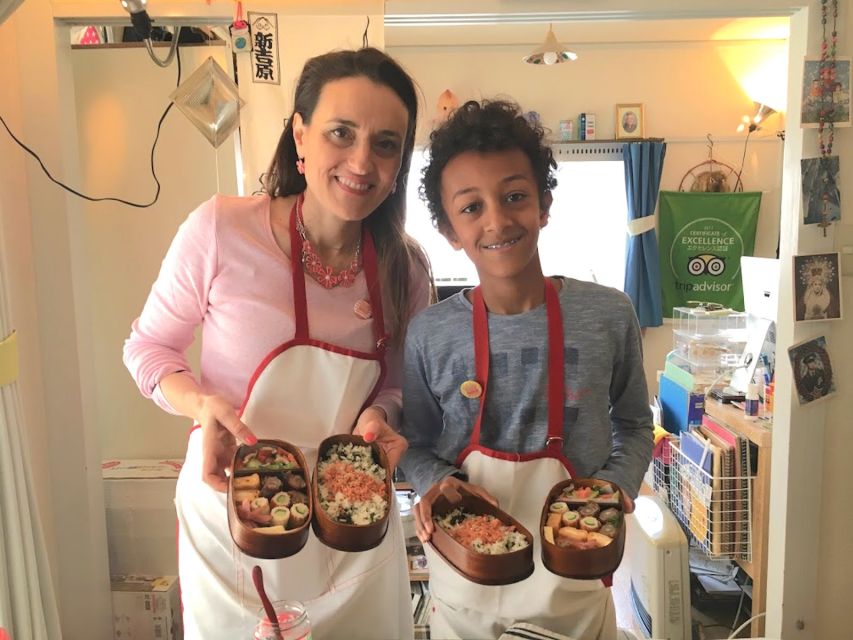
Tokyo food culture makes the most sense when you stop watching and start chopping. In Chef Sato’s small Shinjuku apartment, you help prepare a Japanese meal, learn why seasonal ingredients matter, then sit down and eat what you made. The setting is personal rather than polished, which is exactly the point.
I like the private format, since you can ask questions and work at your own pace. I also like the way the class connects food with family tradition, home life, and everyday Tokyo. The main consideration is the changing menu: you cannot assume you will cook ramen or sushi on every visit.
In This Review
- Key points to know
- A home kitchen in the middle of Shinjuku
- Choosing the right day for your menu
- What the three-hour cooking session feels like
- Chef Sato’s personal approach
- The optional walk after the morning class
- How much value do you get for $120?
- What makes the food lesson useful at home
- Who will enjoy this most
- Timing, meeting point, and cancellation
- Should you book Chef Sato’s cooking class?
- FAQ
- Where does the cooking class meet?
- Where does the cooking class take place?
- Who teaches the class?
- What language is used?
- Is this a private class?
- What food might I cook?
- How many dishes will I prepare?
- Are food and drinks included?
- What time are the classes held?
- Can I take a walk after the class?
- Can I cancel for a refund?
Key points to know
- Chef Sato hosts the class in his Shinjuku apartment, creating a home-based experience rather than a commercial cooking school.
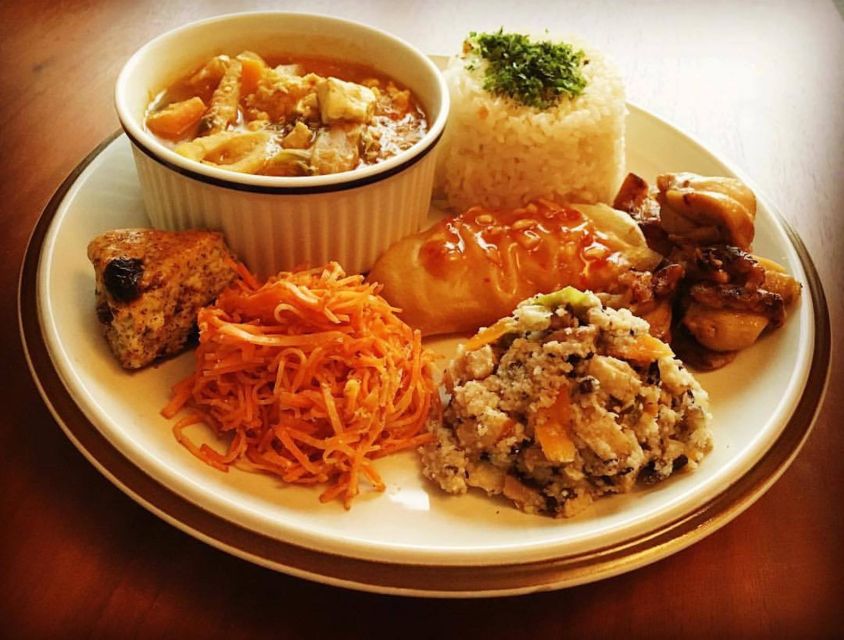
- The menu changes by weekday, with traditional set meals on some days and popular dishes such as ramen, gyoza, curry, or okonomiyaki on others.
- You prepare two to four dishes, then eat the meal with Japanese barley tea.
- Classes are private, with an English-speaking instructor and a meeting point at Shinjuku Station’s east exit police box.
- Morning participants can add a two-and-a-half-hour local walk to places outside the usual guidebook route.
- The $120 price reflects personal attention, a meal, instruction, and time in a local home, not just a short demonstration.
A home kitchen in the middle of Shinjuku
The class begins at the police box near Shinjuku Station’s east exit, at 3-38-38-1, Shinjuku, Shinjuku-ku. This is a sensible meeting place in a famously confusing station district. You receive pickup at the meeting point, then walk with Chef Sato to his apartment.
That short walk helps shift the mood. You are leaving the bright commercial side of Shinjuku and heading into the ordinary residential fabric behind it. The apartment is described as cute and small, not as a purpose-built studio. Expect a personal home setting, with the advantages and limits that come with it.
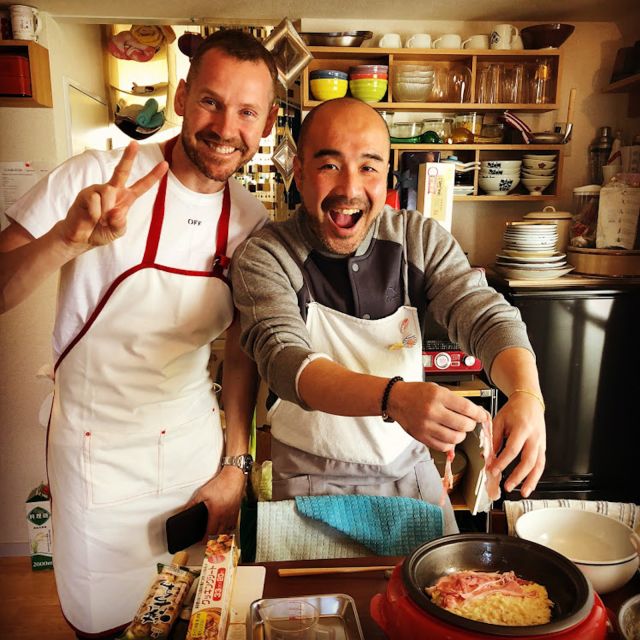
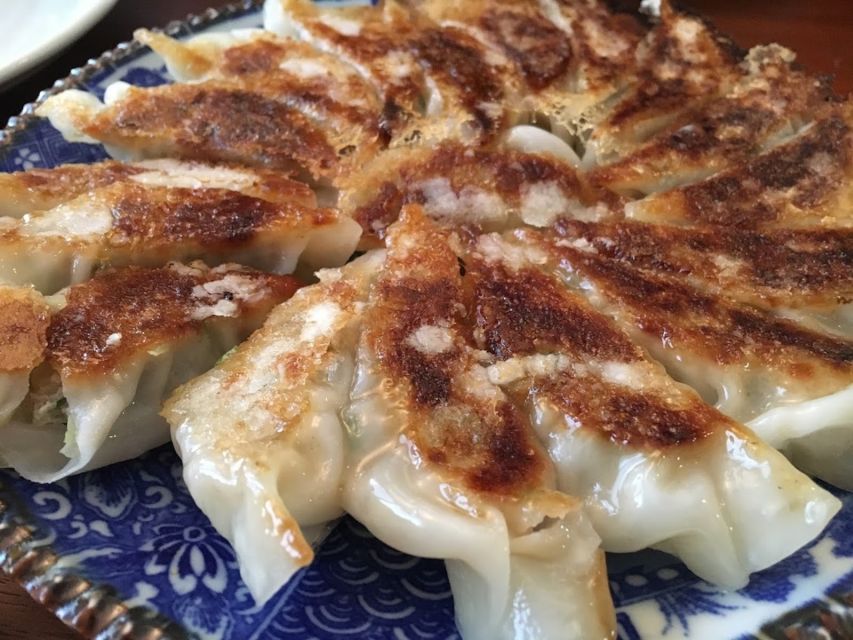
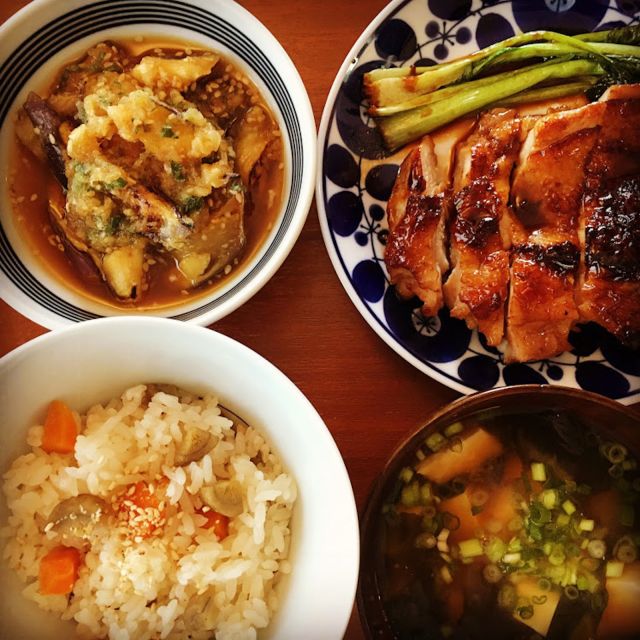
The biggest advantage is conversation. Chef Sato does not simply demonstrate a recipe while you watch from a distance. You chop, season, prepare, and cook. Past menus have included miso soup, rice, teriyaki chicken, salads, stuffed fish cake, katsu curry, tofu dishes, ramen, and gyoza.
The apartment setting also means this is not a showy chef performance. It feels closer to being invited into someone’s home for dinner. If you want a sleek kitchen, restaurant-style plating, and a fixed professional timetable, this may feel informal. If you want to see how Japanese food can be made at home, the informality is a major benefit.
More Japanese Cooking Classes in Tokyo
- Sushi Making Tokyo Roll and Authentic Japanese Sushi Class
★ 5.0 · 3,971 reviews - Tokyo: Roll and Authentic Sushi Making Class in Asakusa
★ 4.9 · 1,957 reviews - Tokyo: Sushi Making Class in a Happi Coat near a Famous Spot
★ 4.9 · 1,377 reviews
Choosing the right day for your menu
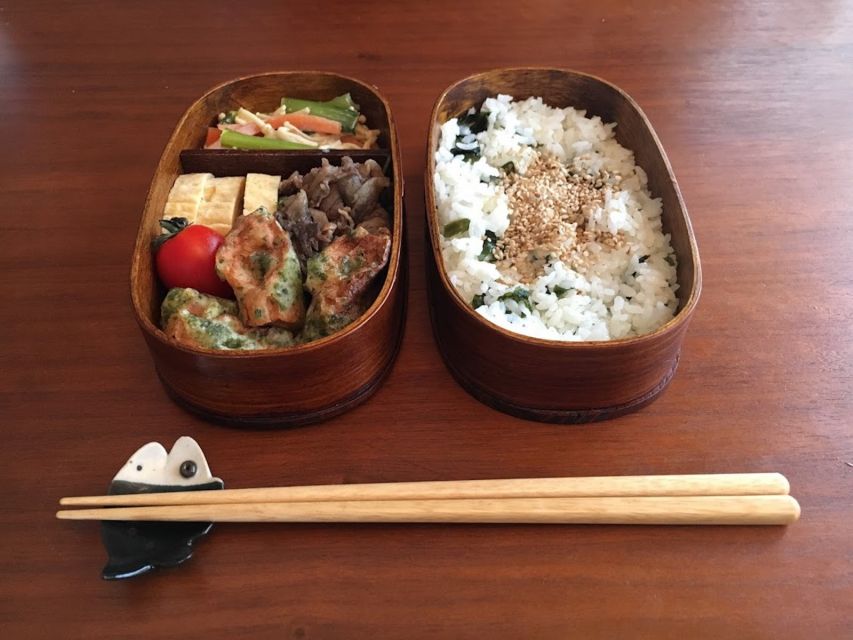
Your weekday matters. Saturday, Sunday, Monday, and Tuesday are scheduled as traditional meal days. The menu may be a teishoku, or set meal, with rice, a seasonal main dish, and two seasonal side dishes. Other possible meals include donburi, obento, tonjiru, and rice balls.
Wednesday through Friday focus on popular Japanese foods. Depending on the day, you might prepare curry rice, okonomiyaki, gyoza, ramen, a rice burger, kara-age, or yakisoba. These are familiar names to many visitors, but making them yourself gives you a better sense of the preparation behind the finished dish.
The schedule is useful, but it is not a guarantee of one exact recipe. The information says the menu changes by day and includes two to four items. If ramen, gyoza, or a specific dish is the reason you want to book, ask about the planned menu before paying.
The emphasis on seasonal ingredients is one of the class’s strongest cultural lessons. Japanese home cooking is not only about copying a recipe. It is also about using what is good at a particular time of year, balancing several small dishes, and presenting the meal neatly.
That idea comes through in simple details. One participant learned how to remove black spots from potatoes. Another prepared a full course with seasonal ingredients. These are modest skills, but they are the sort you can use again at home.
What the three-hour cooking session feels like
The listed duration is described as three hours, with the booking information also showing 270 minutes. The cooking classes themselves are scheduled from 10:30 AM to 1 PM or from 6 PM to 8:30 PM, so the practical class time is two and a half hours. Confirm the exact duration and start time when you check availability.
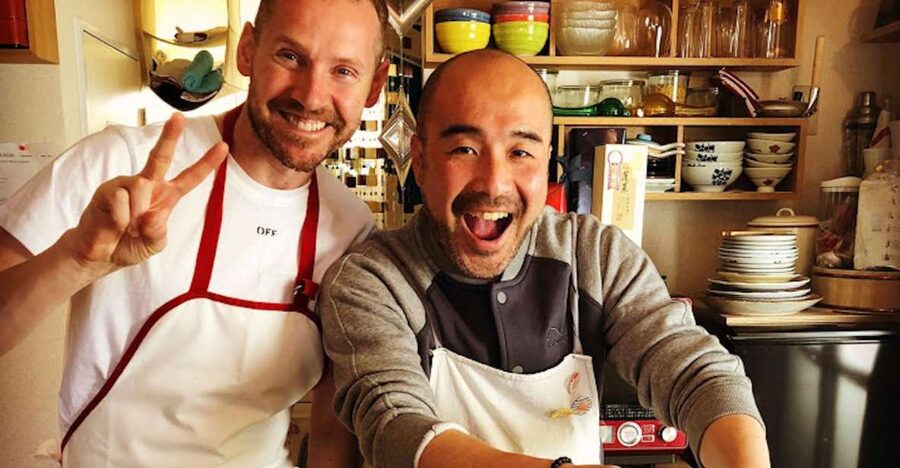
The session normally follows a relaxed pattern. After meeting at the station, you go to the apartment, hear about the ingredients and dishes, and begin preparing the food with Chef Sato’s guidance. You are not limited to watching. The hands-on work can include chopping, seasoning, assembling, and cooking.
Chef Sato’s teaching style is especially suited to beginners and home cooks. He explains ingredients, cooking methods, and the place of each dish in Japanese food culture. You can ask questions as you go, and the private setting gives you more room to pause when a technique needs explaining.
The meal is then served at the table. Japanese barley tea is included, along with the food you helped make. The meal is not an extra tasting added at the end. It is the reward for the work and a chance to understand how the separate dishes fit together.
Several past menus have produced a substantial meal of multiple components. A set meal may include rice, a main dish, soup, and side dishes. A ramen and gyoza class gives you two well-known favorites. A traditional meal may offer a better lesson in everyday Japanese cooking than a single famous dish.
Chef Sato’s personal approach
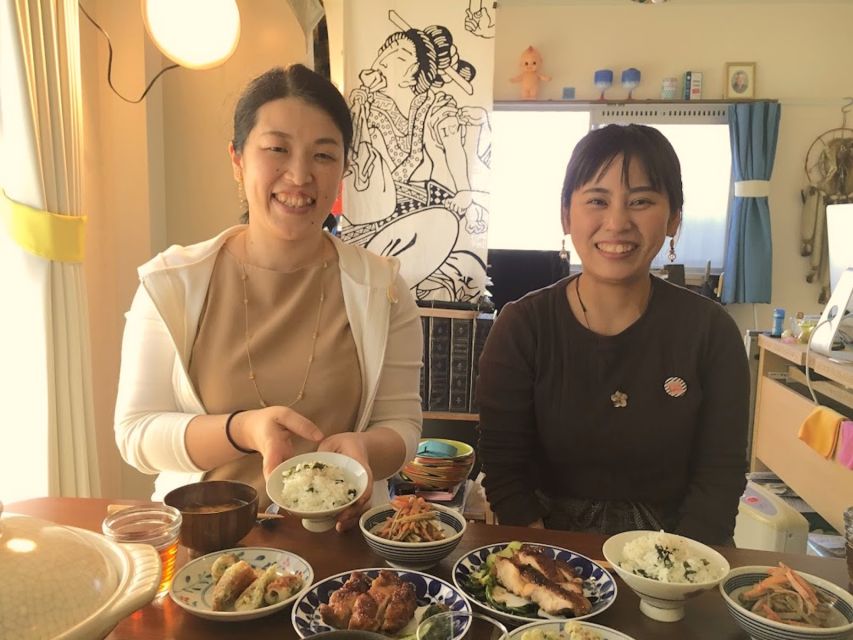
The cooking is only half the reason to choose this class. Chef Sato learned traditional Japanese cooking from his parents from a very young age, and he shares family stories as he teaches. That gives the food context without turning the session into a formal lecture.
You may hear about the role of seasonal vegetables, family cooking, and the background of particular dishes. The conversation can move beyond recipes into everyday life in Japan and your own experiences. Many people value this kind of exchange because it makes the class feel social as well as practical.
His English is described as excellent, and English is the listed teaching language. That matters when you are learning details such as texture, timing, seasoning, and presentation. Cooking instructions become much less useful if you cannot ask why a step matters.
The tone is relaxed and welcoming. This is good news if you feel nervous about cooking in front of a chef. It is also worth understanding that the experience depends heavily on personal interaction. If you prefer to keep conversation to a minimum, a large group lesson may suit you better.
Same city, a completely different kind of day:
- Mt Fuji and Hakone 1-Day Bus Tour Return by Bullet Train
★ 5.0 · 26,383 reviews - 1-Day Tokyo Bus Tour
★ 5.0 · 14,250 reviews - Tokyo: TOKYO SKYTREE® Admission ticket
★ 4.5 · 11,192 reviews - Tokyo: teamLab Planets TOKYO Digital Art Museum Entry Ticket
★ 4.6 · 9,779 reviews
The optional walk after the morning class
Morning participants can add an optional short trip from 1 PM to 3:30 PM. The walk goes to several places described as being outside the usual guidebook route. It is an extra activity after the cooking class, not part of the evening session.
Past participants have walked through parts of Shinjuku and Nakano with Chef Sato. The value here is not a list of major sights. It is having a local point out places you might pass without noticing, along with some background about the area.
This option makes the morning booking a longer commitment. You finish cooking around 1 PM and continue until 3:30 PM if you choose the walk. That can be useful early in your Tokyo stay, when you want help getting oriented. It may be less appealing after a long flight or on a day when you already have fixed sightseeing plans.
The walk also adds variety. You spend the first part of the day learning how food works inside a Japanese home, then see more of the surrounding neighborhoods. It creates a link between domestic life and the city outside.
Because the exact stops are not specified, do not book this option expecting a particular landmark. Think of it as a local neighborhood walk with Chef Sato, not a substitute for a major Tokyo sightseeing tour.
How much value do you get for $120?
At $120 per person, this is not the cheapest way to eat in Tokyo. You can buy an excellent restaurant meal for less, and a standard cooking school may offer a lower price per person.
But the comparison is not really restaurant versus restaurant. The fee includes a private class, English instruction, ingredients, the meal, Japanese barley tea, and pickup at the meeting point. You are also paying for time with a local host in his home and the chance to shape the session through questions.
For two people, the private format can be good value if you want a personal cultural activity rather than another meal out. You are not simply receiving food. You are learning techniques you can repeat, hearing the reasons behind the dishes, and sharing the finished meal with the person who taught you.
The value is stronger for people who cook at home. Past participants have prepared ramen, gyoza, curry, teriyaki chicken, miso soup, salads, and seasonal side dishes they hoped to make again after returning home. Recipe handouts have also been provided in some sessions, though you should confirm what will be supplied for your booking.
The price is harder to justify if your main goal is to eat as many dishes as possible, or if you want an advanced culinary course. The class is about home cooking, cultural exchange, and participation. It is not presented as a professional chef qualification.
What makes the food lesson useful at home
Japanese food can look simple on the plate, but the balance of soup, rice, main dish, and small sides requires thought. Chef Sato’s class helps you see that structure from the inside.
A teishoku teaches you how a Japanese meal can combine several modest portions instead of relying on one large centerpiece. A ramen and gyoza session focuses more on popular comfort food. Curry rice, okonomiyaki, kara-age, and yakisoba offer practical dishes that can be adapted to a home kitchen outside Japan.
The seasonal focus is especially useful. You learn to think about freshness, timing, and how vegetables support the meal. That is a better takeaway than memorizing a restaurant-style recipe you may never make again.
The class also includes presentation. One session included instruction on arranging the dishes neatly. This may sound minor, but the way food is placed on the table is part of Japanese home dining. You leave with an understanding of appearance as well as flavor.
Food preferences may be worth discussing before the class. In at least one booking, Chef Sato contacted participants in advance and tailored the menu at their request. Since menus vary, ask early if you have a particular dish or ingredient concern.
Who will enjoy this most
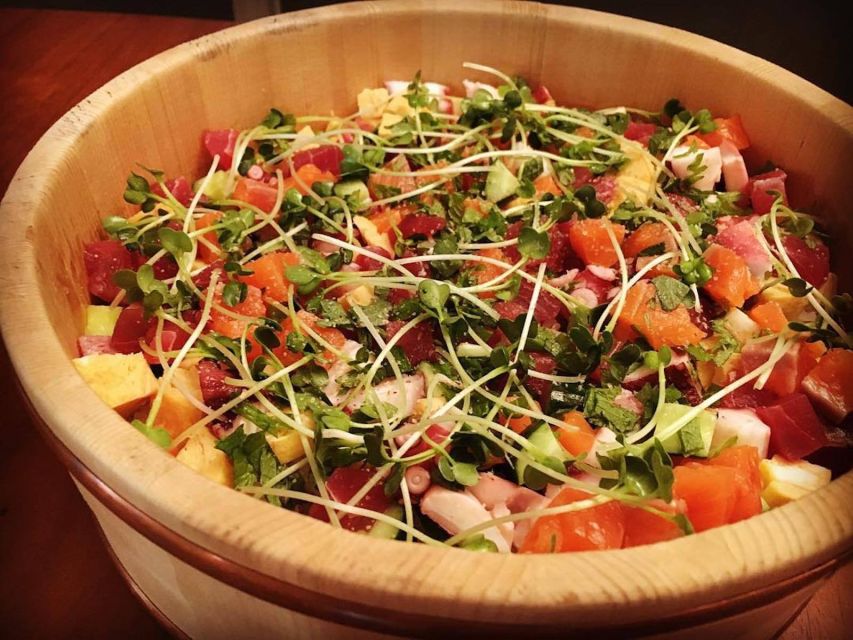
I would choose this for a couple, family, or small private group that wants conversation along with food. It suits beginners, confident home cooks, and anyone curious about what Japanese people prepare away from restaurant counters.
It is also a good choice for a repeat visitor to Tokyo. You get a look at ordinary home life and neighborhoods beyond the main sightseeing circuit. The optional walk gives the experience more local character if your schedule allows.
Food lovers should pay attention to the weekday menu. If you want traditional meal structure, choose one of the listed standard meal days. If you prefer ramen, gyoza, curry, or okonomiyaki, look at the popular food schedule instead.
I would be more cautious if you have strict mobility, dietary, or kitchen requirements, since the class takes place in a small private apartment and the supplied details do not explain accessibility or substitutions. Ask before booking rather than assuming.
Timing, meeting point, and cancellation
The meeting point is the police box at Shinjuku Station’s east exit. Shinjuku Station is large, so allow time to find the correct exit and arrive ready for the walk to the apartment.
Morning and evening classes run on the stated schedule of 10:30 AM to 1 PM and 6 PM to 8:30 PM. The optional walk follows the morning class from 1 PM to 3:30 PM. Check availability because the booking page describes the total duration in two different ways, three hours and 270 minutes.
The class is conducted in English and is for a private group. Free cancellation is available up to 24 hours before the activity for a full refund. You can also reserve and pay later, which helps if your Tokyo plans are still changing.
Should you book Chef Sato’s cooking class?
Book it if you want to cook, talk, and eat in a real home rather than simply watch a demonstration. Chef Sato’s warmth, clear English, family stories, and flexible conversation are central to the experience. The strongest part is the feeling of sharing a meal with a local person, not the promise of a particular famous dish.
Choose your date with care and confirm the menu if ramen, gyoza, or another recipe is essential. Add the afternoon walk if you want a longer local outing through Shinjuku and Nakano.
Skip it if you want a large professional kitchen, a fixed menu, or an advanced technical course. For everyone else, especially people who enjoy cooking and want a personal side of Tokyo, the $120 fee buys far more than dinner.
FAQ
Where does the cooking class meet?
Meet at the police box by the east exit of Shinjuku Station, at 3-38-38-1, Shinjuku, Shinjuku-ku, Tokyo, 160-0022, Japan.
Where does the cooking class take place?
The class takes place in Chef Sato’s apartment in Shinjuku.
Who teaches the class?
Chef Sato teaches the class.
What language is used?
The class is taught in English.
Is this a private class?
Yes. The group type is listed as a private group.
What food might I cook?
The menu changes by weekday. Possible dishes include teishoku, donburi, obento, tonjiru, rice balls, curry rice, okonomiyaki, gyoza, ramen, rice burgers, kara-age, and yakisoba.
How many dishes will I prepare?
You will cook two to four items, depending on the menu.
Are food and drinks included?
Yes. The meal and a free drink of Japanese barley tea are included.
What time are the classes held?
Morning classes run from 10:30 AM to 1 PM, and evening classes run from 6 PM to 8:30 PM. Check availability for the current starting times.
Can I take a walk after the class?
Yes. An optional short trip runs every day from 1 PM to 3:30 PM after the morning class. It visits places described as being outside the usual guidebook route.
Can I cancel for a refund?
Yes. You can cancel up to 24 hours in advance for a full refund. You can also reserve now and pay later.
More Workshops in Tokyo
- Tokyo Shinjuku Chopsticks Making Class
★ 5.0 · 1,763 reviews - Chopstick Making Workshop in Ginza
★ 4.8 · 1,366 reviews - Tokyo Sushi Making Class in Tsukiji with Professional Chef
★ 5.0 · 1,177 reviews - Matcha Making Class in Tokyo with Authentic Japanese Sweets Set
★ 5.0 · 744 reviews
More Cooking Classes in Tokyo
- Ramen & Gyoza Cooking Class in Tokyo with Local Supermarket Visit
★ 5.0 · 823 reviews - Tokyo: Easy Ramen Cooking Experience in Kabukicho, Shinjuku
★ 4.6 · 321 reviews - Ramen and Sushi Cooking Class with Sake Pairing Set in Tokyo
★ 5.0 · 291 reviews - Tokyo: Wagyu and 7 Japanese Dishes Cooking Class
★ 4.9 · 273 reviews
Just added around Tokyo
- Tokyo: Customizable Private Guided Walking Tour★ 4.5 · 129 reviews
- Private Harajuku Omotesando Architecture Tour★ 4.9 · 18 reviews
- Tokyo: Guided Walking Tour of Tsukiji Market with Lunch★ 4.4 · 24 reviews
- Tokyo: Private Personalized Local Food Tour★ 4.5 · 101 reviews
- Tokyo: Guided Helicopter Ride★ 4.9 · 24 reviews
- Tokyo GINZA: KONPARU Japanese Cabaret Show with Drink★ 4.8 · 38 reviews
- Tokyo: Guided Walking Tour of Tsukiji Market with Breakfast★ 4.4 · 134 reviews
- Tokyo: Gotokuji Cat Temple, Shinjuku Cat Cafe & 3D Cat Tour★ 4.9 · 38 reviews
Japanese Cooking Classes, compared.
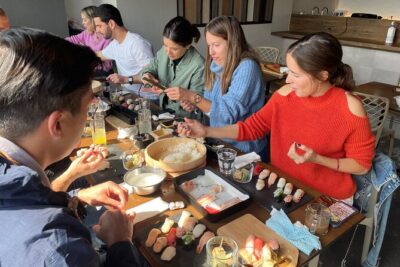
Sushi Making Tokyo Roll and Authentic Japanese Sushi Class
Read our review →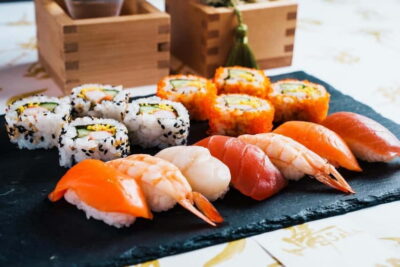
Roll and Authentic Sushi Making Class in Asakusa
Read our review →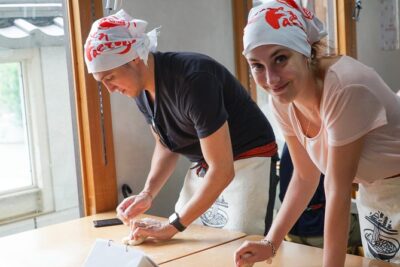
Ramen Cooking Class at Ramen Factory in Kyoto
Read our review →
Sushi Making Class in a Happi Coat near a Famous Spot
Read our review →
Sushi Making Osaka Roll and Authentic Japanese Sushi Class
Read our review →
Tokyo Sushi Making Class in Tsukiji with Professional Chef
Read our review →
Ramen & Gyoza Cooking Class in Tokyo with Local Supermarket Visit
Read our review →
Tsukiji Fish Market Guided Tour and Sushi Making with Pro Chef
Read our review →Browse the lists this tour appears in