
REVIEW · TEA CEREMONY EXPERIENCES
Tea Ceremony Experience in Traditional Kyoto Townhouse
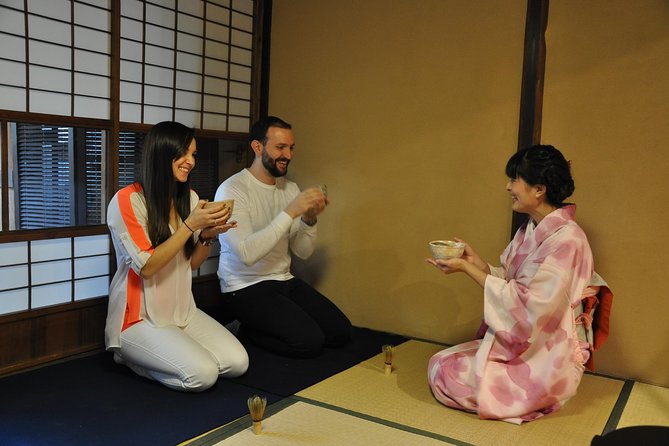
The best part of this Kyoto experience is the setting: you step into an 80-year-old machiya, one of the traditional wooden townhouses that once filled the city. Inside, you learn to prepare matcha, watch a careful tea ceremony demonstration, and enjoy Japanese sweets in a space that feels far removed from modern Kyoto.
I like two things here. First, the workshop is hands-on, so you are not simply watching a ritual you may not understand. Second, the group is capped at six people, which gives the hosts room to explain the steps and offer personal demonstrations. The main drawback is the short one-hour format. It gives you a good introduction, but not a long, meditative study of tea culture.
In This Review
- Key points to know before booking
- Entering an 80-year-old Kyoto machiya
- Learning why matcha mattered to monks and samurai
- Making a bowl of matcha yourself
- The tea ceremony demonstration
- What the small group changes
- Is $27.59 good value for one hour?
- Fitting Ami Kyoto into your day
- Who will enjoy this tea lesson most?
- Should you book the Ami Kyoto tea ceremony?
- FAQ
- How long does the tea ceremony experience last?
- Where does the experience begin?
- Where does the experience end?
- Is hotel pickup included?
- What does the experience include?
- Will I make matcha myself?
- Is a tea ceremony demonstration included?
- How many people can join the activity?
- Is the experience near public transportation?
- Can I cancel for a full refund?
Key points to know before booking
- An 80-year-old machiya: Spend the hour inside a surviving traditional Kyoto townhouse rather than in a modern classroom.
- You prepare your own matcha: The session includes practical instruction, not just a demonstration.
- A full tea ceremony introduction: Learn about the ritual and its links to monks and samurai.
- Small groups of six or fewer: The format should allow clear explanations and individual help.
- Matcha and sweets included: You receive a bowl of matcha and Japanese sweets from a well-known Kyoto confectionary.
- Simple one-hour plan: The activity begins and ends at 605 Nishidacho, making it easy to fit into a busy Kyoto day.
Entering an 80-year-old Kyoto machiya
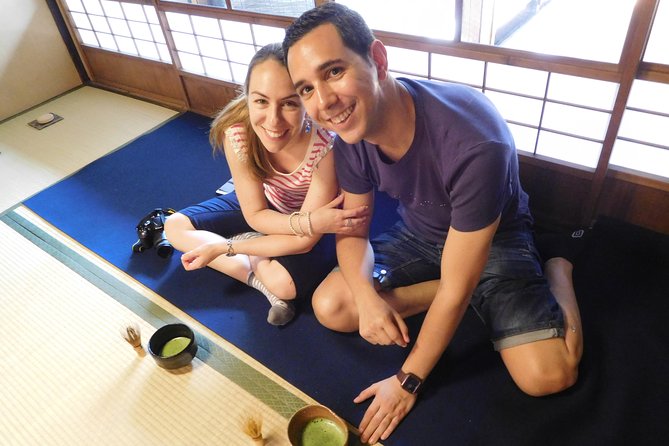
Kyoto’s machiya were practical city homes and shops, built with timber and arranged in long, narrow plots. Many have disappeared as the city changed, so the chance to spend time inside one adds real value to this short activity.
Ami Kyoto’s townhouse is about 80 years old. That age does not turn the building into a museum piece. Instead, it gives the tea lesson a proper sense of place. You are learning about a Japanese custom in a building shaped by the same urban culture that helped keep that custom alive.
I like this approach because the building is part of the lesson. You do not have to schedule a separate architectural visit or spend your hour looking at a staged display. The townhouse creates a quiet, traditional backdrop while the hosts explain what you are doing and why.
The description gives no detailed account of the room layout or seating arrangement, so you should not book expecting a particular garden view, tatami setup, or historic household collection. The reliable promise is simpler: an hour inside a traditional wooden Kyoto home, paired with matcha instruction and a tea ceremony.
More Tea Ceremony Experiences in Kyoto
- Kyoto: Tea Ceremony in a Traditional Tea House in Kiyomizu
★ 4.9 · 3,519 reviews - Kyoto: Tea Ceremony Ju-An at Jotokuji Temple
★ 4.9 · 3,207 reviews - Kyoto: 45-Minute Tea Ceremony Lesson Experience
★ 4.3 · 2,378 reviews
Learning why matcha mattered to monks and samurai
The session covers the lesser-known background of the tea ceremony, including its connections with monks and samurai. That context matters because the ceremony is not just a method for making a powdered drink. Its gestures, tools, timing, and attention to presentation reflect a larger cultural practice.
You will hear how the ritual became valued by powerful and religious figures, then see how that tradition appears in the movements of the host. The teaching is designed for visitors who may know little about Japanese tea. Explanations are clear and simple, according to the information available about the session, so you do not need previous experience.
I would pay attention to the small actions rather than trying to memorize every term. Watch how the tea is handled, how the demonstration is paced, and how the host presents the finished bowl. Those details help you understand why tea preparation became a formal art rather than an everyday shortcut.
The one-hour length also shapes the lesson. You will get an accessible introduction, not a scholarly account of tea history. That is a sensible trade for people fitting this into a first visit to Kyoto, but anyone hoping for an extended ceremony or advanced instruction may want a longer program.
Making a bowl of matcha yourself
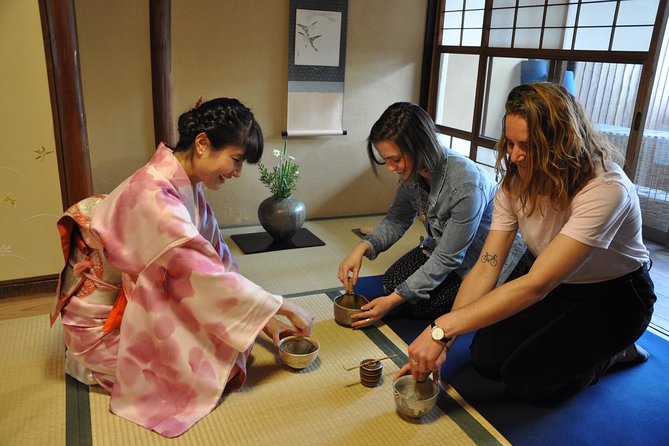
The practical portion is the heart of the experience. You learn how to brew matcha and then prepare your own bowl. This gives you something a formal demonstration cannot: a feel for the process and a better sense of why the host’s technique matters.
Matcha is powdered green tea, so the preparation differs from steeping ordinary leaves in a pot. The quality of the powder, the amount used, and the way it is mixed all affect the final drink. Here, the matcha comes from an organic farm, adding a clear point of interest to the tasting.
You can expect the host to explain the basic method and then show it in person. The description also promises personalized demonstrations, which is useful in a small group. If you are unsure about a step, the format should make it easier to see the movement up close rather than trying to follow from the back of a crowded room.
The activity is suitable for most people, and no previous tea experience is required. It is also a good choice for families. One parent and two parents with children could enjoy the simple satisfaction of making tea together, though the supplied information does not specify a minimum age or child pricing.
Do not expect to leave as a tea master. The point is to understand the basics, take part in a formal custom, and learn why a carefully prepared bowl tastes and feels different from a casual green tea drink.
The tea ceremony demonstration
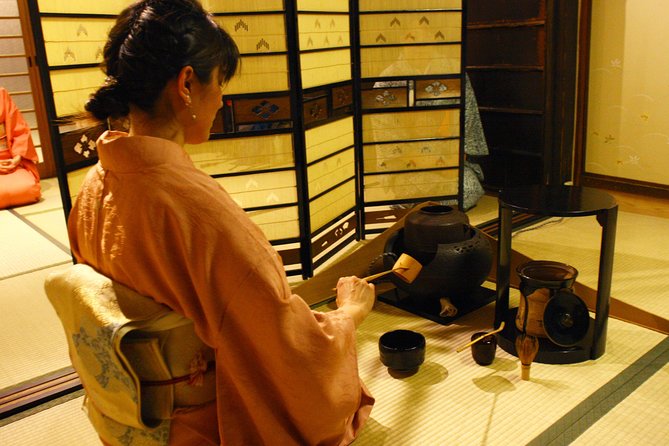
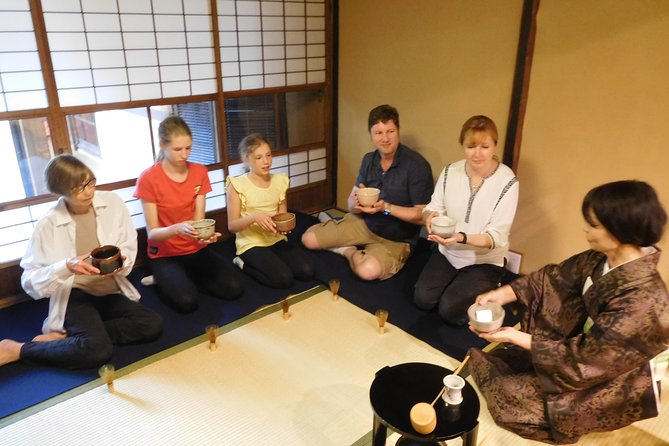
Your own preparation is paired with a proper tea ceremony demonstration. This gives you two views of the tradition: the visitor’s hands-on attempt and the host’s more polished presentation.
That contrast is useful. When you make the tea yourself, you focus on the mechanics. When you watch the demonstration, you can concentrate on the order, rhythm, and manners of the ceremony. The demonstration has been described as thorough and fascinating, with clear explanations that make the ritual easier to follow.
The ceremony is likely to feel deliberate rather than theatrical. You are not being asked to watch a performance with no explanation. The hosts explain the custom, show how the steps fit together, and then let you take part.
The included bowl of matcha is served with Japanese sweets from a famous Kyoto confectionary. That pairing is more than a snack. Japanese sweets are often chosen to balance the tea’s bitter edge, so tasting both helps you understand the flavor relationship at the center of the ceremony.
The exact sweets are not specified, and seasonal choices may vary. That uncertainty is minor, but it is worth knowing if you have dietary restrictions. The available details do not list ingredients, allergy accommodations, or alternatives.
Same city, a completely different kind of day:
- PERFECT KYOTO 1-Day Bus Tour
★ 5.0 · 13,518 reviews - Kyoto: Fushimi Inari, Kinkakuji, Bamboo Grove 1 Day Bus Tour
★ 4.8 · 4,316 reviews - Kyoto Geisha Walking Tour: Gion District & Hidden Gems
★ 4.7 · 3,273 reviews - Kyoto: Gion Magical Night Walking Tour with Geisha Trivia
★ 4.9 · 2,393 reviews
What the small group changes
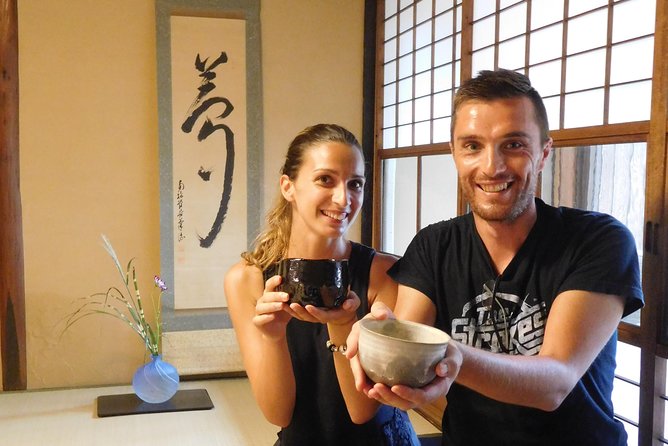
The maximum group size is six people. For a cultural lesson, that is a useful limit. You can see the demonstration without competing with a large crowd, and the hosts have a better chance to correct your technique or answer a question.
Small groups also make the setting feel more personal. One of the hosts identified in the available information is Kimi from Ami Kyoto. The responses connected with the experience use a warm, professional tone and note that explanations are simple and clear. You can expect the session to be organized around instruction rather than hurried crowd control.
There is still no guarantee that every group will feel identical. A full group of six will have a different pace from a private booking, and the one-hour schedule leaves limited time for long individual conversations. Still, the cap is one of the strongest practical features at this price.
The session works particularly well for first-time visitors to Japan, couples wanting a calm cultural break, families, and matcha fans who want more than a café drink. It may be less satisfying for someone already trained in tea ceremony or looking for a highly formal school-specific lesson.
Is $27.59 good value for one hour?
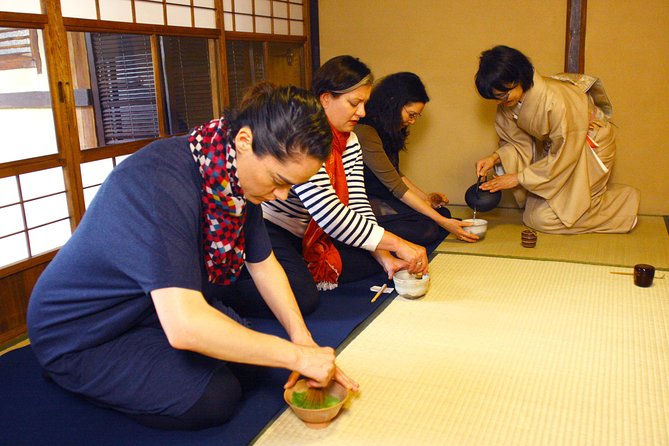
At $27.59 per person, this is a modestly priced cultural activity for Kyoto. You receive a bowl of matcha, Japanese sweets, instruction, a demonstration, and access to an 80-year-old machiya. The value comes from the combination, not from the amount of food or the length of the event.
A cheaper cup of matcha is easy to find. What you are paying for here is the explanation, the guided preparation, and the chance to enter a traditional townhouse. If you already plan to visit tea rooms and cultural sites elsewhere, the added lesson may feel less essential. For most first-time visitors, though, it offers a direct way to understand a custom that can otherwise seem mysterious.
The one-hour duration keeps the cost and time commitment manageable. You can schedule it between sightseeing stops instead of surrendering half a day. The tradeoff is that the session cannot cover every aspect of Japanese tea culture or allow a long period of quiet reflection.
I see it as good value for a short, focused introduction. It is especially worthwhile if you value local buildings, small groups, and active participation over a large attraction with a long checklist of sights.
Fitting Ami Kyoto into your day
The meeting point is 605 Nishidacho, in Kyoto’s Shimogyo Ward, postal code 600-8397. The location is near public transportation, but hotel pickup and drop-off are not included. Plan to reach the townhouse on your own and allow enough time to find the entrance.
The activity ends at the same meeting point. That makes the next step simple. You can continue sightseeing, return to your hotel, or schedule lunch nearby without arranging a separate transfer.
Because the session lasts about one hour, it works well as a morning or afternoon pause. I would avoid placing it immediately before a timed train or another booking unless you leave a comfortable buffer. The event itself is short, but finding an unfamiliar address in Kyoto can take longer than expected.
A mobile ticket is provided, which keeps the booking process light. Confirmation arrives within 48 hours, subject to availability, so do not assume your place is final until confirmation comes through. The experience is often booked 19 days ahead, a useful sign that you should reserve early if your Kyoto dates are fixed.
Free cancellation is available when you cancel at least 24 hours before the local start time. A cancellation inside that window is not refunded, and last-minute changes are not accepted.
Who will enjoy this tea lesson most?
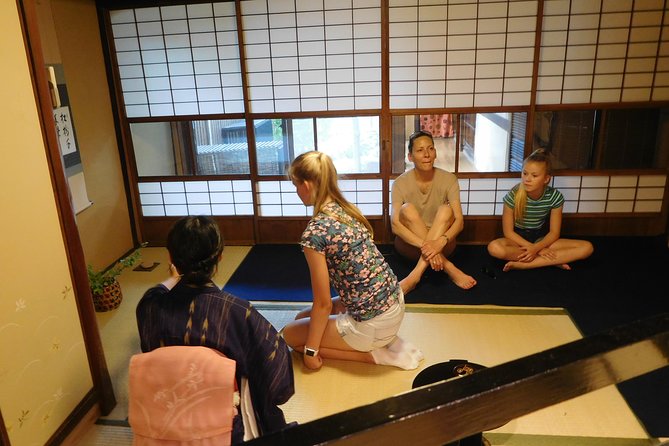
I would choose this experience for you if you want a short cultural activity that gives you something to do, taste, and understand. It suits people who enjoy learning by trying, rather than sitting through a long talk.
Matcha enthusiasts will appreciate the focus on preparation and the use of tea from an organic farm. Architecture fans will value the townhouse. First-time visitors may like the plain explanations and the historical background, especially if the formal gestures of a tea ceremony have always seemed hard to read.
Families can also consider it. The available information says most people can participate, and the small group should help parents and children follow the demonstration. Since no age policy or accessibility details are provided, contact Ami Kyoto if you need a specific arrangement.
I would think twice if you dislike powdered tea, sweets, floor-based cultural activities, or quiet formal rituals. The details do not confirm the seating style, so ask ahead if that matters to you. Also, do not choose this expecting hotel transport, an extended ceremony, or a full meal.
Should you book the Ami Kyoto tea ceremony?
Book it if you want an affordable, one-hour introduction to matcha in a real Kyoto townhouse. The combination of hands-on preparation, a careful demonstration, Japanese sweets, and a group limit of six gives the experience more substance than a quick tea tasting.
The strongest reason to go is the setting paired with instruction. You are not only drinking matcha. You are learning how it is made and seeing how the ritual fits into Japanese culture. The main limitation is scope: one hour can open the door to the subject, but it cannot take you very far inside it.
Reserve ahead if your schedule is tight, arrive at the Nishidacho meeting point with time to spare, and treat the activity as a focused introduction rather than a complete tea-study program. At $27.59, it is an easy choice for most visitors who want a personal, practical taste of Kyoto culture.
FAQ
How long does the tea ceremony experience last?
The activity lasts approximately one hour.
Where does the experience begin?
It begins at 605 Nishidacho, Shimogyo Ward, Kyoto, 600-8397, Japan.
Where does the experience end?
It ends back at the meeting point.
Is hotel pickup included?
No. Hotel pickup and drop-off are not included.
What does the experience include?
It includes a bowl of matcha green tea and Japanese sweets.
Will I make matcha myself?
Yes. The activity includes hands-on instruction in preparing matcha.
Is a tea ceremony demonstration included?
Yes. You will watch a tea ceremony demonstration as part of the session.
How many people can join the activity?
The group has a maximum of six people.
Is the experience near public transportation?
Yes. The meeting location is near public transportation.
Can I cancel for a full refund?
Yes, if you cancel at least 24 hours before the experience start time. Cancellations made less than 24 hours in advance are not refunded.
Just added around Kyoto
- Private Guided Traditional Buddhist Cooking in Japan★ 5.0 · 16 reviews
- Kyoto: Gion Geisha District & Sake-in-Hand Walking Tour★ 5.0 · 37 reviews
- Your Private Vacation Photography Session In Kyoto★ 5.0 · 110 reviews
- Kyoto: Zen Meditation at a Private Temple with a Monk★ 5.0 · 25 reviews
- Traditional Japanese Washi Papermaking- Kyoto morning★ 5.0 · 77 reviews
- Kyoto Wagashi(Japanese sweets) Cooking Class near Fushimiinari★ 5.0 · 60 reviews
- Private Pewter Sake Cup Experience with a Kyoto Artisan★ 5.0 · 31 reviews
- Kyoto Private 6 hour Tour: English Speaking Driver Only, No Guide★ 5.0 · 88 reviews
Tea Ceremony Experiences, compared.

Tea Ceremony in a Traditional Tea House in Kiyomizu
Read our review →

World Heritage Kyoto & Nara Uji Authentic Matcha Experience
Read our review →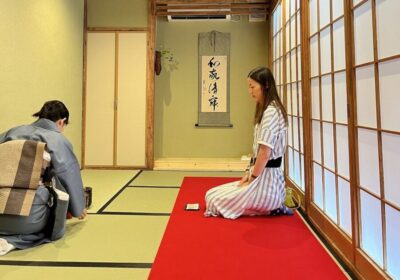
Browse the lists this tour appears in