
REVIEW · JAPANESE COOKING CLASSES
Sushi Cooking Class: AKEMI’s SUSHiKiTCHEN in Tokyo
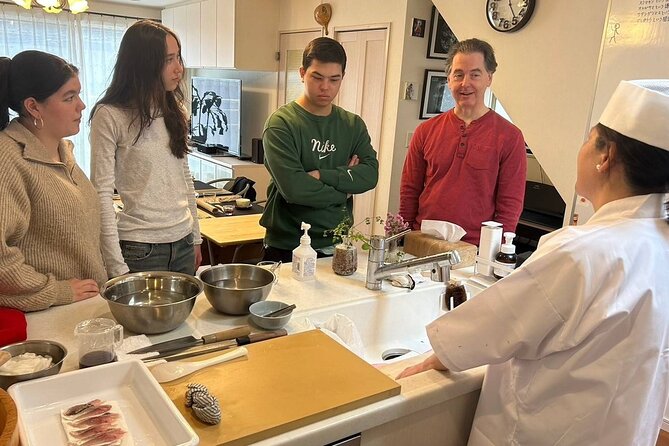
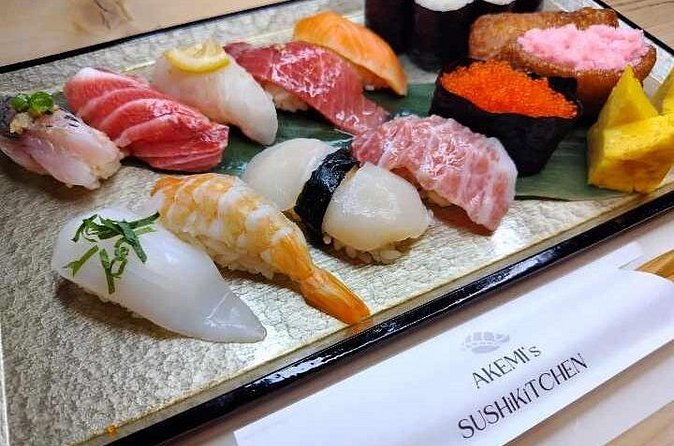
Sushi here is not just lunch on a plate. You enter Akemi’s Tokyo home, work with fish from Toyosu and Tsukiji markets, and learn four kinds of sushi in a small class. Chef Akemi has seven years in Japan’s restaurant industry and completed the Edomae Sushi Technique Acquisition Course at Tokyo Sushi School.
I like the maximum of six participants, which gives Akemi room to correct your technique instead of leaving you to copy someone across the room. I also like the care put into the ingredients, from specially ordered rice blended by Kyoto’s Hachidaime Gihey, founded in 1787, to fresh fish selected from Tokyo’s major markets.
The main consideration is the price, about $105.68 per person, for roughly two and a half hours. That is more than a casual meal, but you are paying for instruction, food, cultural context, and a quiet home setting. The class also begins in Sasazuka, so you need to allow time to reach this residential part of Shibuya.
In This Review
- Key points to know before booking
- Entering a quiet home in Sasazuka
- Learning from a chef trained in Edomae technique
- Four types of sushi, not just a quick roll
- Why the rice and fish matter
- Sushi terms, etiquette, and the story behind the dish
- Sitting down to eat what you made
- Is $105.68 a fair price?
- Who will enjoy this Tokyo cooking class?
- My booking advice
- FAQ
- Where does the sushi class take place?
- How long does the experience last?
- How many people can join the class?
- Who teaches the sushi lesson?
- How many kinds of sushi will I learn to make?
- Are ingredients included?
- Does the class include a meal?
- Can I cancel for a refund?
Key points to know before booking
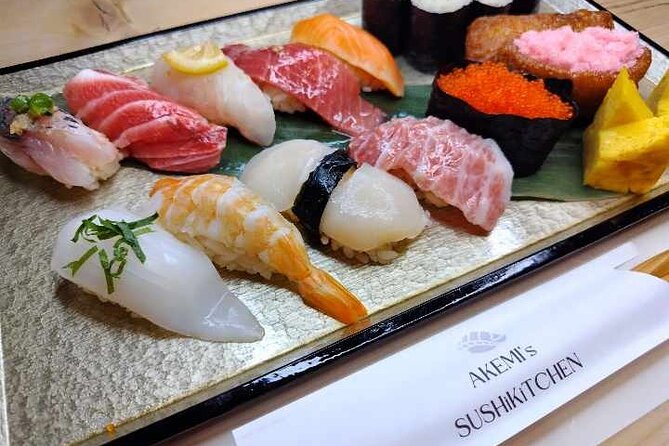
- Four sushi styles in one lesson: You learn several forms rather than preparing only one simple roll.
- Akemi teaches from professional experience: She has seven years in Japanese restaurants and formal Edomae sushi training.
- Premium ingredients shape the lesson: Rice comes from Hachidaime Gihey in Kyoto, while fish is sourced from Toyosu and Tsukiji.
- Small groups mean useful feedback: The class is limited to a maximum of six participants, with plenty of personal guidance.
- The setting feels personal: You cook inside Akemi and Dan’s home in a quiet residential area.
- The meal is your finish line: After practicing, you sit down to eat the sushi you prepared yourself.
Entering a quiet home in Sasazuka
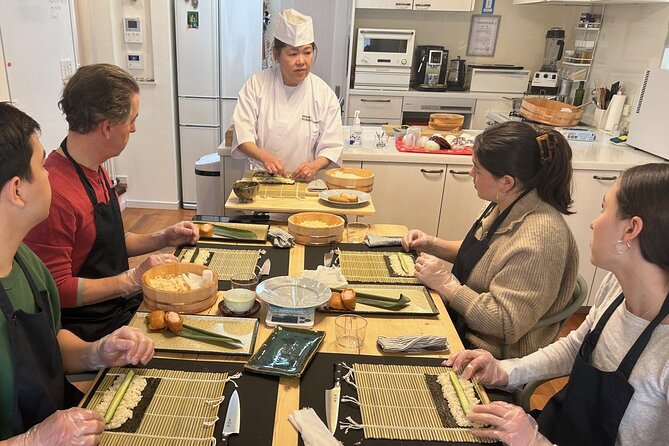
The meeting point is Tamanosato Sasazukaten at 1-chōme-56-18 Sasazuka, Shibuya, Tokyo 151-0073. This is not a restaurant dining room or a large culinary studio. The lesson takes place in Akemi and Dan’s home, in a quieter residential part of Tokyo.
That setting changes the mood from the start. You are not being rushed through a commercial kitchen while a large crowd waits behind you. Instead, you have a more personal introduction to Japanese cooking, with the host’s own kitchen and food traditions at the center.
I would plan your route carefully and arrive ready for a home visit rather than a formal restaurant appointment. The experience begins and ends at the same meeting point, which keeps the logistics simple once you arrive. Public transportation is nearby, but the supplied details do not specify a particular station or walking time, so check the route before leaving your hotel.
Dan is part of the welcoming home atmosphere, while Akemi leads the cooking instruction. A previous class was especially praised for the friendly hosts and the pleasant feel of the house. That matters because a cooking lesson works best when you feel comfortable asking basic questions, making mistakes, and trying again.
More Japanese Cooking Classes in Tokyo
- Sushi Making Tokyo Roll and Authentic Japanese Sushi Class
★ 5.0 · 3,971 reviews - Tokyo: Roll and Authentic Sushi Making Class in Asakusa
★ 4.9 · 1,957 reviews - Tokyo: Sushi Making Class in a Happi Coat near a Famous Spot
★ 4.9 · 1,377 reviews
Learning from a chef trained in Edomae technique
Akemi brings more than home-cooking enthusiasm to the table. She has seven years of experience in Japan’s restaurant industry and completed the Edomae Sushi Technique Acquisition Course at Tokyo Sushi School.
Edomae sushi refers to the style associated with old Tokyo, where technique, preparation, and ingredient handling matter as much as the finished shape. You should not expect a professional sushi apprenticeship in two and a half hours, but Akemi’s training gives the lesson a useful foundation. She can explain not only what to do, but why the steps matter.
Her English ability is another practical advantage. Food classes can become confusing when instructions involve pressure, angle, texture, or timing. Clear explanations let you focus on your hands instead of trying to decode a demonstration.
The small group is important here. With no more than six participants, Akemi can provide individual help. If your rice is too loose, your shape is uneven, or your knife work needs adjustment, you have a better chance of receiving direct advice than in a class built for a large crowd.
Four types of sushi, not just a quick roll
The core of the class is learning to make four types of sushi. The supplied details do not name each style, so I would not book this expecting a particular form such as nigiri, maki, or temaki unless Akemi confirms it in advance.
What you do get is variety. Four preparations let you compare different techniques, shapes, and ways of combining rice with fish or other ingredients. That makes the class more useful than a short demonstration followed by a meal you did not prepare.
You will also work with fresh flavors and ingredients that you might not notice when ordering from a menu. In a restaurant, the finished sushi arrives looking simple. In a kitchen lesson, you see the choices behind it: how rice is handled, how ingredients are arranged, and how small movements affect the result.
The lesson is designed for beginners, including people who have never tried sushi before. That is a meaningful point. You do not need previous sushi-making experience to take part, and the meal at the end gives you a clear reward for the practice.
Do not expect to master restaurant-level sushi in one session. The value is in learning the basic methods and gaining a better understanding of what you are eating. You leave with techniques you can remember, even if your first pieces look more handmade than polished.
Why the rice and fish matter
Akemi uses blended rice specially ordered from Hachidaime Gihey in Kyoto, a company established in 1787. This is not a decorative detail. Rice is the foundation of sushi, and its taste, texture, and consistency affect every piece you make.
Using a carefully selected rice gives you a better chance to understand what sushi rice should feel like. It also helps explain why restaurant sushi can taste balanced even when the ingredient list looks short. The rice is doing important work.
The fish, called neta in sushi terminology, comes directly from fish markets in Toyosu and Tsukiji. These names connect the lesson to Tokyo’s working food culture. Toyosu is now the city’s major wholesale market, while Tsukiji remains strongly linked with Tokyo’s seafood trade and market identity.
The class does not simply hand you anonymous ingredients. It gives you a chance to connect the food on your plate with the places that supply Tokyo’s sushi counters. That context adds value, especially if you have already visited markets but want to understand how their products are used.
Ingredient availability can vary in any food experience, and the provided details do not promise particular fish varieties. You should focus on the quality and sourcing rather than expecting one exact species.
Same city, a completely different kind of day:
- Mt Fuji and Hakone 1-Day Bus Tour Return by Bullet Train
★ 5.0 · 26,383 reviews - 1-Day Tokyo Bus Tour
★ 5.0 · 14,250 reviews - Tokyo: TOKYO SKYTREE® Admission ticket
★ 4.5 · 11,192 reviews - Tokyo: teamLab Planets TOKYO Digital Art Museum Entry Ticket
★ 4.6 · 9,779 reviews
Sushi terms, etiquette, and the story behind the dish
Cooking is only one part of the lesson. Akemi also explains sushi terminology, the history of sushi, and traditional Japanese eating etiquette.
This cultural material helps you order and eat with more confidence later in your trip. Sushi menus can include unfamiliar words, and etiquette can feel intimidating if you are worried about using chopsticks, dipping pieces, or choosing the right moment to eat something.
The instruction is aimed at both international participants and Japanese participants. Even people familiar with Japanese food may learn something about their own food culture. That tells you the class is not limited to a basic tourist introduction, although Akemi keeps it accessible for beginners.
I value this part because it places sushi in context. You are not just practicing shapes and then taking photographs of your food. You are learning how the dish developed, how people refer to its parts, and how it fits into Japanese dining customs.
The etiquette portion should be treated as guidance, not a test. You do not need to arrive with perfect manners. The point is to understand the customs and enjoy the meal with a little more awareness.
Sitting down to eat what you made
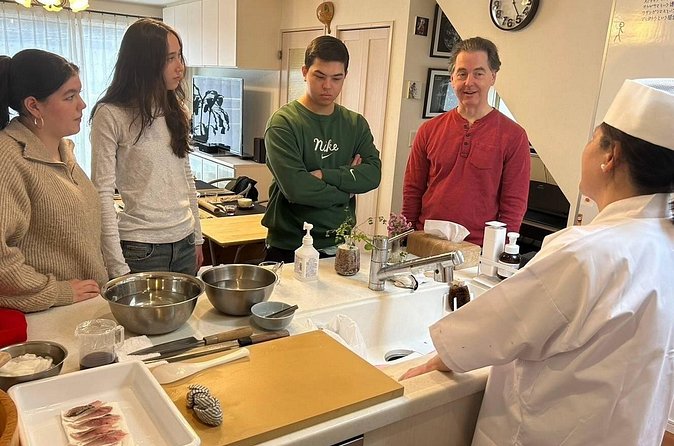
The lesson ends with a meal made by the participants. This is where the separate parts come together: rice handling, ingredients, technique, and presentation.
A self-prepared meal also gives you a fair way to judge your progress. You can see what worked, taste the effect of your choices, and appreciate how much skill goes into a professional sushi counter. Even imperfect pieces can be satisfying because you know the work behind them.
One detailed account praised the fresh sushi, the friendly atmosphere, and Akemi and Dan’s hospitality. That combination is important. Good ingredients alone do not make a good class, and a pleasant host cannot compensate for weak food. Here, the experience is built around both.
The meal is also more substantial than a demonstration where you watch someone else cook. You take part, eat the result, and finish at the same place where you began. If you want a souvenir you can pack in your suitcase, this is not it. If you want a skill and a food memory, it makes more sense.
Is $105.68 a fair price?
At about $105.68 per person, this is a premium cooking activity rather than a cheap way to fill an afternoon. The price includes approximately two and a half hours, a small-group lesson, professional instruction, fresh market-sourced fish, specialty Kyoto rice, cultural teaching, and the meal you prepare.
Compare it with a standard restaurant visit and the value becomes clearer. A restaurant gives you polished sushi with little explanation. This class gives you food plus instruction and access to a private home setting. If you already plan to spend close to this amount on a special sushi meal, the class may offer more lasting value.
The price will feel less attractive if you only want to eat sushi or if you dislike hands-on activities. You are paying for participation, so the experience works best when you are willing to listen, practice, and accept that your first pieces may not look perfect.
The five-star rating from 48 reviews and a 100 percent recommendation rate support the idea that the class delivers what it promises. Still, ratings cannot tell you if you personally enjoy cooking, home-based activities, or learning food etiquette. Use your own travel style as the final guide.
Who will enjoy this Tokyo cooking class?
I would recommend it to first-time sushi makers, food-focused visitors, couples, families with suitable ages, and anyone who wants a more personal Tokyo activity. The English instruction makes it easier to follow, and the small group helps keep the class approachable.
It also suits repeat visitors who have already seen major sights and want an activity tied to everyday Japanese food culture. You do not need to be a serious cook. Curiosity and a willingness to use your hands matter more.
It may not suit you if you want a large professional kitchen, a fast demonstration, or a guaranteed menu of specific sushi varieties. The home setting is central to the experience, so book it because that personal atmosphere appeals to you, not because you expect a formal restaurant school.
Service animals are allowed, and the activity is near public transportation. Confirmation arrives when you book. You can cancel for a full refund up to 24 hours before the start time, but changes or cancellations inside that window are not accepted.
My booking advice
I would book this class if you want to understand sushi from the inside out. The strongest reasons are Akemi’s restaurant background, her Edomae training, the carefully sourced rice and fish, and the chance to receive personal help in a group capped at six.
The class is especially good value for someone who would otherwise spend an afternoon eating sushi without learning anything about it. You leave with practical techniques, food vocabulary, etiquette tips, and a meal you helped create.
Book it at least several weeks ahead if your schedule is fixed. It averages 49 days of advance booking, which suggests that available places can disappear well before your Tokyo visit. Choose it with the right expectation: this is an intimate, educational home lesson, not a quick sushi tasting or a professional certification course.
FAQ
Where does the sushi class take place?
The class takes place at Tamanosato Sasazukaten, 1-chōme-56-18 Sasazuka, Shibuya, Tokyo 151-0073, Japan.
How long does the experience last?
The experience lasts approximately two hours and 30 minutes.
How many people can join the class?
The activity has a maximum of six participants. Lessons are described as limited to a maximum of five students, so check the confirmed booking details for the exact group size on your date.
Who teaches the sushi lesson?
Chef Akemi teaches the lesson, with Dan also part of the home-host setting. Akemi has seven years of restaurant industry experience in Japan and completed the Edomae Sushi Technique Acquisition Course at Tokyo Sushi School.
How many kinds of sushi will I learn to make?
You will learn how to make four types of sushi. The supplied details do not specify the names of those four styles.
Are ingredients included?
Yes. Akemi provides the ingredients, including blended rice ordered from Hachidaime Gihey in Kyoto and fish sourced from the Toyosu and Tsukiji markets.
Does the class include a meal?
Yes. The lesson ends with a meal made from the sushi prepared by the participants.
Can I cancel for a refund?
You can cancel up to 24 hours before the experience start time for a full refund. Cancellations or changes made less than 24 hours before the start time are not accepted for a refund.
More Workshops in Tokyo
- Tokyo Shinjuku Chopsticks Making Class
★ 5.0 · 1,763 reviews - Chopstick Making Workshop in Ginza
★ 4.8 · 1,366 reviews - Tokyo Sushi Making Class in Tsukiji with Professional Chef
★ 5.0 · 1,177 reviews - Matcha Making Class in Tokyo with Authentic Japanese Sweets Set
★ 5.0 · 744 reviews
More Cooking Classes in Tokyo
- Ramen & Gyoza Cooking Class in Tokyo with Local Supermarket Visit
★ 5.0 · 823 reviews - Tokyo: Easy Ramen Cooking Experience in Kabukicho, Shinjuku
★ 4.6 · 321 reviews - Ramen and Sushi Cooking Class with Sake Pairing Set in Tokyo
★ 5.0 · 291 reviews - Tokyo: Wagyu and 7 Japanese Dishes Cooking Class
★ 4.9 · 273 reviews
Just added around Tokyo
- Private Memorable Tokyo Tour with English Speaking Driver★ 5.0 · 30 reviews
- Private Tokyo Custom Full-Day Tour by Chartered Vehicle★ 5.0 · 16 reviews
- Private Sightseeing to Mt Fuji and Hakone with English Driver★ 5.0 · 51 reviews
- Tokyo Photography Masterclass – Private Photography Lesson★ 5.0 · 25 reviews
- Private Mt. Fuji Day Trip from Tokyo with English-Speaking Driver★ 5.0 · 33 reviews
- 4 Day Tour – Mount. Fuji, Tokyo, Hakone, Kamakura and Yokohama★ 5.0 · 19 reviews
- Private Unforgettable Mt Fuji Tour with English Speaking Driver★ 5.0 · 142 reviews
- Private Tokyo Food Tour – A Journey Through Time Through Food★ 5.0 · 36 reviews
Japanese Cooking Classes, compared.
Sushi Making Tokyo Roll and Authentic Japanese Sushi Class
Read our review →
Roll and Authentic Sushi Making Class in Asakusa
Read our review →
Ramen Cooking Class at Ramen Factory in Kyoto
Read our review →
Sushi Making Class in a Happi Coat near a Famous Spot
Read our review →
Sushi Making Osaka Roll and Authentic Japanese Sushi Class
Read our review →
Tokyo Sushi Making Class in Tsukiji with Professional Chef
Read our review →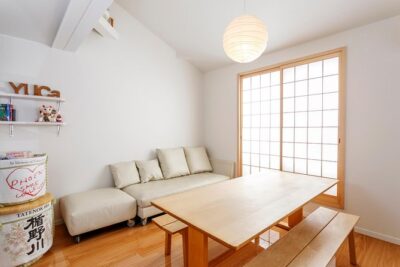
Ramen & Gyoza Cooking Class in Tokyo with Local Supermarket Visit
Read our review →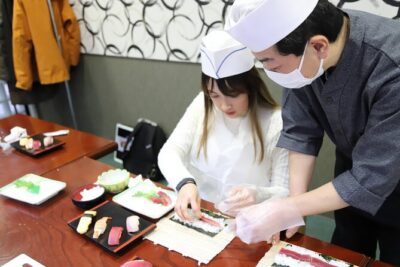
Tsukiji Fish Market Guided Tour and Sushi Making with Pro Chef
Read our review →Browse the lists this tour appears in