
REVIEW · JAPANESE COOKING CLASSES
Ramen Making from Scratch +Akihabara Tour –Cooking Class
Making ramen by hand is the heart of this three-hour experience. You do not simply watch a chef stir a pot. You turn flour into noodles, prepare broth and toppings, and finish with a bowl of Jiro-style ramen made by your own hands. The class also begins with a short look at Akihabara and a Japanese supermarket, which gives the cooking some useful context.
I like two things right away: the small group of up to six keeps the class personal, and the English-speaking format makes the cooking steps easier to follow. I also like that the supermarket stop shows how everyday Japanese ingredients fit into the meal, rather than treating ramen as a dish with no connection to daily life.
The main consideration is the food itself. Vegan and vegetarian options are not available, and the class is not suitable for children under five, wheelchair users, or people with back problems. The train fare to the kitchen studio is also paid separately with a Suica card or another IC card.
In This Review
- Key points to know before booking
- From Akihabara streets to a bowl of ramen
- What the supermarket stop adds
- Taking the train to Patia Kitchen Studios
- Making noodles from flour
- Preparing broth, toppings, and chashu
- Why the English instruction matters
- The finished Jiro-style ramen
- Is $120 a fair price?
- Timing, meeting point, and practical limits
- Who will get the most from this class?
- Should you book Ramen Making from Scratch and the Akihabara Tour?
- FAQ
- Where does the ramen experience begin?
- How long does the experience last?
- Is the class taught in English?
- How many people can join the group?
- Do I make the ramen noodles myself?
- Is transportation to the cooking studio included?
- Can the pork chashu be changed to chicken?
- Are vegan or vegetarian options available?
Key points to know before booking
- Fresh noodles from flour: You make the ramen noodles yourself instead of using packaged noodles.
- Akihabara before cooking: A short walking tour links the famous electronics and pop-culture district with the food experience.
- Supermarket lesson: You examine the ingredients used for that day’s ramen and learn how they are used in Japanese cooking.
- Jiro-style bowl: The class focuses on a special Jiro-style ramen, including broth, toppings, fresh noodles, and chashu.
- English and intimate group: An English-speaking instructor teaches a maximum of six participants.
- Plan for the finish: The class ends at Patia Kitchen Studios, not back at Akihabara Station.
From Akihabara streets to a bowl of ramen
This experience works because it combines three parts that are often separated: neighborhood sightseeing, food shopping, and cooking. You begin at 11 AM outside the Central Ticket Gate at JR Akihabara Station, then move through the area for about 20 minutes.
Akihabara is best known for electronics, anime, games, and Japanese pop culture. The walking portion is short, so do not expect a full city tour. Instead, think of it as a quick orientation before the cooking begins. Your guide points out popular places on the way to the supermarket, giving you a taste of the district before you leave it.
I like this opening because it keeps the class tied to Tokyo. You are not simply being taken to an anonymous kitchen. You start in one of the city’s most recognizable neighborhoods, then follow an ordinary local errand before preparing a familiar Japanese dish.
Still, the walking tour is only about 20 minutes. If you want a long Akihabara tour, this will feel brief. Its value is in the transition and the setting, not in covering every shop, arcade, or anime attraction.
More Japanese Cooking Classes in Tokyo
- Sushi Making Tokyo Roll and Authentic Japanese Sushi Class
★ 5.0 · 3,971 reviews - Tokyo: Roll and Authentic Sushi Making Class in Asakusa
★ 4.9 · 1,957 reviews - Tokyo: Sushi Making Class in a Happi Coat near a Famous Spot
★ 4.9 · 1,377 reviews
What the supermarket stop adds
The supermarket visit lasts about 20 minutes. That may sound like a small part of the schedule, but it is one of the more useful elements for anyone curious about Japanese food beyond restaurant menus.
Your guide explains the ingredients used in the ramen made that day. You get a chance to look at Japanese cooking products in their everyday setting and learn how they are used. The experience does not treat ingredients as mysterious props. It shows you that ramen begins with shopping choices, not only with a recipe card.
The exact ingredients can vary because the guide explains what is being used for that particular class. That is a benefit if you want a practical lesson, though it means you should not expect the exact same ingredient list at every session.
This stop also helps you understand the final bowl. When you later prepare the broth and toppings, you have already seen the building blocks. I find that this makes the cooking feel more connected to Japanese food culture today. You are learning about food in a supermarket where people shop, not only in a classroom designed for visitors.
The timing is tight, however. Twenty minutes is enough for an introduction and explanation, but not for a long shopping trip or a detailed lesson about every aisle. Keep your attention on the ramen ingredients and ask questions while you have the chance.
Taking the train to Patia Kitchen Studios
After the supermarket, you take a train to the cooking studio. The ride takes about 15 to 30 minutes, depending on the route and timing. Transportation from Suehirocho Station to the studio is not included, so you need to use your own Suica card or another IC card.
If you do not have an IC card, the guide helps you buy a ticket. That makes the transfer manageable, but you should still arrive ready to handle a short train journey. This is not a hotel pickup experience, and the group moves according to a set schedule.
The destination is a Patia Kitchen Studio, a modern cooking venue in central Tokyo. It is described as spacious and relaxing, and it is only a few minutes from the nearest station. The studio has also been used for Japanese television programs, which gives it a little local media flavor without changing the practical focus of the class.
The class ends at the studio. You do not return to the Akihabara meeting point, so plan your afternoon from the kitchen location rather than from the station where you began.
Making noodles from flour
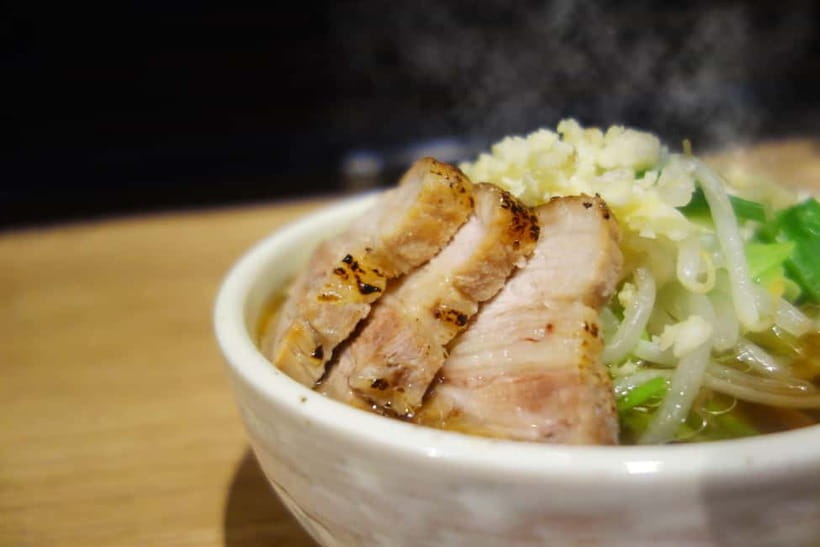
The main cooking session lasts about 90 minutes. You learn to make ramen from scratch, beginning with fresh noodles and continuing through the broth, toppings, and final assembly.
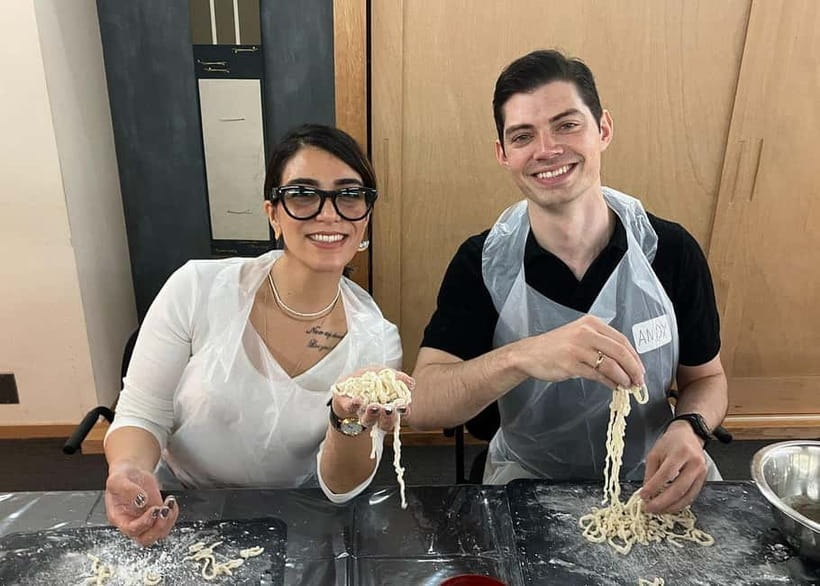
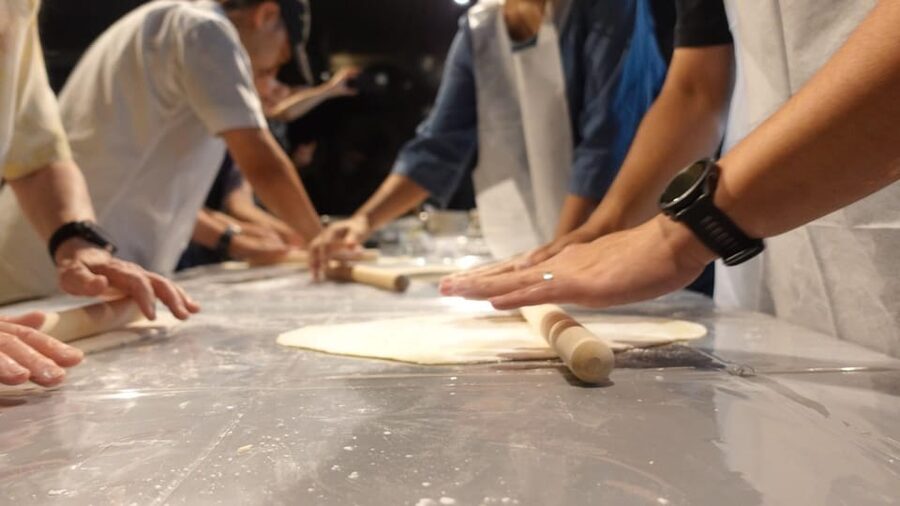
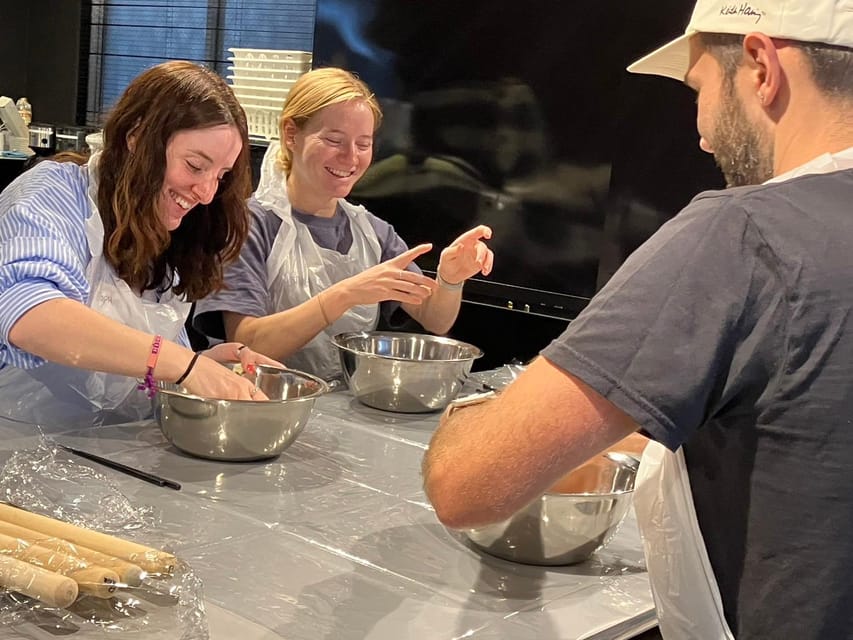
Making noodles is the part that gives this class its hands-on character. You work with flour and learn how the noodles are prepared instead of dropping a packet into boiling water. The steps are guided by an English-speaking instructor, so you can focus on texture, handling, and timing rather than guessing what to do next.
The class is not just a demonstration followed by a meal. You prepare the components yourself, with instruction along the way. That makes the finished bowl more satisfying because you can connect it to the work that came before it.
The details of the noodle process are not specified in advance, so you should not expect a particular technique or equipment list. The clear promise is that you make fresh ramen noodles from flour under instruction. If noodle making is your main reason for booking, this is the strongest part of the experience.
Same city, a completely different kind of day:
- Mt Fuji and Hakone 1-Day Bus Tour Return by Bullet Train
★ 5.0 · 26,383 reviews - 1-Day Tokyo Bus Tour
★ 5.0 · 14,250 reviews - Tokyo: TOKYO SKYTREE® Admission ticket
★ 4.5 · 11,192 reviews - Tokyo: teamLab Planets TOKYO Digital Art Museum Entry Ticket
★ 4.6 · 9,779 reviews
Preparing broth, toppings, and chashu
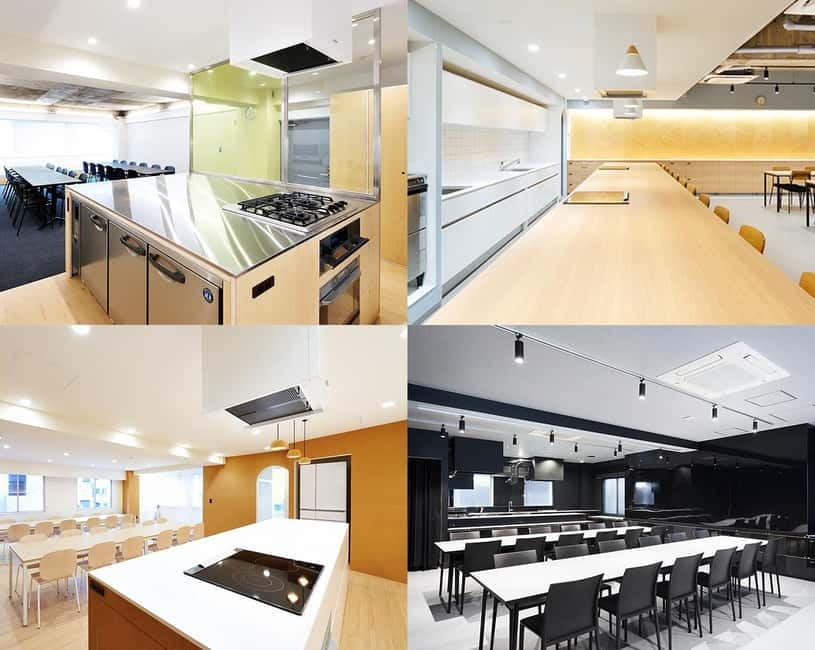
The class also covers the broth and toppings. Ramen is more than noodles, and the cooking session gives you a chance to see how the separate parts come together in one bowl.
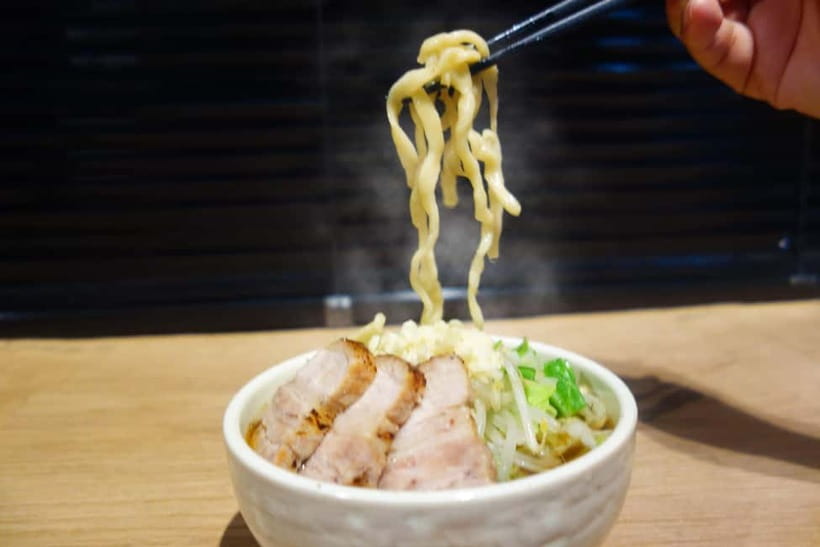
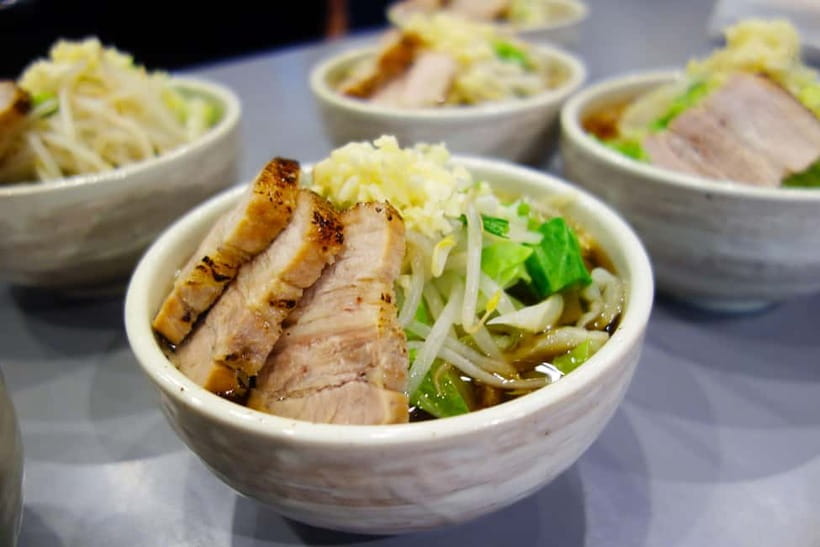
The focus is Jiro-style ramen, a specific style rather than a general survey of Japanese noodle soups. You learn to prepare the broth and toppings, then combine them with the fresh noodles. The finished dish is designed to be substantial and flavorful, though the supplied information does not specify the exact broth base or full topping list for each date.
Chashu is included as part of the meal. If you give more than 48 hours of notice, the pork chashu can be changed to chicken. That is useful for people who eat chicken but not pork, though it does not make the class suitable for vegetarians or vegans.
I would contact the provider before booking if the meat change matters to you. The information specifically allows a pork-to-chicken change with advance notice, but it does not promise other substitutions or allergy accommodations.
Why the English instruction matters
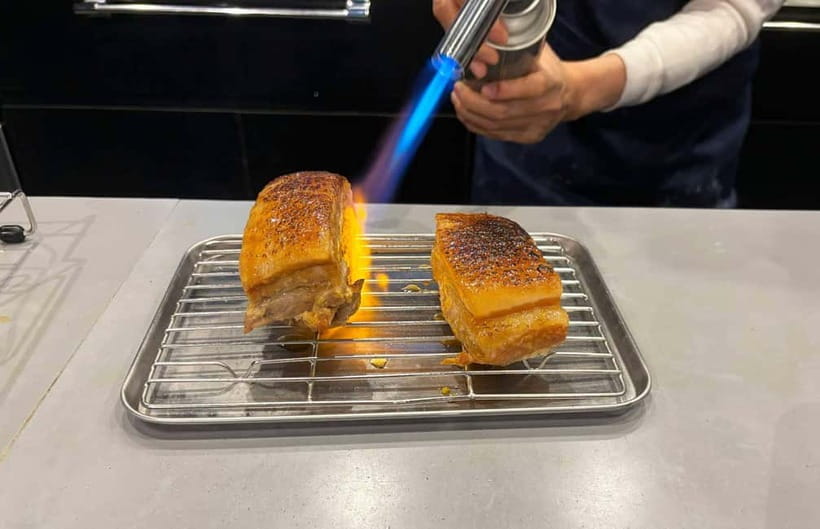
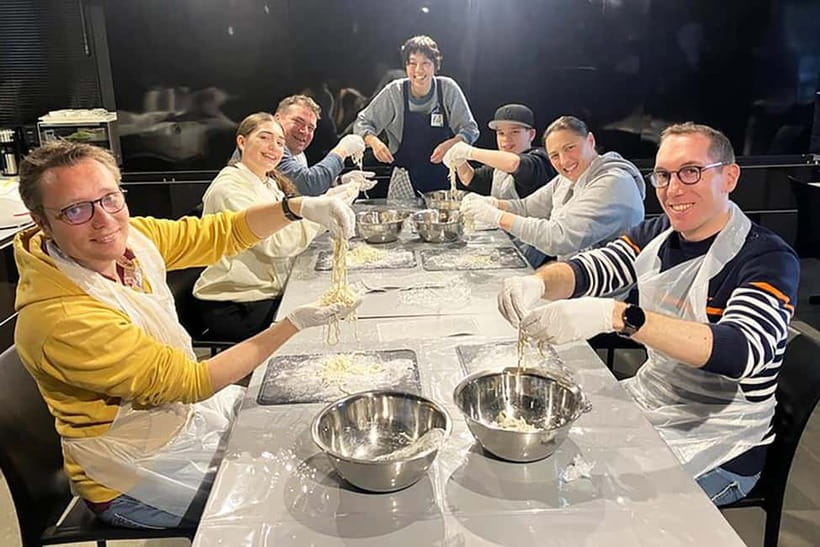
The instructor teaches in English, and that is important in a class where timing and technique affect the result. You can ask questions as you work, rather than relying on a translated recipe or copying movements without knowing why they matter.
The guide and chef are described as friendly and helpful, and the strongest praise focuses on the teaching as much as the food. That matches the design of the experience: the goal is not only to eat ramen, but to understand the ingredients and make the dish yourself.
The small group size helps here. With no more than six participants, the instructor has a better chance to see what you are doing and answer questions. It also makes the activity more manageable for people who are new to Japanese cooking.
A small group does not guarantee individual attention every second. You still need to listen, keep up with the schedule, and work alongside the other participants. But six people is a comfortable limit for a practical cooking class.
The finished Jiro-style ramen
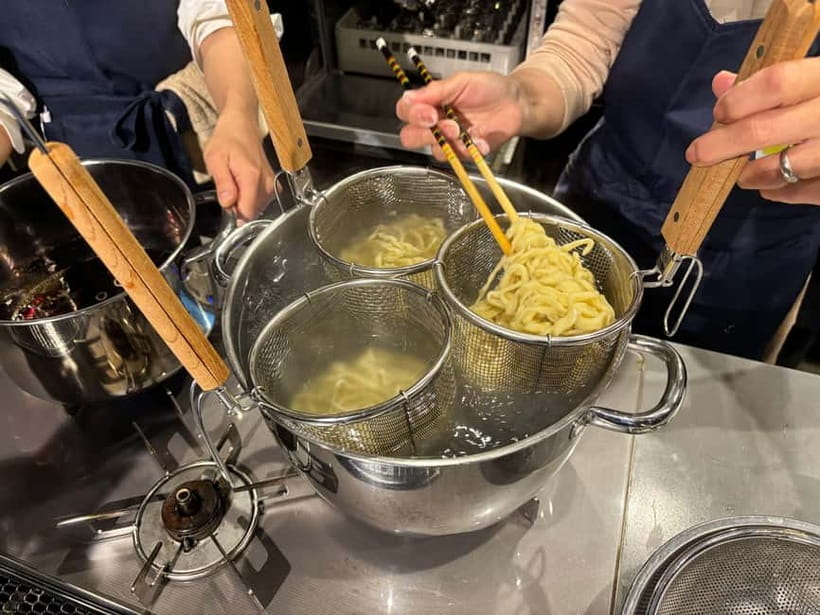
At the end, you eat the bowl you prepared. The experience is built around that moment: fresh noodles, broth, toppings, and chashu brought together as a complete meal.
The style is Jiro-style ramen, so this is a good choice if you want to explore a distinct ramen tradition rather than make a generic noodle soup. The dish has been praised as the best ramen eaten during one participant’s Japan trip, but tastes are personal and the recipe may not suit everyone.
The meal is included in the price, along with food and beverages. You are not paying only for a lesson and then buying lunch somewhere else. You receive the ingredients, instruction, cooking activity, and the bowl you make during the class.
Photos taken during the experience can be downloaded later. That is a useful extra, since cooking classes can be awkward to photograph while your hands are busy. It also gives you a record of the Akihabara walk and the cooking session without needing to stop constantly for pictures.
Is $120 a fair price?
At $120 per person, this is not the cheapest way to eat ramen in Tokyo. You can find a bowl of ramen for far less. The price makes more sense when you count the full package: an Akihabara walk, a supermarket visit, train guidance, a 90-minute cooking class, food and drinks, a small group, English instruction, and downloadable photos.
The value depends on what you want from the afternoon. If your only goal is lunch, the price is high. If you want a practical cooking lesson and a closer look at how Japanese ingredients are used, the cost is easier to justify.
You are also paying for a class with a clear focus. It is not a broad Japanese cooking course covering sushi, tempura, and several side dishes. It concentrates on one ramen style and teaches you to make the noodles, broth, and toppings that complete it.
The included supermarket stop adds more value than a standard restaurant meal because it gives you information you can use later. You may leave with a better sense of what to look for in Japanese shops, even though the class itself is the main event.
Timing, meeting point, and practical limits
The experience lasts about three hours and starts at 11 AM. You need to meet outside the Central Ticket Gate at JR Akihabara Station, not inside the station or at the cooking studio.
Arrive early. If you are more than 10 minutes late, the group may leave without you. In that case, you are expected to go directly to the kitchen studio, and no refund is provided for the delay. This is especially important in Akihabara, where station exits and internal walkways can be confusing.
Wear something comfortable for cooking and walking. Baby strollers are not allowed, and smoking is not allowed during the experience. People with back problems should note that the activity includes walking, train travel, and cooking work.
The class requires at least two people per reservation. That means solo visitors cannot book a place alone under the stated conditions. Groups of up to six can take part, making this a good fit for couples, friends, and small families with children old enough for the activity.
Children under five are not suitable for the class. Wheelchair users are also listed as unsuitable, so anyone with mobility needs should contact the provider before considering it.
Who will get the most from this class?
I would recommend this experience to people who want to do more than eat Japanese food. It suits you if you enjoy practical activities, want English instruction, and like seeing how a dish connects to shopping and daily food habits.
It is especially useful for:
- Couples looking for a shared activity in Tokyo
- Small groups who want a private-feeling class
- First-time visitors curious about Akihabara beyond electronics and anime
- Ramen fans who want to make fresh noodles
- Families with children over five who can manage walking and cooking
- Visitors who want a meal plus a skill they can remember afterward
It is a poor match for vegans and vegetarians because no plant-based option is available. It also may not suit you if you dislike meat, cannot manage a train transfer, or want a class that returns you to Akihabara Station.
The pork-to-chicken change helps, but only if requested more than 48 hours ahead. Do not assume that the kitchen can handle every dietary need.
Should you book Ramen Making from Scratch and the Akihabara Tour?
Book it if you want an active food experience with a local neighborhood start, a supermarket lesson, and a finished meal you prepare yourself. The fresh noodle work, English instruction, and group limit of six make the $120 price reasonable for someone who values participation over a quick restaurant stop.
Think twice if you only want cheap ramen, need a vegetarian meal, or prefer a relaxed activity with no walking and no train ride. The class finishes away from the station where you meet, and punctuality matters.
For the right person, this is a focused and memorable way to connect Akihabara with Japanese cooking. You leave with a bowl of Jiro-style ramen, a better understanding of its ingredients, and photos of the experience.
FAQ
Where does the ramen experience begin?
It begins at 11 AM outside the Central Ticket Gate at JR Akihabara Station.
How long does the experience last?
The full experience lasts about three hours.
Is the class taught in English?
Yes. The guide and cooking instructor provide the experience in English.
How many people can join the group?
The group is limited to six participants.
Do I make the ramen noodles myself?
Yes. You make fresh noodles from flour and also prepare the broth and toppings.
Is transportation to the cooking studio included?
The train ride is part of the route, but the transportation fare from Suehirocho Station to the studio is not included. Use a Suica card or another IC card, or ask the guide for help buying a ticket.
Can the pork chashu be changed to chicken?
Yes. You can request a chicken replacement if you give notice more than 48 hours in advance.
Are vegan or vegetarian options available?
No. Vegan and vegetarian options are not available.
More Workshops in Tokyo
- Tokyo Shinjuku Chopsticks Making Class
★ 5.0 · 1,763 reviews - Chopstick Making Workshop in Ginza
★ 4.8 · 1,366 reviews - Tokyo Sushi Making Class in Tsukiji with Professional Chef
★ 5.0 · 1,177 reviews - Matcha Making Class in Tokyo with Authentic Japanese Sweets Set
★ 5.0 · 744 reviews
More Cooking Classes in Tokyo
- Ramen & Gyoza Cooking Class in Tokyo with Local Supermarket Visit
★ 5.0 · 823 reviews - Tokyo: Easy Ramen Cooking Experience in Kabukicho, Shinjuku
★ 4.6 · 321 reviews - Ramen and Sushi Cooking Class with Sake Pairing Set in Tokyo
★ 5.0 · 291 reviews - Tokyo: Wagyu and 7 Japanese Dishes Cooking Class
★ 4.9 · 273 reviews
Just added around Tokyo
- Tokyo: Customizable Private Guided Walking Tour★ 4.5 · 129 reviews
- Private Harajuku Omotesando Architecture Tour★ 4.9 · 18 reviews
- Tokyo: Guided Helicopter Ride★ 4.9 · 24 reviews
- Tokyo: Guided Walking Tour of Tsukiji Market with Lunch★ 4.4 · 24 reviews
- Tokyo: Private Personalized Local Food Tour★ 4.5 · 101 reviews
- Tokyo: Guided Walking Tour of Tsukiji Market with Breakfast★ 4.4 · 134 reviews
- Tokyo: Gotokuji Cat Temple, Shinjuku Cat Cafe & 3D Cat Tour★ 4.9 · 38 reviews
- Tokyo GINZA: KONPARU Japanese Cabaret Show with Drink★ 4.8 · 38 reviews
Japanese Cooking Classes, compared.
Sushi Making Tokyo Roll and Authentic Japanese Sushi Class
Read our review →
Roll and Authentic Sushi Making Class in Asakusa
Read our review →
Ramen Cooking Class at Ramen Factory in Kyoto
Read our review →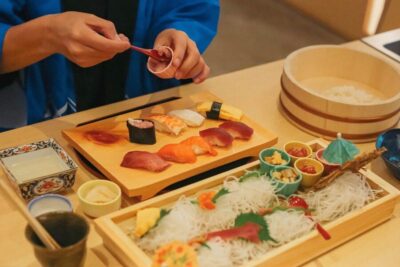
Sushi Making Class in a Happi Coat near a Famous Spot
Read our review →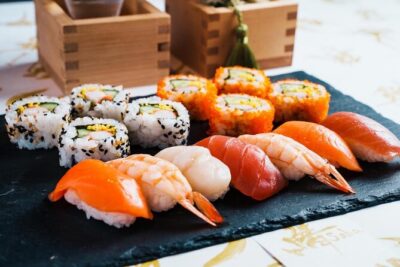
Sushi Making Osaka Roll and Authentic Japanese Sushi Class
Read our review →
Tokyo Sushi Making Class in Tsukiji with Professional Chef
Read our review →
Ramen & Gyoza Cooking Class in Tokyo with Local Supermarket Visit
Read our review →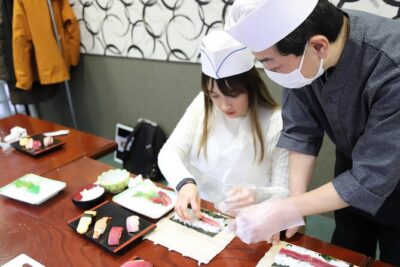
Tsukiji Fish Market Guided Tour and Sushi Making with Pro Chef
Read our review →Browse the lists this tour appears in