REVIEW · TEA CEREMONY EXPERIENCES
Private Tea Ceremony and Sake Tasting in Kyoto Samurai House
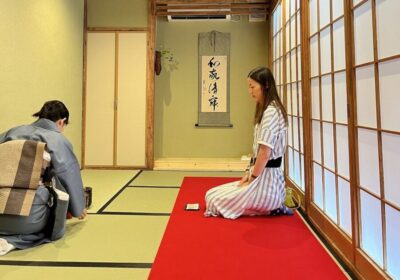
The most unusual part of this Kyoto experience is the setting: you enter a 300-year-old samurai residence and have the traditional tea room to yourselves. A tea master explains the quiet rules of matcha, while the family hosts you in a house that has remained with the same family for generations.
I especially like the private format, which gives you room to ask questions and take photos without a crowd watching. I also like the choice after the ceremony: whisk your own Uji matcha, taste five sakes, or sample two Japanese whiskies. The main drawback is the short 50-minute schedule. Add kimono dressing, and you need another 30 minutes plus an extra fee.
In This Review
- Key points at a glance
- Entering a 300-year-old samurai house
- The tea ceremony in a traditional Kyoto tea room
- Choosing matcha, sake, or Japanese whisky
- Kimono, haori, and katana photographs
- Why the private format matters
- Is $99 a fair price?
- Who should book this Kyoto experience?
- Booking details and useful preparation
- Should you book it?
- FAQ
- Where does the tea ceremony and tasting take place?
- How long does the experience last?
- Is this a private activity?
- What kind of tea is served?
- Can I make matcha myself?
- Is alcohol included?
- Can children participate?
- Can I wear a kimono during the ceremony?
Key points at a glance
- A samurai-era home near Kyoto Station: The house is about an eight-minute walk from the station, making this easy to fit into a busy Kyoto day.
- A real tea-room ceremony: A tea master demonstrates the formal way to prepare and drink high-grade organic matcha from Uji.
- Three follow-up choices: Pick a bamboo-whisk matcha lesson, five sake samples, or two Japanese whisky samples. Alcohol is only for people over 20.
- Dress-up photos included in the visit: You can pose in an authentic silk wedding kimono, for women, or with samurai clothing and a katana.
- A genuinely private appointment: Only your own party takes part, with a minimum booking of two people.
- One very old toilet: Use the restroom before arriving if possible. This is a historic home, not a modern visitor center.
Entering a 300-year-old samurai house
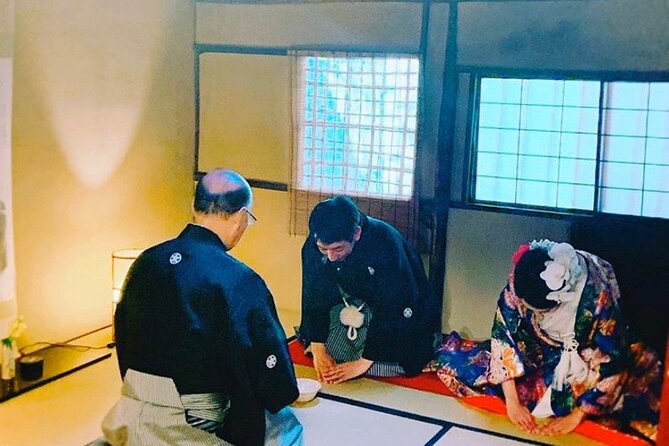
The short walk from Kyoto Station leads you away from the station crowds and toward a family home with a long connection to samurai life. The house has been in the same family for around 300 years, and that fact changes the tone of the visit. You are not simply stepping into a themed room built for tourists. You are being welcomed into an old residence that still carries its original domestic character.
That also means the building has limits. It is not designed like a large museum, and facilities are basic. There is only one old toilet, so use the restroom before you arrive if you can. The experience is not recommended for people weighing more than 120 kilograms, and the traditional setting may be less comfortable for anyone who finds old Japanese homes difficult to navigate.
The private booking is important. Your group has the property to yourselves during the appointment, so you can ask about the house, tea, samurai customs, or Japanese drinks without worrying about holding up a larger crowd. The hosts are described as warm, welcoming, and fluent in English, which helps turn the ceremony into a conversation rather than a silent demonstration.
More Kimono & Culture Experiences in Kyoto
- Kyoto Geisha Walking Tour: Gion District & Hidden Gems
★ 4.7 · 3,273 reviews - Kyoto: Gion Magical Night Walking Tour with Geisha Trivia
★ 4.9 · 2,393 reviews - Kyoto: Gion Geisha District Walking Tour – Stories of Geisha
★ 4.7 · 2,187 reviews
The tea ceremony in a traditional Kyoto tea room
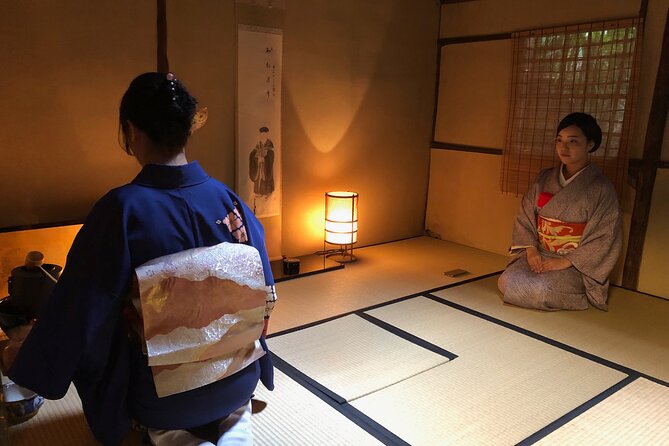
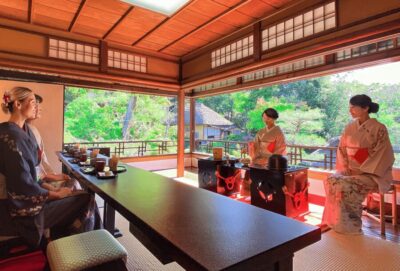
The heart of the visit is the formal matcha ceremony. You sit in a traditional tea room while the tea master explains the basic ideas behind the way of tea, including the careful movements used to prepare, present, and receive the drink.
This is not a fast cup of green tea. The purpose is to slow down and notice the small actions: the handling of the bowl, the bamboo whisk, the position of the tea, and the respectful rhythm between host and guest. Even if you know little about Japanese tea, the explanation gives you enough context to understand why the ritual matters.
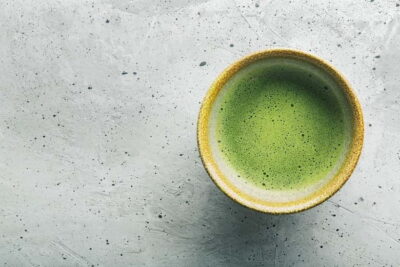
The matcha is high-grade organic tea sourced locally from Uji, the area near Kyoto that is famous for its green tea. Uji matcha has a strong place in Japanese tea culture, and using it here gives the ceremony a direct connection to the region rather than treating matcha as a generic souvenir drink.
The ceremony is likely to appeal most to people who enjoy quiet cultural experiences. If you prefer constant activity, loud entertainment, or a long list of sights, the deliberate pace may feel slow. That is part of the point, though. The ceremony offers a pause from Kyoto’s crowded temples and packed streets.
Several accounts of the experience describe the tea master as having many years of training, with one account noting 14 years of study and another mentioning 40 years of experience. The exact background of the person leading your appointment may vary, but you can expect a serious presentation of the tea ritual rather than a casual matcha workshop.
Choosing matcha, sake, or Japanese whisky
After the ceremony, you choose one of three options. This choice affects the mood of the second half, so think about what suits your group.
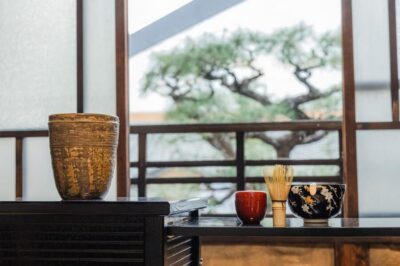
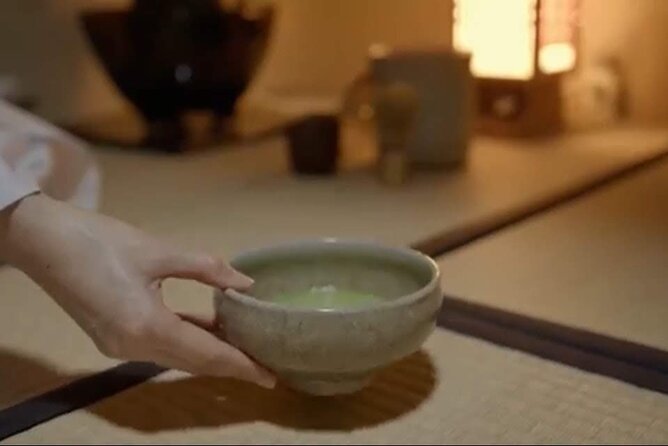
The first option is a hands-on matcha lesson. You use a bamboo whisk, called a chasen, to prepare your own powdered green tea. This is a good pick for families, non-drinkers, and anyone who wants to continue the quiet focus of the ceremony. Children under 20 receive the matcha whisking lesson instead of alcohol.
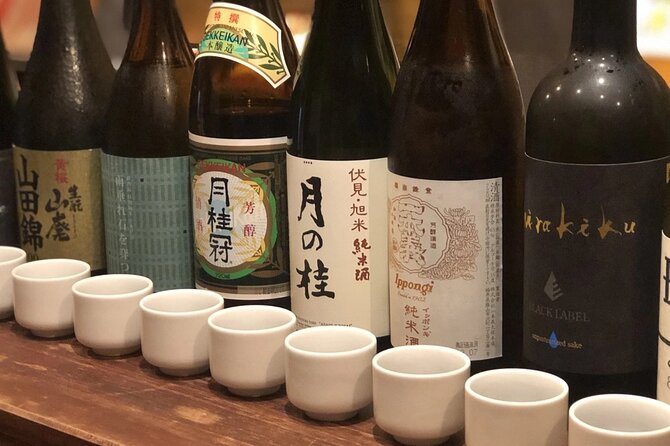
The second option is a sake tasting with five shots. The host explains different types and flavors, with locally produced sake forming the main part of the tasting. This gives you a simple introduction to the drink without requiring a full evening at a sake bar.
The third option is Japanese whisky tasting, with two shots. Some accounts also describe the chance to try whisky alongside the sake, including rare bottles, but the stated experience includes two whisky samples as the designated choice. Do not assume that every appointment will include extra pours beyond the advertised tasting.
Alcohol is available only to people over 20. If anyone in your group is under that age, the matcha whisking lesson is the substitute. This makes the activity workable for families, though the tasting portion naturally appeals more to adults.
Kimono, haori, and katana photographs
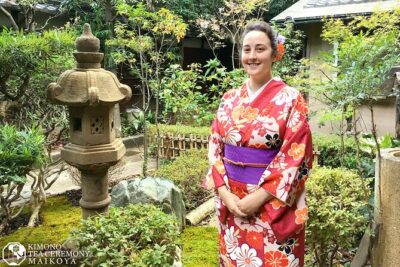
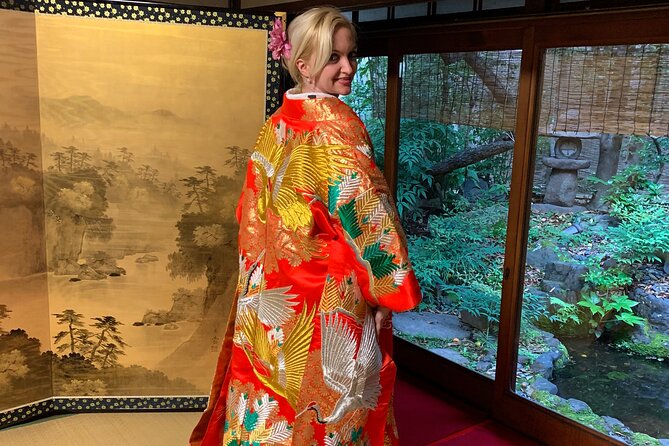
The photo session is one of the most popular extras. Women can wear an authentic silk wedding kimono, while men can pose in samurai clothing or a haori-style outfit with a katana. You are welcome to take photographs during the visit, and the hosts help with poses.
This is a short dress-up moment, not a full-day kimono rental. That distinction is useful. You get the visual memory of wearing formal Japanese clothing without spending hours walking through Kyoto in restrictive layers or worrying about rain, stairs, and transport.
The clothing can also make the visit more appealing to families. Children have taken part in the photos, and the hosts have been especially accommodating with younger children. One family even received a sword-shaped umbrella for two boys, though you should treat that as a kind gesture, not a guaranteed part of the booking.
Women who want to wear a kimono during the tea ceremony need to plan ahead. Doing so adds about 30 minutes and costs extra. It is limited to one group at the venue, and other time slots require an exclusive plan booked through the provider’s own website. If the tea ceremony itself is your priority, the standard short visit may be enough. If the clothing is the main attraction, check the special arrangement before paying.
You can also purchase matcha bowls and authentic silk kimono at the property. That may be tempting if you want a lasting reminder of the visit, but remember that these purchases are separate from the $99 activity price.
More Sake & Bar Hopping Tours in Kyoto
- Kyoto Night Foodie Tour in Gion (9+ dishes + 6 Sake tastings)
★ 5.0 · 1,762 reviews - 3-Hour Kyoto Insider Sake Brewery Tour with Tastings & Pairings
★ 5.0 · 917 reviews - Arashiyama Bamboo, Temple, Monkeys, or Secret Sake Brewery
★ 4.8 · 886 reviews - Kyoto: Izakaya Bars Guided Walking Tour
★ 4.9 · 815 reviews
Why the private format matters
Kyoto has many tea ceremonies, but privacy changes the experience. In a shared room, you may hesitate to ask basic questions or take a photo. Here, your group can relax, speak with the hosts, and spend more time on the parts that interest you.
The arrangement works particularly well for couples. It also suits families and small groups who want one cultural activity that works across ages. A child can learn to whisk matcha while adults choose sake or whisky, and everyone can join the photos.
The house setting adds a human element. The host is not only explaining tea as an abstract tradition. The family connection to the property gives you a chance to hear about the home and its samurai ancestry in a personal setting.
That personal quality comes with a small tradeoff. A private home is less predictable than a purpose-built attraction. The old toilet, traditional room, and limited space are part of the charm, but anyone expecting polished hotel-style facilities should adjust expectations.
Is $99 a fair price?
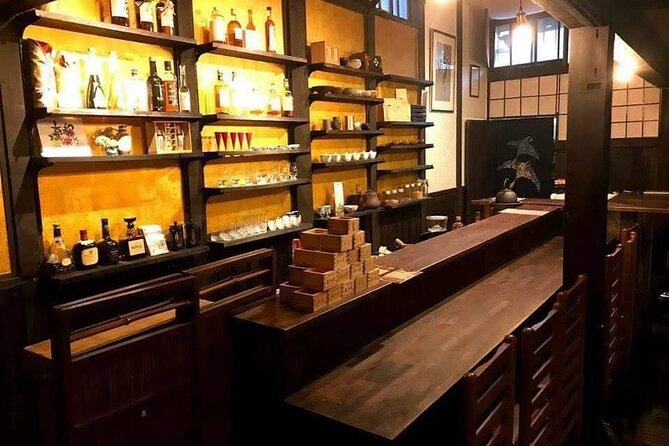
At $99, this is not the cheapest way to drink matcha in Kyoto. You can find simple tea experiences for less, especially if you only want a bowl of green tea and a sweet.
The price makes more sense when you count the full package: a private appointment, a historic house, a formal ceremony, high-grade Uji matcha, a choice of matcha or alcohol tasting, cultural explanations, and dress-up photographs. For a couple or small group, the private access is the key value. You are paying for time and attention as much as for the tea.
The sake option adds value for adults who want a gentle introduction to several styles in one sitting. The matcha option is better value for families because it keeps the whole group involved. The kimono and katana photographs also give you something beyond the drink itself, though the full kimono ceremony requires additional time and cost.
Group discounts are available, but the booking requires at least two people. Since the experience lasts about 50 minutes, it is easy to place near a visit to Kyoto Station, Higashi Honganji, or other central sights. Allow extra time for finding the house and arriving calmly, especially if you are carrying luggage or moving with children.
Who should book this Kyoto experience?
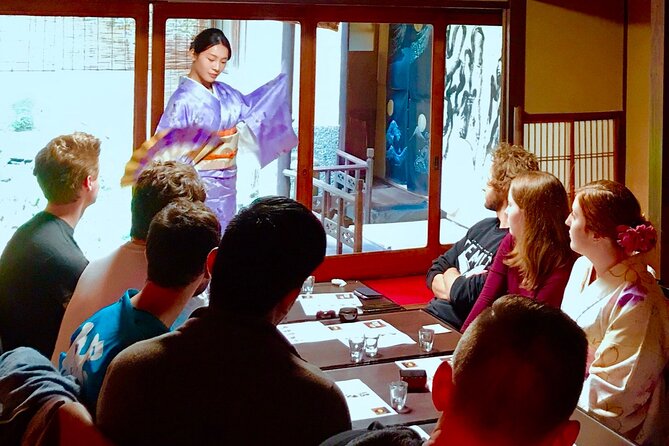
I would choose this for a first visit to Kyoto when you want cultural context but do not want to spend half a day in a museum. It is also a good pick for a couple looking for a quiet shared activity, especially if the sake tasting and photographs appeal to both of you.
Families can make it work well. The private room keeps children from feeling watched, and under-20 participants receive the matcha lesson instead of alcohol. The hosts have experience making the visit comfortable for children, though the ceremony itself still asks for a little patience and respectful behavior.
This is less suitable if you want to wear a kimono while walking around Kyoto, since the standard activity offers a brief photo session rather than a full-day rental. It is also not ideal for anyone who dislikes sitting in a traditional room or needs modern restroom facilities.
Bring a curious attitude. The most rewarding part is not simply drinking matcha or sake. It is understanding why the actions are careful, why the room is arranged as it is, and how an old family home still connects those customs to daily life.
Booking details and useful preparation
The meeting point is Kyoto Samurai House at 384 Mongakucho, Shimogyo Ward, Kyoto 600-8222. It is about an eight-minute walk from Kyoto Station, and the activity finishes back at the same location.
Confirmation is provided when you book, and mobile tickets are available. The experience is non-refundable and cannot be changed for any reason, so check your date and group size carefully before paying. If the minimum number of required participants is not reached and the operator cancels, you are offered another date or experience, or a full refund.
Wear clothing that allows you to sit comfortably in a traditional tea room. The supplied information does not specify a dress code, but you should avoid arriving rushed or burdened with large bags. Use the restroom before you go, since the old house has only one toilet.
The experience requires a minimum of two people and is limited to your own party. Alcohol is restricted to people aged 20 and over. If you want kimono dressing during the ceremony, arrange that separately because it adds time and cost.
Should you book it?
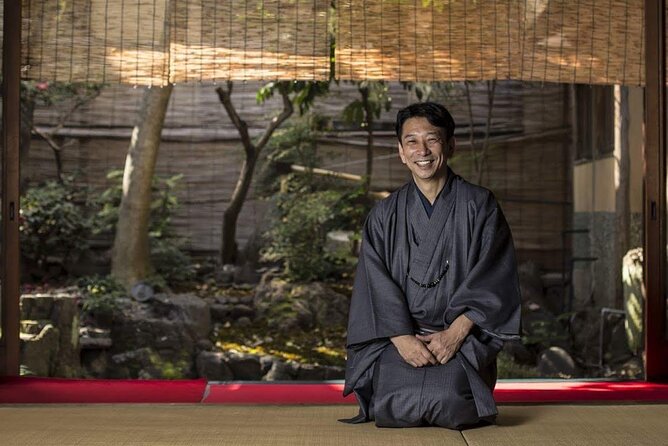
Book this if you want a personal cultural visit rather than a quick photo stop. The combination of an old samurai home, formal Uji matcha, private teaching, and a choice of sake, whisky, or hands-on whisking gives the short appointment real substance.
Skip it if your priority is a low-cost tea drink, modern facilities, or a full-day kimono rental. For everyone else, especially couples, families, and small groups near Kyoto Station, this is a strong use of 50 minutes. Choose matcha for a quieter and family-friendly visit, sake or whisky for an adult tasting, and add the longer kimono option only if the clothing is central to your plans.
FAQ
Where does the tea ceremony and tasting take place?
It takes place at Kyoto Samurai House, 384 Mongakucho, Shimogyo Ward, Kyoto 600-8222, Japan. The house is about an eight-minute walk from Kyoto Station.
How long does the experience last?
The main activity lasts approximately 50 minutes. Wearing a kimono during the tea ceremony adds about 30 minutes and costs extra.
Is this a private activity?
Yes. Only your own group participates, and a minimum of two people is required to make a reservation.
What kind of tea is served?
The ceremony uses high-grade organic matcha sourced locally from Uji in Kyoto.
Can I make matcha myself?
Yes. After the tea ceremony, you can choose a matcha-making lesson using a bamboo whisk.
Is alcohol included?
You can choose either a sake tasting of five shots or a Japanese whisky tasting of two shots instead of the matcha lesson. Alcohol is available only to people aged 20 and over.
Can children participate?
Yes. People under 20 receive the matcha whisking lesson rather than the alcohol tasting. Children can also take part in the kimono or samurai photo session.
Can I wear a kimono during the ceremony?
Yes, but it requires an extra 30 minutes and an additional cost. This option is limited to one group at the venue and requires a special arrangement.
More Drinking Tours in Kyoto
- Kyoto: Insider Sake Brewery Tour with Sake and Food Pairing
★ 5.0 · 704 reviews - Kyoto Sake Brewery & Tasting Walking Tour
★ 5.0 · 623 reviews - Kyoto Bar Hopping Night Tour
★ 5.0 · 613 reviews - Kyoto Local Bar Crawl in Kawaramachi Area
★ 5.0 · 378 reviews
More Tea Ceremony Experiences in Kyoto
- Kyoto: Tea Ceremony in a Traditional Tea House in Kiyomizu
★ 4.9 · 3,519 reviews - Kyoto: Tea Ceremony Ju-An at Jotokuji Temple
★ 4.9 · 3,207 reviews - Kyoto: 45-Minute Tea Ceremony Lesson Experience
★ 4.3 · 2,378 reviews - Kyoto: Table-Style Tea Ceremony at a Kyo-Machiya
★ 4.9 · 1,211 reviews
Just added around Kyoto
- Private Guided Traditional Buddhist Cooking in Japan★ 5.0 · 16 reviews
- Kyoto: Gion Geisha District & Sake-in-Hand Walking Tour★ 5.0 · 37 reviews
- Your Private Vacation Photography Session In Kyoto★ 5.0 · 110 reviews
- Kyoto: Zen Meditation at a Private Temple with a Monk★ 5.0 · 25 reviews
- Traditional Japanese Washi Papermaking- Kyoto morning★ 5.0 · 77 reviews
- Kyoto Wagashi(Japanese sweets) Cooking Class near Fushimiinari★ 5.0 · 60 reviews
- Private Pewter Sake Cup Experience with a Kyoto Artisan★ 5.0 · 31 reviews
- Kyoto Private 6 hour Tour: English Speaking Driver Only, No Guide★ 5.0 · 88 reviews
Tea Ceremony Experiences, compared.
Tea Ceremony in a Traditional Tea House in Kiyomizu
Read our review →

World Heritage Kyoto & Nara Uji Authentic Matcha Experience
Read our review →