
REVIEW · HISTORICAL TOURS
Private Guided Historical Sightseeing Tour in Kyoto
Kyoto packs centuries of Japanese culture into a surprisingly compact center, and this four-hour private tour gives you a fast look at the city’s essential sights. You move from the red torii gates of Fushimi Inari to temple terraces, food stalls, Zen rooms, and old geisha districts without having to build the route yourself.
I like the one-group-only format, which lets the guide adjust the pace for older visitors, families, or anyone who wants more time for questions. I also like the range of the route: guides such as Julian, Johannes, Robert, Ricardo, Andrea, and Ken have been praised for explaining Shinto, Buddhism, Kyoto’s culture, and local food in clear English.
The big concern is the operator’s poor communication record. Several bookings have been affected by a guide who did not arrive, an unreachable phone number, or confusion over the start time. I would book only after confirming the meeting point, pickup, guide, and admission costs directly.
In This Review
- Key points at a glance
- A fast route through Kyoto’s old heart
- Fushimi Inari and the red torii gates
- Kiyomizu-dera and its famous wooden terrace
- Kennin-ji, a quieter Zen pause
- Yasaka Shrine at the edge of Gion
- Nishiki Market for a taste of Kyoto
- One hour in Pontocho Alley
- Gion, geisha culture, and old Kyoto streets
- What the private format changes
- The guide quality can make or break the day
- Who will get the most from this tour
- Should you book the Kyoto private tour?
- FAQ
- How long is the private Kyoto sightseeing tour?
- Which places are visited?
- Is the tour private?
- Is hotel pickup available?
- Are admission tickets included?
- Can most people take part?
- What happens if I need to cancel?
Key points at a glance
- Seven major Kyoto stops in four hours: The route covers Fushimi Inari, Kiyomizu-dera, Kennin-ji, Yasaka Shrine, Nishiki Market, Pontocho, and Gion.
- Private pacing: Your group has the guide to itself, and past tours have been adjusted for older participants and personal interests.
- Strong individual guides: Julian, Johannes, Robert, Ricardo, Andrea, Oscar, Diego, and Ken have received praise for clear explanations and friendly service.
- A useful first look at old Kyoto: You see religious sites, food culture, traditional streets, and geisha districts in one compact outing.
- Transportation may be part of the plan: Guides have used trains, walking, and taxis, depending on the route and timing.
- Confirm every detail: The operator has had serious no-show and scheduling problems, so communication is the deciding factor.
A fast route through Kyoto’s old heart
This tour is best understood as an introduction rather than a slow study of Kyoto. You visit seven places, with most stops scheduled for 30 minutes and one hour reserved for Pontocho. That is enough to see the main features, hear useful background, and decide where you might want to return later.
The route also gives you a good sense of Kyoto’s contrasts. You begin at a Shinto shrine tied to mountain worship, continue to one of the city’s best-known Buddhist temples, then move through a Zen temple, a major festival shrine, a food market, and two historic entertainment districts.
At $85 per person, the value depends on your group size and guide quality. For a private group, the price can be fair if you want help with orientation, local transport, and cultural context. It is less attractive if you prefer to wander slowly, since seven stops in four hours leave little time for unhurried exploration.
A few more Kyoto trips to weigh up
- Kyoto Gion: 2-Hour Geisha Culture & History Walking Tour
★ 5.0 · 1,186 reviews - Kyoto Gion Historical Walking Tour
★ 5.0 · 188 reviews - Historical Kyoto E-Bike Tour
★ 5.0 · 181 reviews
Fushimi Inari and the red torii gates
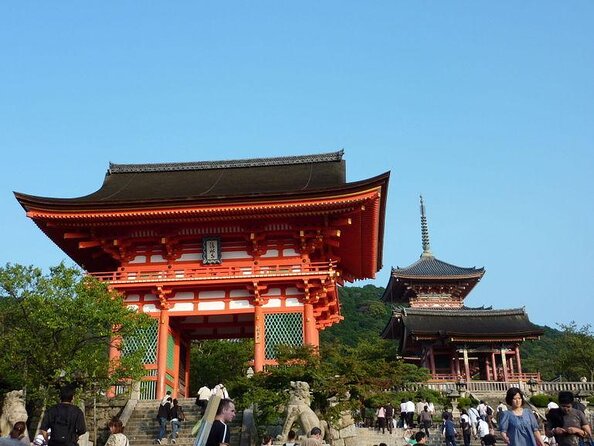
Your first stop is Fushimi Inari-taisha, one of Kyoto’s most recognizable sights. The shrine sits at the base of Mount Inari and is known for its long passageways of red-orange torii gates.
The scheduled visit is only 30 minutes, so you will see the lower shrine area and an opening section of the gates rather than walk far up the mountain. That short visit makes sense if your goal is a first look, but it will feel brief if you hoped to complete a longer hillside walk.
A guide can explain the shrine’s Shinto setting, the role of Inari worship, and why the gates appear in such numbers. This is one of the places where a short explanation adds real value. Without context, you mainly see a striking corridor of gates. With context, the site becomes easier to understand as a working religious place, not simply a photo stop.
If you want quiet photographs, timing matters, but no specific departure time is guaranteed in the tour details. Ask the operator when you confirm the booking.
Kiyomizu-dera and its famous wooden terrace
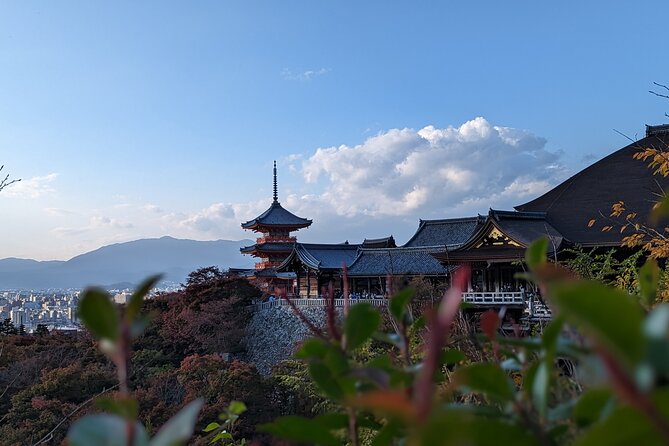
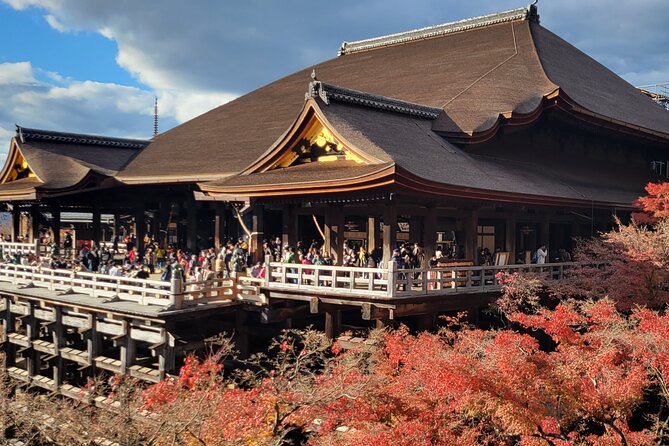
Kiyomizu-dera gives you a very different view of Kyoto. The temple is known for its large wooden terrace and hillside position, with broad views across the city from the temple grounds.
Again, the planned time is 30 minutes. That is enough to enter, see the main terrace area, and hear the basic story of this UNESCO World Heritage site. It is not enough for a leisurely examination of every hall, approach street, or nearby lane.
I would pay attention to the guide’s explanation here. Kiyomizu-dera is not just a scenic platform. Its buildings, rituals, and hillside setting show how religious sites shaped daily life and travel in old Kyoto. Guides praised for connecting architecture with Japanese culture, including Robert, Ricardo, and Johannes, are likely to make this stop more rewarding.
The approach can be busy, and the route may involve walking and slopes. The tour is described as suitable for most people, but the information does not promise step-free access or a specific mobility plan. Tell the operator about mobility needs before booking.
Kennin-ji, a quieter Zen pause
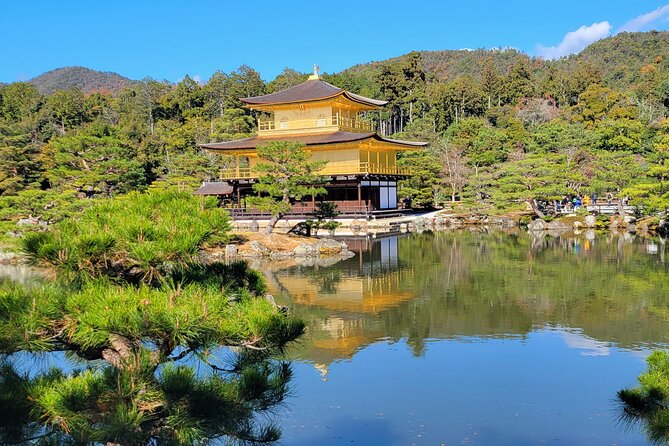
Kennin-ji offers a change of mood after the larger sights. This Zen Buddhist temple sits in central Kyoto and is presented as a calm place for viewing temple spaces and learning about Zen practice.
The 30-minute slot is short, but it can work well as a reset between major stops. Instead of another huge shrine complex, you get a more contained temple visit and a chance to look at the design of the rooms and gardens.
I like this inclusion because it broadens the tour beyond the standard pair of Fushimi Inari and Kiyomizu-dera. If your guide is strong at explaining Japanese religious traditions, you can begin to see differences between Shinto shrines, Buddhist temples, and Zen spaces.
Do not expect a meditation class or a long period of silence. This is a sightseeing visit with an explanation, not a retreat.
Same city, a completely different kind of day:
- PERFECT KYOTO 1-Day Bus Tour
★ 5.0 · 13,518 reviews - Kyoto: Fushimi Inari, Kinkakuji, Bamboo Grove 1 Day Bus Tour
★ 4.8 · 4,316 reviews - Kyoto: Tea Ceremony in a Traditional Tea House in Kiyomizu
★ 4.9 · 3,519 reviews - Kyoto Geisha Walking Tour: Gion District & Hidden Gems
★ 4.7 · 3,273 reviews
Yasaka Shrine at the edge of Gion
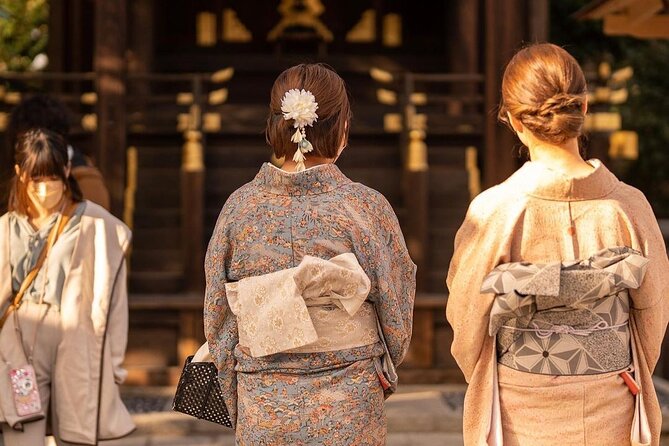
Yasaka Shrine brings you into one of Kyoto’s best-known religious and festival settings. It sits near Gion and helps connect the temple portion of the tour with the old entertainment quarters that follow.
The shrine can feel more open and public than Kennin-ji. You may see worshippers, ceremonial details, and the steady movement of people passing through. The tour information highlights ancient traditions and cultural celebrations, so ask your guide about the shrine’s role in Kyoto’s festival life.
This is another 30-minute stop. That is enough for an orientation and a close look at the main grounds, but not for a full exploration of every side path. The location also makes it a useful transition point before the walk toward Gion and Pontocho.
Nishiki Market for a taste of Kyoto
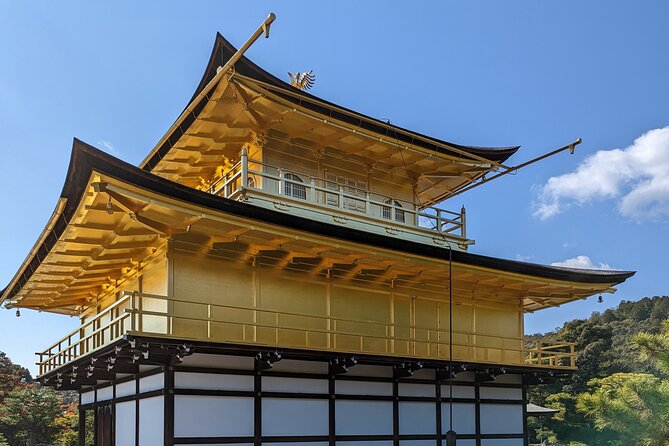
Nishiki Market is the food stop, and it adds something the temples cannot. The narrow market street is lined with stalls and shops selling Kyoto foods, snacks, and cooking ingredients.
The scheduled time is 30 minutes, so think of this as a guided introduction rather than a full meal. You can look at unfamiliar foods, ask what is local, and try a few items if time allows. One guide, Johannes, was specifically praised for helping explain Shinto while also arranging an opportunity to try street food.
Your guide’s input matters here. A market is easy to visit on your own, but it can be hard to know what you are looking at or which foods are associated with Kyoto. Andrea has also been praised for giving restaurant suggestions, which can be useful if you want to plan dinner after the tour.
The main drawback is pace. Nishiki rewards wandering, browsing, and stopping when something catches your eye. A half-hour visit may leave you wanting more. I would treat the stop as a preview and return later if food is a major reason for your Kyoto visit.
One hour in Pontocho Alley
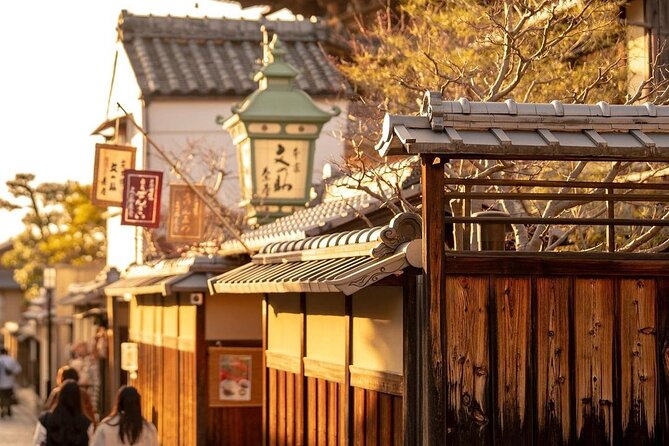
Pontocho receives the longest scheduled visit, one hour, and that is sensible. This narrow district beside the Kamogawa River is known for traditional restaurants, evening atmosphere, and its connection with Kyoto’s performing arts and geisha culture.
Your guide can help you read the district as more than a photogenic lane. Pontocho has a compact, old-fashioned feel, with restaurants tucked behind traditional facades. Some businesses are private or reservation-only, so a walking tour is a better fit than expecting to enter every doorway.
The hour gives you time to walk at a reasonable pace and ask questions. It also creates room for restaurant advice. Andrea has been praised for recommending places to eat, while other guides have helped visitors understand the customs surrounding geisha districts.
Please keep your camera respectful in Gion and Pontocho. The tour information presents these areas as living cultural neighborhoods, not theme parks. You are there to observe the streets and architecture, not to stop people or photograph anyone without permission.
Gion, geisha culture, and old Kyoto streets
Gion is the final stop, with 30 minutes set aside for its traditional streets and geisha culture. This is a natural ending because it brings the tour back to the social and cultural life of old Kyoto after the temples and market.
You might see people working in traditional entertainment, but no sighting is promised. One guide did help a group spot an authentic geisha, though you should treat that as luck, not part of the itinerary.
A good guide will explain the difference between the public image of geisha culture and the working world behind the teahouse doors. The streets are attractive, but the real value comes from understanding why the district developed and how it still functions.
Thirty minutes is enough for a walk and orientation. If you want to explore Gion’s lanes, shops, shrines, and restaurants in detail, plan a separate visit.
What the private format changes
A private tour can make this packed route work better. You are not waiting for a large group to gather, and the guide can adjust the pace. Ricardo, for example, has been praised for adapting the outing for four older people, while other guides have changed the route based on personal interests.
The group format also helps with questions. You can ask why a shrine uses certain symbols, how to behave at a temple, or where to eat afterward without worrying about holding up a busload of strangers.
Pickup is offered, and one guide, Diego, went to a hotel to collect the group. That can remove the stress of finding an unfamiliar meeting point. Still, pickup should not be assumed until it is confirmed. A separate booking had a one-hour difference between the time shown in the app and the time given by the guide, and another group had to take a taxi after receiving late information.
The tour may use trains, walking, and taxis. That flexibility is useful in Kyoto, where the seven stops are spread across different districts. It also means the exact flow may depend on traffic, station access, walking speed, and the guide’s judgment.
The guide quality can make or break the day
The strongest part of this experience is the individual guide. Julian has been praised for passion and historical explanations. Johannes has received especially strong marks for kindness, cultural knowledge, and clear English. Robert, Ricardo, Andrea, Oscar, Diego, and Ken have also been praised for friendly service, local advice, and the ability to explain places in a way that made the short tour meaningful.
That range matters because the operator appears to assign different guides. You are not booking a single named historian with a fixed style. You are booking a private route that can be excellent when communication works and the assigned guide is prepared.
The main weakness is not the sightseeing plan. It is the company’s administration. Some bookings had no guide at the meeting point, unanswered messages, or a phone number that did not work. Another group was told that details would arrive the day before, but the guide seemed to receive information only on the morning of the tour.
I would send a written message before your start date and keep the response. Confirm:
- The exact start time
- The pickup address or meeting point
- The guide’s name and phone or WhatsApp contact
- Which admissions are included
- The plan if a flight delay affects your arrival
This is especially important because the supplied tour details say admission tickets are included, while one experience involved a guide who did not know admission had already been paid, and another account says admissions were not included. Treat that as an unresolved point and get a clear answer in writing.
Who will get the most from this tour
I would consider this tour if you have only a few hours in Kyoto and want a broad first look. It suits people who prefer a local guide, need help linking distant sights, or want cultural explanations rather than simply collecting photographs.
It is also a good match for a private family group or older visitors who need a flexible pace. Several guides have adjusted the outing to suit the group, and the private format gives you room to ask for breaks or spend less time at a stop that does not interest you.
I would be more cautious if you have one full day and enjoy slow travel. Seven stops in four hours means short visits. You may prefer to choose two or three sights and explore them properly.
I would also avoid making this your only Kyoto plan until the operator confirms the booking. The experience requires good weather and a minimum number of people, although a cancellation for either reason should bring an alternative date, another experience, or a full refund.
The cancellation terms allow a full refund when you cancel at least 24 hours before the start time. Changes or cancellations inside that window are not accepted for a refund, except when the operator cancels under the stated conditions.
Should you book the Kyoto private tour?
Book it if you value efficient sightseeing and personal guidance more than a relaxed pace. The route covers a lot, and the best guides turn a quick circuit into a useful lesson in Kyoto’s religious traditions, food culture, and old neighborhoods.
I would not book it blindly. The no-show reports and timing mix-ups are too serious to ignore, especially when you have limited time in Kyoto. Confirm every detail, save the operator’s reply, and have a backup plan for seeing at least one major sight on your own.
With a reliable confirmation and a strong guide such as Johannes, Julian, Robert, Ricardo, Andrea, Diego, or Ken, $85 can be reasonable for a private introduction. Without clear communication, the same price buys uncertainty. Make the booking only after the practical details are settled.
FAQ
How long is the private Kyoto sightseeing tour?
The tour lasts approximately four hours.
Which places are visited?
The route includes Fushimi Inari-taisha Shrine, Kiyomizu-dera Temple, Kennin-ji Temple, Yasaka Shrine, Nishiki Market, Pontocho District, and Gion.
Is the tour private?
Yes. Only your group participates in the activity.
Is hotel pickup available?
Pickup is offered, and at least one guide collected a group from its hotel. Confirm your exact pickup location with the operator before the tour.
Are admission tickets included?
The tour details state that admission tickets are included, but other information says admissions were not included in at least one experience. Confirm the admission arrangement directly before booking.
Can most people take part?
The experience states that most people can participate and that it is near public transportation. Specific accessibility details are not provided.
What happens if I need to cancel?
You can receive a full refund if you cancel at least 24 hours before the local start time. Cancellations or changes made less than 24 hours before the start are not accepted for a refund.
Just added around Kyoto
- Private Guided Traditional Buddhist Cooking in Japan★ 5.0 · 16 reviews
- Kyoto: Gion Geisha District & Sake-in-Hand Walking Tour★ 5.0 · 37 reviews
- Your Private Vacation Photography Session In Kyoto★ 5.0 · 110 reviews
- Kyoto: Zen Meditation at a Private Temple with a Monk★ 5.0 · 25 reviews
- Traditional Japanese Washi Papermaking- Kyoto morning★ 5.0 · 77 reviews
- Kyoto Wagashi(Japanese sweets) Cooking Class near Fushimiinari★ 5.0 · 60 reviews
- Private Pewter Sake Cup Experience with a Kyoto Artisan★ 5.0 · 31 reviews
- Kyoto Private 6 hour Tour: English Speaking Driver Only, No Guide★ 5.0 · 88 reviews
Historical Tours, compared.
World Heritage Shirakawa-go and Experience Tours from Kanazawa
Read our review →
Imperial Palace and Shogun Historical Walking Tour
Read our review →
World Heritage Kyoto & Nara Uji Authentic Matcha Experience
Read our review →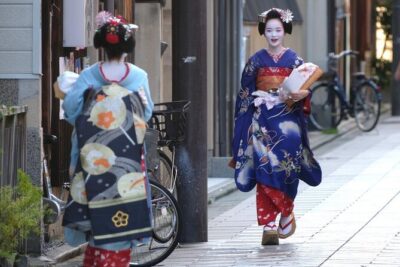
Kyoto Gion: 2-Hour Geisha Culture & History Walking Tour
Read our review →
World Heritage Shirakawa-go Morning Guided Tour
Read our review →
Hiroshima Historical Walking Tour – Why A-Bomb was Dropped
Read our review →
Hiroshima Peace (Heiwa) Walking Tour at World Heritage Sites
Read our review →Browse the lists this tour appears in