
REVIEW · WORKSHOPS
Kyoto: Traditional Mini Umbrella Making Workshop
The best part of this Kyoto workshop is that you do not simply buy a Japanese umbrella, you help make one. At the city’s oldest umbrella shop, you work with genuine materials and traditional methods to create a miniature Hime Wagasa, a graceful craft associated with happiness and good fortune. I especially like the hands-on work and the chance to leave with something made for your own home, not another mass-produced souvenir.
I also like the setting, just two minutes north of Shijo Kawaramachi, and the patient instruction in Japanese and English. The main consideration is time and concentration: 90 minutes is enough for a satisfying project, but making a small umbrella still calls for careful attention to detail. The workshop is not suitable for children under six.
In This Review
- Key points at a glance
- Why making a mini Wagasa is worth your time
- Entering the umbrella shop near Shijo Kawaramachi
- The first steps: materials, design, and instruction
- Building the miniature Japanese umbrella
- The finishing stage and optional craftsman work
- What the $70 price really buys you
- Who will enjoy the 90-minute format
- Practical planning for your Kyoto day
- How this compares with buying a Wagasa
- The strongest part: patient guidance
- Should you book the Kyoto Mini Umbrella Workshop?
- FAQ
- How long does the traditional umbrella workshop last?
- How much does the experience cost?
- Where is the meeting point?
- What do I take home?
- Is the workshop available in English?
- Can children join the workshop?
Key points at a glance
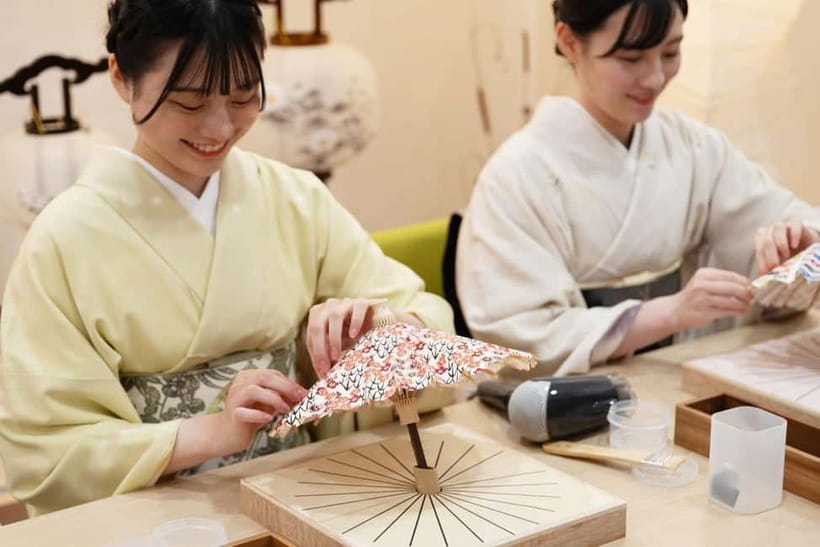
- Make a real Hime Wagasa: Use genuine Japanese materials and follow traditional umbrella-making methods.
- Learn at Kyoto’s oldest umbrella shop: The workshop connects your craft project with a long-running local trade.
- Finish with a useful display set: Your umbrella comes with a bamboo stand, decorative box, and carry bag.
- Meet near Shijo Kawaramachi: The central location fits neatly into a shopping or sightseeing day.
- Expect calm, careful instruction: Guides speak Japanese and English, and the teaching style is patient and practical.
- Add artisan finishing work if desired: A craftsman can complete extra finishing touches for an additional fee.
Why making a mini Wagasa is worth your time
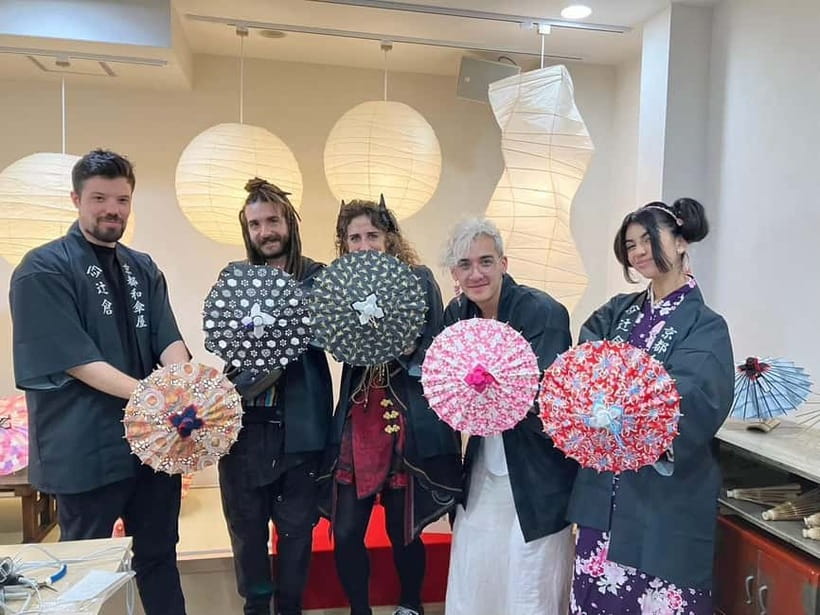
Kyoto offers plenty of chances to admire Japanese craft behind glass. This workshop gives you a different role. You handle the components, make choices, and assemble a small umbrella under the eye of an instructor. That change from spectator to maker is the real value.
A Wagasa is more than a rain cover. Its form reflects precision, balance, and decoration. Even in miniature, the umbrella asks you to slow down and notice how separate pieces become one finished object. The activity has a quiet rhythm, with less rushing than you might find on a packed sightseeing tour.
You should also keep expectations sensible. This is a guided craft class, not a full apprenticeship in umbrella making. In 90 minutes, you create a mini version rather than a full-size umbrella. The finished piece is decorative, though the process gives you a clear sense of the care required in the traditional craft.
A few more Kyoto trips to weigh up
- Kyoto: 45-Minute Tea Ceremony Lesson Experience
★ 4.3 · 2,378 reviews - Ramen Cooking Class at Ramen Factory in Kyoto
★ 5.0 · 1,937 reviews - Kyoto : Chopsticks Making Workshop in Gion with Engraving Option
★ 5.0 · 958 reviews
Entering the umbrella shop near Shijo Kawaramachi
The workshop sits in central Kyoto, only about two minutes north of the famous Shijo Kawaramachi intersection. That makes it easy to pair with time in one of Kyoto’s main shopping areas. You can schedule the class between visits to nearby sights, though you should allow enough time to arrive without hurrying.
Inside, the mood is designed for making. Traditional umbrellas decorate the space, and traditional lighting helps create a calm, distinctly Japanese setting. This matters because the surroundings prepare you to work slowly and carefully rather than treat the activity as a quick souvenir stop.
The location is a practical strength. You do not need to spend much of your day reaching an out-of-the-way craft studio. At the same time, the central setting means this is a good choice for an afternoon activity after exploring Kyoto on foot.
The first steps: materials, design, and instruction
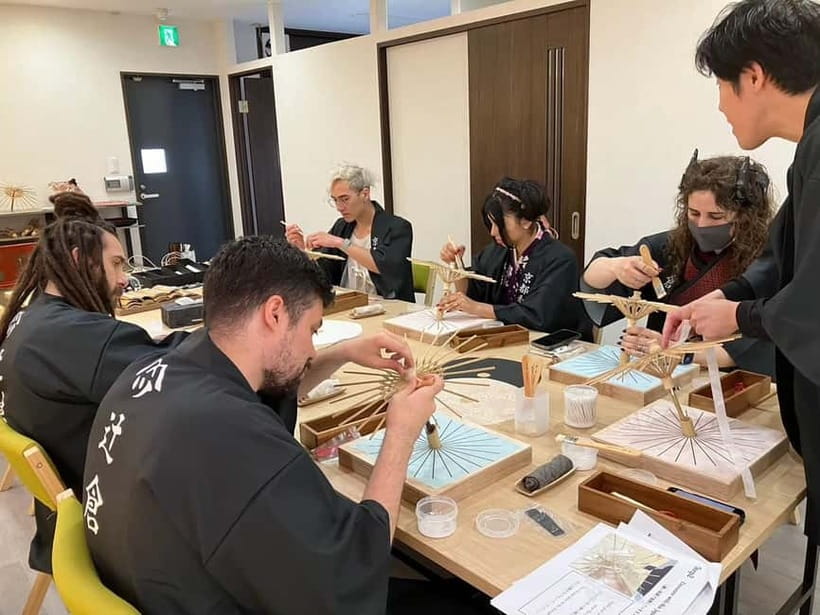
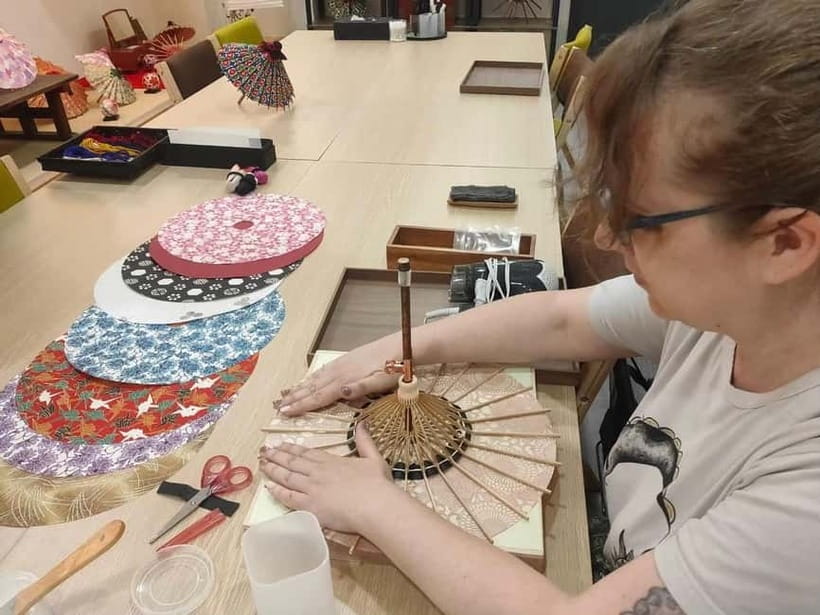
Your instructor introduces the materials and the basic methods used to make a Hime Wagasa. The supplied information does not give a fixed choice of colors or patterns, so the exact design options may vary. You can expect to make a personal decorative umbrella, with the instructor showing you how to handle each part.
This is where the quality of the teaching matters most. The craft requires attention to detail, especially when you are shaping and joining small components. Instructors are described as patient, friendly, and helpful, and Ai Takenaka is specifically praised for being warm and supportive. Another instructor is noted for showing the best ways to work with the materials.
The language setup is useful for international visitors. Instruction is available in Japanese and English, so you can ask questions and follow the process without relying only on demonstration. You should still expect some quiet concentration. The class is not built around a nonstop talk, but around watching, trying, and correcting your technique.
Building the miniature Japanese umbrella
The main part of the class is the hands-on assembly. You work through the components step by step, turning the raw materials into a small Wagasa. The exact order of every task is not specified, so I would not promise a particular sequence, but the workshop clearly centers on shaping and assembling your own umbrella.
The scale makes the project approachable, but it does not make it mindless. Small details matter. You may need to focus closely as you position parts or follow the instructor’s method. That can be rewarding if you like crafts, but it may frustrate anyone looking for a purely passive cultural activity.
I like this balance. You are not expected to arrive with craft experience, yet you are given enough responsibility to feel that your finished piece belongs to you. The instructors guide the work without taking away the sense of achievement.
The activity also offers a useful window into Japanese workmanship. You see how much patience sits behind an object that can look simple at first glance. The finished umbrella is delicate and decorative, but the lesson is about process: careful hands, good materials, and repeated attention to small details.
Same city, a completely different kind of day:
- PERFECT KYOTO 1-Day Bus Tour
★ 5.0 · 13,518 reviews - Kyoto: Fushimi Inari, Kinkakuji, Bamboo Grove 1 Day Bus Tour
★ 4.8 · 4,316 reviews - Kyoto: Tea Ceremony in a Traditional Tea House in Kiyomizu
★ 4.9 · 3,519 reviews - Kyoto Geisha Walking Tour: Gion District & Hidden Gems
★ 4.7 · 3,273 reviews
The finishing stage and optional craftsman work
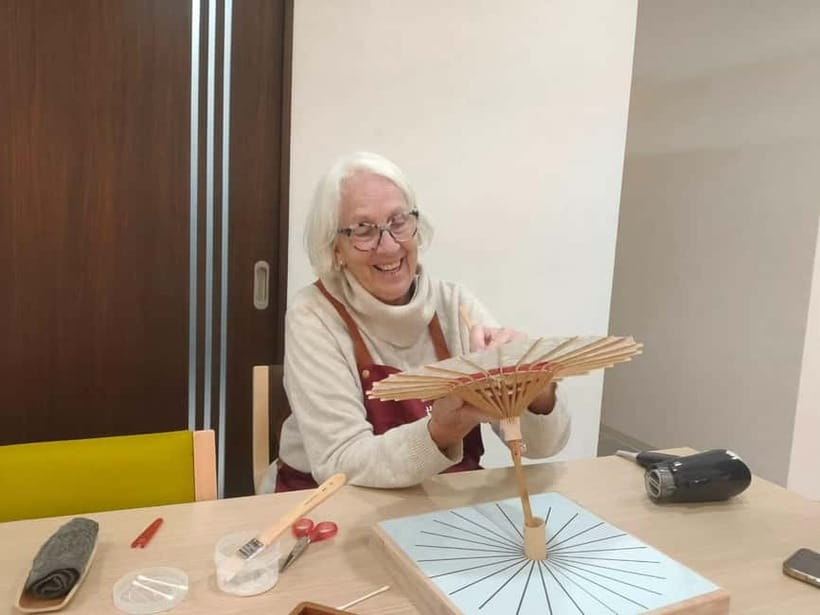
At the end, you have your own mini Hime Wagasa. The umbrella is presented as a symbol of happiness, which gives it a nice role as a present for someone at home. You can also keep it as a reminder of Kyoto, especially if you prefer souvenirs with a story attached.
A bamboo umbrella stand is included, so you can display the piece rather than pack it away in a drawer. You also receive a decorative box and carry bag. These extras make a real difference when you are carrying a fragile craft through the rest of your Japan trip or taking it home by air.
You can choose to pay an additional fee for a craftsman to add finishing touches to your umbrella. This option is worth considering if you want the most polished result or are unsure about your own final detailing. If the personal effort is the main reason you booked, you may prefer to keep the piece as you made it.
The activity does not specify the additional fee, so check the current cost before deciding. That is one area where you should avoid assuming the base price covers every possible artisan service.
What the $70 price really buys you
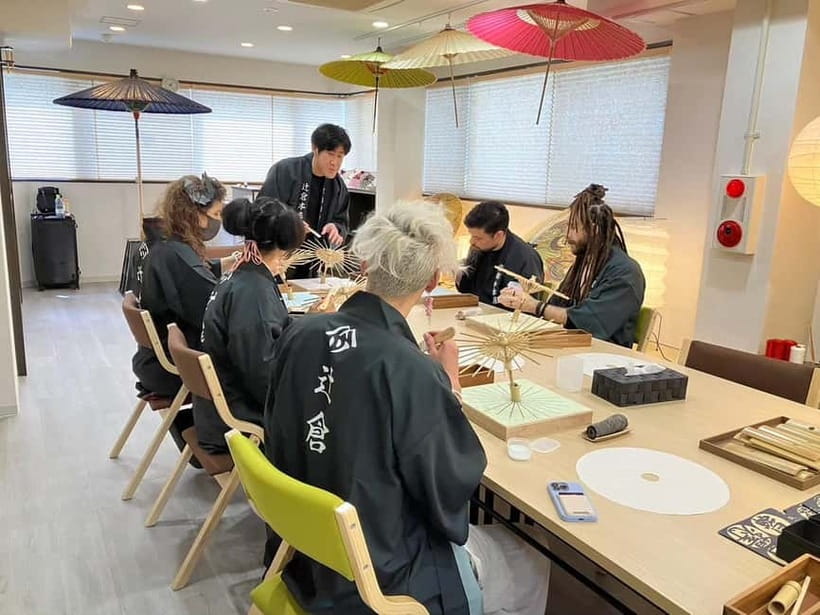
At $70 per person, this is not the cheapest short activity in Kyoto. It is also more than the price of an ordinary decorative souvenir. The value comes from the combination of instruction, genuine materials, a workshop setting, and the finished display package.
You are paying for 90 minutes of focused craft time at a specialist umbrella shop, not just for the object itself. The bamboo stand, decorative box, and carry bag add practical value, and the central location helps you fit the class into a busy day without a long transfer.
I would consider the price fair for someone who values making and cultural context. If you only want a small umbrella for decoration, buying one may be simpler. If you want to understand how the object comes together and take part in the work, the class offers more than a retail purchase.
The value also rises if you are choosing a meaningful gift. A handmade Wagasa carries the memory of the class, and the stand lets the recipient display it. The workshop describes the umbrella as a symbol of happiness, so it works especially well as a present tied to a birthday, anniversary, new home, or simply a thoughtful thank-you.
Who will enjoy the 90-minute format
This workshop suits adults, couples, friends, and families with older children. It is a good choice for anyone who enjoys careful handwork, Japanese design, or souvenirs that connect to a specific place. The short length makes it easier to fit into a Kyoto itinerary than a full-day craft course.
The activity can also work well for a group. A group of nine was accommodated, including children, though the formal guidance says the experience is not suitable for children under six. Follow that age rule when booking, even though one past group included younger children.
You should choose another activity if you dislike fine-detail work or want a lively, constantly moving tour. The workshop rewards patience. You will likely spend much of the class seated or focused on the umbrella in front of you, rather than touring several locations.
Accessibility is another positive. The workshop is wheelchair accessible. The available languages are Japanese and English, and the instructor-led format means you can receive help as you work instead of trying to understand written instructions alone.
Practical planning for your Kyoto day
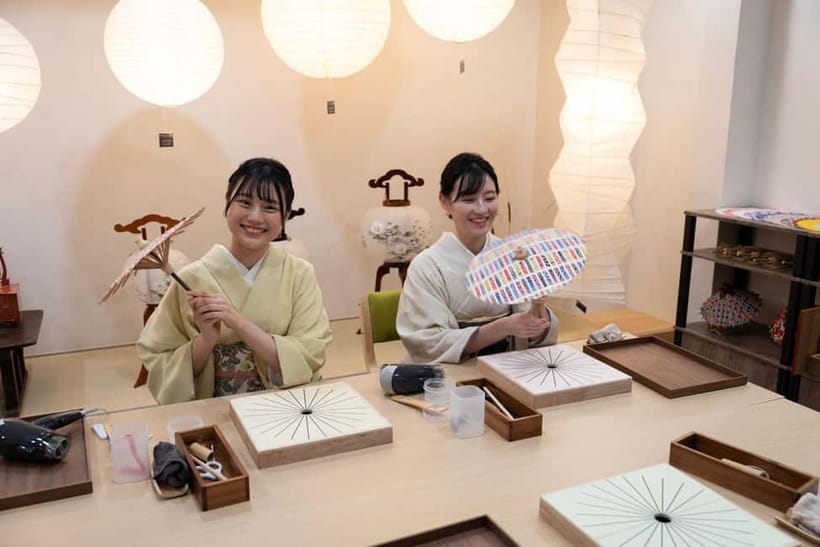
Because the shop is near Shijo Kawaramachi, it is easy to combine the workshop with central Kyoto plans. Check the available starting times before you book, then leave enough margin to reach the meeting point two minutes north of the intersection. The class itself lasts 90 minutes.
Wear something that lets you work comfortably and avoid treating the session as a rushed stop between reservations. The craft needs concentration, so you will get more from it if you arrive ready to focus.
Smoking, alcohol, drugs, and explosive substances are not allowed. Those rules are straightforward, but they are worth noting if you are planning a full day around food and nightlife in central Kyoto.
You can cancel up to 24 hours in advance for a full refund, and the reserve-now, pay-later option keeps your schedule more flexible. Those policies are useful in Kyoto, where weather and changing sightseeing plans can affect your day. Confirm the current terms when booking.
How this compares with buying a Wagasa
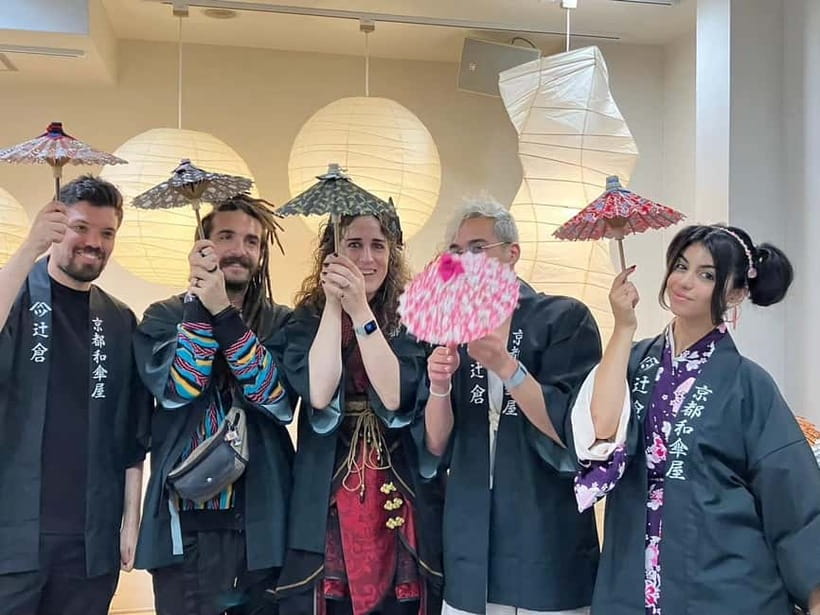
A shop-bought umbrella wins for speed and choice. You can browse, pay, and continue your day. The workshop wins for personal meaning. You see the materials, learn the basic methods, and leave with an object connected to your own time in Kyoto.
The miniature scale is important. You are not making a full rain umbrella, so do not book this expecting a functional replacement for the folding umbrella in your suitcase. You are creating a display piece, and the included bamboo stand confirms that purpose.
That is not a weakness unless you had different expectations. For a compact souvenir, the mini format is easier to carry and display. It also lets the class fit into a 90-minute slot, rather than requiring the much longer process needed for a full-size traditional umbrella.
The strongest part: patient guidance
The teaching receives the clearest praise, and it is easy to see why that matters here. A craft class can become stressful when the instructor moves too quickly or assumes you already know what to do. The comments about patient, friendly, and helpful guidance suggest that you receive support at the points where the work becomes tricky.
Ai Takenaka is singled out by name for being friendly and helpful. Another instructor is praised for a practical understanding of the materials and for showing effective ways to complete the craft. That kind of direct correction is more useful than a long lecture about umbrella history.
The class also seems to leave room for satisfaction at the end. Several participants describe enjoying the process and feeling pleased with the finished umbrella. I would treat that as the main reason to book: you get a small object, but you also get the satisfaction of making it under expert supervision.
Should you book the Kyoto Mini Umbrella Workshop?
Book it if you want a central Kyoto activity with real making, a clear cultural connection, and a take-home object that is ready to display. The patient Japanese and English instruction, genuine materials, bamboo stand, and gift-ready packaging make the $70 price easier to justify.
Skip it if you want a full-size working umbrella, a long historical tour, or a fast photo stop. The craft takes focus, and the miniature Wagasa is decorative rather than a practical rain shield.
For most visitors who enjoy hands-on culture, this is a strong Kyoto choice. It gives you a quiet break from busy sightseeing, introduces you to a specialist craft, and leaves you with a souvenir that says something about where you made it.
FAQ
How long does the traditional umbrella workshop last?
The workshop lasts 90 minutes.
How much does the experience cost?
The price is $70 per person.
Where is the meeting point?
The workshop is in central Kyoto, about two minutes on foot north of the Shijo Kawaramachi intersection.
What do I take home?
You take home the mini Hime Wagasa you make, a bamboo umbrella stand, a decorative box, and a carry bag.
Is the workshop available in English?
Yes. Instruction is available in Japanese and English.
Can children join the workshop?
The activity is not suitable for children under six.
Just added around Kyoto
- Taste of Nishiki Market Walking Food Tour with Local guide★ 5.0 · 17 reviews
- Kyoto: Sushi Making Class with Sushi Chef★ 4.8 · 64 reviews
- Kyoto: City Secrets eBike Tour★ 4.9 · 196 reviews
- Sacred Pathways: Discover the Philosopher’s Path of Kyoto★ 4.9 · 20 reviews
- Private Tour to Monkey Park and Arashiyama Highlights★ 5.0 · 22 reviews
- Private Nara Tour from Osaka – Meet at Your Hotel★ 5.0 · 22 reviews
- Private Sake Tasting in Central Kyoto with Sake Sommelier★ 5.0 · 13 reviews
- Kyoto : Private Custom Walking Tour With A Local Guide★ 4.6 · 144 reviews
Workshops, compared.
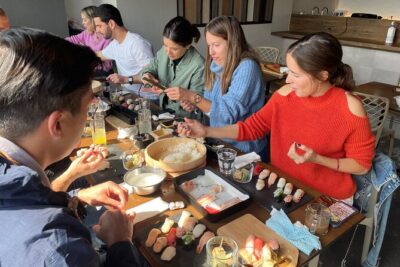
Sushi Making Tokyo Roll and Authentic Japanese Sushi Class
Read our review →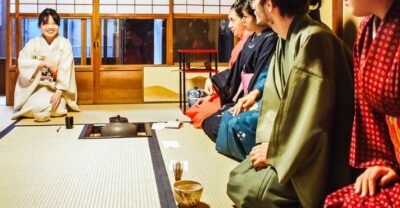

Roll and Authentic Sushi Making Class in Asakusa
Read our review →
Ramen Cooking Class at Ramen Factory in Kyoto
Read our review →
Sushi Making Class in a Happi Coat near a Famous Spot
Read our review →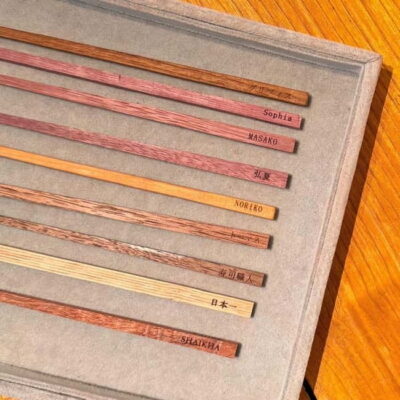

Sushi Making Osaka Roll and Authentic Japanese Sushi Class
Read our review →
Tokyo Sushi Making Class in Tsukiji with Professional Chef
Read our review →Browse the lists this tour appears in