
REVIEW · TEA CEREMONY EXPERIENCES
Kyoto: Tea Ceremony with Maiko
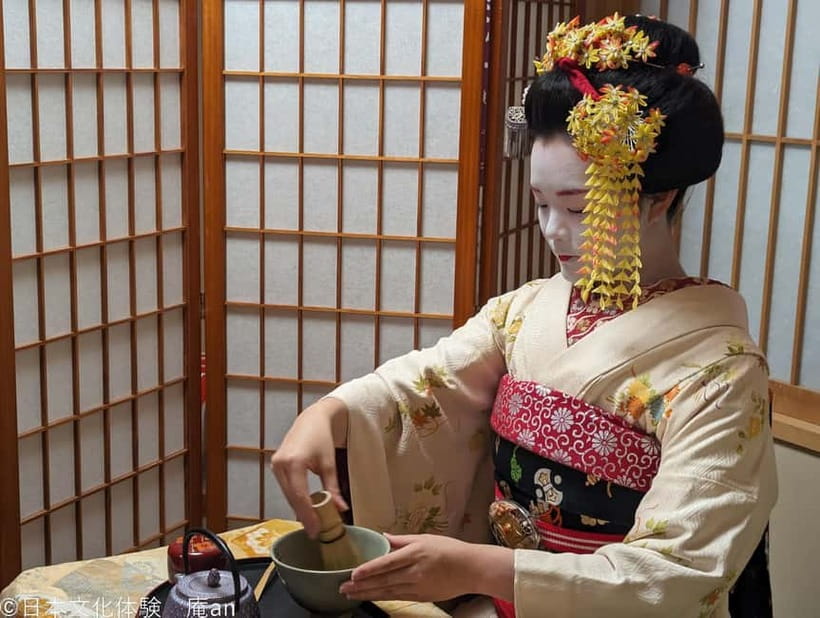
Meeting a maiko and learning to make matcha in the same short session gives you two classic Kyoto experiences without spending half a day at a formal tea school. The setting is friendly and modern rather than an old tea house, but the personal contact makes the program feel far more engaging than simply watching a performance.
I especially like the chance to ask direct questions about a maiko’s daily life, and I like that you prepare your own cup of matcha rather than only observing. The location, just a minute from Gojo Station, is another real plus for a tight Kyoto schedule. The main consideration is that the experience takes place in a building with stairs, and English translation is provided only as much as possible.
In This Review
- Key points to know before booking
- A short Kyoto experience with real personal contact
- Finding the venue near Gojo Station
- What happens during the 45 minutes
- Making matcha instead of only watching
- The maiko Q&A is the heart of the experience
- A photo beside the performer and a Senjafuda gift
- What the setting is really like
- Is $28 a good value?
- Who should book this Kyoto tea meeting?
- My call: book it for contact, not ceremony
- FAQ
- Where is the tea ceremony held?
- How long does the experience last?
- Is the ceremony conducted in English?
- Will the host always be a maiko?
- What is included in the price?
- Is the venue a traditional Japanese tea house?
- What is the cancellation policy?
Key points to know before booking
- Meet a maiko up close: Depending on the date, a maiko or geiko leads the session and answers questions about her life.
- Make your own matcha: You watch the demonstration, then whisk your own tea and drink it with two ohigashi sweets.
- Expect a compact program: The main activity takes about 30 to 40 minutes, with room departure at about 45 minutes.
- Ask about Kyoto’s traditional entertainment world: The Q&A is one of the most personal parts of the experience.
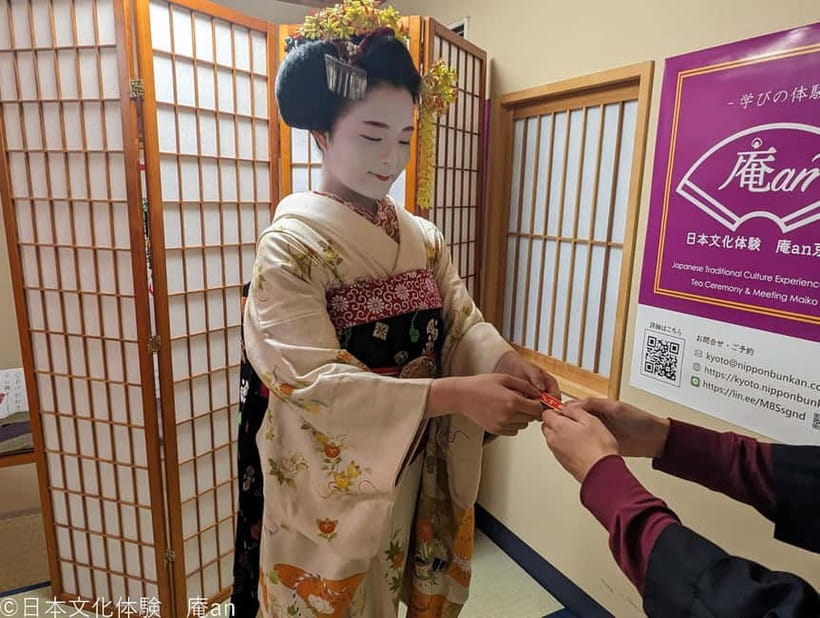
- Get a keepsake: Your Senjafuda, a small lucky paper charm, is presented after the photo.
- Plan for stairs: There is no elevator, and the venue is above street level near Gojo Station.
A short Kyoto experience with real personal contact
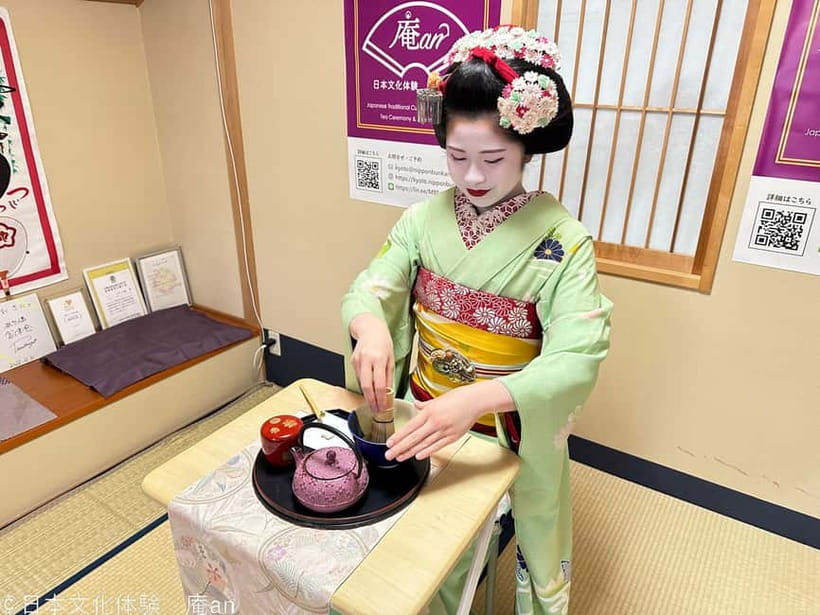
Many cultural activities give you a demonstration, a quick photo, and little chance to ask anything. This one gives you a maiko, matcha, Japanese sweets, a question period, and a photo opportunity in less than an hour.
That compact format is its greatest strength. If your Kyoto schedule already includes temples, markets, and a day trip, you can fit this in without giving up a full morning or afternoon. At $28 per person, it is also priced below many longer cultural programs. You are paying for a brief, focused introduction rather than a full tea-school lesson or an evening entertainment show.
The tradeoff is equally clear. This is not a private tea ceremony in a traditional machiya, and it is not held in an ochaya, the type of exclusive tea house associated with geiko and maiko entertainment. The venue is in a building facing Gojo-dori, with a relaxed atmosphere and helpful staff. If you are seeking old wooden architecture and a quiet, highly formal setting, this may feel more practical than romantic.
More Tea Ceremony Experiences in Kyoto
- Kyoto: Tea Ceremony in a Traditional Tea House in Kiyomizu
★ 4.9 · 3,519 reviews - Kyoto: Tea Ceremony Ju-An at Jotokuji Temple
★ 4.9 · 3,207 reviews - Kyoto: 45-Minute Tea Ceremony Lesson Experience
★ 4.3 · 2,378 reviews
Finding the venue near Gojo Station
The meeting point is easy to reach by subway. Take Exit 1 of Gojo Station on the Karasuma Line, then walk about a minute with the building entrance facing the main street, Gojo-dori.
The entrance can be easy to miss if you are looking for a grand cultural venue. One useful orientation is that the location is above the supermarket Carnival. From Exit 1, walk straight, cross the small street, continue ahead, and look for the entrance before the next small street. You will need to go upstairs.
There is no elevator in the building. That matters if you use a wheelchair, have trouble with stairs, or are traveling with a stroller. The supplied information does not describe the number of stairs or any alternate access, so contact the operator before booking if access is a concern.
The location works well for a short stop before or after sightseeing around central Kyoto. It is close enough to Kyoto Station to be useful on a travel day, although you should not cut your arrival too close. The program does not wait for late arrivals, and latecomers are not entitled to a refund.
What happens during the 45 minutes
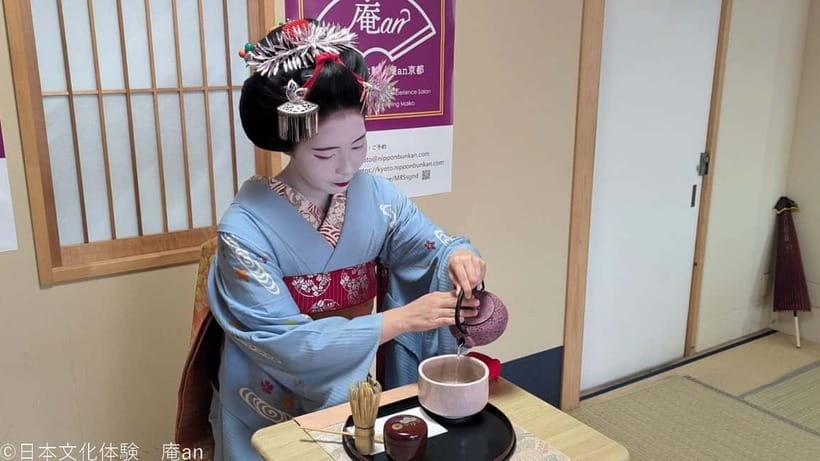
The advertised duration is 45 minutes, though the main program finishes at about the 30-minute mark. The remaining time allows for photographs, the Senjafuda presentation, and leaving the room.
A typical schedule runs like this:
- Greeting from the maiko or geiko
- Tea ceremony demonstration
- Matcha preparation and tasting
- Two ohigashi sweets
- Question and answer period
- Photograph beside the performer
- Senjafuda gift
- Room departure at about 45 minutes
This order gives the session a clear rhythm. You begin by meeting the performer, then watch the tea preparation before trying it yourself. The questions come while the experience is still fresh, and the photo and charm arrive at the end as a natural closing.
The timing is useful for families and first-time visitors because the program does not demand a long stretch of quiet concentration. Children who need their own seat pay the standard per-person rate. Children under two who sit on a parent’s lap are free.
Making matcha instead of only watching
The tea portion is hands-on. The maiko demonstrates how to make matcha and explains what to do, then you prepare your own bowl.
That simple change from watching to doing makes the activity more memorable. Matcha preparation has a careful, deliberate feel, but you do not need special training or preparation before arriving. The aim is to give you the essence of the process, not to test you on formal tea-school rules.
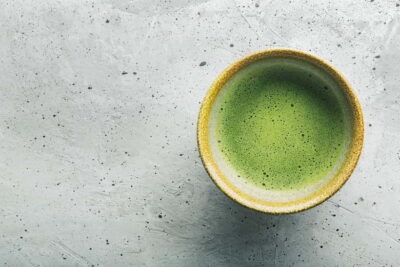
You also receive two dried Japanese sweets called ohigashi. These sweets are made to accompany matcha, and their dry texture balances the strong, grassy taste of the tea. The inclusion of two sweets is a small detail, but it helps the tea portion feel like a complete tasting rather than a quick cup handed to you.
The exact level of ceremony may vary with the performer and the group. Expect an accessible introduction, not a long formal tea ceremony with an extensive sequence of prescribed movements. That makes it easier for first-time visitors, though those who already know Japanese tea traditions may want a more advanced lesson.
Same city, a completely different kind of day:
- PERFECT KYOTO 1-Day Bus Tour
★ 5.0 · 13,518 reviews - Kyoto: Fushimi Inari, Kinkakuji, Bamboo Grove 1 Day Bus Tour
★ 4.8 · 4,316 reviews - Kyoto Geisha Walking Tour: Gion District & Hidden Gems
★ 4.7 · 3,273 reviews - Kyoto: Gion Magical Night Walking Tour with Geisha Trivia
★ 4.9 · 2,393 reviews
The maiko Q&A is the heart of the experience
The most valuable part for many people is the question period. You are not simply watching a performer in elaborate dress. You have a chance to ask about the world of maiko and the path toward becoming a geiko.
The information provided does not promise a fixed set of questions, so prepare a few respectful ones of your own. You might ask about daily life, training, the transition to geiko, or what it is like to work in Kyoto’s traditional entertainment culture. The point is direct contact and conversation.
The primary language is Japanese. English translation is offered as much as possible, and you should contact the operator if you want to add English support. In one session, an interpreter helped explain the maiko’s answers, allowing the group to follow the discussion closely. Still, you should not assume that every word will be translated in the same way or at the same length.
Masaya-san was praised for explaining matcha clearly and answering questions with confidence. Since the performer can change, do not book this expecting Masaya-san specifically. Depending on the date, the host may be a maiko or a geiko.
A photo beside the performer and a Senjafuda gift
After the question period, you can take a commemorative photo beside the maiko. This is an up-close photo opportunity, not a distant stage picture, and it gives you a clear souvenir of the meeting.
A small point of etiquette is worth keeping in mind: treat the photograph as part of a hosted cultural activity, not as a chance to handle costume pieces or ask for anything beyond the arranged photo. The program is designed to let you meet the performer respectfully and comfortably.
You also receive a Senjafuda. Senjafuda are small name or dedication papers traditionally associated with Japanese temples, shrines, and entertainers. Here, it is presented as a lucky charm. It is a light, easy-to-pack souvenir with more character than a generic shop purchase.
The charm is given after the photo, just before the maiko leaves. That closing sequence keeps the session moving and explains why the experience lasts about 45 minutes even though the main program is scheduled to end around 30 minutes.
What the setting is really like
Set your expectations before arriving. The venue is not a traditional Japanese house or an ochaya. It is located inside a building, and you reach the room by stairs.
That may sound like a drawback, but the practical venue has benefits. Staff help explain how the session works, and the room is described as a comfortable size for the activities. You do not need to know formal tea etiquette before entering, and you do not need to dress in any special way.
I would choose this setting for convenience and access to the performer, not for architecture. If your priority is a historic room with tatami, gardens, and a highly polished ceremony, look for a separate tea-house experience. If your priority is meeting a maiko without committing to an expensive evening program, this location does the job well.
The atmosphere can also vary because the program may be held alongside people having lunch or dinner. That means the surroundings may not always feel completely silent or ceremonial. In exchange, you get a more relaxed introduction that does not require the formality of a private tea appointment.
Is $28 a good value?
At $28, this is good value if you want several small Kyoto experiences in one appointment. You receive a live demonstration, your own matcha, two sweets, direct questions, a photo, and a Senjafuda. Many short cultural activities charge a similar amount for only one of those elements.
The price is especially reasonable for a visitor with limited time. A 45-minute activity near Gojo Station is easier to fit around a temple visit than a longer tea lesson on the edge of the city. It also gives you personal contact with a maiko, something that can be difficult to arrange independently and should never be treated as an unplanned street encounter.
The value drops if you are expecting a long performance or a full meal. The standard inclusions do not promise dinner, sake, a dance performance, or a drinking game. Individual sessions may differ, but you should book based on the stated tea, sweets, Q&A, photo, and charm rather than on extras that may not be part of your date.
The overall rating is 3.5 out of 5 from 174 ratings, so this is not a choice to make on the idea of universal approval. The strong points are clear: personal contact, a simple hands-on tea lesson, a convenient location, and a friendly staff. The weaker points are also practical: stairs, a nontraditional venue, possible language limits, and a short schedule that may feel brief to some people.
Who should book this Kyoto tea meeting?
I would recommend it to first-time visitors who want a respectful introduction to maiko culture without spending a large sum. It suits couples, families with older children, and anyone who enjoys asking questions rather than only watching a staged presentation.
It is also a smart option for people staying near Kyoto Station or moving through central Kyoto. The short duration leaves room for other plans, and the subway access makes the appointment straightforward once you locate the entrance.
You should think twice if you need a fully accessible venue, guaranteed English interpretation, or a traditional house. You should also avoid booking a tight connection around it. Reservations are processed during operating hours from 10:00 AM to 5:00 PM, and changes within seven days of the booking may carry a fee.
Free cancellation is available up to eight days in advance for a full refund. Closer cancellations incur a fee, and the operator does not compensate you for transportation costs if the event is canceled. Check the exact terms before paying, especially if your Kyoto plans are still shifting.
My call: book it for contact, not ceremony
Book this experience if you want to meet a maiko at close range, prepare matcha, ask personal questions, and leave with a small charm, all for $28 and less than an hour. Its best quality is the human exchange, particularly when translation support lets you understand the answers.
Skip it if the room itself matters as much as the ritual. This is a building near Gojo Station, not an old tea house, and the program is brief. For a convenient, affordable introduction to a distinctive part of Kyoto culture, though, it offers a lot in a small package.
FAQ
Where is the tea ceremony held?
The meeting point is a one-minute walk from Exit 1 of Gojo Station on the Kyoto Subway Karasuma Line. The entrance faces Gojo-dori and is above the supermarket Carnival.
How long does the experience last?
The full visit takes about 45 minutes. The main program finishes at around 30 minutes, followed by photos, the Senjafuda presentation, and room departure.
Is the ceremony conducted in English?
The instructor’s language is Japanese. English translation is provided as much as possible, and you should contact the operator if you would like to request translation support.
Will the host always be a maiko?
No. Depending on the event date, the program may be hosted by a maiko or a geiko.
What is included in the price?
The price includes the tea ceremony with a maiko or geiko, matcha, two dried Japanese sweets called ohigashi, a photo opportunity, and a Senjafuda gift.
Is the venue a traditional Japanese tea house?
No. The venue is inside a building rather than an ochaya or traditional Japanese house. It offers a relaxed atmosphere, and stairs are required because there is no elevator.
What is the cancellation policy?
You can cancel up to eight days in advance for a full refund. Cancellation fees apply after that point, and changing the date or time within seven days of booking may also incur a fee.
Just added around Kyoto
- Taste of Nishiki Market Walking Food Tour with Local guide★ 5.0 · 17 reviews
- Kyoto: Sushi Making Class with Sushi Chef★ 4.8 · 64 reviews
- Kyoto: City Secrets eBike Tour★ 4.9 · 196 reviews
- Sacred Pathways: Discover the Philosopher’s Path of Kyoto★ 4.9 · 20 reviews
- Private Tour to Monkey Park and Arashiyama Highlights★ 5.0 · 22 reviews
- Private Nara Tour from Osaka – Meet at Your Hotel★ 5.0 · 22 reviews
- Private Sake Tasting in Central Kyoto with Sake Sommelier★ 5.0 · 13 reviews
- Kyoto : Private Custom Walking Tour With A Local Guide★ 4.6 · 144 reviews
Tea Ceremony Experiences, compared.
Tea Ceremony in a Traditional Tea House in Kiyomizu
Read our review →
World Heritage Kyoto & Nara Uji Authentic Matcha Experience
Read our review →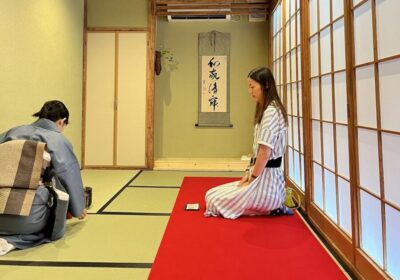
Browse the lists this tour appears in