
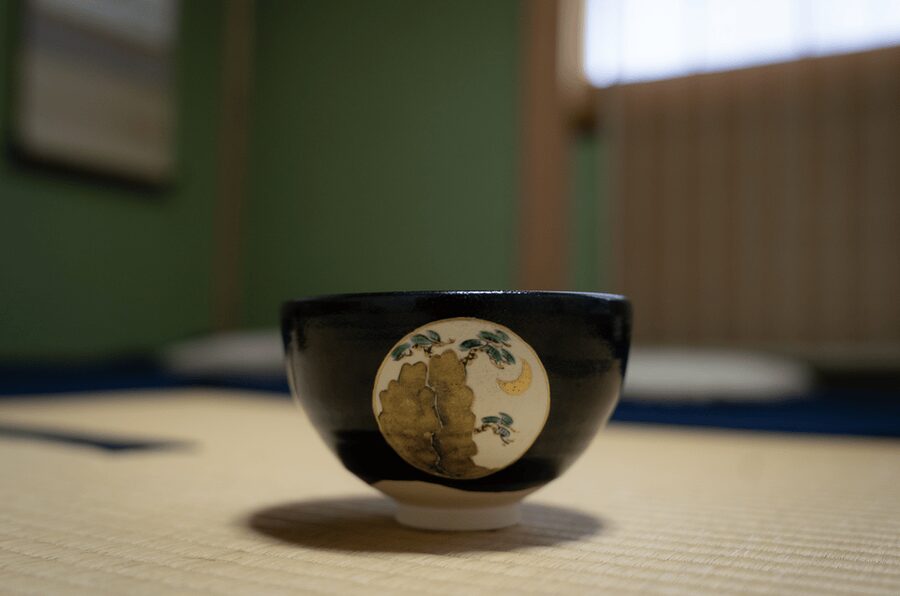
REVIEW · TEA CEREMONY EXPERIENCES
Kyoto: Tea Ceremony Experience in a Small Tea Room
Kyoto’s tea culture becomes much easier to understand in this small tea room ceremony, where an English-speaking teacher with 30 years of experience guides you through the meaning and motions of matcha preparation. You are not expected to know the rules ahead of time, and you can make your own tea if you wish.
I like the six-person limit, which keeps the hour personal rather than turning it into a show for a large crowd. I also like the setting, just a 15-minute walk from the Kamogawa Delta and Demachiyanagi Station, so you can pair the ceremony with a quiet riverside walk or further sightseeing.
The main consideration is the short one-hour format. It gives you a focused introduction, not a full afternoon devoted to tea culture, and the small room may feel intimate for anyone hoping for a broad Kyoto history lesson.
In This Review
- Key points at a glance
- Why this one-hour Kyoto tea ceremony works
- Inside the small tea room near Tisato
- Learning the meaning behind matcha
- Matcha and traditional dried sweets
- The value of making your own tea
- Pairing the ceremony with Kamogawa Delta
- Planning around Demachiyanagi Station
- What the small group changes
- What the $38 price gets you
- Who will enjoy this tea ceremony most
- Practical details before you book
- Should you book the Tisato tea ceremony?
- FAQ
- Where does the Kyoto tea ceremony take place?
- How long does the tea ceremony last?
- How much does the tea ceremony cost?
- Is the tea ceremony conducted in English?
- How many people can join the session?
- Do I need previous tea ceremony experience?
- Can I make my own matcha?
- What is included in the price?
- Can I cancel for a refund?
- Can I reserve now and pay later?
Key points at a glance
- A 30-year tea teacher: Learn the purpose behind the ceremony from an instructor with long experience.
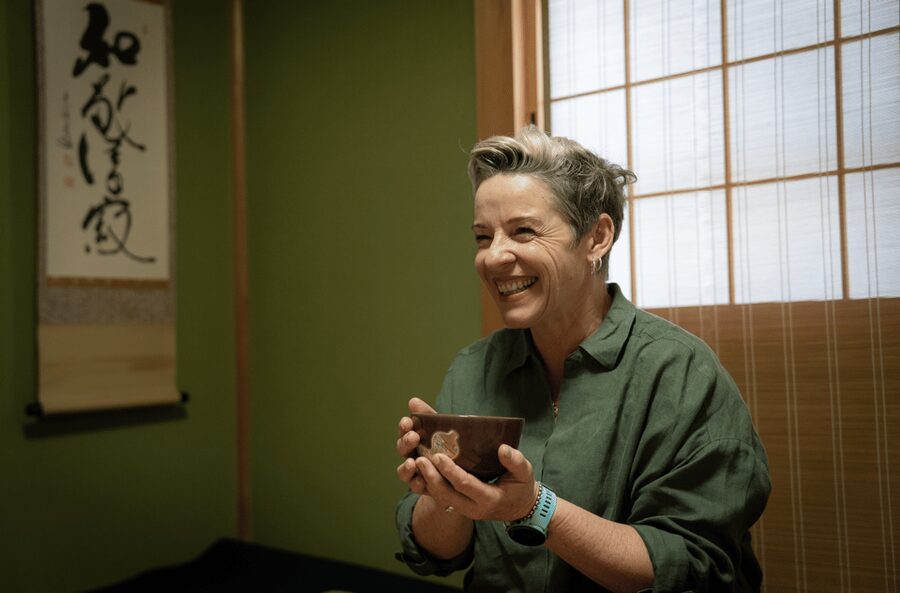
- Hands-on matcha making: Whisk your own powdered tea under careful guidance if you choose.
- Only six participants: The small group allows time for questions and personal instruction.
- Near Kamogawa Delta: Add a peaceful riverside walk before or after the session.
- Tea and dried sweets included: The simple pairing is part of the traditional experience.
- Easy to fit into a Kyoto day: The tea room is about 15 minutes on foot from Demachiyanagi Station.
Why this one-hour Kyoto tea ceremony works
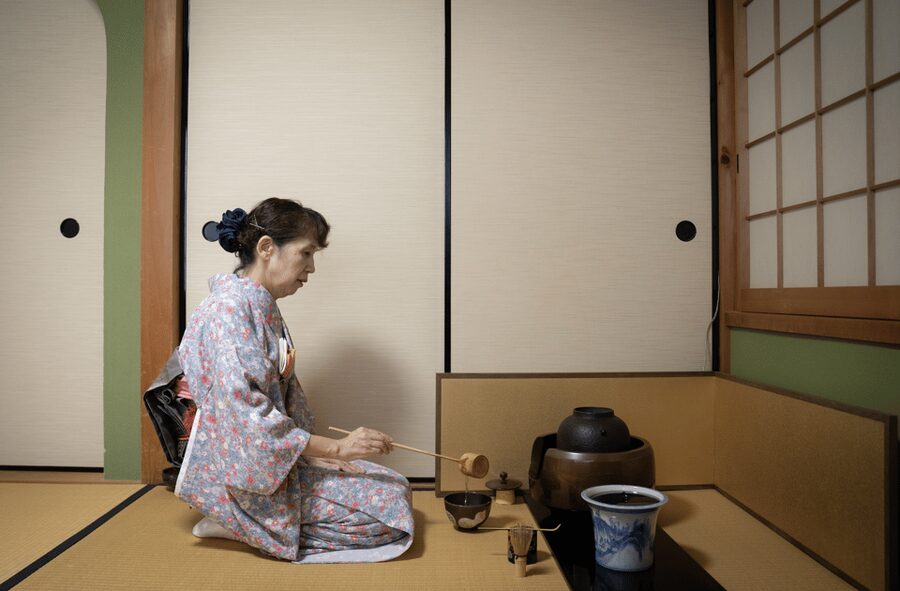
A tea ceremony can look formal and mysterious from the outside. Every movement seems measured, and the setting may appear reserved for people who already understand Japanese customs. This session takes a friendlier approach.
Your teacher explains what is happening as you go, using English and clear instruction. The goal is not to test your manners. It is to help you notice the care in small actions: preparing the bowl, whisking the matcha, and enjoying the tea with a traditional dried sweet.
That makes the experience suitable for a first visit to a tea ceremony. You do not need prior knowledge, and you do not need experience making matcha. The instruction is designed to lower the usual barriers around the art of tea.
The session lasts one hour, so you can fit it between major Kyoto sights without surrendering half a day. At the same time, an hour passes quickly. You will gain a useful introduction, but you should not expect a long lecture on every school of tea or every period of Japanese history.
More Tea Ceremony Experiences in Kyoto
- Kyoto: Tea Ceremony in a Traditional Tea House in Kiyomizu
★ 4.9 · 3,519 reviews - Kyoto: Tea Ceremony Ju-An at Jotokuji Temple
★ 4.9 · 3,207 reviews - Kyoto: 45-Minute Tea Ceremony Lesson Experience
★ 4.3 · 2,378 reviews
Inside the small tea room near Tisato
The meeting point is a Japanese house marked with a sign reading Tisato. Look for that sign when you arrive so you can enter the correct building.
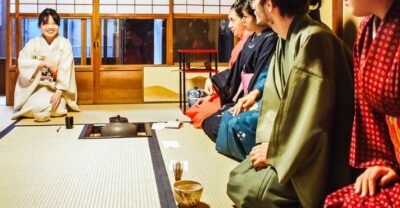
The setting matters here. A small Japanese house gives the ceremony a more personal scale than a large cultural venue. With no more than six participants, the teacher can keep the pace calm and explain the steps without rushing through a crowd.
The available details do not specify the room’s exact design, seating arrangement, or architectural features, so you should not book this expecting a particular type of tatami room or a staged historical reconstruction. What you can count on is a compact setting, direct instruction, and a session built around participation.
This is also a useful choice for couples, solo visitors, and small family groups who prefer a quieter activity. If you are traveling with a larger party, the six-person limit may mean splitting your group across sessions or checking availability carefully.
Learning the meaning behind matcha
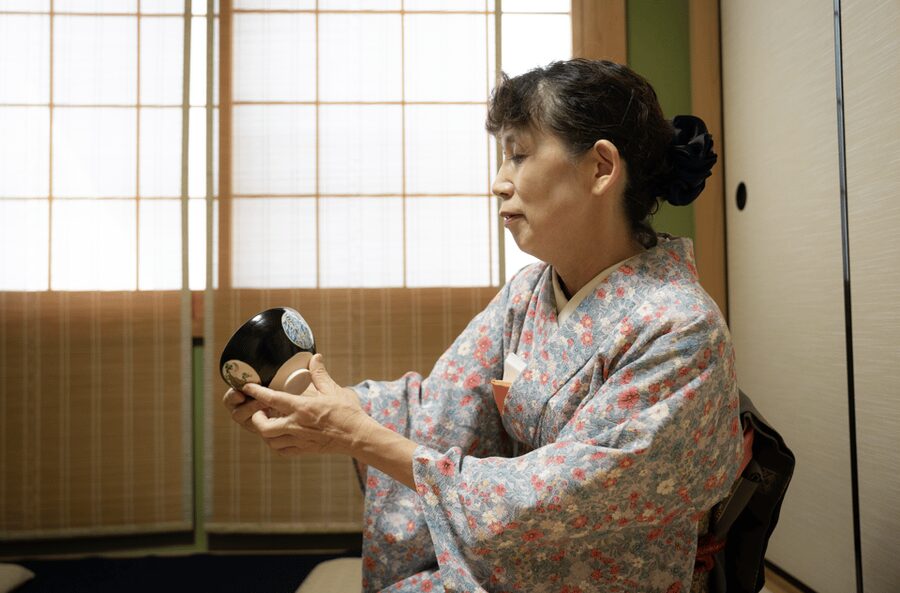
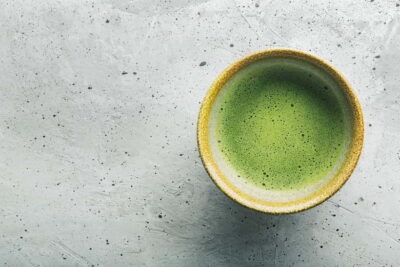
The most useful part of the ceremony is the explanation. Matcha is not simply green tea served in a bowl. The preparation reflects care, order, and mindfulness, and the instructor helps you see why the movements matter.
You learn the basic process of preparing the powdered tea, including whisking it properly. The motions are precise, but the tone is welcoming rather than severe. If you want to make your own tea, the teacher guides your hands and explains the steps. If you prefer to watch, you can still follow the ceremony and taste the finished matcha.
That choice is important. Some visitors want a hands-on activity, while others would rather observe first. Here, you are not forced to perform before you feel ready.
The teacher’s three decades of experience add value beyond a simple matcha demonstration. Long practice helps explain the small details that are easy to miss, such as why the ceremony follows a particular order or how preparation creates a quiet pause in the day.
Still, keep the scale in mind. This is an introduction to Japanese tea practice, not professional training. You will leave with a better sense of the tradition and the confidence to recognize the basic process, not with mastery of the art.
Matcha and traditional dried sweets
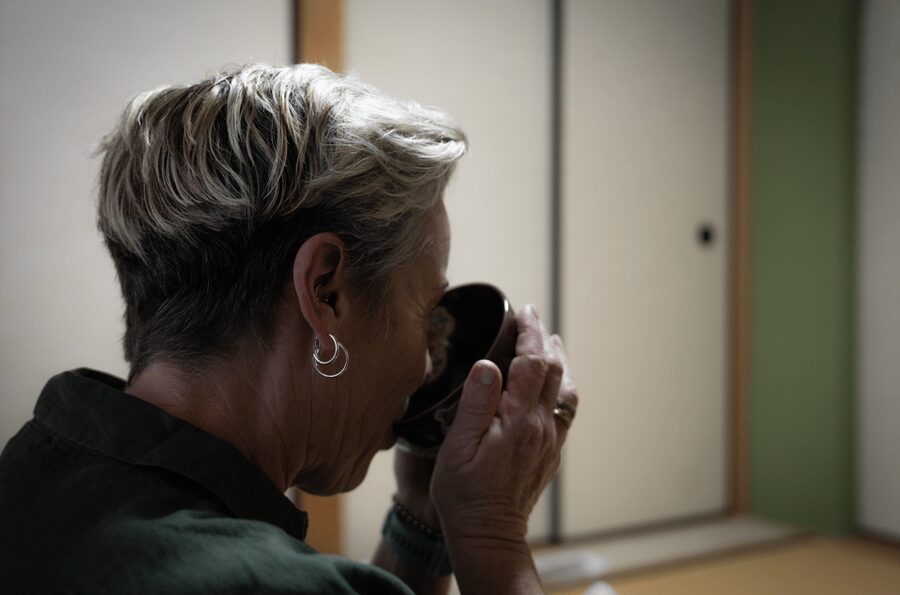
The tea is served with traditional dried sweets, a familiar part of the tea ceremony experience. Their purpose is not just to add a snack. The sweet taste balances the bitterness of matcha and prepares your palate for the tea.
This simple pairing also gives the ceremony a pleasant rhythm. You receive something to taste, something to watch, and something to do. It keeps the experience from becoming a lecture.
The supplied details do not identify the exact type or flavor of the sweets, so you should treat them as a traditional accompaniment rather than expect a particular confection. Matcha flavor can also be new to some people. It is more concentrated and grassy than ordinary brewed green tea, which is one reason the sweet is served alongside it.
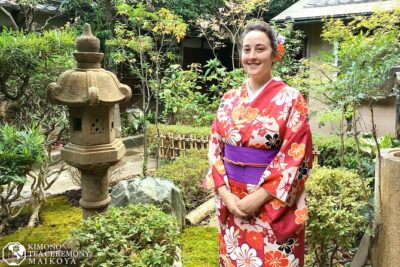
The host has been described as patient and kind, and that matters during a tea ceremony. Beginners often worry about holding the bowl correctly or making a mistake with the whisk. A patient teacher lets you focus on the experience instead of worrying about doing everything perfectly.
Same city, a completely different kind of day:
- PERFECT KYOTO 1-Day Bus Tour
★ 5.0 · 13,518 reviews - Kyoto: Fushimi Inari, Kinkakuji, Bamboo Grove 1 Day Bus Tour
★ 4.8 · 4,316 reviews - Kyoto Geisha Walking Tour: Gion District & Hidden Gems
★ 4.7 · 3,273 reviews - Kyoto: Gion Magical Night Walking Tour with Geisha Trivia
★ 4.9 · 2,393 reviews
The value of making your own tea
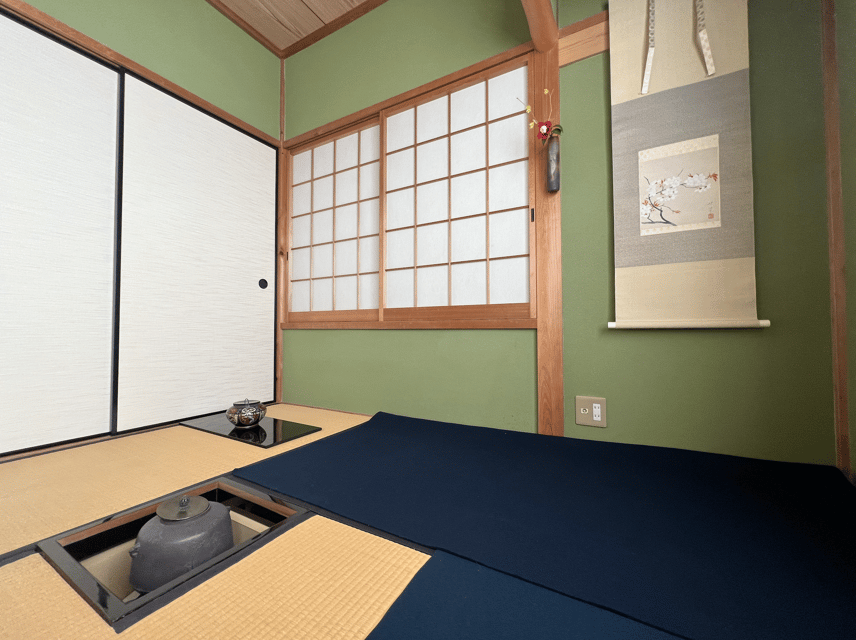
The option to prepare your own matcha is the clearest reason to choose this session over simply watching a demonstration. You learn by doing, and the process gives you a small connection to the tradition.
The instructor guides you through the preparation, from handling the powdered tea to whisking it into a smooth drink. You will notice that the act requires attention. It is a modest task, but it asks you to slow down and watch what your hands are doing.
That quiet focus is part of the appeal. Kyoto sightseeing can involve crowded temples, busy shopping streets, and a long list of places to see. An hour spent making tea gives you a different kind of cultural experience, one based on patience rather than covering more ground.
You should also feel free to participate at your own level. The session welcomes beginners, and the wording of the experience makes clear that making your own tea is optional. This is helpful if you are shy, traveling with children, or simply more interested in observing the teacher first.
Pairing the ceremony with Kamogawa Delta
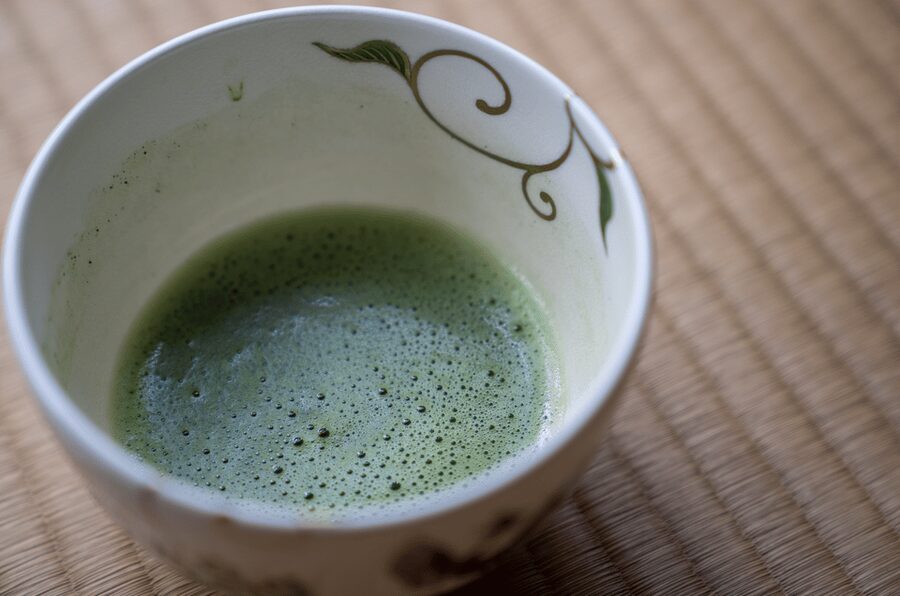
The tea room is about a 15-minute walk from the Kamogawa Delta, one of the most pleasant nearby places to add to your Kyoto plans. The delta offers calm riverside scenery where locals and visitors spend time outdoors.
I would schedule the ceremony alongside a walk rather than treat the tea room as an isolated stop. The river gives you room to stretch your legs and reset before entering the quiet tea setting. After the session, it can help you ease back into the city at a slower pace.
The exact walking route and road conditions are not provided, so allow enough time to find the Japanese house and the Tisato sign. A 15-minute walk on a map can take longer if you pause for photos or are unfamiliar with the neighborhood.
This location is particularly useful for an itinerary that already includes northern Kyoto. You are close to Demachiyanagi Station, and that station is described as a starting point for exploring Kibune Shrine and Rurikou Temple. The ceremony can therefore work as a short cultural stop before or after those places.
Planning around Demachiyanagi Station
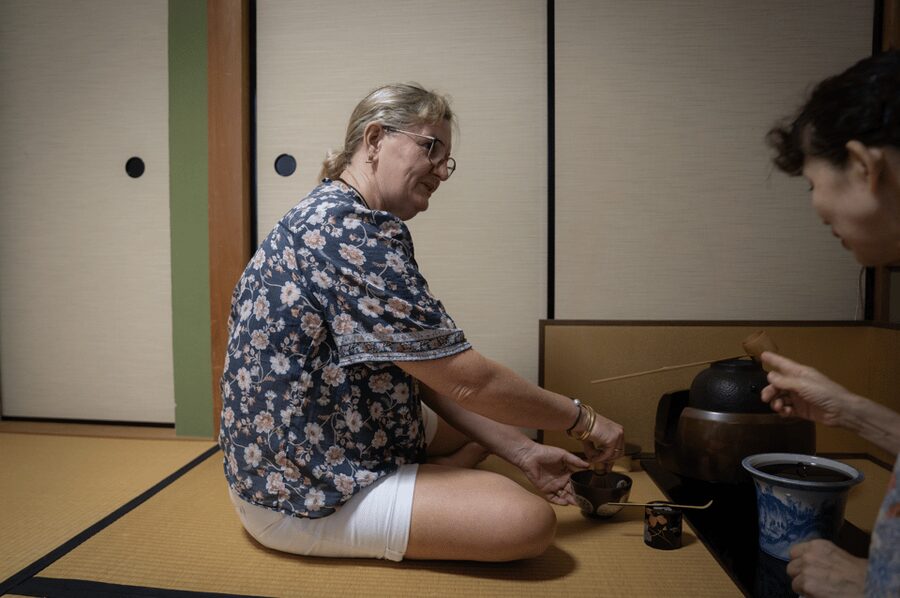
Demachiyanagi Station is also about a 15-minute walk from the tea room. That makes public transport planning fairly simple, at least in broad terms, and gives you a clear area in which to arrange the activity.
The experience provider does not give a detailed route from the station, so you should use the meeting instructions carefully. The key landmark is not a large tourist office or hotel. It is a Japanese house with the Tisato sign.
I would avoid arriving at the last second. The activity lasts only an hour, and time spent searching for the entrance cuts into the ceremony itself. Build in a little margin, particularly if you are coming from another part of Kyoto.
Because the meeting point is a house, do not assume the building will look like a major attraction. The modest entrance is part of the local feel, but it also means you need to pay attention to the sign.
What the small group changes
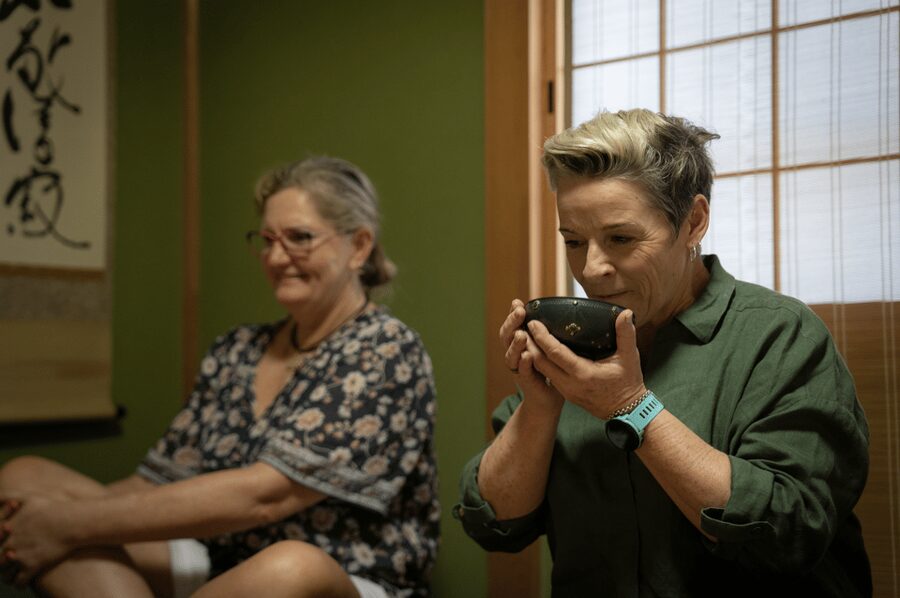
A maximum of six participants is a major advantage for this kind of activity. Tea ceremony instruction depends on small details, and a teacher cannot easily correct or explain them in a large class.
With six or fewer people, you have a better chance to ask questions and receive direct help while preparing the matcha. The teacher can keep the explanation conversational, and you are less likely to spend the whole session watching from the back.
The group size also supports the calm mood. A tea ceremony loses some of its quiet quality when the room is filled with a large tour group. Here, the setting is more likely to feel like an introduction shared by a few people.
There is one tradeoff. Small-group availability can be limited, especially if you are trying to fit the session into a fixed sightseeing schedule. Check the available starting times before building the rest of your day around it.
What the $38 price gets you
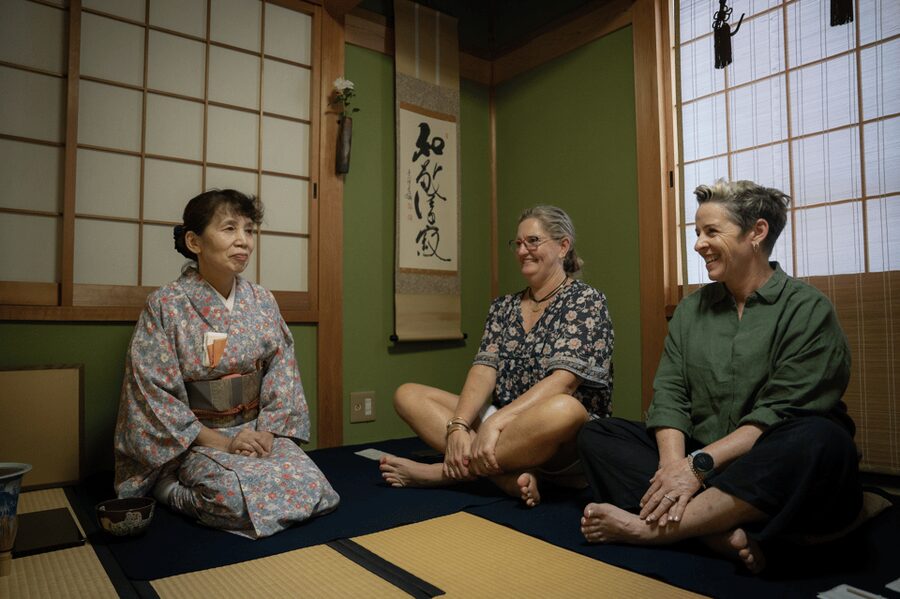
At $38 per person, the price is reasonable if you want direct instruction rather than only a cup of matcha in a scenic setting. You receive the one-hour tea ceremony, guidance from an experienced teacher, matcha, and traditional dried sweets.
The strongest part of the value is the access to instruction. You are paying for a teacher who can explain the tradition and guide your own preparation, not just for the ingredients. The small group also makes the cost easier to justify because the session is designed for interaction.
The price may feel less attractive if you want a long cultural program with several locations, a meal, or extensive historical commentary. None of those are included. This is a focused Kyoto activity, and its value comes from the quality of the hour rather than the number of items packed into it.
For many visitors, the location improves the value. Since you can combine the tea room with Kamogawa Delta, Demachiyanagi Station, and possible northern Kyoto sightseeing, you do not need to spend a separate block of time crossing the city for the activity.
Who will enjoy this tea ceremony most
I would recommend this experience to you if you want a gentle introduction to Japanese tea culture and prefer a small group. It suits first-time visitors because the teacher explains the process instead of assuming you know traditional etiquette.
It is also a good fit if you enjoy hands-on cultural activities. Making matcha gives you something concrete to remember, and the lesson is more personal than simply taking photographs at a tea house.
Families and mixed-interest groups may also find the format useful. Someone who loves Japanese culture can ask questions, while someone with no background can follow the basic steps without feeling out of place.
You may want to choose another activity if you are looking for a grand historic venue, a long ceremony, or a full meal. The information provided does not promise a large temple setting, an extended performance, or a menu beyond matcha and dried sweets.
The ceremony is also not the best choice if your Kyoto schedule is so tight that you cannot allow time for the walk to and from the meeting point. The class itself is one hour, but the surrounding logistics require more time.
Practical details before you book
The instructor speaks English, which removes a major concern for visitors who want explanations rather than silent observation. The experience is offered as a small group with a maximum of six participants.
You can cancel up to 24 hours before the start time for a full refund. The reserve-now, pay-later option lets you hold a place without paying immediately, which is useful when your Kyoto schedule is still changing.
Tea ceremony, instruction, matcha, and traditional dried sweets are included. The available information does not list hotel pickup, transportation, a meal, or additional sightseeing as part of the booking, so plan to reach the Tisato meeting point yourself.
The activity is listed in Kyoto on Honshu, near the Kamogawa Delta and Demachiyanagi Station. Starting times vary, so check availability before deciding where to place it in your day.
Should you book the Tisato tea ceremony?
Book it if you want a calm, personal introduction to matcha with a teacher who has spent 30 years practicing and teaching the tradition. The six-person cap, English instruction, optional hands-on preparation, and nearby riverside setting make this a useful one-hour pause in a busy Kyoto itinerary.
Skip it if you expect a long cultural tour, a full meal, or a grand historical venue. The experience is compact and focused.
For $38, I think the best value comes from combining it with a walk along the Kamogawa Delta or plans near Demachiyanagi Station. Arrive with enough time to find the Tisato sign, take part at your own pace, and you will get a thoughtful taste of Kyoto’s tea tradition without needing to know the rules in advance.
FAQ
Where does the Kyoto tea ceremony take place?
It takes place at a Japanese house with a sign that says Tisato. The house is about a 15-minute walk from the Kamogawa Delta and about a 15-minute walk from Demachiyanagi Station.
How long does the tea ceremony last?
The experience lasts one hour.
How much does the tea ceremony cost?
The listed price is $38 per person.
Is the tea ceremony conducted in English?
Yes. The instructor language is English.
How many people can join the session?
It is a small-group experience limited to six participants.
Do I need previous tea ceremony experience?
No. The session is designed to welcome complete beginners as well as people who already have some familiarity with tea ceremonies.
Can I make my own matcha?
Yes. You can prepare your own tea under the teacher’s guidance if you wish.
What is included in the price?
The price includes the tea ceremony, instruction from an experienced teacher, matcha tea, and traditional dried sweets.
Can I cancel for a refund?
You can cancel up to 24 hours in advance for a full refund.
Can I reserve now and pay later?
Yes. The reserve-now, pay-later option lets you book a spot without paying immediately.
Just added around Kyoto
- Taste of Nishiki Market Walking Food Tour with Local guide★ 5.0 · 17 reviews
- Kyoto: Sushi Making Class with Sushi Chef★ 4.8 · 64 reviews
- Kyoto: City Secrets eBike Tour★ 4.9 · 196 reviews
- Sacred Pathways: Discover the Philosopher’s Path of Kyoto★ 4.9 · 20 reviews
- Private Tour to Monkey Park and Arashiyama Highlights★ 5.0 · 22 reviews
- Private Nara Tour from Osaka – Meet at Your Hotel★ 5.0 · 22 reviews
- Private Sake Tasting in Central Kyoto with Sake Sommelier★ 5.0 · 13 reviews
- Kyoto : Private Custom Walking Tour With A Local Guide★ 4.6 · 144 reviews
Tea Ceremony Experiences, compared.
Tea Ceremony in a Traditional Tea House in Kiyomizu
Read our review →
World Heritage Kyoto & Nara Uji Authentic Matcha Experience
Read our review →
Browse the lists this tour appears in