
REVIEW · TEA CEREMONY EXPERIENCES
Kyoto Newly Opened Tea Ceremony – Sanjo Chasuian
The most rewarding part of this one-hour Kyoto tea ceremony is that you do not only watch. The host prepares one bowl of matcha, then you choose a tea bowl and whisk a second serving yourself. That simple hands-on step turns a formal custom into something you can understand and repeat at home.
I like the careful explanations, especially the reasons behind the gestures, utensils, and quiet pauses. I also like the two bowls of matcha, since many short tea experiences stop after a demonstration. The main consideration is timing: the door is locked once the session begins, and even a one-minute delay means you cannot join or receive a refund.
In This Review
- Key points at a glance
- What makes Sanjo Chasuian different
- Your arrival at the Kyoto tea room
- The opening explanation and demonstration
- Choosing a bowl and making your own matcha
- The sweets are part of the lesson
- A small group and a quiet pace
- Traditional touches and optional extras
- Is $32.77 a fair price?
- Who should book this experience?
- Booking, cancellation, and practical details
- Should you book Sanjo Chasuian?
- FAQ
- How long does the tea ceremony last?
- Where does the activity begin and end?
- How many people can join the session?
- How much matcha is included?
- Are Japanese sweets included?
- Can I make my own matcha?
- Are chairs available?
- Do I need to wear socks?
- What happens if I arrive late?
- Can I cancel for a full refund?
Key points at a glance
- Whisk your own matcha: You prepare a second bowl after watching the tea host demonstrate the proper movements.
- Two servings are included: One bowl is made by the host, and one is made by you or a companion.
- Seasonal Kyoto sweets: Traditional confectionery from a Kyoto sweet shop with more than 100 years of history accompanies the tea.
- A real nijiriguchi entrance: The crawl-in doorway gives the small tea room a traditional point of entry and a clear symbolic purpose.
- Small, calm setting: The group is limited to 10 people, with English explanations and time for questions.
- Arrive early and wear socks: Entry begins five minutes before the start, and late arrivals cannot enter once the ceremony begins.
What makes Sanjo Chasuian different
Kyoto offers many ways to drink matcha, but a proper tea ceremony is about more than the flavor. It is a set of movements and choices designed to create calm, attention, and respect between the person preparing the tea and the person receiving it.
At Sanjo Chasuian, you get enough explanation to see why the ceremony works as it does. The host covers the background and customs before beginning, then demonstrates each step in a quiet room. You are not expected to know when to bow, how to hold the bowl, or which movement comes next. The instruction is part of the experience.
That makes this a good first tea ceremony for you if Japanese customs feel unfamiliar. The hosts explain the process in accessible English, and the tone is friendly rather than stiff. Yuko is praised for being patient, warm, and clear, with a presentation that balances tradition and practical instruction. Another session was described as easy to follow despite a slight English accent, so explanations may vary by host, but English guidance is provided.
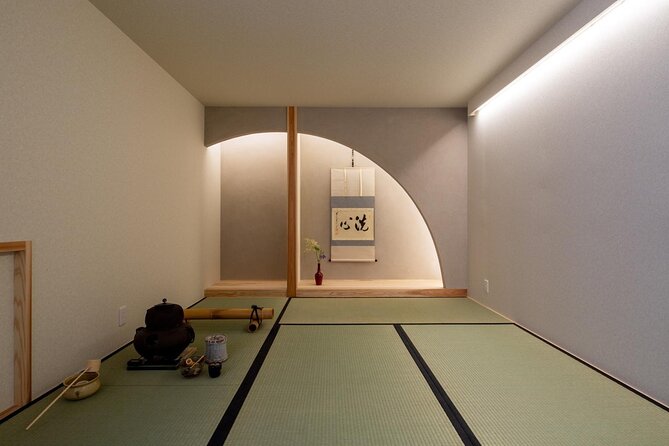
The setting also has a physical detail that matters. The nijiriguchi, or crawl-in entrance, is a traditional tea-room doorway. Its low opening encourages you to leave the outside world behind and enter with humility. You do not simply walk into an ordinary room and drink green tea. The entrance helps mark a change in pace.
More Tea Ceremony Experiences in Kyoto
- Kyoto: Tea Ceremony in a Traditional Tea House in Kiyomizu
★ 4.9 · 3,519 reviews - Kyoto: Tea Ceremony Ju-An at Jotokuji Temple
★ 4.9 · 3,207 reviews - Kyoto: 45-Minute Tea Ceremony Lesson Experience
★ 4.3 · 2,378 reviews
Your arrival at the Kyoto tea room
The meeting point is Tea Ceremony & Sake Tasting Kyoto, Sanjo Chasuian, at 324-2 Sanjōchō in Nakagyo Ward. The venue is near public transportation, and the activity begins and ends at this same location. There is no hotel pickup or private transportation, so you need to make your own way there.
Allow extra time for finding the entrance. Google Maps may guide you toward a smaller street at the corner. A useful visual clue is the green matcha ice cream cone in front of the venue. Stay on the main street and look for that marker rather than following the map blindly into the side lane.
The entry window opens five minutes before the scheduled start. This is not an open-door drop-in activity. Once the ceremony begins, the door is locked, so arriving at the exact start time is risky. I would aim to be in the area at least 10 to 15 minutes early, particularly if you are coming from another sightseeing stop.
You should also wear socks or bring a pair with you. The request is part of the tea-room etiquette. Chairs are available, but one description of the experience notes a good deal of sitting on the floor, and the traditional format may involve floor-level seating. If sitting that way is difficult, use the available chair and settle in as comfortably as the room allows.
The opening explanation and demonstration
The ceremony begins with an introduction to the history, meaning, and customs of Japanese tea practice. This is not filler. Without it, the movements can look like a series of elegant but puzzling gestures. With the background, you begin to understand why the host handles the bowl, whisk, scoop, and tea with such care.
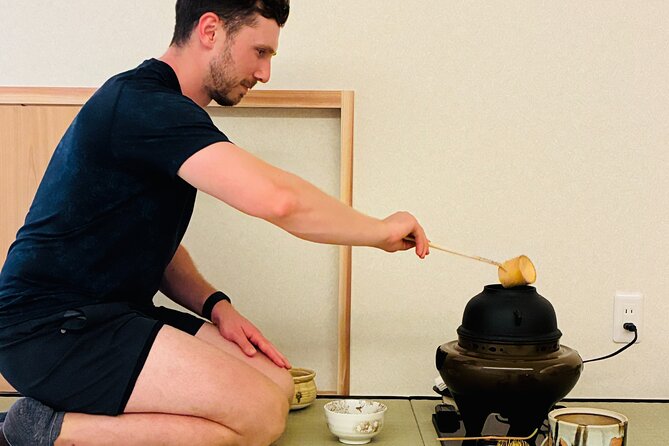
The host then prepares the first bowl of matcha. Watch the small actions rather than treating this as a performance to photograph. The sound of the whisk, the position of the bowl, and the order of the movements are the useful parts. The quiet setting helps you notice details that are easy to miss in a larger, faster demonstration.
The explanations are designed for participation. You can ask questions, and the host takes you through the process in stages. Several accounts of the session emphasize that the tone remains relaxed and welcoming, even while the ceremony itself stays quiet and respectful.
This balance is one of the activity’s strengths. You receive a cultural lesson, but you are not trapped in a lecture. The demonstration gives you something to watch, taste, and later try with your own hands.
Choosing a bowl and making your own matcha
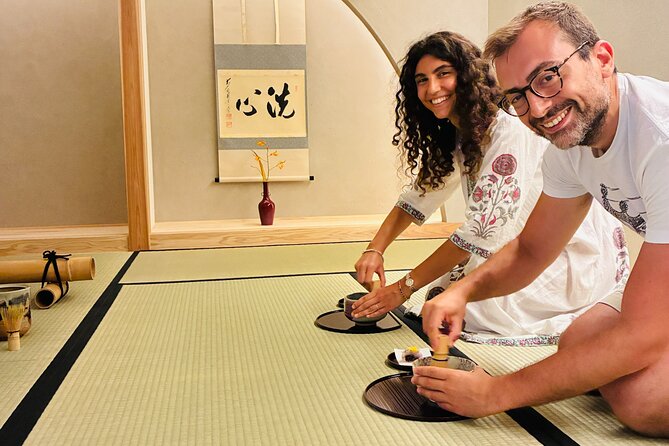
After the host serves the first tea, you get your turn. You choose a tea bowl, receive the necessary ingredients and utensils, and follow the demonstrated movements to whisk your matcha. You may prepare it yourself or do it with a companion, depending on how your booking is arranged.
This is where the experience becomes more memorable than simply ordering a matcha drink at a café. You learn how much movement is involved, how the whisk feels in your hand, and how easy it is to make the process too hurried or too forceful. The host can guide you through the practical details while keeping the atmosphere light.
Your bowl will not need to look perfect. That is part of the point. The activity lets you try the technique without pretending that one lesson turns you into a tea master. You can take home a basic understanding of how matcha is prepared and perhaps recreate it later.
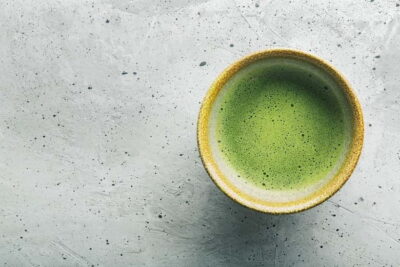
You receive two bowls in total: one prepared by the host and one you make. This is good value for a short experience because you can compare the professional preparation with your own attempt. It also gives first-time matcha drinkers two chances to get used to the flavor.
Same city, a completely different kind of day:
- PERFECT KYOTO 1-Day Bus Tour
★ 5.0 · 13,518 reviews - Kyoto: Fushimi Inari, Kinkakuji, Bamboo Grove 1 Day Bus Tour
★ 4.8 · 4,316 reviews - Kyoto Geisha Walking Tour: Gion District & Hidden Gems
★ 4.7 · 3,273 reviews - Kyoto: Gion Magical Night Walking Tour with Geisha Trivia
★ 4.9 · 2,393 reviews
The sweets are part of the lesson
Traditional seasonal Japanese confectionery is included. The sweets come from a Kyoto sweet shop with more than 100 years of history, and their appearance is treated as carefully as their taste.
Expect something beautiful enough to pause over before eating. The sweets provide a contrast to matcha, whose earthy bitterness can surprise anyone trying it for the first time. Eating the confectionery alongside the tea is not just a snack break. The pairing helps explain how Japanese sweets balance the drink.
For many people, this will be their first taste of matcha prepared in a formal setting. One account describes the tea as smooth, while others focus on the fine appearance and flavor of the sweets. Your reaction will depend on how much you already like green tea, but the confectionery makes the tasting easier and more rounded.
A small group and a quiet pace
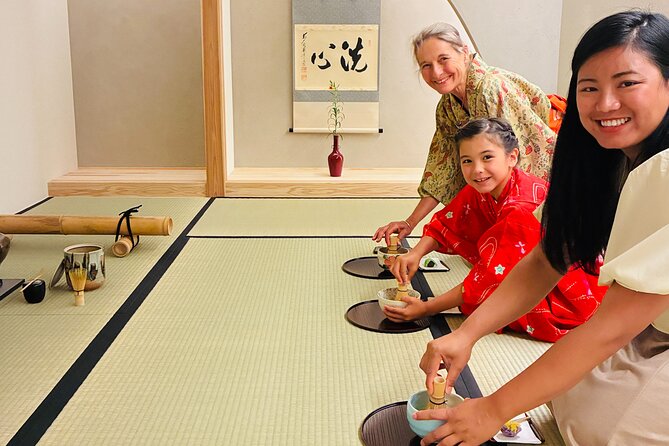
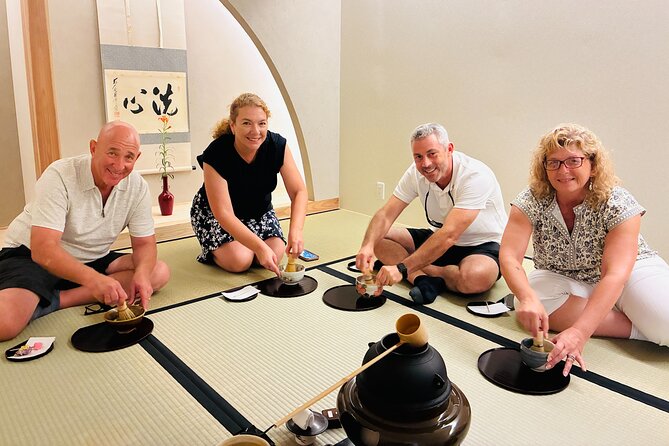
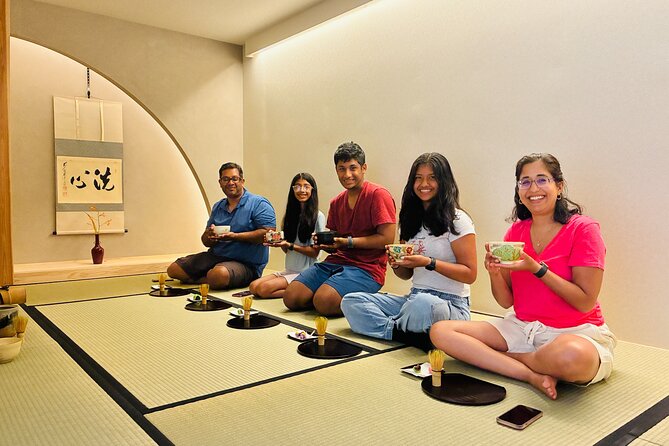
The maximum group size is 10 people. That is small enough for the host to demonstrate closely and give each person a turn with the bowl and whisk. It also suits the nature of the ceremony. A crowded room would work against the quiet concentration that gives the experience its character.
The atmosphere is intentionally serene. You should not expect a loud, theatrical presentation or a constantly moving tour. There are pauses, careful gestures, and stretches of silence. That can be a welcome break if your Kyoto schedule is packed with temples, shops, and busy streets.
The calm does not mean the session is dull. The hands-on portion keeps you involved, and the questions make it suitable for families and adults with different levels of interest. A family of three adults found the format easy to enjoy because everyone had a chance to prepare matcha.
The session lasts about one hour, which is a practical length. You get a complete introduction without giving up half a day. It fits neatly before lunch, between central Kyoto sightseeing stops, or during a quieter part of your afternoon.
Traditional touches and optional extras
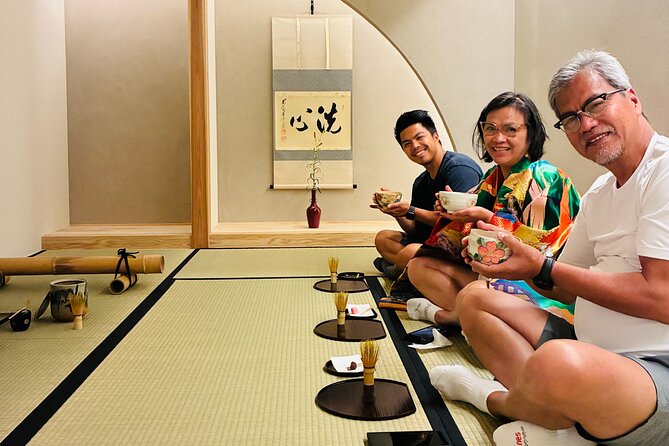
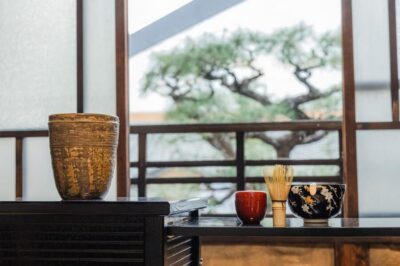
The nijiriguchi is the most distinctive architectural feature, but it is not the only traditional detail. Tea bowls and selected tea items are available for purchase, so you can look at the tools more closely or buy something connected to the lesson. These purchases are optional and are not included in the activity price.
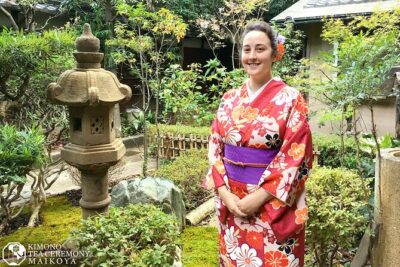
There is also an option to wear a formal uchikake, a striking traditional coat used for formal ceremonies. It is described as more elaborate than a standard kimono. This can add a visual element to the visit, but you should treat it as an option rather than a guaranteed part of every booking.
The venue is described as clean and new-looking, with an immaculate tea room. That matters in a ceremony centered on order and care. A tidy room, clean utensils, and a well-kept setting help the formal gestures feel sincere rather than staged.
The address also identifies the venue as a place for tea ceremony and sake tasting. An impromptu sake tasting was possible after one session, but it should not be assumed to be included in this booking. The listed inclusions are the two bowls of matcha and the seasonal confectionery.
Is $32.77 a fair price?
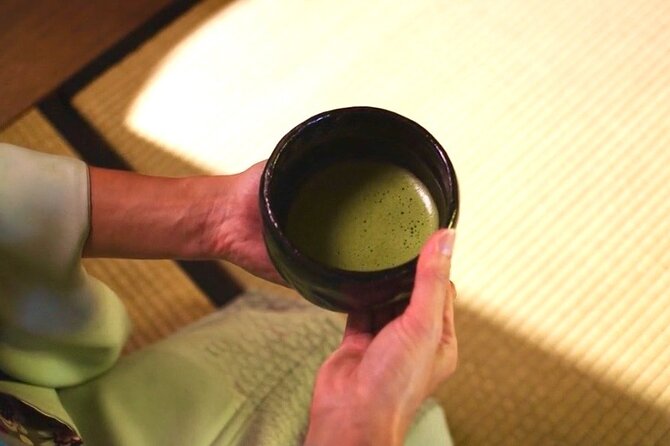
At $32.77 per person, this is a reasonable price for a one-hour cultural activity in Kyoto. You are paying for instruction, two servings of matcha, a traditional sweet, a small group, and access to a purpose-built tea-room setting.
The value is strongest if you want participation rather than a quick demonstration. One bowl is made for you, and one is made by you. That second serving gives the lesson a practical purpose and makes the price easier to justify than an experience where you only sit and watch.
It is less suitable if you are looking for a long ceremonial performance, a private tea master, or a full kimono dressing session. The booking is a short introduction, not an extended study of tea practice. The small group also means it is intimate, but not exclusive.
For a first encounter with matcha, the price compares well with other short cultural activities because you leave with both context and a skill. The sweets add another tasting element, and the location near central Kyoto transport makes it easy to fit into a day of sightseeing.
Who should book this experience?
I would recommend it to first-time visitors who want a clear introduction to Japanese tea ceremony without committing to a longer formal program. It also suits families, since the process is explained step by step and each person can take a turn whisking.
It is a good choice for anyone who enjoys learning by doing. If you only want to drink matcha, a café will be faster and cheaper. If you want to understand the gestures, try the preparation, and see how the tea and sweets work together, this session offers much more.
The activity should also appeal to you if your Kyoto itinerary feels overpacked. The quiet room and one-hour schedule provide a useful pause. Several aspects are relaxing, but the experience still has enough instruction to feel worthwhile rather than merely restful.
You should think twice if you cannot arrive early, dislike quiet settings, or are uncomfortable with any floor sitting. Chairs are available, but the tea-room style may not be ideal for every body. Wear socks, plan your route carefully, and do not count on entering after the start time.
Booking, cancellation, and practical details
Your mobile ticket provides the booking confirmation, and confirmation is received at the time of booking. The activity starts and ends at the Sanjo Chasuian meeting point, with no transfer service included.
Free cancellation is available if you cancel at least 24 hours before the local start time. Cancellations or changes made within 24 hours are not refunded or accepted. Because late arrival also means no entry and no refund, this is an activity where careful scheduling matters.
I would place it on a day when you are already exploring central Kyoto rather than trying to cross the city at the last minute. Arrive early, locate the green sign, wear socks, and keep your phone quiet during the ceremony. Those small choices will help you appreciate the room and the ritual.
Should you book Sanjo Chasuian?
Book this tea ceremony if you want an authentic-feeling, hands-on introduction to matcha in a small and peaceful room. The strongest reasons are the clear English instruction, two bowls of tea, seasonal sweets, and the chance to whisk your own matcha instead of remaining a spectator.
Skip it if you want a long, private ceremony or a guaranteed costume session. For most visitors, though, the one-hour format is just right: enough history, demonstration, practice, and tasting to make the tradition understandable without taking over your Kyoto day.
FAQ
How long does the tea ceremony last?
The experience lasts approximately one hour.
Where does the activity begin and end?
It begins and ends at Tea Ceremony & Sake Tasting Kyoto, Sanjo Chasuian, at 324-2 Sanjōchō, Nakagyo Ward, Kyoto, 604-8205, Japan.
How many people can join the session?
The activity has a maximum of 10 participants.
How much matcha is included?
You receive two bowls of matcha. One is prepared by the host, and one is whisked by you or with a companion.
Are Japanese sweets included?
Yes. Traditional seasonal Japanese confectionery is included.
Can I make my own matcha?
Yes. You choose a tea bowl and whisk your own matcha after watching the host demonstrate the process.
Are chairs available?
Yes, chairs are available. You should still be prepared for some floor sitting because the ceremony takes place in a traditional tea-room setting.
Do I need to wear socks?
You should bring or wear socks during the experience.
What happens if I arrive late?
Entry is allowed from five minutes before the start time. Once the session begins, the door is locked. Even one minute late means you cannot join, and no refund is given.
Can I cancel for a full refund?
Yes, if you cancel at least 24 hours before the experience start time. Cancellations or changes made less than 24 hours before the start are not refunded or accepted.
Just added around Kyoto
- Private Guided Traditional Buddhist Cooking in Japan★ 5.0 · 16 reviews
- Kyoto: Gion Geisha District & Sake-in-Hand Walking Tour★ 5.0 · 37 reviews
- Your Private Vacation Photography Session In Kyoto★ 5.0 · 110 reviews
- Kyoto: Zen Meditation at a Private Temple with a Monk★ 5.0 · 25 reviews
- Traditional Japanese Washi Papermaking- Kyoto morning★ 5.0 · 77 reviews
- Kyoto Wagashi(Japanese sweets) Cooking Class near Fushimiinari★ 5.0 · 60 reviews
- Private Pewter Sake Cup Experience with a Kyoto Artisan★ 5.0 · 31 reviews
- Kyoto Private 6 hour Tour: English Speaking Driver Only, No Guide★ 5.0 · 88 reviews
Tea Ceremony Experiences, compared.

Tea Ceremony in a Traditional Tea House in Kiyomizu
Read our review →

World Heritage Kyoto & Nara Uji Authentic Matcha Experience
Read our review →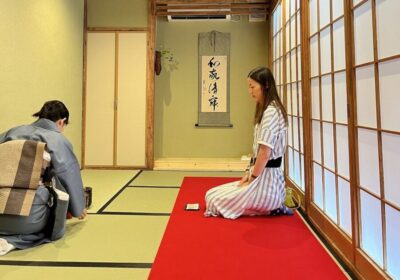
Browse the lists this tour appears in