
REVIEW · WORKSHOPS
Kyoto Michelin Ramen Workshop or Painting Ramen Essentials
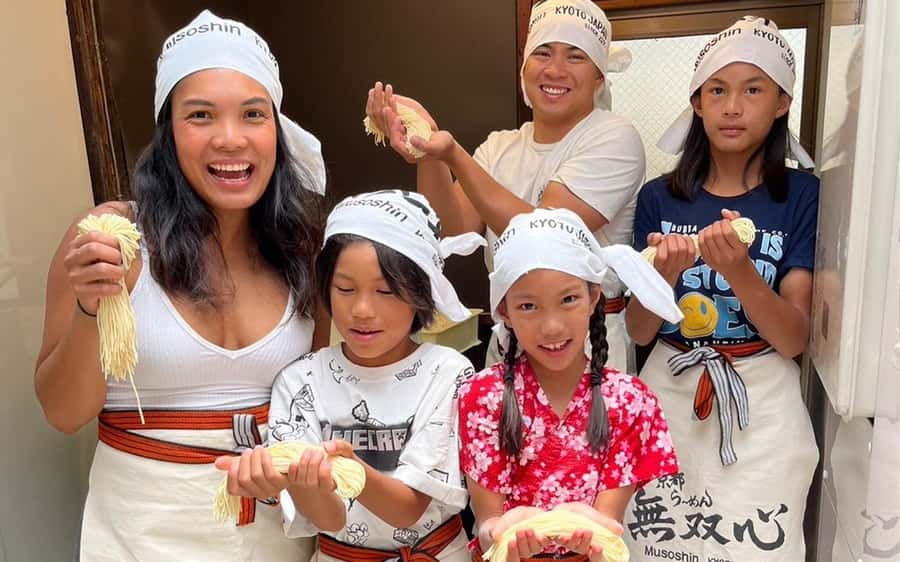
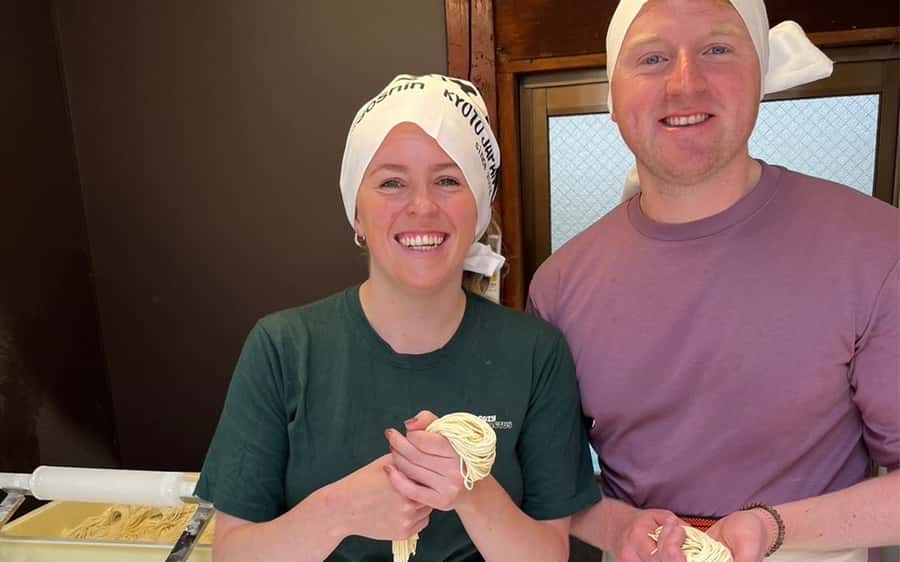
Kyoto’s Musoshin Ramen workshop lets you see how a serious ramen shop works, then sit down to eat the finished meal. You mix ingredients, work the dough through a noodle machine, and learn why Musoshin rests its noodles overnight and cooks its soup for 12 hours. The restaurant’s Toronto branch has earned Michelin recognition.
I especially like the hands-on noodle making, which gives children and adults something real to do instead of simply watching a demonstration. I also like that you can paint a bowl or spoon and finish with a meal at the restaurant, making the $54 price feel more useful than a standard cooking lesson.
The main drawback is space. One family found the workshop cramped when another pair joined them, so this is not the best pick if you need room to move or prefer a quiet, spacious class. Group size and meeting point can vary by option, so check the exact booking details.
In This Review
- Key points to know before booking
- Why this Kyoto ramen class feels different
- Mixing flour, water, and patience
- Painting a bowl or spoon before dinner
- The restaurant meal is part of the value
- A strong choice for children and mixed-age families
- The cramped room is the main caution
- Is $54 a fair price?
- Dietary needs and special requests
- Who should book this experience?
- Should you book the Musoshin ramen workshop?
- FAQ
- Where does the ramen workshop take place?
- How much does the experience cost?
- How long does the workshop last?
- Is a meal included?
- Do I eat the noodles I make?
- Are vegetarian and vegan options available?
- Can someone with celiac disease join?
- Can I paint a ramen bowl?
- Are a spoon, bowl, and apron included?
- What languages are spoken?
Key points to know before booking
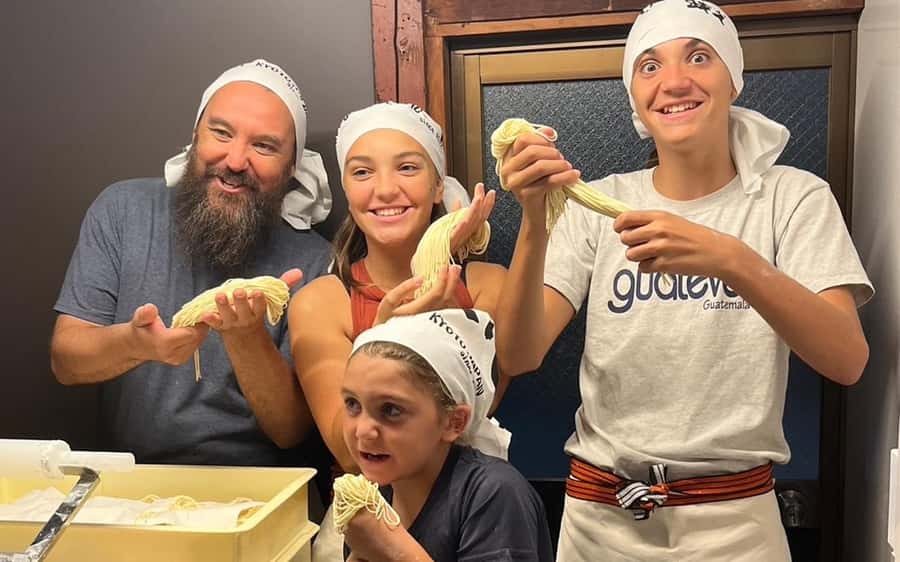
- You make noodles from the beginning: Mix ingredients, work the dough, and use the noodle machine with guidance from the staff.
- The meal comes at Musoshin Ramen: Your workshop finishes with a bowl of ramen and a drink at the restaurant.
- Painting is an optional creative extra: Design a ramen bowl or spoon, with a custom bowl fired free in a kiln for pickup the next day.
- Children can take part: The class is designed for families, and young participants can get involved with the dough and machine.
- Special diets can be discussed: Vegetarian and vegan ramen are available, and one family received gluten-free noodles and soup after a last-minute request.
- The staff makes the difference: Shin, Patti, Yaya, Momo, Shima, Rose, Koki, and Makoto are among the instructors praised for patient explanations and friendly English-language help.
Why this Kyoto ramen class feels different
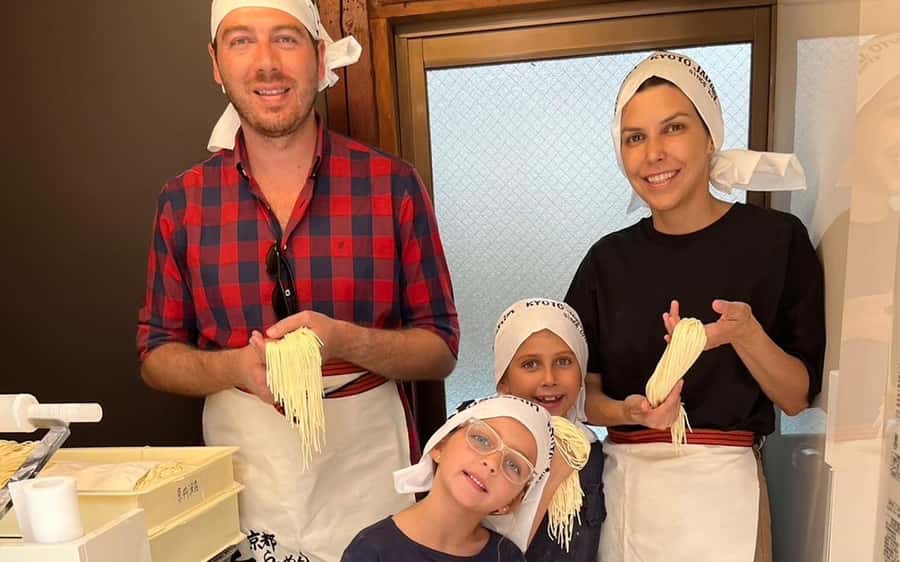
Many food activities in Japan leave you with a recipe, a photo, or a full stomach. This one gives you a better look at the work behind a bowl of ramen. Musoshin makes its noodles in-house every morning, rests them overnight, and prepares its soup over 12 hours. The soy sauce and roast pork are also made by the restaurant.
That matters because you are not making a simplified tourist version in a generic kitchen. You are learning inside a business that actually serves the food you are studying. Musoshin began in Kyoto in 2022 and now has six restaurants in Kyoto and Toronto. Its Toronto branch has been nominated for Michelin recognition for three consecutive years, while the Kyoto workshop presents the same recipe and restaurant approach.
I like this connection between class and meal. You learn why the dough needs time, then taste a bowl made with the same care. The lesson does not turn you into a ramen chef in one hour, but it does give you a practical sense of the ingredients, timing, and labor involved.
The class is also designed around pleasure rather than pressure. The instructors guide you through each step, and the activity has been praised for its relaxed pace. You can take photos and videos during the preparation, and staff can take a picture of you with the finished work.
A few more Kyoto trips to weigh up
- Kyoto: 45-Minute Tea Ceremony Lesson Experience
★ 4.3 · 2,378 reviews - Ramen Cooking Class at Ramen Factory in Kyoto
★ 5.0 · 1,937 reviews - Kyoto : Chopsticks Making Workshop in Gion with Engraving Option
★ 5.0 · 958 reviews
Mixing flour, water, and patience
The noodle portion takes about an hour according to the activity details. In practice, the exact balance between noodle making and painting depends on the option you book. Some schedules divide the time roughly equally between painting and ramen assembly, while other descriptions focus on a full hour of noodle work.
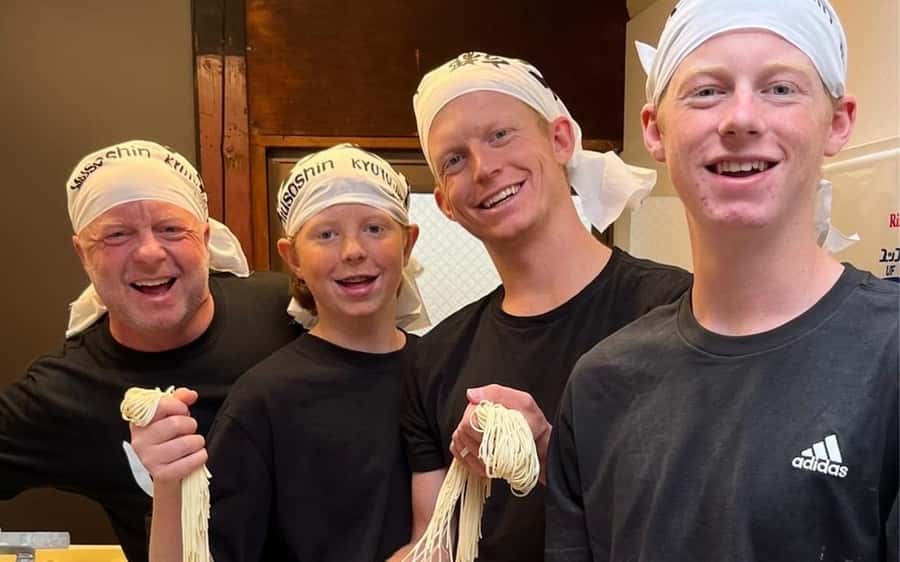
The process is hands-on. You learn about the ingredients, mix the dough, and work it through several stages with the noodle machine. Children can use their hands and help with the machine, under staff supervision. That gives younger participants a clear job and keeps the lesson from becoming a talk aimed only at adults.
Your noodles are not necessarily cooked immediately as the noodles you made. Musoshin lets its dough rest overnight before using it the next day, so the meal served after class is prepared by the restaurant. This is an important detail: you take part in making the noodles, but the included bowl is the restaurant’s properly prepared ramen rather than a rushed dish made from freshly finished workshop dough.
The result is a useful lesson in timing. You see that good ramen is not simply flour, broth, and toppings thrown together at the last minute. The noodles need planning, and the broth takes much longer than the meal itself suggests.
The instructors explain the process in English and Japanese. Names attached to the classes include Shin, Koki, Makoto, Patti, Yaya, Momo, Shima, and Rose. The teaching style can vary by session, but the pattern is consistent: clear instructions, help when you need it, and plenty of conversation.
Painting a bowl or spoon before dinner
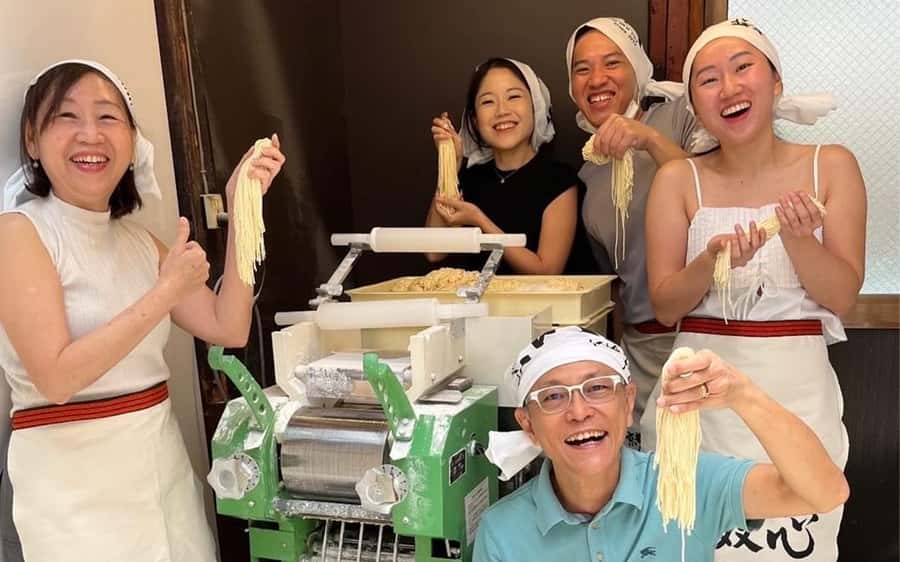
The painting option adds a calmer, more artistic part to the class. You can design a ramen bowl, or in some versions paint a spoon. One family spent about an hour painting bowls before moving on to roughly 30 minutes of ramen preparation.
The bowl is not simply a souvenir you carry away that afternoon. Musoshin can fire your custom design in a kiln for free, with pickup the following day. That makes this option especially useful if you have at least another day in Kyoto and want a personal memento rather than a mass-produced gift.
There is one practical painting tip worth remembering: light colors may not show strongly after firing. One participant found that pink needed to be applied thickly to appear clearly. If you choose a pale shade, use enough paint to make the design visible.
The activity information lists the ramen bowl, ramen spoon, apron, and some workshop items as options, so check what is included in your chosen package. A Musoshin bandana is included with the workshop. An apron can also be purchased separately, with one participant citing a price of 3,000 yen.
Painting changes the feel of the outing. Noodle making is active and messy; bowl or spoon painting is slower and gives you a chance to sit, talk, and make something personal. Families can split naturally, with adults helping younger children and older children taking more control of their designs.
The restaurant meal is part of the value
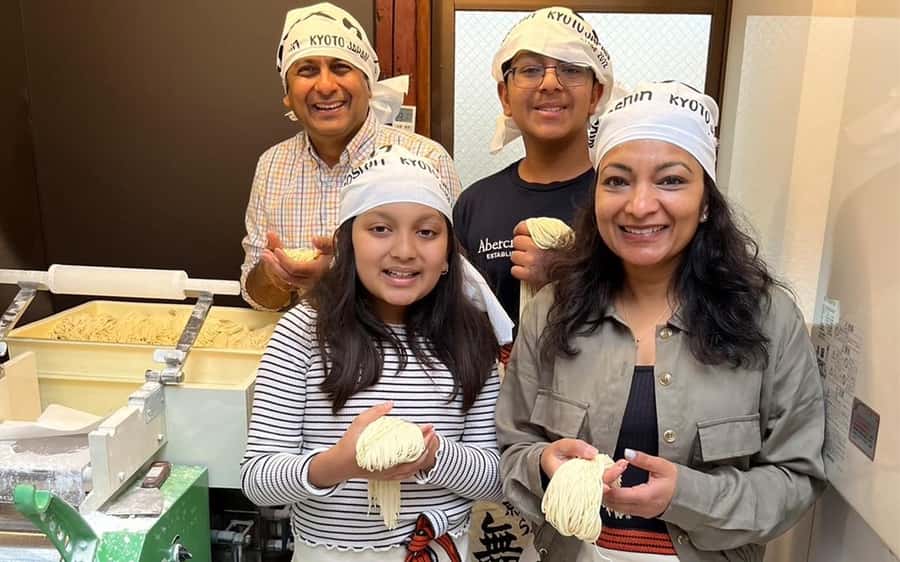
After the workshop, you eat at Musoshin Ramen and receive a drink. That meal is not an afterthought. It is one of the strongest reasons to choose this class over a cheaper noodle demonstration.
The restaurant makes its own noodles, broth, soy sauce, and roast pork. The soup cooks for 12 hours, and the same basic recipe is tied to the Musoshin restaurants in Kyoto and Toronto. You can choose from available ramen options, including vegetarian and vegan versions.
The exact bowl choices can depend on the session and restaurant menu, so do not assume every topping or style is available in every booking. Still, the class information and participant experiences make clear that the food is a central part of the activity, not just a small tasting.
Some people describe the meal as the best ramen they ate during a Japan trip that included many ramen meals. I would treat that as a matter of taste, but the useful point is this: you are not paying only for a craft activity. You receive a full restaurant meal from the business that teaches the class.
One family also ordered black ramen, Musoshin’s specialty, and fried chicken. Those extras were separate choices, not guaranteed parts of the workshop, but they show that the restaurant can turn the class into a broader meal if you want more than the included bowl.
Same city, a completely different kind of day:
- PERFECT KYOTO 1-Day Bus Tour
★ 5.0 · 13,518 reviews - Kyoto: Fushimi Inari, Kinkakuji, Bamboo Grove 1 Day Bus Tour
★ 4.8 · 4,316 reviews - Kyoto: Tea Ceremony in a Traditional Tea House in Kiyomizu
★ 4.9 · 3,519 reviews - Kyoto Geisha Walking Tour: Gion District & Hidden Gems
★ 4.7 · 3,273 reviews
A strong choice for children and mixed-age families
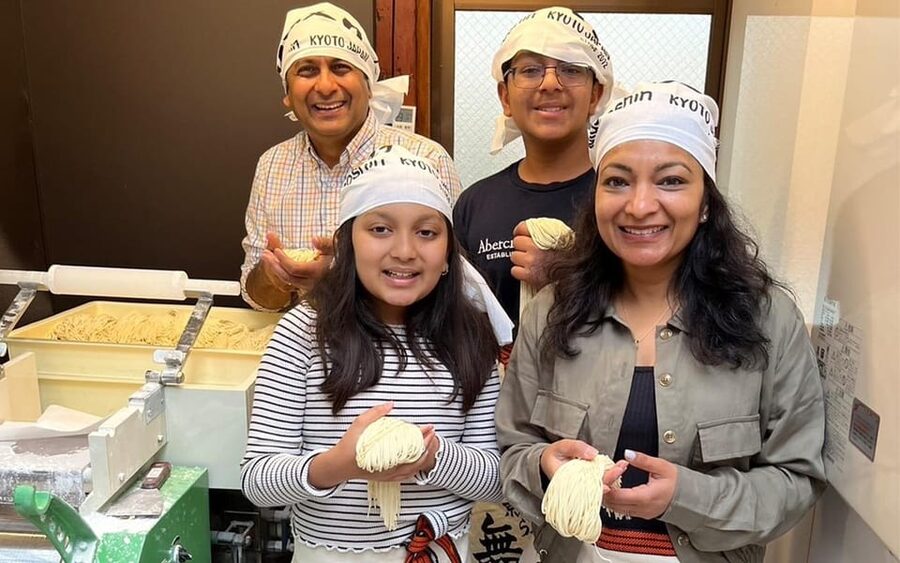
This is one of the better Kyoto activities for a family with different interests. A four-year-old joined one family, while other sessions included children around nine and 11 and teenagers. The class gives younger children simple physical tasks and gives older participants a clearer look at food production.
A nine-year-old reportedly wanted to give the activity 1,000 stars, but the practical reason it works for children is easy to see. They can touch the dough, operate parts of the noodle machine with help, paint, pose for a photo, and then eat what the adults have been discussing.
Adults are not left out. The restaurant side appeals to serious food lovers, and the noodle process offers enough detail to hold the attention of people who cook at home. You also receive an ingredient list, which can help you try the recipe later, although the overnight resting and 12-hour soup preparation show that home ramen requires planning.
The staff’s attitude is important here. They are described as patient, funny, and willing to include everyone. Patti and Yaya, in particular, were praised for keeping the mood lively, while Shin was singled out for his humor and hands-on teaching.
This is not a formal culinary school. If you want advanced knife work, precise culinary theory, or a long chef-led lecture, you may find it too light. If you want a friendly, active introduction that works for parents, children, and grandparents, it fits well.
The cramped room is the main caution
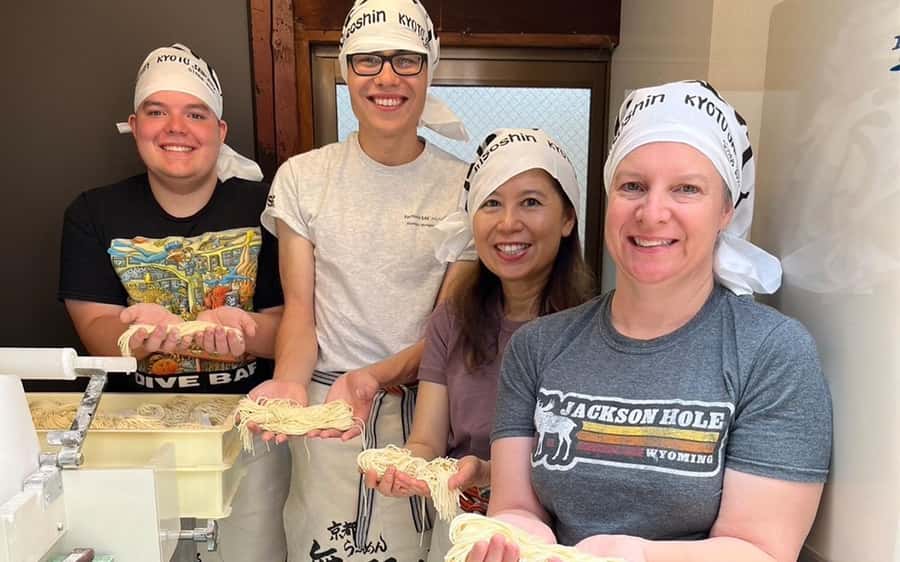
The workshop takes place in a small, carefully kept space. That can be part of its appeal: you are close to the noodle machine and instructors rather than watching from the back of a large studio.
But limited space can become uncomfortable. One family of four felt cramped when two additional people joined the session and suggested a cap of four participants. The activity is still workable, but you should set your expectations correctly. This is a compact working ramen shop, not a broad cooking classroom.
If your group includes young children, keep an eye on how much room they need around the equipment. The staff provides guidance, but a small room can feel busy when several people are moving, painting, and taking photos.
The meeting point may differ by the option booked, and the activity ends back at the meeting point. Read the exact option carefully before setting your day around it. The language support is English and Japanese.
Is $54 a fair price?
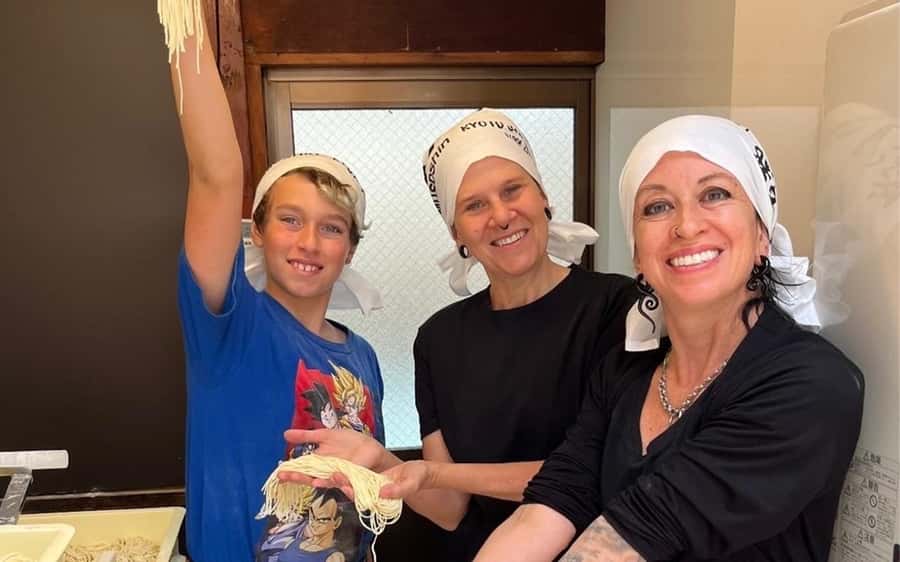
At $54 per person, this is not the cheapest way to eat ramen in Kyoto. You can buy a bowl at many restaurants for much less. The fair comparison is not a restaurant meal alone, though. The price covers instruction, hands-on noodle work, a Musoshin bandana, a drink, and the restaurant meal. Some options also include painting, a spoon, a bowl, or the kiln firing service.
The value improves if you want both an activity and lunch or dinner. Instead of paying separately for a craft class and a meal, you combine the two. The free kiln firing is another useful touch if you can return the next day for your bowl.
The price is less attractive if you mainly want to eat Michelin-associated ramen and have no interest in making noodles or painting. In that case, visit the restaurant on its own if possible. The workshop earns its cost through participation and context, not through the bowl alone.
I would also consider the cost of your time. A short, food-focused activity is a good use of a Kyoto morning or afternoon, especially on a rainy day. It is less suitable if you have only a few hours in the city and are trying to cover major sights.
Dietary needs and special requests
Vegetarian and vegan ramen options are available. If you have a serious allergy or need a very specific substitution, contact the provider before booking rather than relying on a casual request at the door.
One family discovered shortly before the class that their son had celiac disease. The staff arranged special gluten-free noodles and prepared a separate gluten-free soup so he could take part in the meal. That is encouraging, but it should not be treated as a guarantee for every allergy or every date.
Explain your needs clearly when you reserve. Ask what can be prepared, and confirm which ramen option applies to you. The kitchen makes its own noodles and broth, so advance notice is especially sensible for strict dietary requirements.
Who should book this experience?
I would choose this for families with children, couples who like cooking, and friends who want a shared activity with a clear finish. It also suits food lovers who want to understand the process behind ramen rather than simply ordering another bowl.
It is a good rainy-day plan because much of the experience happens indoors and combines making, painting, and eating. It also works well near the middle of a Kyoto visit, when you can return the next day for a kiln-fired bowl if you choose that option.
I would hesitate if you dislike compact spaces, need a highly structured professional cooking course, or have no spare time for the workshop. The class is friendly and practical, but it is not designed as an advanced chef program.
Book the painting option only if you can collect the fired bowl the next day, unless the provider gives you different arrangements. Check whether the spoon, bowl, apron, and other extras are part of your selected package. Reserve at least 24 hours ahead if you want the full-refund cancellation window, and the reserve-now, pay-later option can help keep your plans flexible.
Should you book the Musoshin ramen workshop?
Yes, if you want a family-friendly Kyoto activity that combines food, craft, and useful insight into ramen production. The strongest reasons are the real restaurant setting, the hands-on noodle process, the included meal, and the staff’s patient approach.
I would especially recommend it to parents with children or to anyone who has already eaten plenty of ramen and wants to learn what happens before the bowl reaches the table. Just allow for the small room, confirm dietary needs, and check exactly what your package includes.
FAQ
Where does the ramen workshop take place?
The activity takes place in Kyoto, Japan, and is run by Musoshin Ramen. The exact meeting point may vary depending on the option you book.
How much does the experience cost?
The listed price is $54 per person.
How long does the workshop last?
The noodle-making portion is described as about one hour. Some sessions divide the time between painting and ramen preparation, with one schedule described as about one hour of bowl painting followed by about 30 minutes of ramen preparation.
Is a meal included?
Yes. The experience includes a ramen meal and a drink at the Musoshin Ramen restaurant.
Do I eat the noodles I make?
The noodles made during the workshop need to rest overnight before use. The meal served after class is prepared by the restaurant.
Are vegetarian and vegan options available?
Yes. Vegetarian and vegan ramen options are available.
Can someone with celiac disease join?
A family received special gluten-free noodles and a separate gluten-free soup. If you need gluten-free food, contact Musoshin before the activity so your requirements can be discussed.
Can I paint a ramen bowl?
Yes, painting a custom ramen bowl is available as an option. Musoshin can fire the design in a kiln for free, and the bowl can be picked up the next day.
Are a spoon, bowl, and apron included?
The workshop includes a Musoshin bandana. A ramen spoon, ramen bowl, and apron are listed as options, so check your selected package. An apron may also be purchased separately.
What languages are spoken?
The workshop is offered in English and Japanese.
Just added around Kyoto
- Taste of Nishiki Market Walking Food Tour with Local guide★ 5.0 · 17 reviews
- Kyoto: Sushi Making Class with Sushi Chef★ 4.8 · 64 reviews
- Kyoto: City Secrets eBike Tour★ 4.9 · 196 reviews
- Sacred Pathways: Discover the Philosopher’s Path of Kyoto★ 4.9 · 20 reviews
- Private Tour to Monkey Park and Arashiyama Highlights★ 5.0 · 22 reviews
- Private Nara Tour from Osaka – Meet at Your Hotel★ 5.0 · 22 reviews
- Private Sake Tasting in Central Kyoto with Sake Sommelier★ 5.0 · 13 reviews
- Kyoto : Private Custom Walking Tour With A Local Guide★ 4.6 · 144 reviews
Workshops, compared.
Sushi Making Tokyo Roll and Authentic Japanese Sushi Class
Read our review →
Roll and Authentic Sushi Making Class in Asakusa
Read our review →
Ramen Cooking Class at Ramen Factory in Kyoto
Read our review →
Sushi Making Class in a Happi Coat near a Famous Spot
Read our review →
Sushi Making Osaka Roll and Authentic Japanese Sushi Class
Read our review →
Tokyo Sushi Making Class in Tsukiji with Professional Chef
Read our review →Browse the lists this tour appears in