
REVIEW · KIMONO & CULTURE EXPERIENCES
Kyoto: Meet the Geisha Maiko with Gion Walking Tour
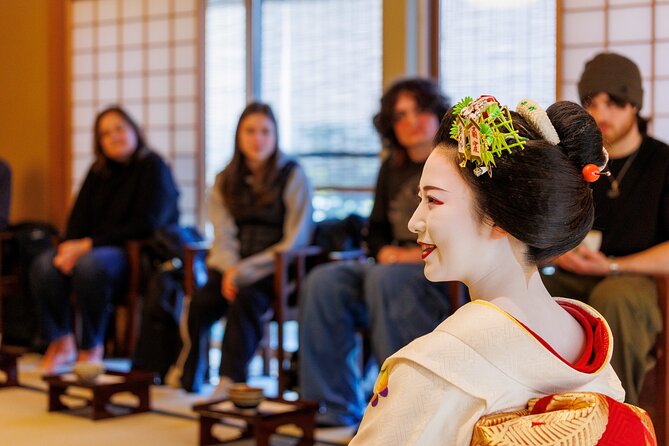
The rare treat here is not spotting a maiko hurrying through Gion. It is meeting one by arrangement, inside a private ochaya that normally keeps its doors closed to outsiders. You watch a traditional dance, hear shamisen music, and ask questions through your guide’s translation.
I like two things in particular: the walk gives the performance a useful setting, and the conversation afterward makes the artists feel like people rather than costumes in a street scene. Guides including Haruki, Naomi, Ayako, Miko, and Takuma have earned praise for their warmth and English skills. The main caution is value: at $109.43, the walking portion can feel repetitive, and some groups have found the translation hard to hear.
In This Review
- Key points to know before booking
- What the $109.43 price really buys
- Starting around Gion Shirakawa
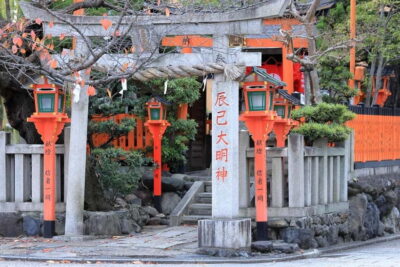
- Tatsumi Daimyojin Shrine and Tatsumi Bridge
- Hanamikoji Street and Gion Corner
- The private ochaya in Miyagawasuji
- The conversation is as important as the dance
- How long the walk feels in practice
- Respect is part of the experience
- Who will enjoy it most
- Cancellation and practical preparation
- Should you book this Gion maiko tour?
- FAQ
- How long does the Kyoto maiko and Gion walking tour last?
- Where does the tour begin and end?
- Will I meet a real maiko and geiko?
- Is photography allowed during the experience?
- What should I wear or bring?
- Is the tour suitable for children?
Key points to know before booking
- Private ochaya access: Enter a traditional entertainment house in Miyagawasuji, a rare opportunity even by Kyoto standards.
- A maiko and retired geiko: Meet both an apprentice artist and a fully trained former geiko, not just a performer passing by.
- Live traditional arts: Watch a maiko dance, with shamisen music provided by the ochaya’s okaasan, or house mother.
- Useful Gion orientation: Walk through Gion Shirakawa, Tatsumi Daimyojin Shrine, Tatsumi Bridge, Hanamikoji Street, and nearby temple precincts.
- Translated Q&A: Ask questions after the performance, with the guide interpreting the conversation.
- Practical restrictions: Wear socks, use comfortable shoes, manage stairs to the second floor, and expect the tour to run in rain or shine.
What the $109.43 price really buys
This is a three-hour cultural outing priced at $109.43 per person. That is not a bargain if you measure it against a simple neighborhood walk or a short dance show. It becomes easier to justify if your priority is access to an ochaya and a direct conversation with a maiko.
Kyoto’s geisha districts are not open-air museums. The wooden houses still serve a working entertainment world, and the people who live and work there deserve privacy. You cannot reasonably expect to walk in and ask questions at an ochaya on your own. The fee pays for the guide, interpretation, venue arrangement, and the chance to enter a place that is normally available only through personal introductions.
The value depends on how much you care about context. If you only want a photograph of someone in kimono, this is too expensive. If you want to understand the difference between a maiko and a geiko, learn how the districts function, see a traditional dance, and speak with the artists, the price is more defensible.
The tour receives a 4.9 rating from 400 reviews, with 98 percent recommending it. Those figures suggest strong consistency, but they do not erase the drawbacks. The most important one is the balance between the walk and the indoor visit. The performance and Q&A are the clear center of the outing. The walk helps explain them, but some people find it too long for the information delivered.
More Kimono & Culture Experiences in Kyoto
- Kyoto Geisha Walking Tour: Gion District & Hidden Gems
★ 4.7 · 3,273 reviews - Kyoto: Gion Magical Night Walking Tour with Geisha Trivia
★ 4.9 · 2,393 reviews - Kyoto: Gion Geisha District Walking Tour – Stories of Geisha
★ 4.7 · 2,187 reviews
Starting around Gion Shirakawa
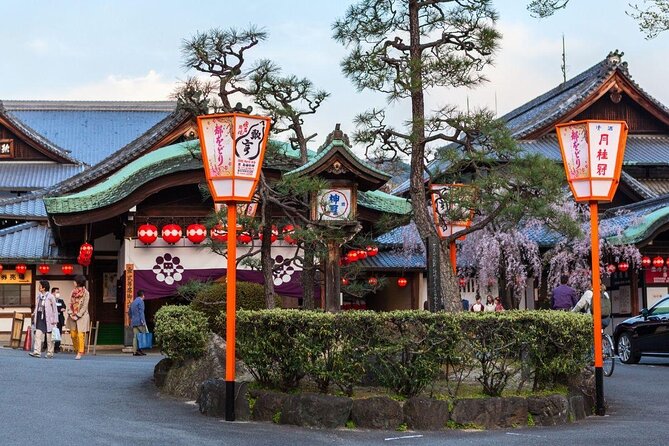
The walk begins at Miyagawasuji and takes you into the Gion area, beginning with Gion Shirakawa. This is the atmospheric part of the district, with narrow lanes, wooden machiya houses, and water along the Shirakawa area. Your guide explains who Kyoto’s geisha are, how maiko training differs from a geiko’s professional life, and why the district remains important today.
This introduction matters because the word geisha often gets flattened into a Western stereotype. In Kyoto, the preferred local terms are maiko for an apprentice and geiko for a fully trained artist. Their work involves dance, music, conversation, etiquette, and long years of practice. The tour gives you a basic framework before you meet the performers.
Guides have been one of the strongest parts of the outing. Ayako is praised for excellent English and for being willing to help after the tour. Naomi is described as friendly and well informed, while Chiko and Mika are praised for explaining Gion’s customs in detail. Guide quality can vary, as it does on any language-based tour, but the best guides make the walk far more useful than a succession of photo stops.
Gion Shirakawa is also a place where manners matter. Keep your voice low, do not block lanes, and do not treat any maiko you happen to see as a public attraction. The point of this tour is precisely that you can meet performers in a suitable setting instead of chasing them through the streets.
Tatsumi Daimyojin Shrine and Tatsumi Bridge
The next pause is Tatsumi Daimyojin, a small Shinto shrine associated with protection, good fortune, and safety. Its origins reach back to the Heian period, from 794 to 1185. The stop lasts only about five minutes, so do not expect a formal shrine lesson, but it gives the walk a useful link to Kyoto’s older religious life.
Nearby Tatsumi Bridge is one of Gion’s most recognizable little scenes. The bridge, traditional houses, and narrow lanes make it easy to see why this corner appears so often in photographs and films. Your guide can explain how the area around the bridge connects with the entertainment district.
There is a practical downside. The bridge and shrine are close together, and this part of the walk can feel like a slow loop rather than a route to somewhere new. One clear criticism of the tour is that the walking segment spends too much time pointing out the fronts of buildings and repeating information later discussed at the ochaya.
I would treat this portion as orientation, not the main event. Pay attention to the social rules and the district’s layout, but do not expect every stop to be a major sight. The charm is in the details: a lantern, a wooden façade, a quiet side lane, or the contrast between ordinary Kyoto streets and the discreet entrances used by the entertainment houses.
Hanamikoji Street and Gion Corner
Hanamikoji Street is a main road through Gion, lined with machiya houses, tea houses, shops, and restaurants. It offers the broadest sense of the district’s polished public face. Here, your guide talks about the way the geisha quarters operate and points out the types of buildings connected with the tradition.
You may also pass Gion Corner, a venue known for presenting several forms of traditional Japanese art. The itinerary does not include entry, so consider it a reference point rather than a separate show. The tour is not a general survey of Kyoto’s performing arts. Its focus stays on maiko and geiko culture.
The walk may also pass through the grounds of one of Kyoto’s oldest Zen temples. You do not enter the temple buildings, but you walk through the precinct as local pedestrians do and get a brief change of pace from the lanes of Gion. This is a modest addition, not a full temple visit, so plan a separate visit if you want architecture, gardens, or extended time inside.
This section works best when your guide connects the visible streets to the less visible world behind them. A good explanation can show why the district’s appearance matters, why the ochaya doors are discreet, and why respectful behavior is essential. A weaker explanation leaves you looking at façades while waiting for the performance.
More Walking Tours in Kyoto
- Private Kyoto Tour with a Local, Highlights & Hidden Gems, Personalised
★ 5.0 · 1,543 reviews - Kyoto Gion Geisha District Walking Tour – The Stories of Geisha
★ 5.0 · 1,441 reviews - Nishiki Market Brunch Walking Tour (7 Tastings + Brunch)
★ 5.0 · 1,355 reviews - Kyoto Arashiyama Walking Tour: Bamboo, Monkeys, Gardens & Secrets
★ 5.0 · 1,216 reviews
The private ochaya in Miyagawasuji
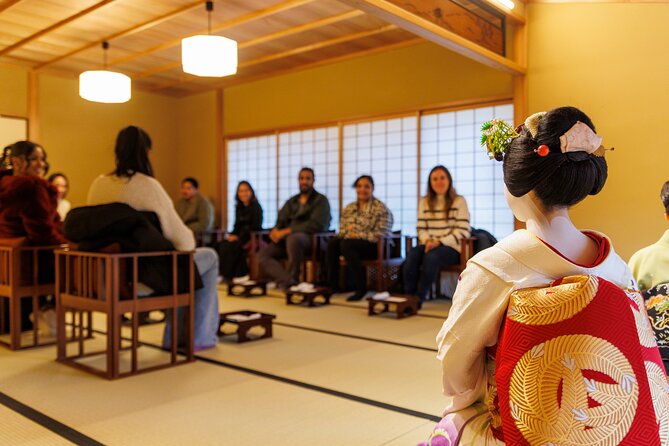
The tour’s payoff comes at Miyagawasuji, where the group enters a private ochaya. The name can cause confusion. This is not a café or a standard tea ceremony venue. An ochaya is a traditional entertainment house where clients are hosted by geiko and maiko, and access is normally restricted.
You climb stairs to the second floor, so this portion is not suitable for anyone who cannot manage stairs. The venue also requires socks. On rainy days, arrive with dry socks and avoid bringing wet clothing into the house. The walk continues in bad weather, but an umbrella is expected, and no wet cloth or wet socks are allowed inside.
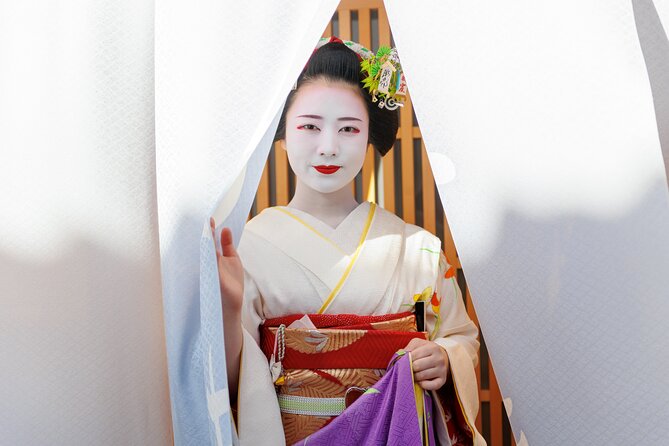
The indoor visit lasts about 90 minutes. You meet a maiko who is still training toward becoming a geiko, along with a retired geiko. The exact balance of speaking, music, dance, and questions may vary, but the format gives you more than a staged viewing. You have time to hear about training, daily customs, performance work, and the changes facing this traditional profession.
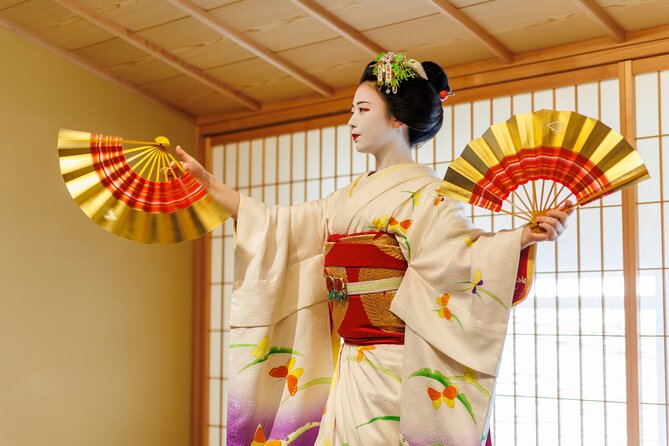
The performance is the emotional center of the afternoon. The maiko presents a classical Japanese dance in formal dress and makeup. In one described format, the okaasan, or mother of the geisha house, accompanies the dance on shamisen. That combination gives the event a sense of working tradition rather than a generic cultural demonstration.
The dance may be brief, but its meaning becomes clearer after the guide explains the gestures, costume, music, and discipline involved. You are not simply watching movement. You are seeing one part of an art form that takes years to learn and is tied closely to Kyoto’s seasonal and social customs.
The conversation is as important as the dance
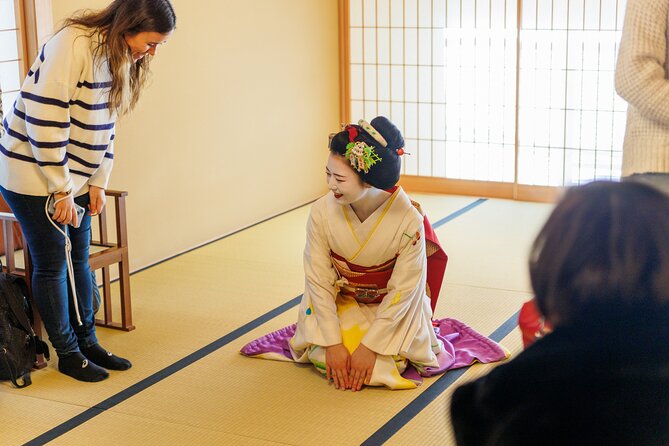
After the performance, you have a chance to ask questions. The guide translates between the group and the maiko or retired geiko, which lets you ask about real life instead of relying on a prepared speech.
This is where guides such as Miko have been especially useful. Her role as translator made the conversation accessible, while other guides, including Naomi and Ellie, have been praised for explaining the culture clearly. A strong interpreter does more than convert words. The guide also helps explain context and keeps questions respectful.
You can ask about training, performance, the life of a maiko, or the path from maiko to geiko. The supplied information does not promise a fixed question list, so prepare a few polite questions of your own. Avoid treating the artists as celebrities or asking for private details. The best questions are about their art and work.
One concern deserves plain treatment: sound. At least one participant found the guide and speakers too soft and missed much of the translated conversation. This may depend on room layout, group size, and the guide, but the group can reach 30 people. If hearing is important to you, stay near the guide and performers, and ask politely if a sentence was missed.
The photo session is another highlight, but it comes with rules. Photography and video are allowed during the performance and designated photo session only. If you want to post an image on social media, ask the maiko directly for permission first. Do not photograph people elsewhere in Gion without consent.
How long the walk feels in practice
The stated duration is about three hours, with roughly 30 minutes at Gion Shirakawa, brief stops at the shrine and bridge, a short visit along Hanamikoji Street, and about 90 minutes at the ochaya. The actual finish can run longer depending on the day.
The physical demand is moderate rather than strenuous. You walk through urban streets and traditional lanes, then climb stairs to the second floor. Comfortable shoes are a sensible choice. The tour runs in rain or shine, so weather can affect your comfort even though the indoor program continues.
Group size can reach 30, though some sessions are much smaller. One account describes an intimate group of around 10 people at the ochaya, which would make questions and photographs easier. A full group could feel less personal, especially during translation.
The meeting point is in Miyagawasuji, Higashiyama Ward, and the tour returns to the same general area at the special private house. Hotel pickup, drop-off, and transport to the meeting point are not included. The location is near public transport, but confirm the precise meeting instructions before setting out because the start point may not be an obvious landmark.
You can pair the tour with a visit to Higashiyama earlier in the day. The walk is conveniently placed for combining with nearby historic streets, but leave enough time to reach the meeting point without rushing. The tour may last longer than three hours, so do not schedule a tight dinner reservation immediately afterward.
Respect is part of the experience
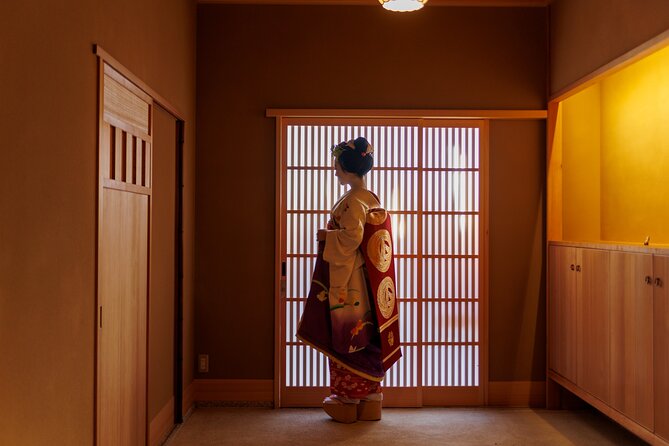
This tour makes a point of showing geisha culture in a respectful setting. That is important in Gion, where unwanted photographs, blocked doorways, and people following maiko have caused real frustration.
Your guide should explain where photography is acceptable and how to behave. You should also do your part:
- Keep to the side of narrow streets.
- Do not stop in front of private entrances.
- Ask before taking a close portrait.
- Follow the no-photo rules inside the ochaya.
- Request permission before sharing images online.
- Keep the indoor house dry and clean.
The tour’s value is weakened if you approach it as a hunt for exotic images. It works better when you see the maiko and geiko as working artists who are allowing a carefully managed introduction to their profession.
Who will enjoy it most
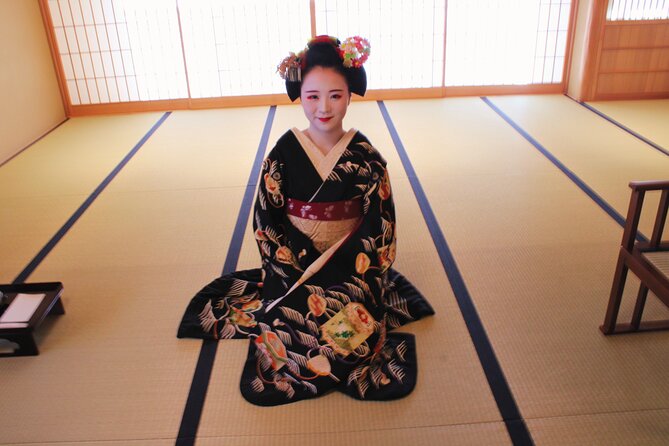
I would recommend this experience to someone visiting Kyoto for the first time who wants a clear introduction to maiko and geiko culture without arranging a private introduction. It suits people who enjoy live performance, cultural explanation, and small personal exchanges more than people who want a fast sightseeing circuit.
It is also a good fit if you are curious but wary of the common practice of chasing maiko through Gion. The private meeting removes that awkwardness and gives you a proper chance to ask questions.
The tour is less suitable for children under 10, anyone unable to manage a moderate walk and stairs, or anyone expecting food and drinks. Those extras are not included. It may also disappoint you if you want a broad history tour of Kyoto, a full temple visit, or a long meal with the performers.
Language matters. The guide’s English can make or break the experience because translation is central to the Q&A. Many guides have been praised for clear English and friendly teaching, but one low rating specifically cites poor English and another reports difficulty hearing. That is a fair reason to keep expectations measured.
Cancellation and practical preparation
You can cancel at least 24 hours before the local start time for a full refund. Changes or cancellations inside that window are not refunded. If the organizer cancels, the experience is refundable, but incidental costs such as hotel charges or bullet train tickets are not covered.
Wear comfortable walking shoes and bring an umbrella if rain is possible. Most important, wear clean, dry socks. You will need them at the traditional house, and wet socks are not allowed inside on rainy days.
Photography is limited to the performance and photo session. The second-floor venue is reached by stairs. The experience is operated by Japan Wonder Travel and uses a mobile ticket.
Should you book this Gion maiko tour?
Book it if the private ochaya visit is the reason you came to Kyoto. Meeting a maiko and retired geiko, watching a dance, hearing shamisen music, and asking questions through a translator is difficult to arrange independently. The experience offers a respectful alternative to chasing performers on the street.
Think twice if $109.43 feels high for a three-hour outing or if you prefer a tour packed with landmarks, food, and drinks. The walking route can feel circular, some explanations may repeat, and a large group or soft translation could reduce the pleasure.
My advice is simple: choose this for access and conversation, not for the walk alone. Confirm the meeting point, wear socks, leave room in your schedule, and approach the artists with courtesy. For the right person, the private house and human exchange make the cost worthwhile. For everyone else, a less expensive Gion walk may be the better buy.
FAQ
How long does the Kyoto maiko and Gion walking tour last?
The tour lasts about three hours, though it may run longer depending on the day.
Where does the tour begin and end?
It begins in Miyagawasuji in Kyoto’s Higashiyama Ward and ends in the same general area at a special private house used for the visit.
Will I meet a real maiko and geiko?
You meet a maiko and a retired geiko. The maiko performs, and both may take part in conversation, with the guide translating.
Is photography allowed during the experience?
Photography and video are allowed only during the performance and photo session. Ask the maiko directly for permission before posting images on social media.
What should I wear or bring?
Wear comfortable walking shoes and socks. Bring an umbrella in wet weather, and make sure your socks and clothing are dry before entering the venue.
Is the tour suitable for children?
No. Children under 10 are not allowed. Participants should also have moderate physical fitness because the experience includes walking and stairs to the second-floor performance room.
Just added around Kyoto
- Taste of Nishiki Market Walking Food Tour with Local guide★ 5.0 · 17 reviews
- Kyoto: Sushi Making Class with Sushi Chef★ 4.8 · 64 reviews
- Kyoto: City Secrets eBike Tour★ 4.9 · 196 reviews
- Sacred Pathways: Discover the Philosopher’s Path of Kyoto★ 4.9 · 20 reviews
- Private Tour to Monkey Park and Arashiyama Highlights★ 5.0 · 22 reviews
- Private Nara Tour from Osaka – Meet at Your Hotel★ 5.0 · 22 reviews
- Private Sake Tasting in Central Kyoto with Sake Sommelier★ 5.0 · 13 reviews
- Kyoto : Private Custom Walking Tour With A Local Guide★ 4.6 · 144 reviews
Kimono & Culture Experiences, compared.
Kyoto Geisha Walking Tour: Gion District & Hidden Gems
Read our review →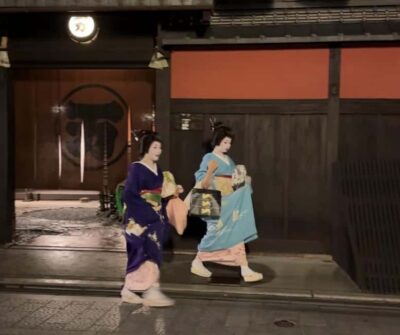
Gion Magical Night Walking Tour with Geisha Trivia
Read our review →
Gion Geisha District Walking Tour – Stories of Geisha
Read our review →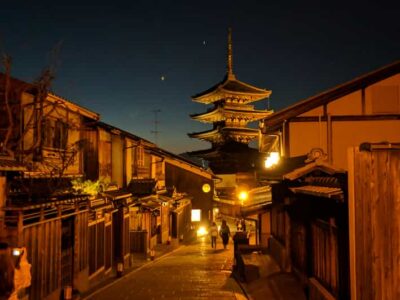
Best of Kyoto: Gion, Geisha, Pagodas & Cobblestones
Read our review →
Kyoto Gion Geisha District Walking Tour – The Stories of Geisha
Read our review →
Browse the lists this tour appears in