
REVIEW · WORKSHOPS
Kyoto: Make Your Own “Daruma” Craft & Painting Workshop
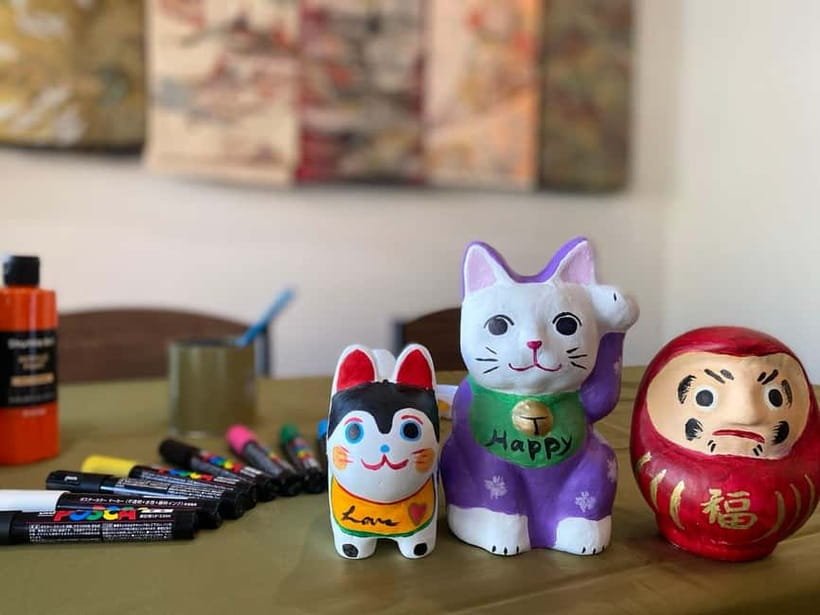
A plain papier-mâché shape becomes your own Kyoto keepsake in this friendly two-hour workshop. You can paint a Daruma, beckoning cat, dog, or fox, then take it home with the fingerprints of your trip still on it. The host, May, also referred to as Mei in one account, guides without taking over.
I like the very small group size, limited to four, and the calm, self-directed pace. I also like the useful souvenir: you pay $25 and leave with something you designed yourself, plus a drink and traditional Japanese confectionery. The main thing to consider is that the paint is acrylic, so you need to protect the piece carefully if rain is falling when you leave.
In This Review
- Key points at a glance
- A quiet craft break in central Kyoto
- Pick a Daruma, lucky cat, dog, or fox
- How the two-hour session works
- May’s gentle, practical guidance
- Tea, sweets, and a little conversation
- What makes the $25 price worthwhile
- A smart choice for families and rainy afternoons
- Fitting the workshop around Kyoto sights
- The souvenir problem, solved
- What the experience does not provide
- Booking details worth knowing
- Should you book the Kyoto Daruma workshop?
- FAQ
- How long does the Kyoto Daruma painting workshop last?
- How much does the workshop cost?
- What can I paint during the activity?
- Do I need previous painting experience?
- Is the workshop suitable for children?
- Is the instruction in English?
- What is included in the price?
- What happens if I need to cancel?
Key points at a glance
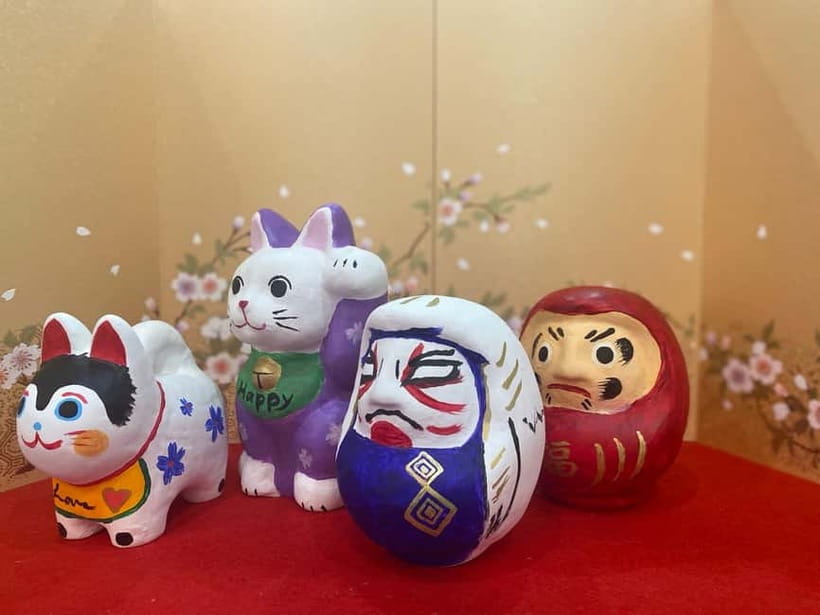
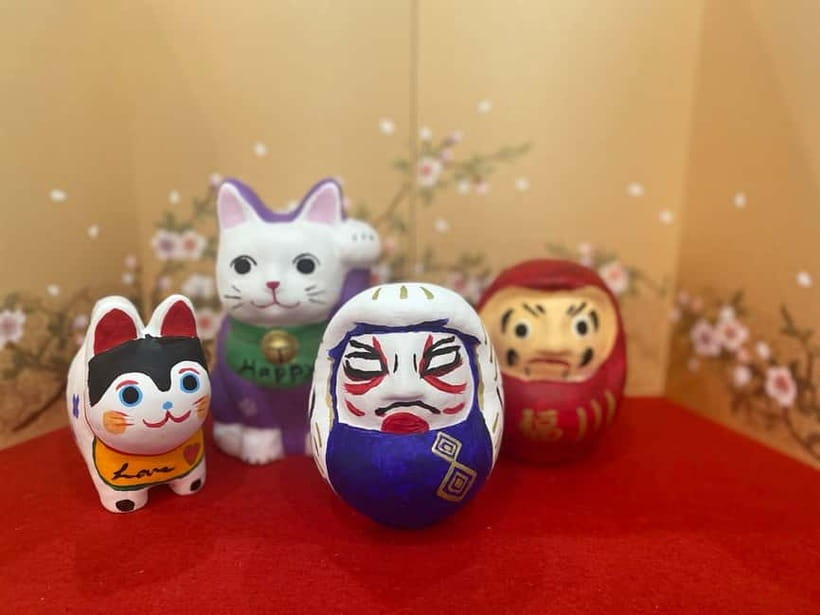
- Choose your own figurine: Paint a Daruma, beckoning cat, dog, or Kitsune fox.
- A genuinely small class: The workshop takes no more than four participants, making it comfortable for couples and families.
- Guidance without pressure: May offers help and ideas, while leaving room for your own creative choices.
- Tea and a Japanese sweet included: Your complimentary drink and confectionery make the session feel like a relaxed cultural visit, not just a craft lesson.
- A good rainy-day plan: The activity takes place indoors and works for adults, children, and complete beginners.
- Look around the boutique shop: Handmade kimono pieces, bags, and lacquer boxes may be available to buy, though shopping is not the main activity.
A quiet craft break in central Kyoto
Kyoto can fill a day with temples, shrines, crowded lanes, and train connections. This workshop gives you two hours to sit down, slow your hands, and make something with no need to chase the next sight.
The setting is a newly renovated boutique craft shop in the heart of Kyoto. You enter the workshop on arrival, where your host waits to greet you. The information provided does not give a street address or a formal walking route, so check the exact meeting details when booking.
The space is also a working shop. One participant bought handmade bags created by the host, while another noticed handmade kimono items and lacquer boxes. That adds interest, but keep your expectations sensible: shopping is an optional extra, not part of the $25 workshop fee.
The atmosphere matters here. You are not being hurried through a large class or pushed toward a standard finished design. The session is built around making, chatting, and taking your time.
A few more Kyoto trips to weigh up
- Kyoto: 45-Minute Tea Ceremony Lesson Experience
★ 4.3 · 2,378 reviews - Ramen Cooking Class at Ramen Factory in Kyoto
★ 5.0 · 1,937 reviews - Kyoto : Chopsticks Making Workshop in Gion with Engraving Option
★ 5.0 · 958 reviews
Pick a Daruma, lucky cat, dog, or fox
The most recognizable option is the Daruma, a rounded papier-mâché figure linked with determination and wishes. Traditionally, a Daruma often begins with blank eyes, with one eye filled when a goal is made and the other added when the goal is achieved. The workshop lets you explore that symbolism while giving you freedom to create your own version.
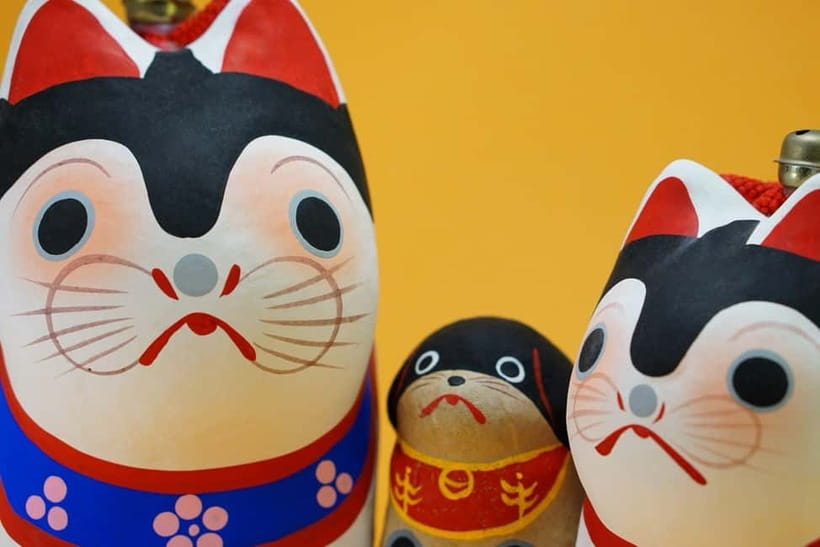
You can also choose a beckoning cat, often called a lucky cat, or paint a dog or Kitsune fox. These shapes give you different ways to connect with Japanese visual culture. The cat makes a familiar souvenir, the fox has strong connections with Japanese folklore, and the dog may appeal if you want something less expected than the usual Kyoto purchase.
The exact selection available on your visit is not specified, so treat the four shapes as the stated choices rather than a guarantee that every design will be waiting on the table at all times. If one particular figure matters to you, ask when you arrive.
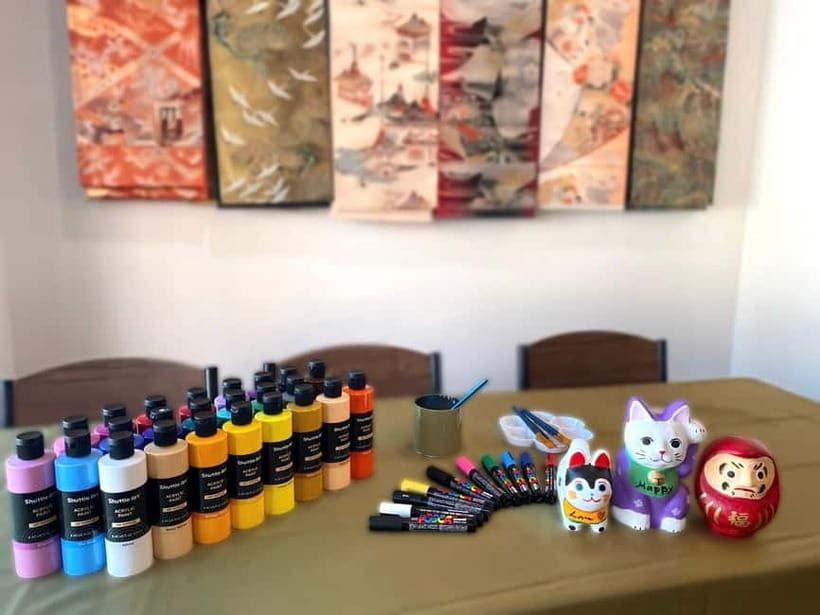
All materials are provided. You do not need art training, craft experience, or a carefully prepared idea. I would still spend a few minutes thinking about colors or symbols before the session, since a rough plan can make the painting stage easier.
How the two-hour session works
The workshop starts with an introduction to the craft and the meanings behind the figures. Your English-speaking local craft master explains the basic process, then helps you get started.
You will work on a papier-mâché form rather than building the entire object from wet paper and paste. That makes the activity approachable for children and adults who want to paint rather than take a long production class. The main creative work is personalizing the surface.
The next stretch is yours. You choose colors, add patterns, and decide how traditional or playful your design should be. May has been described as encouraging and patient, offering suggestions when asked but not hovering over the table. That is a useful balance. You can learn without feeling that every brushstroke needs approval.
Allow the full two hours. Some people finish quickly, while others want to add small details. One participant stayed a little longer to complete the final touches, with the host’s permission. That suggests some flexibility, but I would not plan on extra time being guaranteed. If you have a train or timed temple visit afterward, leave a buffer.
The craft process has a pleasant rhythm. Paint, pause, look at the shape from another angle, then add another detail. It is a hands-on activity, but not an exhausting one. I would choose it after a busy sightseeing morning or during a wet afternoon when you want something more meaningful than another café stop.
May’s gentle, practical guidance
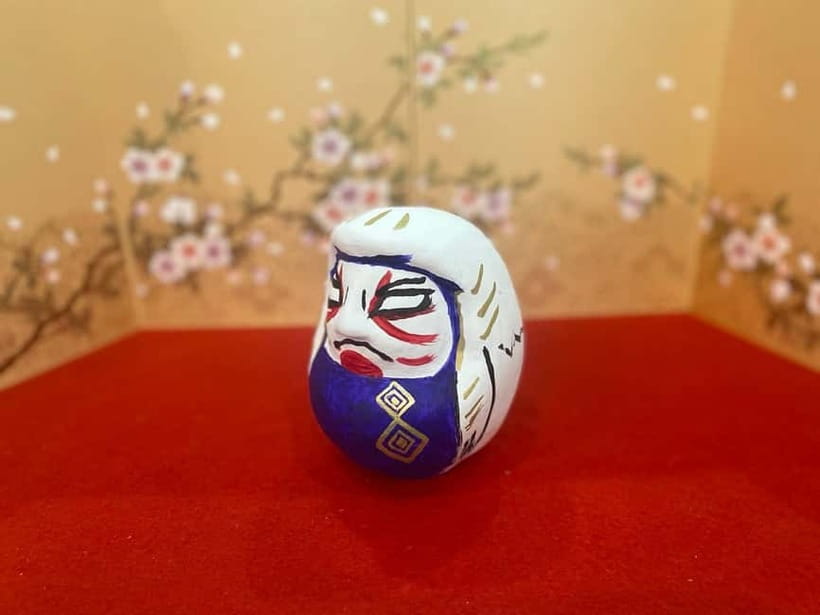
The host is the heart of this experience. The people who have taken part describe May as kind, welcoming, chatty, and helpful. One account calls her Mei, so you may see either name connected with the session.
Her role is not to create a model for you to copy. She explains the figures, answers questions, and encourages you to use your own style. Several participants appreciated being left alone to make their own choices, with help available when needed.
That approach suits mixed groups. A confident painter can work independently, while a beginner can ask for advice. A parent can help a child without worrying that the class is moving too fast. A couple can make matching figures or deliberately different ones.
English instruction is provided. The activity information does not promise a long formal lecture about Japanese art, so book this for a practical cultural lesson rather than a specialist history seminar. You learn through the objects, the host’s explanations, and the act of making.
Same city, a completely different kind of day:
- PERFECT KYOTO 1-Day Bus Tour
★ 5.0 · 13,518 reviews - Kyoto: Fushimi Inari, Kinkakuji, Bamboo Grove 1 Day Bus Tour
★ 4.8 · 4,316 reviews - Kyoto: Tea Ceremony in a Traditional Tea House in Kiyomizu
★ 4.9 · 3,519 reviews - Kyoto Geisha Walking Tour: Gion District & Hidden Gems
★ 4.7 · 3,273 reviews
Tea, sweets, and a little conversation
Each person receives a complimentary drink and a traditional Japanese confectionery of their choice. Specific drink options are not listed, although participants describe being served tea, including matcha in one case.
This is a small touch, but it improves the pace of the afternoon. You can pause with a cup in hand, ask about the Daruma or other figures, and enjoy a Japanese sweet without adding another purchase to your day.
The confectionery is part of the experience rather than a meal. Do not arrive expecting lunch or a full tea ceremony. Think of it as a modest refreshment that gives the workshop a more personal feel.
The setting encourages conversation. One couple spent much of the time chatting with the host because they were the only two participants. With a maximum of four people, the class has a good chance of feeling personal, although the exact group on your date will vary.
What makes the $25 price worthwhile
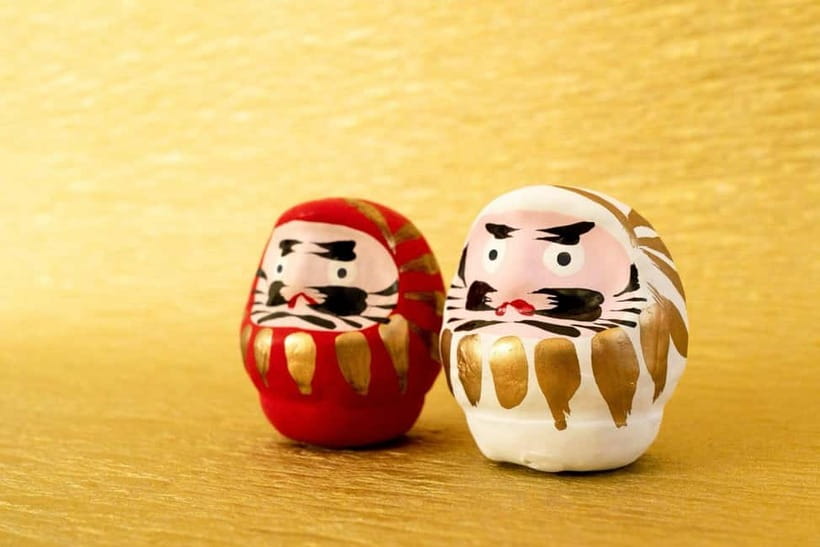
At $25 per person, this is not the cheapest way to buy a small Japanese ornament. It is good value if you want more than a shelf item.
Your fee covers the figurine, paints, tools, the craft lesson, English guidance, a drink, and a traditional sweet. Most importantly, it covers the time and attention needed to make a personal object. You are paying for an activity and a keepsake together.
A shop-bought Daruma may look more polished. It may also tell you very little about your time in Kyoto. Your painted figure will probably have uneven lines or an ambitious color choice. That is part of its charm. It carries a story: where you made it, who you were with, and what you wanted it to represent.
The value is especially strong for couples, families, and anyone who has already spent heavily on entry tickets and transport. Children get a creative activity, adults get a break, and everyone leaves with a physical reminder of the day.
The price does not include optional items from the boutique shop. Handmade bags, kimono pieces, and lacquer boxes may tempt you, so set a separate shopping budget if you like artisan goods.
A smart choice for families and rainy afternoons
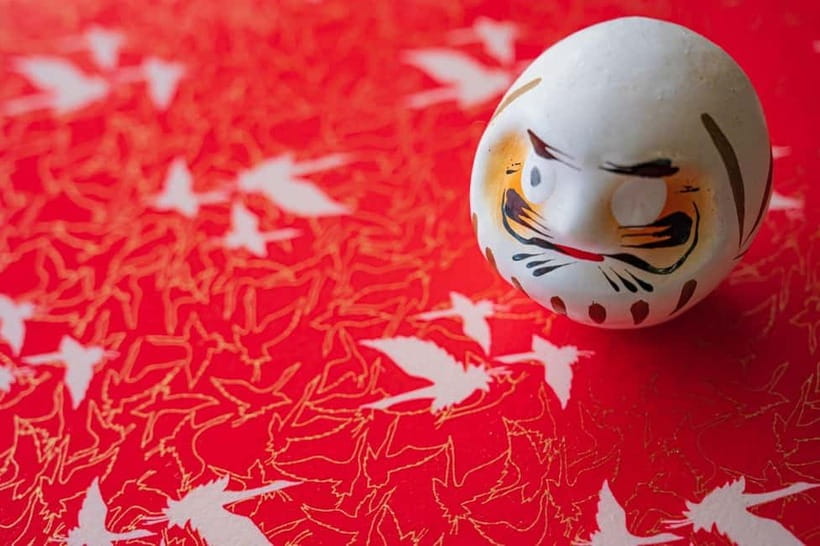
This is one of the easier Kyoto activities to fit into a family itinerary. No prior skill is required, all ages are welcome, and the class is indoors. A child can enjoy choosing colors and painting a simple design, while an adult can spend longer on patterns and detail.
The small class size also helps. A group of three was described as particularly comfortable, and a family shared the activity with a grandson. Still, remember that children need to handle paint and tools carefully. The supplied information does not give a minimum age, so confirm any age questions before booking.
Rain is a particularly good reason to choose this workshop. One person called it a wonderful rainy-day outing. Another offered a practical warning: acrylic paint can be damaged by rain before it has fully settled, so wrap your creation if the weather is wet.
The workshop is also listed as wheelchair accessible. That is useful, though the available details do not describe the entrance, restroom, or exact table setup. If you need a particular access arrangement, contact the provider before your visit.
Fitting the workshop around Kyoto sights
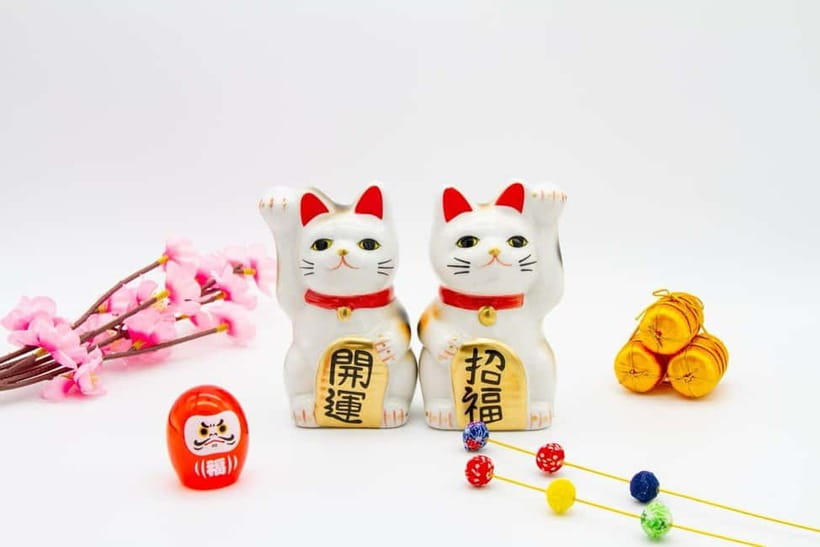
The class is in the heart of Kyoto and the surrounding area contains historically significant temples and shrines. The workshop itself does not include a guided temple or shrine tour, so plan those visits separately.
That location can work well in a day of nearby sightseeing. You might visit a temple or shrine before the two-hour class, then use the workshop as a slower middle section of the day. Or paint first and continue sightseeing afterward with your finished piece safely packed.
Do not treat the nearby religious sites as scheduled stops included in your booking. No specific temple names, transport arrangements, or walking times are supplied. Check a map and allow extra time for finding the shop, particularly if you are arriving from a large station or carrying luggage.
I like the contrast. Kyoto’s famous sights show you finished buildings, gardens, sculptures, and ritual objects. At the workshop, you make a small object with your own hands. The two experiences complement one another without pretending to be the same kind of cultural visit.
The souvenir problem, solved
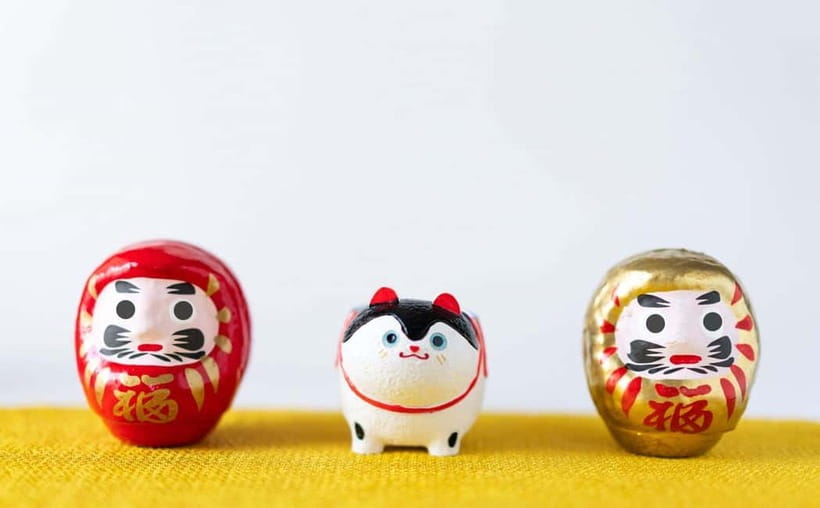
Kyoto has no shortage of souvenirs. You can buy sweets, fans, ceramics, fabric goods, charms, and figurines almost everywhere. The problem is choosing something that feels connected to your trip rather than simply purchased during it.
This workshop solves that problem neatly. Your Daruma or lucky cat may not be perfect, but it is yours. You decide the expression, the colors, and the level of detail. A child can take home a bright, bold figure, while an adult might create something restrained or symbolic.
The shape also gives you a useful reminder of Japanese traditions. The host explains the meaning behind the figures, so you are not simply painting a blank ornament with no context.
Pack it thoughtfully. Acrylic paint and moisture are a poor combination when the piece is fresh. If you are traveling onward, protect it from rain and from being crushed inside a full suitcase. The information does not specify the packaging provided, so bring or request suitable protection if you need it.
What the experience does not provide
A fair review should note the limits. This is not a full-day art course, a museum visit, or a formal temple tour. The session focuses on decorating a prepared papier-mâché figurine.
You should also expect a relaxed class rather than a tightly scripted presentation. That is a strength for many people, but anyone seeking advanced painting instruction may find the activity basic. The workshop is designed for all abilities, so its goal is enjoyment and cultural connection, not technical mastery.
The small shop setting means the experience is intimate, but it may not suit someone who prefers a large group with lots of social energy. You may spend much of the time quietly painting. That is ideal if you want peace, less so if you want a lively group outing.
Finally, the activity information repeats that surrounding temples and shrines are nearby, but it does not include admission, guiding, or transport to them. You need to organize those parts yourself.
Booking details worth knowing
The session lasts two hours and is taught in English. It is limited to four participants, so book ahead if you want a particular date or a private-feeling session.
You can reserve now and pay later, which helps if your Kyoto schedule is still changing. Cancellation is free up to 24 hours before the activity for a full refund.
Enter the workshop when you arrive. Your host will be waiting inside to greet you. Since the exact address and starting times depend on availability, check your confirmation closely and avoid arriving with only a few spare minutes.
The activity is listed as wheelchair accessible. No prior experience is needed, and all materials are included.
Should you book the Kyoto Daruma workshop?
I would book this if you want a quiet, hands-on break from temple visits and a souvenir with a personal story. It is particularly well suited to couples, families, first-time painters, and anyone looking for a rainy-day plan.
The strongest reasons to go are the four-person limit, May’s patient guidance, the included tea and sweet, and the chance to make a Daruma, cat, dog, or fox in your own style. The $25 price is fair because it combines instruction, materials, refreshments, and a finished keepsake.
I would skip it only if you want a serious art lesson, a formal temple tour, or a fast activity that takes less than an hour. Also plan carefully if rain is forecast, since fresh acrylic paint needs protection.
For most visitors, this is a simple and worthwhile addition to a Kyoto itinerary. You leave with a small handmade object, but the better souvenir is the memory of sitting still and making something while the city carries on outside.
FAQ
How long does the Kyoto Daruma painting workshop last?
The workshop lasts two hours. Starting times vary, so check availability when booking.
How much does the workshop cost?
The listed price is $25 per person.
What can I paint during the activity?
You can paint a papier-mâché Daruma, beckoning cat, dog, or Kitsune fox figurine.
Do I need previous painting experience?
No. The workshop is suitable for all skill levels, and no prior experience is required.
Is the workshop suitable for children?
Yes. The activity is described as suitable for all ages, including adults and children.
Is the instruction in English?
Yes. The instructor language is English.
What is included in the price?
The price includes all craft materials, the papier-mâché workshop, guidance from a local craft master, one complimentary drink, and a traditional Japanese confectionery for each participant.
What happens if I need to cancel?
You can cancel up to 24 hours in advance for a full refund. You can also reserve now and pay later to keep your plans flexible.
Just added around Kyoto
- Taste of Nishiki Market Walking Food Tour with Local guide★ 5.0 · 17 reviews
- Kyoto: Sushi Making Class with Sushi Chef★ 4.8 · 64 reviews
- Kyoto: City Secrets eBike Tour★ 4.9 · 196 reviews
- Sacred Pathways: Discover the Philosopher’s Path of Kyoto★ 4.9 · 20 reviews
- Private Tour to Monkey Park and Arashiyama Highlights★ 5.0 · 22 reviews
- Private Nara Tour from Osaka – Meet at Your Hotel★ 5.0 · 22 reviews
- Private Sake Tasting in Central Kyoto with Sake Sommelier★ 5.0 · 13 reviews
- Kyoto : Private Custom Walking Tour With A Local Guide★ 4.6 · 144 reviews
Workshops, compared.
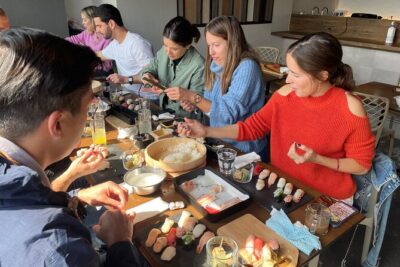
Sushi Making Tokyo Roll and Authentic Japanese Sushi Class
Read our review →

Roll and Authentic Sushi Making Class in Asakusa
Read our review →
Ramen Cooking Class at Ramen Factory in Kyoto
Read our review →
Sushi Making Class in a Happi Coat near a Famous Spot
Read our review →

Sushi Making Osaka Roll and Authentic Japanese Sushi Class
Read our review →
Tokyo Sushi Making Class in Tsukiji with Professional Chef
Read our review →Browse the lists this tour appears in