
REVIEW · WORKSHOPS
Kyoto: Japanese Archery Workshop with Experienced Instructor
Kyudo is not a quick lesson in firing arrows. It is a careful sequence of posture, grip, breathing, and release, taught here by Yamaguchi-sensei, a master with more than 50 years of practice and a Kyoshi 6th grade rank. You begin handling the equipment early, so this feels like a real introduction rather than a lecture.
I like the small group of four, which gives you time for hands-on correction, and I like the calm spirit behind the art. The main consideration is communication: the instructor teaches in Japanese, with English help from an assistant or student interpreter. It works well, but you should be comfortable learning through demonstration, gestures, and translation.
In This Review
- Key points
- What Kyudo Teaches Beyond Hitting a Target
- Meeting Master Yamaguchi in a Kyoto Studio
- The First Minutes: Bow, Stance, and Form
- Shooting Arrows in a Small Group
- The Cultural Meaning Behind Each Movement
- Why the Four-Person Limit Matters
- Location, Arrival, and What to Wear
- Is $38 Good Value for One Hour?
- Who Will Enjoy This Kyudo Workshop Most?
- Should You Book It?
- FAQ
- How long does the kyudo workshop last?
- How much does the experience cost?
- How many people can join one session?
- Is the instructor fluent in English?
- Who teaches the class?
- Is kyudo equipment included?
- Do I need to bring my own bow or arrows?
- What should I wear?
- Can children participate?
- Where is the meeting point?
- Can nonparticipants watch the session?
- Is hotel transportation included?
- Can I cancel for a refund?
- Can I reserve now and pay later?
Key points
- Master Yamaguchi’s long experience: Learn from a Kyoshi 6th grade teacher who has practiced kyudo for more than five decades.
- Hands-on from the start: Practice the stance, bow hold, movements, and shooting rather than simply watching a demonstration.
- A group capped at four: Small numbers mean more personal guidance and more chances to try.
- Japanese instruction with English support: Printed English material and an interpreter help explain the cultural and spiritual ideas behind kyudo.
- A serious bow in a beginner setting: The tall Japanese bow can feel heavier than many Western bows, so comfortable clothing and reasonable arm strength help.
- Easy central Kyoto access: The studio is about a 10-minute walk from JR Tambaguchi, Hankyu Omiya, and Randen Shijo-Omiya stations.
What Kyudo Teaches Beyond Hitting a Target
Kyudo, often translated as the way of the bow, is a Japanese martial art built around control and form. The arrow hitting the target is only one part of the lesson. You are also learning how to stand, hold tension, move with purpose, and stay calm.
That gives this workshop a different feel from a standard archery attraction. The opening movements can seem almost like a karate kata, with each step and position carrying meaning. You may find the first attempts tricky, but that difficulty is useful. It shows why kyudo takes years to practice.
The session also gives you a glimpse of the peaceful side of Japanese martial arts. The instructor repeatedly encourages relaxation, even while you are using a bow that can feel surprisingly large and strong. You are not simply trying to overpower the equipment. You are trying to work with it correctly.
This is still a practical activity. You will hold the bow, learn the basic technique, and shoot arrows toward a target. But the workshop asks you to pay attention to the process, not just the result.
A few more Kyoto trips to weigh up
- Kyoto: 45-Minute Tea Ceremony Lesson Experience
★ 4.3 · 2,378 reviews - Ramen Cooking Class at Ramen Factory in Kyoto
★ 5.0 · 1,937 reviews - Kyoto : Chopsticks Making Workshop in Gion with Engraving Option
★ 5.0 · 958 reviews
Meeting Master Yamaguchi in a Kyoto Studio
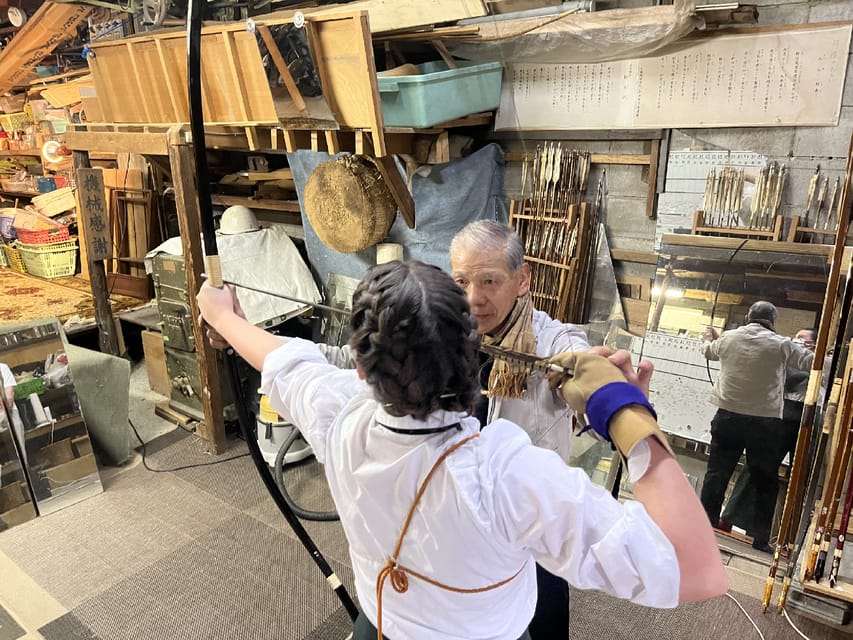
The class takes place at からくり弓道体験場, a dedicated kyudo experience venue in Kyoto. The teacher is identified in participant feedback as Yamaguchi-sensei, and the supplied information describes him as a professional instructor with more than 50 years of kyudo practice and a Kyoshi 6th grade qualification.
That background matters in a one-hour class. You do not have much time for a long technical course, so an experienced teacher who can spot basic errors quickly is important. The instruction is described as patient, attentive, encouraging, and sometimes humorous. You can expect the teacher to guide you through each movement rather than leaving you to guess.
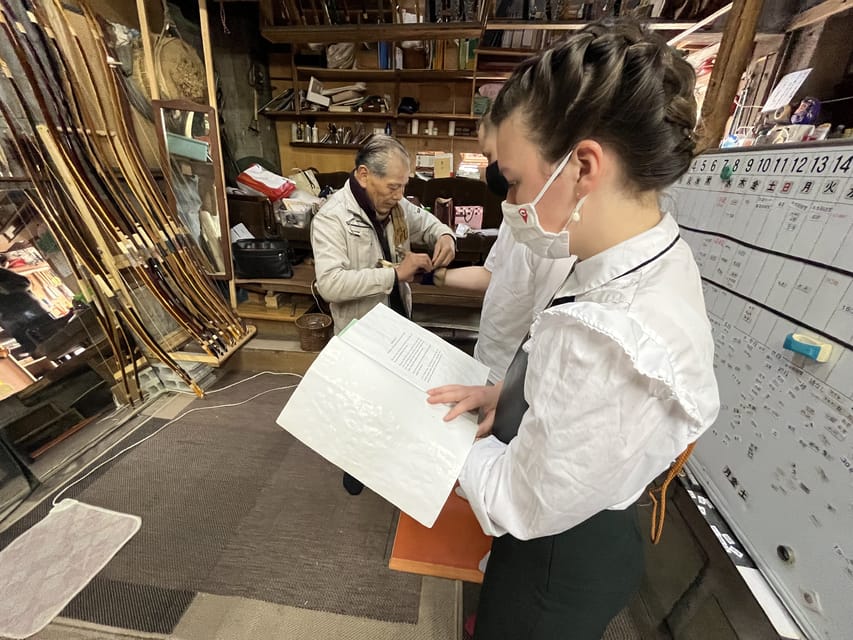
The instructor speaks Japanese. English materials are provided, and an assistant or student interpreter helps explain the lesson. The interpreter may also know archery, which is useful when a translation needs to explain not just a word, but the position of your hands or shoulders.
You should not expect polished English from the main teacher. You also should not treat that as a major barrier. The class relies on demonstration, touch, gestures, shared enthusiasm, and translation. Ask questions when something is unclear. The instructor is described as friendly and willing to help.
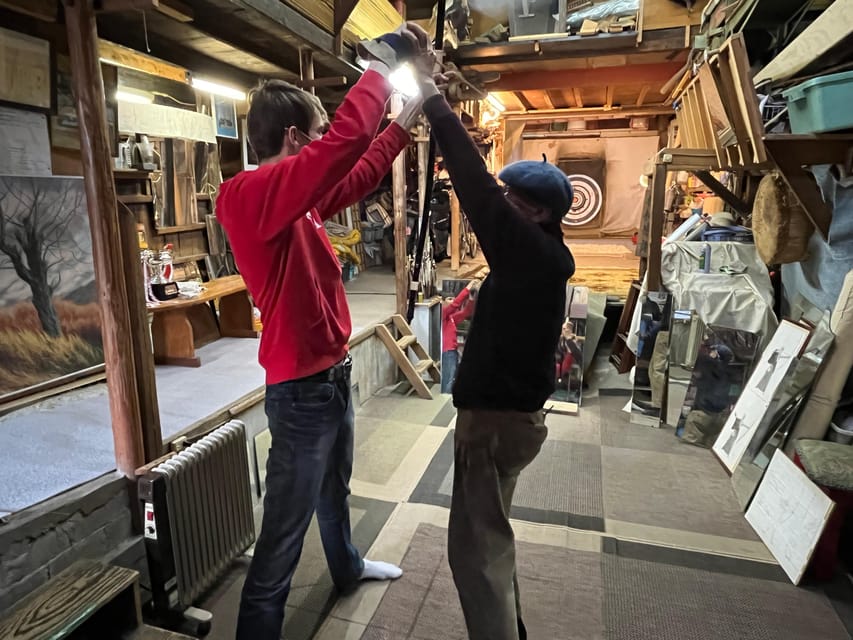
Hands-on correction is part of the teaching style. The instructor may place or guide your hands to show the correct bow hold and stance. If you prefer not to receive this kind of physical guidance, tell the organizers ahead of time.
The First Minutes: Bow, Stance, and Form
The lesson moves into practice quickly. You learn how to stand and how to hold the bow before working toward a shot. This is useful for beginners because you get a physical sense of kyudo instead of spending the entire hour listening to background information.
The bow itself may surprise you. Japanese kyudo bows are tall, and one participant found the equipment heavier than bows commonly used in Europe. That does not mean you need advanced athletic ability, but you should wear clothes that let your arms and shoulders move freely.
At this stage, the teacher watches closely. Small adjustments to your posture and grip can affect the whole movement. With only four participants, the instructor has a better chance to spend time with each person. You may still need patience, since the movements are more involved than they first appear.
The class treats form as part of the art, not as decoration. Your stance, the way you draw, and the release all belong to one controlled sequence. That is why beginners often describe the activity as part martial art and part meditation.
Shooting Arrows in a Small Group
After learning the basic positions, you work toward shooting at the target. You are not expected to perform like a trained kyudo student. The point is to understand the mechanics and experience the focus required to make a controlled shot.
You may have more than one attempt, with the exact number depending on the pace of the group and the instructor’s teaching. Small groups help here. Each person receives individual guidance, and the class does not feel like a crowded turn-taking attraction.
The target gives the session a satisfying goal, but do not judge the experience only by how many arrows land. One participant described the art as extremely difficult while still praising the teacher’s patience. That is a fair way to approach it. A successful hit feels rewarding, but a well-executed movement can also be a good result for a first lesson.
Some beginners do hit the target during the session. The important point is that the teacher helps you understand why an arrow travels as it does. You get a taste of the discipline rather than a staged photo opportunity.
Families can take part, too. A seven-year-old used a smaller bow, and teenagers aged 12 and 15 were able to participate. These examples show that the class can work for families, but younger children may need extra help and focus. Only participants may attend because space at the venue is limited.
Same city, a completely different kind of day:
- PERFECT KYOTO 1-Day Bus Tour
★ 5.0 · 13,518 reviews - Kyoto: Fushimi Inari, Kinkakuji, Bamboo Grove 1 Day Bus Tour
★ 4.8 · 4,316 reviews - Kyoto: Tea Ceremony in a Traditional Tea House in Kiyomizu
★ 4.9 · 3,519 reviews - Kyoto Geisha Walking Tour: Gion District & Hidden Gems
★ 4.7 · 3,273 reviews
The Cultural Meaning Behind Each Movement
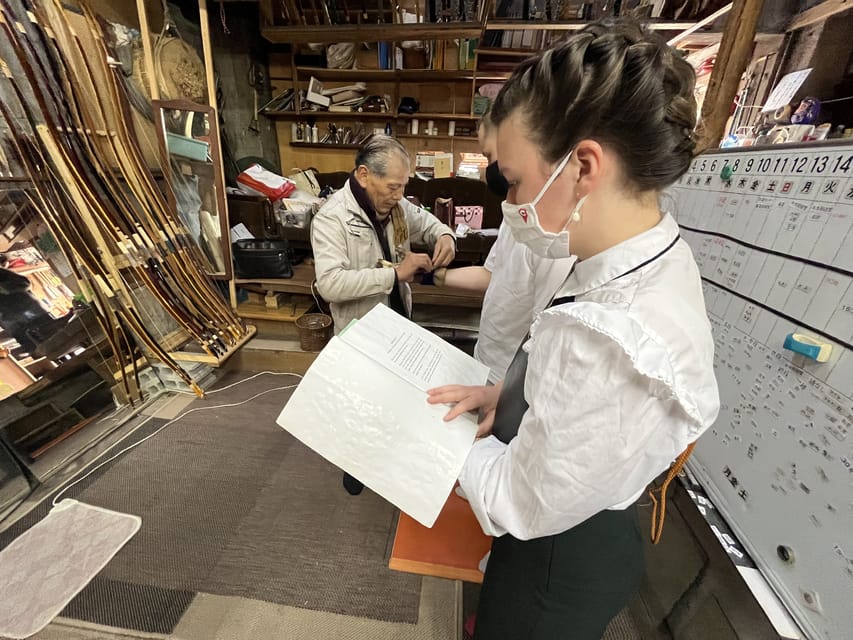
A good part of the workshop is the explanation of what kyudo represents. The assistant helps describe the history of Japanese archery and the spiritual or peaceful ideas connected with the practice.
You learn that kyudo is more than a method for sending an arrow toward a target. The formal movements encourage patience, self-control, and concentration. The repeated instruction to relax may sound surprising when you are holding a heavy bow, but it points to the balance at the heart of the art.
This cultural context makes the session valuable for anyone who has already seen Kyoto temples and gardens but wants a more active connection with Japanese tradition. You are not just looking at an old practice. You are trying to carry out part of it under the eye of someone who has spent decades refining the same movements.
The English materials help, but the lesson is not presented as a long academic talk. Most of your understanding comes from watching, copying, trying, and asking questions. That keeps the one-hour format lively.
Why the Four-Person Limit Matters
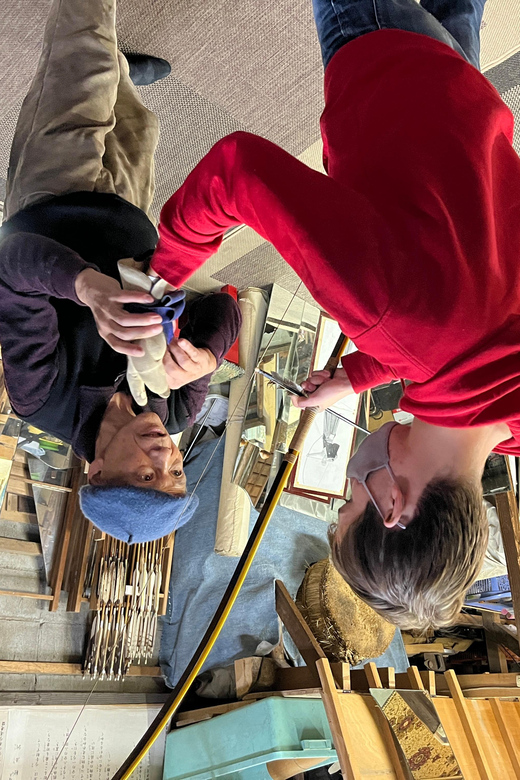
A four-person maximum is one of the best features of this workshop. Kyudo form is personal. The teacher needs to see whether your feet, shoulders, arms, and grip are working together, and that is easier in a small room with a short line of participants.
A larger group could make the activity cheaper to operate, but it would likely reduce your time with the instructor. Here, you can receive hands-on help and watch other beginners make the same adjustments. Seeing another person corrected can make your own movement easier to understand.
The small setting also creates a warm atmosphere. You are sharing a quiet activity with a few people rather than moving through a large commercial attraction. That suits the thoughtful nature of kyudo.
The trade-off is that space is limited. Friends or family members who are not taking part cannot sit in on the class. Plan on having only booked participants attend.
Location, Arrival, and What to Wear
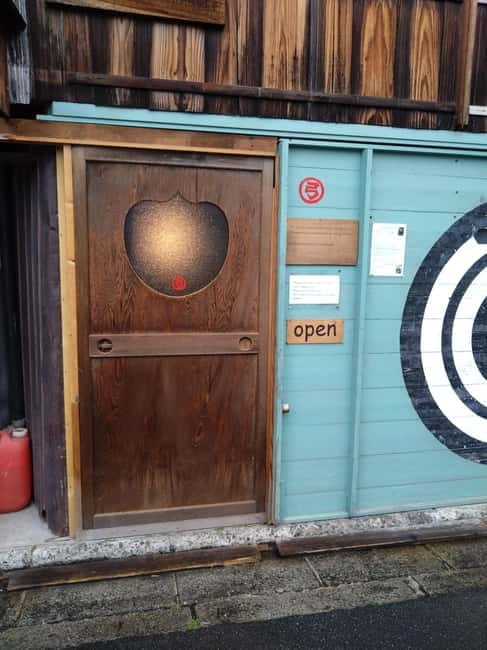
The studio is roughly a 10-minute walk from JR Tambaguchi, Hankyu Omiya, or Randen Shijo-Omiya station. That makes it practical to combine with other stops in central Kyoto, though you should allow enough time to find the entrance.
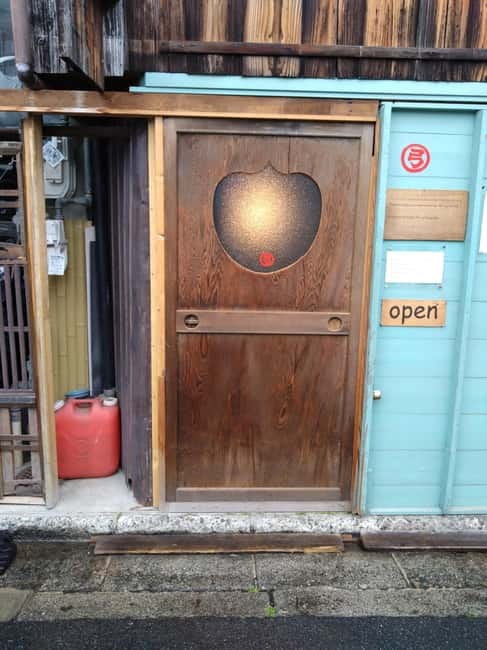
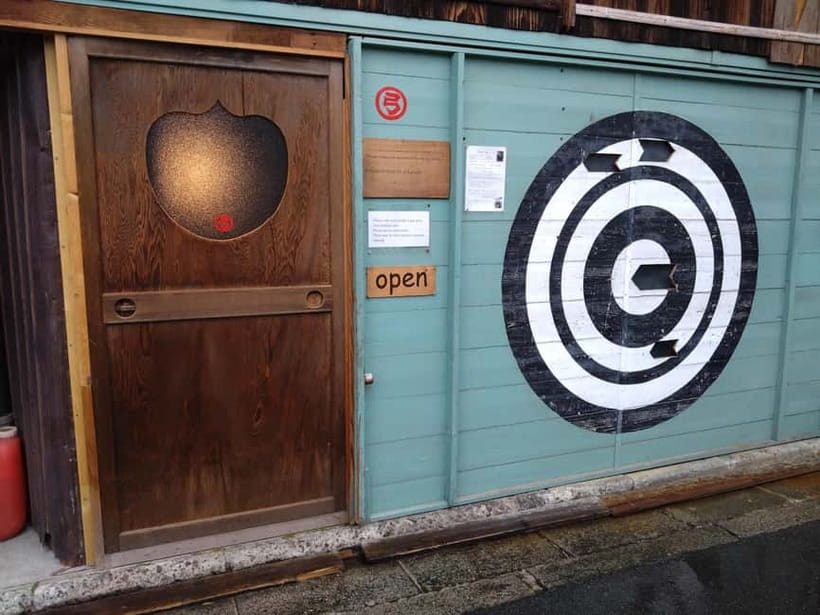
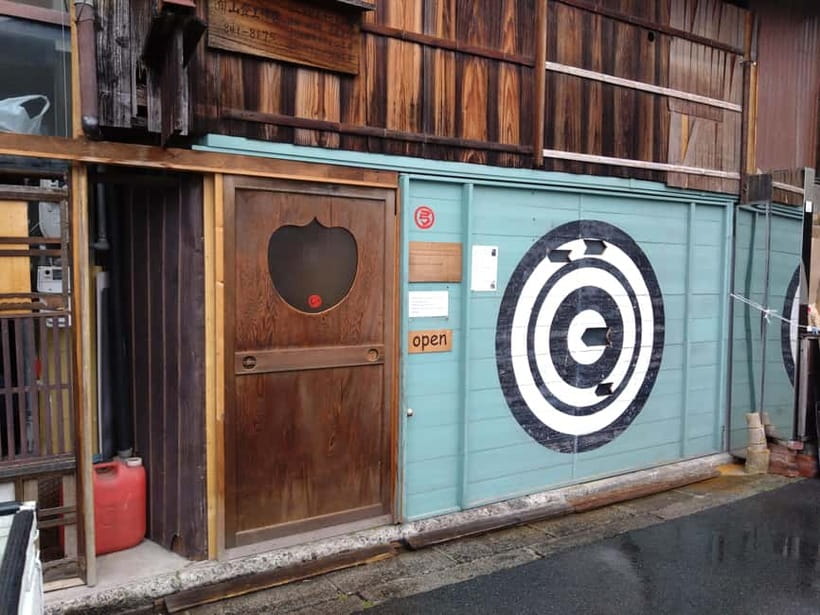
There are no doorbells at the entrance. Enter from the side of the building, opposite a small parking lot. Do not use the other doors or ring the doorbells.
For Google Maps, copy and paste the Japanese name, からくり弓道体験場, or search for Kyudo Experience Kyoto. Compare the result with the supplied address rather than trusting the first search result automatically.
If you take a taxi, tell the driver Mibugawa-street, Takatsuji-street instead of relying on the full address. This practical instruction may save you time, especially if the driver has trouble locating the venue from an English search.
Wear comfortable clothing that allows free movement. You do not need to bring kyudo equipment, since the bow and other required gear are supplied. The class does not include hotel pickup or drop-off.
Is $38 Good Value for One Hour?
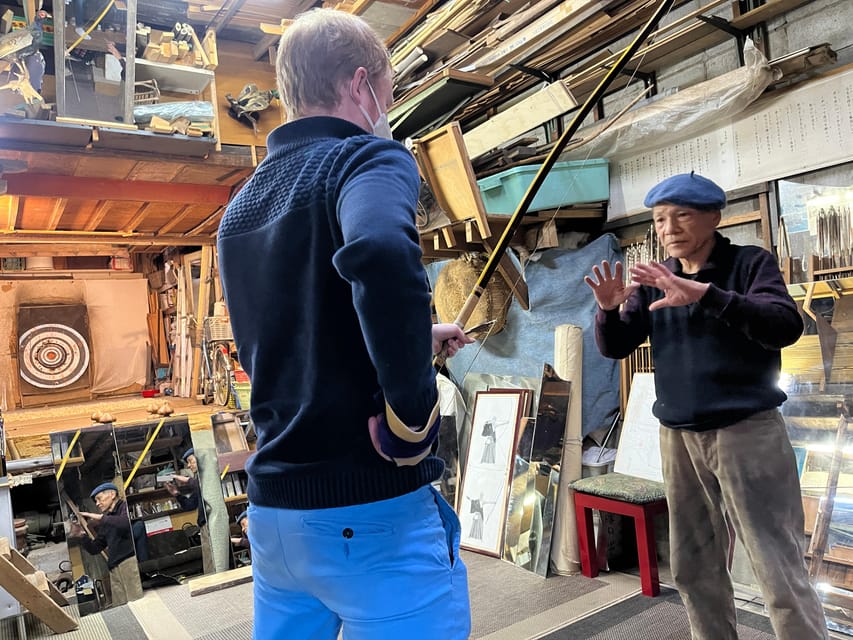
At $38 per person, this is not the cheapest way to fill an hour in Kyoto. It is, however, a reasonable price for a private-feeling introduction that includes equipment, a highly experienced instructor, an interpreter or English support, and a group limited to four.
The value rests mainly in the teaching. You are not renting a bow and shooting casually on your own. You are receiving correction from a senior practitioner and learning why the form matters. If you care about Japanese culture, martial arts, or unusual hands-on activities, the price compares well with many short Kyoto experiences.
The one-hour length is both a strength and a limit. It fits neatly into a busy sightseeing day and does not require a full afternoon. But you will only learn the basics. If you want to develop real kyudo skill, this class is a first step, not a complete course.
The reserve-now, pay-later option can help if your Kyoto plans are still changing. Free cancellation is available up to 24 hours before the session for a full refund. Check the available start times when booking.
Who Will Enjoy This Kyudo Workshop Most?
I would choose this for you if you want a cultural activity that feels personal and active. It suits first-time archers, people interested in Japanese martial arts, and anyone who prefers a calm experience to a loud or highly staged attraction.
It also works well for families with older children and teenagers. A smaller bow was available for a seven-year-old, and teenagers were able to take part, but children still need to follow instructions carefully around bows and arrows.
You should think twice if you want fluent English instruction from the main teacher, a large modern facility, or a fast series of successful shots. The class uses Japanese, translation, and demonstration. The bow can be demanding, and kyudo technique takes time.
You should also tell the operator in advance if hands-on instruction is not suitable for you. Physical guidance is used to demonstrate stance and bow hold.
Should You Book It?
Book this Kyoto kyudo workshop if you want to meet a genuine local teacher and try a traditional art in a small, quiet setting. The strongest reasons are the teacher’s decades of experience, the close instruction, and the chance to understand the calm discipline behind the bow.
Skip it if you need a fully English-led lesson or want a simple archery game with little attention to form. Kyudo is slower and harder than that. For most curious visitors, though, the difficulty is part of the appeal. You leave with more respect for the practice, even if your arrows do not all find the target.
FAQ
How long does the kyudo workshop last?
The workshop lasts one hour.
How much does the experience cost?
The listed price is $38 per person.
How many people can join one session?
The activity is limited to four participants.
Is the instructor fluent in English?
The instructor teaches in Japanese. English materials and an assistant or student interpreter are provided to help explain the lesson.
Who teaches the class?
The class is taught by Yamaguchi-sensei, an experienced kyudo teacher who has practiced for more than 50 years and holds a Kyoshi 6th grade rank.
Is kyudo equipment included?
Yes. The lesson includes all required kyudo equipment.
Do I need to bring my own bow or arrows?
No. The required equipment is provided.
What should I wear?
Wear comfortable clothing that allows you to move freely.
Can children participate?
Children can participate, and a smaller bow was available for a seven-year-old. Teenagers aged 12 and 15 also took part. The activity data does not provide a formal minimum age.
Where is the meeting point?
The meeting point is からくり弓道体験場. It is about a 10-minute walk from JR Tambaguchi, Hankyu Omiya, or Randen Shijo-Omiya station. The entrance is on the side of the building, opposite a small parking lot, and there are no doorbells.
Can nonparticipants watch the session?
No. Because space is limited, only participants should attend.
Is hotel transportation included?
No. Hotel pickup and drop-off are not included.
Can I cancel for a refund?
You can cancel up to 24 hours in advance for a full refund.
Can I reserve now and pay later?
Yes. The activity offers a reserve-now, pay-later option.
Just added around Kyoto
- Taste of Nishiki Market Walking Food Tour with Local guide★ 5.0 · 17 reviews
- Kyoto: Sushi Making Class with Sushi Chef★ 4.8 · 64 reviews
- Kyoto: City Secrets eBike Tour★ 4.9 · 196 reviews
- Sacred Pathways: Discover the Philosopher’s Path of Kyoto★ 4.9 · 20 reviews
- Private Tour to Monkey Park and Arashiyama Highlights★ 5.0 · 22 reviews
- Private Nara Tour from Osaka – Meet at Your Hotel★ 5.0 · 22 reviews
- Private Sake Tasting in Central Kyoto with Sake Sommelier★ 5.0 · 13 reviews
- Kyoto : Private Custom Walking Tour With A Local Guide★ 4.6 · 144 reviews
Workshops, compared.
Sushi Making Tokyo Roll and Authentic Japanese Sushi Class
Read our review →
Roll and Authentic Sushi Making Class in Asakusa
Read our review →
Ramen Cooking Class at Ramen Factory in Kyoto
Read our review →
Sushi Making Class in a Happi Coat near a Famous Spot
Read our review →

Sushi Making Osaka Roll and Authentic Japanese Sushi Class
Read our review →
Tokyo Sushi Making Class in Tsukiji with Professional Chef
Read our review →Browse the lists this tour appears in