REVIEW · KIMONO & CULTURE EXPERIENCES
Kyoto: Gion Evening Walk with Hidden Gems, Geisha & Sake
Gion changes character after sunset. The tour takes you past tea houses, shrines, wooden townhouses, and lantern-lit lanes when the daytime crowds have thinned. With local sake in hand, you get a compact introduction to Kyoto’s geiko and maiko traditions without spending an entire evening on a formal lecture.
I especially like the small group limit of 10, which leaves room for real questions and conversation. I also like the route: it links famous sights such as Yasaka Pagoda and Ninenzaka with cultural stops that are easy to miss on your own. The main limitation is time. Ninety minutes is enough for an atmospheric overview, but not for long visits inside temples or a detailed treatment of every part of Gion.
- Lantern-lit Gion: Walk Hanamikoji and nearby lanes after dark, when the district feels quieter and more atmospheric.
- Five essential stops: See Gion, Yasui Kompira-gū Shrine, Hōkan-ji Temple, Ninenzaka, and Yasaka Shrine.
- Local sake included: Sip sake as you walk, with responsible drinking expected.
- English-speaking guide: Guides such as Shumpei and Nick have been praised for warmth, humor, and useful local advice.
- Photo help: Your guide can help frame photos at the main stops.
- Easy evening format: The route lasts about 70 to 90 minutes and ends at Yasaka Shrine.
In This Review
- Why Gion Works Best After Dark
- Meeting the Guide on Shijo Kiyamachi
- Hanamikoji Street and the Geiko District
- Yasui Kompira-gū and Its Power Stone
- Hōkan-ji Temple and Yasaka Pagoda
- Ninenzaka After the Shops Quiet Down
- Yasaka Shrine, the Evening Finish
- What the Sake Adds to the Walk
- How Much Value Do You Get for $32?
- Who Will Enjoy This Gion Walk Most?
- Practical Tips for a Better Evening
- Should You Book the Kyoto Gion Evening Walk?
- FAQ
- How long does the Gion evening walk last?
- What language is the tour conducted in?
- How large is the group?
- Where does the tour meet?
- Where does the tour finish?
- Is sake included?
- Will I definitely see a geiko or maiko?
- What should I bring?
- Can people with back problems join?
Why Gion Works Best After Dark
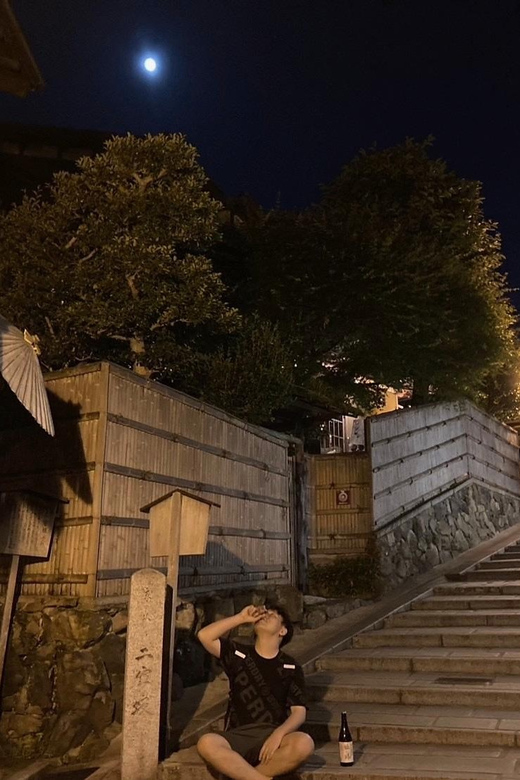
Gion is famous for its geiko and maiko culture, but its appeal is not limited to spotting performers. The district’s traditional architecture, narrow lanes, old shrines, and quiet social rules become easier to appreciate at night.
The tour begins in the Shijo Kiyamachi area and moves into Gion at a relaxed pace. You are not simply checking off landmarks. Your guide explains what you are seeing, how geiko and maiko traditions fit into Kyoto life, and how Buddhist and Shinto customs overlap across the city.
I like this conversational approach. One of the strongest features is the chance to ask practical questions as you walk. You can ask where to eat next, what to see tomorrow, or how to understand the difference between a geiko and a maiko. Guides Shumpei and Nick are singled out in the tour’s feedback for being friendly, funny, patient, and easy to talk with.
That personal style matters in Gion. The streets can feel mysterious if you only pass through with a map. A good explanation helps you understand why the district looks the way it does and why visitors need to keep their voices low near homes, businesses, and sacred sites.
Meeting the Guide on Shijo Kiyamachi
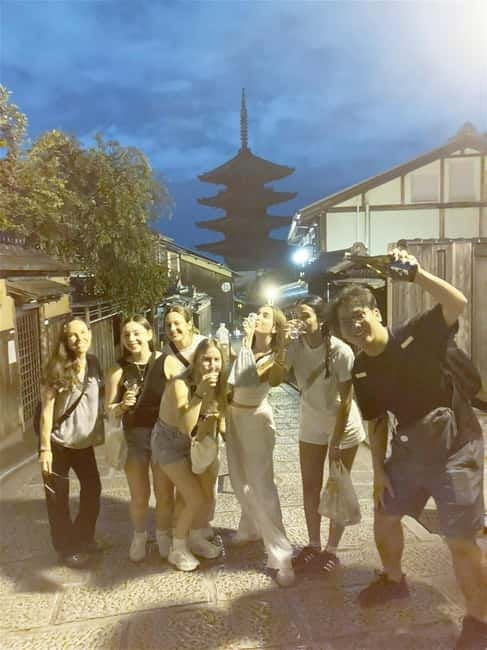
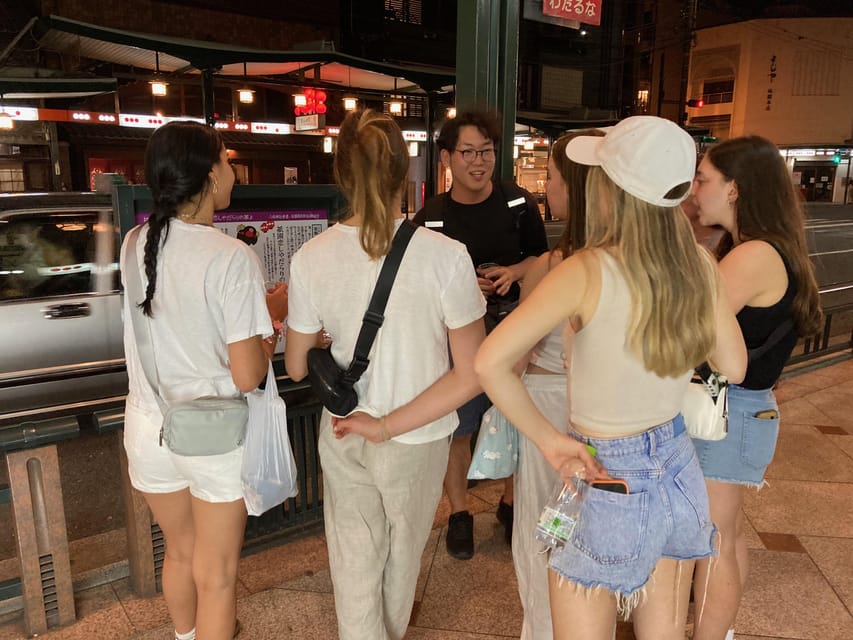
The meeting point is at 90-3 Shinchō, in the Shijo Kiyamachi area. More specifically, look for the guide between McDonald’s and the Japanese restaurant Kikunoi Roan, a little south along Kiyamachi Street.
The guide holds an Otatrip Guide sign. This is worth noting because Kiyamachi can be busy, and the meeting point is not described as a large landmark or station entrance.
Arrive early. The tour starts promptly, and the group may leave on time even if someone is still finding the meeting point. One group arrived late but was still welcomed warmly, yet you should not count on that outcome. A few extra minutes at the start can save a rushed beginning.
The walk is conducted in English and is limited to 10 people. That is a useful middle ground. You get more personal attention than on a large city tour, but you may still meet other visitors and exchange ideas about Kyoto.
More Kimono & Culture Experiences in Kyoto
- Kyoto Geisha Walking Tour: Gion District & Hidden Gems
★ 4.7 · 3,273 reviews - Kyoto: Gion Magical Night Walking Tour with Geisha Trivia
★ 4.9 · 2,393 reviews - Kyoto: Gion Geisha District Walking Tour – Stories of Geisha
★ 4.7 · 2,187 reviews
Hanamikoji Street and the Geiko District
The first major part of the walk takes you through Gion, including Hanamikoji Street. This is Kyoto’s best-known geisha street, lined with traditional tea houses and wooden buildings.
At night, Hanamikoji is less about grand views and more about small details. Look for the proportions of the townhouses, the subdued signs, the lantern light, and the way the street changes from a public road into a working neighborhood.
Your guide explains the world of geiko and maiko in plain English. That is valuable because the subject is often reduced to costumes and photographs. The tour gives you a chance to learn about the traditions and etiquette connected with the district without treating the people who work there as part of a display.
You may see a geiko or maiko during the walk, but this is not guaranteed. One tour participant did see two actual geishas, though you should treat that as a fortunate possibility rather than a promised part of the program. The better reason to book is the setting and the explanation, not a sighting.
Please keep your camera and your manners under control. The tour specifically asks you to keep voices low in residential and sacred areas. That is not just a courtesy. Gion is a real neighborhood, not a theme park.
Yasui Kompira-gū and Its Power Stone
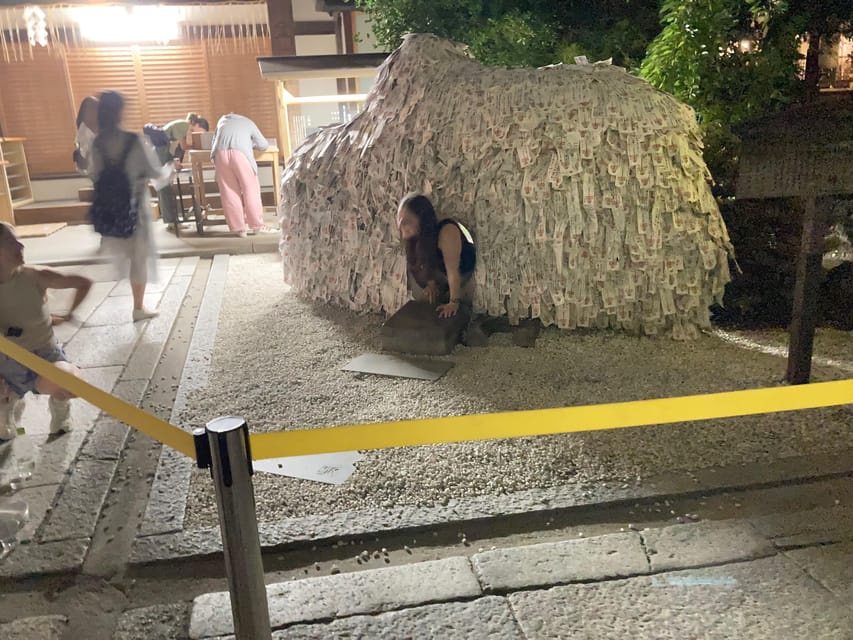
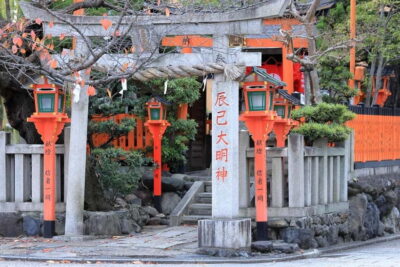
The next stop is Yasui Kompira-gū Shrine, a compact but unusual place with a strong local identity. It is known for a power stone associated with cutting bad ties and building good ones.
Your guide explains how people use the shrine and what the ritual means. This adds a different layer to the walk. Instead of seeing only famous streets, you get a look at a place tied to personal hopes, difficult changes, and fresh starts.
The visit lasts about 10 minutes, including time for photographs and explanation. That is enough to understand the shrine’s central idea, but not enough for a long religious study. I see this as a sampler, especially useful if you have not yet learned how Shinto shrines work.
The compact stop also helps keep the tour moving. Gion is best experienced on foot, but a 90-minute tour cannot linger at every gate, stone, and building. The guide’s job is to point out what matters most and give you enough context to appreciate it later.
Hōkan-ji Temple and Yasaka Pagoda
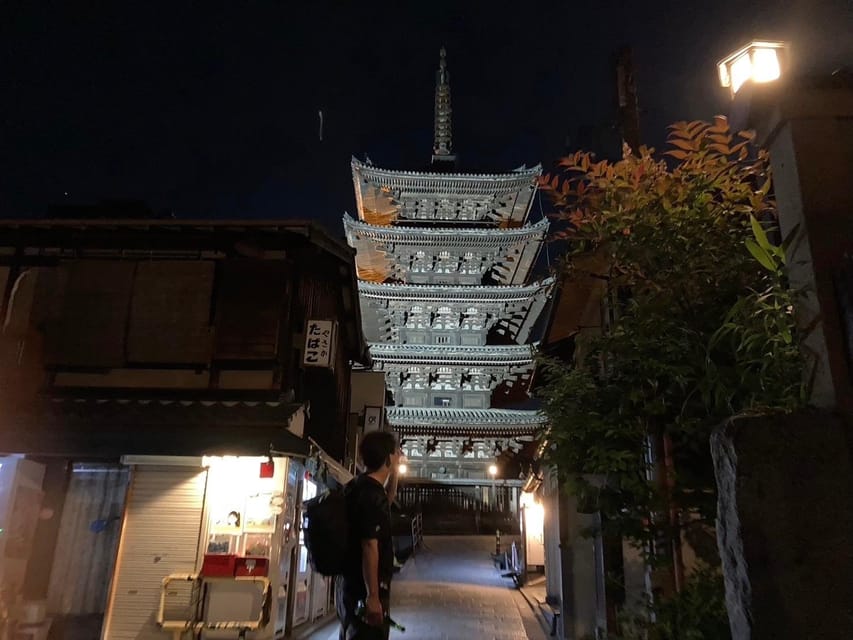
Hōkan-ji Temple is home to the five-story Yasaka Pagoda, one of Kyoto’s most recognizable sights. At night, the pagoda is lit and often easier to photograph without the daytime crowds.
This is the tour’s strongest photo stop. Your guide can help with framing, which is handy when the streets are dim and the pagoda rises above the surrounding buildings. You can focus on the moment instead of asking a stranger to take a hurried picture.
The stop is listed at about 10 minutes. You should expect an exterior visit and guided explanation rather than a long temple visit. If your main goal is to go inside Hōkan-ji or study its architecture in detail, you will need a separate visit and more time.
Still, the short stop works well at night. The pagoda, surrounding lanes, and soft lighting give you the classic Kyoto scene without making you wait in a long daytime crowd. It is a good example of the tour’s value: you are not paying for extended access, but for timing, orientation, and a guide who knows where to pause.
More Sake & Bar Hopping Tours in Kyoto
- Kyoto Night Foodie Tour in Gion (9+ dishes + 6 Sake tastings)
★ 5.0 · 1,762 reviews - 3-Hour Kyoto Insider Sake Brewery Tour with Tastings & Pairings
★ 5.0 · 917 reviews - Arashiyama Bamboo, Temple, Monkeys, or Secret Sake Brewery
★ 4.8 · 886 reviews - Kyoto: Izakaya Bars Guided Walking Tour
★ 4.9 · 815 reviews
Ninenzaka After the Shops Quiet Down
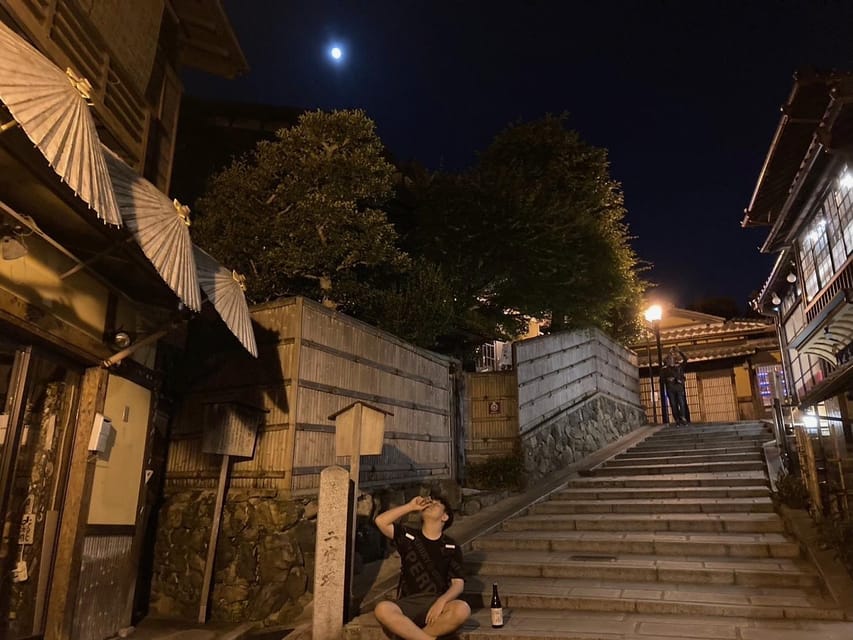
Ninenzaka is a traditional cobblestone slope lined with wooden townhouses. During the day, it can be busy and highly photographed. After dark, the atmosphere changes.
The slope is one of the most attractive parts of the route because it connects architecture, street design, and mood. You get the feeling of stepping into old Kyoto, though you should remember that this is still a popular tourist area and not an untouched historic village.
The 10-minute stop gives you time for photographs and a short explanation. Wear comfortable shoes, especially if you are not used to cobblestones or slopes. The tour is not described as difficult, but it is a walking experience, and people with back problems may find it unsuitable.
Rain can even change the character of Ninenzaka. One visitor walked the route in wet weather and found the streets especially quiet. You should not book hoping for rain, but the tour can still work in less-than-perfect weather if you bring suitable clothing and accept that photographs may look different.
Yasaka Shrine, the Evening Finish
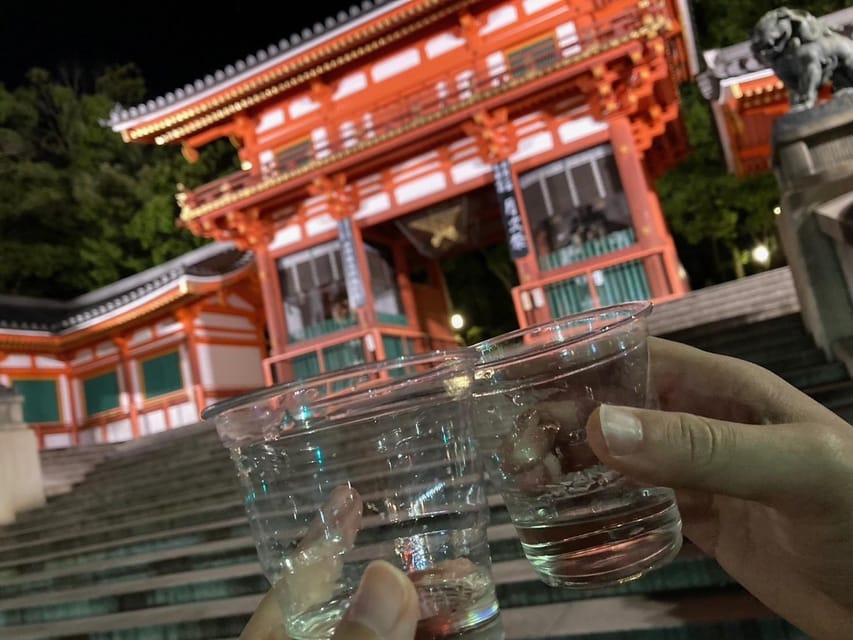
The tour finishes at Yasaka Shrine, a major spiritual landmark that has watched over Gion for more than 1,300 years. The ending is practical as well as scenic. From here, you are in a useful part of Kyoto for continuing your evening, finding food, or returning toward central areas.
Yasaka Shrine gives the route a strong finish because it is larger and more formal than some of the smaller stops. Your guide can place Gion’s streets in a broader religious setting and explain the role of Shinto sites in Kyoto.
The tour does not include a restaurant visit or a full sake tasting. The sake is a simple included drink enjoyed during the walk. That makes it a pleasant extra rather than the main event. Drink slowly, especially if you have dinner plans or another evening activity afterward.
Some people used the social side of the tour to continue for food or a drink afterward. That is not part of the advertised route, so think of it as a possible bonus if the group and guide are a good fit, not something to plan around.
What the Sake Adds to the Walk
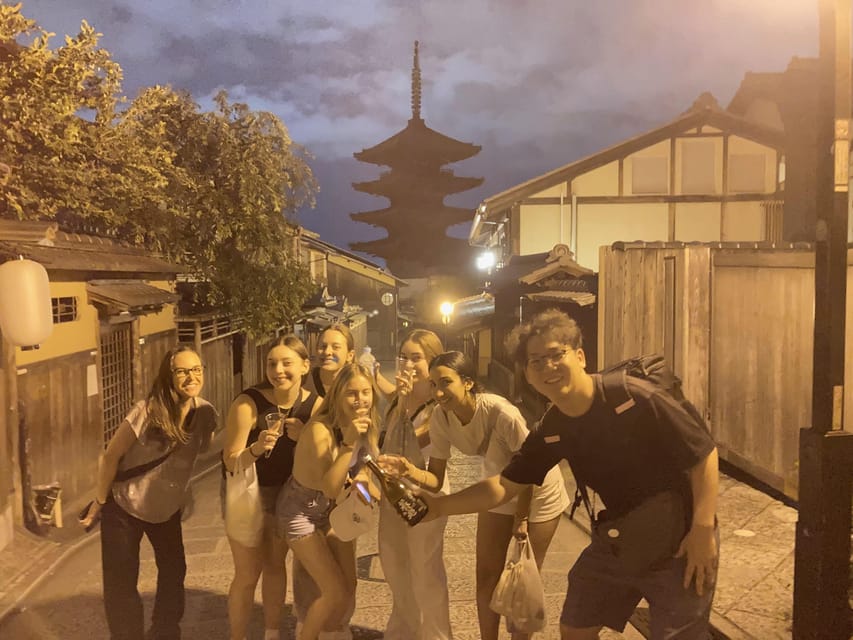
The included local sake helps set a relaxed tone. You are not sitting through a tasting lecture. You receive a cup to enjoy while moving through the lantern-lit streets.
I like this because it fits the short format. The sake gives you a small taste of local culture without adding another scheduled stop. It also creates an easy way for the group to talk.
Keep your expectations measured. The tour does not promise a selection of sake, a brewery visit, or detailed instruction about production. If you want a serious sake education, choose a dedicated tasting. Here, the drink is one pleasant part of a broader evening walk.
The amount served may vary with the guide and circumstances. Some people found their guide especially generous, but responsible drinking is still important. You are walking through quiet residential and sacred areas, so this is not the place for loud behavior or heavy drinking.
How Much Value Do You Get for $32?
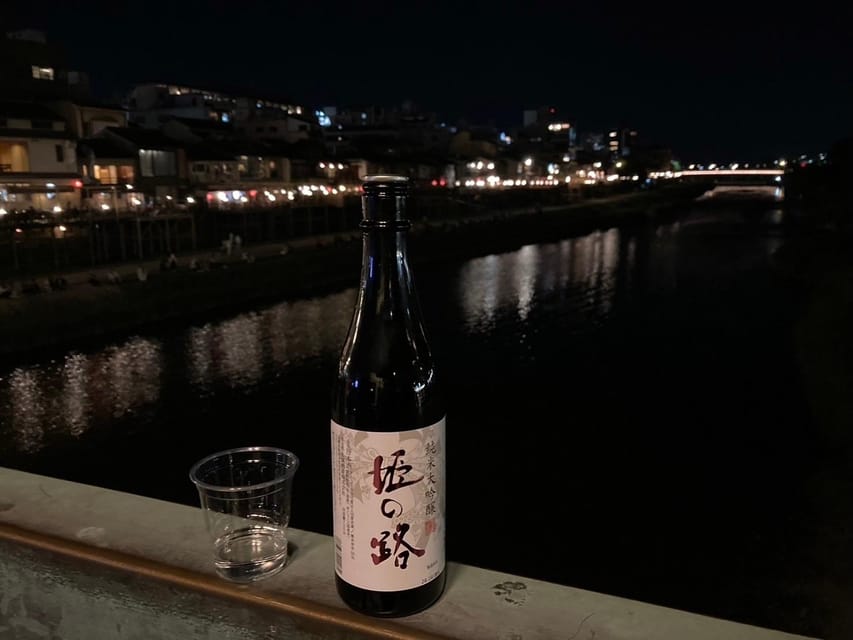
At $32 per person, this is reasonably priced for a 90-minute guided walk in one of Kyoto’s most sought-after districts. The value comes from the combination of location, timing, small group size, guide access, photo help, and included sake.
If you simply want to walk through Gion, you can do that for free. You can also visit the exterior of Yasaka Pagoda, Ninenzaka, and Yasaka Shrine without booking a tour. The fee makes sense if you want someone to connect the sights, explain local customs, and help you avoid wandering past the less obvious places.
The price looks especially fair if you are new to Kyoto or have only one evening in Gion. You get a clear route and several major sights without spending half a day. It is less compelling for a repeat visitor who already knows Gion well and prefers to explore alone.
The small group limit is important here. A group of up to 10 can stop in narrow streets without becoming a large moving crowd, and you have a better chance to ask questions. Some scheduled departures may be even smaller, though you should book for the advertised maximum rather than expecting a private walk.
Who Will Enjoy This Gion Walk Most?
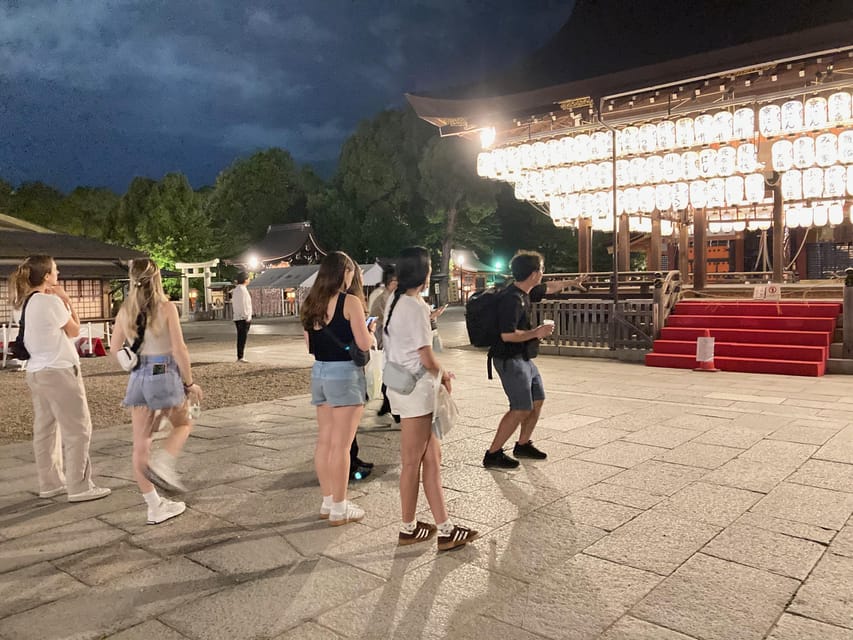
I would recommend this tour to first-time Kyoto visitors who want an easy introduction to Gion after dark. It also suits solo visitors who want company, couples looking for a gentle evening activity, and anyone who prefers cultural explanation over a rigid lecture.
You will get the most from it if you enjoy walking, asking questions, and noticing small details. The route is short, but it covers several different types of places: a famous geiko street, a shrine with an unusual ritual, a pagoda, a historic slope, and a major shrine.
It may not suit you if you want extensive temple interiors, a long sake tasting, or a private photography session. It is also not suitable for people with back problems, and comfortable shoes are a must.
Families and groups should also remember that smoking is not allowed. Quiet behavior is expected around homes and sacred sites, so the tour is better for people who can follow local etiquette.
Practical Tips for a Better Evening
Arrive at Shijo Kiyamachi early and identify the meeting point before the start time. The guide will be holding the Otatrip Guide sign between the named businesses, but busy streets can still slow you down.
Wear shoes that handle ordinary city walking, slopes, and cobblestones. The route lasts 70 to 90 minutes, yet you will be on your feet for most of it.
Bring a light layer if needed, but the tour information does not list special equipment. If the weather is poor, expect a different mood and fewer people on the streets rather than assuming the tour will be cancelled.
Keep your voice low in Gion. Do not treat geiko or maiko as photo props, and listen carefully when the guide explains local customs. Good conduct makes the experience better for you and for the people who live and work in the district.
Use the guide’s local advice. Past participants found it useful to ask about food, later sightseeing, and even unrelated Kyoto interests such as anime. That is where a conversational small-group tour can give you more than a standard script.
Should You Book the Kyoto Gion Evening Walk?
Book it if you want a friendly, compact introduction to Gion with a local guide, a little sake, and several of Kyoto’s most photogenic night scenes. The strongest reasons are the small group, the relaxed tone, and the route’s mix of famous landmarks and quieter cultural stops.
I would be cautious if you expect guaranteed geisha sightings, extensive temple access, or a full sake experience. None of those is the central promise. This is a well-organized evening orientation, not a specialist religious tour or nightlife crawl.
For $32, I think it offers good value for a first or second night in Kyoto. You finish at Yasaka Shrine with a better sense of where you are, what you have seen, and how to spend the rest of your evening.
FAQ
How long does the Gion evening walk last?
The tour is scheduled for 90 minutes, with the walking portion described as lasting about 70 to 90 minutes.
What language is the tour conducted in?
The live tour guide speaks English.
How large is the group?
The tour is limited to a maximum of 10 participants.
Where does the tour meet?
The meeting point is in the Shijo Kiyamachi area at 90-3 Shinchō. Look between McDonald’s and Kikunoi Roan, a little south along Kiyamachi Street, for a guide holding an Otatrip Guide sign.
Where does the tour finish?
The walk finishes at Yasaka Shrine, written as 八坂神社.
Is sake included?
Yes. A cup of local sake is included to enjoy during the walk.
Will I definitely see a geiko or maiko?
No. The route explains geiko and maiko culture, but sightings are not guaranteed.
What should I bring?
Bring comfortable shoes. The tour is conducted on foot and includes cobblestone streets and a sloped section at Ninenzaka.
Can people with back problems join?
The tour is listed as unsuitable for people with back problems. Smoking is also not allowed during the activity.
More Drinking Tours in Kyoto
- Kyoto: Insider Sake Brewery Tour with Sake and Food Pairing
★ 5.0 · 704 reviews - Kyoto Sake Brewery & Tasting Walking Tour
★ 5.0 · 623 reviews - Kyoto Bar Hopping Night Tour
★ 5.0 · 613 reviews - Kyoto Local Bar Crawl in Kawaramachi Area
★ 5.0 · 378 reviews
More Walking Tours in Kyoto
- Private Kyoto Tour with a Local, Highlights & Hidden Gems, Personalised
★ 5.0 · 1,543 reviews - Kyoto Gion Geisha District Walking Tour – The Stories of Geisha
★ 5.0 · 1,441 reviews - Nishiki Market Brunch Walking Tour (7 Tastings + Brunch)
★ 5.0 · 1,355 reviews - Kyoto Arashiyama Walking Tour: Bamboo, Monkeys, Gardens & Secrets
★ 5.0 · 1,216 reviews
Just added around Kyoto
- Taste of Nishiki Market Walking Food Tour with Local guide★ 5.0 · 17 reviews
- Kyoto: Sushi Making Class with Sushi Chef★ 4.8 · 64 reviews
- Kyoto: City Secrets eBike Tour★ 4.9 · 196 reviews
- Sacred Pathways: Discover the Philosopher’s Path of Kyoto★ 4.9 · 20 reviews
- Private Tour to Monkey Park and Arashiyama Highlights★ 5.0 · 22 reviews
- Private Nara Tour from Osaka – Meet at Your Hotel★ 5.0 · 22 reviews
- Private Sake Tasting in Central Kyoto with Sake Sommelier★ 5.0 · 13 reviews
- Kyoto : Private Custom Walking Tour With A Local Guide★ 4.6 · 144 reviews
Kimono & Culture Experiences, compared.
Kyoto Geisha Walking Tour: Gion District & Hidden Gems
Read our review →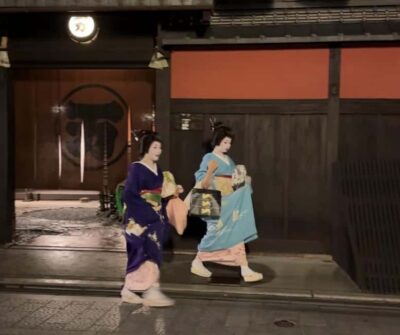
Gion Magical Night Walking Tour with Geisha Trivia
Read our review →
Gion Geisha District Walking Tour – Stories of Geisha
Read our review →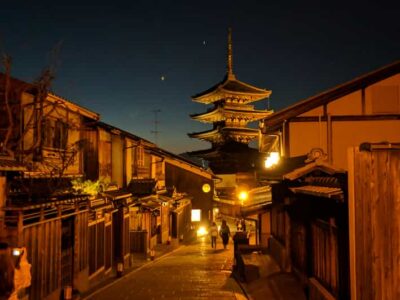
Best of Kyoto: Gion, Geisha, Pagodas & Cobblestones
Read our review →
Kyoto Gion Geisha District Walking Tour – The Stories of Geisha
Read our review →