
REVIEW · KIMONO & CULTURE EXPERIENCES
Kyoto Geisha District Walking Tour in Gion
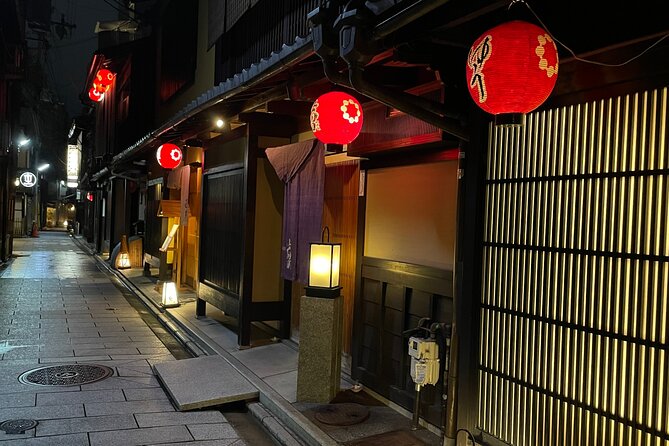
Gion is best understood on foot, especially in its quieter lanes where wooden machiya houses, lanterns, shrines, and narrow waterways give the district its special character. This two-hour walk takes you from Yasaka Shrine through the geiko quarter and explains what you are seeing instead of leaving you to guess at the closed tea houses and traditional streets.
I like the small group limit of 10, which makes it easier to hear the guide and ask questions. I also like the mix of famous sights and less obvious corners, including Tatsumi Shrine, Tatsumi Bridge, and Gion Shirakawa. The main consideration is guide quality: most guests praise guides such as Takuma, Yuko, Yuji, Tom, and Hide, but a few found the English, organization, or level of detail disappointing.
In This Review
- Key points to know before walking Gion
- Why Gion makes a good first Kyoto walk
- Starting at Yasaka Shrine
- Entering Gion’s traditional streets
- Tatsumi Daimyojin and the smaller details
- Tatsumi Bridge and Gion Shirakawa
- Seeing the other side of Gion
- Hanamikoji Street and Gion Corner
- What the guide can add
- Is two hours enough?
- Who should book this Gion tour?
- Practical timing and meeting details
- Final verdict: good value for a first look at Gion
- FAQ
- How long is the Kyoto Geisha District Walking Tour?
- How much does the tour cost?
- Where does the tour start and finish?
- Is the group size limited?
- Can I see a geiko or maiko during the walk?
- What happens if it rains?
Key points to know before walking Gion
- Geiko culture explained clearly: Learn about geisha customs, maiko training, work, clothing, and daily life.
- A compact Kyoto introduction: Cover Yasaka Shrine, two parts of Gion, Tatsumi Bridge, Gion Shirakawa, and Hanamikoji Street in roughly two hours.
- Small groups capped at 10: The size suits questions and keeps the walk more personal than a large city tour.
- Best photo settings: Expect lantern-lit streets, wooden machiya houses, shrines, bridges, and the Shirakawa Canal.
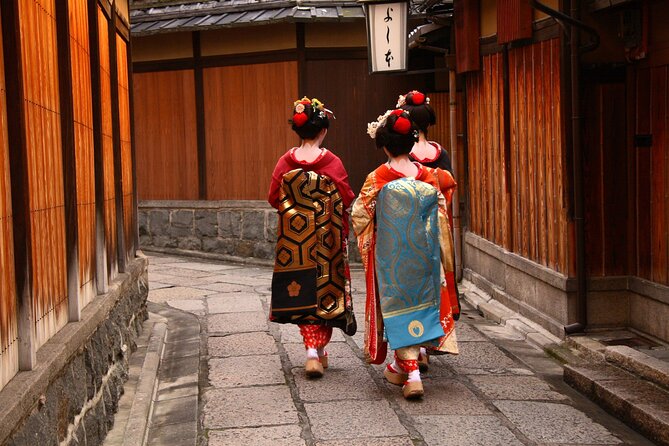
- Possible geiko sighting: You may see maiko or geiko moving between engagements, but this is luck, not a promise.
- Good value at $29.85: The price is modest for a guided introduction, especially if you want context without spending half a day researching Gion.
Why Gion makes a good first Kyoto walk
Gion can look simple at first: a few pretty streets, dark wooden buildings, tea houses, and people taking photographs. The details matter, though. A guide can explain why some buildings are connected with geiko culture, how the district developed, and what the different terms for geiko and maiko mean.
That context changes the way you see the area. Instead of treating Gion as a stage set, you begin to notice the working district behind the photographs. The traditional houses are not just old facades, and the women in formal dress are not performers available for photographs on demand.
The walk also gives you a gentle introduction to Kyoto religion. Yasaka Shrine and Tatsumi Daimyojin offer useful background on Shinto customs, while the streets around them show how religious sites and traditional neighborhoods fit together.
At $29.85 per person, this is priced as an accessible orientation rather than a full cultural workshop. You are paying for a guide, local explanations, and a well-planned route. You are not paying for food, transport, hotel pickup, performances, or entry to a paid attraction.
More Kimono & Culture Experiences in Kyoto
- Kyoto Geisha Walking Tour: Gion District & Hidden Gems
★ 4.7 · 3,273 reviews - Kyoto: Gion Magical Night Walking Tour with Geisha Trivia
★ 4.9 · 2,393 reviews - Kyoto: Gion Geisha District Walking Tour – Stories of Geisha
★ 4.7 · 2,187 reviews
Starting at Yasaka Shrine
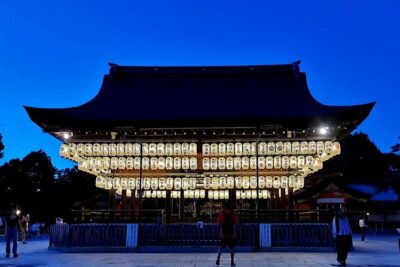
The tour begins at Gion Kōbu Kaburenjō, at 570-2 Gionmachi Minamigawa. From there, the walk heads to Yasaka Shrine, one of Kyoto’s best-known Shinto sites. Admission is free, so your fee goes toward the guided experience rather than a ticket.
Allow about 40 minutes here. That is a useful amount of time for a guide to explain the shrine’s role, point out its architecture and lanterns, and introduce basic Shinto ideas before the walk moves into Gion proper.
Yasaka Shrine is a strong starting point because it gives the tour a clear cultural base. You can look at the buildings and rituals with some understanding instead of rushing straight to the geiko streets.
This first stop may also be the busiest part of the walk. The shrine is famous, and the surrounding area can feel more public and active than the narrow lanes later in the tour. Wear shoes that are comfortable for standing and walking, and expect the route to include stairs.
Entering Gion’s traditional streets
The first Gion section receives about 20 minutes, though the guide will be explaining the neighborhood as you move. This is where the tour shifts from shrine grounds to the wooden architecture and narrow streets associated with Kyoto’s entertainment quarters.
You will hear about geiko and maiko customs, the way the district operates, and the traditions connected with tea houses. The best guides make this more than a glossary of Japanese terms. Takuma, Yuko, Yuji, Tom, and Hide are repeatedly praised for being friendly, polite, funny, and able to explain the culture in a way that brings the streets to life.
This is also the point where expectations matter. You may see a maiko or geiko, particularly on an evening walk, but no guide can guarantee it. Several groups happened to see two, three, or even four women in traditional dress while they were heading between engagements. That is a lucky glimpse of people going to work, not a scheduled show.
Please keep your camera respectful. Gion is a real neighborhood and a place of work. The tour is most worthwhile when you learn how to observe without treating residents or performers as scenery.
Tatsumi Daimyojin and the smaller details
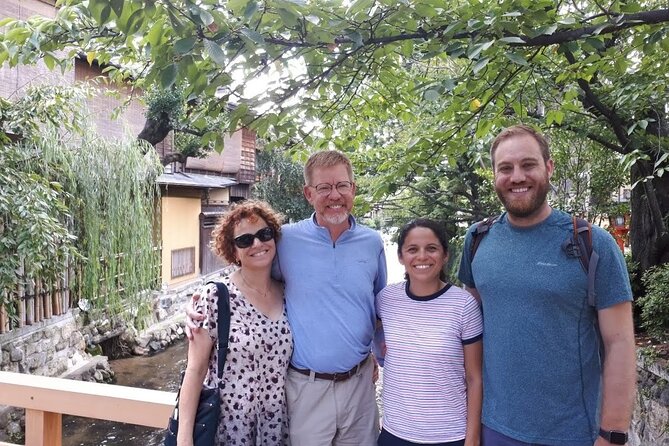
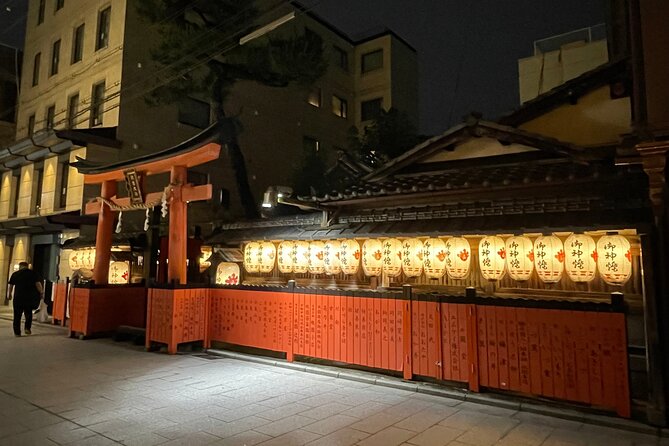
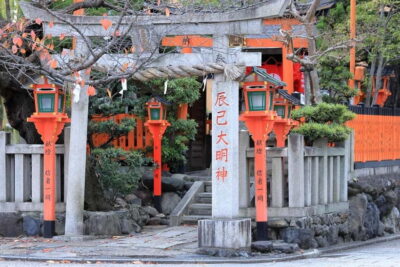
Tatsumi Daimyojin is a tiny Shinto shrine, with only about five minutes set aside for the stop. It is associated with protection, good fortune, and safety, including protection for travelers and warriors, and it dates to the Heian period.
Do not expect a large shrine complex here. Its value is scale and atmosphere. After the bigger Yasaka Shrine, this compact site helps you notice how religious markers appear within Kyoto’s ordinary streets.
A good guide can use a short stop like this to explain how local worship fits into daily life. It is also a reminder that Gion is not only about geiko culture. The district has religious, residential, commercial, and historical layers.
The drawback is that five minutes passes quickly. If you want long explanations at every shrine, this tour may feel brisk. Its strength is breadth: you see several important corners in a short period rather than spending the whole walk at one site.
More Walking Tours in Kyoto
- Private Kyoto Tour with a Local, Highlights & Hidden Gems, Personalised
★ 5.0 · 1,543 reviews - Kyoto Gion Geisha District Walking Tour – The Stories of Geisha
★ 5.0 · 1,441 reviews - Nishiki Market Brunch Walking Tour (7 Tastings + Brunch)
★ 5.0 · 1,355 reviews - Kyoto Arashiyama Walking Tour: Bamboo, Monkeys, Gardens & Secrets
★ 5.0 · 1,216 reviews
Tatsumi Bridge and Gion Shirakawa
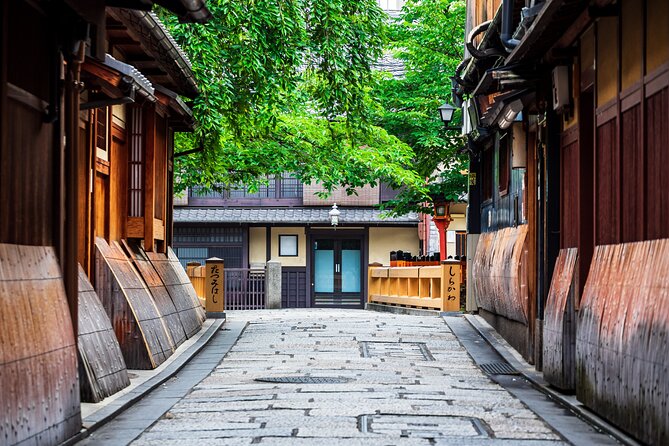
Tatsumi Bridge is one of the prettiest points on the route. Set beside traditional wooden houses, it feels quieter and more intimate than the main streets. The bridge itself is small, but the surrounding views make it a natural place for photographs.
The official timing allows about 10 minutes here. That is enough to pause, listen, and take a few pictures without turning the tour into a long photo session. Some guides have been especially focused on taking group photographs, so you may want to make your own wishes clear if you prefer more cultural explanation.
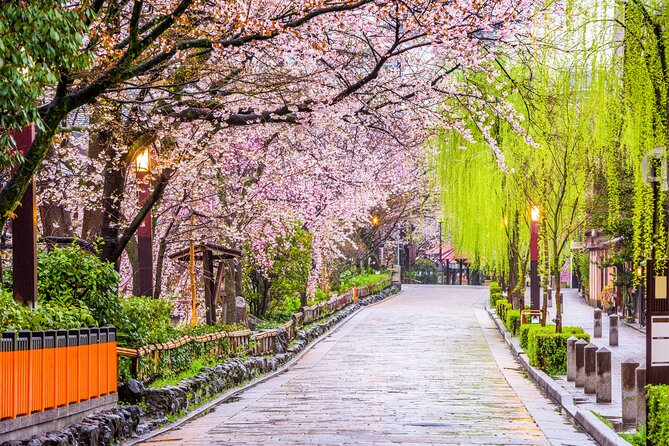
From the bridge, the route reaches Gion Shirakawa, also called the Shirakawa Canal. The waterway is lined with preserved machiya houses and, in season, weeping cherry trees. This is one of the places where Gion’s famous visual appeal feels earned rather than manufactured.
The canal area can be especially atmospheric when lanterns begin to glow. In wet weather, reflections may add to the mood, though the tour runs rain or shine. Bring suitable clothing and shoes because there is no weather cancellation promise built into the experience.
Seeing the other side of Gion
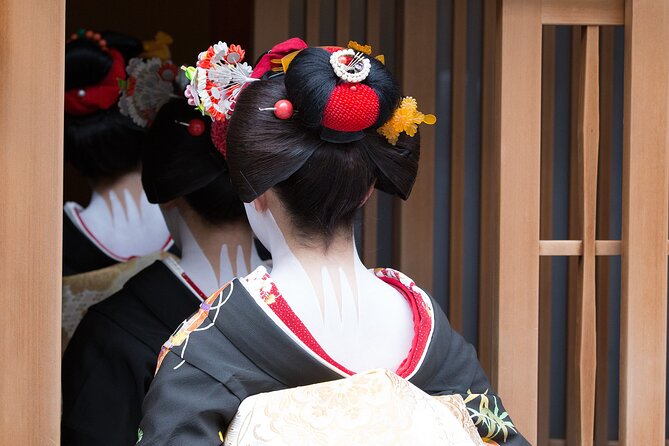
The route then continues through another section of Gion for about 20 minutes. This matters because Gion is not one single street. Its character changes as you move away from the most photographed corners.
A guide helps you connect the parts. You can learn where geiko live and work, how the traditional houses function, and why some streets feel more private than others. One of the tour’s practical strengths is that it takes you through back lanes you might not think to enter on your own.
That said, the walk is not a private look inside geiko houses. There is no promise of meeting a geiko, entering a tea house, or attending a performance. You are seeing the district from public streets and learning how to read its customs.
This distinction is important. If your main goal is a guaranteed encounter in costume, choose a performance or cultural program instead. If you want a respectful introduction to the setting and traditions, the walking format makes sense.
Hanamikoji Street and Gion Corner
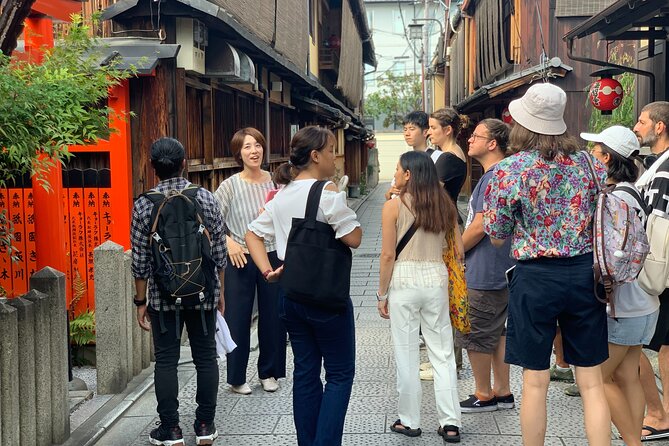
Hanamikoji Street is one of Gion’s main routes, lined with machiya houses, tea houses, shops, and restaurants. The tour allows around 10 minutes here, so expect a concise orientation rather than time to browse every storefront.
This street is visually striking, but it is also where the district can feel most crowded. Your guide can point out architectural details and explain how the area’s businesses relate to the traditional quarter. You may want to return later at your own pace if you find a restaurant or shop that catches your eye.
The route also passes Gion Corner, a venue associated with traditional Kyoto arts performances. The walk does not include a performance ticket, so treat this as an exterior or neighborhood reference rather than part of the paid show itself.
Gion Corner can help you decide how to spend another evening. If the guide’s explanation sparks your interest in dance, music, or other traditional arts, you can investigate a separate performance on your own.
What the guide can add
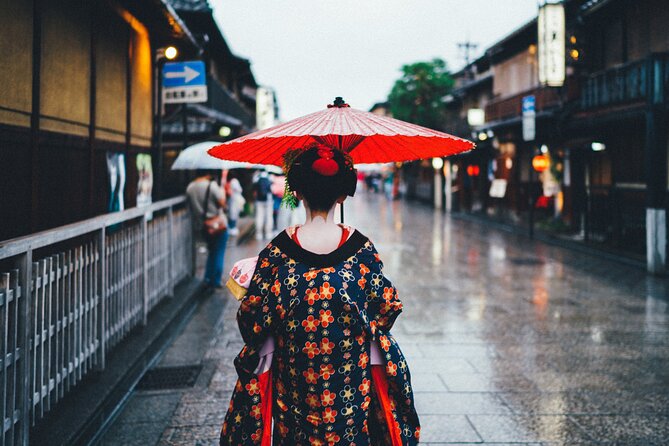
The guide is the biggest variable in this experience. The strongest accounts describe guides who are warm, patient, well informed, and able to answer questions. Yuko is praised for her pleasant manner and clear explanations. Takuma is repeatedly singled out for humor, energy, and strong explanations of geiko customs. Yuji is described as kind and patient, while Tom receives praise for explaining shrines, religion, and the district’s past.
Hide is also noted for finding a good viewing spot at the right moment when geiko were leaving one engagement and heading to another. That kind of timing can make an evening memorable, but it remains chance rather than a feature you can purchase.
English ability may vary by guide. Most feedback is strongly positive, including praise for clear English and engaging explanations. A small number of people found a guide difficult to understand, disorganized, or too focused on group photos and simple guessing games.
I would book this tour for its route and small size, but I would keep expectations sensible. A two-hour walk cannot explain every part of Kyoto’s social history in great depth. It should give you a useful framework, attractive views, and a chance to ask questions.
Is two hours enough?
Two hours is enough for an introduction. You cover a surprising amount of ground: Yasaka Shrine, Gion streets, Tatsumi Daimyojin, Tatsumi Bridge, Gion Shirakawa, another Gion area, and Hanamikoji Street.
The pace will likely feel efficient rather than leisurely. The walk includes several short stops, and there may be stairs. If you want time for long photography sessions, shopping, or sitting beside the canal, plan to return later.
The compact format works well at the beginning of a Kyoto stay. You can learn the layout, then revisit the areas you liked most. It also suits families who want culture without committing to a full-day program. A family with children aged 10 and 13 found the route manageable and enjoyable, and an 11-year-old particularly enjoyed the historical explanations.
Who should book this Gion tour?
I would choose this experience if you:
- Want a short introduction to Kyoto’s geiko district
- Prefer a guide to explain customs and religious sites
- Like photography but also want cultural context
- Are comfortable walking and using stairs
- Prefer a group capped at 10
- Have limited time in Kyoto
- Are visiting Gion for the first time
- Want the possibility of seeing maiko or geiko without treating that as a guarantee
I would look elsewhere if you want a guaranteed performance, a meal, hotel transportation, or an in-depth academic discussion. I would also think twice if walking on uneven streets or climbing stairs is difficult, since the tour is not suitable for people who cannot manage stairs.
Children must be accompanied by an adult. Most people can take part, but comfortable walking shoes are strongly advised. Transportation to the meeting point, food, drinks, and personal expenses are not included.
Practical timing and meeting details
The tour begins and ends at Gion Kōbu Kaburenjō. The guide can help you find your way back at the end, but you are responsible for reaching the starting point yourself. The location is near public transportation, which makes it practical to combine with other Kyoto plans.
An evening departure may give you the best atmosphere, with lanterns and quieter side streets. It may also improve your chance of seeing geiko or maiko moving to evening engagements. Still, the timing depends on the chosen departure, and sightings are never assured.
The tour operates in all weather. Use a small umbrella or rain jacket when needed, and avoid delicate footwear. If you add a kimono plan, the arrangements require extra attention: after changing, you must walk about five minutes to the Japan Kanji Museum & Library, and the kimono must be returned by 5:30 p.m.
Cancellation is free up to 24 hours before the start time. Inside that window, the amount paid is not refunded, and changes are not accepted. The local time in Kyoto determines the cutoff.
Final verdict: good value for a first look at Gion
At $29.85, this is a sensible purchase for a guided first walk through Gion. The route covers the district’s most photogenic settings while adding explanations about Shinto, machiya houses, geiko life, and local customs. The group cap of 10 gives it a more personal feel than a large city stroll.
I would book it if you want a friendly orientation and understand that seeing a geiko is a bonus. Choose an evening time if available, wear good shoes, and arrive ready to listen as well as photograph.
I would not book it solely for a guaranteed geisha sighting or a deep specialist lecture. Guide quality can vary, and a few experiences have been less organized or less informative than expected. For most first-time visitors who want two useful hours in one of Kyoto’s most distinctive districts, though, this walk offers a fair price and a strong starting point.
FAQ
How long is the Kyoto Geisha District Walking Tour?
The tour lasts approximately two hours.
How much does the tour cost?
The listed price is $29.85 per person.
Where does the tour start and finish?
It starts and ends at Gion Kōbu Kaburenjō, 570-2 Gionmachi Minamigawa, Higashiyama Ward, Kyoto, 605-0074, Japan.
Is the group size limited?
Yes. The tour accepts a maximum of 10 people.
Can I see a geiko or maiko during the walk?
You might see one, especially if the timing places you near the streets as they move between engagements, but sightings are not guaranteed.
What happens if it rains?
The tour runs rain or shine. Comfortable walking shoes are recommended, and you should dress for the weather.
Just added around Kyoto
- Taste of Nishiki Market Walking Food Tour with Local guide★ 5.0 · 17 reviews
- Kyoto: Sushi Making Class with Sushi Chef★ 4.8 · 64 reviews
- Kyoto: City Secrets eBike Tour★ 4.9 · 196 reviews
- Sacred Pathways: Discover the Philosopher’s Path of Kyoto★ 4.9 · 20 reviews
- Private Tour to Monkey Park and Arashiyama Highlights★ 5.0 · 22 reviews
- Private Nara Tour from Osaka – Meet at Your Hotel★ 5.0 · 22 reviews
- Private Sake Tasting in Central Kyoto with Sake Sommelier★ 5.0 · 13 reviews
- Kyoto : Private Custom Walking Tour With A Local Guide★ 4.6 · 144 reviews
Kimono & Culture Experiences, compared.
Kyoto Geisha Walking Tour: Gion District & Hidden Gems
Read our review →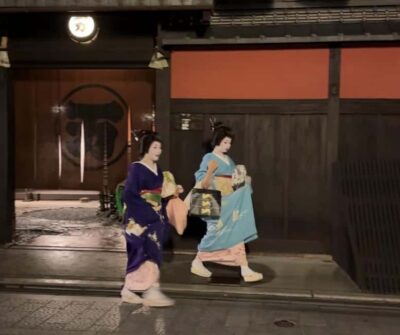
Gion Magical Night Walking Tour with Geisha Trivia
Read our review →
Gion Geisha District Walking Tour – Stories of Geisha
Read our review →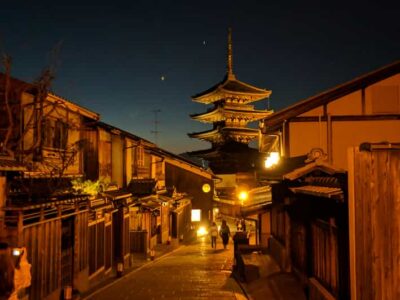
Best of Kyoto: Gion, Geisha, Pagodas & Cobblestones
Read our review →
Kyoto Gion Geisha District Walking Tour – The Stories of Geisha
Read our review →
Browse the lists this tour appears in