
REVIEW · TEMPLE & SHRINE TOURS
Kyoto: Fushimi Inari Shrine Walking Tour
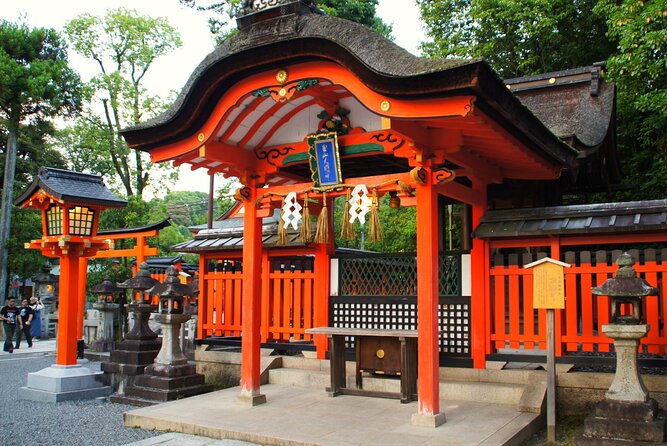
Fushimi Inari is more than a long tunnel of orange-red gates. This two-hour evening walk explains the fox symbols, offerings, and shrine rituals that can otherwise seem mysterious, then leads you up forest paths for broader views of Kyoto.
I like the small group limit of 10, which makes it easier to hear the guide and stop for questions. I also like the balance of culture and walking: you get clear explanations in the shrine complex, then a scenic climb away from the busiest lower gates.
The main consideration is the climb. The tour is only two hours, but Fushimi Inari sits on a mountain, and the evening setting can still be busy at the start. This is a guided walk, not a flat photo stop.
In This Review
- Key points at a glance
- Why Fushimi Inari deserves more than a quick photo
- Meeting at Daily Yamazaki at 6:00 pm
- Beneath the first torii gates
- Understanding Inari, foxes, and shrine customs
- From the gate tunnel to the forest trails
- Panoramic views and a different side of Kyoto
- What the small group changes
- The $39.64 price and what you receive
- Who will get the most from this walk
- Timing, cancellation, and small practical details
- Should you book the Fushimi Inari walking tour?
- FAQ
- How long is the Fushimi Inari walking tour?
- What time does the tour start?
- Where does the tour meet?
- Where does the tour finish?
- What is the maximum group size?
- Is an English-speaking guide included?
- Is admission to Fushimi Inari-taisha included?
- Are food and drinks included?
- Is tipping included?
- Can I cancel for a full refund?
Key points at a glance
- Fox statues have a story: Learn why foxes are linked with Inari worship and how the statues fit into the shrine’s beliefs.
- A maximum of 10 people: The small group helps you stay close to the guide in crowded areas.
- A 6:00 pm start: The tour takes place in the evening, when the lower shrine grounds may still be busy but the forest paths can feel calmer.
- A real uphill walk: The route includes scenic mountain trails, so comfortable shoes and a reasonable level of stamina matter.
- Kyoto views along the way: The climb offers panoramic viewpoints rather than only the famous gate tunnel.
- One simple meeting point: Start and finish at Daily Yamazaki Fushimi Inari Shrine, near public transportation.
Why Fushimi Inari deserves more than a quick photo
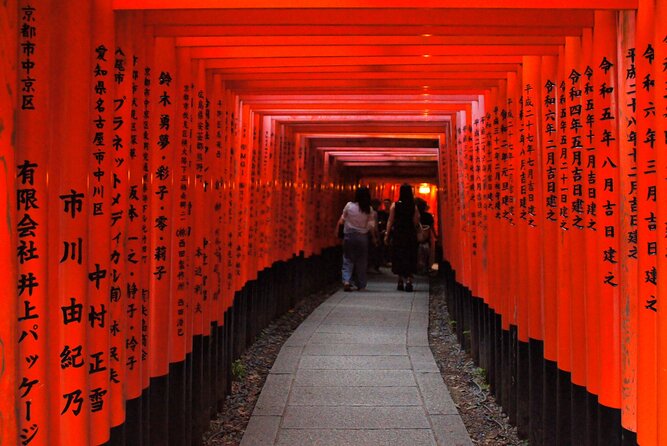
Fushimi Inari-taisha is one of Kyoto’s most recognizable sights because of its thousands of torii gates. Each gate forms part of a long route through the wooded slopes of Mount Inari, creating the bright orange corridors seen in nearly every Kyoto guidebook.
That visual appeal is only the beginning. Inari is connected with rice, prosperity, business, and household well-being, while foxes are treated as messengers of the deity. Without some explanation, the fox statues, small shrines, gates, ropes, offerings, and gestures of prayer can blur into one impressive but confusing scene.
This tour is designed to give those details a place in the larger story. Your English-speaking guide explains the shrine’s religious meaning and points out customs taking place around you. That matters because Fushimi Inari is an active place of worship, not simply an outdoor monument.
I especially value the focus on rituals. A guide can tell you what visitors are doing, why certain areas are treated with care, and how to behave respectfully. You are still free to enjoy the gates as a photographic subject, but you also gain a better sense of what the site means to people who come to pray.
More Temple & Shrine Tours in Kyoto
- Kyoto: Fushimi Inari, Kinkakuji, Bamboo Grove 1 Day Bus Tour
★ 4.8 · 4,316 reviews - Kyoto: Tea Ceremony in a Traditional Tea House in Kiyomizu
★ 4.9 · 3,519 reviews - Kyoto: Tea Ceremony Ju-An at Jotokuji Temple
★ 4.9 · 3,207 reviews
Meeting at Daily Yamazaki at 6:00 pm
The tour begins at Daily Yamazaki Fushimi Inari Shrine, at 93 Fukakusa Inarionmaechō in Kyoto’s Fushimi Ward. The start time is fixed at 6:00 pm, and the activity ends back at the same meeting point.
That arrangement is useful. You do not need to work out a different exit point on the mountain or wonder where the group will separate. Since the meeting point is near public transportation, you can reach the shrine area without relying on a taxi.
I would arrive with enough time to locate the convenience store and gather your bearings. The supplied details do not name the guide, so you should not plan on looking for a particular person by name. Instead, use the confirmed meeting information from your booking and stay close to the meeting point around the start time.
The mobile ticket also keeps things simple. Have your confirmation ready on your phone, and remember that the tour does not include food or drinks. A small drink before setting out is sensible, especially since the route includes uphill walking.
Beneath the first torii gates
The opening portion takes place in the main shrine area, where the torii gates are at their most concentrated and popular. The lower section is usually the place most people picture when they think of Fushimi Inari, with repeated gates creating a striking corridor of color and shadow.
Here, the guide sets the scene. You learn about Inari worship, the role of foxes, and the meaning attached to the shrine’s features. The benefit is not simply factual. Once you understand why fox statues appear and how the shrine functions, the details around you become easier to read.
The lower grounds can be busy, even for an evening tour. That is one reason the group limit matters. With no more than 10 people, the guide has a better chance of keeping everyone together, and you should not have to search through a large crowd to find the group.
Still, this is not a private tour. The lower gates are a major Kyoto attraction, and you may share the route with plenty of other people. The guide can help you make sense of the setting, but cannot clear the path or guarantee an empty photo.
Understanding Inari, foxes, and shrine customs
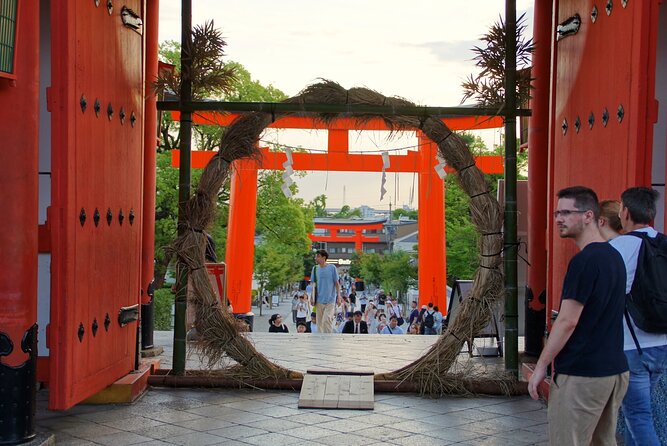
The cultural teaching is the heart of this experience. Fushimi Inari can be visually overwhelming, and a short explanation of Inari worship helps you see more than a row of repeated gates.
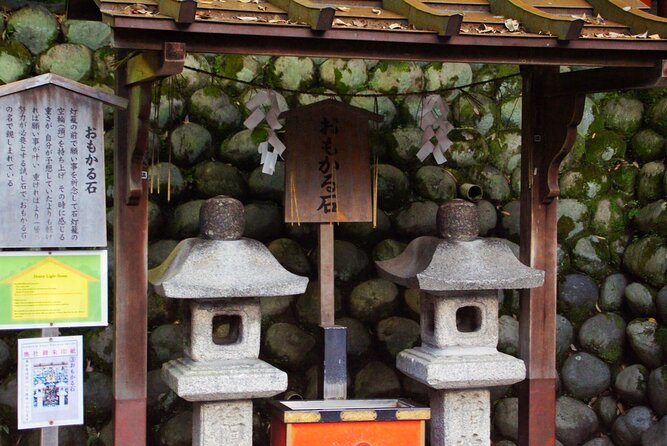
Fox imagery is especially important. The statues are not simply decorative animals placed around the shrine. They relate to Inari and serve as messengers, giving the site a distinct character that differs from a casual walk through a temple garden.
The guide also explains shrine rituals and traditional practices happening around the complex. That may include the way people approach sacred spaces, the role of offerings, and the meaning of gestures you might otherwise copy without understanding.
I like this part because it encourages respectful sightseeing. You can take photographs, ask questions, and enjoy the setting while remembering that people are using the shrine for spiritual reasons. The best guided visits make a famous place feel less like a backdrop and more like a living part of Kyoto.
The activity includes historical insights into the district as well as entry to Fushimi Inari-taisha. No separate admission fee is listed for the shrine in the itinerary, so the practical value is less about avoiding a costly entrance ticket and more about having the route and interpretation organized for you.
More Walking Tours in Kyoto
- Kyoto Geisha Walking Tour: Gion District & Hidden Gems
★ 4.7 · 3,273 reviews - Kyoto: Gion Magical Night Walking Tour with Geisha Trivia
★ 4.9 · 2,393 reviews - Kyoto: Gion Geisha District Walking Tour – Stories of Geisha
★ 4.7 · 2,187 reviews - Private Kyoto Tour with a Local, Highlights & Hidden Gems, Personalised
★ 5.0 · 1,543 reviews
From the gate tunnel to the forest trails
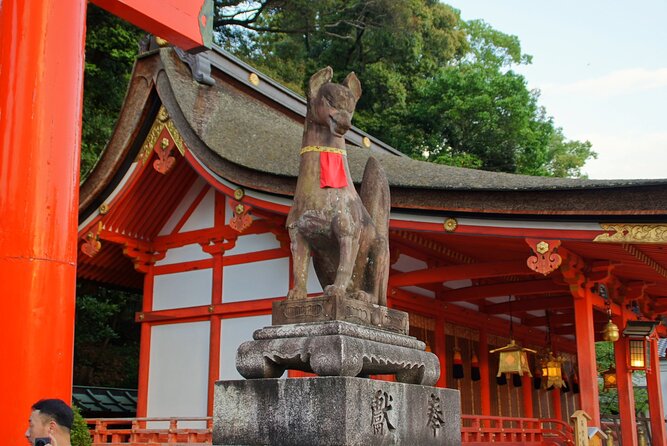
After the main shrine area, the route follows scenic trails up the mountain. This changes the mood. The lower torii section is the signature image, but the wooded paths offer a quieter setting and give you a better sense of Fushimi Inari as a mountain shrine.
The uphill portion is important to understand before booking. The tour lasts about two hours, and the supplied descriptions specifically mention a climb and panoramic views. You should expect walking rather than a short circuit around the entrance buildings.
The climb also gives the guide room to show you areas many people miss. According to the experience details, the route includes peaceful spots for reflection and viewpoints used for photographs. You might find the trail calmer than the entrance area, though the tour cannot promise solitude.
This is where comfortable footwear pays off. The route is described as a scenic mountain walk, so sandals or shoes that are fine for a level city street may feel less suitable as the path rises. The information does not give a precise distance, number of steps, or grade, so anyone with concerns about uphill walking should ask the provider before booking.
Panoramic views and a different side of Kyoto
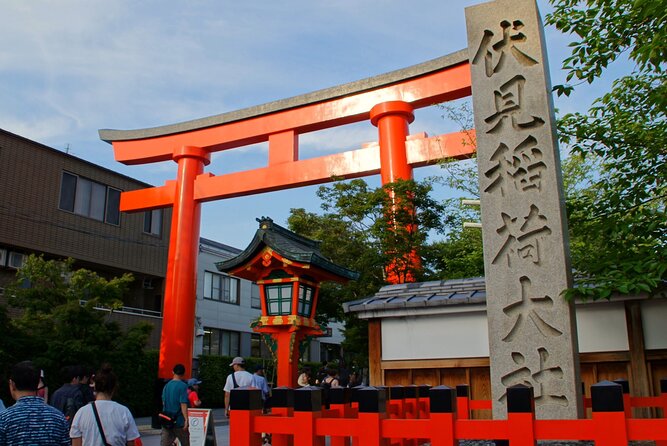
The promised views add useful variety to the tour. Fushimi Inari is often treated as a close-up experience, with visitors focused on the gates directly in front of them. From higher points, you can look outward across Kyoto and connect the shrine to the wider city.
The views are not the only reason to climb. The mountain setting gives the shrine its sense of progression. You move from busy, highly photographed gates into wooded paths, smaller worship areas, and places where the sound and pace can change.
Several parts of the experience are praised for careful pacing. That is a real advantage on a short tour. A rushed guide might race past the lower gates and then turn the walk into a tiring ascent. A well-paced route gives you time to listen, take photographs, and keep moving without feeling pushed.
The evening start may help with this shift in atmosphere. At 6:00 pm, the lower part can still be crowded, but the forest trails may feel more peaceful as the walk continues. Lighting conditions can change quickly, so do not book this solely for perfect sunset photography. The information promises evening timing and viewpoints, not a specific sunset or weather condition.
What the small group changes
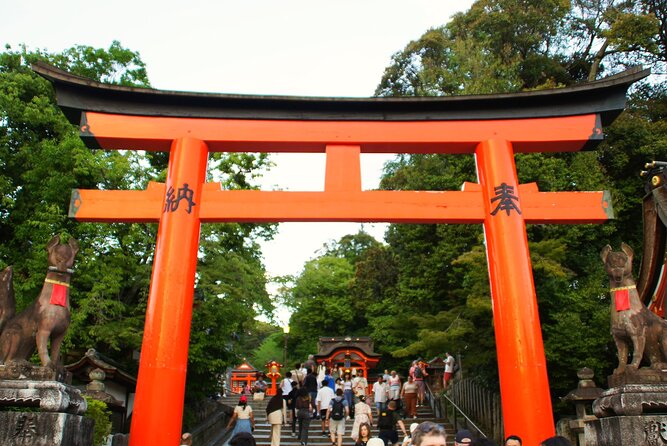
A maximum of 10 people is one of the strongest practical features. Fushimi Inari’s gates create narrow passages, and a large group can easily stretch out or block the route. A smaller party gives the guide more control and lets you stay within hearing range.
It also makes questions easier. The cultural material is not just a speech delivered once at the entrance. The guide explains rituals seen along the way and responds to questions about Japanese spirituality and local customs.
A small group does not remove every problem. The shrine itself can be crowded, and other people will be on the route. But the format should feel more personal than a large coach-style outing, especially during stops at viewpoints or quieter sections of the trail.
The experience has earned a five-star rating from 72 reviews, with 100 percent recommending it. That record points to strong satisfaction with the guide-led format, but I would still match the tour to your own needs. If you want total independence, silence, or a fast visit limited to the first gate tunnel, you may find the group structure unnecessary.
The $39.64 price and what you receive
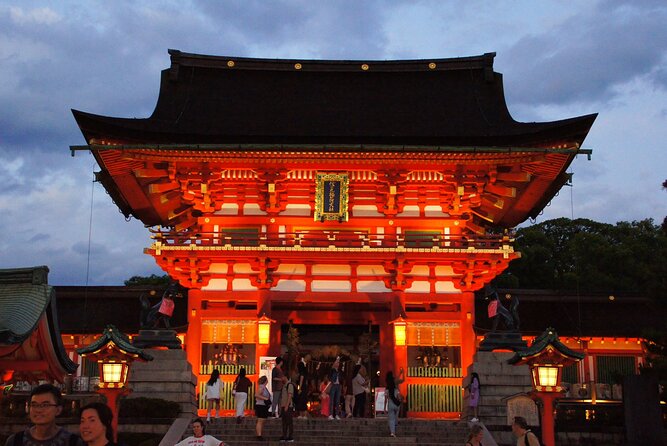
At $39.64 per person, this is a moderate price for a two-hour cultural walk in one of Kyoto’s best-known sites. The fee covers an English-speaking guide, historical context about the district, and entry to Fushimi Inari-taisha.
The shrine itself does not show a separate admission charge in the itinerary, so the price should not be judged as a ticket-saving bargain alone. You are mainly paying for direction, interpretation, and company on the mountain route.
That can be good value if you would otherwise walk through the torii without understanding the fox symbolism or shrine customs. It is less compelling if you already know Fushimi Inari well or prefer to explore at your own pace with a guidebook.
Food, drinks, and tips are not included. Tips are optional, and there is no meal component, so your only likely extra costs for the activity are personal refreshments and transportation to the meeting point.
Who will get the most from this walk
I would recommend this tour to a first-time Kyoto visitor who wants more than a photograph under the torii gates. It suits you if you like a mix of history, local religious practice, scenic walking, and questions answered along the way.
It is also a good fit for anyone who worries about missing important details. Fushimi Inari is easy to enter but less easy to interpret. The guide helps you notice fox statues, rituals, viewpoints, and side paths that may not be obvious during an independent visit.
The tour could work well for couples, families with older children, and small groups of friends who want a shared cultural activity. Most people can participate, according to the supplied information, but the mountain climb remains the key physical consideration.
I would be more cautious about booking if you have difficulty with uphill walking, want a fully private experience, or need a precisely measured route. The available details do not state the total distance, step count, or accessibility arrangements. Those points are worth checking directly before you pay.
Timing, cancellation, and small practical details
Confirmation is received at booking, and the mobile ticket makes the check-in process straightforward. The tour runs daily at 6:00 pm, lasts about two hours, and returns to the starting point.
Free cancellation is available if you cancel at least 24 hours before the local start time. A cancellation made less than 24 hours before the experience is not refunded, and late changes are not accepted.
Bring a charged phone, your confirmation, comfortable shoes, and enough water for the walk. Since the route involves a mountain trail and the exact distance is not provided, plan for a proper walk rather than a brief guided introduction.
Should you book the Fushimi Inari walking tour?
Book it if you want Fushimi Inari explained as a working shrine, not just photographed as a tunnel of gates. The strongest reasons are the small group, the attention to fox lore and rituals, the scenic climb, and the chance to reach viewpoints and quieter paths with a guide.
Skip it if you already have strong knowledge of Inari worship, dislike organized walks, or want to visit only the lower gates for a few quick photographs. For most first-time visitors, though, $39.64 is a fair price for two hours of context and mountain walking, especially when the guide helps turn a famous image into a more meaningful Kyoto experience.
FAQ
How long is the Fushimi Inari walking tour?
The tour lasts approximately two hours.
What time does the tour start?
It starts daily at 6:00 pm.
Where does the tour meet?
The meeting point is Daily Yamazaki Fushimi Inari Shrine, 93 Fukakusa Inarionmaechō, Fushimi Ward, Kyoto, 612-0881, Japan.
Where does the tour finish?
The activity ends back at the meeting point.
What is the maximum group size?
The group can include a maximum of 10 travelers.
Is an English-speaking guide included?
Yes. An English-speaking guide is included.
Is admission to Fushimi Inari-taisha included?
Yes. Entry to Fushimi Inari-taisha Shrine is included in the activity details.
Are food and drinks included?
No. Food and drinks are not included.
Is tipping included?
Tips are not included, but they are optional.
Can I cancel for a full refund?
Yes, if you cancel at least 24 hours before the experience start time. Cancellations made less than 24 hours before the start time are not refunded, and late changes are not accepted.
Just added around Kyoto
- Private Guided Traditional Buddhist Cooking in Japan★ 5.0 · 16 reviews
- Kyoto: Gion Geisha District & Sake-in-Hand Walking Tour★ 5.0 · 37 reviews
- Your Private Vacation Photography Session In Kyoto★ 5.0 · 110 reviews
- Kyoto: Zen Meditation at a Private Temple with a Monk★ 5.0 · 25 reviews
- Traditional Japanese Washi Papermaking- Kyoto morning★ 5.0 · 77 reviews
- Kyoto Wagashi(Japanese sweets) Cooking Class near Fushimiinari★ 5.0 · 60 reviews
- Private Pewter Sake Cup Experience with a Kyoto Artisan★ 5.0 · 31 reviews
- Kyoto Private 6 hour Tour: English Speaking Driver Only, No Guide★ 5.0 · 88 reviews
Temple & Shrine Tours, compared.
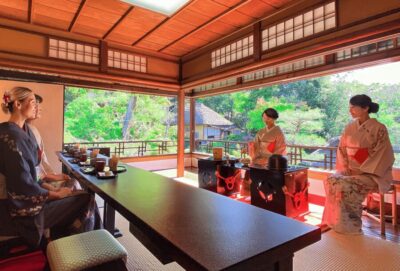
Tea Ceremony in a Traditional Tea House in Kiyomizu
Read our review →

Meiji Shrine, Asakusa, Skytree Bus Tour and Cruise
Read our review →
Asakusa Walking Tour with Sensoji Temple Visit
Read our review →
Kamakura & Enoshima Day Trip including Temple Tickets
Read our review →
Kyoto/Osaka: Nara, Fushimi Inari Taisha, Arashiyama Bus Tour
Read our review →
Nikko Toshogu Shrine and Kegon Waterfall Tour
Read our review →
Tokyo Panoramic 1 Day: Meiji Shrine, Asakusa, Odaiba and SKYTREE®
Read our review →Browse the lists this tour appears in