
REVIEW · WORKSHOPS
Kyoto: Beginner Knife Sharpening & Handle Fitting Workshop
The best part of this Kyoto workshop is that you do not simply buy a Japanese knife, you learn how to care for one and finish it yourself. In two hours at Japanese knife shop HIRAI, you sharpen a knife, fit a magnolia handle, and leave with a useful souvenir rather than another decorative trinket.
I like the hands-on instruction, especially the demonstration knives and patient corrections that make whetstone sharpening less intimidating. I also like the small group size, limited to three, which gives you room to ask questions and work at a sensible pace.
The main thing to consider is the price, $161 per person. It is a strong value if you wanted to buy a Japanese knife anyway, but it is more than a standard sightseeing activity. Fire is used while fitting the handle, so your clothes may pick up a smoky smell.
In This Review
- Key points to know before you book
- What makes this Kyoto workshop different
- Choosing between Santoku, Deba, and Yanagi
- The sharpening lesson, from uncertain to practical
- Fitting the magnolia handle
- English instruction and the small-group setting
- Finding HIRAI near Nishiki Market
- Is $161 a fair price?
- Who will get the most from this experience?
- Small details that improve the experience
- Should you book the HIRAI knife workshop?
- FAQ
- Where does the workshop take place?
- How long does the activity last?
- How much does the workshop cost?
- Which knives can I choose?
- Can I take the knife home?
- Is the handle included?
- Can I choose another handle?
- Is engraving available?
- Is the workshop available in English?
- How many people can join?
- What should I wear?
- Is the workshop suitable for children?
- Can wheelchair users join?
- Can I cancel for a refund?
Key points to know before you book
- You choose your own knife: Pick a Santoku, Deba, or Yanagi for the workshop.
- The knife goes home with you: Your sharpened knife and fitted magnolia handle are packaged after the class.
- You learn a useful kitchen skill: The instructor teaches basic whetstone sharpening you can repeat at home.
- Julio and other English-speaking instructors may lead the class: English and Japanese instruction are available.
- Engraving is included: Request up to four letters in advance if you want a personal mark.
- Expect a little smoke: Fire is part of the handle-fitting process, so wear clothes you do not mind smelling smoky.
What makes this Kyoto workshop different
Kyoto offers plenty of cooking classes, craft demonstrations, and food-market stops. This one gives you something you can use every week. You leave with a real Japanese kitchen knife, but the lasting value is the skill that comes with it.
The workshop is aimed at beginners. You do not need previous sharpening experience, and you are not expected to arrive with a prized blade from home. The knife used in class is included, which makes the session easier to understand as a complete experience.
You begin with an explanation of Japanese knives and their place in kitchen work. The introduction gives you a useful reason for the different shapes rather than asking you to choose a blade by looks alone. A Santoku is the general-purpose option, while a Deba or Yanagi has a more specific Japanese kitchen role.
The instruction is practical from the start. You see the correct motion on demonstration knives, then try it on your own blade while the instructor checks your angle and pressure. That sequence matters. Watching a technique on a video is easy, but knowing what the whetstone should feel like under your hand is much harder to learn alone.
A few more Kyoto trips to weigh up
- Kyoto: 45-Minute Tea Ceremony Lesson Experience
★ 4.3 · 2,378 reviews - Ramen Cooking Class at Ramen Factory in Kyoto
★ 5.0 · 1,937 reviews - Kyoto : Chopsticks Making Workshop in Gion with Engraving Option
★ 5.0 · 958 reviews
Choosing between Santoku, Deba, and Yanagi
Your knife choice shapes the whole experience. If you want the most useful blade for ordinary home cooking, the Santoku is the sensible pick. It is the general-purpose choice and the one most likely to become part of your regular kitchen routine.
The Deba and Yanagi are more specialized. The Deba is associated with heavier work, while the Yanagi is a long slicing knife. The workshop lets you work with one of these styles instead of limiting everyone to the same blade, which is useful if you already have a clear interest in Japanese cooking.
I suggest deciding before the class if you are choosing for daily use. If the knife will be a working souvenir, the Santoku is likely the easiest match. If you are buying for a particular cooking interest, the Deba or Yanagi may have more appeal.
You can also purchase additional knives at the shop, but those are not included in the $161 fee. Some people choose to upgrade the blade or handle after seeing the selection. There is no need to do so, since the standard choices are already part of the workshop and provide a complete experience.
The sharpening lesson, from uncertain to practical
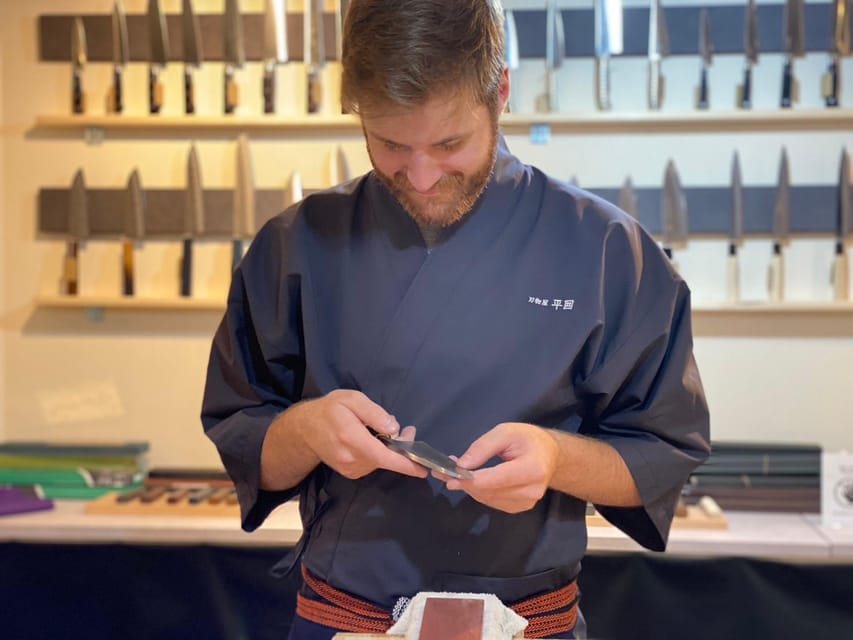
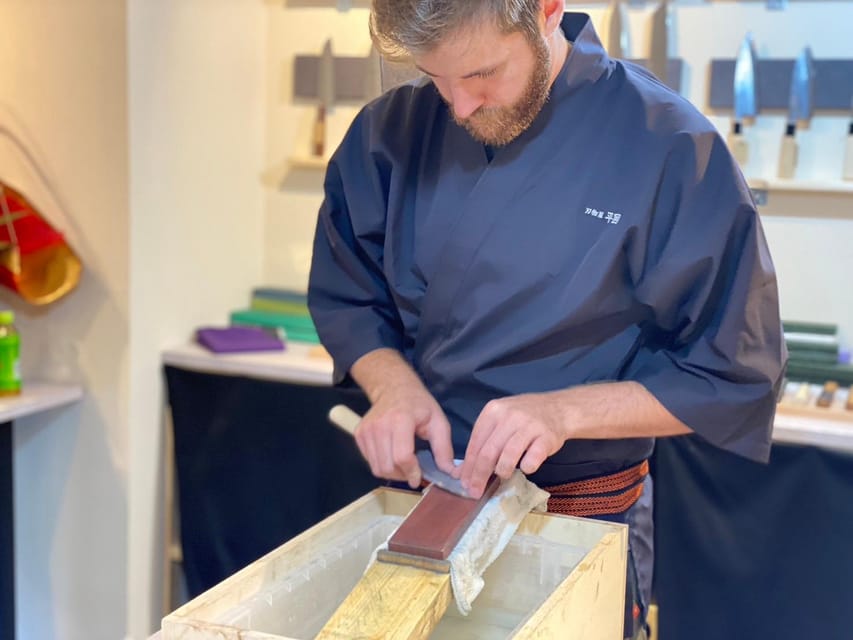
The sharpening section is the heart of the class. Whetstones can seem difficult because small changes in angle affect the edge, and beginners often use too much force. Here, you first receive a clear demonstration, then work on a practice knife before moving to your own blade.
The instructor watches closely and gives corrections as you go. That personal feedback is what separates this from a self-guided lesson. You can ask about hand position, movement, and pressure, then immediately try the adjustment rather than wondering if you understood the explanation.
The class is not designed to turn you into a professional bladesmith in one afternoon. It teaches a beginner-level method for maintaining a knife at home. That is a realistic goal, and it is one you can continue using long after your Kyoto visit.
You will need concentration. The work is calm, repetitive, and precise, not fast or flashy. If you enjoy learning by doing, the pace should suit you. If you want a relaxed activity that requires no focus, this may feel more demanding than expected.
One useful improvement would be a printed reminder of the sharpening method. The instructor explains the steps in person, but you may want to take careful notes or ask for the process to be repeated before leaving. You will remember the basic motion better if you practice again at home soon.
Fitting the magnolia handle
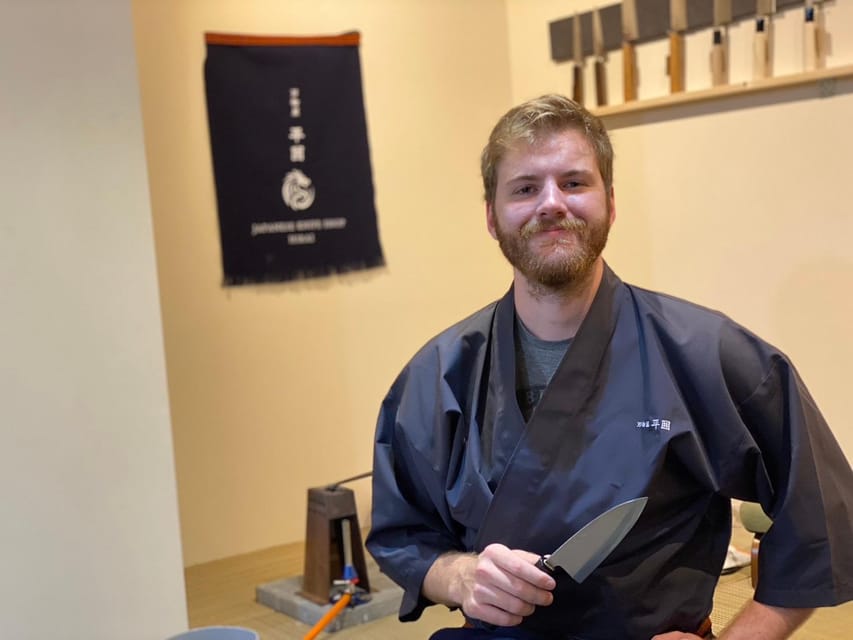
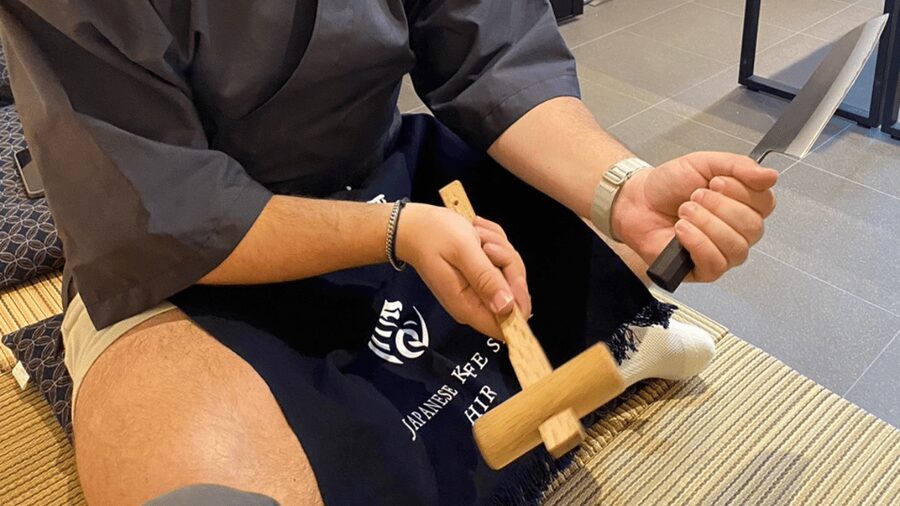
After sharpening, you move to handle fitting. The included handle is made from magnolia wood, a traditional and practical choice for a Japanese kitchen knife. You select the handle and work with the shop staff to fit it to the knife.
This is the most distinctive part of the workshop. Sharpening can be learned in many places, but fitting a handle gives you a direct connection to the construction of the tool. You are not only polishing a finished product. You are helping assemble the knife you will use.
Fire is used during this part of the process. Smoke may come from the work, and your clothing can take on the smell. Wear something casual that you do not mind exposing to smoke, especially if you have dinner plans or a special outfit later in the day.
Other handle types are available for an additional fee. The exact cost depends on the handle you choose. The standard magnolia handle is included, so treat an upgrade as an optional design choice rather than a required expense.
The workshop also offers engraving. Up to four letters can be added, but you must request this in advance and provide the exact characters you want. This is a thoughtful option if the knife is a gift or if you want a personal reminder of Kyoto on the blade.
Same city, a completely different kind of day:
- PERFECT KYOTO 1-Day Bus Tour
★ 5.0 · 13,518 reviews - Kyoto: Fushimi Inari, Kinkakuji, Bamboo Grove 1 Day Bus Tour
★ 4.8 · 4,316 reviews - Kyoto: Tea Ceremony in a Traditional Tea House in Kiyomizu
★ 4.9 · 3,519 reviews - Kyoto Geisha Walking Tour: Gion District & Hidden Gems
★ 4.7 · 3,273 reviews
English instruction and the small-group setting
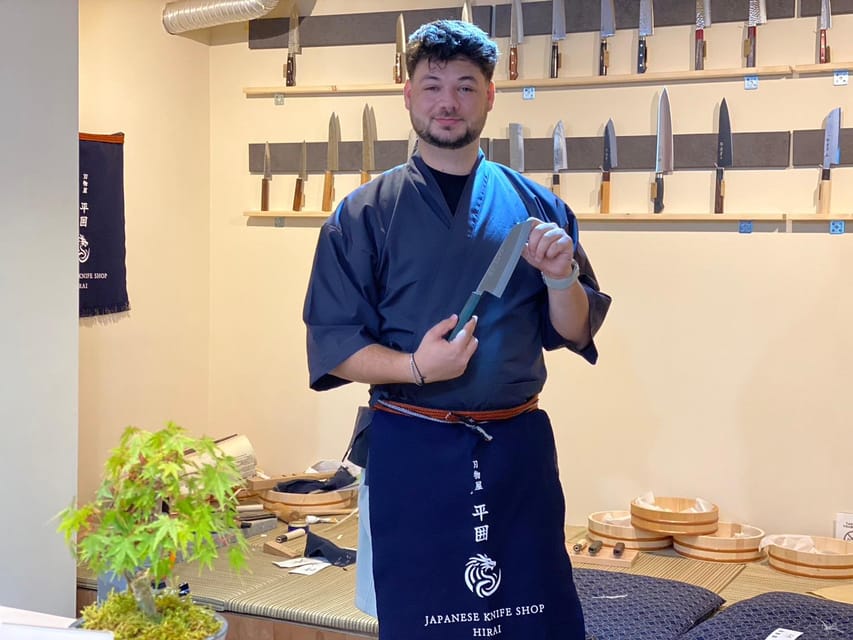
The class is available in English and Japanese. Instructors such as Julio have been praised for patient, clear teaching, while other staff members help with the knife and handle work. The setup combines an English guide with Japanese craft knowledge, giving you explanations you can follow without losing the local character of the workshop.
The maximum group size is three participants. That is a major advantage for a technical activity. You are not standing at the back of a large room trying to copy a hand movement from a distance.
A small group also keeps the session personal without making it private. You can watch other beginners work, notice common mistakes, and learn from questions that may not occur to you. At the same time, the instructor has enough time to check your own progress.
The workshop is not suitable for children under 15 or people over 80. It is also not suitable for wheelchair users. Pets, baby strollers, smoking, alcohol, drugs, and noisy behavior are not allowed.
Finding HIRAI near Nishiki Market
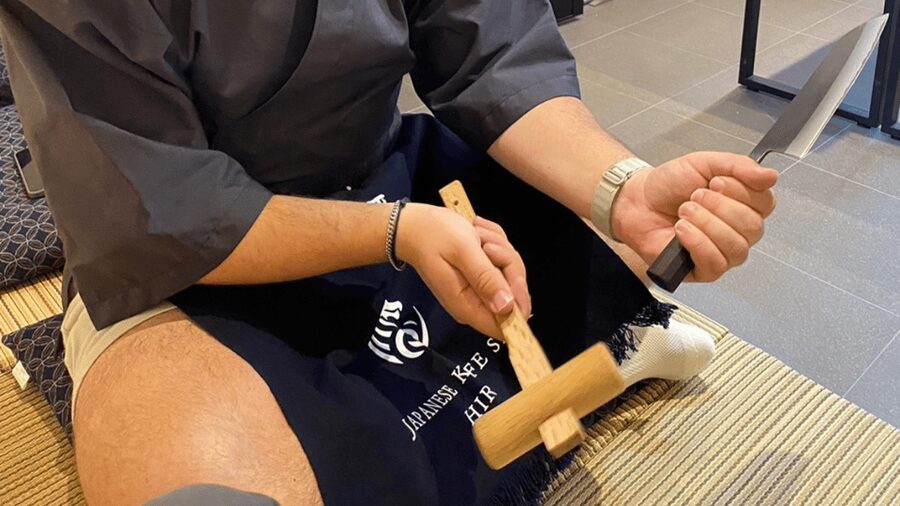
You go directly to the shop rather than meeting a guide at a station. The shop has a white storefront curtain, which is the main visual clue. Arrive five minutes early so the class can start smoothly.
The location is in the Nishiki Market area, a convenient place to combine with food browsing and central Kyoto sightseeing. The market area can be busy, and the shop may be a little hard to spot at first. Give yourself extra time to find the white curtain instead of arriving at the exact start time.
The two-hour duration fits well into a Kyoto day. You could schedule it before exploring Nishiki Market, or use the market as a nearby stop afterward. Keep in mind that you will leave with a knife, so plan how you will carry it safely through the rest of your day.
The shop packages the finished knife for you. You can take it home after the workshop, but you should still think ahead about your travel plans and baggage. A packaged kitchen knife is easier to manage than an unprotected blade, but it remains a sharp object that needs sensible handling.
Is $161 a fair price?
At first glance, $161 may seem high for a two-hour activity. The price makes more sense when you separate the instruction from the souvenir. It includes the knife you sharpen, the magnolia handle you fit, the uniform and apron, the instructor, the engraving fee, and the use of the shop’s whetstones.
You do not need to buy a whetstone for the class. The shop supplies the equipment, which keeps the session simple for a first attempt. A whetstone purchase is optional if you want to continue practicing at home.
The knife itself is the key value question. If you planned to buy a Japanese knife during your stay, the workshop gives you instruction and a personal connection for little more than the cost of buying a knife alone, depending on the blade and any upgrades. If you are not interested in cooking or knife care, the price will feel less convincing.
Optional costs can increase the final bill. Extra knives and handles beyond the included choices are not covered, and upgraded handles have different prices. Decide your spending limit before you browse the shop selection, since the range of blades and handles may tempt you.
The included engraving fee helps the basic package feel complete. You still need to arrange the engraving in advance and keep the inscription to four letters or fewer.
Who will get the most from this experience?
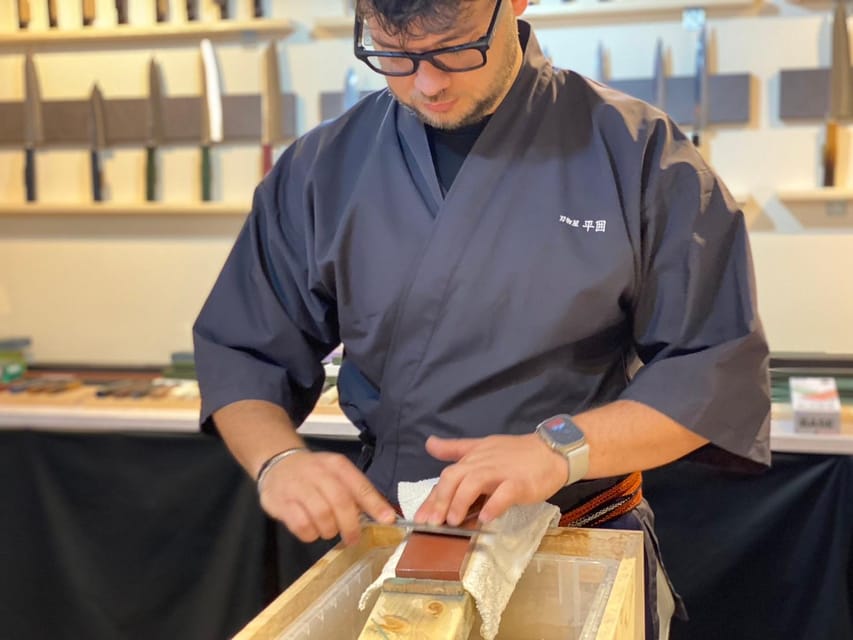
I would recommend this workshop to home cooks, food lovers, and anyone who has been nervous about sharpening with a whetstone. It is also a good choice for couples, parents with older teenagers, or friends who want a shared souvenir that is useful rather than ornamental.
It suits people who enjoy patient instruction. You will spend part of the class concentrating on small movements, and the result depends on following the method carefully. The payoff is a skill you can use on future knives.
It is especially appealing if you are already considering a Japanese knife purchase. Instead of choosing one from a display case and walking away, you learn how the edge is maintained and how the handle is fitted.
I would be less likely to recommend it to someone who wants a broad cultural tour or a fast activity between major sights. The Japanese knife background is included, but the main subject is practical craft. You will spend most of the time working at the bench, not touring Kyoto.
Small details that improve the experience
Wear comfortable clothes and bring an outfit that can tolerate smoke. The handle-fitting work uses fire, so this is not the place for clothing you need to keep perfectly fresh.
Arrive early, especially if you are coming through Nishiki Market. The area can slow you down, and the white curtain is easier to miss when the street is crowded.
Choose your knife before the activity begins. The three options are Santoku, Deba, and Yanagi. If you want engraving, send the requested characters in advance and keep them within the four-letter limit.
Ask questions during the sharpening practice. The instructor can correct your technique while the movement is still fresh. You might also want to write down the key steps, since the workshop does not promise a printed sharpening guide.
Free cancellation is available up to 24 hours before the activity for a full refund. You can also reserve and pay later, which helps if your Kyoto schedule is still shifting.
Should you book the HIRAI knife workshop?
Book it if you want a useful Kyoto souvenir, enjoy hands-on instruction, and are willing to spend two focused hours learning a practical skill. The included knife, handle fitting, English support, and tiny group make the price easier to justify than a simple shopping stop.
Choose the Santoku for the safest all-purpose option, or pick the Deba or Yanagi if you already understand why you want a specialized blade. Request engraving early, wear clothes that can handle smoke, and arrive five minutes before the start.
Skip it if you do not cook, dislike precise repetitive work, or want a low-effort sightseeing activity. For the right person, though, this is a memorable way to bring home a piece of Japanese craft that you sharpened, assembled, and can use for years.
FAQ
Where does the workshop take place?
You go directly to Japanese knife shop HIRAI in Kyoto, on Honshu. Look for the shop’s white storefront curtain.
How long does the activity last?
The workshop lasts two hours.
How much does the workshop cost?
The listed price is $161 per person.
Which knives can I choose?
You can choose one knife from three options: Santoku, Deba, or Yanagi.
Can I take the knife home?
Yes. The knife you sharpen and the handle you fit are packaged after the workshop, and you can take them home.
Is the handle included?
Yes. The included handle is made from magnolia wood.
Can I choose another handle?
Yes, but handles other than magnolia cost an additional fee. The amount depends on the handle you select.
Is engraving available?
Yes. Engraving is included, but you must request it in advance and provide up to four letters.
Is the workshop available in English?
Yes. Instruction is available in English and Japanese.
How many people can join?
The workshop is limited to three participants.
What should I wear?
Wear clothes you do not mind smelling smoky because fire is used during the handle-fitting section.
Is the workshop suitable for children?
No. It is not suitable for children under 15.
Can wheelchair users join?
No. The activity is not suitable for wheelchair users.
Can I cancel for a refund?
You can cancel up to 24 hours in advance for a full refund.
Just added around Kyoto
- Taste of Nishiki Market Walking Food Tour with Local guide★ 5.0 · 17 reviews
- Kyoto: Sushi Making Class with Sushi Chef★ 4.8 · 64 reviews
- Kyoto: City Secrets eBike Tour★ 4.9 · 196 reviews
- Sacred Pathways: Discover the Philosopher’s Path of Kyoto★ 4.9 · 20 reviews
- Private Tour to Monkey Park and Arashiyama Highlights★ 5.0 · 22 reviews
- Private Nara Tour from Osaka – Meet at Your Hotel★ 5.0 · 22 reviews
- Private Sake Tasting in Central Kyoto with Sake Sommelier★ 5.0 · 13 reviews
- Kyoto : Private Custom Walking Tour With A Local Guide★ 4.6 · 144 reviews
Workshops, compared.
Sushi Making Tokyo Roll and Authentic Japanese Sushi Class
Read our review →
Roll and Authentic Sushi Making Class in Asakusa
Read our review →
Ramen Cooking Class at Ramen Factory in Kyoto
Read our review →
Sushi Making Class in a Happi Coat near a Famous Spot
Read our review →
Sushi Making Osaka Roll and Authentic Japanese Sushi Class
Read our review →
Tokyo Sushi Making Class in Tsukiji with Professional Chef
Read our review →Browse the lists this tour appears in