
REVIEW · JAPANESE COOKING CLASSES
Japanese Home Styled Cooking Class in or around Shinjuku, Tokyo
The best part of this Japanese home-style cooking class is its focus on food people actually make at home, not restaurant showpieces. Over about two and a half hours, you prepare three or four dishes, then sit down to eat what you made. Chieko-San, Lulu, and Erica are among the hosts associated with the class, and English support is available.
I like the hands-on format, with ingredients and cooking tools supplied, and I like that you leave with recipe sheets rather than only a full stomach. The class is also capped at 12 people, which gives it a more personal feel. One thing to consider is menu flexibility: you can choose from four menus only when your group is the sole booking that day.
In This Review
- Key points at a glance
- Cooking everyday Japanese food near Shinjuku
- What happens during the two-and-a-half-hour class
- Learning with Chieko-San, Lulu, and Erica
- Why home-style cooking is the right souvenir
- The meal matters as much as the cooking
- Menu choices, allergies, and what to confirm
- Is $89.99 a fair price?
- Timing, location, and group size
- What the praise tells you, and what the complaint tells you
- Who should book this cooking class?
- FAQ
- Where does the Japanese cooking class meet?
- How long does the class last?
- How many people can join?
- What is included in the price?
- Can I choose the menu?
- Can food allergies be accommodated?
- Should you book it?
Key points at a glance
- Three to four everyday Japanese dishes: You learn food designed for a home kitchen, not just for display.
- A meal you help create: Cooking is followed by time to eat together and connect with the host and other people in the class.
- Four menu choices: Menu selection is possible when your group is the only booking, but may not be available when another group joins.
- Practical take-home value: Recipe sheets help you repeat the dishes after returning home.
- Small-group setting: The maximum group size is 12, with several helpers available on some sessions.
- Convenient central location: The meeting point is at 2-chōme-5-1 Yoyogi in Shibuya, close to public transportation and within the wider Shinjuku area.
Cooking everyday Japanese food near Shinjuku
This class takes a useful approach to Japanese cuisine. Instead of promising a grand restaurant lesson, it concentrates on simple dishes that can be made in an ordinary home kitchen. That makes the class a good match for you if you want to keep cooking Japanese food after your holiday.
The meal includes three or four dishes, though the exact menu depends on the option selected and the group arrangements for that date. Four menu choices are available when your party is the only booking. If another group is attending, the host may need to use a shared menu instead.
That detail matters. You should not book expecting complete menu control every time. At the same time, the menus are described as popular, well-known Japanese dishes, so the class remains focused on familiar local cooking rather than unusual food chosen mainly for novelty.
The class takes place in or around Shinjuku, with the listed meeting point at 2-chōme-5-1 Yoyogi, Shibuya, Tokyo. That puts you in central Tokyo, near public transportation. You arrange your own way there, since private transportation is not included.
More Japanese Cooking Classes in Tokyo
- Sushi Making Tokyo Roll and Authentic Japanese Sushi Class
★ 5.0 · 3,971 reviews - Tokyo: Roll and Authentic Sushi Making Class in Asakusa
★ 4.9 · 1,957 reviews - Tokyo: Sushi Making Class in a Happi Coat near a Famous Spot
★ 4.9 · 1,377 reviews
What happens during the two-and-a-half-hour class
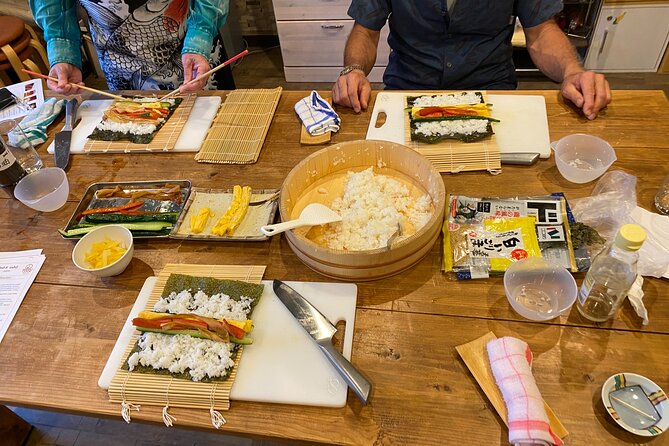
The host prepares the ingredients ahead of time, so your time is spent learning and cooking rather than waiting for every vegetable or other component to be set out. The supplied tools and ingredients let you work directly with the food instead of watching a demonstration from the sidelines.
You should expect a practical lesson covering the preparation of three or four dishes. The supplied information does not give a fixed cooking sequence or a guaranteed menu for every date, so the pace and exact order can change. Still, the structure is clear: cook the dishes, learn about the food and its place in Japanese culture, then eat the finished meal together.
The class lasts approximately two hours and 30 minutes. That is long enough for a real meal and some conversation, but short enough to fit into a day of sightseeing. You may want to avoid placing an important timed reservation immediately afterward, since the stated duration is approximate.
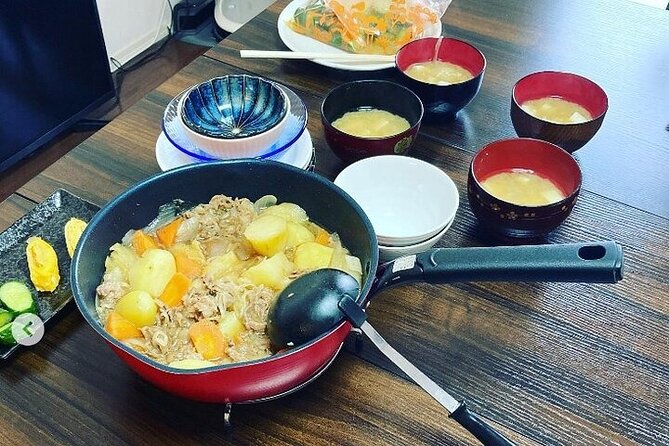
The food itself is part of the lesson’s appeal. One reported menu included sushi and a green bean salad, showing the range can include both a familiar Japanese favorite and a simple side dish. You should treat that as an example, not a promise of the exact menu on your date.
Learning with Chieko-San, Lulu, and Erica
The teaching staff is an important part of the experience. Chieko-San is described as answering questions clearly and speaking English very well. Lulu and Erica are also named as hosts, and the class may include several helpers who keep people on track while they cook.
That extra help can make a difference in a group setting. Cooking classes become less enjoyable when one person is waiting for instructions or cannot see what is happening. Here, the presence of helpers on some sessions suggests that the lesson is organized to keep everyone involved.
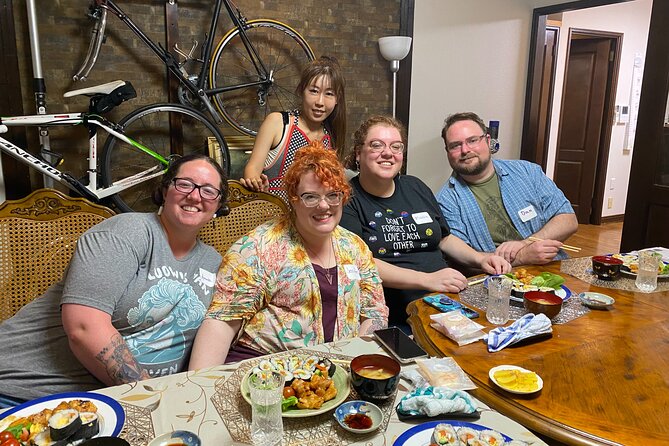
The atmosphere is intended to be social as well as instructional. You cook with the host and other people, then share the meal you have made. If you enjoy conversation and meeting people during a class, this format should suit you better than a private lesson focused only on technique.
English ability may vary by host, but Chieko-San is specifically noted as speaking English very well. If clear communication is especially important to you, you can take that into account when arranging the class, though the available information does not promise a particular instructor for every booking.
Why home-style cooking is the right souvenir
A cooking class can give you something more useful than another photograph. The recipe sheets included with this activity give you a way to recreate the dishes at home, which is one reason the class has lasting value.
The recipes are also tied to the memory of the place. You may remember the steps, the shared meal, and the food conversation each time you prepare one of the dishes later. That is especially helpful if you want a Japanese food experience that continues after you leave Tokyo.
The class is aimed at basic, authentic home cooking. That makes it approachable, but you should not expect advanced culinary training or a formal professional kitchen course. The goal is to understand and prepare familiar dishes with guidance, then enjoy the result.
For many people, that is the sensible level. You do not need to turn the class into a career lesson. You simply need enough understanding to repeat the food in your own kitchen.
Same city, a completely different kind of day:
- Mt Fuji and Hakone 1-Day Bus Tour Return by Bullet Train
★ 5.0 · 26,383 reviews - 1-Day Tokyo Bus Tour
★ 5.0 · 14,250 reviews - Tokyo: TOKYO SKYTREE® Admission ticket
★ 4.5 · 11,192 reviews - Tokyo: teamLab Planets TOKYO Digital Art Museum Entry Ticket
★ 4.6 · 9,779 reviews
The meal matters as much as the cooking
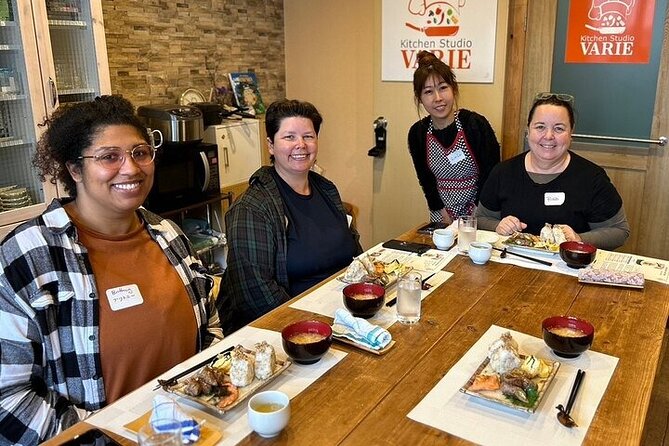
After the cooking is finished, you eat the dishes together at the meeting point. This shared meal gives the class a natural ending and lets you taste the results while the methods are still fresh in your mind.
I like this arrangement because it connects the lesson to a clear payoff. You are not just chopping and mixing, then leaving with containers of food. You sit down and enjoy the meal as part of the class.
The social side can be a strength, particularly for solo visitors or couples who want an easy way to meet people. Lulu and Erica are described as warm and welcoming, and the class is built around cooking, conversation, laughter, and eating together. The maximum size of 12 keeps the group from becoming a large demonstration, though the exact feel depends on how many people book your date.
If you prefer quiet, private instruction, this may not be your ideal choice. You are joining a group activity, and the end of the class is designed for shared conversation as well as food.
Menu choices, allergies, and what to confirm
When booking, pay close attention to the menu conditions. You can select one of four menu options if your group is the only group attending that day. If another group also attends, the host may decide on a menu that works for the combined class.
This is not necessarily a problem, but it is worth knowing before you pay. If a particular dish is the main reason you want to attend, contact the provider in advance and confirm what can be arranged.
Food allergies should also be disclosed ahead of time. The host says the menu and available alternatives can be discussed in advance. Do not wait until the class begins, since ingredients are prepared beforehand.
The available information does not specify the full list of ingredients or guarantee that every allergy can be accommodated. You should explain your needs clearly before the activity and ask what options are possible.
Is $89.99 a fair price?
At $89.99 per person, this is not the cheapest meal you will find in Tokyo. But the price includes the cooking instruction, all cooking tools, ingredients, the prepared meal, recipe sheets, and all fees and taxes.
The value depends on how you use the class. If you only want to eat Japanese food, you can find less expensive meals elsewhere. If you want a guided activity that teaches you how to prepare several dishes and gives you recipes to use later, the price is easier to justify.
The class also saves you from arranging ingredients, finding equipment, and translating a recipe on your own. Those practical elements are part of what you are paying for. Group discounts are available, which may improve the value if you are booking with family or friends.
I would see this as a good middle ground between a restaurant meal and a full-day food workshop. It gives you a substantial activity without consuming an entire day of your Tokyo schedule.
Timing, location, and group size
The class meets at 2-chōme-5-1 Yoyogi, Shibuya, Tokyo 151-0053, and ends back at the same meeting point. The area is near public transportation, but private transportation is not provided, so you need to make your own way to Yoyogi.
Because the activity is marketed for Shinjuku and the meeting point is in Yoyogi, check the address carefully rather than navigating only to the broad Shinjuku area. Tokyo addresses can be confusing, and arriving at the wrong station exit can cost you valuable time.
The class lasts about two hours and 30 minutes and accepts a maximum of 12 people. That is a manageable size for a cooking lesson, especially when helpers are available. If you are planning a busy sightseeing day, leave a little extra time around the class for finding the meeting point and settling in.
The activity is booked an average of 37 days in advance. That does not guarantee that every date fills early, but it is a useful warning for planning. If this is important to your itinerary, reserve before your Tokyo schedule becomes crowded.
Confirmation is provided at booking, and the ticket is mobile, so you do not need to arrange a paper voucher.
What the praise tells you, and what the complaint tells you
The strongest pattern in the feedback is personal attention. The class has a 4.8 out of 5 rating from 18 reviews, with 94 percent recommending it. Several positive comments focus on the helpful staff, English communication, warm atmosphere, and the fact that the recipes feel achievable at home.
The mention of several helpers is particularly useful. It suggests that the class is not simply one instructor talking while everyone else tries to keep up. You may receive help during the preparation and have someone nearby to clarify what to do next.
The practical nature of the food is another major strength. Chieko-San is praised for making home-style cooking feel believable for a returning cook. That is a better fit for you if you want repeatable recipes rather than complex techniques that require specialist equipment.
There is also one serious caution about cancellation communication. A family who requested a change the night before the class did not receive a refund. The provider explained that the late notice led to cancellation and that the refund decision followed the booking company’s rules.
The lesson is simple: do not treat the 24-hour cancellation window casually. Full refunds are available when you cancel at least 24 hours before the start time. Changes or cancellations inside that period are not accepted for a refund.
The class may also be canceled if bad weather affects the activity or if the minimum number of participants is not reached. In those cases, you are offered another date or experience, or a full refund.
Who should book this cooking class?
I would recommend it to you if you want a food activity that teaches useful skills and gives you time to talk with local hosts. It is a particularly good choice for couples, families, and small groups who enjoy making something together rather than sitting through a demonstration.
It also suits people who have already eaten plenty of sushi and ramen but want a closer look at ordinary Japanese cooking. The recipe sheets make the class more useful after the trip, and the home-style focus keeps the lesson grounded.
Families should consider the group format and the two-and-a-half-hour duration. The supplied information does not state a minimum age or specific child policy, so confirm that before booking for young children.
You may want to skip it if your schedule is uncertain, if you need a fully private class, or if you require a guaranteed menu that cannot change. You should also contact the provider early about allergies and language needs.
FAQ
Where does the Japanese cooking class meet?
The listed meeting point is 2-chōme-5-1 Yoyogi, Shibuya, Tokyo 151-0053, Japan. The activity ends back at the same meeting point.
How long does the class last?
The activity takes approximately two hours and 30 minutes, including cooking and eating the meal you prepare.
How many people can join?
The maximum group size is 12 people.
What is included in the price?
Cooking tools, ingredients, and all fees and taxes are included. Private transportation is not included.
Can I choose the menu?
You can choose from four menu options when your group is the only group attending that day. If another group joins the class, you may not be able to select the menu.
Can food allergies be accommodated?
You should notify the host in advance. The menu and available options can then be discussed, though the available information does not guarantee that every allergy can be accommodated.
Should you book it?
Book this class if you want to learn three or four practical Japanese dishes, eat what you prepare, and take home recipes you can use again. The helpful staff, small maximum group size, English support from Chieko-San, and social meal make it more than a basic cooking demonstration.
At $89.99, the value comes from the instruction and lasting usefulness, not simply the food. Confirm your meeting point, menu expectations, and allergy needs before booking, then protect the 24-hour cancellation deadline. For an approachable taste of Japanese home cooking in central Tokyo, this is a sensible choice.
More Workshops in Tokyo
- Tokyo Shinjuku Chopsticks Making Class
★ 5.0 · 1,763 reviews - Chopstick Making Workshop in Ginza
★ 4.8 · 1,366 reviews - Tokyo Sushi Making Class in Tsukiji with Professional Chef
★ 5.0 · 1,177 reviews - Matcha Making Class in Tokyo with Authentic Japanese Sweets Set
★ 5.0 · 744 reviews
More Cooking Classes in Tokyo
- Ramen & Gyoza Cooking Class in Tokyo with Local Supermarket Visit
★ 5.0 · 823 reviews - Tokyo: Easy Ramen Cooking Experience in Kabukicho, Shinjuku
★ 4.6 · 321 reviews - Ramen and Sushi Cooking Class with Sake Pairing Set in Tokyo
★ 5.0 · 291 reviews - Tokyo: Wagyu and 7 Japanese Dishes Cooking Class
★ 4.9 · 273 reviews
Just added around Tokyo
- Private Memorable Tokyo Tour with English Speaking Driver★ 5.0 · 30 reviews
- Private Tokyo Custom Full-Day Tour by Chartered Vehicle★ 5.0 · 16 reviews
- Private Sightseeing to Mt Fuji and Hakone with English Driver★ 5.0 · 51 reviews
- Tokyo Photography Masterclass – Private Photography Lesson★ 5.0 · 25 reviews
- 4 Day Tour – Mount. Fuji, Tokyo, Hakone, Kamakura and Yokohama★ 5.0 · 19 reviews
- Private Mt. Fuji Day Trip from Tokyo with English-Speaking Driver★ 5.0 · 33 reviews
- Private Unforgettable Mt Fuji Tour with English Speaking Driver★ 5.0 · 142 reviews
- Private Tokyo Food Tour – A Journey Through Time Through Food★ 5.0 · 36 reviews
Japanese Cooking Classes, compared.

Sushi Making Tokyo Roll and Authentic Japanese Sushi Class
Read our review →
Roll and Authentic Sushi Making Class in Asakusa
Read our review →
Ramen Cooking Class at Ramen Factory in Kyoto
Read our review →
Sushi Making Class in a Happi Coat near a Famous Spot
Read our review →
Sushi Making Osaka Roll and Authentic Japanese Sushi Class
Read our review →
Tokyo Sushi Making Class in Tsukiji with Professional Chef
Read our review →
Ramen & Gyoza Cooking Class in Tokyo with Local Supermarket Visit
Read our review →
Tsukiji Fish Market Guided Tour and Sushi Making with Pro Chef
Read our review →Browse the lists this tour appears in