

REVIEW · WORKSHOPS
Itajime Shibori Scarf Class
Itajime shibori turns folded fabric, wooden boards, pressure, and dye into a scarf with bold geometric patterns. At Kyoto Shibori Museum, you do the work yourself, then see how this simple-looking process connects to a much older Japanese textile craft.
I like the hands-on pace and the warm, personal teaching. I also like that your finished scarf is more than a souvenir bought from a shelf. You choose the fabric and colors, make the pattern, and watch the final design appear. The main thing to note is the size of the venue: the room is small, the class can last anywhere from 30 minutes to an hour, and finding the second-floor entrance may take a little care.
In This Review
- Key points to know before booking
- Making a Kyoto scarf with an old dyeing method
- Choosing fabric, colors, and a pattern
- Folding and clamping the cloth
- The scarf reveal is the best part
- Kyoto Shibori Museum adds the missing context
- A convenient stop near Nijo Castle
- Why families and solo visitors both fit well
- What could disappoint you
- Planning the timing and cancellation
- Should you book the Itajime Shibori Scarf Class?
- FAQ
- How long does the Itajime Shibori Scarf Class last?
- What is included in the experience?
- What is the minimum age?
- How many people can join the class?
- Is the museum close to public transportation?
- What is the cancellation policy?
Key points to know before booking
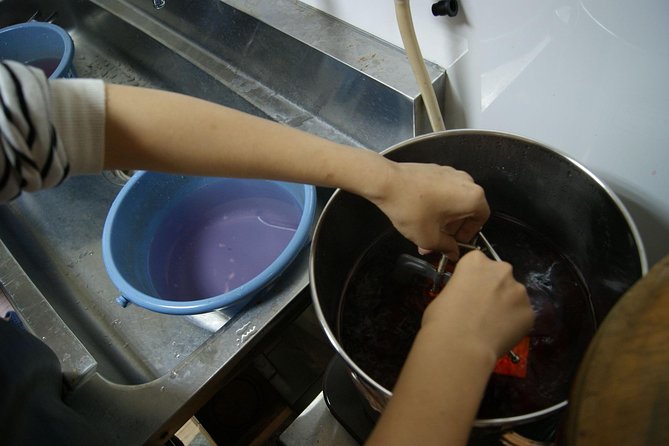
- You make the scarf yourself: Folding and dyeing are the heart of the activity, with staff guiding you step by step.
- The museum adds real context: While your scarf dries, you can see shibori examples, watch a film about the process, and learn about kimono fabric.
- Small groups feel personal: The maximum group size is 10, and one-on-one help may be available.
- It suits families: Children age 6 and older can participate, and adult pricing applies to every age.
- It is easy to pair with sightseeing: The museum is near public transportation and about a two-minute walk from Nijo Castle, according to the experience information.
- The price is reasonable for a made-by-you souvenir: At $43.60 per person, the fee includes the class and museum admission.
Making a Kyoto scarf with an old dyeing method
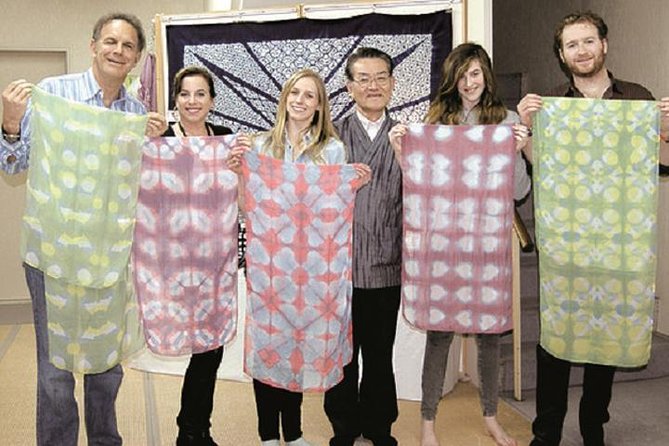
Shibori is a Japanese resist-dyeing craft. You shape or compress parts of the fabric before it enters the dye, leaving some areas protected from the color. When the fabric is opened, the covered sections create the pattern.
This class focuses on itajime shibori, a method that uses folding and pressure. The result often has crisp, repeated shapes rather than the loose swirls you might associate with ordinary tie-dye. You are not simply watching an artisan work. You are making the decisions that determine your own scarf.
That distinction matters. Kyoto has no shortage of attractive souvenirs, but a handmade textile carries a different memory. You remember the folds, the color choices, the moment the cloth opens, and the small surprises in the final pattern. Even if you do not think of yourself as artistic, the method gives you a clear structure to follow.
The staff walk you through the process, so you do not need prior craft experience. Instructions are described as clear and patient, and June is specifically praised for her calm guidance. Kenji and the museum staff are also noted for taking time to explain the craft and answer questions.
A few more Kyoto trips to weigh up
- Kyoto: 45-Minute Tea Ceremony Lesson Experience
★ 4.3 · 2,378 reviews - Ramen Cooking Class at Ramen Factory in Kyoto
★ 5.0 · 1,937 reviews - Kyoto : Chopsticks Making Workshop in Gion with Engraving Option
★ 5.0 · 958 reviews
Choosing fabric, colors, and a pattern
The class begins with selecting from Japanese fabrics and deciding what colors and pattern you want to create. This is a small choice with a big effect on the finished scarf. A restrained color combination may produce something elegant and easy to wear, while stronger contrasts can make the pattern more dramatic.
You should take a moment here rather than rushing. The folds and boards shape the design, but your color choices control its mood. Since every person makes a slightly different arrangement, the finished scarves will not all look alike.
The appeal is partly that you can make a mistake without ruining the experience. Shibori has a handmade quality, and small variations are part of the point. The staff help you understand what to do, but they do not turn the activity into a rigid demonstration where every result must look identical.
For families, this stage gives children a real role. The minimum age is 6, and adult pricing applies to all ages. Younger children may need more help with careful folding and handling the materials, but the activity is practical and visual enough to hold attention better than a long museum talk.
Folding and clamping the cloth
After choosing your materials, you prepare the fabric for dyeing. Itajime shibori depends on the way the cloth is folded and held between traditional tools. Areas pressed or covered by the boards resist the dye, creating the pattern when the scarf is unfolded.
This is where the class feels most like a craft workshop rather than a quick tourist stop. You are working with a traditional technique, but the instructions keep the task manageable. The staff explain not only what to do, but also why the folds and pressure matter.
The pace is usually relaxed. The advertised duration is about 30 minutes to one hour, while the museum itinerary allows roughly an hour. That makes this a useful choice for a morning or afternoon when you want a focused activity without giving up half a day.
One practical point: the class can feel personal because the maximum group size is 10. Several accounts describe dedicated, one-on-one attention, but the exact level of individual help will depend on how many people are booked at your session. If you prefer a large, energetic workshop with lots of social interaction, this may feel quiet. If you value patient instruction, the smaller setting is a strength.
The scarf reveal is the best part
Once the fabric has been prepared and dyed, the most satisfying moment comes when the scarf is opened. The pattern you imagined becomes visible, and the result may differ from what you expected. That final reveal gives the class a clear payoff.
Staff handle the finishing touches and prepare the scarf for you to take home. The waiting period is useful rather than wasted, since you can explore the museum and its displays while the fabric dries. By the time you finish looking around, your scarf may be dried and packaged.
That timing helps the activity feel complete. You do not leave with a damp piece of cloth and instructions to figure out the rest yourself. You leave with a finished object, and in one family’s case, even a certificate was prepared for a child who completed the scarf.
The scarf is the main souvenir, but the process is what gives it value. At $43.60 per person, you are paying for instruction, materials, museum admission, and a personal keepsake. That is a fair price for a Kyoto activity that occupies about an hour and gives you something useful to bring home.
Same city, a completely different kind of day:
- PERFECT KYOTO 1-Day Bus Tour
★ 5.0 · 13,518 reviews - Kyoto: Fushimi Inari, Kinkakuji, Bamboo Grove 1 Day Bus Tour
★ 4.8 · 4,316 reviews - Kyoto: Tea Ceremony in a Traditional Tea House in Kiyomizu
★ 4.9 · 3,519 reviews - Kyoto Geisha Walking Tour: Gion District & Hidden Gems
★ 4.7 · 3,273 reviews
Kyoto Shibori Museum adds the missing context

The museum is not just a waiting room. Its second-floor exhibition shows the skill and time behind Japanese textile work. You can see shibori examples, learn about the craft’s development, and gain a better sense of how dyed fabric has been used in kimono making.
A film explains the process, including the labor involved in creating different forms of shibori. The displays help you understand why handmade textiles can require so much patience. After folding and dyeing one scarf, you look at the museum pieces with a sharper eye.
This is one of the strongest features of the experience. Without the museum, the class would still be pleasant, but it might seem like a Japanese version of tie-dye. The exhibition shows that shibori is a serious textile art with many techniques and levels of difficulty.
The museum also gives you a calm break from Kyoto’s crowded sightseeing areas. The class and exhibition together create a quiet hour focused on fabric, color, and handwork. I would especially consider it for the middle of a busy sightseeing day, when you want to sit down and do something rather than move from one major sight to another.
Some people also find the craft shop worth a look. One account describes purchasing a shibori and leather purse, and the museum has been praised for answering questions about the work on display. Shopping is not the main purpose of the booking, so think of it as an optional extra rather than part of the promised activity.
A convenient stop near Nijo Castle
The museum is near public transportation, which makes it practical to reach as part of a Kyoto day. It is also described as about a two-minute walk from Nijo Castle. That pairing is particularly useful because the two activities offer different kinds of experience.
Nijo Castle gives you grand architecture and political history. The shibori class gives you a quieter look at Japanese handcraft. You could visit the castle first, then make a scarf, or do the class before touring the castle. Allow enough time between bookings if you need to meet a strict entry slot, since the class duration can vary from 30 minutes to one hour.
The entrance is on the second floor and may not be clearly marked from the street. This is the one arrival issue worth taking seriously. Look for the building carefully and allow a few extra minutes rather than arriving at the last second.
Two car parking spaces and bicycle parking are available. The limited car parking means you should not count on an open space, especially if you are traveling at a busy time. Public transportation is the safer plan for most visitors.
The mobile ticket is convenient, and confirmation is provided at booking. Most people can participate, but the minimum age is 6. No special physical requirements are listed, so if you have a concern beyond the stated information, ask the provider before booking.
Why families and solo visitors both fit well
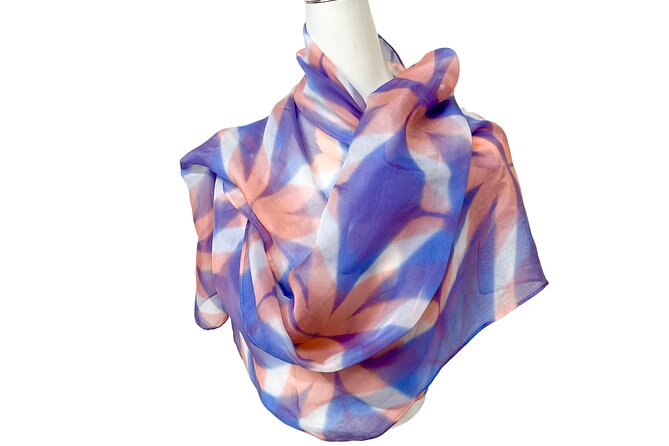
This is a flexible activity for different kinds of Kyoto trips. Families can work side by side and take home matching or contrasting scarves. Teenagers may appreciate that they are creating something rather than simply looking at another display. The activity has enough structure for children and enough choice to keep older participants interested.
Solo visitors can also get a lot from it. A small class and attentive instruction make it easier to ask questions without feeling lost in a large group. One solo participant made three scarves and found the experience a relaxing way to begin a final full day in Japan. The booking appears to work well for someone who wants a low-pressure activity with a clear result.
Couples and friends can compare their designs at the end. The scarf-making process is social without requiring constant conversation. You can focus on your own fabric, then share the reveal.
Craft lovers will find the most to enjoy, but you do not need to know anything about textiles. The museum explanation gives you the background, while the activity keeps the lesson practical. You learn by doing rather than sitting through a long lecture.
What could disappoint you
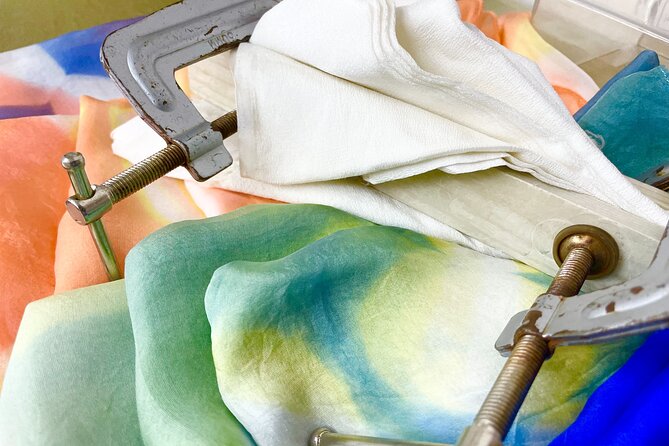
The class is short. If you are hoping to master shibori or spend several hours on detailed textile work, this is an introduction, not an apprenticeship. You will learn one technique and create one or more scarves within the allotted time, but the museum displays will show far more complexity than you can cover in a single session.
The compact setting may also feel less polished than a large commercial workshop. That is part of its personal character, but it means the entrance can be easy to miss and the room may feel close if the group is full.
The final design is not fully predictable. That is part of handmade dyeing, yet it may frustrate anyone expecting a precise, uniform pattern. Listen closely during the folding stage and ask for help if you are unsure. The staff are there to guide you, but your choices still shape the result.
Finally, adult pricing applies to all ages. A child pays the same listed rate as an adult, so a large family should calculate the total before booking. The value remains solid if everyone will take part, visit the museum, and use the scarf afterward.
Planning the timing and cancellation
Set aside about an hour, even though the experience is advertised as lasting 30 to 60 minutes. That gives you room for the craft, the drying period, and the museum displays without making your next appointment uncomfortably tight.
The maximum group size is 10. Confirmation arrives at booking, and the mobile ticket makes entry simple. The activity is available to most participants, with a minimum age of 6.
Free cancellation is available until 24 hours before the local start time. Cancel at least 24 hours ahead for a full refund. Cancellations or changes made within 24 hours are not refunded or accepted, so do not book this alongside a schedule that is likely to shift.
Should you book the Itajime Shibori Scarf Class?
I would book this if you want a personal souvenir, enjoy making things, or need a quieter Kyoto activity near Nijo Castle. The combination of instruction, museum access, and a finished scarf gives the hour more substance than a simple craft demonstration.
It is also a good pick for families with children age 6 and older, couples, solo visitors, and anyone curious about Japanese textiles. The kind staff, patient instruction, and satisfying final reveal are the strongest reasons to go.
I would choose something else if you want a long, advanced workshop or if your schedule allows no flexibility around a one-hour activity. For most visitors, though, $43.60 buys a genuine cultural encounter and a useful reminder of Kyoto that you made yourself.
FAQ
How long does the Itajime Shibori Scarf Class last?
The activity lasts approximately 30 minutes to one hour. The museum itinerary allows about one hour, including the scarf-making experience and museum visit.
What is included in the experience?
The class includes instruction, Japanese fabric and traditional tools for making the scarf, the finished handmade memento, and admission to the Kyoto Shibori Museum.
What is the minimum age?
The minimum age is 6. Adult pricing applies to all ages, including children.
How many people can join the class?
The activity has a maximum of 10 participants.
Is the museum close to public transportation?
Yes. The museum is near public transportation. Two car parking spaces and bicycle parking spaces are also available.
What is the cancellation policy?
You can cancel at least 24 hours before the local start time for a full refund. Cancellations or changes made less than 24 hours before the start time are not accepted, and the payment is not refunded.
Just added around Kyoto
- Private Guided Traditional Buddhist Cooking in Japan★ 5.0 · 16 reviews
- Kyoto: Gion Geisha District & Sake-in-Hand Walking Tour★ 5.0 · 37 reviews
- Your Private Vacation Photography Session In Kyoto★ 5.0 · 110 reviews
- Kyoto: Zen Meditation at a Private Temple with a Monk★ 5.0 · 25 reviews
- Traditional Japanese Washi Papermaking- Kyoto morning★ 5.0 · 77 reviews
- Kyoto Wagashi(Japanese sweets) Cooking Class near Fushimiinari★ 5.0 · 60 reviews
- Private Pewter Sake Cup Experience with a Kyoto Artisan★ 5.0 · 31 reviews
- Kyoto Private 6 hour Tour: English Speaking Driver Only, No Guide★ 5.0 · 88 reviews
Workshops, compared.

Sushi Making Tokyo Roll and Authentic Japanese Sushi Class
Read our review →

Roll and Authentic Sushi Making Class in Asakusa
Read our review →
Ramen Cooking Class at Ramen Factory in Kyoto
Read our review →
Sushi Making Class in a Happi Coat near a Famous Spot
Read our review →

Sushi Making Osaka Roll and Authentic Japanese Sushi Class
Read our review →
Tokyo Sushi Making Class in Tsukiji with Professional Chef
Read our review →Browse the lists this tour appears in