
REVIEW · WORKSHOPS
Hanakoushi cotton Scarf Class
The best part of this Kyoto class is watching a plain length of fabric turn into a patterned scarf through folding, dye, and a little patience. You choose the color, learn the basic technique, and leave with something you made rather than another shop-bought souvenir.
I like the private format, which keeps instructions easy to follow, and the small museum visit while your scarf dries. The main thing to keep in mind is that the class is short and simplified for visitors, so serious craft students may find the hands-on work limited.
- A 175 by 50 cm scarf: You make a generously sized wearable souvenir, not a tiny sample.
- Private instruction: Only your party takes part, with staff able to guide you at your own pace.
- Traditional folding and dyeing: The class introduces the sekka shibori or hanakoushi method described for this experience.
- Museum time included: See shibori artwork, tools, samples, and an explanatory video while your fabric dries.
- A practical Kyoto keepsake: The finished scarf costs less to ship home than many bulky souvenirs and carries a personal story.
- A short, easy craft session: The class lasts about 30 to 60 minutes, with the fabric needing roughly 30 minutes to dry.
In This Review
- Turning Plain Fabric Into a Kyoto Souvenir
- What You Actually Do During the 30-Minute Class
- The Drying Time Is Part of the Visit
- The Private Setup Makes Instructions Easier
- What Your Scarf Is Like
- A Small Museum With a Strong Shop
- Is the $43.35 Price Good Value?
- How to Fit It Into a Kyoto Day
- Who Will Enjoy This Most
- Should You Book the Hanakoushi Cotton Scarf Class?
- FAQ
- Where does the scarf class take place?
- How long does the activity last?
- Is the class private?
- What will I make?
- Which shibori method will I learn?
- Do I choose the scarf color?
- Can I visit the museum during the class?
- Is the museum shop included?
- Can I cancel for a refund?
Turning Plain Fabric Into a Kyoto Souvenir
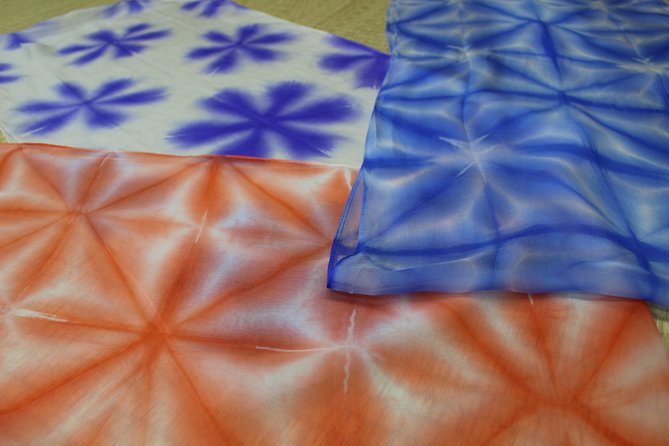
Shibori is a Japanese resist-dyeing craft. Fabric is folded, tied, stitched, clamped, or otherwise shaped before dye is applied. The covered parts resist the color, leaving patterns when the material is opened.
This particular class keeps the process manageable. You do not spend hours tying dozens of tiny sections. Instead, an instructor shows you how to fold the scarf in a set way, select a color, and place the fabric into the dye.
That shorter format is useful on a busy Kyoto day. You get a real handcraft lesson without giving up half a day of sightseeing. At the same time, the quick structure means you are learning one approachable method rather than mastering the full range of shibori techniques.
The class is held at the Kyoto Shibori Museum, at 135-5 Shikiamicho in Nakagyo Ward. The activity begins and ends there, so you do not need to manage a second meeting point or arrange a separate pickup.
What You Actually Do During the 30-Minute Class
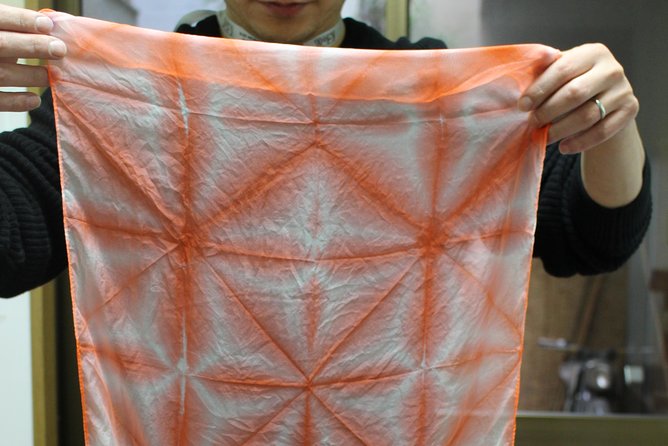
Your first task is choosing a favorite color. Color choice matters because the scarf pattern itself comes from the folding, while the dye gives the whole piece its mood and overall character.
Next, the instructor demonstrates how to fold the 70-inch by 17-inch fabric, listed in metric measurements as 175 by 50 centimeters. Pay close attention here. The folds determine where the dye reaches the cloth, so this is the part where your own decisions have the greatest effect.
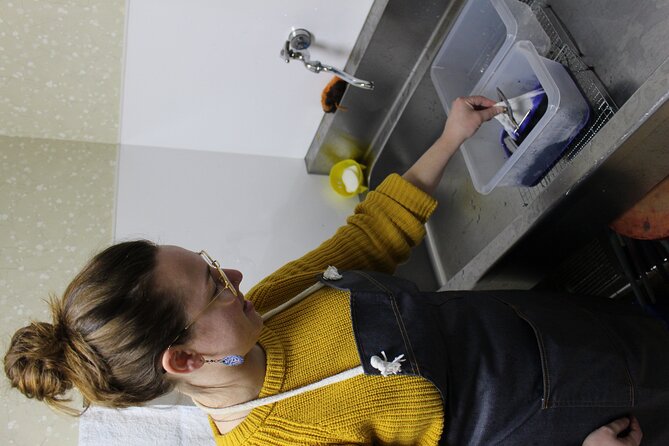
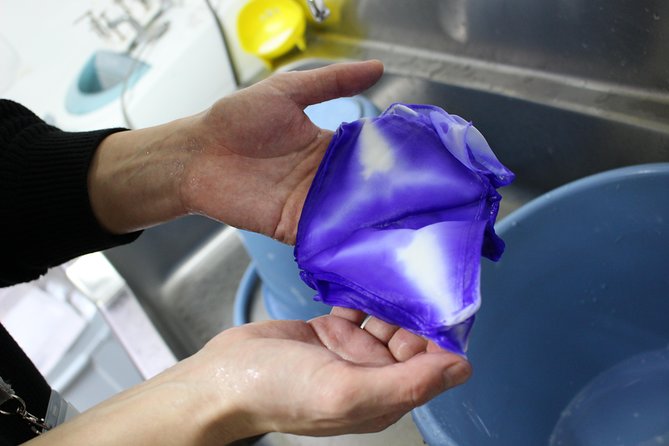
You then dye the folded material. Staff provide guidance throughout the process, and the private setting means you can ask for a repeat explanation without worrying about slowing down a larger group.
The experience description calls the method hanakoushi shibori and also refers to sekka shibori. These names may be used differently in the booking details, so if the exact technique matters to you, ask the museum to clarify it when you book. In practical terms, you are learning a traditional folded resist-dye process and taking home the result.
The class itself may last about 30 minutes, while some sessions run closer to an hour. The difference likely depends on the pace of your party and the amount of explanation you receive. Plan for extra time after the dyeing stage because the fabric needs around 30 minutes to dry.
A few more Kyoto trips to weigh up
- Kyoto: 45-Minute Tea Ceremony Lesson Experience
★ 4.3 · 2,378 reviews - Ramen Cooking Class at Ramen Factory in Kyoto
★ 5.0 · 1,937 reviews - Kyoto : Chopsticks Making Workshop in Gion with Engraving Option
★ 5.0 · 958 reviews
The Drying Time Is Part of the Visit
While your scarf dries, you can look around the museum. This is not a large institution, and one account found it tiny but still interesting. That is a fair expectation. You are not setting aside an entire afternoon for a major museum complex.
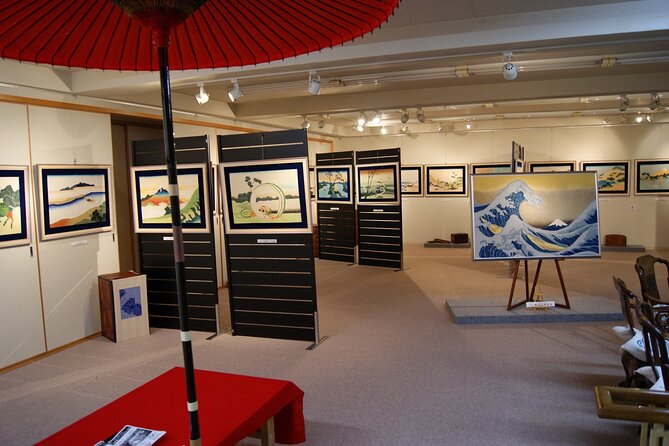
What you do get is a focused look at shibori. Displays include finished art pieces, tools, fabric samples, and examples of the craft. A historical video and show-and-tell material help explain how much careful work can go into more elaborate pieces.
I would treat this as the second half of the class, not as a separate museum attraction. The displays give meaning to the simple scarf exercise. You see the difference between a visitor-friendly project and the painstaking work behind more complex Japanese textiles.
This is also where the experience can become more than a quick craft stop. A family of five found the examples and explanations helped them understand the place of shibori in Japanese history and appreciate the skill behind the larger works.
The Private Setup Makes Instructions Easier
The class is private for your party only. That arrangement suits couples, families, and small groups who want to work together without sharing a table with strangers.
Small classes also help if you are unsure about the folding steps. One participant had a solo session with Nina and found the instruction clear, friendly, and fun. Other accounts describe the staff as patient, welcoming, and easy to understand, with solid English available.
You should not expect a formal lecture from a large museum education department. The charm here comes from direct help at the worktable. Staff can show you the motion, correct the fold, and explain what you are seeing in the museum.
The private format is especially helpful for children or anyone who prefers a slower pace. Most people can take part, and the activity is near public transportation. Still, the provided information does not specify a minimum age, detailed accessibility features, or the exact languages offered at every session, so ask before booking if those points affect your plans.
What Your Scarf Is Like
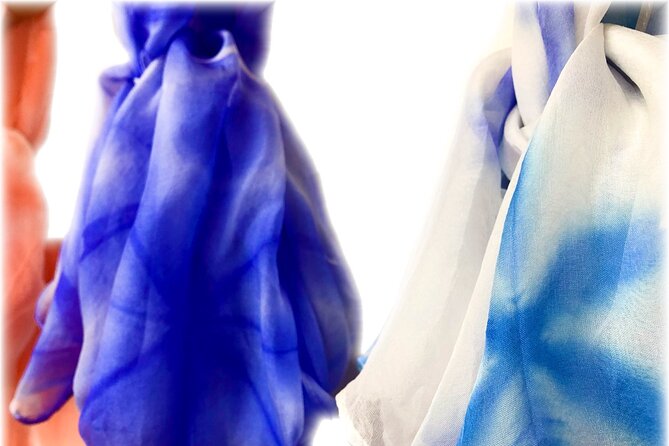
The finished piece is a substantial cotton scarf according to the class details, measuring about 175 by 50 centimeters. That gives you a useful item for wearing or gifting rather than a craft that sits in a drawer.
Several participants describe their finished scarves as beautiful and were proud to take them home. Some accounts call the material silk instead of cotton, so there is a small inconsistency in the available description. If the fabric type matters to you, confirm it with the Kyoto Shibori Museum before paying.
Do not expect a perfectly predictable factory pattern. Part of the appeal is that your folding and dye placement shape the result. You are making a personal souvenir, and small differences are part of the process.
The scarf also makes a good gift. One couple created two, and another family bought additional handmade items for relatives. If you are looking for something connected to Kyoto but easy to pack, this is more useful than many fragile ornaments.
Same city, a completely different kind of day:
- PERFECT KYOTO 1-Day Bus Tour
★ 5.0 · 13,518 reviews - Kyoto: Fushimi Inari, Kinkakuji, Bamboo Grove 1 Day Bus Tour
★ 4.8 · 4,316 reviews - Kyoto: Tea Ceremony in a Traditional Tea House in Kiyomizu
★ 4.9 · 3,519 reviews - Kyoto Geisha Walking Tour: Gion District & Hidden Gems
★ 4.7 · 3,273 reviews
A Small Museum With a Strong Shop
After your scarf is complete, take time for the museum shop. It sells shibori fabrics, purses, samue clothing, scarves, and other handmade goods.
The shop is worth separating from the class fee in your mind. Your booked price covers the class and the scarf project, but extra purchases cost more. That can be a benefit if you want to browse without committing to a larger item in advance.
You might find gifts for people who cannot join the workshop. A purse or fabric item also lets you take home a more polished example of the craft and compare it with your own work.
Shopping can easily stretch the visit beyond the advertised class time. If your schedule is tight, set a departure time before you begin browsing. If you have room in your Kyoto plans, the shop gives you a chance to support the craft and choose a gift with a clear local connection.
Is the $43.35 Price Good Value?
At $43.35 per person, this is not the cheapest quick activity in Kyoto. You are paying for instruction, materials, a finished scarf, access to the museum displays, and a private session.
I think the value is strongest if you want a hands-on memory and a usable souvenir. Buying a scarf alone may cost less or more depending on its material and workmanship, but it does not give you the story of making it. The class also avoids the risk of choosing a pretty textile without knowing how it was produced.
The price is less convincing if you mainly want a long craft lesson. The actual work is intentionally simple and often takes only 30 minutes, though some sessions run up to an hour. One person felt the activity involved too little direct work and preferred the museum itself.
That criticism is useful. This is an introduction, not an apprenticeship. You will not learn every shibori method or spend hours creating a highly intricate design. You will learn one traditional approach, produce a finished item, and receive context from the displays.
The private booking improves the value for a couple or family. You are not paying for a crowded demonstration where everyone waits for the instructor. You get personal attention and a project that each member of your party can make.
How to Fit It Into a Kyoto Day
The museum is in Nakagyo Ward and near public transportation. Since the activity starts and finishes at the museum, it works well as one stop between other central Kyoto plans.
Allow more than the bare 30-minute estimate. You need time to arrive, choose a color, fold and dye the fabric, wait for drying, see the displays, and possibly browse the shop. A practical visit may take around an hour or more, depending on how long you stay after the scarf is made.
Booking is commonly done about three weeks ahead, with an average lead time of 23 days. I would not leave it until the last morning if your Kyoto schedule is fixed, especially because the class is private and therefore has limited session capacity.
The mobile ticket makes entry simple. Confirmation is provided at booking, and the meeting point is the Kyoto Shibori Museum itself. Check the local start time carefully, since the cancellation cutoff uses Kyoto time.
You can cancel for a full refund up to 24 hours before the start. Cancellations or changes made within 24 hours are not accepted for a refund.
Who Will Enjoy This Most
I would recommend this class to:
- Couples who want to make matching or complementary scarves.
- Families seeking a short, shared activity.
- First-time visitors curious about Japanese textile crafts.
- Shoppers who want to understand shibori before buying it.
- Anyone who prefers a personal souvenir over a mass-produced item.
- People with a free hour between larger Kyoto sights.
It is also a good choice for a rainy day or for a break from temple and shrine visits. The work is simple enough for most participants, and the museum provides a quieter change of pace.
You may want something else if you are an experienced textile artist seeking advanced instruction. The simplified tourist format is a strength for most people, but it limits the depth of the lesson. Likewise, if you dislike shopping or have no interest in making a souvenir, the price may feel high for a short class.
The activity has earned a 4.8 rating from 18 ratings, with 94 percent recommending it. The praise centers on the friendly staff, easy instructions, attractive finished scarves, and the chance to see serious shibori art. The lower score points to the only real concern: the hands-on portion can feel brief.
Should You Book the Hanakoushi Cotton Scarf Class?
Book it if you want a short private craft class that gives you both an activity and a Kyoto keepsake. The strongest reasons are the personal instruction, the high-quality fabric described for the project, and the small museum collection that explains what you are making.
Go in with the right expectation. You are not becoming a shibori expert in 30 minutes. You are learning a simplified traditional process, watching your own pattern appear, and gaining a better eye for the detailed work sold in the museum shop.
For a couple, family, or solo participant who values local craft and wants an easy item to pack, $43.35 is reasonable. Confirm the cotton or silk material and the exact shibori method if those details matter to you. Then leave enough time for drying, museum displays, and the tempting shop.
FAQ
Where does the scarf class take place?
The class takes place at the Kyoto Shibori Museum, located at 135-5 Shikiamicho, Nakagyo Ward, Kyoto, 604-8261, Japan.
How long does the activity last?
The class usually takes about 30 minutes, though some sessions last from 30 to 60 minutes. The fabric needs about 30 minutes to dry afterward.
Is the class private?
Yes. The activity is private, and only your party participates.
What will I make?
You will dye a scarf measuring approximately 175 by 50 centimeters, or 70 by 17 inches. The class details identify it as cotton, though some descriptions of completed projects refer to silk, so confirm the material before booking if needed.
Which shibori method will I learn?
The experience is described as using the hanakoushi shibori method and also refers to sekka shibori. Ask the Kyoto Shibori Museum to confirm the exact technique if that distinction is important to you.
Do I choose the scarf color?
Yes. You begin by choosing your preferred color before folding and dyeing the fabric.
Can I visit the museum during the class?
Yes. While the scarf dries, you can see shibori artwork, tools, samples, and educational material in the museum.
Is the museum shop included?
The museum shop is available during your visit and sells shibori items, fabrics, souvenirs, purses, and samue clothing. Any additional purchases are separate from the class price.
Can I cancel for a refund?
You can cancel at least 24 hours before the experience start time for a full refund. Cancellations or changes made less than 24 hours before the start are not refunded.
Just added around Kyoto
- Private Guided Traditional Buddhist Cooking in Japan★ 5.0 · 16 reviews
- Kyoto: Gion Geisha District & Sake-in-Hand Walking Tour★ 5.0 · 37 reviews
- Your Private Vacation Photography Session In Kyoto★ 5.0 · 110 reviews
- Kyoto: Zen Meditation at a Private Temple with a Monk★ 5.0 · 25 reviews
- Traditional Japanese Washi Papermaking- Kyoto morning★ 5.0 · 77 reviews
- Kyoto Wagashi(Japanese sweets) Cooking Class near Fushimiinari★ 5.0 · 60 reviews
- Private Pewter Sake Cup Experience with a Kyoto Artisan★ 5.0 · 31 reviews
- Kyoto Private 6 hour Tour: English Speaking Driver Only, No Guide★ 5.0 · 88 reviews
Workshops, compared.

Sushi Making Tokyo Roll and Authentic Japanese Sushi Class
Read our review →

Roll and Authentic Sushi Making Class in Asakusa
Read our review →
Ramen Cooking Class at Ramen Factory in Kyoto
Read our review →
Sushi Making Class in a Happi Coat near a Famous Spot
Read our review →

Sushi Making Osaka Roll and Authentic Japanese Sushi Class
Read our review →
Tokyo Sushi Making Class in Tsukiji with Professional Chef
Read our review →Browse the lists this tour appears in