REVIEW · KYOTO TOURS
Gion Nocturno: Secretos y Leyendas de las Geishas
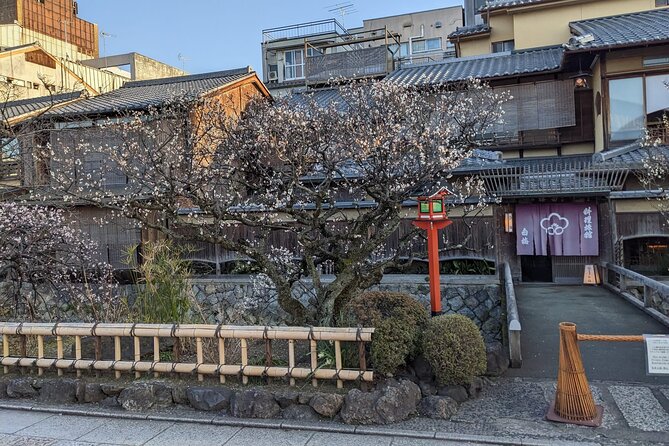
Gion is at its most atmospheric after dark, when the cameras thin out and its wooden lanes feel quieter. This small-group walk takes you past Kyoto’s famous theaters, tea-house streets, bridges, and shrines while explaining the world of geishas in the setting where that culture still belongs.
I like the maximum group size of 15, which makes it easier to hear the guide and ask questions. I also like the route’s mix of well-known sights and smaller corners, especially Tatsumi Bridge and Hanamikoji Street. The main consideration is that Gion Corner admission is not included, and the tour is primarily an outdoor walking experience.
In This Review
- Key points to know before booking
- Why Gion makes more sense after sunset
- Starting at Minamiza Theater
- Tatsumi Bridge and Gion Shinbashi
- Hanamikoji Street and the old tea-house district
- Gion Corner and the end of the walk
- Yasaka Shrine closes the route
- What the $21.80 price gets you
- How the guides shape the experience
- Who will enjoy this Kyoto walk
- Booking flexibility and practical details
- Should you book Gion Nocturno?
- FAQ
- Where does the Gion night tour begin?
- Where does the tour finish?
- How long does the experience last?
- How much does the tour cost?
- What places are included in the route?
- Is admission to Gion Corner included?
- Are the other listed stops free to enter?
- How many people can join the tour?
- Is the tour available with a mobile ticket?
- Can I cancel for a full refund?
Key points to know before booking
- Nighttime Gion: See the district after sunset, when its traditional lanes are calmer and more atmospheric.
- Five central stops: The route includes Minamiza Theater, Tatsumi Bridge, Hanamikoji Street, Gion Corner, and Yasaka Shrine.
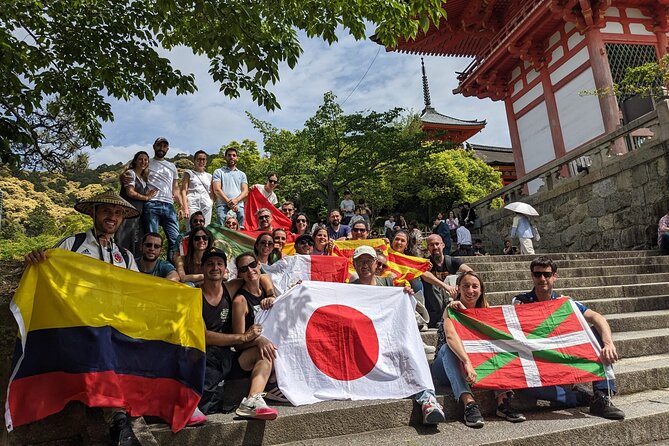
- Small group format: No more than 15 people join the walk, a useful limit in narrow streets.
- Geisha culture explained: The tour focuses on the career, daily life, and traditions connected with geishas.
- About 2 to 3 hours: The listed stops are short, with the remaining time used for walking and commentary.
- Good value at $21.80: You pay for a guided introduction to Gion, not for theater or Gion Corner admission.
Why Gion makes more sense after sunset
Gion can be hard to appreciate in daylight. The district is famous, so daytime streets often fill with sightseeing groups and people hoping to photograph a geisha. At night, the mood changes. Traditional wooden facades, narrow lanes, and softly lit entrances become easier to notice without the same visual noise.
That does not mean the tour promises a geisha sighting. The useful part is learning about the district in its proper setting rather than treating it as a photo backdrop. A good guide can explain the difference between geisha and apprentice geisha, the role of tea houses, and the long training behind the performance arts associated with the district.
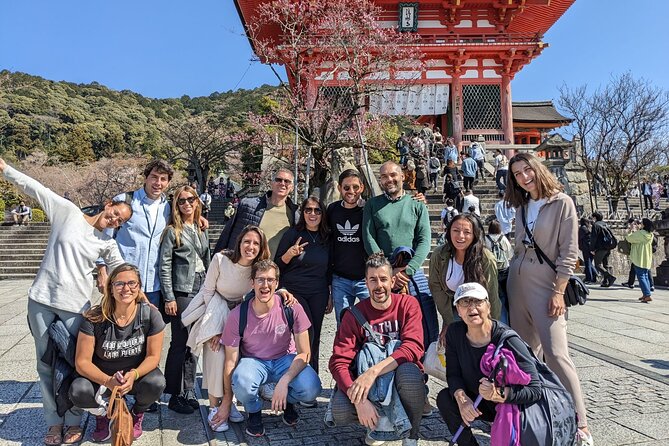
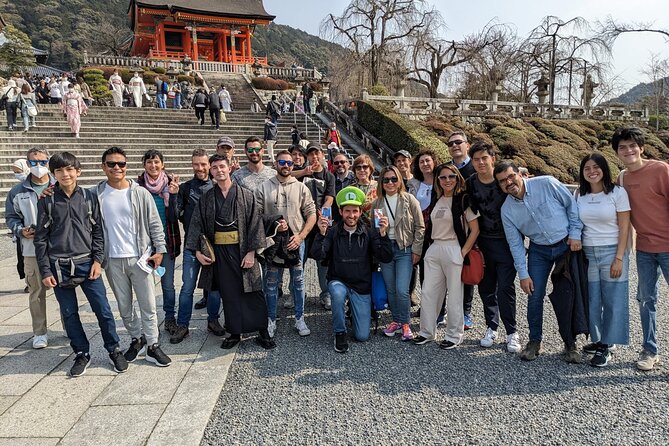
The walk is designed for a small group of no more than 15 people. That matters here. Gion’s lanes are not broad, and a very large group would make it harder to stay together or hear the guide. The tour lasts around two to three hours, so you should expect a relaxed walking pace with stops for explanations.
Other Kyoto days people book alongside this one:
- PERFECT KYOTO 1-Day Bus Tour
★ 5.0 · 13,518 reviews - Kyoto: Fushimi Inari, Kinkakuji, Bamboo Grove 1 Day Bus Tour
★ 4.8 · 4,316 reviews - Kyoto: Tea Ceremony in a Traditional Tea House in Kiyomizu
★ 4.9 · 3,519 reviews
Starting at Minamiza Theater
The meeting point is the Minamiza Theater, at the eastern end of Shijo Bridge in Kyoto’s Higashiyama Ward. This is a practical place to begin because it introduces you to one of Kyoto’s most important traditional performance venues before the route moves into Gion.
Minamiza is closely linked with kabuki, a form of Japanese theater known for dramatic makeup, elaborate costumes, stylized movement, and emotional storytelling. The stop lasts about 10 minutes, and admission is free. You should not expect a performance as part of the walking tour. Instead, the theater serves as a cultural starting point and helps place Gion’s entertainment traditions in context.
This opening stop is especially useful if you know little about Japanese theater. It gives the guide a way to explain how performance, hospitality, music, dance, and the tea-house world overlap in Kyoto’s traditional culture.
The starting address is Kyoto City Higashiyama Ward, at the Minamiza Theater near Shijo Bridge. Because the tour starts in a central area near public transportation, it is relatively easy to reach before the walk. Your mobile ticket and booking confirmation are used for the experience.
Tatsumi Bridge and Gion Shinbashi
From Minamiza, the walk continues toward Tatsumi Bridge and the Gion Shinbashi area. This is one of the most attractive sections of the route, with stone-paved lanes, traditional wooden buildings, and the quiet feel many people hope to find in old Kyoto.
The stop is scheduled for about 10 minutes. That may sound brief, but a short pause can work well here. The value is not in spending a long time at one bridge. It is in hearing why this small part of Gion matters and seeing how the architecture changes as you leave the larger commercial streets.
Tatsumi Bridge is also one of the places where you should be considerate with photography. Gion is a working neighborhood, not an open-air stage. The tour description presents the area as a place to observe geisha culture in its real setting, so respectful behavior is part of the experience. Do not block lanes, follow anyone, or assume that a person in traditional dress is available for a photo.
This stop is likely to appeal to you if you prefer atmosphere to a long list of monuments. It is a scenic pause, but the guide’s explanation is what gives it meaning.
Hanamikoji Street and the old tea-house district
Hanamikoji Street is one of Gion’s best-known lanes. Its traditional machiya buildings, tea houses, and refined restaurants create the classic image of old Kyoto. The tour spends about 10 minutes here, with the guide explaining the street and its connection to geisha culture.
The strength of this stop is its setting. You can see the type of architecture and streetscape that shaped Gion’s identity. The limitation is that a short guided stop cannot reveal the private world inside the tea houses. Many of those establishments are not open for casual sightseeing, and this tour does not include entry to one.
That makes the commentary important. The guide can help you understand that geisha work is not simply about wearing a kimono and entertaining visitors. It involves artistic performance, formal hospitality, training, and a professional structure that is easy to misunderstand from the street.
One review praised Sergio as an experienced guide who explained the career and life of geishas in an instructive way. Another named Michael as polite and engaging, but also raised a useful warning: historical explanations should be listened to with a questioning ear. Guides may simplify complicated subjects for a general audience, and not every detail will satisfy a visitor seeking academic precision.
For most people, the stop works best as an introduction. If you want a full scholarly study of geisha history, you will need more than a short evening walk. If you want a clear explanation of what you are seeing, Hanamikoji is a strong part of the route.
Same city, a completely different kind of day:
- Kyoto Geisha Walking Tour: Gion District & Hidden Gems
★ 4.7 · 3,273 reviews - Kyoto: Tea Ceremony Ju-An at Jotokuji Temple
★ 4.9 · 3,207 reviews - Kyoto: Gion Magical Night Walking Tour with Geisha Trivia
★ 4.9 · 2,393 reviews - Kyoto: 45-Minute Tea Ceremony Lesson Experience
★ 4.3 · 2,378 reviews
Gion Corner and the end of the walk
The route continues to Gion Corner, a cultural center devoted to Japanese traditional arts. The description presents it as a place where several forms of Japanese performance and cultural practice are brought together.
The tour includes a stop of about 10 minutes, but admission to Gion Corner is not included. That distinction matters. You can visit the area and finish the walking tour there, but you should not assume that a show or indoor presentation is part of the $21.80 price.
The end point is in front of Gion Corner, at 570-2 Gionmachi Minamigawa. This is convenient if you want to continue exploring Gion afterward, but the tour does not include return transportation. Since the finish is in the same historic district, you remain near the streets and sights discussed during the walk.
Gion Corner is a sensible ending because it shifts the focus from streets and buildings to the performing arts. It also reinforces one of the tour’s main ideas: Gion is not only an old neighborhood. It is a living center for traditional entertainment.
Yasaka Shrine closes the route
Yasaka Shrine, also called Yasaka Jinja or Gion Shrine, is the final major sight listed on the route. The stop lasts around 10 minutes, and admission is free.
The shrine has more than a thousand years of history and remains one of Kyoto’s best-known Shinto sites. Its location beside Gion makes it a natural part of the walk. You get a change of mood here, moving from tea houses and theatrical traditions to a religious site connected with the spiritual life of the district.
A short stop is enough to see the shrine area and hear an introduction, though it will not cover every building or religious custom in detail. If Yasaka Shrine interests you, you may want to return separately with more time. The walk ends near Gion Corner, so check the exact route explanation on the day if you want to spend extra time at the shrine after the formal tour.
What the $21.80 price gets you
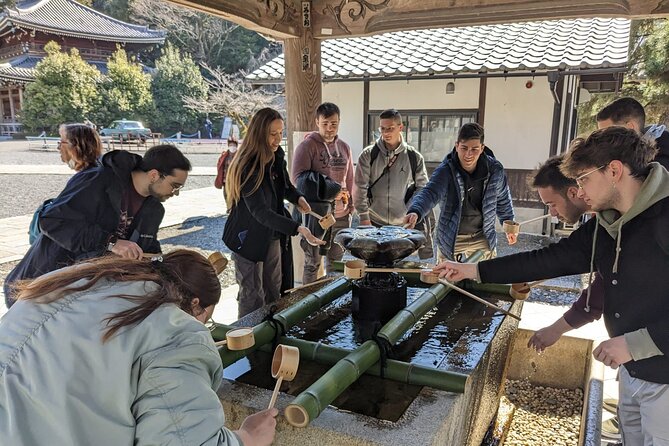
At $21.80 per person, this is a low-cost guided introduction to one of Kyoto’s most famous districts. The value comes from interpretation and route planning. You are paying someone to connect Minamiza Theater, Gion Shinbashi, Hanamikoji, Gion Corner, and Yasaka Shrine into one coherent story.
The price does not include admission to Gion Corner. The listed stops at Minamiza Theater, Tatsumi Bridge, Hanamikoji Street, and Yasaka Shrine have no admission charge, so there are no major entrance costs hidden inside the walking route.
I consider the price fair if you want an overview, especially on a first visit to Kyoto. It is less compelling if you already know Gion well or prefer to explore without a guide. The tour’s purpose is not to offer exclusive access. Its purpose is to help you notice what you might otherwise walk past.
The fact that it is often booked about 38 days ahead suggests that advance planning is sensible. That is particularly true if your Kyoto dates are fixed. The small group limit may fill more quickly than a large bus tour.
How the guides shape the experience
The guide is central to this walk. The route itself is easy to find, but understanding geisha life, kabuki, tea houses, and Shinto traditions requires clear explanation.
Sergio is specifically praised for his experience with the history and career of geishas. Michael is described as polite and engaging. These comments point to two qualities worth looking for: a guide who can explain unfamiliar customs in plain language and one who keeps the group involved during a walking route.
At the same time, you should treat broad historical claims carefully. One participant felt that some statements were inaccurate. That does not erase the value of the tour, but it is a reminder that a short walk offers an introduction rather than a final authority on Japanese history.
I would book this experience for its access to a useful local framework, not because every explanation will cover every scholarly disagreement. Listen closely, ask questions when possible, and keep in mind that geisha culture is complex.
Who will enjoy this Kyoto walk
This tour suits you best if you want:
- A first look at Gion after dark
- An explanation of geisha culture in plain language
- A short evening activity lasting about two to three hours
- A small group rather than a large organized crowd
- A route combining architecture, theater, traditional arts, and religion
- A reasonably priced introduction to central Gion
It may be less suitable if you want an indoor performance, a meal at a tea house, or guaranteed contact with geishas. None of those are included in the information provided. It is also not the right choice if you want to spend a long time at each sight, since the listed stops are generally around 10 minutes.
Most people can participate, and the route is near public transportation. Still, this is a walking tour through historic streets, so comfortable shoes are a practical choice. Your booking confirmation arrives when you reserve, and the experience uses a mobile ticket.
Booking flexibility and practical details
Free cancellation is available if you cancel at least 24 hours before the scheduled start time. Cancellations made later, or changes requested within that 24-hour window, are not refunded or accepted. The cut-off follows local Kyoto time.
The activity requires a minimum number of participants. If that minimum is not met and the operator cancels, you are offered another date or experience, or a full refund.
The tour begins at Minamiza Theater and finishes in front of Gion Corner. It does not return you to the starting point, so plan the rest of your evening from the Gion area. Since the end point is central to the route, this can be an advantage if you want to continue seeing Kyoto on foot.
Should you book Gion Nocturno?
Book it if you want a short, affordable, guided introduction to nighttime Gion and you value context more than exclusive access. The small group, central route, and focus on geisha culture make it a useful first-night activity in Kyoto.
Skip it if you are looking for a full theater show, admission to Gion Corner, a private tea-house visit, or an in-depth academic treatment of Japanese history. The best reason to choose this walk is simple: it helps you look at Gion with more understanding while the district is at its calmest.
FAQ
Where does the Gion night tour begin?
The tour begins at Minamiza Theater, located at the eastern end of Shijo Bridge in Kyoto’s Higashiyama Ward.
Where does the tour finish?
The walk finishes in front of Gion Corner at 570-2 Gionmachi Minamigawa, Higashiyama Ward, Kyoto.
How long does the experience last?
The tour lasts approximately 2 to 3 hours.
How much does the tour cost?
The listed price is $21.80 per person.
What places are included in the route?
The route includes Minamiza Theater, Tatsumi Bridge, Hanamikoji Street, Gion Corner, and Yasaka Shrine.
Is admission to Gion Corner included?
No. Admission to Gion Corner is not included in the tour price.
Are the other listed stops free to enter?
The listed admission details show free admission for Minamiza Theater, Tatsumi Bridge, Hanamikoji Street, and Yasaka Shrine.
How many people can join the tour?
The group has a maximum of 15 people.
Is the tour available with a mobile ticket?
Yes. The experience includes a mobile ticket, and confirmation is received when you book.
Can I cancel for a full refund?
Yes, if you cancel at least 24 hours before the experience start time. Later cancellations are not refunded.
Just added around Kyoto
- Private Guided Traditional Buddhist Cooking in Japan★ 5.0 · 16 reviews
- Kyoto: Gion Geisha District & Sake-in-Hand Walking Tour★ 5.0 · 37 reviews
- Your Private Vacation Photography Session In Kyoto★ 5.0 · 110 reviews
- Kyoto: Zen Meditation at a Private Temple with a Monk★ 5.0 · 25 reviews
- Traditional Japanese Washi Papermaking- Kyoto morning★ 5.0 · 77 reviews
- Kyoto Wagashi(Japanese sweets) Cooking Class near Fushimiinari★ 5.0 · 60 reviews
- Private Pewter Sake Cup Experience with a Kyoto Artisan★ 5.0 · 31 reviews
- Private Cooking Class Udon in Kyoto Japan★ 5.0 · 23 reviews
Kyoto Tours, compared.
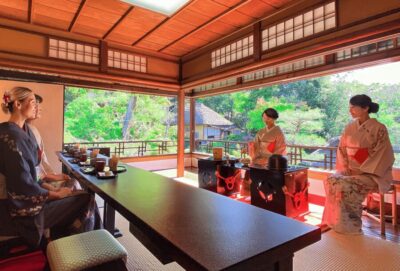
Tea Ceremony in a Traditional Tea House in Kiyomizu
Read our review →
Kyoto Geisha Walking Tour: Gion District & Hidden Gems
Read our review →

Gion Magical Night Walking Tour with Geisha Trivia
Read our review →

Gion Geisha District Walking Tour – Stories of Geisha
Read our review →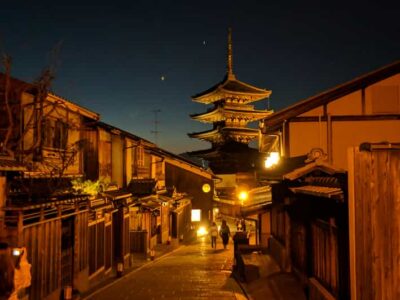
Best of Kyoto: Gion, Geisha, Pagodas & Cobblestones
Read our review →