
REVIEW · WORKSHOPS
Fish Cutting workshop in Kyoto Japan
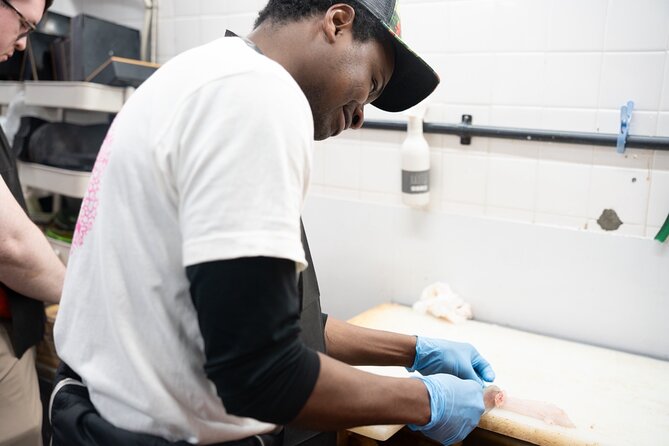
Kyoto’s food culture gets much more interesting when you put down the chopsticks and pick up a fish knife. In this small class at Kimura Fresh Fish, a fishmonger with more than 20 years of experience teaches you to break down raw fish, cut it into sashimi, and eat the results for lunch.
I like two things right away: you handle the fish yourself, rather than simply watching a demonstration, and the class takes place at a fish shop with a 400-year history. The maximum of six people also means you can ask questions and receive close help with each cut.
The main consideration is that this is real knife work. Children under eight are not allowed, and anyone uneasy around raw fish or fish preparation may prefer a standard sushi-making class. You should also arrive ready to concentrate, not just sit back and snack.
In This Review
- Key points at a glance
- What this Kyoto fish-cutting class really offers
- Arriving at Kimura Fresh Fish at 10:00 am
- The first lesson: handling raw fish safely
- Cutting three fish into sashimi
- Turning your work into a sashimi lunch
- Conversation and food culture between the knife work
- Is the $98.53 price a good value?
- Who should book this experience
- Timing, group size, and practical planning
- What makes this more than a standard sushi class
- Should you book the Kyoto fish-cutting workshop?
- FAQ
- Where does the fish-cutting workshop take place?
- What time does the activity start?
- How long does the experience last?
- Is lunch included?
- How many people can join the class?
- Can children attend the workshop?
Key points at a glance
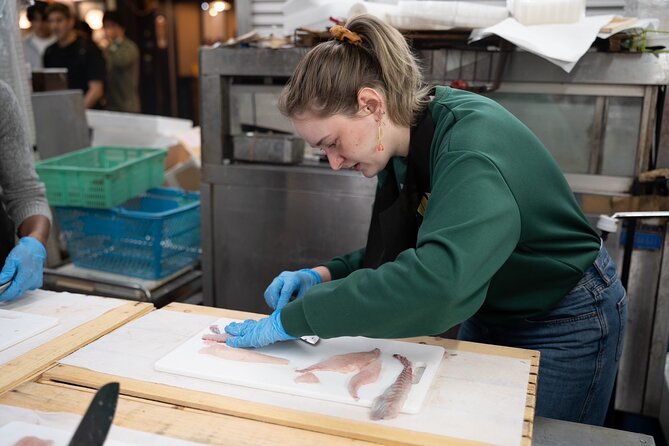
- Three types of fish: You process three fish yourself and eat them as sashimi.
- A working fishmonger teaches you: The instruction draws on more than 20 years of fish-shop experience and techniques passed down through generations.
- Small group, maximum six: You get room to ask questions and receive careful supervision.
- Lunch is the finished lesson: The fish you cut becomes the meal, so there is no separate restaurant stop.
- Central Kyoto meeting point: The class begins and ends at Kimura Fresh Fish, 483 Nakauoyachō, Nakagyo Ward.
- A short, focused class: The experience starts at 10:00 am and lasts about two hours and 30 minutes.
What this Kyoto fish-cutting class really offers
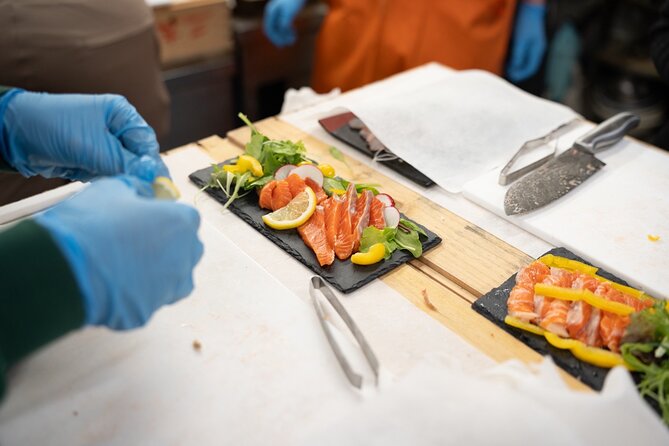
This is not a polished cooking show where you watch someone else do the difficult work. The point is to learn the basic handling and cutting of fish by doing it yourself.
The instructor first shows you how to handle the fish safely. You then cut it into three pieces, with guidance as you work. The lesson is designed for beginners, so you do not need previous fish-processing experience.
The most useful part is the close supervision. Several people who have taken the class found the knife work difficult at first, but the instructors stayed nearby and corrected each step. That matters when you are learning how to make clean cuts without wasting the flesh.
You also get answers as questions come up. If you want to know more about fish, sashimi, knives, or the process of preparing raw seafood, this is a good setting for asking directly rather than trying to follow a fast demonstration.
A few more Kyoto trips to weigh up
- Kyoto: 45-Minute Tea Ceremony Lesson Experience
★ 4.3 · 2,378 reviews - Ramen Cooking Class at Ramen Factory in Kyoto
★ 5.0 · 1,937 reviews - Kyoto : Chopsticks Making Workshop in Gion with Engraving Option
★ 5.0 · 958 reviews
Arriving at Kimura Fresh Fish at 10:00 am
The meeting point is Kimura Fresh Fish at 483 Nakauoyachō in Nakagyo Ward, near public transportation. The activity begins at 10:00 am and returns to the same place when the meal is finished.
The setting gives the class more character than a generic cooking studio. You are working with a fishmonger connected to a shop with a 400-year history, so the lesson takes place in a real food-business environment rather than a staged tourist kitchen.
The supplied details do not specify a hotel pickup or private transfer. You need to make your own way to the meeting point, and private transportation is not included. Since the class has a fixed morning start, leave enough time to find Kimura Fresh Fish without rushing in with a knife lesson already underway.
A mobile ticket is provided, and booking confirmation arrives at the time of booking. The class is popular enough that it is booked, on average, 48 days ahead, so I would not leave it until the last part of a Kyoto visit if the date matters to you.
The first lesson: handling raw fish safely
The session begins with instruction on handling the fish. This step is important, especially if you cook at home but have never prepared a whole fish or worked with sashimi-grade cuts.
The instructor explains the basic method before handing the work over to you. The aim is not to make you a professional fishmonger in one morning. It is to give you a clear understanding of how the fish is handled and how the cuts are made.
You can expect the teacher to watch your work closely. That makes the class suitable for beginners, but it also means you cannot rush through the process. The knife needs attention, and you will get more from the lesson if you follow the demonstrations carefully.
This is also the point where the class differs from a typical sushi workshop. Many food activities focus on shaping rice or arranging toppings. Here, the important skill is preparing the fish itself.
Cutting three fish into sashimi
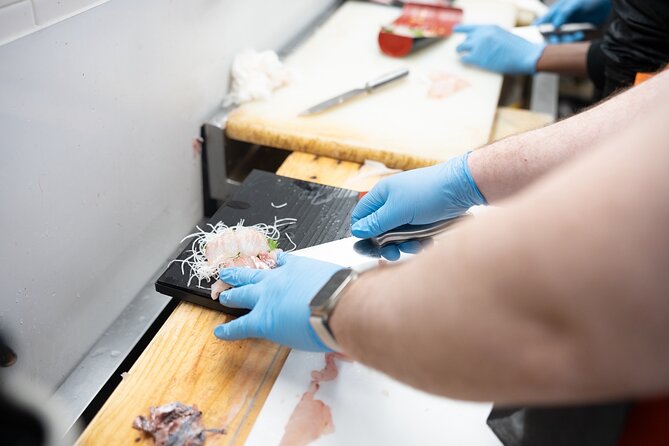
You will process three different types of fish, cutting each into three pieces. The exact varieties are not specified in the available details, so do not book expecting a particular species.
The repeated practice is useful. One fish gives you a first attempt, while the next two let you adjust your grip, angle, and pressure. You get to see how different fish may require slightly different handling, though the class description does not promise a formal comparison of each variety.
The instructors demonstrate the cuts step by step, then supervise you as you try. This is where the small group matters most. With no more than six people, you have a better chance to receive individual help instead of waiting behind a large class.
You may find the work harder than it looks. The goal is clean, attractive sashimi, and a beginner’s first cuts may not be perfect. That is part of the value. You are learning why trained fishmongers make the process appear simple.
A few people who took the class especially enjoyed the knife-skills side, even if sashimi was not their main reason for booking. If you like cooking, want to improve your control with a kitchen knife, or are curious about how fish reaches the plate, this is the heart of the experience.
Same city, a completely different kind of day:
- PERFECT KYOTO 1-Day Bus Tour
★ 5.0 · 13,518 reviews - Kyoto: Fushimi Inari, Kinkakuji, Bamboo Grove 1 Day Bus Tour
★ 4.8 · 4,316 reviews - Kyoto: Tea Ceremony in a Traditional Tea House in Kiyomizu
★ 4.9 · 3,519 reviews - Kyoto Geisha Walking Tour: Gion District & Hidden Gems
★ 4.7 · 3,273 reviews
Turning your work into a sashimi lunch
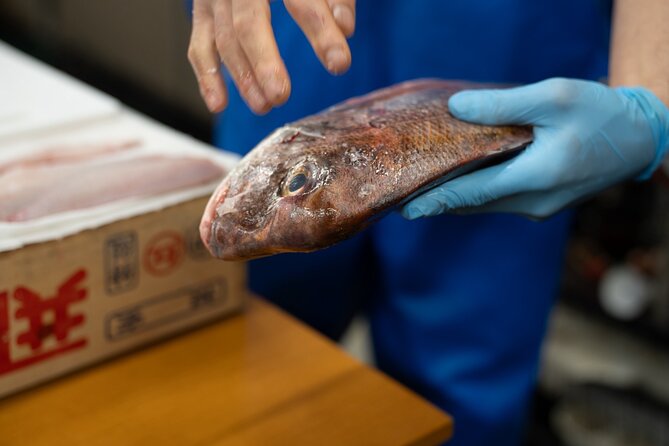
Once the fish has been cut, you arrange it and eat what you prepared. Lunch is included in the price, and there is no need to find another meal immediately afterward.
That direct connection between work and food is one of the strongest features of the class. You are not simply tasting a professional chef’s finished plate. You are seeing the fish through the full process, from raw product to sashimi lunch.
The fresh fish is meant to be the reward, but it also gives you a practical way to judge your own work. You can see how the cut affects the texture and appearance, then enjoy the result in a relaxed meal.
Come hungry. The class lasts two and a half hours, and the lunch comes at the end, not at the beginning. The supplied information does not list extra dishes or drinks, so do not assume that the meal includes anything beyond the sashimi you prepare.
Conversation and food culture between the knife work
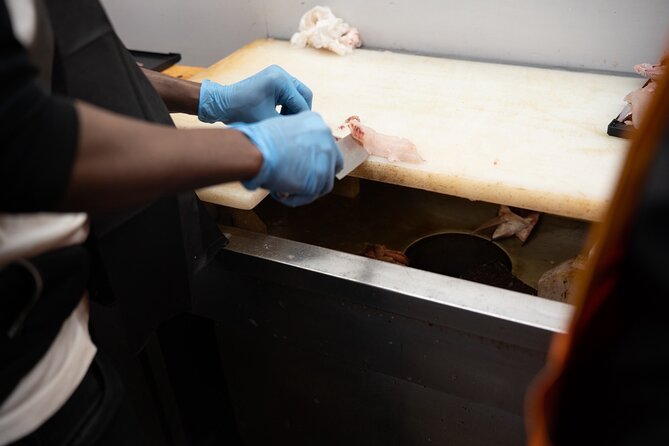
The meal also creates time for conversation with the instructors and the other people in the class. The experience includes discussion about Kyoto, Japanese food, fish, and knives, with questions answered as they arise.
That informal exchange is a useful part of the morning. You get more than a set of mechanical cuts. You can ask why a step matters, how fish preparation fits into Japanese food culture, and what the instructor recommends if you want to try similar food at home.
The teaching style is careful and relaxed. The instructors aim to make beginners feel at ease, which helps if you are worried about making a mistake. At the same time, the class remains hands-on, so you should be ready to participate rather than expect a light demonstration followed by lunch.
The food conversation is particularly helpful for anyone who already enjoys sushi and wants to understand sashimi more fully. You leave with a clearer sense of the preparation behind a dish that is often treated as simple because it has so few ingredients.
Is the $98.53 price a good value?
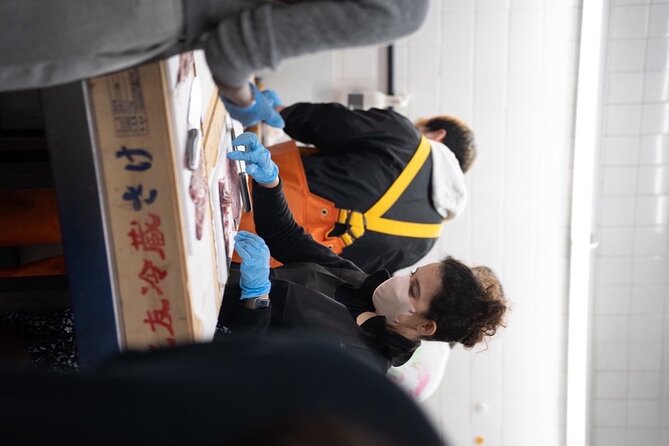
At $98.53 per person, this is not the cheapest food activity in Kyoto. You are paying for instruction, fresh fish, a small class, and lunch, not just for a meal.
I think the price makes the most sense if you value personal instruction. A six-person maximum gives the class a more private feel than a large group workshop, and close knife supervision is difficult to provide at a bargain rate.
The historic fish-shop setting adds meaning, too. You are learning from a fishmonger connected to a long-running business, rather than using supermarket ingredients in a classroom built only for sightseeing. The experience links the meal to a working food tradition.
The value is weaker if you mainly want to eat sashimi. Kyoto has many restaurants and shops where you can order excellent fish without spending two and a half hours learning to cut it. Book this for the skill, the setting, and the chance to eat your own preparation.
It is also a good choice for someone who likes cooking but has already done the usual ramen, tea, or sushi workshops. The subject is narrower, but that is exactly why it feels different.
Who should book this experience
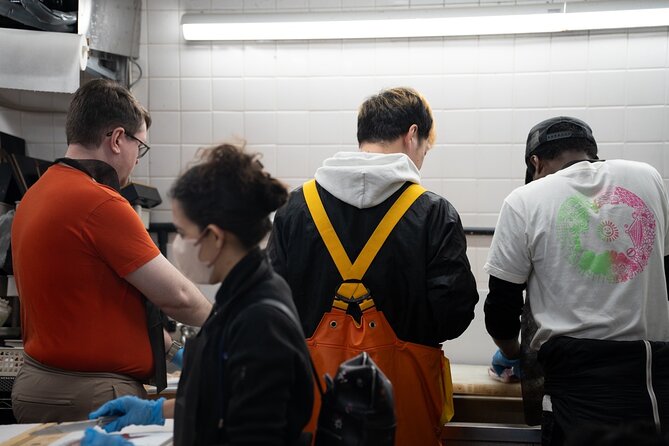
I would recommend it most strongly to:
- Home cooks who want better knife control
- Sushi and sashimi fans who want to understand fish preparation
- Food-focused visitors looking for a less routine Kyoto activity
- People who enjoy small classes and direct conversation
- Adults and older children who can handle knives carefully
- Anyone willing to eat raw fish and take part in the full process
You do not need to be an expert cook. The instruction begins with the basics, and beginners receive help throughout.
I would hesitate if you dislike raw fish, feel uncomfortable handling a whole fish, or want a relaxed food tour with little active work. This class asks for attention and participation. The lunch is a payoff, but it comes after the preparation.
Children under eight should not attend because they handle knives. The information provided does not give a broader age policy, so older children should still be considered individually based on their comfort and ability to follow safety instructions.
Timing, group size, and practical planning
The experience lasts approximately two hours and 30 minutes. Since the start time is 10:00 am and the activity ends back at the meeting point, it fits neatly into a Kyoto morning while leaving the afternoon open.
The six-person limit is worth noting when you plan. A small class can feel more personal, but it also means fewer available places on popular dates. With bookings often made 48 days in advance, reserve early if you need a particular morning.
Wear something that lets you work comfortably. The supplied information does not list a dress code or equipment requirements, so you should not assume that special clothing or a private knife is needed. The essential thing is to arrive on time and ready to follow instructions.
The class is near public transportation, but no private transport is included. Check the meeting address before leaving your hotel and allow extra time for navigating central Kyoto.
You can cancel for a full refund up to 24 hours before the start time. Changes or cancellations made less than 24 hours before the experience are not accepted for a refund, and the cut-off uses Kyoto local time.
What makes this more than a standard sushi class
A sushi-making class usually leaves you with a plate you assembled. This one takes you closer to the ingredient itself.
You learn how fish is transformed into sashimi, why knife work matters, and how much care goes into a preparation that can look almost effortless on the plate. That gives you a better appreciation for Japanese food without turning the morning into a lecture.
The class also gives you a story to carry home. You can explain that you cut three types of fish in Kyoto, worked under a fishmonger’s supervision, and ate the sashimi you prepared. That is a more personal souvenir than another photograph of a restaurant meal.
The experience is not trying to cover every part of Japanese cuisine. It focuses tightly on fish handling and sashimi. For the right person, that focus is a strength. For someone seeking a broad introduction to Kyoto food, it may feel too specialized.
Should you book the Kyoto fish-cutting workshop?
Book it if you like cooking, want to improve your knife skills, or have always wondered how sashimi is prepared before it reaches the table. The small group, careful supervision, historic fish-shop setting, and included lunch give the morning a clear purpose and good value for a hands-on food experience.
Skip it if you want only a tasting, dislike raw fish, or would rather avoid knives on holiday. For everyone else, this is a focused and unusual Kyoto activity that gives you both a practical skill and a meal made by your own hands.
FAQ
Where does the fish-cutting workshop take place?
The class begins and ends at Kimura Fresh Fish, located at 483 Nakauoyachō, Nakagyo Ward, Kyoto, Japan.
What time does the activity start?
The workshop starts at 10:00 am.
How long does the experience last?
The activity lasts approximately two hours and 30 minutes.
Is lunch included?
Yes. Lunch is included, and you eat the sashimi prepared from the fish you handled and cut.
How many people can join the class?
The maximum group size is six people.
Can children attend the workshop?
Children under eight years old should not attend because the activity involves handling knives.
Just added around Kyoto
- Private Guided Traditional Buddhist Cooking in Japan★ 5.0 · 16 reviews
- Kyoto: Gion Geisha District & Sake-in-Hand Walking Tour★ 5.0 · 37 reviews
- Kyoto: Zen Meditation at a Private Temple with a Monk★ 5.0 · 25 reviews
- Your Private Vacation Photography Session In Kyoto★ 5.0 · 110 reviews
- Traditional Japanese Washi Papermaking- Kyoto morning★ 5.0 · 77 reviews
- Kyoto Wagashi(Japanese sweets) Cooking Class near Fushimiinari★ 5.0 · 60 reviews
- Private Pewter Sake Cup Experience with a Kyoto Artisan★ 5.0 · 31 reviews
- Kyoto Private 6 hour Tour: English Speaking Driver Only, No Guide★ 5.0 · 88 reviews
Workshops, compared.
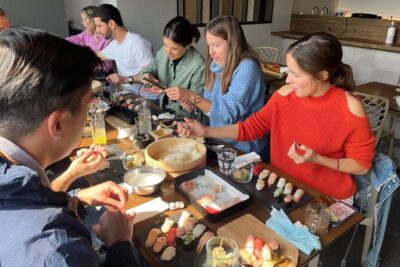
Sushi Making Tokyo Roll and Authentic Japanese Sushi Class
Read our review →
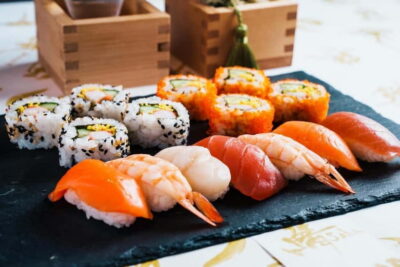
Roll and Authentic Sushi Making Class in Asakusa
Read our review →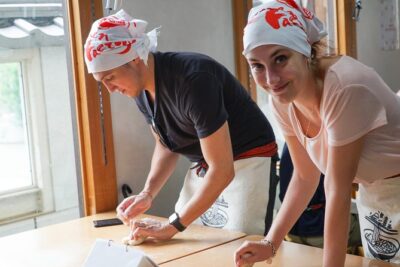
Ramen Cooking Class at Ramen Factory in Kyoto
Read our review →
Sushi Making Class in a Happi Coat near a Famous Spot
Read our review →
Sushi Making Osaka Roll and Authentic Japanese Sushi Class
Read our review →
Tokyo Sushi Making Class in Tsukiji with Professional Chef
Read our review →Browse the lists this tour appears in