
REVIEW · TEA CEREMONY EXPERIENCES
Authentic Kyoto Tea Ceremony: Camellia Flower Teahouse
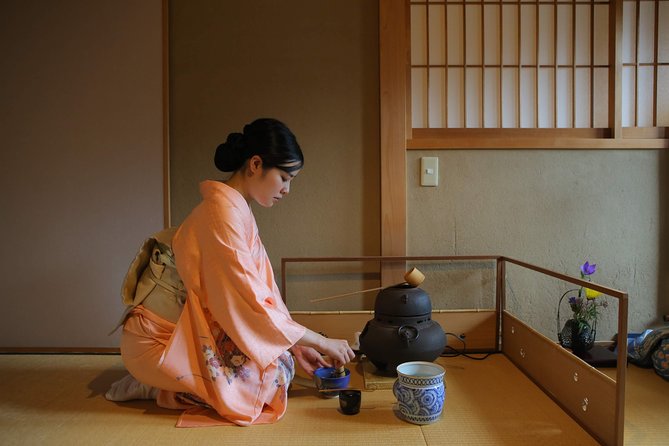
Kyoto’s tea ceremony is not just a lesson in making green tea. It is a compact lesson in attention, respect, and simplicity, held in a traditional setting in Higashiyama. At Camellia Flower, an English-speaking instructor explains the utensils, room layout, gestures, and meaning behind the ritual before letting you prepare your own matcha.
I like two things here. First, the 45-minute format fits neatly into a sightseeing day without feeling like a rushed photo stop. Second, you do more than watch: you handle the tea bowl, scoop, and whisk, then make your own frothy cup. The main consideration is the small, plain room, which may feel less atmospheric than you expect.
In This Review
- Key points to know before booking
- A quiet introduction to Kyoto’s tea culture
- Watching the ritual, then taking part
- Why the 45-minute length works
- A small group with room for questions
- Floor seating, chairs, and the practical limits
- Should you add a kimono?
- What the price delivers
- The atmosphere: calm, friendly, and not theatrical
- Who will enjoy Camellia Flower most
- Booking, cancellation, and planning advice
- FAQ
- How long does the Kyoto tea ceremony last?
- Where does the tea ceremony begin and end?
- Is the tea ceremony wheelchair accessible?
- Are children allowed to join?
- Is kimono rental included?
- What happens during the ceremony?
- Should you book it?
Key points to know before booking
- You make your own matcha: Tea bowls, scoops, and whisks are supplied, with instruction from start to finish.
- The group is capped at eight: This keeps the demonstration relatively personal and leaves time for questions.
- English instruction is provided: The instructors speak English fluently and come from one of Kyoto’s three main tea schools.
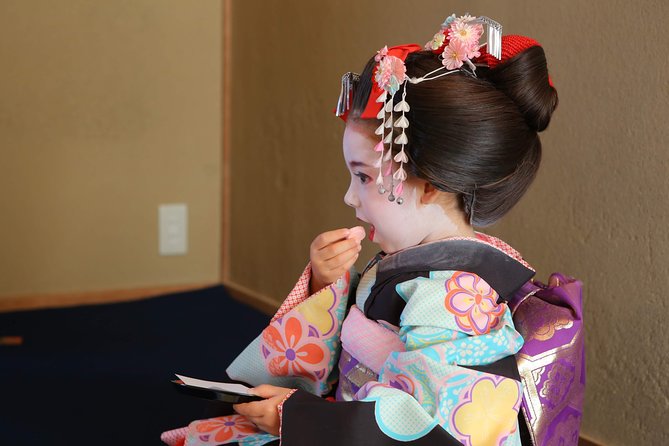
- A seasonal sweet accompanies the tea: The sweet helps balance matcha’s bitter edge and is part of the traditional rhythm.
- You can sit in a chair: Floor seating is usual, but chairs and tables are available on request.
- Kimono rental costs extra: You can ask about adding it by message, but it is not included in the listed price.
A quiet introduction to Kyoto’s tea culture
The ceremony begins with a short welcome and an introduction to matcha. This opening matters because it gives you a frame for what follows. Without it, the cleaning of a utensil or the careful turn of a tea bowl can look like a string of formal motions. With some context, you begin to see each movement as part of a system built around care and consideration.
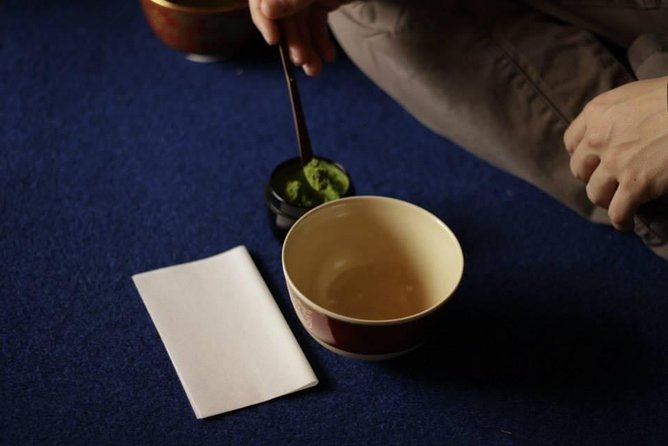
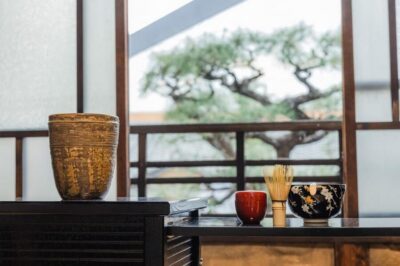
Your instructor then explains the ceremony’s tools. You learn what the tea bowl, tea scoop, and bamboo whisk are for, along with the basic order of events. The explanation also covers the importance of the room’s decoration and arrangement. The setting is not treated as a backdrop. Its objects and layout help create the right mood for the meeting.
The ceremony connects tea with Kyoto’s architecture, taste, and customs. You will not receive a full course in Japanese history in 45 minutes, but you will get a useful introduction to one of the city’s most lasting traditions.
The instructors all speak fluent English and come from one of Kyoto’s three principal schools of tea ceremony. Specific instructors can vary, so you should expect a teacher-led session rather than a fixed performance by one named tea master.
More Tea Ceremony Experiences in Kyoto
- Kyoto: Tea Ceremony in a Traditional Tea House in Kiyomizu
★ 4.9 · 3,519 reviews - Kyoto: Tea Ceremony Ju-An at Jotokuji Temple
★ 4.9 · 3,207 reviews - Kyoto: 45-Minute Tea Ceremony Lesson Experience
★ 4.3 · 2,378 reviews
Watching the ritual, then taking part
A demonstration comes before your turn with the whisk. This is one of the strongest parts of the experience. You can first watch the pace and precision of the preparation, then try to repeat the basic method yourself.
The movements are deliberate. The instructor shows how the utensils are handled and explains the purpose behind the steps. Some of the ritual concerns cleanliness, respect for the person receiving the tea, and clearing the mind before preparing it. These ideas give the ceremony a calm focus, even for someone who has never taken part in a Japanese tea ritual.
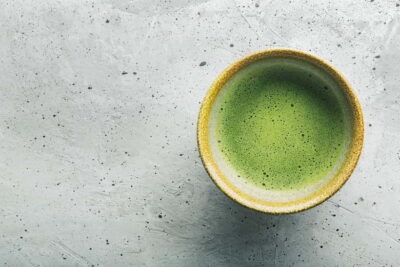
You are served matcha with a seasonal sweet. The sweet is not simply a snack added to the booking. Its mild sweetness prepares your palate for the stronger, grassy taste of matcha. This pairing also helps you understand why the ceremony pays such close attention to small details.
Then comes the hands-on part. You receive a tea bowl, scoop, and whisk, and your instructor shows you how to prepare your own bowl of matcha. You will practice whisking until the tea becomes frothy. The process looks simple at first, but the hands-on attempt shows why proper tea preparation takes training.
This is where the experience shifts from cultural demonstration to practical activity. You leave with a basic sense of how matcha is made, not just an image of someone else doing it.
Why the 45-minute length works
Forty-five minutes is a sensible length for this activity. A longer ceremony might appeal to serious students of tea, but many first-time visitors want a clear introduction that leaves room for Kyoto’s temples, lanes, shops, and meals.
The session includes an explanation, a demonstration, time for the sweet and tea, questions, and your own preparation. That is enough to give the ritual substance without asking you to build your entire day around it.
I would schedule it as a calm pause during sightseeing in Higashiyama. The activity ends at the same place where it begins, and there are no hotel pickups or drop-offs. Since the meeting point is in the Higashiyama Ward, you can combine it with other nearby sightseeing, but you should allow enough time to find the address at 349-13 Masuyacho.
The location is described as easy to reach and near public transportation. Still, the experience takes place in a traditional tea setting, not a large visitor center, so check your route before setting out.
A small group with room for questions
The maximum group size is eight people. That is large enough for a social experience but small enough for the instructor to demonstrate the tools clearly and watch participants prepare their tea.
The group size also affects how much you can ask. The organizers encourage questions about Japan and tea ceremony, and the format leaves time for conversation with the instructor. If you want a private session, a private option may be available, but the supplied details do not specify its price or exact format.
For families, the age policy is important. Children under six cannot participate, while older children are welcome. The experience has worked well for families with children around seven and eight years old, particularly because the hands-on whisking gives young participants something active to do.
Children still need to be comfortable with quiet attention and careful handling of the utensils. This is not a loud, fast-moving attraction. It asks you to slow down.
Same city, a completely different kind of day:
- PERFECT KYOTO 1-Day Bus Tour
★ 5.0 · 13,518 reviews - Kyoto: Fushimi Inari, Kinkakuji, Bamboo Grove 1 Day Bus Tour
★ 4.8 · 4,316 reviews - Kyoto Geisha Walking Tour: Gion District & Hidden Gems
★ 4.7 · 3,273 reviews - Kyoto: Gion Magical Night Walking Tour with Geisha Trivia
★ 4.9 · 2,393 reviews
Floor seating, chairs, and the practical limits
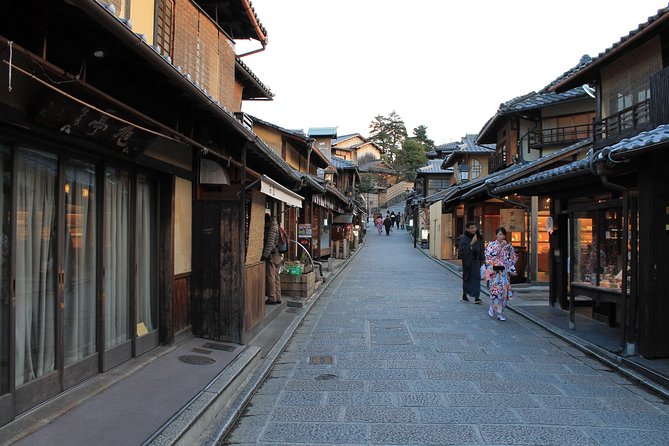
Traditional tea ceremony commonly involves sitting on the floor. At Camellia Flower, chairs and tables are available if you prefer them, so you should request that arrangement rather than assume you must sit in the traditional position.
The activity is not wheelchair accessible. That is a firm consideration for anyone who needs step-free access or a fully adapted space. Service animals are allowed, and the venue is near public transportation.
The room itself may not match every visitor’s idea of an elaborate tea house. One detailed assessment found it small and plain, with the setting feeling less striking than expected. I would keep that in mind if your main goal is a grand visual production. The strength here is the instruction and participation, not a lavish interior.
That modest setting can also suit you if you prefer a direct lesson. The ceremony is not built around spectacle. It focuses on the teacher, the tools, and the meaning of the actions.
Should you add a kimono?
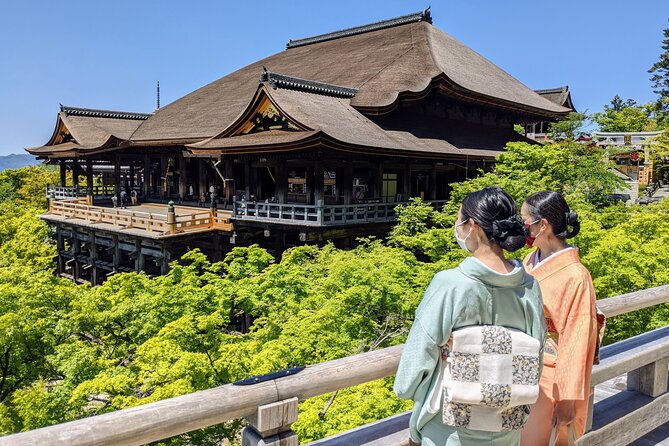
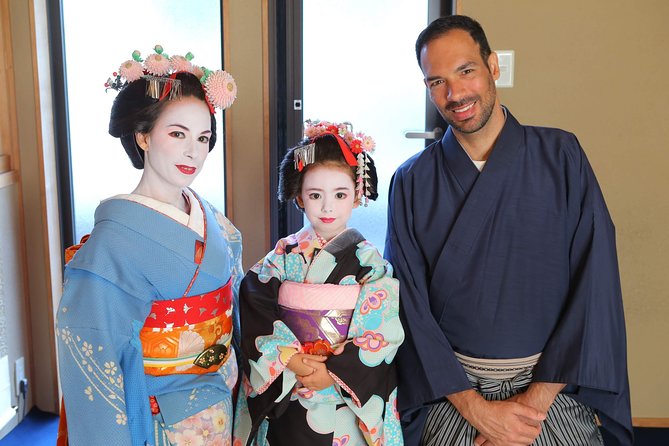
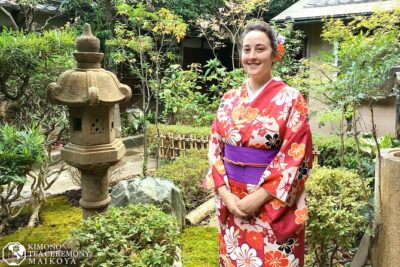
Kimono rental is not included in the $36.48 price, but you can request it by message for an additional charge. Several participants found that wearing a kimono made the ceremony feel more complete, and the service may include dressing help and a quick hairstyle arrangement.
I would consider the add-on if photographs and traditional dress are a major part of your Kyoto plans. It can make the occasion feel more special and gives you a stronger visual connection to the setting.
Skip it if you are already wearing formal clothing, have a packed schedule, or mainly want to learn how matcha is prepared. The core activity does not depend on the kimono. You still receive the explanation, demonstration, tea, sweet, and hands-on practice without it.
Ask about availability and cost before booking the add-on. The additional charge is not provided here, and kimono rental should not be assumed to be part of the standard reservation.
What the price delivers
At $36.48 per person, this is priced as an accessible cultural activity rather than a long formal tea gathering. The value comes from the combination of an English explanation, a live demonstration, matcha, a seasonal sweet, and your own practice with the utensils.
You are also paying for a small-group setting and instruction from someone trained within one of Kyoto’s three main tea schools. That does not make the activity a full study of tea ceremony, but it gives the 45 minutes more substance than a simple tasting.
The price makes the most sense if you want participation. If you only want to watch a ceremony, you may find the session more hands-on than necessary. If you want to understand the basics and try them yourself, the included equipment and instruction make the cost reasonable.
Group discounts are available, so the value may improve for families or small parties. The exact discount is not specified, so check the price for your group when booking.
The atmosphere: calm, friendly, and not theatrical
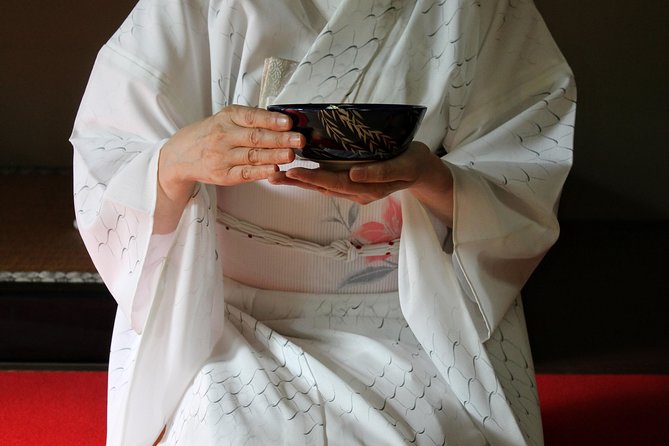
The tone of the activity is welcoming. The instructors are described as friendly, patient, polite, and comfortable explaining the ceremony in English. That matters because tea ceremony etiquette can feel intimidating if you worry about making a mistake.
You are encouraged to ask questions, and the teaching style appears designed to help beginners relax. The ceremony still keeps its formal shape, but you are not expected to arrive with prior knowledge.
The experience can be a useful change of pace after a morning of temples and city streets. The quiet, repeated movements offer a short period of stillness. You learn about matcha while also learning how a traditional Japanese practice creates calm through order and restraint.
Do not expect a theatrical show with a large room, dramatic presentation, or long performance. The ceremony’s appeal is more personal. You watch closely, listen, and then try the technique yourself.
Who will enjoy Camellia Flower most
I would recommend this experience to first-time visitors who want a clear introduction to Japanese tea ceremony. It works especially well for people who enjoy learning by doing, since you prepare your own matcha rather than simply receiving a finished bowl.
It also suits families with children aged six and above, couples, and small groups looking for a cultural activity that does not take half a day. The group limit of eight helps keep the session manageable.
It may be a good fit for you if you enjoy:
- Learning the meaning behind traditional gestures
- Asking questions in English
- Trying matcha for the first time
- Taking part in a quiet, structured activity
- Adding a kimono to a cultural experience
- Combining tea ceremony with sightseeing in Higashiyama
You may want to choose another option if you need wheelchair access, dislike floor-based traditional settings, or want an ornate room and a longer ceremony. Chairs are available, but the venue itself is not wheelchair accessible.
Booking, cancellation, and planning advice
Confirmation is provided at booking, and the experience offers free cancellation up to 24 hours before the scheduled start time. Cancel at least 24 hours ahead for a full refund. Changes or cancellations inside that window are not accepted for a refund.
The experience requires good weather. If poor weather causes cancellation, you will be offered another date or a full refund. Keep that policy in mind when arranging a tightly packed Kyoto schedule.
Wear clothing that lets you sit or move comfortably, even if you plan to use a chair. If you want a kimono, request it in advance rather than waiting until you arrive. Bring your questions, since the instructors specifically invite conversation about tea and Japanese customs.
Photos and short videos are permitted. Be considerate during the formal parts, and avoid letting photography distract from the ceremony itself.
FAQ
How long does the Kyoto tea ceremony last?
The experience lasts approximately 45 minutes, including the introduction, explanation of the utensils, demonstration, tea and sweet, questions, and your chance to make matcha.
Where does the tea ceremony begin and end?
It begins at Tea Ceremony Camellia FLOWER, located at 349-13 Masuyacho in Kyoto’s Higashiyama Ward. The activity ends back at the meeting point.
Is the tea ceremony wheelchair accessible?
No. The experience is not wheelchair accessible. Chairs and tables are available for people who prefer not to sit on the floor.
Are children allowed to join?
Children aged six and older can participate. Children under six cannot join the experience. The maximum group size is eight people.
Is kimono rental included?
No. Kimono rental is an optional extra that can be requested by message. It is not included in the listed price, and the additional cost is not specified.
What happens during the ceremony?
An English-speaking instructor introduces matcha, explains the ceremony’s steps and utensils, and discusses the importance of the room’s decoration and layout. You receive a seasonal sweet and matcha, then use a bowl, scoop, and whisk to make your own tea.
Should you book it?
Book Camellia Flower if you want a short, friendly, hands-on introduction to Kyoto’s tea culture. The best reason to choose it is the balance: you see an authentic ceremony, learn why its actions matter, taste matcha with a seasonal sweet, and practice the technique yourself.
The $36.48 price is fair for that mix of instruction and participation, especially with a group limit of eight and English-speaking teachers trained within Kyoto’s major tea traditions. Add the kimono if dressing for the occasion matters to you.
Skip it if you need wheelchair access or are seeking a grand tea house setting. For most first-time visitors, though, this is a thoughtful way to slow down in Higashiyama and leave Kyoto with more than a photograph of a tea bowl.
Just added around Kyoto
- Taste of Nishiki Market Walking Food Tour with Local guide★ 5.0 · 17 reviews
- Kyoto: Sushi Making Class with Sushi Chef★ 4.8 · 64 reviews
- Kyoto: City Secrets eBike Tour★ 4.9 · 196 reviews
- Sacred Pathways: Discover the Philosopher’s Path of Kyoto★ 4.9 · 20 reviews
- Private Tour to Monkey Park and Arashiyama Highlights★ 5.0 · 22 reviews
- Private Nara Tour from Osaka – Meet at Your Hotel★ 5.0 · 22 reviews
- Private Sake Tasting in Central Kyoto with Sake Sommelier★ 5.0 · 13 reviews
- Kyoto : Private Custom Walking Tour With A Local Guide★ 4.6 · 144 reviews
Tea Ceremony Experiences, compared.
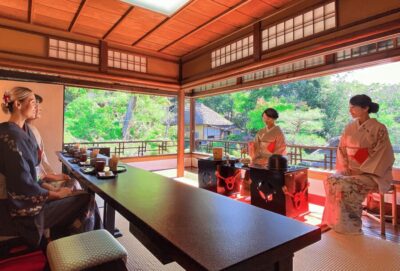
Tea Ceremony in a Traditional Tea House in Kiyomizu
Read our review →
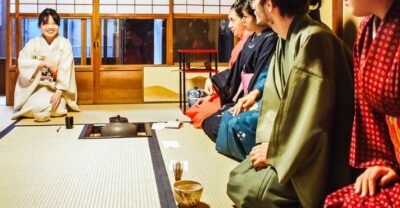
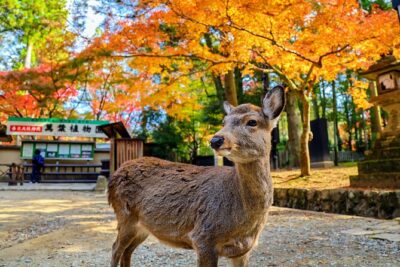
World Heritage Kyoto & Nara Uji Authentic Matcha Experience
Read our review →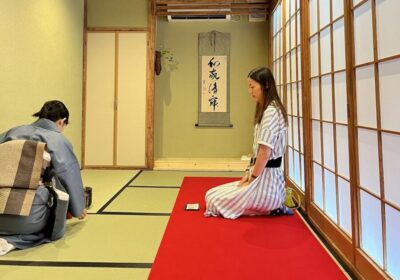
Browse the lists this tour appears in