
REVIEW · TEMPLE & SHRINE TOURS
TREASURES of Kyoto: Fushimi Inari, Kiyomizu Temple, and more!
Kyoto’s most famous sights are far more enjoyable before the tour buses arrive. This four-hour outing takes you from the orange torii gates of Fushimi Inari to Kiyomizu-dera Temple, then through old cobblestoned streets, with taxi rides between stops included.
I like the early 7:00 am start because it gives you a quieter look at places that can become packed later. I also like the small group, capped at 12 people, and the fact that guide Niall leads the experience with a clear interest in Japanese culture. The main drawback is price: at $98.53 per person, you are paying for guidance, planning, and taxis rather than access to sights that are mostly easy to visit on your own.
In This Review
- Key points to know before booking
- Why this early Kyoto route works
- Fushimi Inari at 7:00 am
- Kiyomizu-dera and its city views
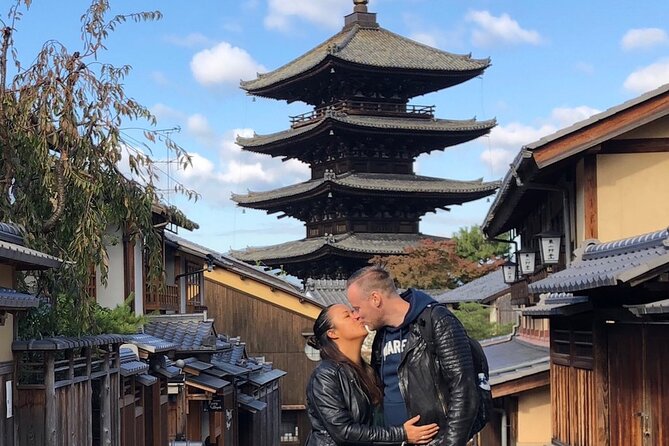
- Cobblestoned streets and old townhouses
- What the guide adds
- Is $98.53 a fair price?
- Walking, taxis, and the pace
- Who will get the most from this tour?
- Practical booking details
- Should you book it?
- FAQ
- How long does the Kyoto tour last?
- What time does the tour begin?
- Where does the tour meet?
- Where does the tour end?
- Which main sights are included?
- Are taxi fares included?
- Is admission to Kiyomizu-dera included?
- What happens if the tour is canceled because of weather or too few bookings?
Key points to know before booking
- The early start is the main advantage: Fushimi Inari and Kiyomizu-dera are approached before the heaviest crowds.
- Taxi fares are included: You avoid working out Kyoto transport between the main stops.
- The group is limited to 12: That gives you a better chance to ask questions and stay connected to the guide.
- Kiyomizu-dera admission is covered: Fushimi Inari-taisha Shrine itself has no admission charge.
- Guide Niall brings personal enthusiasm: His interest in Japanese culture is part of the character of the outing.
- The route lasts about four hours: It is useful for a short Kyoto stay, but it is not a full-day cultural tour.
Why this early Kyoto route works
This experience is built around a simple idea: see two major Kyoto landmarks early, move between them by taxi, and let a guide handle the schedule. That matters in Kyoto, where a short map distance can still mean a slow walk, a crowded bus, or a confusing station change.
You begin at 7:00 am at Inari Station. From there, the plan moves through Fushimi Inari-taisha Shrine, Kiyomizu-dera Temple, and a preserved district of old streets and townhouses before ending at Sanjūsangendō Temple.
The timing is especially useful if you have only a short stay in Kyoto. In four hours, you can get a strong first look at two of the city’s best-known religious sites, then continue with the rest of your day. You also finish in the Higashiyama area, close to more major sights, though the experience itself ends at Sanjūsangendō Temple.
The format is not designed for long private reflection or an in-depth study of every building. It is a brisk introduction, with enough explanation to make the places more meaningful than a quick stop for photographs.
More Temple & Shrine Tours in Kyoto
- Kyoto: Fushimi Inari, Kinkakuji, Bamboo Grove 1 Day Bus Tour
★ 4.8 · 4,316 reviews - Kyoto: Tea Ceremony in a Traditional Tea House in Kiyomizu
★ 4.9 · 3,519 reviews - Kyoto: Tea Ceremony Ju-An at Jotokuji Temple
★ 4.9 · 3,207 reviews
Fushimi Inari at 7:00 am
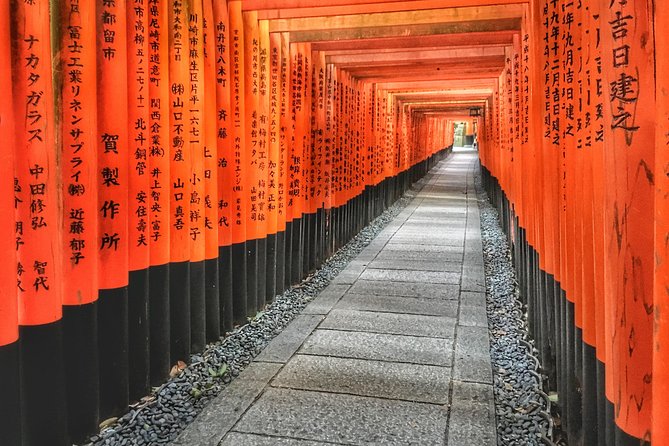
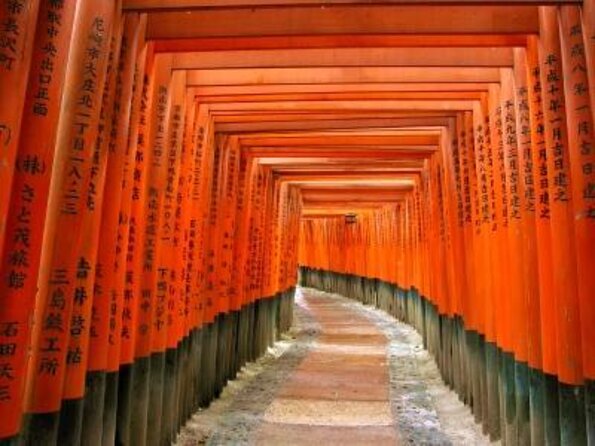
Fushimi Inari-taisha is famous for its long tunnel of vermilion torii gates. These gates line the mountain paths behind the shrine, creating the maze-like scene that appears in so many photographs of Kyoto.
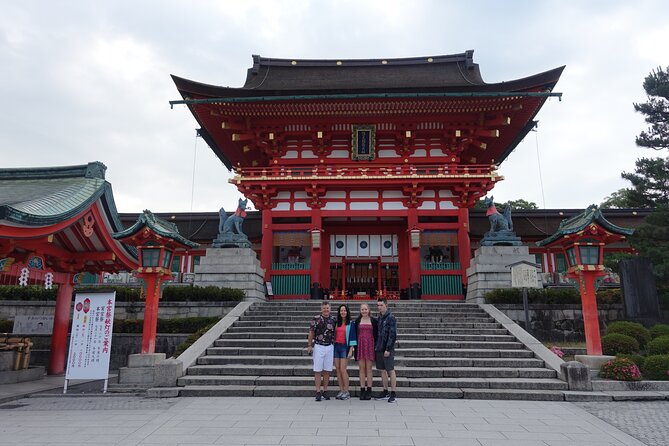
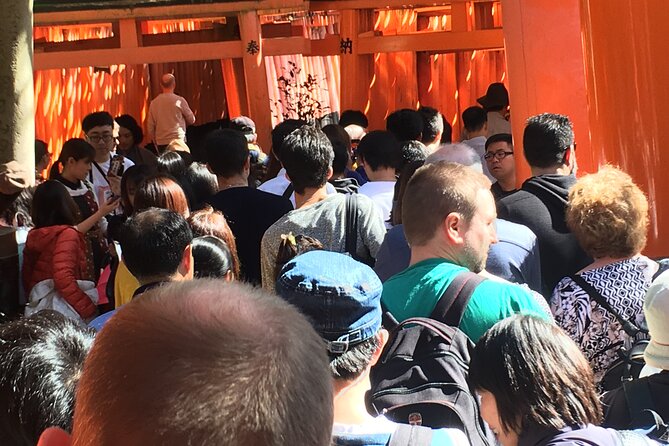
The tour spends about 45 minutes here. That is enough time to enter the shrine grounds, walk through part of the torii-lined route, hear about the site, and stop for photographs. It is not enough time to walk the full mountain trail, so you should see this as an introduction rather than a complete hike.
The early hour helps. Fushimi Inari is free to enter, which makes it one of Kyoto’s easiest major sights to visit independently, but its popularity can make the lower paths crowded later in the morning. Starting early gives you a better chance of seeing the gates with fewer people around and makes photography less frustrating.
Your guide explains the meaning and history of the shrine as you go. That added context is useful because the rows of gates can otherwise become a striking backdrop without much understanding of why they are there.
You should wear shoes suitable for walking. The route through the gates is not just a flat photo stop, and the wider outing includes temple grounds, steps, and old streets. The operator notes that people who do not usually walk much may find Japan demanding, so consider your comfort before booking.
Kiyomizu-dera and its city views
After Fushimi Inari, the group travels by taxi to Kiyomizu-dera. Having the taxi fare included is one of the clearest practical benefits of this tour. You do not need to work out the quickest connection after leaving the shrine, and the group can keep to its planned morning schedule.
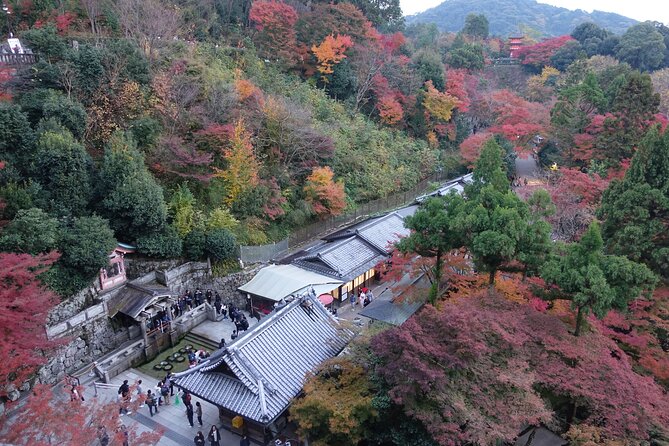
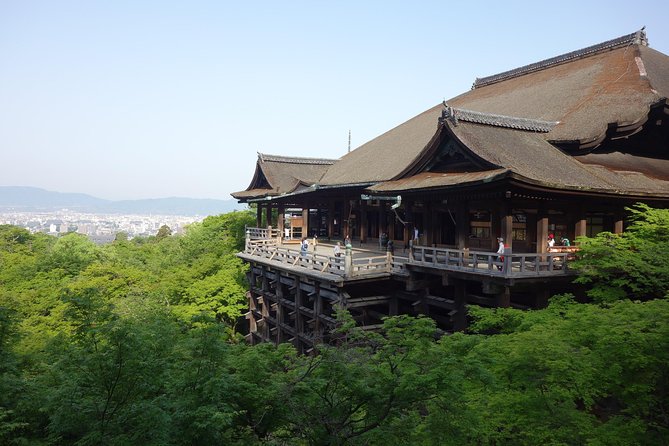
Kiyomizu-dera is one of Kyoto’s best-known temples and an important symbol of the city. Its position gives you sweeping views across Kyoto, making the visit about more than the temple buildings themselves.
The planned visit lasts about one hour, and admission is included. That gives you enough time to explore the main areas at a sensible pace, listen to the guide, and enjoy the views without turning the stop into a rushed dash.
The morning setting is important here too. Kiyomizu-dera can be extremely busy, especially around its approach streets and main viewing areas. An early visit does not guarantee an empty temple, but it gives you a better chance at a calmer start before the largest crowds arrive.
I would treat this as the central stop of the outing. Fushimi Inari offers the memorable gates, while Kiyomizu-dera provides the broad Kyoto setting and the strongest sense of being at one of the city’s signature landmarks.
The tradeoff is that one hour goes quickly. If you want to inspect every hall, shop along the approach, or spend a long time taking photographs, you may wish you had more freedom. The guide-led schedule keeps the morning moving, which is useful for some people and restrictive for others.
Cobblestoned streets and old townhouses
The final part of the route takes you through a preserved district with cobblestoned streets, quaint shops, and traditional townhouses. The supplied details do not give the district a formal name, but the setting provides a welcome change from the major shrine and temple grounds.
This walk is valuable because it shows Kyoto as a lived-in city rather than a series of famous monuments. The old streets give you time to notice the scale of the buildings, the narrow lanes, and the shopfronts that make the historic areas feel different from modern commercial streets.
The description does not specify how long this portion lasts. That means you should view it as part of the overall four-hour route, not as a separate shopping visit with plenty of free time. The tour ends at Sanjūsangendō Temple, so you can plan your next Kyoto activity from that area.
Because the itinerary is compact, the old-district walk may feel like a sampler. I like that it rounds out the morning, but anyone hoping for a long, unhurried wander through Kyoto’s traditional neighborhoods may prefer to return independently later.
Same city, a completely different kind of day:
- PERFECT KYOTO 1-Day Bus Tour
★ 5.0 · 13,518 reviews - Kyoto Geisha Walking Tour: Gion District & Hidden Gems
★ 4.7 · 3,273 reviews - Kyoto: Gion Magical Night Walking Tour with Geisha Trivia
★ 4.9 · 2,393 reviews - Kyoto: 45-Minute Tea Ceremony Lesson Experience
★ 4.3 · 2,378 reviews
What the guide adds
A guide is most useful here when you want meaning, not just directions. At Fushimi Inari, the guide can explain what you are seeing among the gates. At Kiyomizu-dera, the guide helps connect the temple, its setting, and its importance to Kyoto.
Niall is identified as the guide and owner, and his strong interest in Japanese culture is an important part of the experience. His enthusiasm comes through in the way he talks about the places, and he is described as informative and engaged during the morning.
The small-group format supports that personal contact. With a maximum of 12 people, you have a reasonable chance to ask questions without trying to get a guide’s attention across a large crowd. It also makes it easier for the group to move together between taxis and stops.
Still, a small group cannot guarantee that every guide interaction will suit every person. One low rating describes the guide as unhelpful and argues that the two main sights could have been visited independently. That is a fair warning: the value depends heavily on how much you want interpretation and planning help.
Is $98.53 a fair price?
At $98.53 per person, this is not the cheapest way to see Fushimi Inari and Kiyomizu-dera. Fushimi Inari has free admission, and you can visit both areas independently with Kyoto’s public transportation system.
The price makes more sense if you value three things:
- A planned route that begins early
- Taxi transportation between the main stops
- A guide who explains the cultural background
Taxi fares can add up, especially when a group needs to move efficiently between distant sights. You also save the time and mental effort involved in comparing routes, finding the right platform, and keeping an eye on the clock.
The tour is less attractive if you are comfortable navigating Kyoto, enjoy setting your own pace, or already understand the main sights. You could spend longer at each location on your own and return to the places that interest you most.
For a first morning in Kyoto, I see the cost as a convenience fee with cultural guidance attached. It is not a bargain sightseeing pass. It is a compact orientation for people who want the major sights handled efficiently.
Walking, taxis, and the pace
The experience lasts about four hours, but that does not mean four hours of continuous walking. Taxi rides are included between stops, which reduces the strain of crossing the city on foot and keeps the route practical.
You will still walk through shrine and temple grounds, along the torii gates, and over old streets. The operator says most people can participate, but also notes that Japan may be difficult for those who are not used to much walking. Plan for comfortable footwear and a morning that keeps moving.
The 7:00 am start is both a strength and a commitment. You gain quieter conditions, but you must be ready at Inari Station early. If you are arriving in Kyoto after a late night or staying far from Fushimi Inari, check your morning transport carefully.
The meeting point is Inari Station at Fukakusa Inarionmaecho, Fushimi Ward. The route ends at Sanjūsangendō Temple, not back at the starting point, so you should treat it as a one-way sightseeing plan when arranging your day.
Who will get the most from this tour?

This outing suits you if Kyoto is one stop on a larger Japan trip and you want to cover major sights without spending half a morning on logistics. It also works well if you prefer a guide’s explanation to reading signs or researching each site in advance.
It is a good choice for:
- First-time Kyoto visitors
- People with only a day or two in the city
- Small groups who prefer a guide to a large bus
- Anyone who values an early start and fewer crowds
- Visitors who want taxis included between the main stops
You may prefer to go independently if you want to hike farther at Fushimi Inari, linger at Kiyomizu-dera, browse shops at length, or decide spontaneously where to go next. The fixed four-hour plan gives you structure, but it also limits your freedom.
The experience has a 4.8 rating from 20 reviews, with 95 percent recommending it. That is a strong result, while the mixed experience described above is worth keeping in mind. The best match is someone who sees value in a well-organized morning, not someone simply looking for admission tickets.
Practical booking details
You receive confirmation at booking, and the experience uses a mobile ticket. It is near public transportation, begins at Inari Station, and accepts most participants according to the supplied information.
The group maximum is 12 people. That is small enough for direct contact with the guide but not the same as a private tour.
Free cancellation is available if you cancel at least 24 hours before the start time. Changes or cancellations inside that window are not accepted for a refund. The operator also requires good weather and a minimum number of participants. If poor weather or insufficient bookings cancel the experience, you are offered another date or experience, or a full refund.
Should you book it?
Book this tour if you want an early, guided introduction to Kyoto’s two headline sights and like having taxi transport arranged. Guide Niall’s enthusiasm, the small group, and the quiet morning timing are the strongest reasons to choose it.
Skip it if you are confident using public transportation, want to spend as long as you like at each temple, or consider $98.53 too much for sights that can largely be visited independently. The tour’s value is in time saved, context provided, and a smoother morning, not in exclusive access.
For a short Kyoto stay, I think the format is useful. For a longer stay, you may get more from visiting independently and using your extra time to explore the old district at your own pace.
FAQ
How long does the Kyoto tour last?
The experience lasts approximately four hours.
What time does the tour begin?
The tour starts at 7:00 am.
Where does the tour meet?
The meeting point is Inari Station at Fukakusa Inarionmaecho, Fushimi Ward, Kyoto.
Where does the tour end?
The tour ends at Sanjūsangendō Temple in Kyoto’s Higashiyama Ward.
Which main sights are included?
The route includes Fushimi Inari-taisha Shrine, Kiyomizu-dera Temple, and a preserved district with cobblestoned streets, shops, and traditional townhouses.
Are taxi fares included?
Yes. Taxi fares between the tour stops are included.
Is admission to Kiyomizu-dera included?
Yes. Admission to Kiyomizu-dera Temple is included. Fushimi Inari-taisha Shrine has no admission charge.
What happens if the tour is canceled because of weather or too few bookings?
You are offered a different date or experience, or a full refund.
Just added around Kyoto
- Private Guided Traditional Buddhist Cooking in Japan★ 5.0 · 16 reviews
- Kyoto: Gion Geisha District & Sake-in-Hand Walking Tour★ 5.0 · 37 reviews
- Your Private Vacation Photography Session In Kyoto★ 5.0 · 110 reviews
- Kyoto: Zen Meditation at a Private Temple with a Monk★ 5.0 · 25 reviews
- Traditional Japanese Washi Papermaking- Kyoto morning★ 5.0 · 77 reviews
- Kyoto Wagashi(Japanese sweets) Cooking Class near Fushimiinari★ 5.0 · 60 reviews
- Private Pewter Sake Cup Experience with a Kyoto Artisan★ 5.0 · 31 reviews
- Kyoto Private 6 hour Tour: English Speaking Driver Only, No Guide★ 5.0 · 88 reviews
Temple & Shrine Tours, compared.
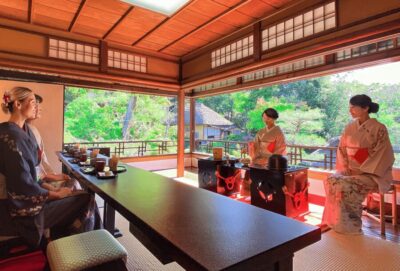
Tea Ceremony in a Traditional Tea House in Kiyomizu
Read our review →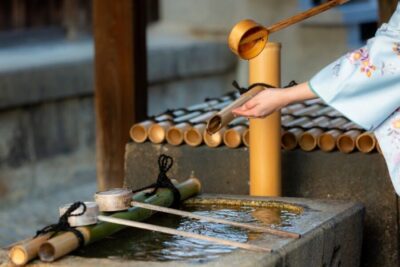
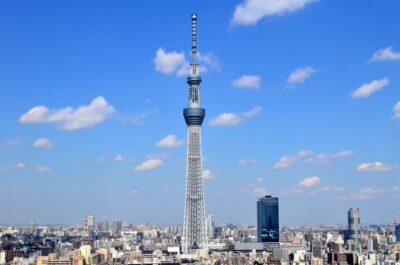
Meiji Shrine, Asakusa, Skytree Bus Tour and Cruise
Read our review →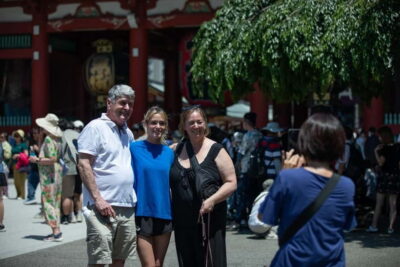
Asakusa Walking Tour with Sensoji Temple Visit
Read our review →
Kamakura & Enoshima Day Trip including Temple Tickets
Read our review →
Kyoto/Osaka: Nara, Fushimi Inari Taisha, Arashiyama Bus Tour
Read our review →
Nikko Toshogu Shrine and Kegon Waterfall Tour
Read our review →
Tokyo Panoramic 1 Day: Meiji Shrine, Asakusa, Odaiba and SKYTREE®
Read our review →Browse the lists this tour appears in