
REVIEW · FOOD MARKET TOURS
Tokyo: Sushi Making with Pro Chef & Tsukiji Fish Market Tour
Tsukiji Fish Market is the real opener here, not just a warm-up before the cooking class. You’ll see where sushi ingredients come from, taste select market foods, and learn how the market fits into Tokyo’s food culture before handling a knife or rice paddle yourself. I especially like the small groups of eight or fewer and the way the tour joins food history with hands-on work.
I also like that your lunch is the sushi you prepare, rather than a separate restaurant meal. Guides such as Tadashi, Yusei, Take, Kate, Yuko, and Matsayo have been praised for giving the walk a personal touch, helping with samples, and explaining the surrounding temple and market. The main caution is food flexibility: vegetarian, vegan, halal, and gluten-free requests are not accommodated, and toppings cannot be changed on the day.
In This Review
- Key points at a glance
- Starting at Tsukiji Honganji Temple
- Reading Tsukiji through its food stalls
- From fish preparation to sushi technique
- What $101 buys you in Tokyo
- Timing, comfort, and food restrictions
- The people who will get the most from it
- A few practical booking tips
- Should you book this Tsukiji sushi tour?
- FAQ
- Where does the tour meet?
- How long does the experience last?
- Is the tour conducted in English?
- How large is the group?
- Is lunch included?
- What should I bring?
- Can vegetarians, vegans, or people with halal or gluten-free diets join?
- What happens if I arrive late or cancel on the day?
Key points at a glance
- Tsukiji comes first: Walk the market with an English-speaking guide before the sushi lesson.
- A working chef teaches the class: Learn sushi technique step by step, including different fish and sushi styles.
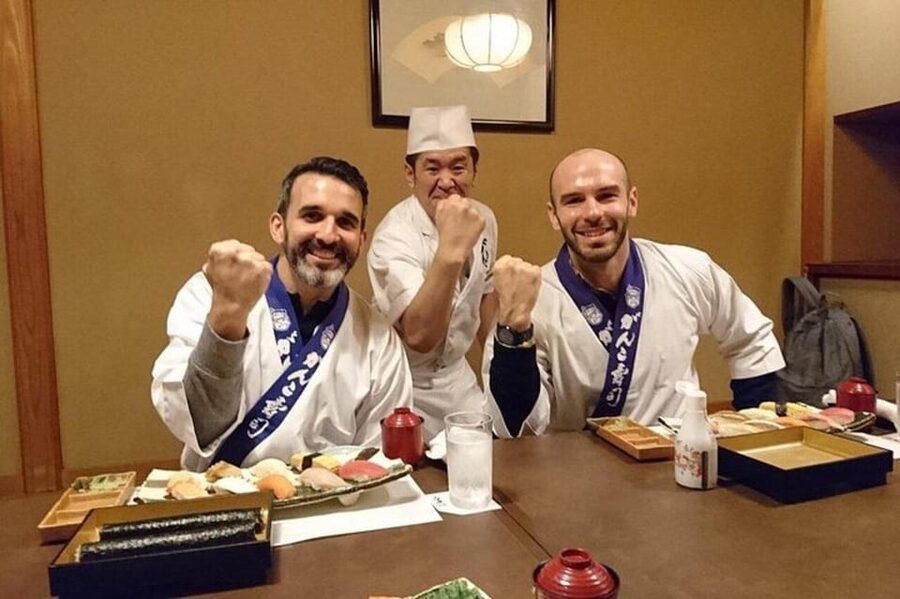
- Your handmade sushi is lunch: The meal is included, so the class ends with a useful and tasty reward.
- The group stays small: With no more than eight participants, you have a better chance to ask questions and get help.
- The temple adds context: The meeting point at Tsukiji Honganji Temple can introduce you to Buddhist culture before the market walk.
- Food restrictions need careful checking: The experience is not suitable for vegans or vegetarians, and allergy requests must be sent by 5:00 P.M. Japan time the day before.
Starting at Tsukiji Honganji Temple
The tour begins at the main gate of Tsukiji Honganji Temple, directly in front of the temple. This detail matters because Google Maps may guide you to the back entrance. Go to the front gate, and arrive early enough to find your guide without rushing.
The temple gives the morning a useful sense of place. One guide-led visit included an introduction to Buddhism before the group moved on to the market. That short stop helps you see Tsukiji as more than a food street. It connects the area’s daily shopping life with one of Tokyo’s important religious sites.
Your guide meets you in English and leads the group on foot. Comfortable shoes are essential. The four-hour schedule includes the temple area, the market walk, and the sushi workshop, so you should expect a fair amount of standing and walking before you sit down to cook.
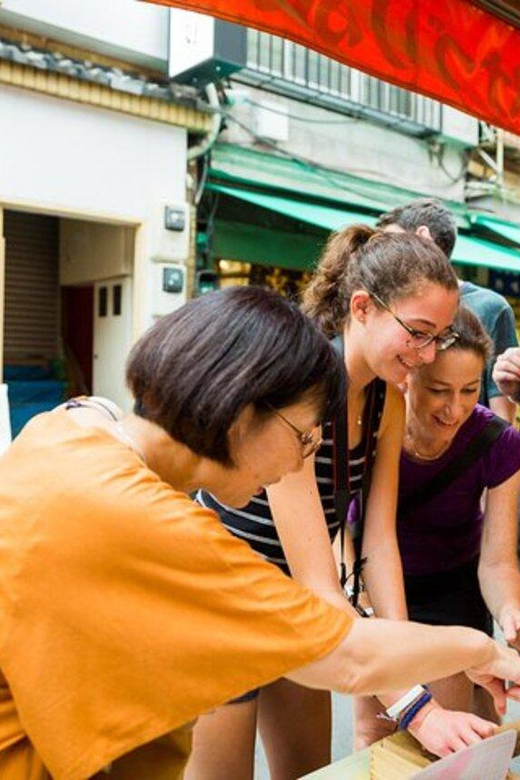
Several guides have received warm praise for their manner and local insight. Tadashi, also called Tad, has been described as patient and good at finding food stalls that are easy to miss. Yusei was noted for explaining the area and its past while allowing time to stop, look, eat, and shop. The specific guide varies, but the small group format gives the tour a more personal feel than a large food walk.
More japanese cooking classes in Japan:
- Sushi Making Tokyo Roll and Authentic Japanese Sushi Class
★ 5.0 · 3,971 reviews - Tokyo: Roll and Authentic Sushi Making Class in Asakusa
★ 4.9 · 1,957 reviews - Ramen Cooking Class at Ramen Factory in Kyoto
★ 5.0 · 1,937 reviews
Reading Tsukiji through its food stalls
The market portion is the strongest reason to book this experience instead of choosing a sushi class alone. You are not simply shown a row of stalls. The guide explains what you are seeing, where ingredients are used, and why Tsukiji matters to Tokyo’s food life.
You’ll see professionals at work and learn how the fish and other ingredients reach restaurants. The emphasis is on the foundations of Japanese food culture, so the walk can help you understand quality, preparation, and seasonality before the chef begins the lesson.
Sampling is part of the appeal, but the exact food available can vary. The tour description promises chances to try foods loved by fine-dining restaurants and to find places favored by local food lovers. One outing included whale meat along with other samples. That may not suit everyone, so treat the tasting portion as an opportunity, not a fixed menu.
The guide may also help you find items you would not notice on your own. One particularly strong account described introductions to vendors and samples that are not normally offered without an arrangement. You should not expect every group to receive the same tasting, but this shows the advantage of walking with someone who knows the market.
You also get time for photographs and, where appropriate, for buying or eating food. That is a useful balance. A rushed market circuit can leave you with a few pictures but little understanding. Here, the pace can allow you to pause while the guide explains an ingredient or a food custom.
The market has a practical limitation: the fish wholesaler market is closed on Wednesdays, Sundays, and other official market-closure days. Check your date carefully. The tour may still have value around the temple and outer market area, but the fish-market portion will not be the same when the wholesaler section is closed.
From fish preparation to sushi technique
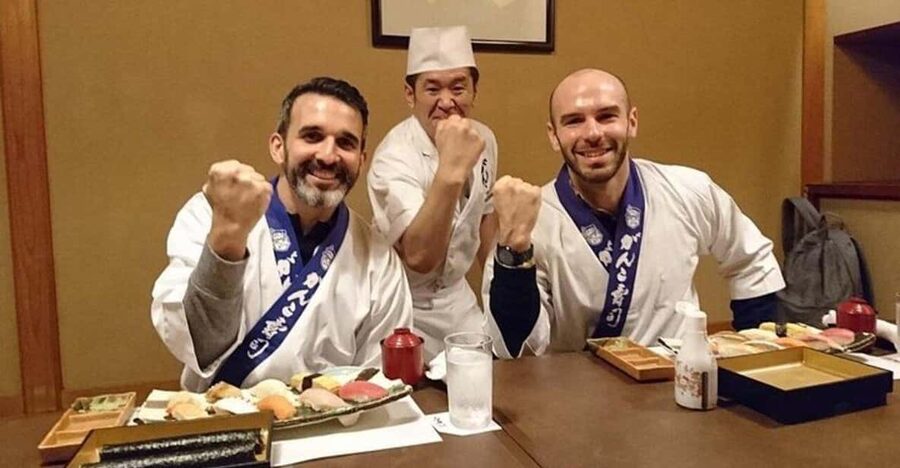
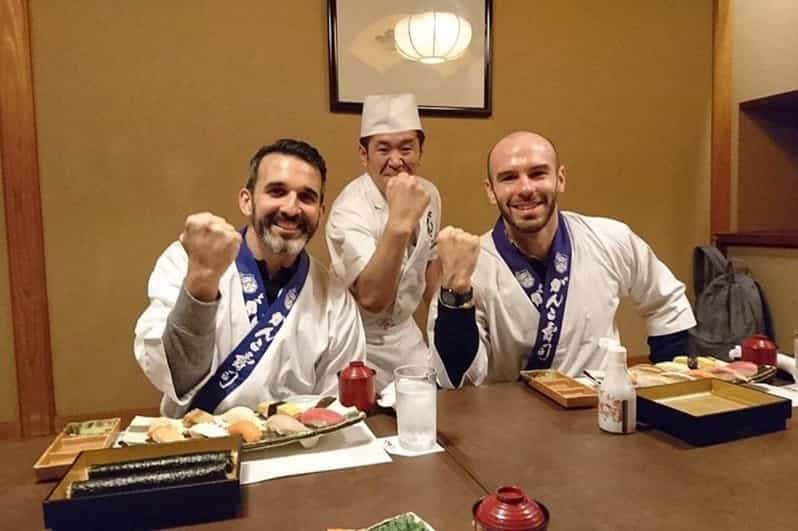
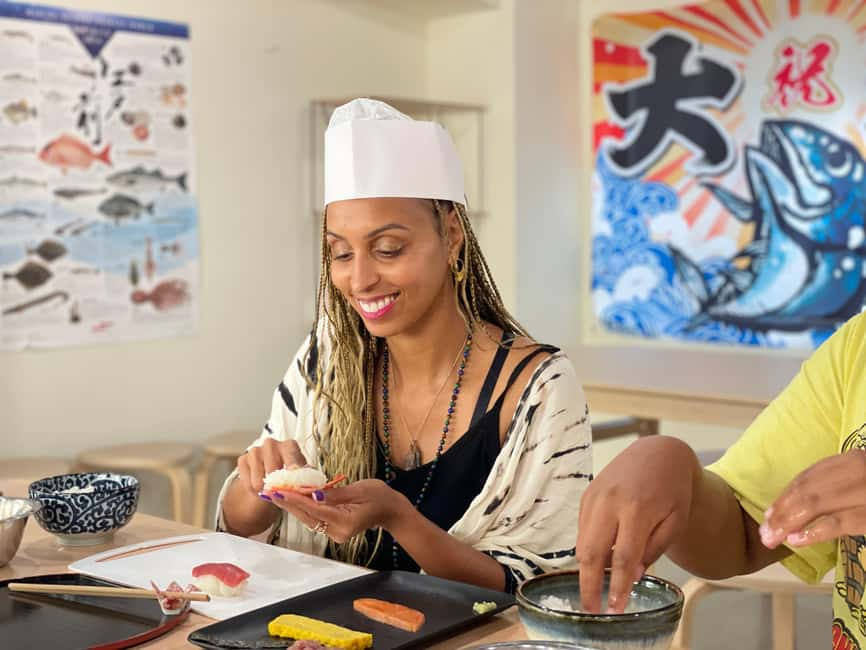
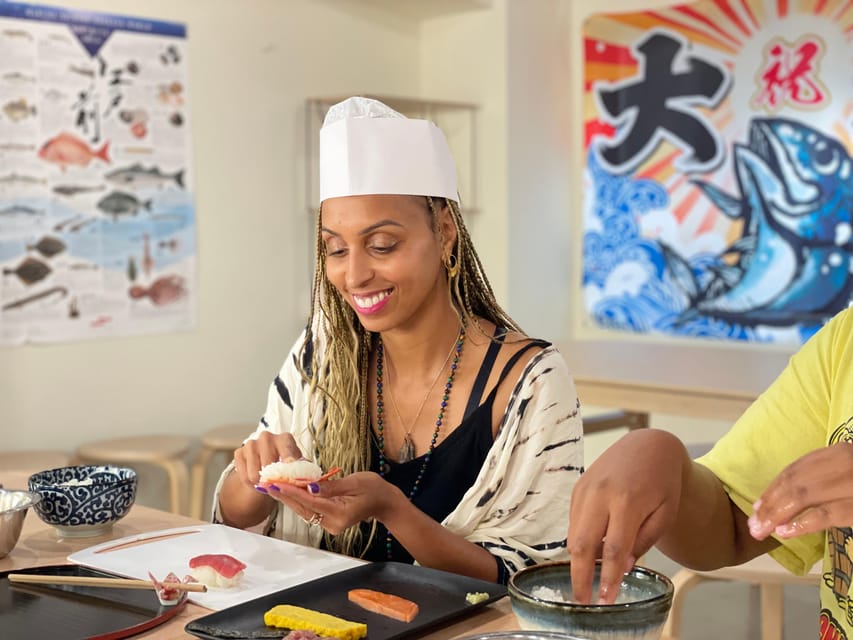
After the market walk, you move to the sushi classroom. The lesson is taught by a professional sushi chef, with step-by-step help from the chef and instructors. That matters because sushi looks simple until you try to shape rice, place a topping, and make the finished piece hold together.
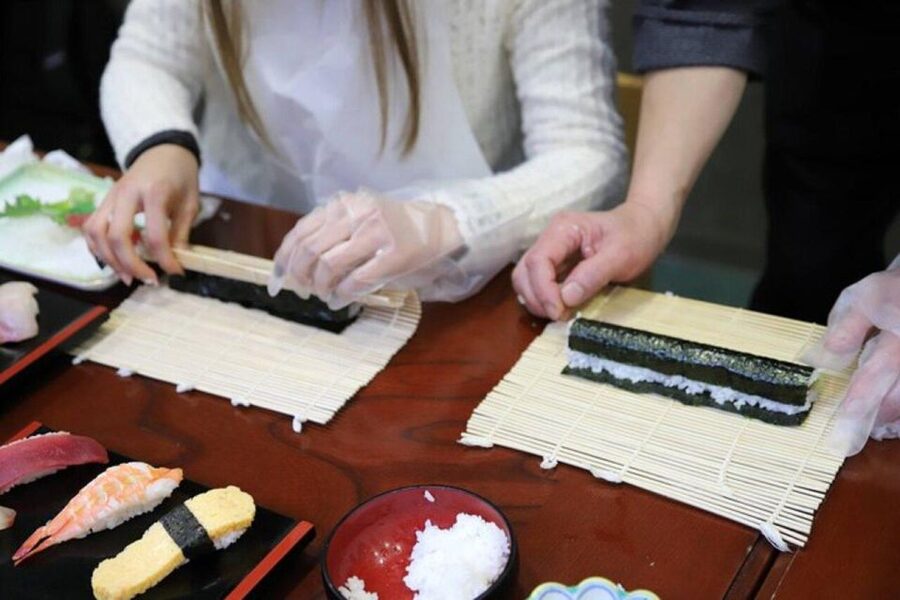
The class covers the role of different fish and the craft behind sushi preparation. You may learn to make several styles, including nigiri and maki. One detailed account described preparing five nigiri and one maki roll, while another noted learning several varieties that were unfamiliar before the class.
You should expect guidance rather than a demonstration that you merely watch. The instructors show the technique, then give you a chance to copy it. If your sushi looks uneven at first, that is part of the fun. A patient instructor can help with shaping, topping placement, and confidence.
The class also explains how to eat sushi properly. That can include practical points about fish, rice, soy sauce, and the balance between the two. The workshop is not only about producing lunch. It gives you a better idea of why a sushi chef handles each ingredient with such care.
Your finished sushi becomes the included lunch. This is good value because the meal is built into the activity rather than added as a separate expense. You also get the satisfaction of eating something you made, even if your first pieces are less tidy than a professional chef’s.
One small criticism is worth noting: extra green tea and soy sauce would have been welcome for some participants. It is a minor point, but if you like plenty of seasoning or tea with your meal, keep your expectations modest.
What $101 buys you in Tokyo
At $101 per person, this is not the cheapest way to eat at Tsukiji or take a sushi lesson. The value comes from combining several services in one four-hour experience: an English-speaking local guide, a market walk, food samples, a professional sushi class, and lunch.
If you visited Tsukiji alone, you could spend less by choosing individual snacks. You would also need to work out what to see, where to go, and how to understand the ingredients. If you booked a separate sushi workshop, you would pay for that class as well. This tour makes sense for you if you want the market and the lesson to connect.
The group limit is important to the price. Eight people is small enough for questions and hands-on assistance, especially during the sushi preparation. A larger class might cost less but could leave you waiting for help or standing behind other participants.
The experience also offers practical value for a first visit to Tokyo. You learn how to approach the market, gain some food vocabulary and context, and leave with a better sense of what makes sushi different from a generic seafood meal. It is still a paid activity, but it provides more than lunch.
More food market tours in Japan:
- Tokyo: Shinjuku Food Tour (13 Dishes at 4 Local Eateries)
★ 5.0 · 6,603 reviews - Tokyo Tsukiji Fish Market Food and Culture Walking Tour
★ 5.0 · 3,184 reviews - Osaka: Shinsekai Food Tour with 13-15 Dishes at 5 Eateries
★ 4.8 · 2,204 reviews - Osaka Food Tour: 13 Dishes at 5 Local Eateries
★ 5.0 · 2,149 reviews
Timing, comfort, and food restrictions
The tour lasts four hours, and the starting time varies by date. Check availability before booking and plan your day around the full block. If you arrive late, the tour cannot be extended, and same-day late arrivals do not receive a refund.
Wear comfortable shoes. The market section involves walking and standing, and the classroom is on the third floor, reached by stairs. This experience is not suitable for wheelchair users, people with mobility impairments, or children under four.
Infants and toddlers can attend free of charge. If a young child wants to make sushi, however, they do not receive their own sushi kit. That makes the arrangement more suitable for families with older children who can take part in the lesson.
Food restrictions require serious attention. The activity does not accommodate vegetarian, vegan, halal, or gluten-free requests. Allergy-related requests may be considered, but they are not guaranteed. You must send the details by 5:00 P.M. Japan time on the day before the tour, and sushi toppings cannot be changed on the day itself.
For anyone with strong food restrictions, I would skip this experience and choose a class built around your diet. For those who eat fish and the other foods served, the fixed menu is part of the experience, but you should still report allergies early.
The people who will get the most from it
This tour suits a first-time visitor who wants a clear introduction to Tokyo’s food culture. The guide gives you a starting point, the market supplies the ingredients and local setting, and the chef turns those ingredients into a practical lesson.
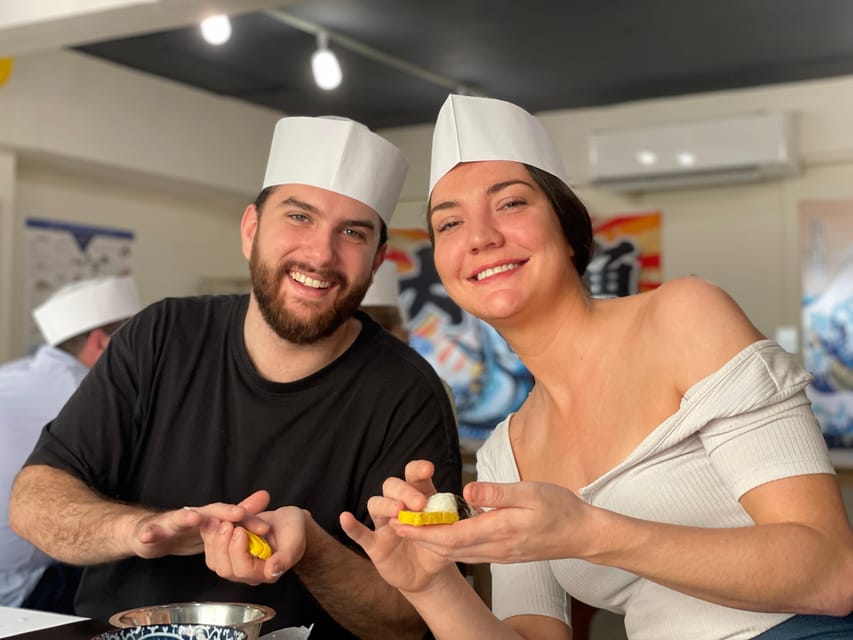
It is also a good choice for couples, families with older children, and small groups of friends. The shared activity gives you something to talk about and do together. Adult children traveling with parents can enjoy both the cultural stop at the temple and the hands-on cooking.
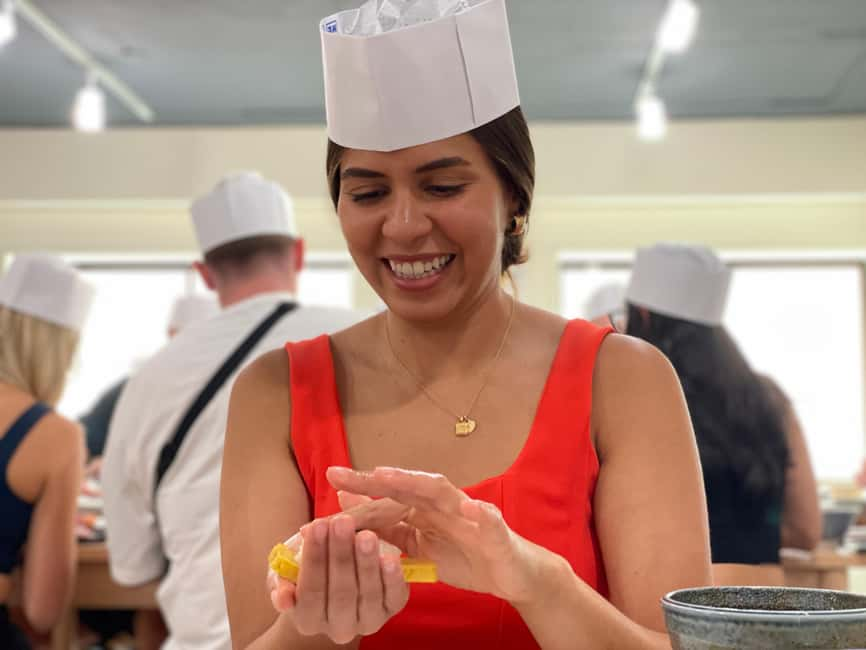
You do not need to be a skilled cook. In fact, the class seems particularly useful if you are nervous about sushi making. The instructors provide tips and encouragement, and the goal is to learn the process, not to produce restaurant-perfect pieces.
This is less suitable if you want a quiet, formal meal or a purely technical knife-skills course. The market can be active and crowded, and the class is designed as an accessible introduction. It gives you context and practice, rather than professional chef training.
A few practical booking tips
Book a day when the fish wholesaler market is open. Wednesdays and Sundays are listed as closure days, along with other market holidays. That point can make a major difference to what you see.
Use the temple’s main gate as your meeting point, not the rear side shown by Google Maps. I would arrive early, since the tour cannot wait or add time for late arrivals.
Tell the provider about allergies before the deadline. Do not assume that a preference can be handled at the classroom door. The toppings are fixed on the day, and several common dietary patterns are not supported.
The tour allows free cancellation up to 24 hours before departure, and you can reserve while paying later. That is useful if your Tokyo schedule is still changing, but it does not protect you from a same-day cancellation or late arrival.
Should you book this Tsukiji sushi tour?
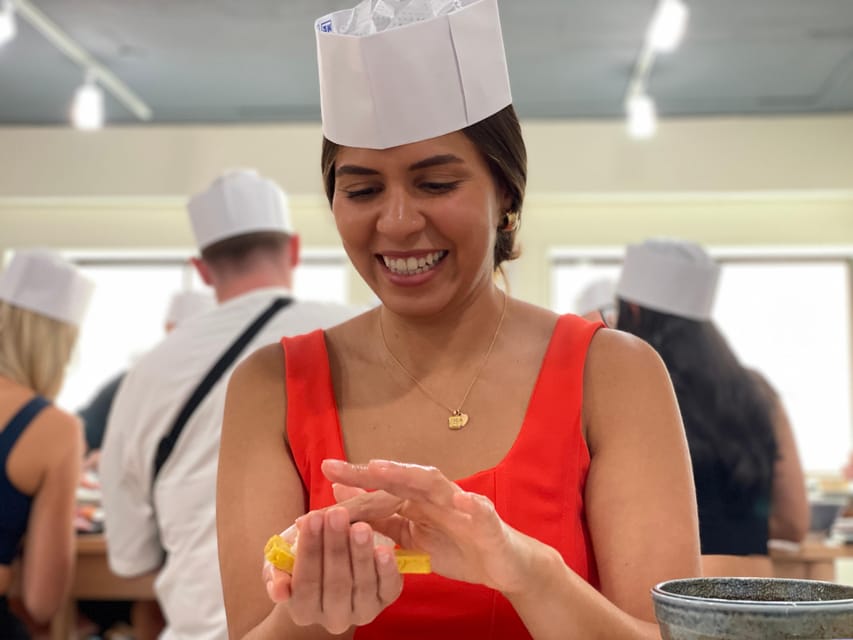
Book it if you want more than a sushi lunch. The combination of Tsukiji, temple context, market tastings, and a professional-led class gives you a fuller picture of Japanese food than either a stand-alone market walk or a basic cooking lesson.
I would give this tour extra weight if you value a small group, direct help from instructors, and a guide who can point out foods and vendors you might miss. The experience has earned a 4.6 rating from 49 ratings, with especially strong praise for the guides, the market explanations, the fresh fish, and the chef-led lesson.
Skip it if you are vegetarian, vegan, halal, gluten-free, unable to use stairs, or uncomfortable with a fixed seafood-centered menu. Also skip it if your schedule falls on a market-closure day and your main goal is the fish wholesaler section.
For everyone else, $101 is a fair price for four hours of food, culture, instruction, and lunch in a group capped at eight. Bring comfortable shoes, arrive at the front of Tsukiji Honganji Temple, and come ready to make slightly imperfect sushi. That is part of the charm.
FAQ
Where does the tour meet?
Meet at the main gate of Tsukiji Honganji Temple, at the front of the temple. Google Maps may take you to the back, so use the front entrance instead.
How long does the experience last?
The tour lasts four hours. Starting times vary, so check availability for your chosen date.
Is the tour conducted in English?
Yes. The tour includes a live English-speaking guide.
How large is the group?
The group is limited to eight participants.
Is lunch included?
Yes. Lunch consists of the sushi you make during the workshop.
What should I bring?
Bring comfortable shoes because the tour includes walking and the classroom is on the third floor.
Can vegetarians, vegans, or people with halal or gluten-free diets join?
The activity does not accommodate vegetarian, vegan, halal, or gluten-free requests. Allergy-related requests may be considered, but accommodation is not guaranteed.
What happens if I arrive late or cancel on the day?
The tour cannot be extended for late arrivals, and same-day late arrivals or cancellations do not receive a refund. Cancellations made up to 24 hours in advance qualify for a full refund.
More Shopping Tours in Japan
- Tokyo: Tsukiji Fish Market Food and Culture Walking Tour
★ 4.7 · 757 reviews - Tsukiji Fish Market: Street Food & Culture Walking Tour
★ 5.0 · 669 reviews - Tsukiji Fish Market Small-Group Food Walking Tour
★ 5.0 · 621 reviews - Kuromon Market Food Walking Tour in Osaka (6 stops, 6 tastes)
★ 5.0 · 550 reviews
More Markets in Japan
- Tokyo: Tsukiji Fish Market Food and Walking tour
★ 5.0 · 1,724 reviews - Tokyo: Tsukiji Fish Market Guided Walking Tour
★ 4.9 · 1,397 reviews - Nishiki Market Brunch Walking Tour (7 Tastings + Brunch)
★ 5.0 · 1,355 reviews - Tsukiji Fish Market Guided Tour and Sushi Making with Pro Chef
★ 5.0 · 775 reviews
Just added around Japan
- Private Memorable Tokyo Tour with English Speaking Driver★ 5.0 · 30 reviews
- Private Tokyo Custom Full-Day Tour by Chartered Vehicle★ 5.0 · 16 reviews
- Private Sightseeing to Mt Fuji and Hakone with English Driver★ 5.0 · 51 reviews
- Tokyo Photography Masterclass – Private Photography Lesson★ 5.0 · 25 reviews
- Private Mt. Fuji Day Trip from Tokyo with English-Speaking Driver★ 5.0 · 33 reviews
- 4 Day Tour – Mount. Fuji, Tokyo, Hakone, Kamakura and Yokohama★ 5.0 · 19 reviews
- Private Unforgettable Mt Fuji Tour with English Speaking Driver★ 5.0 · 142 reviews
- Private Tokyo Food Tour – A Journey Through Time Through Food★ 5.0 · 36 reviews
Food Market Tours, compared.
Shinjuku Food Tour (13 Dishes at 4 Local Eateries)
Read our review →
Tokyo Tsukiji Fish Market Food and Culture Walking Tour
Read our review →
Shinsekai Food Tour with 13-15 Dishes at 5 Eateries
Read our review →
Osaka Food Tour: 13 Dishes at 5 Local Eateries
Read our review →
Shinjuku Food Tour (15 Dishes and 4 Eateries)
Read our review →
Best of Shinjuku: Izakaya Food Tour (4 Stops, 14+ Tastings)
Read our review →
Hungry Osaka Street Food Tour:15 Tastings & 3 Drinks with a Local
Read our review →
Browse the lists this tour appears in