
REVIEW · SUMO EXPERIENCES
Tokyo: Sumo Morning Practice -Stable Visit Tour with a Guide
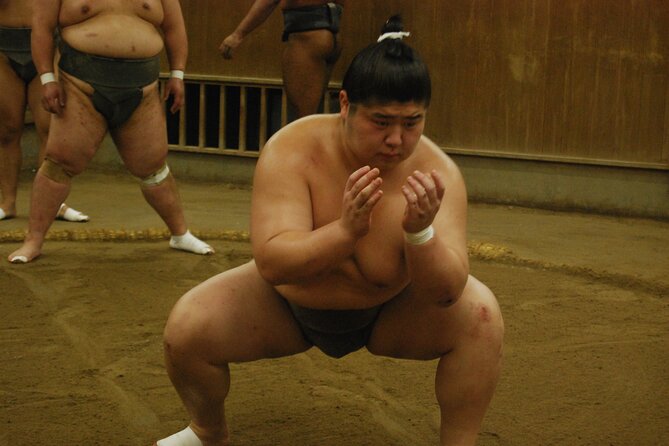
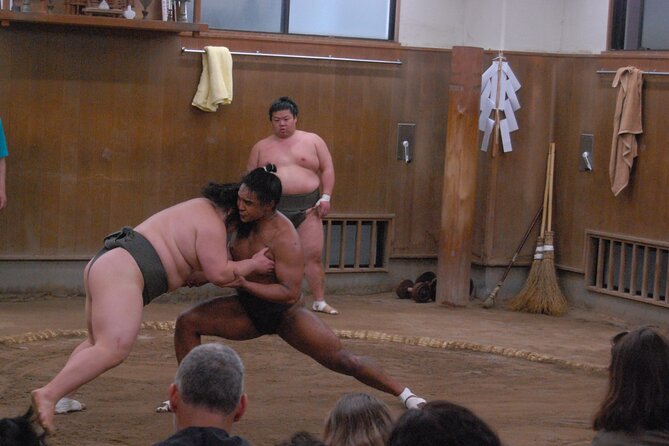
The most striking part of this Tokyo sumo tour is the distance. You are not watching from the raised seats of the Kokugikan. You are close enough to see a wrestler’s breathing, facial expression, and the force of each collision during a real morning practice. I like the small group of up to 10 people, and I like the chance to ask questions and take photos with the wrestlers afterward.
The main thing to consider is the strict etiquette. You must stay quiet during practice, cannot take video or use flash photography, and cannot bring food inside. The coach’s voice can sound harsh, too, though the tour explains that this forceful training style rests on trust between coach and wrestlers.
In This Review
- Key details before you book
- Why morning practice feels different from tournament sumo
- Entering the Sumida stable at 8:30 am
- What you see during the practice session
- The value of seeing sumo before the tournament
- Photos and questions after practice
- Etiquette that protects the experience
- Is $82 a fair price?
- Who should book this morning visit?
- Booking, cancellation, and practical planning
- My take: book it for access, not spectacle
- FAQ
- Where does the sumo practice tour meet?
- What time does the tour start?
- How long does the experience last?
- How many people can join?
- Is transportation included?
- Can I take photographs inside the sumo stable?
- Can I record video during practice?
- Can I bring food into the stable?
- Can I ask the wrestlers questions?
- Is a guide included?
- What happens if I need to cancel?
Key details before you book
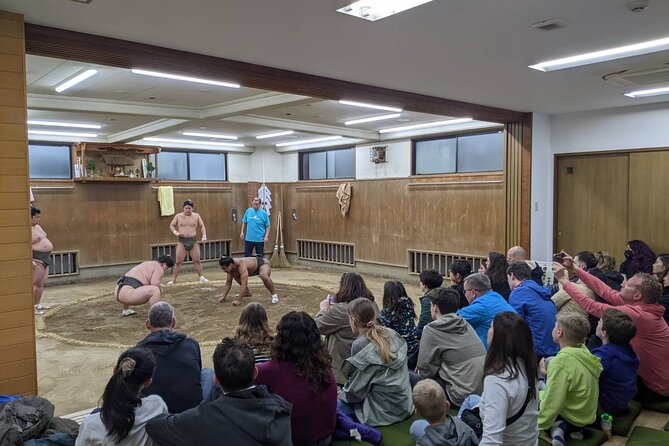
- Watch a working stable, not a staged show: You see the daily practice that keeps sumo going between official tournaments.
- Get unusually close to the action: The setting lets you notice breathing, expressions, impact, and the sounds of bodies colliding.
- Meet at 8:30 am in Sumida: The early start is part of the experience, so plan your route carefully.
- Ask questions after practice: A question-and-answer period gives you a better grasp of the sport and its customs.
- Bring a lidded drink only: Snacks, bread, rice balls, and other food are not allowed during morning practice.
- Budget $82 for about two hours: The price pays for access to a rare working environment, a guide, and a small group rather than a long sightseeing route.
Why morning practice feels different from tournament sumo
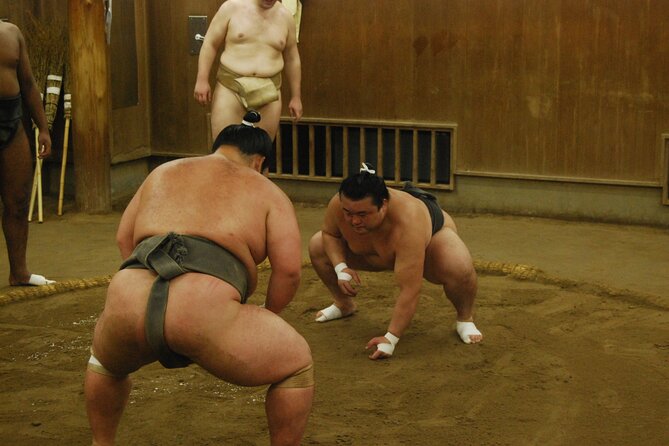
Most visitors first meet sumo at a tournament, where the ritual is polished and the audience fills the Kokugikan. This visit takes you behind that public performance and into the repetitive work that makes the sport possible.
Sumo wrestlers and their apprentices practice every morning. You watch the sport in its working form: bodies preparing, repeating movements, responding to instruction, and building strength. There is no promise of a theatrical performance, and that is exactly the point.
At close range, details carry the experience. You can see a wrestler’s breathing and facial expressions. You can hear the heavy contact when bodies collide. You can also hear the coach’s voice, which may sound surprisingly strong and severe if you have never seen a practice session before.
I find this useful for understanding sumo as a discipline rather than simply a contest. The tournament is the public result. This morning session shows the daily effort behind it.
The stable is identified as Ikazuchi Sumo Stable. You are entering a working place where the wrestlers and apprentices need concentration. The request to avoid private conversation is not a minor courtesy. It protects the focus of the people training in front of you.
More Sumo Experiences in Tokyo
- Tokyo: Sumo Show and Dining Experience
★ 4.8 · 2,742 reviews - the SUMO show
★ 5.0 · 1,960 reviews - Tokyo Shinjuku Sumo Show & Experience with Photo
★ 5.0 · 1,750 reviews
Entering the Sumida stable at 8:30 am
Your meeting point is listed at Water section1-chōme-1-1, Oshiage, Sumida City, Tokyo 131-0045. The tour begins at 8:30 am and returns to the same meeting point at the end.
The location is near public transportation, but the supplied details do not name a specific station or provide a walking route. I would check the meeting point carefully before leaving your hotel and allow extra time for Tokyo’s large stations and busy morning transfers. An early arrival also gives you a calmer start before entering the stable.
The group is limited to a maximum of 10 people. That matters here. A smaller group is less disruptive in a quiet training room, and you have a better chance of seeing the action without standing behind a large crowd. It also makes the guide’s explanations and the later questions easier to follow.
The activity is described as approximately two hours, while the stable visit itself is listed as about one hour and 30 minutes in the schedule, with roughly one hour specifically devoted to watching practice. Treat the timing as an approximate morning experience rather than a precise two-hour performance.
What you see during the practice session
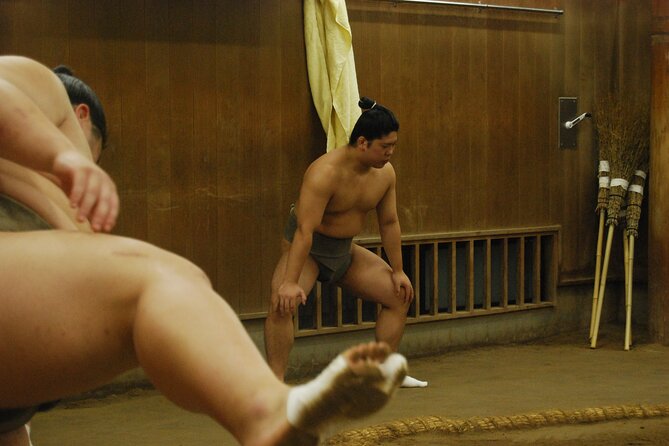
The main part of the tour is watching morning practice at a strong sumo stable. The language used for the session points to a serious training environment, not a demonstration arranged for sightseeing.
You may notice how little needs to be added to create drama. The sounds of bodies meeting, the coach’s commands, and the facial expressions of the wrestlers do the work. From close range, sumo can feel more physical than it does from a tournament seat.
The guide helps you understand what you are seeing. A special brochure is included, and it is designed to help you learn more about sumo during the visit. That is helpful if you know the sport mainly from television or have trouble telling one practice sequence from another.
You should not expect a running conversation while the wrestlers train. The instructions specifically ask you to refrain from private conversation during the tour so the rikishi and apprentices can maintain concentration. This may feel restrictive if you are used to casual sightseeing, but the quiet is part of respecting the setting.
The coach’s voice can sound harsh. I would not read that tone as a sign that the session is unsafe or staged for effect. The explanation given for it is that the coach has built trust with the students and rikishi, and that trust helps keep the stable active. You are seeing a demanding training culture, not a soft-edged museum display.
The value of seeing sumo before the tournament
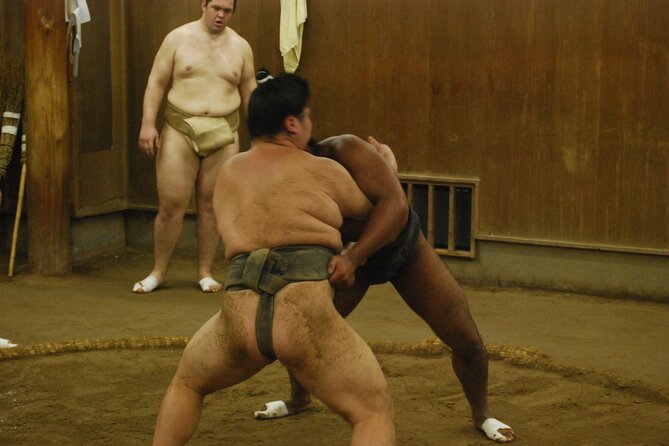
A tournament ticket gives you the excitement of official competition. This visit gives you a closer look at preparation, and the two experiences serve different purposes.
At a tournament, you see the match, the ceremony, the crowd, and the formal setting. At a stable, you see repetition and concentration. You notice the effort in the bodies and the people around them. For someone already planning to attend a tournament, this tour adds useful context.
It also helps if your time in Tokyo does not line up with an official tournament. The experience is available as a morning visit rather than being tied to tournament dates, though the activity can still require a minimum number of participants to operate.
I especially like this option for first-time sumo fans. You do not need to know every rule before you arrive. The brochure and guide give you a starting point, while the close setting makes the basic physical reality clear.
The experience may be less suitable if you want a highly interactive activity from the beginning. Most of the practice requires quiet observation. The questions and photographs come after the training, not throughout it.
Same city, a completely different kind of day:
- Mt Fuji and Hakone 1-Day Bus Tour Return by Bullet Train
★ 5.0 · 26,383 reviews - 1-Day Tokyo Bus Tour
★ 5.0 · 14,250 reviews - Tokyo: TOKYO SKYTREE® Admission ticket
★ 4.5 · 11,192 reviews - Tokyo: teamLab Planets TOKYO Digital Art Museum Entry Ticket
★ 4.6 · 9,779 reviews
Photos and questions after practice
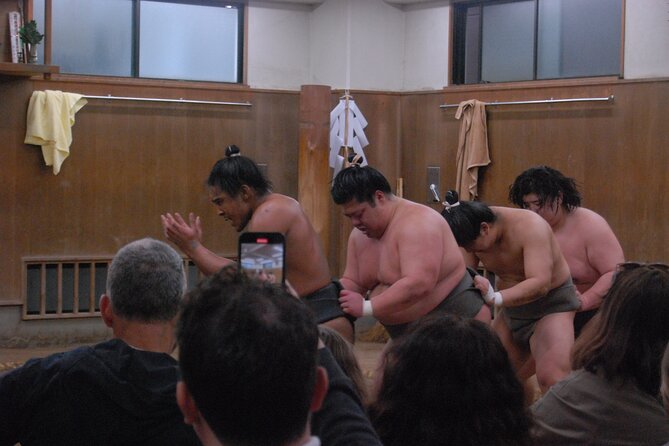
After watching practice, you can take photographs with the sumo wrestlers and ask them questions. This is a valuable change of pace. The first part asks you to remain still and quiet, while the end gives you a chance to connect more directly with the people you have been watching.
Photography rules are firm. Video is prohibited inside the stable, and flash photography is also prohibited. Still photographs without flash are allowed. You should set your camera or phone before entering so you are not fumbling with settings during practice.
The post-practice photo opportunity is one reason the tour works well for families. A published family visit describes children enjoying the experience, with the question-and-answer session working well at the end. That makes the tour more than a silent viewing session, while still preserving the stable’s need for focus.
Do not assume that the photo session means unlimited personal conversation. The quiet rule applies during the training, and the stable remains a working environment. Follow the guide’s instructions about when and how to approach the wrestlers.
Etiquette that protects the experience
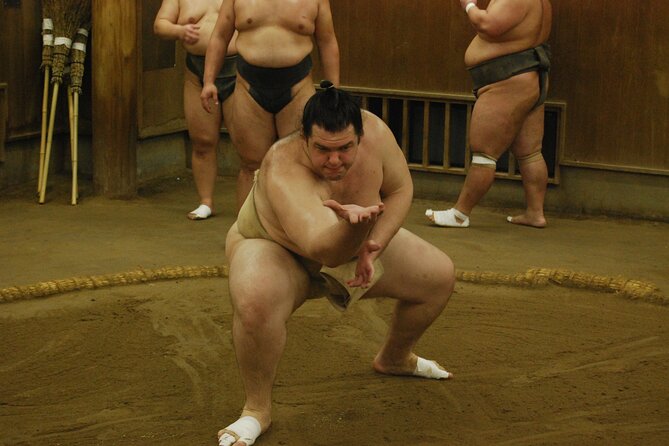
The rules are simple, but they matter more here than on an ordinary walking tour.
- Keep private conversation to a minimum during practice.
- Do not record video.
- Do not use flash photography.
- Bring a drink only if it has a lid.
- Leave snacks, bread, rice balls, and other food outside.
- Follow the guide’s directions about photos and questions.
The food restriction is easy to overlook. You may be heading out early and want breakfast, but food is not allowed during the morning practice. Eat before the tour or wait until it ends. A lidded drink is permitted, so bring one if you need water.
You should also prepare children before arrival. The activity can suit families, but children need to understand that the first section is a quiet observation period. A child who can watch attentively and save questions for later will get much more from the visit.
A tip for the rikishi is not included in the price. If you feel moved to support them after practice, you may leave a tip. This is optional, but it is worth carrying some cash if you want to offer one.
Is $82 a fair price?
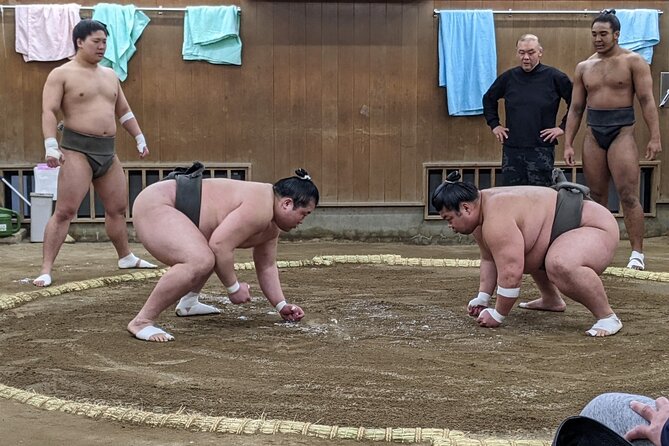
At $82, this is not the cheapest way to spend a morning in Tokyo. The tour lasts about two hours, and the stable practice itself takes only part of that time. You are not paying for a full-day schedule packed with several sights.
You are paying for access to a place that most people cannot simply enter on their own. Sumo stables are working environments, and a guide helps you arrive, understand the rules, and watch without causing problems. The group cap of 10 also gives the price more weight than a large bus excursion would have.
The special brochure adds basic context, while the question period and photos provide a clear finish. For me, the value is strongest if you have a genuine interest in Japanese culture, sports, training, or everyday traditions that take place away from the main sightseeing route.
The value is weaker if you mainly want to see a formal sumo match. In that case, an official tournament offers a different kind of excitement. This visit is best understood as a close observation of practice, not a substitute for tournament day.
The price also makes more sense for visitors who value access over quantity. You could spend $82 on several Tokyo attractions, but few would put you this close to active sumo training.
Who should book this morning visit?
I would recommend it to several types of visitors:
- Families with children who can follow quiet-setting rules.
- First-time sumo fans who want an introduction beyond television.
- Visitors interested in Japanese customs and disciplined daily practice.
- People who prefer small-group activities to large tours.
- Anyone who wants a closer look at sumo than a stadium seat allows.
I would hesitate to recommend it to someone who dislikes early starts, strict rules, or quiet observation. The 8:30 am meeting time is fixed, and the central practice period is not designed for casual chatting.
It may also disappoint anyone expecting a guaranteed wrestler interview or a long personal meeting. You can ask questions and take photos after practice, but the supplied details do not promise a lengthy discussion with each wrestler.
The activity is suitable for most participants, according to the booking information. Still, you should judge your own comfort with sitting or standing quietly in a concentrated training environment, since the experience depends on respectful behavior.
Booking, cancellation, and practical planning
Confirmation is provided when you book, and the activity accepts mobile tickets. The tour operates near public transportation, with the start and end at the same Sumida meeting point.
Free cancellation is available if you cancel at least 24 hours before the local start time. A cancellation made within 24 hours is not refunded, and changes within that period are not accepted. The tour also requires a minimum number of participants. If that minimum is not reached and the activity is canceled, you are offered another date or experience, or a full refund.
Because the meeting time is early, I would save the address in your phone and verify it the evening before. Wear clothing that lets you sit or remain still comfortably, though no special dress requirement is provided. Most important, bring a lidded drink and leave breakfast for before or after the visit.
My take: book it for access, not spectacle
Book this tour if you want to understand what happens before sumo reaches the Kokugikan. The close view of breathing, expressions, impact, and coaching gives you a side of the sport that an official match cannot provide.
The best features are the small group, the real practice setting, and the chance to ask questions and take photos after the session. The tradeoffs are the early start, quiet rules, no video, no flash, and a relatively high price for a short activity.
For a family, a curious first-time visitor, or a serious sumo fan, I think the $82 can be justified. If you want a loud, open, highly interactive show, choose something else. This is a focused morning inside a working stable, and its value comes from being allowed to watch respectfully.
FAQ
Where does the sumo practice tour meet?
The meeting point is Water section1-chōme-1-1, Oshiage, Sumida City, Tokyo 131-0045, Japan.
What time does the tour start?
The tour starts at 8:30 am.
How long does the experience last?
The experience lasts approximately two hours. The scheduled stable visit is listed as about one hour and 30 minutes, including the practice viewing and follow-up activities.
How many people can join?
The tour has a maximum group size of 10 travelers.
Is transportation included?
Transportation is not listed as included. The meeting point is near public transportation.
Can I take photographs inside the sumo stable?
Yes, photographs without flash are allowed.
Can I record video during practice?
No. Video recording is prohibited inside the sumo stable.
Can I bring food into the stable?
No. Snacks, bread, rice balls, and other food are not allowed during morning practice. Drinks with lids are permitted.
Can I ask the wrestlers questions?
Yes. After practice, you can ask questions and take photographs with the sumo wrestlers.
Is a guide included?
Yes. A tour guide and a special brochure are included.
What happens if I need to cancel?
You receive a full refund if you cancel at least 24 hours before the experience start time. Cancellations within 24 hours are not refunded, and changes within 24 hours are not accepted.
More Morning in Tokyo
- Tokyo: Sumo Morning Practice Viewing Tour
★ 4.8 · 570 reviews - Tokyo: Sumo Morning Training Visit
★ 4.4 · 370 reviews - Tokyo: Sumo Morning Practice Tour at Sumida City
★ 4.8 · 308 reviews - Tokyo Sumo Morning Practice Tour at Stable
★ 5.0 · 298 reviews
Just added around Tokyo
- Private Memorable Tokyo Tour with English Speaking Driver★ 5.0 · 30 reviews
- Private Tokyo Custom Full-Day Tour by Chartered Vehicle★ 5.0 · 16 reviews
- Private Sightseeing to Mt Fuji and Hakone with English Driver★ 5.0 · 51 reviews
- Tokyo Photography Masterclass – Private Photography Lesson★ 5.0 · 25 reviews
- Private Mt. Fuji Day Trip from Tokyo with English-Speaking Driver★ 5.0 · 33 reviews
- 4 Day Tour – Mount. Fuji, Tokyo, Hakone, Kamakura and Yokohama★ 5.0 · 19 reviews
- Private Unforgettable Mt Fuji Tour with English Speaking Driver★ 5.0 · 142 reviews
- Private Tokyo Food Tour – A Journey Through Time Through Food★ 5.0 · 36 reviews
Sumo Experiences, compared.
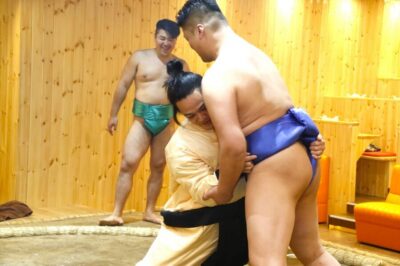
Sumo Show Experience with Chicken Hot Pot and a Photo
Read our review →
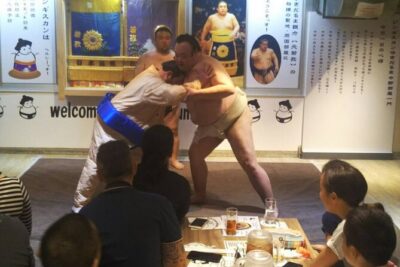
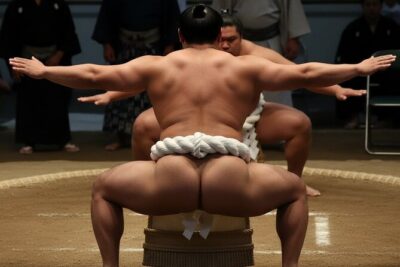
Tokyo Shinjuku Sumo Show & Experience with Photo
Read our review →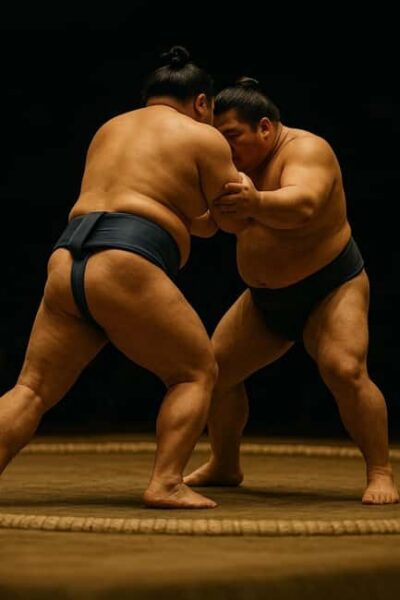
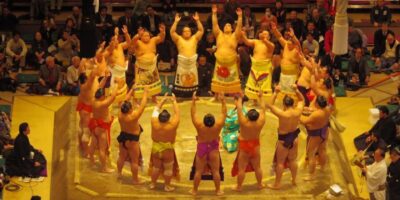
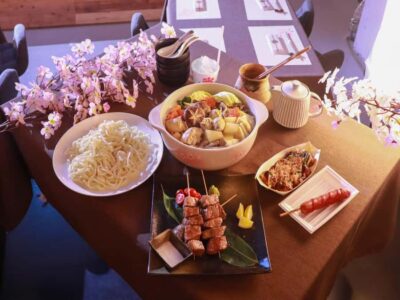
Sumo Show & Experience w/ Optional Kimono & Hot Pot
Read our review →
Authentic Sumo Experience in Tokyo: Enter the Sanctuary
Read our review →Browse the lists this tour appears in