
REVIEW · JAPANESE COOKING CLASSES
Tokyo: Night Cooking Class: 5 Home-Cooked Japanese Dishes
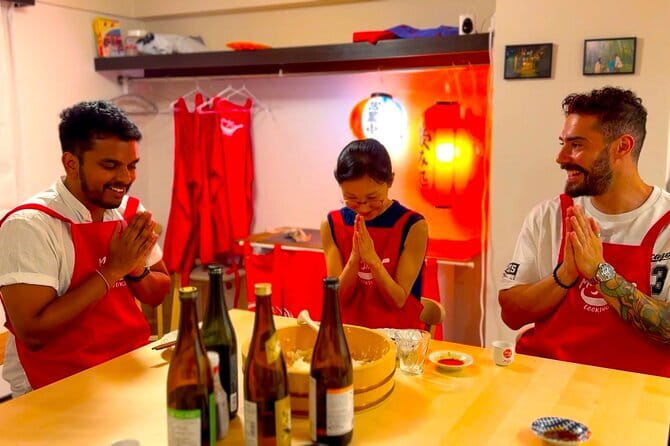
Tokyo evenings often revolve around small plates, shared drinks, and relaxed conversation. This Iriya cooking class lets you take part in that home-style custom by preparing dishes such as wagyu steak, hand-rolled sushi, tamagoyaki, and miso eggplant, then matching them with sake, beer, or soft drinks.
I like the six-person maximum, which gives you room to ask questions and work directly with the guide. I also like the practical recipes, since the class uses ingredients you can find outside Japan and sends you home with instructions. The main consideration is age and diet: knife and hot-stove work is limited to participants 12 and over, and the class is not suitable for vegan or gluten-free diets.
In This Review
- Key points at a glance
- Why this Iriya cooking class feels different
- Three hours of cooking, tasting, and conversation
- The four named dishes, plus the five-dish promise
- Sushi hand rolls: simple food with room for creativity
- Wagyu or tofu steak: a flexible main plate
- Tamagoyaki and the value of learning technique
- Miso eggplant and Japanese flavor balance
- Drinks are part of the lesson, not an afterthought
- What the guides add to the experience
- The $103 price: fair for a small evening class
- Who should book this class
- Dietary limits and access details to consider
- Cancellation and meeting advice
- Should you book the Tokyo night cooking class?
- FAQ
- How long does the cooking class last?
- Where does the class meet?
- What language is the class conducted in?
- How many people can join the class?
- What dishes are included?
- Are drinks included?
- Can children join?
- Can vegetarians participate?
- Is the class suitable for vegan or gluten-free diets?
- Are hotel pickup and drop-off included?
- Can I cancel for a refund?
- Is the class wheelchair or stroller accessible?
Key points at a glance
- A small Iriya class for up to six people, with an English-speaking local guide.
- Japanese home-drinking culture is the theme, with small dishes made for sake, beer, or soft drinks.
- Hands-on cooking includes hand rolls, wagyu or tofu steak, rolled egg, and miso eggplant.
- Three cans of alcoholic or soft drinks are included, with alcohol served only to people aged 20 and over.
- Recipes, ingredients, equipment, and tour photos are provided, so you can continue the meal at home.
- Vegetarians can be accommodated, but vegan, gluten-free, and some allergy needs cannot be guaranteed.
Why this Iriya cooking class feels different
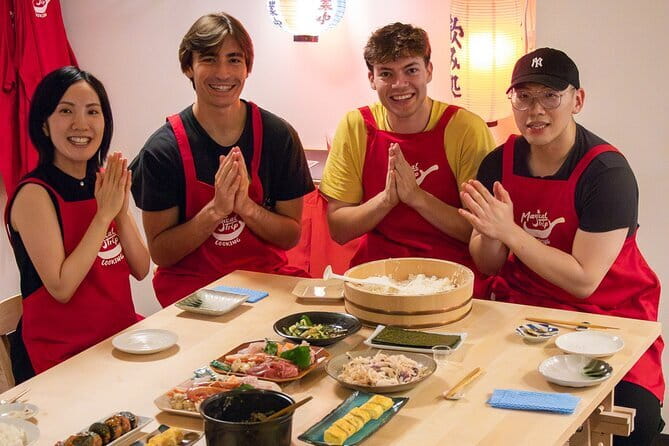
Many Japanese cooking classes focus on sushi, ramen, or a single famous dish. This one takes a broader look at izakaya food, the kind of small, savory cooking that works well during a Japanese evening with drinks.
That makes the class useful for more than learning recipes. You get a sense of how Japanese home drinking works: several modest plates arrive over time, each with a different flavor and texture, and the drink is part of the meal rather than an afterthought.
The setting is in Iriya, a neighborhood served by the Tokyo Metro station. The meeting point is in front of the FamilyMart beside Gindako takoyaki shop and Doutor Coffee at Iriya Station Exit 2. Take care here, because there are two FamilyMart shops at Iriya Station. The Gindako and Doutor landmarks are the details that matter.
This is not a sightseeing tour with a cooking demonstration added on. The food preparation is the main event, and the small group size should make it easier to take part rather than simply watch.
More Japanese Cooking Classes in Tokyo
- Sushi Making Tokyo Roll and Authentic Japanese Sushi Class
★ 5.0 · 3,971 reviews - Tokyo: Roll and Authentic Sushi Making Class in Asakusa
★ 4.9 · 1,957 reviews - Tokyo: Sushi Making Class in a Happi Coat near a Famous Spot
★ 4.9 · 1,377 reviews
Three hours of cooking, tasting, and conversation
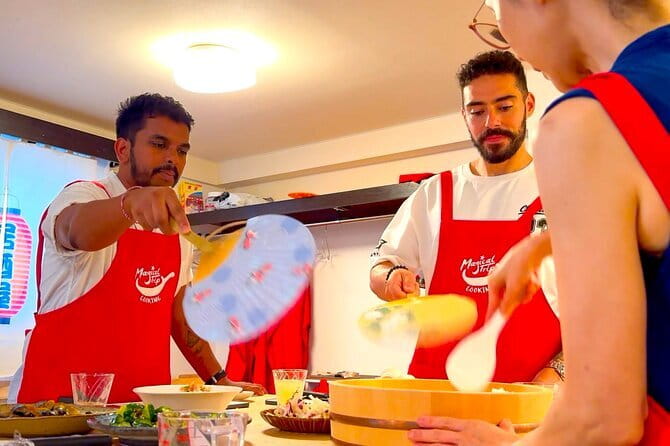
The class lasts about three hours and takes place in the evening. Exact starting times depend on availability, so check the schedule before booking.
You can expect a social format. You prepare food, sit down to eat it, and use the included drinks as part of the lesson. The class is built around a nomikai, or drinking party, so conversation and shared plates are important parts of the night.
The guide leads the session in English. Names associated with the class include Alice, Masae, and Fuji. Alice is described as bringing a lot of fun to the evening, while Masae has taken some participants through a local supermarket before the cooking began. That supermarket visit is not listed as a guaranteed part of every booking, so treat it as a possible extra rather than a promised stop.
The group limit of six is one of the strongest practical features. Cooking in a large class can mean waiting for a turn with the knife, pan, or work surface. Here, you have a better chance to ask about ingredients, cooking methods, and drink pairings as you work.
The four named dishes, plus the five-dish promise
The experience is marketed as a class in five home-cooked Japanese dishes. The included cooking description specifically names four preparations:
- Sushi hand roll
- Wagyu or tofu steak
- Japanese-style rolled egg
- Grilled eggplant with miso sauce
The wider description also refers to items such as savory skewers, tempura, and pickles. Because the supplied details do not clearly identify a fifth fixed dish, I would confirm the exact menu before booking if that point matters to you.
That small uncertainty does not take away from the main appeal. The named dishes cover a useful range of Japanese cooking skills, from shaping hand rolls to handling a pan for tamagoyaki and building a sauce for eggplant.
You should also note that wagyu steak and tofu steak are alternatives, not necessarily two separate dishes. Vegetarians can be accommodated, with ingredients and preparation adjusted for the meal.
Sushi hand rolls: simple food with room for creativity
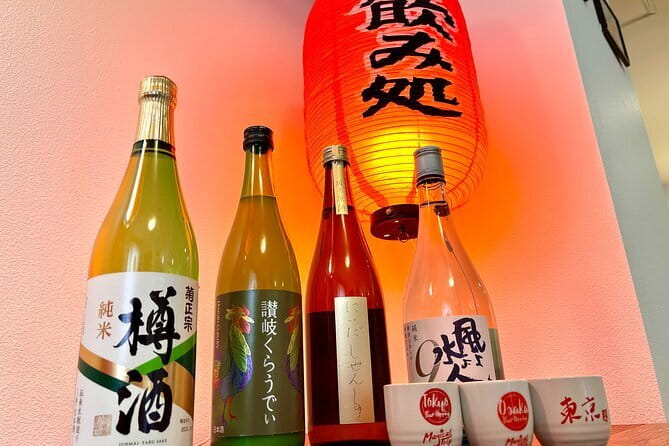
Hand-rolled sushi is a good choice for a group class because it is practical and social. Instead of focusing on the precise knife work needed for elaborate sushi, you learn how to assemble and eat a casual roll.
This fits the home-drinking theme well. Hand rolls are easy to share, and each person can build a bite to suit their taste. You will also have the chance to ask how the ingredients are combined and how the dish fits with Japanese drinks.
Do not expect a formal sushi-chef certification course. The value is in learning a dish you can repeat at home without a specialist kitchen.
Same city, a completely different kind of day:
- Mt Fuji and Hakone 1-Day Bus Tour Return by Bullet Train
★ 5.0 · 26,383 reviews - 1-Day Tokyo Bus Tour
★ 5.0 · 14,250 reviews - Tokyo: TOKYO SKYTREE® Admission ticket
★ 4.5 · 11,192 reviews - Tokyo: teamLab Planets TOKYO Digital Art Museum Entry Ticket
★ 4.6 · 9,779 reviews
Wagyu or tofu steak: a flexible main plate
The steak course gives the meal a hearty center. Wagyu introduces you to a prized Japanese ingredient, while tofu keeps the dish accessible for vegetarians.
This is also where the class offers a useful lesson in adapting Japanese cooking. You are not locked into one menu designed only for meat eaters. A vegetarian can still take part in the same style of meal, with tofu used in place of wagyu.
The class does not promise a specific wagyu cut, portion, or grade, so I would not book it as a premium beef tasting. Think of the wagyu as one part of a varied home-style meal, not the whole reason to attend.
Tamagoyaki and the value of learning technique
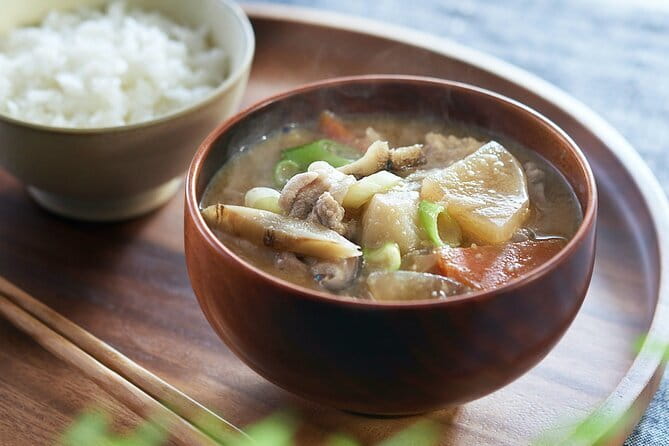
Japanese rolled omelette, or tamagoyaki, looks easy until you try to create its neat layers. It is a small dish, but it teaches control of heat, timing, and rolling technique.
This is the sort of preparation where a live guide adds real value. A recipe alone cannot always show you when the egg is ready to fold or how to keep the layers together. Working alongside an instructor gives you a better sense of the process.
The dish also fits the evening menu. Tamagoyaki is mild, slightly sweet in many versions, and easy to serve as one plate among several stronger flavors.
Miso eggplant and Japanese flavor balance
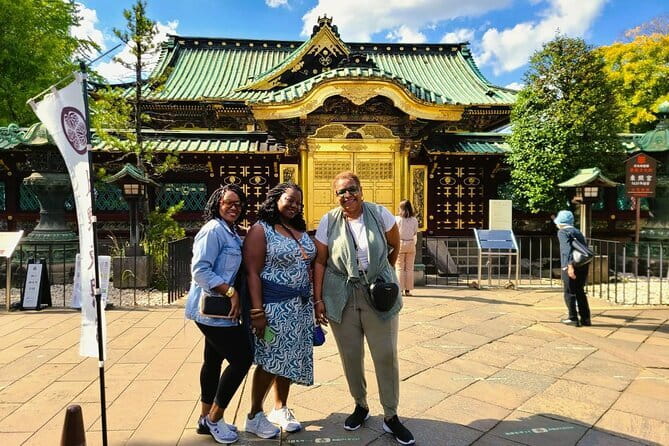
Grilled eggplant with miso sauce brings a softer texture and a savory, sweet-salty flavor to the table. It is a useful introduction to the way miso can turn a plain vegetable into a satisfying side dish.
For you, this may be one of the most repeatable recipes in the class. Eggplant is widely available, and the dish does not require expensive equipment. It also shows that Japanese home cooking is not only about raw fish, noodles, or costly beef.
The larger lesson is balance. A meal of small plates needs contrast, and the class gives you several ways to build it: grilled food, egg, sushi, vegetables, and possibly other izakaya-style items such as pickles, skewers, or tempura.
Drinks are part of the lesson, not an afterthought
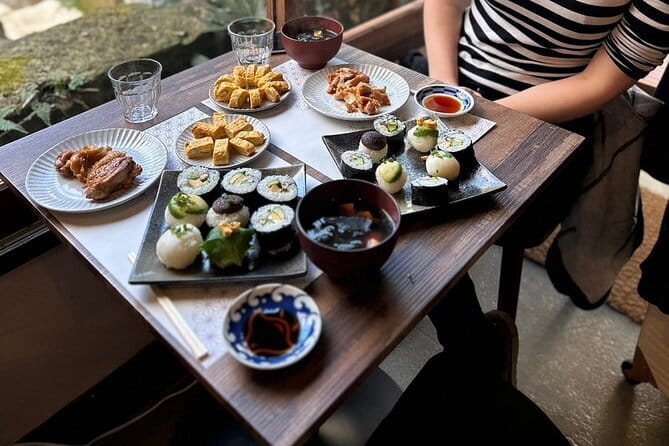
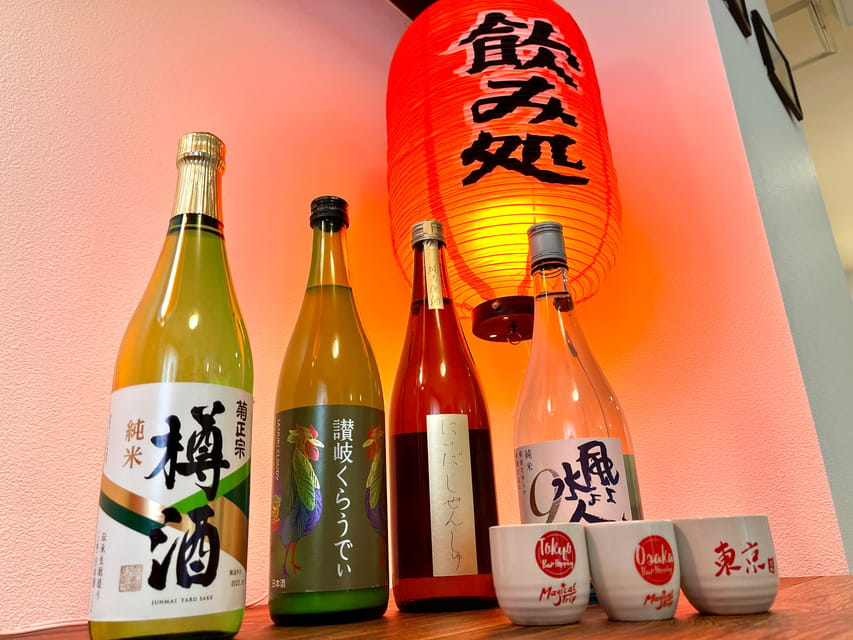
Three cans of alcoholic or soft drinks are included. The class focuses on pairing Japanese foods with drinks, so you can learn why a particular plate works better with beer, sake, or a nonalcoholic option.
People aged 20 and over may receive alcoholic drinks, in line with Japanese law. Younger participants receive soft drinks. You should bring realistic expectations: three cans provide a tasting element and help create the right evening atmosphere, but this is not an open bar.
The drink portion may be especially useful if you want to understand Japanese home parties. The idea is not to match every dish with a rare beverage. It is to see how ordinary drinks and small plates support one another during a relaxed meal.
If you do not drink alcohol, the soft-drink option still lets you take part in the food and pairing discussion.
What the guides add to the experience
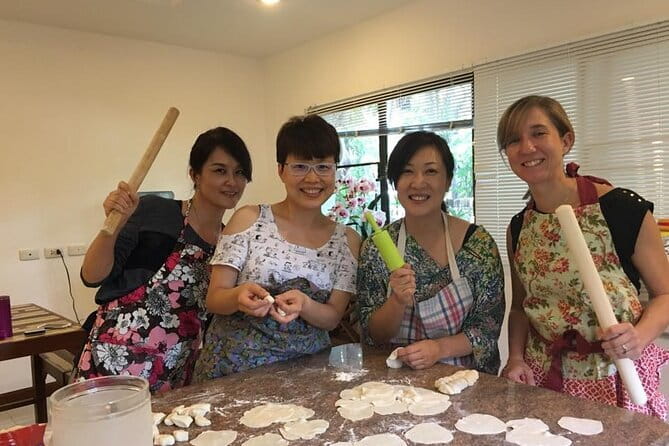
A cooking class depends heavily on the instructor. The guides connected with this experience include Alice, Masae, and Fuji, and the class is conducted in English.
Alice is praised for making the night fun while explaining the material clearly. Fuji is described as both a strong guide and a good instructor. Masae’s version of the class included a supermarket visit and plenty of discussion about Japanese cooking methods and culture.
Those details suggest that the guide’s role goes beyond handing out ingredients. You can expect explanations of technique, food customs, and the social side of Japanese cooking. Still, the specific guide and exact running order can vary, so do not book on the assumption that one named person will lead every session.
The local guide is included in the price, as are all ingredients and cooking equipment. You do not need to bring cooking tools.
The $103 price: fair for a small evening class
At $103 per person, this is not a bargain meal. The price makes more sense when you count the three-hour length, ingredients, equipment, three drinks, instruction, recipes, photos, and the six-person limit.
A small class is important here. You are paying for participation and personal attention, not just a seat at a demonstration. If you want to ask questions about substitutions, cooking order, or drink pairings, the price is easier to justify.
The included recipes add lasting value. You can recreate the food after your trip, using ingredients available in your own country. That makes this a better buy for someone who enjoys cooking than for someone seeking only a cheap dinner.
You should also remember that transportation to and from the class is not included. Hotel pickup and drop-off are not provided, so you make your own way to Iriya Station.
Who should book this class
I would point this experience toward several types of people:
- Couples and friends who want an evening activity with food and conversation.
- Solo visitors who like meeting a small group while learning something practical.
- Home cooks who want recipes beyond the usual sushi lesson.
- Sake and beer fans who enjoy learning about food pairings.
- Vegetarians who are comfortable with tofu and can confirm the arrangements in advance.
- Families with older children, provided they understand the age rules and cooking limits.
The class is open to ages six and up in the general activity information, but children under 12 cannot handle the knife and heat steps. Another part of the information lists the experience as not suitable for children under 12, so I would treat 12 as the practical minimum.
A kids’ playroom is available, which may help families, but it does not change the cooking restrictions. Pregnant people are also listed as unsuitable for this activity.
Dietary limits and access details to consider
Vegetarians are welcome, and the organizers can arrange ingredients and cooking steps for them. The experience is not available for vegan or gluten-free diets.
Allergies require extra care. The kitchen is not operated by MagicalTrip, and allergy-free preparation cannot be guaranteed. Substitutions may not be possible at every stage, although the organizers will try to make adjustments elsewhere. If your allergy is serious, ask for confirmation before paying.
The route includes places that are not accessible to a wheelchair or stroller. Smoking is not allowed. These points are easy to overlook, but they can affect your comfort and planning.
Cancellation and meeting advice
You can cancel up to 24 hours before the activity for a full refund, and the reserve-now-pay-later option lets you hold a place without paying immediately.
For the meeting point, go to Iriya Station Exit 2 and look for the FamilyMart beside Gindako and Doutor Coffee. Do not simply follow a map to any FamilyMart near the station, since there are two.
Arrive with enough time to identify the correct shop. A cooking class has a fixed start, and sorting out the meeting point at the last minute is a poor way to begin an evening built around food.
Should you book the Tokyo night cooking class?
I would book this if you want a hands-on, small-group evening that connects Japanese food with everyday drinking customs. The recipes are varied, the guides add cultural context, and the take-home instructions give the class value after your trip.
I would skip it if you need vegan or gluten-free food, require guaranteed allergy control, or want a polished restaurant meal with no cooking duties. Families should also read the age rules carefully.
For most food-focused visitors who can manage the dietary limits, $103 is reasonable for three hours of instruction, dinner-style tasting, drinks, recipes, and a group capped at six. Confirm the exact fifth dish and your dietary arrangements before booking, then meet at the correct FamilyMart by Gindako.
FAQ
How long does the cooking class last?
The class lasts three hours.
Where does the class meet?
Meet in front of the FamilyMart next to Gindako takoyaki shop and Doutor Coffee at Iriya Station Exit 2. There are two FamilyMart shops at Iriya Station, so use these landmarks to find the correct one.
What language is the class conducted in?
The live guide speaks English.
How many people can join the class?
The group is limited to six participants.
What dishes are included?
The named preparations are a sushi hand roll, wagyu or tofu steak, Japanese-style rolled egg, and grilled eggplant with miso sauce. The experience is described as teaching five dishes, so confirm the exact fifth item if it is important to you.
Are drinks included?
Yes. Three cans of alcoholic or soft drinks are included.
Can children join?
The general age information allows participants aged six and above. Knife and heat-related steps are limited to people aged 12 and over with parent or guardian supervision, and the activity is also listed as unsuitable for children under 12.
Can vegetarians participate?
Yes. Vegetarian participants are welcome, and ingredients and cooking steps can be arranged for them.
Is the class suitable for vegan or gluten-free diets?
No. The activity is not available for vegan or gluten-free diets.
Are hotel pickup and drop-off included?
No. You must arrange your own transportation to and from the class.
Can I cancel for a refund?
Yes. Cancellation up to 24 hours before the activity qualifies for a full refund.
Is the class wheelchair or stroller accessible?
Not fully. Some locations in the itinerary are not accessible by wheelchair or stroller.
More Workshops in Tokyo
- Tokyo Shinjuku Chopsticks Making Class
★ 5.0 · 1,763 reviews - Chopstick Making Workshop in Ginza
★ 4.8 · 1,366 reviews - Tokyo Sushi Making Class in Tsukiji with Professional Chef
★ 5.0 · 1,177 reviews - Matcha Making Class in Tokyo with Authentic Japanese Sweets Set
★ 5.0 · 744 reviews
More Cooking Classes in Tokyo
- Ramen & Gyoza Cooking Class in Tokyo with Local Supermarket Visit
★ 5.0 · 823 reviews - Tokyo: Easy Ramen Cooking Experience in Kabukicho, Shinjuku
★ 4.6 · 321 reviews - Ramen and Sushi Cooking Class with Sake Pairing Set in Tokyo
★ 5.0 · 291 reviews - Tokyo: Wagyu and 7 Japanese Dishes Cooking Class
★ 4.9 · 273 reviews
Just added around Tokyo
- Private Memorable Tokyo Tour with English Speaking Driver★ 5.0 · 30 reviews
- Private Tokyo Custom Full-Day Tour by Chartered Vehicle★ 5.0 · 16 reviews
- Private Sightseeing to Mt Fuji and Hakone with English Driver★ 5.0 · 51 reviews
- Tokyo Photography Masterclass – Private Photography Lesson★ 5.0 · 25 reviews
- Private Mt. Fuji Day Trip from Tokyo with English-Speaking Driver★ 5.0 · 33 reviews
- 4 Day Tour – Mount. Fuji, Tokyo, Hakone, Kamakura and Yokohama★ 5.0 · 19 reviews
- Private Tokyo Custom Half-Day Tour by Chartered Vehicle★ 4.5 · 13 reviews
- Private Unforgettable Mt Fuji Tour with English Speaking Driver★ 5.0 · 142 reviews
Japanese Cooking Classes, compared.

Sushi Making Tokyo Roll and Authentic Japanese Sushi Class
Read our review →
Roll and Authentic Sushi Making Class in Asakusa
Read our review →
Ramen Cooking Class at Ramen Factory in Kyoto
Read our review →
Sushi Making Class in a Happi Coat near a Famous Spot
Read our review →
Sushi Making Osaka Roll and Authentic Japanese Sushi Class
Read our review →
Tokyo Sushi Making Class in Tsukiji with Professional Chef
Read our review →
Ramen & Gyoza Cooking Class in Tokyo with Local Supermarket Visit
Read our review →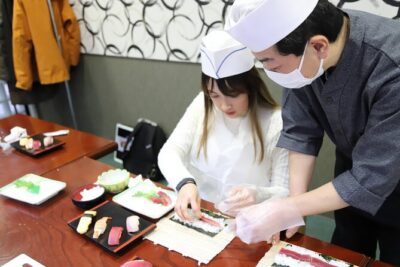
Tsukiji Fish Market Guided Tour and Sushi Making with Pro Chef
Read our review →Browse the lists this tour appears in