
REVIEW · GARDEN & PALACE TOURS
Tokyo: Imperial Palace, the history of Japan (ENGLISH GUIDE)
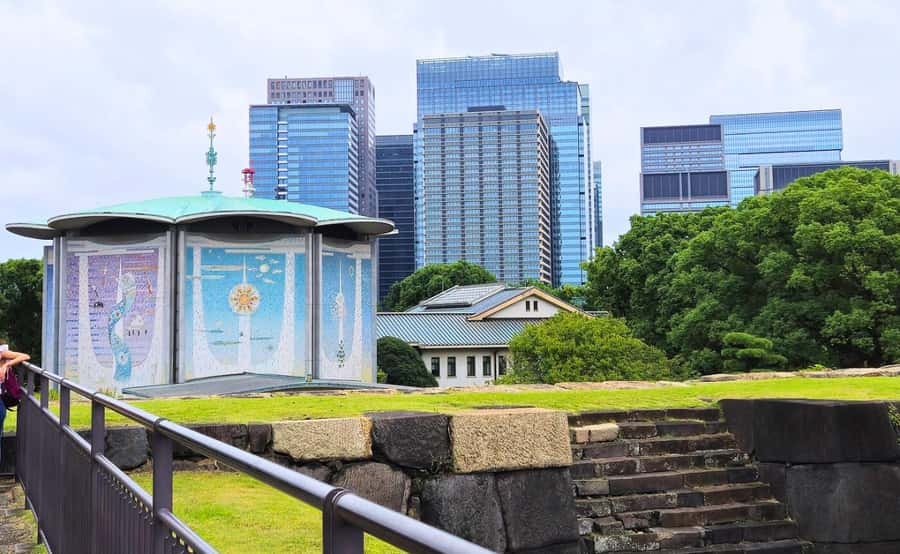
The most revealing part of this Tokyo tour is that it takes you to the former heart of Edo, the city that became modern Tokyo. Among gardens, stone walls, palace ruins, and a miniature model of the old castle, you get a clear explanation of how Japan changed over more than 350 years.
I like the historical focus and the chance to see the grounds at an easy walking pace. I also like the intimate feel reported by one small group of five, where guide Nicolas could answer questions about mythology, language, the imperial family, and Japan today.
The main thing to check before booking is the guide language. The tour title says English guide, but the detailed information lists a French guide, and the included service says French. Confirm this point before paying if you need English.
In This Review
- Key points
- Why Edo Castle explains modern Tokyo
- Meeting at Wadakuramon Fountain Park
- Passing through Otemon Gate
- Seeing the castle ruins and former barracks
- Finding the special koi
- Gardens, trees, and photo stops
- A guide-led conversation, not just a scripted walk
- What $40 gets you
- Who should book this Imperial Palace walk
- Practical details before you go
- Should you book it?
- FAQ
- Where does the Imperial Palace tour start?
- How do I reach the meeting point?
- Where does the tour finish?
- Is the inner palace included?
- Is the old main castle still standing?
- What language is the tour offered in?
- How much does the tour cost?
- What should I wear?
- What happens if I arrive late?
Key points
- Walk through Edo Castle’s former base: See the site of the old stronghold that shaped Tokyo’s history.
- Visit the eastern gardens: Enjoy ornamental planting, open palace grounds, and calm paths near the city center.
- Look for special koi: The gardens are home to a distinctive breed of koi found only here.
- Learn from a local guide: Nicolas, a Franco-Japanese guide, has led conversations about history, mythology, language, and the imperial family.
- Meet near Tokyo Station: The starting point is a five to ten minute walk from Tokyo Station or Otemachi Station.
- Remember the limits: This tour does not enter the inner palace, and the castle itself no longer survives.
Why Edo Castle explains modern Tokyo
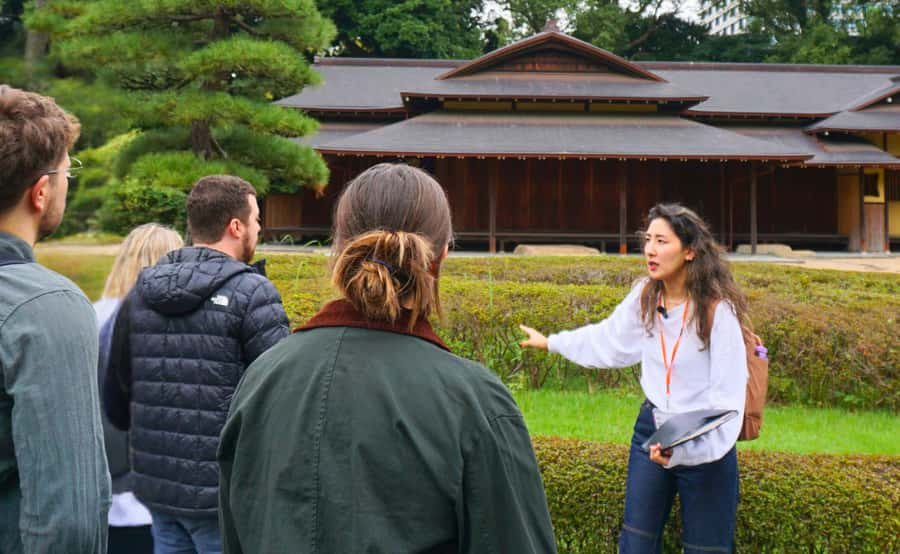
Tokyo’s Imperial Palace can seem formal and distant from the surrounding city. This walk gives you a more useful way to read it. Before it became the imperial residence, this area was the center of Edo Castle, the base of military power during the Tokugawa period.
You’ll walk over ground connected with the former Edo Castle, more than 350 years old. The castle was not simply a residence. It was the seat of the shogun, the military ruler whose government shaped Japan for centuries. That background helps explain why Tokyo became the political center of the country.
The castle itself is gone, but that absence is part of the story. Your guide explains why the main structure no longer exists, rather than asking you to admire a reconstruction and move on. You may also see a miniature structure of the former palace, which helps you picture the scale and layout of what once stood here.
I like this approach because the tour is not just a walk through pretty gardens. You are given the political story behind the stones, gates, walls, and open spaces. If you want to understand how Japan moved from feudal rule to the modern nation you see today, this setting makes the lesson concrete.
More Garden & Palace Tours in Tokyo
- Tokyo: Imperial Palace and Shogun Historical Walking Tour
★ 5.0 · 2,251 reviews - Tokyo Castle & Imperial PalaceーShogun Walking Tour
★ 4.7 · 1,068 reviews - Tokyo: Imperial Palace Japanese History Walking Tour
★ 4.9 · 987 reviews
Meeting at Wadakuramon Fountain Park
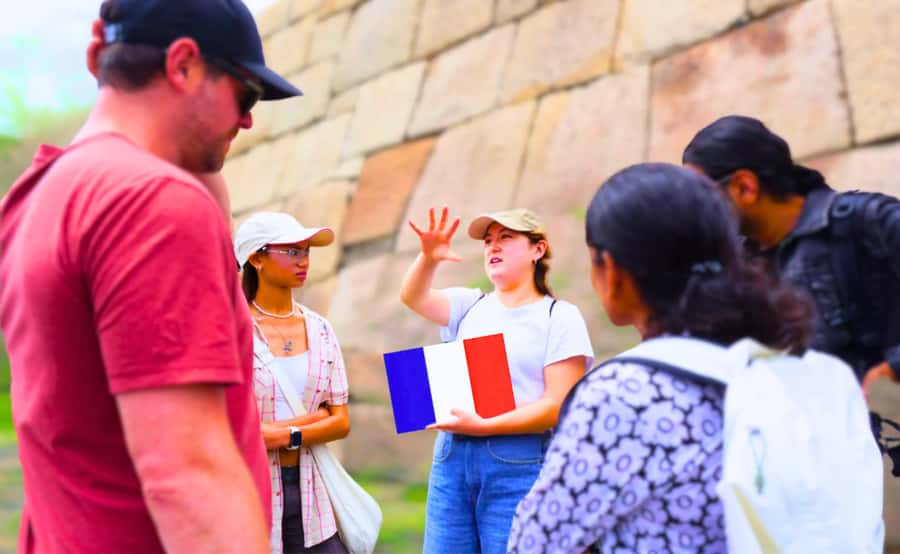
You begin at Starbucks near Wadakuramon Fountain Park. The guide waits by the fountain with a sign marked SUNRISE ADVENTURE. This is a practical meeting point, but Tokyo Station and Otemachi Station can both feel large and confusing, so give yourself enough time to get oriented.
From either station, the walk to the park takes about five to ten minutes. I would not cut this close. The group leaves if you are more than ten minutes late, and the tour may continue without you.
The route finishes back at the same meeting point. That makes the tour easy to fit before or after other plans around Tokyo Station, Marunouchi, or Otemachi. It also means you do not need to arrange a separate pickup or find your way to a distant neighborhood.
Wear clothing suited to the forecast. The walk goes ahead in good weather or bad, and no indoor palace visit is offered as a backup. Comfortable shoes and protection from sun or rain are sensible choices, though the activity information does not give a precise walking distance or duration.
Passing through Otemon Gate
The first major step is reaching Otemon, the large main gate of the Imperial Palace’s eastern grounds. Passing through this gate gives the tour a strong sense of arrival. You leave the busy station district behind and enter a place shaped by military planning, court life, and imperial history.
Your guide leads the group rather than leaving you to decode the site alone. That matters here because large stone foundations and garden paths can look attractive without making their purpose clear. The historical explanation turns them into clues.
You should expect an outdoor walking tour, not a staged palace performance. The experience is built around observation and conversation. One small group had five people, which allowed plenty of questions and made the visit feel friendly. Group size can change, so treat that as a useful example rather than a promise.
Seeing the castle ruins and former barracks
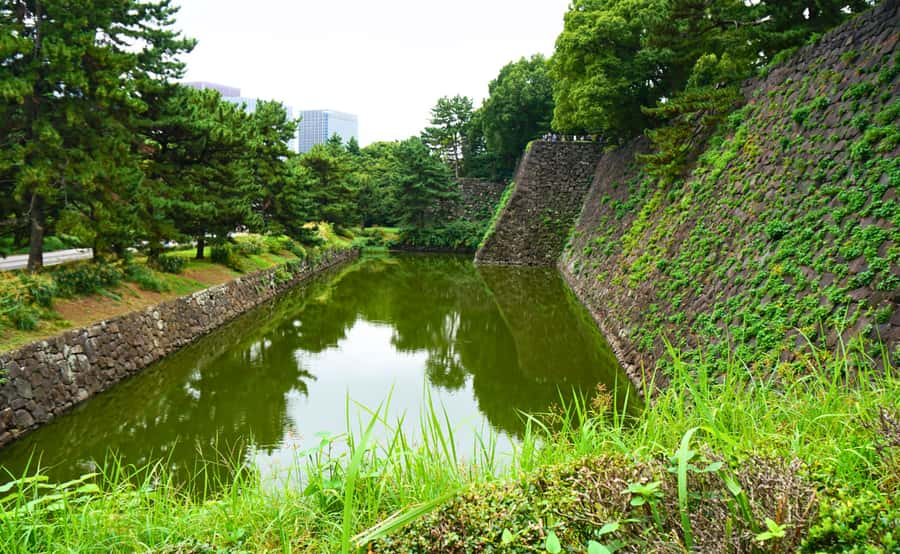
The old castle no longer exists in full, but the grounds preserve traces of its former role. You’ll explore palace ruins and hear about the old soldiers’ barracks. These details bring the military side of Edo Castle into view.
This is where a guide adds real value. Without context, a remaining wall or foundation is easy to pass with a quick photo. With an explanation, you can begin to understand how the site functioned and why the castle mattered to the development of Tokyo.
The tour also includes a look at a miniature version of the former palace. It cannot replace the original building, but it gives you a visual reference that ruins alone cannot provide. If you enjoy history through maps, models, and physical remains, this combination should work well.
There is a limit here. You will not see the inner palace. The activity covers the eastern gardens and former castle grounds, not the private or restricted areas of the Imperial Palace. Book it for historical setting and outdoor scenery, not for access to royal rooms.
Same city, a completely different kind of day:
- Mt Fuji and Hakone 1-Day Bus Tour Return by Bullet Train
★ 5.0 · 26,383 reviews - 1-Day Tokyo Bus Tour
★ 5.0 · 14,250 reviews - Tokyo: TOKYO SKYTREE® Admission ticket
★ 4.5 · 11,192 reviews - Tokyo: teamLab Planets TOKYO Digital Art Museum Entry Ticket
★ 4.6 · 9,779 reviews
Finding the special koi
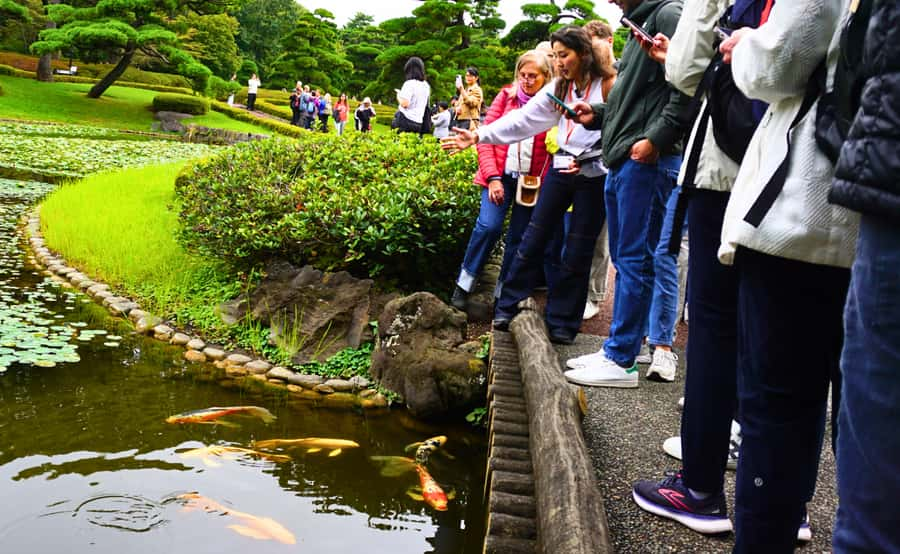
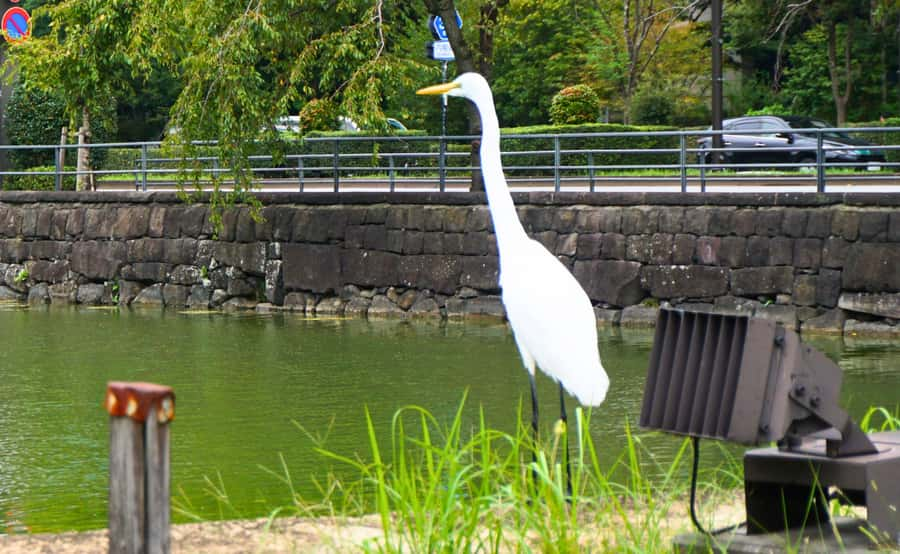
One of the more unusual stops is the koi. The grounds contain a breed that can only be found here, giving the tour a small detail you would be unlikely to seek out on your own.
Koi are common sights in Japanese gardens, so this detail adds something more specific than a standard pond stop. Your guide can place the fish within the story of the grounds, alongside the gardens, trees, and palace remains.
Do not expect the koi to be the main event. The tour is primarily about Japanese history, and the fish are one memorable part of the walk. Still, this is the sort of detail that makes a visit easier to remember, especially if you enjoy gardens, photography, or the small symbols found in historic places.
Gardens, trees, and photo stops
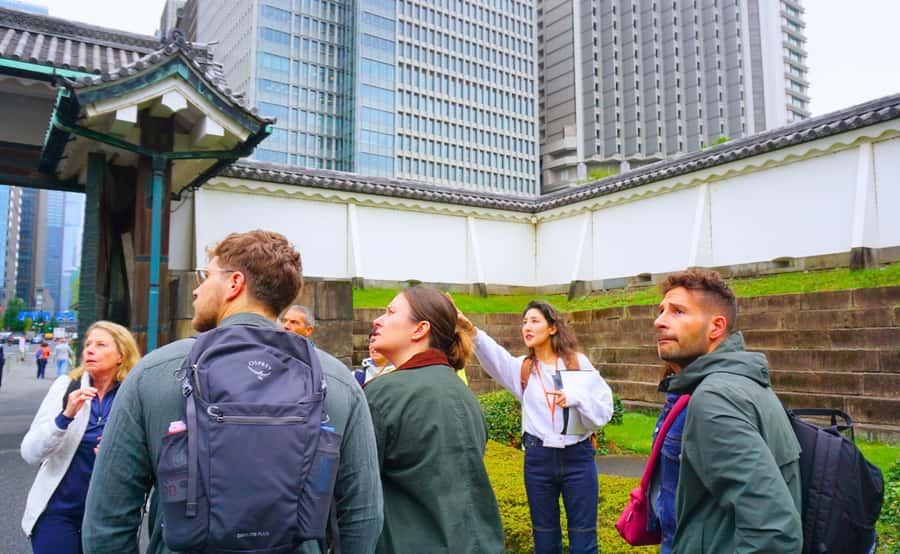
The eastern gardens provide a quieter setting than the streets around Tokyo Station. You’ll stroll among oriental garden features and see trees representing different prefectures of Japan. That regional detail gives the grounds a broader national meaning.
The gardens are also among the tour’s best photo settings. You can expect opportunities for pictures of greenery, stonework, palace remains, the gate, and garden views. Your guide points out good places to stop, which is useful when you want more than a quick snapshot at the entrance.
The calm atmosphere may be the biggest contrast with central Tokyo. You are still close to major stations, but the palace grounds offer space to slow down. I like that this tour uses the garden as part of the lesson rather than treating it as decoration.
Keep your expectations realistic. This is not a formal garden-design class, and the focus is not on every plant or seasonal change. The information provided does not promise a particular bloom season or a special event. The appeal is the mix of open garden space, history, and city-center convenience.
A guide-led conversation, not just a scripted walk

The strongest feature is the chance to ask questions. Guide Nicolas is described as Franco-Japanese and able to discuss Japanese mythology, the language, the imperial family, and the country in general. That range can make a history walk much more useful than a string of dates.
The tour is a good fit if you want to connect the old castle grounds with Japan today. You can ask how historical ideas continue into modern Japan, or focus on subjects such as mythology and the imperial institution. The value depends partly on how much you participate, so bring questions.
The language information needs careful attention. The title identifies an English guide, but the detailed tour information says French in several places. Nicolas is described as Franco-Japanese, yet that does not settle which language your specific departure will use. Contact Sunrise Adventure and confirm before booking, especially if you do not speak French.
What $40 gets you
At $40 per person, this is not the cheapest way to see palace gardens. You can visit many public Tokyo sights independently, and the gardens themselves may be accessible without paying for a guided explanation. The question is what the guide adds.
For your money, you get a historical walking tour, interpretation of the former Edo Castle grounds, help identifying the most important remains, garden and photo stops, and the chance to ask questions. If you would otherwise walk past the ruins without knowing what they meant, the guide can make the admission of time and effort worthwhile.
The value is strongest for a first visit to Tokyo, history fans, and anyone trying to understand the country beyond modern districts and famous shopping streets. It is weaker for you if you prefer to explore alone, want a short photo stop, or mainly want to enter the inner palace.
The small-group experience described by one participant also matters. A group of five allowed easy conversation and even led to an informal meal afterward. That meal is not part of the included service, so do not book expecting it. It does show the friendly, social tone that can develop when the group is small.
Who should book this Imperial Palace walk
I would point this tour toward several types of visitors:
- You are visiting Tokyo for the first time and want a historical starting point.
- You enjoy asking questions rather than listening to a fixed speech.
- You want gardens and old stonework without leaving the city center.
- You are interested in the shogun, Edo Castle, the imperial family, or Japan’s transition into the modern era.
- You prefer a small, conversational group when one is available.
- You want photo opportunities with more meaning than a quick landmark visit.
Families and casual sightseers may also like it, but the history content is central. If your group has little interest in the past, the walk may feel slower than a general sightseeing outing.
You should skip it if entering the inner palace is your priority. You should also think twice if the guide language cannot be confirmed in a language you understand. The English title and French details do not match, and that is the one practical concern I would resolve before booking.
Practical details before you go

The tour begins and ends near Starbucks in Wadakuramon Fountain Park, close to the fountain. Travel by train to Tokyo Station or Otemachi Station, then allow five to ten minutes for the walk to the meeting point.
The guide holds the SUNRISE ADVENTURE sign. Arrive early enough to find the fountain and identify the group. If you arrive more than ten minutes late, the tour starts without you.
Smoking, drones, alcohol, drugs, littering, and skateboards are not allowed. Dress for the weather because the tour runs in rain or shine. The inner palace is not included.
You can reserve now and pay later, and cancellation is allowed up to 24 hours before the activity for a full refund. The experience is provided by Sunrise Adventure.
Should you book it?
Book this tour if you want the Imperial Palace to make historical sense, not just look attractive in photographs. The former Edo Castle site, special koi, palace ruins, trees from across Japan, and a guide-led discussion give the walk more substance than a simple garden visit.
The strongest reasons to choose it are the historical focus and the chance for a personal conversation, especially if Nicolas is leading your group. The main reasons to hesitate are the lack of inner-palace access and the unclear guide language.
Confirm that language before booking. If it works for you, $40 is a fair price for a focused introduction to Edo Castle and Japan’s political past, with a calm garden walk built into the lesson.
FAQ
Where does the Imperial Palace tour start?
It starts near the Starbucks by the fountain in Wadakuramon Fountain Park. The guide holds a SUNRISE ADVENTURE sign.
How do I reach the meeting point?
Take the train to Tokyo Station or Otemachi Station. From either station, the park and meeting point are about a five to ten minute walk away.
Where does the tour finish?
The activity ends back at the original meeting point near Wadakuramon Fountain Park.
Is the inner palace included?
No. The tour visits the eastern gardens and former Edo Castle grounds, but it does not include access to the inner palace.
Is the old main castle still standing?
No. The main castle no longer exists. Your guide explains why and also shows you a miniature structure of the former palace.
What language is the tour offered in?
The title identifies an English guide, but the detailed information lists French guiding and says the included guide is French. Confirm the language with Sunrise Adventure before booking.
How much does the tour cost?
The listed price is $40 per person.
What should I wear?
Wear clothing suitable for the weather. The tour takes place outdoors and operates in both good and bad weather.
What happens if I arrive late?
If you do not arrive within ten minutes of the scheduled meeting time, the group may leave without you.
More Historical Tours in Tokyo
- Tokyo: Shinjuku Historical Walking Tour & Secret Backstreets
★ 5.0 · 530 reviews - Yanaka Walking Tour: Historic and Traditional District of Tokyo
★ 5.0 · 530 reviews - Mt. Fuji Heritage Tour: Traditional Villages, Lakes & Shrine
★ 4.5 · 509 reviews - From Tokyo: Nikko World Heritage Site Private Full-Day Trip
★ 4.9 · 243 reviews
Just added around Tokyo
- Private Memorable Tokyo Tour with English Speaking Driver★ 5.0 · 30 reviews
- Private Tokyo Custom Full-Day Tour by Chartered Vehicle★ 5.0 · 16 reviews
- Private Sightseeing to Mt Fuji and Hakone with English Driver★ 5.0 · 51 reviews
- Tokyo Photography Masterclass – Private Photography Lesson★ 5.0 · 25 reviews
- Private Mt. Fuji Day Trip from Tokyo with English-Speaking Driver★ 5.0 · 33 reviews
- 4 Day Tour – Mount. Fuji, Tokyo, Hakone, Kamakura and Yokohama★ 5.0 · 19 reviews
- Private Unforgettable Mt Fuji Tour with English Speaking Driver★ 5.0 · 142 reviews
- Private Tokyo Food Tour – A Journey Through Time Through Food★ 5.0 · 36 reviews
Garden & Palace Tours, compared.

Imperial Palace and Shogun Historical Walking Tour
Read our review →
Tokyo Castle & Imperial PalaceーShogun Walking Tour
Read our review →
Nijo-jo Castle and Ninomaru Palace Guided Tour
Read our review →

Ultimate Osaka Walking Tour: Castle, Dotonbori & Hidden Gems
Read our review →Tokyo Castle & Imperial PalaceーShogun Walking Tour
Read our review →Browse the lists this tour appears in