
REVIEW · FOOD MARKET TOURS
Tokyo: Guided Walking Tour of Tsukiji Market with Lunch
Tsukiji is best understood with your eyes, ears, and appetite switched on. This 165-minute walk takes you from the Indian-inspired exterior of Tsukiji Hongwanji Temple into the narrow streets of the Outer Market, where shopkeepers, cooks, and wholesalers work around you. The nine tastings turn a simple market visit into a practical lesson in Japanese food.
I like the small group limit of 10, which makes it easier to stay together in crowded lanes and ask questions. I also like the cultural angle: your guide explains how Japanese food connects with religion, ritual, and daily life, rather than simply pointing out dishes and moving on.
The main caution is value. At $113 per person, this is not a cheap lunch, and the food selection may not satisfy you if you expect a long series of premium sushi portions. Some tastings are modest street-food samples, so book it for guidance and context as much as for the meal.
In This Review
- Key points to know before you book
- Starting at Tsukiji Hongwanji Temple
- Moving into Tsukiji Outer Market
- What you eat during the nine tastings
- The guides make or break the experience
- How much of Tsukiji do you actually see?
- Is $113 good value?
- Who should book this Tsukiji walk?
- Practical details for a smooth visit
- Should you book this Tsukiji tour?
- FAQ
- Where does the Tsukiji walking tour meet?
- How long does the tour last?
- What food is included?
- Is the tour offered in English?
- How many people are in the group?
- Is the tour wheelchair accessible?
Key points to know before you book
- Nine tastings in one walk: Expect seafood or beef skewers, tamagoyaki, tuna sushi, fried fish paste, filled rice balls, dessert, a drink, Japanese tea, and dashi soup.
- A useful first stop: The tour begins outside Tsukiji Hongwanji Temple, only about 50 meters from Tsukiji Station’s Exit A1.
- Small-group attention: Groups are limited to 10, and guides such as Tomoko, Yumiko, Sachiko, and Hide have helped visitors navigate the market.
- More than a food crawl: You learn how Japanese cuisine connects with Buddhist practice, local customs, and market work.
- A compact route: The tour focuses on Tsukiji Outer Market, so you get a close look at one area rather than a broad tour of Tokyo.
- Good shoes matter: The market streets are busy, and comfortable shoes are specifically recommended.
Starting at Tsukiji Hongwanji Temple

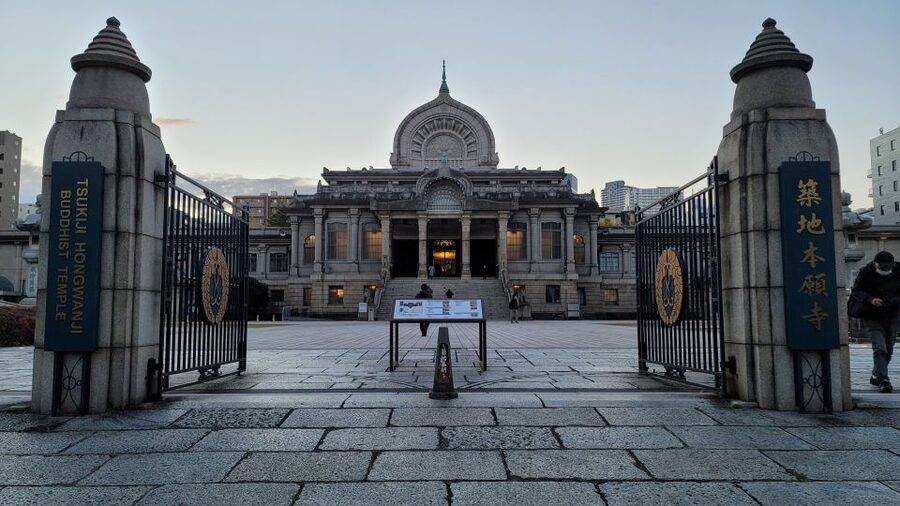
Your meeting point is directly in front of Tsukiji Hongwanji Temple. From Tsukiji Station on the Hibiya Line, take Exit A1, turn left, and walk about 50 meters to the entrance.
This is a smart meeting point. You do not need to search for a small shop or decipher a complicated street address. The temple is easy to spot, and it gives the tour a meaningful opening before the food begins.
You view the temple from the exterior rather than taking part in a formal visit inside. Its design has an ancient Indian-inspired Buddhist look, unusual in Tokyo and quite different from the wooden temple style you may expect. The stop also gives your guide a chance to explain the connection between religion and food in Japan.
That context matters. A market stall is not just a place to grab a snack. Ingredients, preparation, offering, seasonality, and respect for food all sit within a larger cultural setting. The temple stop helps frame the market as part of Tokyo’s daily life, not simply a backdrop for photographs.
The opening explanation will be more useful if you enjoy knowing why a dish or custom exists. If you want to start eating immediately, the temple introduction may feel like a delay. Still, it is brief compared with the full 165-minute schedule and gives the walk a clear sense of place.
More Food Market Tours in Tokyo
- Tokyo: Shinjuku Food Tour (13 Dishes at 4 Local Eateries)
★ 5.0 · 6,603 reviews - Tokyo Tsukiji Fish Market Food and Culture Walking Tour
★ 5.0 · 3,184 reviews - Tokyo: Shinjuku Food Tour (15 Dishes and 4 Eateries)
★ 4.9 · 2,033 reviews
Moving into Tsukiji Outer Market
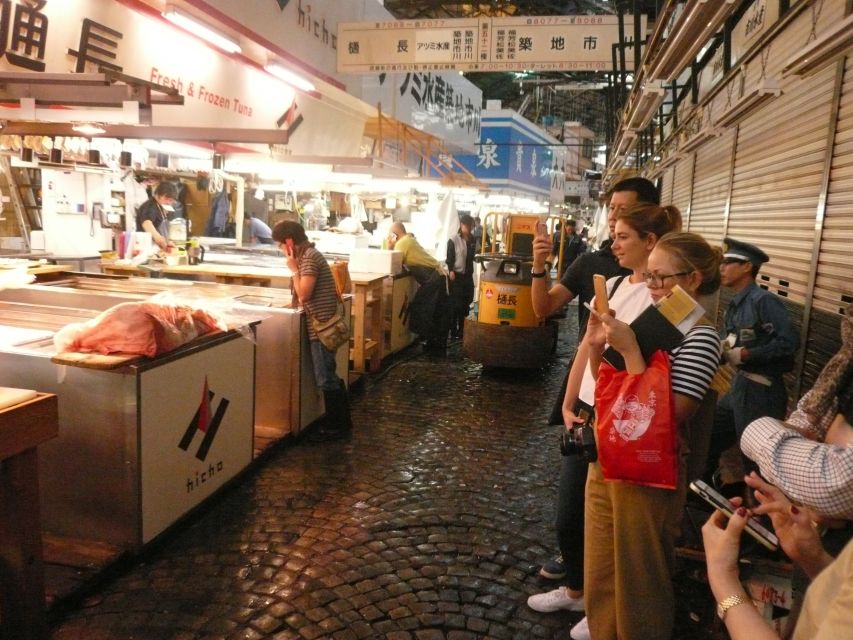
From the temple, you head into Tsukiji Outer Market. The market is famous for seafood, but its streets also contain restaurants, produce sellers, kitchen shops, prepared-food counters, and stalls selling ingredients used in Japanese cooking.
The Outer Market is different from a single indoor food hall. You move through public streets and narrow lanes while businesses continue their normal work. That means the experience can feel more genuine than a staged tasting room, but it also means the route may be tight, noisy, and crowded.
Your guide helps you read the scene. Instead of wondering which stall is worth your time, you can watch the workers and products with someone explaining what you are seeing. The best guides also help keep the group together and make ordering easier.
This is where the small group becomes important. Ten people is still enough to create a little traffic in a narrow lane, but it is far more manageable than a large coach group. One particularly useful approach described by the tour team is having an assistant help with queues and food boxes. Tomoko was praised for waiting in line while the group looked around, and for carrying cleaning wipes to keep the tastings organized.
That kind of simple support can make a difference. You can focus on the market instead of juggling food, napkins, and bags. It also shows why a guide may be worth paying for in a place where stalls operate quickly and space is limited.
What you eat during the nine tastings
The tasting list is broad rather than luxurious. You receive nine local specialties, with the exact seafood or beef choices likely shaped by what is available at the market that day.
The planned selection includes:
- A grilled seafood or wagyu beef skewer
- Japanese-style omelette, known as tamagoyaki
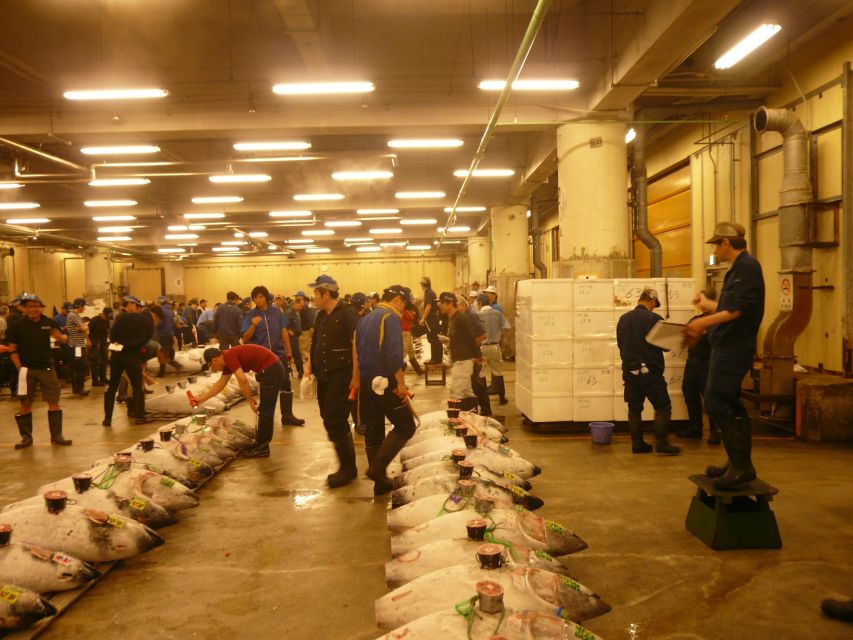
- Tuna sushi
- Fried fish paste on a skewer
- Filled rice balls
- A dessert
- A drink
- Japanese tea
- Dashi soup stock
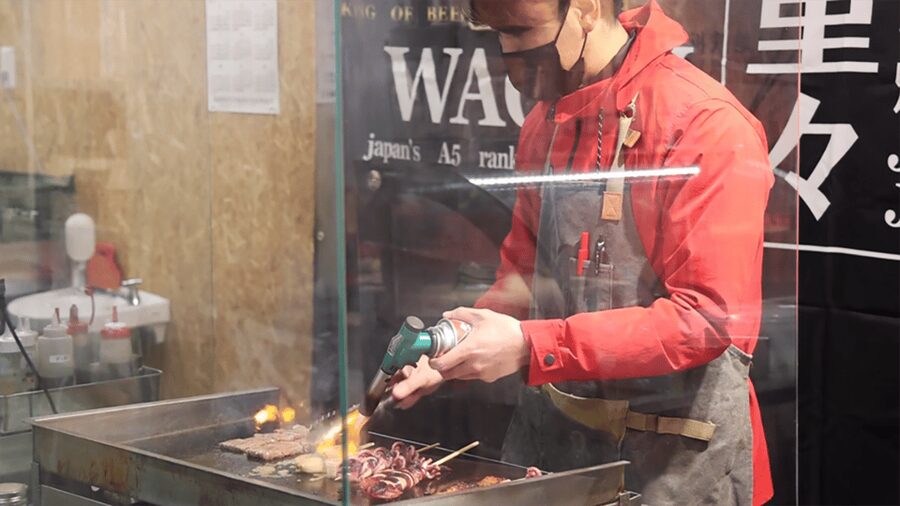
The skewer is one of the more appealing parts for many people because it gives you a direct taste of market-style cooking. Depending on the selection, it may be grilled seafood or wagyu beef. Do not assume this means a large steak portion. Think of it as a tasting bite that lets you compare texture, seasoning, and cooking style.
Tamagoyaki offers a different lesson. This softly layered Japanese omelette is mildly sweet and neatly shaped, with a texture unlike a Western breakfast omelette. It is a small food, but a useful one because it shows how Japanese cooking can make a few basic ingredients feel precise and deliberate.
Tuna sushi is included, along with filled rice balls. Here, expectations matter. The tour is not promising a full sushi meal at a famous reservation-only counter. One unhappy participant found the tuna sushi ordinary and the tuna mayonnaise rice ball disappointing. If you are a serious sushi enthusiast, you may judge these samples more harshly than someone who wants an introduction.
The fried fish paste skewer gives you another common market texture, while dashi lets you taste the stock that forms the base of many Japanese soups and sauces. The tea sample and dessert round out the meal rather than transforming it into a major feast.
One visitor described some of the food as greasy and average, while others found the dishes enjoyable and the overall tour excellent. That split is useful. The food is best viewed as a guided sampling of everyday specialties, not a high-end tasting menu.
The guides make or break the experience
The strongest part of this tour is likely to be your guide. Names connected with particularly well-regarded outings include Hide, Tomoko, Yumiko, and Sachiko, though the guide assigned to your departure may differ.
Hide was praised for showing exactly what to try and making the market easy to follow. Tomoko was noted for her relaxed manner, explanations of market culture, and practical help with queues and food boxes. Yumiko and Sachiko worked together, combining local information with hands-on help as the group moved through the stalls.
Those details tell you what good guiding looks like here. It is not only a stream of facts. It is knowing where to stand, when to move, what to taste, and how to keep a group comfortable in a working market.
The tour is offered in English. A minor language barrier was reported at the start of one outing, so if something is unclear, ask early about the schedule, the tasting order, or the ingredients. Clear expectations matter, especially if you have allergies, dietary restrictions, or strong preferences. The supplied information does not confirm special dietary substitutions, so do not assume they are available.
The guide also adds value for repeat visitors. One person who had already visited Tsukiji found that Tomoko’s explanations revealed a different side of the area. That is a good sign for anyone who has wandered through the market alone but felt they were only seeing the surface.
More Walking Tours in Tokyo
- Tokyo: Imperial Palace and Shogun Historical Walking Tour
★ 5.0 · 2,251 reviews - Tokyo: Shinjuku Local Bar and Izakaya Guided Walking Tour
★ 4.9 · 1,794 reviews - Tokyo: Tsukiji Fish Market Food and Walking tour
★ 5.0 · 1,724 reviews - Tokyo: Asakusa Walking Tour with Sensoji Temple Visit
★ 4.8 · 1,583 reviews
How much of Tsukiji do you actually see?
The route covers a focused part of Tsukiji, not the whole of Tokyo’s food scene. One person felt that the area covered was quite small and that the guide had to fill the allotted time.
That criticism is fair. Tsukiji Outer Market is large enough to occupy hours if you browse every counter, but a guided route must keep a group together and fit in nine tastings. You should expect a compact tour with a clear food-and-culture focus, not an all-day market expedition.
The limited route can also be a strength. You get enough time to stop, listen, and eat without racing through a huge district. If you are visiting Tsukiji for the first time, the tour gives you a starting map of the area. You can return later to browse shops or try extra dishes at your own pace.
The 165-minute duration is long enough for more than a quick orientation but short enough to fit around other Tokyo plans. Allow extra energy for standing and walking, and wear comfortable shoes as requested. The market setting is active, so this is not a sit-down lunch with a fixed table and leisurely service.
Is $113 good value?
At $113 per person, the price needs a clear explanation. If you measure value only by the amount of food, you may feel disappointed. Nine samples do not necessarily equal nine full servings, and the menu includes everyday items such as tea, dashi, a drink, and dessert.
I would judge the price in three parts: the food, the guide, and the access to a working market. The food alone probably does not justify the full cost for a confident eater who can order independently. You can spend less by buying individual items as you walk.
The guide is where the price becomes easier to defend. You receive help choosing unfamiliar foods, explanations of local customs, and a route through a crowded area. A guide may also help you avoid ordering blindly or missing the market’s less obvious details.
The value is strongest for first-time visitors, families, and people who want cultural background with their lunch. It is weaker for serious food hunters who already know Tsukiji, speak enough Japanese to order comfortably, and prefer to choose every dish themselves.
The rating of 4.4 from 24 reviews suggests a generally positive experience, but not universal agreement. The pattern is clear: guide quality and market interpretation receive the warmest praise, while food quality and price create the most doubt.
Who should book this Tsukiji walk?
I would recommend this tour if you want a structured first visit and prefer several small tastings to one formal meal. It suits you if crowded markets feel confusing, if you want an English-speaking guide, or if you like learning the story behind food rather than simply photographing it.
Families may also appreciate the support of a guide and assistant, especially when several people need to stay together. The small group cap makes the experience more personal than a large organized outing.
It is less suitable if you want premium sushi, generous portions, or a long list of stops across Tokyo. It may also disappoint you if you expect every tasting to be a standout dish. The route is compact, and the market remains a real working place, not a polished restaurant tour.
Wheelchair access is listed, which is useful, but the tour still takes place on busy market streets. Ask the provider for current route details if mobility is a major concern. The supplied information confirms accessibility, but it does not describe the exact street surfaces or any route adjustments.
Practical details for a smooth visit
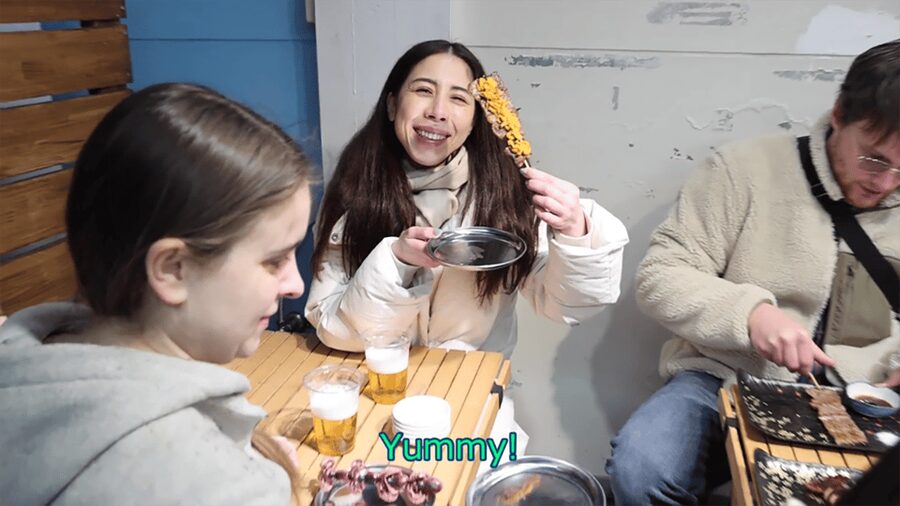
Meet in front of Tsukiji Hongwanji Temple. The simplest route is Tsukiji Station, Hibiya Line, Exit A1, then a left turn and a walk of about 50 meters.
The tour lasts 165 minutes and runs with an English-speaking live guide. Check the available departure times when booking, since the start time is not fixed in the information provided.
Wear comfortable shoes. You will be walking through busy streets and standing at food counters, so thin-soled fashion shoes are a poor choice. Keep your belongings manageable, too, since market lanes can be tight.
The group is limited to 10 people. Booking allows you to reserve now and pay later, and cancellation is free up to 24 hours before the activity for a full refund. These policies are useful if your Tokyo schedule is still shifting.
Should you book this Tsukiji tour?
Book it if you want an informed introduction to Tsukiji, practical help with the market, and nine small tastes woven into a cultural walk. The temple opening, the English-speaking guide, and the small group give the experience more shape than simply arriving and buying snacks at random.
Skip it if your main goal is the best sushi meal for your money. At $113, the food portions and quality may not satisfy a dedicated gourmet, especially if you already know how to explore Tsukiji alone.
For most first-time visitors, I would see this as a guided orientation with lunch samples, not a luxury food tour. Go with that expectation, and you are more likely to appreciate the expert market navigation, the religious and culinary context, and the chance to see how the stalls work. Reserve it when the guide’s insight matters as much to you as what is on the plate.
FAQ
Where does the Tsukiji walking tour meet?
Meet in front of Tsukiji Hongwanji Temple. From Tsukiji Station on the Hibiya Line, take Exit A1, turn left, and walk about 50 meters to the temple entrance.
How long does the tour last?
The tour lasts 165 minutes, or two hours and 45 minutes. Check the available start times when booking.
What food is included?
You receive nine tastings. They include grilled seafood or beef skewers, Japanese-style omelette, tuna sushi, fried fish paste skewers, filled rice balls, dessert, a drink, Japanese tea, and dashi soup stock.
Is the tour offered in English?
Yes. The activity includes a live English-speaking guide.
How many people are in the group?
The tour is limited to 10 participants, making it a small-group experience.
Is the tour wheelchair accessible?
Yes, the activity is listed as wheelchair accessible. The supplied details do not specify the exact street conditions or route adjustments, so contact the provider if you need particular accessibility arrangements.
More Markets in Tokyo
- Tokyo: Tsukiji Fish Market Guided Walking Tour
★ 4.9 · 1,397 reviews - Tsukiji Fish Market Guided Tour and Sushi Making with Pro Chef
★ 5.0 · 775 reviews - Tokyo: Tsukiji Fish Market Food and Culture Walking Tour
★ 4.7 · 757 reviews - Tsukiji Fish Market: Street Food & Culture Walking Tour
★ 5.0 · 669 reviews
More Lunch Experiences in Tokyo
- Tokyo: Mt.Fuji & Lake Kawaguchiko 1-Day Bus Tour w/Optional Lunch
★ 4.5 · 839 reviews - Tokyo: Sumo Experience and Chanko Nabe Lunch
★ 4.8 · 257 reviews - Tokyo: 1 Day Bus Tour with Meiji-Jingu,Odaiba,lunch&Skytree
★ 4.6 · 156 reviews - Nagano Snow Monkey 1 Day Tour with Beef Sukiyaki Lunch from Tokyo
★ 4.5 · 123 reviews
Just added around Tokyo
- Tokyo: Customizable Private Guided Walking Tour★ 4.5 · 129 reviews
- Private Harajuku Omotesando Architecture Tour★ 4.9 · 18 reviews
- Tokyo: Guided Helicopter Ride★ 4.9 · 24 reviews
- Tokyo: Private Personalized Local Food Tour★ 4.5 · 101 reviews
- Tokyo: Guided Walking Tour of Tsukiji Market with Breakfast★ 4.4 · 134 reviews
- Tokyo: Gotokuji Cat Temple, Shinjuku Cat Cafe & 3D Cat Tour★ 4.9 · 38 reviews
- Tokyo GINZA: KONPARU Japanese Cabaret Show with Drink★ 4.8 · 38 reviews
- Tokyo: Full Course Tour: Explore 10 Must-Sees & Hidden Gems★ 5.0 · 35 reviews
Food Market Tours, compared.
Shinjuku Food Tour (13 Dishes at 4 Local Eateries)
Read our review →
Tokyo Tsukiji Fish Market Food and Culture Walking Tour
Read our review →
Shinsekai Food Tour with 13-15 Dishes at 5 Eateries
Read our review →
Osaka Food Tour: 13 Dishes at 5 Local Eateries
Read our review →
Shinjuku Food Tour (15 Dishes and 4 Eateries)
Read our review →
Best of Shinjuku: Izakaya Food Tour (4 Stops, 14+ Tastings)
Read our review →
Hungry Osaka Street Food Tour:15 Tastings & 3 Drinks with a Local
Read our review →
Browse the lists this tour appears in