
REVIEW · SUMO EXPERIENCES
Tokyo: Sumo Experience and Chanko Nabe Lunch
Sumo gets much easier to understand when a former professional wrestler explains what you are seeing, then shows you the moves at close range. This two-hour Tokyo experience combines a clear English lesson, lively demonstrations, and a playful chance to face a wrestler yourself.
I like the small group limit of six, which gives you a better shot at asking questions and getting photos. I also like the chanko nabe lunch, prepared by the wrestlers, because the meal connects the sport to the food that fuels its athletes.
The main consideration is timing: this is a fixed 1:00 PM start, with no pickup or drop-off, and the exact meeting place arrives with your voucher. If you want a quiet museum-style lesson, the audience participation and comic wrestling may feel a little lively.
In This Review
- Key points to know before booking
- Why this sumo experience works for first-time visitors
- Starting with the rituals and rules
- Watching former wrestlers demonstrate their strength
- Your chance to enter the ring
- Chanko nabe, the meal that connects sport and daily life
- Asakusa on Monday, Ryogoku on Thursday
- Is the $95 price fair?
- Who will enjoy this most?
- What to arrange before you go
- Final verdict: should you book it?
- FAQ
- Where does the sumo experience take place?
- How long does the activity last?
- What time does it start?
- Is the experience conducted in English?
- Is lunch included?
- Can I participate in a sumo bout?
- Are vegetarian or Halal meals available?
- Is the activity wheelchair accessible?
- Is transportation included?
Key points to know before booking
- Former professional wrestlers lead the lesson: You get explanations in English from people who have competed in the sport.
- The rules and rituals become clear: The demonstrations explain why sumo involves far more than simply pushing an opponent out of a ring.
- You may enter the ring yourself: Audience members can be chosen to wear a sumo costume and join the demonstration, though participation is not guaranteed for everyone.
- Chanko nabe is part of the experience: The wrestlers prepare the Japanese hot pot served after the demonstration.
- The location changes by day: Mondays are in Asakusa, while Thursdays are in Ryogoku.
- It suits families and first-time visitors: The English instruction, humor, photos, and short format make the sport approachable.
Why this sumo experience works for first-time visitors
Sumo can look simple at first glance. Two large wrestlers crouch, charge, and try to force each other out of a circular ring. Yet the action is wrapped in rules, gestures, rituals, and training customs that are not obvious from the seats at a tournament.
That is where this experience earns its price. Former professional wrestlers explain the sport in English, then demonstrate the movements instead of leaving you to guess what matters. You learn about the rituals before seeing how they fit into the contest itself.
I especially like this mix of instruction and play. The lesson is not delivered as a stiff lecture. The wrestlers use humor, crowd interaction, and demonstrations to show the force and technique involved. Several participants have described the entertainers as warm, funny, and easy to understand, which matters when the subject has so many unfamiliar terms.
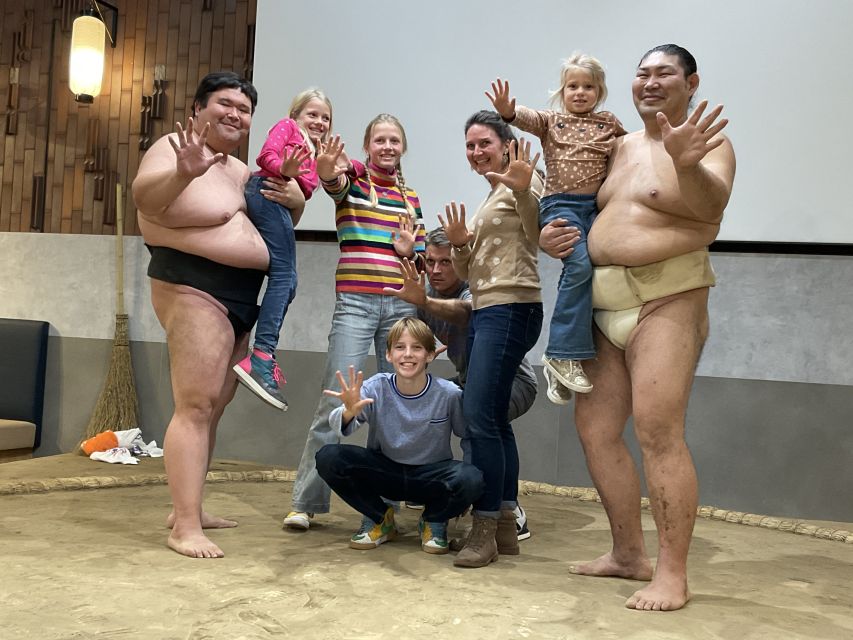
You also get a close look at the athletes. This is not a distant stadium spectacle. The format lets you see the size, balance, and strength of former professionals at close range, then take photos with them after the activity.
More Sumo Experiences in Tokyo
- Tokyo: Sumo Show and Dining Experience
★ 4.8 · 2,742 reviews - the SUMO show
★ 5.0 · 1,960 reviews - Tokyo Shinjuku Sumo Show & Experience with Photo
★ 5.0 · 1,750 reviews
Starting with the rituals and rules
The first part focuses on what makes sumo a sport with ceremony. You learn about its rules, rituals, training, and competition. For someone who has only seen short television clips, this introduction gives the bout a useful frame.
The demonstrations help explain why the opening movements matter. Sumo is not just a test of body weight. Stance, timing, balance, and the ability to use an opponent’s force all enter the contest. A large wrestler can still be vulnerable if footing or position goes wrong.
The English instruction is a major advantage. You do not need prior knowledge of sumo, Japanese language skills, or experience attending a tournament. The presenters explain the sport for newcomers, and the tone stays light enough for children to follow.
Expect some comedy along with the instruction. That is part of the design. The goal is to help you understand the sport while keeping the room engaged, not to recreate the serious atmosphere of a championship match.
If you want a highly formal cultural presentation, this may feel less solemn than expected. If you want to understand the sport and have a laugh while doing so, the informal approach works well.
Watching former wrestlers demonstrate their strength
After the explanations, the wrestlers show what the sport looks like in action. This is the point where the size and power of the athletes become easier to grasp.
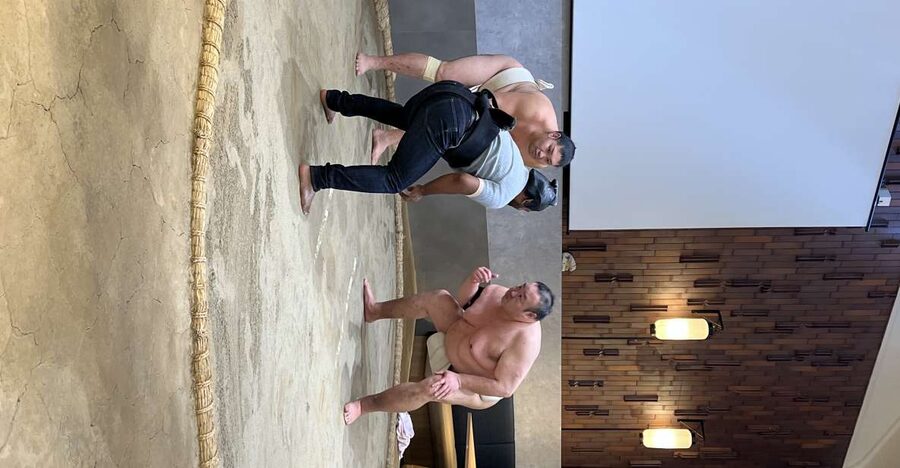
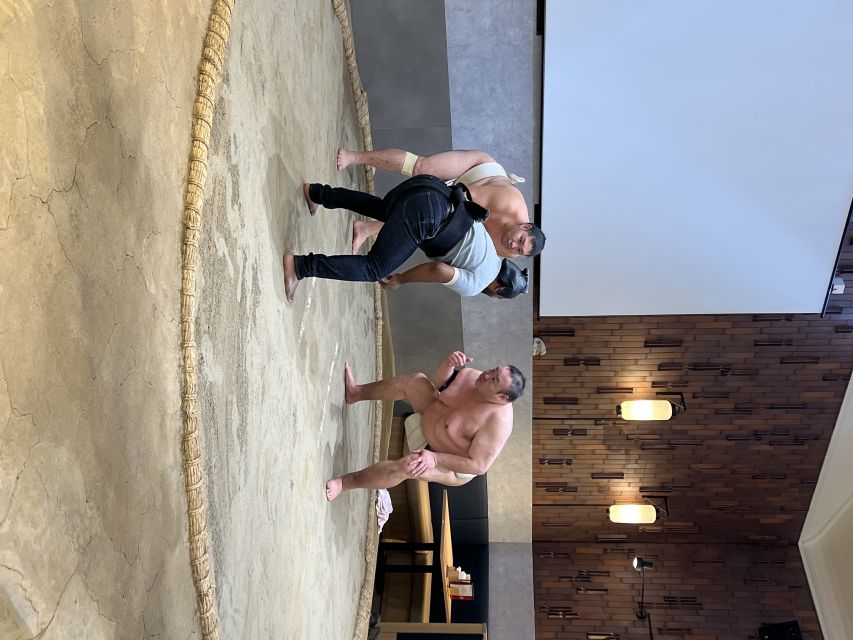
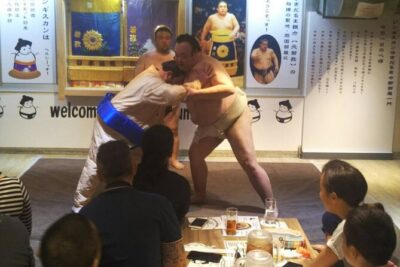
The demonstration is designed for entertainment as well as instruction. You see the basic physical challenge, but you also see how easily a trained former wrestler can control the pace against an untrained person. One participant weighing 105 kilograms described feeling like a child against the wrestler’s strength. That gives you a useful idea of the power involved, without suggesting that you need to be athletic yourself.
The presenters also have to keep the demonstrations safe and playful. You are not being asked to compete in a real bout. The activity lets you sample the feeling of sumo without pretending that a short audience turn matches years of training.
I like this section because it turns abstract facts into something physical. A rule explained in English is useful. A rule followed by a demonstration, a laugh, and a close look at the wrestlers is easier to remember.
Your chance to enter the ring
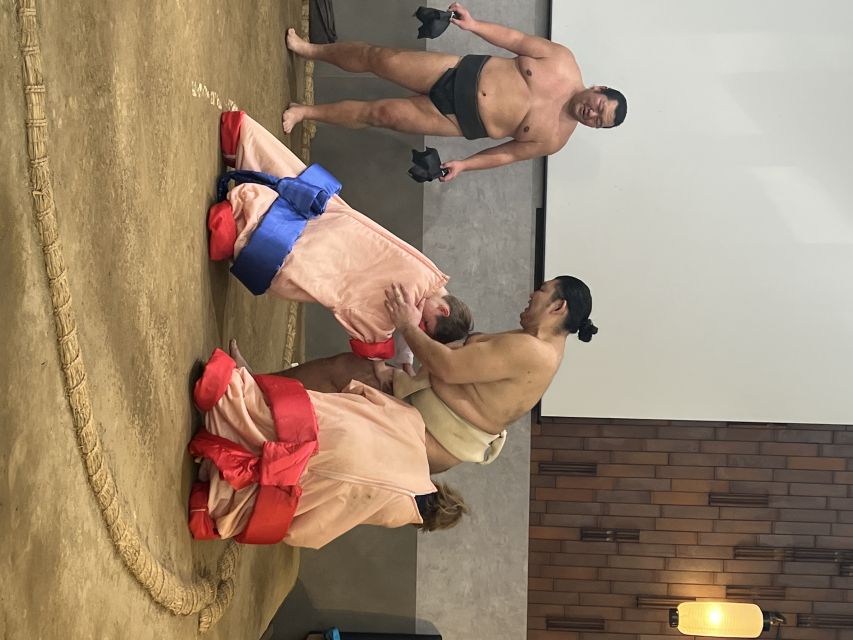
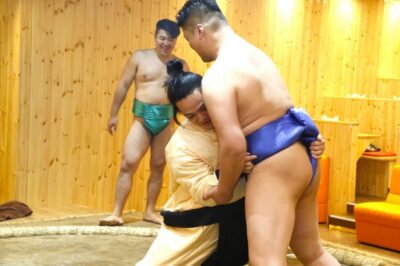
The interactive part is the feature many people remember most. Some audience members may be selected to put on a sumo wrestler costume and help with a demonstration. Participants can also face the professionals in a playful duel.
You should understand the limit here: not everyone is guaranteed a turn. The information specifically notes that only some people may be picked. The presenters make an effort to involve the audience, and many accounts describe broad participation, but you should book this for the full experience rather than solely for a personal bout.
If you do get chosen, expect a comic demonstration of strength rather than a serious contest. The wrestlers guide the action, and the point is to show how difficult it is to move a trained athlete. Children can find this especially entertaining, though the experience is also popular with adults.
The photo opportunity adds value. You have time to take pictures with the wrestlers, and the close setting gives you a more personal souvenir than a distant photograph from a tournament. If photos matter to you, keep your phone ready and follow the staff’s instructions.
For families, this part gives children something active to watch for. They are not simply sitting through a talk. They see adults and possibly children take part, and they get a better sense of the athletes’ personalities.
Same city, a completely different kind of day:
- Mt Fuji and Hakone 1-Day Bus Tour Return by Bullet Train
★ 5.0 · 26,383 reviews - 1-Day Tokyo Bus Tour
★ 5.0 · 14,250 reviews - Tokyo: TOKYO SKYTREE® Admission ticket
★ 4.5 · 11,192 reviews - Tokyo: teamLab Planets TOKYO Digital Art Museum Entry Ticket
★ 4.6 · 9,779 reviews
Chanko nabe, the meal that connects sport and daily life
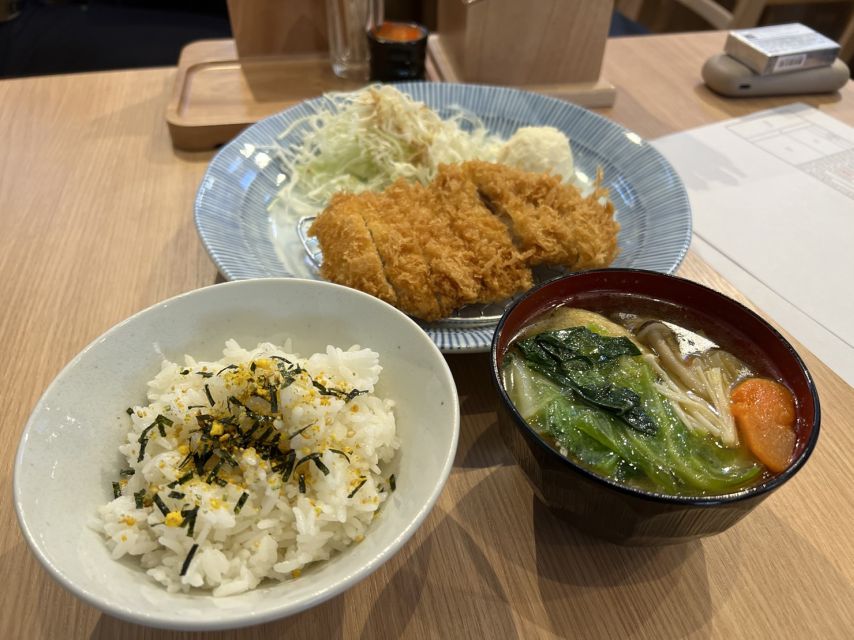
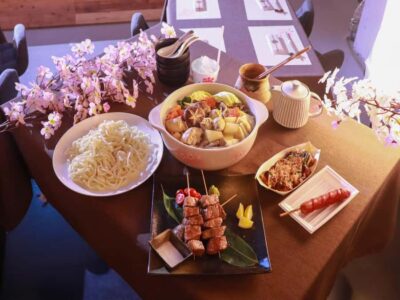
The experience ends with chanko nabe, a Japanese-style hot pot prepared by the wrestlers themselves. The dish is associated with sumo training and is often described as food that provides stamina.
The meal gives the afternoon a welcome second act. You are not simply watching a demonstration and leaving. You sit down to eat food connected to the wrestlers’ lives and training culture.
The exact meal presentation can vary, but the supplied details identify lunch as included, and several descriptions refer to a generous meal with soup, dessert, and drinks. Treat the included lunch as part of the booking’s stated value, while checking the current menu if you have strict dietary needs.
Vegetarian and Halal meals can be requested, but you need to note this during booking or contact the operator by email at least two days before your date. Do not wait until you arrive. Chanko nabe is a shared hot-pot style meal, so dietary planning matters.
The food has received particularly strong praise. That is important because a meal included in a cultural activity can sometimes feel like an afterthought. Here, it is one of the main reasons the two-hour format feels complete.
Asakusa on Monday, Ryogoku on Thursday
The location depends on the day you choose. Monday sessions take place in Asakusa, while Thursday sessions are held in Ryogoku.
That choice can help you plan your Tokyo day. Asakusa is one of the city’s best-known sightseeing areas, so a Monday booking can fit with temples and traditional streets nearby. Ryogoku is closely linked with sumo, making Thursday’s setting feel especially appropriate for visitors who want the sport’s neighborhood context.
The exact meeting point is not supplied in advance as a simple street address in the tour details. You receive a voucher with a map showing the precise place. Read that map carefully and allow time to find the entrance.
There is no pickup or drop-off. You make your own way to the meeting point and return from there after the meal. This is easy enough for independent visitors, but it means the experience needs to fit into your own Tokyo transport plan.
The activity starts at 1:00 PM and begins on time. The door opens at 12:40, so arrive before the start rather than cutting it close. A late arrival could mean missing the opening explanation, which is the part that gives meaning to everything that follows.
Is the $95 price fair?
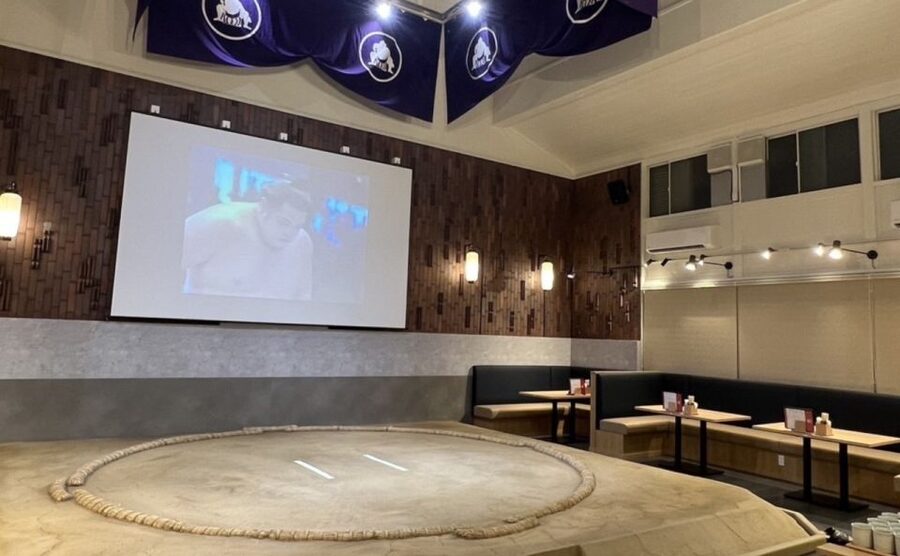
At $95 per person, this is not a cheap lunch. It is also more than a quick stop at a sumo-related museum or a casual meal in Tokyo. The value comes from combining several paid elements in one short session: an English-speaking instructor, former professionals, a live demonstration, audience participation, photos, and lunch.
The small advertised limit of six is another point in its favor. A limited group should give you a better chance to hear the explanations and ask questions than a large bus tour would. The activity can still feel social, but you are not paying only to watch a distant performance.
The price makes the most sense if you are new to sumo or want a personal encounter rather than a tournament ticket. You get an introduction to the sport and a meal in one booking, with no need to understand the rules beforehand.
It makes less sense if your main goal is to watch official competition. This is an educational and entertaining demonstration with former wrestlers, not a professional tournament. You also cannot count on being selected for the costume or wrestling portion.
For many visitors, the food helps tip the balance. The chanko lunch is not an unrelated add-on. It gives you a taste of the eating culture associated with the sport and keeps the activity from feeling like a short stage show.
Who will enjoy this most?
This is a strong pick for families. Children can follow the demonstrations, laugh at the playful bouts, and possibly see someone from the audience enter the ring. The wrestlers are described as friendly and engaging with children, and the format avoids requiring a long attention span.
It also suits adults who know little about sumo. The English explanations cover the basics without assuming previous knowledge. You can ask questions, watch the demonstrations, and leave with a clearer sense of what happens during a real match.
Food-focused visitors have another reason to consider it. The hot pot is made by the wrestlers, and lunch is included in the price. If you enjoy experiences that combine a meal with cultural context, this is a better fit than a stand-alone performance.
It may be less suitable for someone seeking a serious, silent cultural lesson. The tone is deliberately funny and interactive. You may be asked to cheer, watch audience members participate, or take part yourself.
The activity is wheelchair accessible, which makes it easier for more people to consider. Still, the exact meeting point and on-site layout should be checked using the voucher map if you have specific mobility needs.
What to arrange before you go
Choose the day based on your route. Monday means Asakusa, and Thursday means Ryogoku. Since there is no pickup, you should plan the trip to the venue as carefully as the activity itself.
Arrive early. The start is fixed at 1:00 PM, and the door opens at 12:40. I would aim to be in the area with enough time to find the entrance, rather than arriving at the last minute with lunch and a cultural lesson already underway.
Mention dietary requirements at least two days ahead. Vegetarian and Halal meals are possible when requested in advance, but they are not something to arrange casually at the door.
Wear something that lets you sit comfortably and move if you are invited to participate. The experience does not require athletic ability, and the bouts are playful, but you may want to step into the ring or help with a demonstration.
Cancellation is flexible only up to a point. You can cancel for a full refund until 10 days before the activity date. After that deadline, the stated full-refund option no longer applies.
Final verdict: should you book it?
Book this experience if you want sumo explained in plain English, prefer a personal setting to a distant stadium seat, and enjoy a little audience participation. The combination of former professionals, humor, photos, and wrestler-made chanko nabe gives you a rounded introduction to the sport.
I would especially recommend it for families, first-time visitors to Japan, and anyone who wants a memorable lunch with a cultural lesson attached. The $95 price is reasonable when you value the food and close interaction, though it is harder to justify if you only want to observe a real tournament.
Choose Monday for Asakusa or Thursday for Ryogoku, arrive before 1:00 PM, and request any special meal at least two days ahead. If those details suit your schedule, this is a lively and accessible way to get much closer to sumo than a quick photo outside a stadium.
FAQ
Where does the sumo experience take place?
On Mondays, the activity takes place in Asakusa. On Thursdays, it takes place in Ryogoku. The exact meeting point is provided on a voucher with a map.
How long does the activity last?
The experience lasts two hours.
What time does it start?
The activity starts at 1:00 PM. The door opens at 12:40, and you need to arrive before the start time.
Is the experience conducted in English?
Yes. The instructor and explanations are in English.
Is lunch included?
Yes. Entrance, participation, and lunch are included in the price. The lunch is chanko nabe, a Japanese-style hot pot prepared by the wrestlers.
Can I participate in a sumo bout?
You may be invited to face a former wrestler in a playful duel. Some audience members may also be chosen to wear a sumo costume and help with a demonstration, but participation is not guaranteed for everyone.
Are vegetarian or Halal meals available?
They can be requested. Note your requirement in the reservation or contact the operator by email at least two days before the participation date.
Is the activity wheelchair accessible?
Yes, the activity is listed as wheelchair accessible.
Is transportation included?
No. Pickup and drop-off are not included. You must make your own way to the meeting point and return from there after the activity.
More Lunch Experiences in Tokyo
- Tokyo: Mt.Fuji & Lake Kawaguchiko 1-Day Bus Tour w/Optional Lunch
★ 4.5 · 839 reviews - Tokyo: 1 Day Bus Tour with Meiji-Jingu,Odaiba,lunch&Skytree
★ 4.6 · 156 reviews - Nagano Snow Monkey 1 Day Tour with Beef Sukiyaki Lunch from Tokyo
★ 4.5 · 123 reviews - Tokyo: Family Sumo Workshop & Live Wrestling Show with Lunch
★ 4.9 · 99 reviews
Just added around Tokyo
- Tokyo: Customizable Private Guided Walking Tour★ 4.5 · 129 reviews
- Private Harajuku Omotesando Architecture Tour★ 4.9 · 18 reviews
- Tokyo: Guided Helicopter Ride★ 4.9 · 24 reviews
- Tokyo: Guided Walking Tour of Tsukiji Market with Lunch★ 4.4 · 24 reviews
- Tokyo: Private Personalized Local Food Tour★ 4.5 · 101 reviews
- Tokyo GINZA: KONPARU Japanese Cabaret Show with Drink★ 4.8 · 38 reviews
- Tokyo: Guided Walking Tour of Tsukiji Market with Breakfast★ 4.4 · 134 reviews
- Tokyo: Gotokuji Cat Temple, Shinjuku Cat Cafe & 3D Cat Tour★ 4.9 · 38 reviews
Sumo Experiences, compared.
Sumo Show Experience with Chicken Hot Pot and a Photo
Read our review →
Tokyo Shinjuku Sumo Show & Experience with Photo
Read our review →
Sumo Show & Experience w/ Optional Kimono & Hot Pot
Read our review →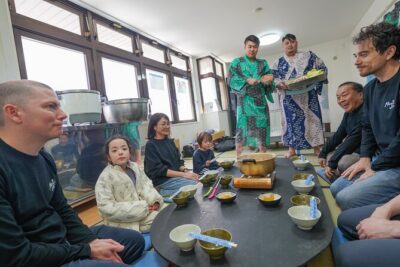
Authentic Sumo Experience in Tokyo: Enter the Sanctuary
Read our review →Browse the lists this tour appears in