REVIEW · KYOTO TOURS
The Way of Tea: Kyoto Crafts, Hidden Temples & Wabi-Sabi Walk
Kyoto’s tea culture makes more sense when you see the places and objects around it. This 3.5-hour small-group walk links Gion, Kennin-ji Temple, local craft shops, a quiet temple and garden, and a matcha ceremony in a traditional Japanese house. You do not just sit down for tea at the end. You first see the setting, tools, and ideas that give the ceremony meaning.
I like the maximum group size of seven, which should make it easier to hear the guide and ask questions. I also like the simple route from Gion Shijo Station to the tea house, with temple admission, an English-speaking guide, and tour photos included. The main caution is communication: one low rating describes a guide who spoke very softly and was difficult to understand in English.
Key points
- Matcha culture comes first: Begin in Gion with an introduction to Japanese tea and a stop at a famous matcha shop.
- Kennin-ji adds historic weight: Visit one of Kyoto’s long-established temples with admission included.
- Raku pottery gives tea a human touch: See tea bowls and learn why each cup has its own form, story, and character.
- The final hour is hands-on: A tea master guides you through making and drinking matcha in a traditional house.
- Small means small: The group is limited to seven people, though other participants may join you.
- Plan for the weather: Kyoto can reach 40°C in summer and fall to -5°C in winter, so clothing and water matter.
In This Review
- From Gion Shijo Station into Kyoto’s tea world
- Kennin-ji Temple and the value of a guided visit
- Craft shops, raku bowls, and the idea of wabi-sabi
- A quiet temple and garden away from the main route
- Making matcha in a traditional Japanese house
- What the $94.45 price really covers
- Timing, weather, and walking comfort
- Who will get the most from this Kyoto experience
- Should you book The Way of Tea?
- FAQ
- Where does the tour begin?
- Where does the tour end?
- How long does the experience last?
- Is the tea ceremony included in the price?
- Can children join the tea ceremony?
- What happens if I need to cancel?
From Gion Shijo Station into Kyoto’s tea world
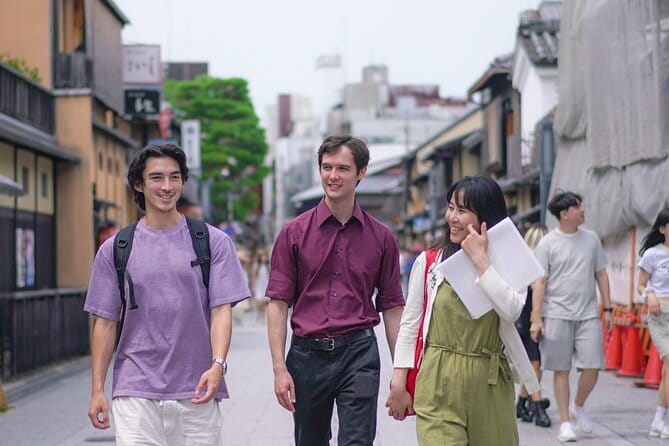
The meeting point is easy to find if you use the Keihan Line. Meet in front of the statue of Izumo-no-Okuni, just outside Exit 5 of Gion Shijo Station. Your guide carries an orange MagicalTrip Tour signboard.
Arrive early. This tour starts on time, and you cannot join later, reschedule, or receive a refund if you miss the group. That strict rule matters here because the tour moves on foot through several sites, and there is no practical way to catch up once the group has left.
The route begins in Gion, Kyoto’s famous geisha district. The first section is not simply a stroll for photographs. The guide introduces the history of Japanese tea and explains how matcha is made before taking you to a well-known matcha shop. You get useful context before the tea ceremony, so the final activity does not feel like an isolated demonstration.
The Gion portion lasts about 30 minutes. That is enough time for an introduction and a short walk, but not enough for a full district tour. If you want to study Gion’s lanes, shops, and traditional architecture at a slow pace, return on your own another day.
Kennin-ji Temple and the value of a guided visit
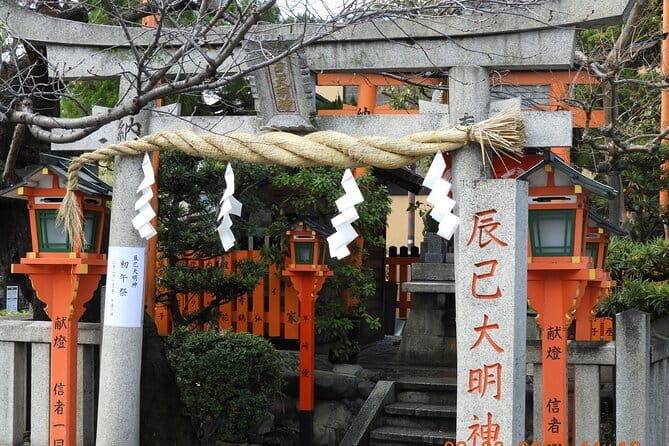
Kennin-ji is the tour’s main temple stop. It has stood for centuries and gives you a chance to see a formal religious site within the same part of Kyoto as Gion. The visit lasts about 30 minutes, with admission included.
That half hour is best viewed as a focused introduction, not a complete temple exploration. Your guide can point out details you might otherwise pass without noticing, while you avoid the small hassle of finding the entrance and paying separately. The trade-off is pace. You will have limited time to linger, sit quietly, or examine every building and garden.
I like this pairing of Gion and Kennin-ji because the two stops serve different purposes. Gion introduces the public face of tea culture, while the temple offers a quieter setting for understanding Japanese aesthetics and religious space. The tour later connects those ideas to the tea bowl and the ceremony itself.
The two temple entrance fees are included in the price. That is useful in Kyoto, where several small admissions can quickly add to the cost of a busy day.
Other Kyoto days people book alongside this one:
- PERFECT KYOTO 1-Day Bus Tour
★ 5.0 · 13,518 reviews - Kyoto: Fushimi Inari, Kinkakuji, Bamboo Grove 1 Day Bus Tour
★ 4.8 · 4,316 reviews - Kyoto: Tea Ceremony in a Traditional Tea House in Kiyomizu
★ 4.9 · 3,519 reviews
Craft shops, raku bowls, and the idea of wabi-sabi
The middle of the walk turns to Kyoto crafts. You visit craft shops, then stop at a tea bowl shop where raku pottery takes center stage. The guide explains how each bowl has its own form, past, and meaning.
This is one of the most interesting parts for anyone who wants more than a quick cup of green tea. A tea bowl is not just a container. Its shape, surface, weight, and irregularities affect the way tea is prepared and served. The emphasis on individual character also gives you a practical way to understand wabi-sabi, the appreciation of simplicity, imperfection, and change.
The schedule allows about 30 minutes for the craft portion. That should give you an introduction to the objects, but shopping time may be limited. If you are serious about buying ceramics, ask the guide how much time remains before making a purchase. The tour is built around learning and walking, not a long browse through every shop.
The craft stop also helps explain why the final ceremony is more than a photo opportunity. By the time you reach the tea house, you have seen the drink, the setting, and one of the key objects used in tea practice. The sequence gives the experience a clear shape.
A quiet temple and garden away from the main route
The itinerary includes a visit to a less prominent temple and garden in Kyoto Prefecture. The exact temple name is not provided, so you should not book this expecting a specific famous landmark.
That uncertainty is part of the appeal, but it also affects your planning. The stop is described as a quiet temple and garden, with about 30 minutes set aside. You can expect a more subdued pause in the walk, useful for seeing how a garden and temple setting support the calm mood associated with tea.
Do not expect a long garden visit or a major sightseeing stop. The tour has several parts to fit into roughly three and a half hours, so the guide will keep the group moving. If your priority is one particular temple, this is not the best format. If you like a guided route that mixes well-known and less prominent places, it makes sense.
The walk connects the physical surroundings to the wabi-sabi theme. Simple materials, aged surfaces, and carefully arranged spaces become easier to notice once the guide has given you a few ideas to watch for.
Making matcha in a traditional Japanese house
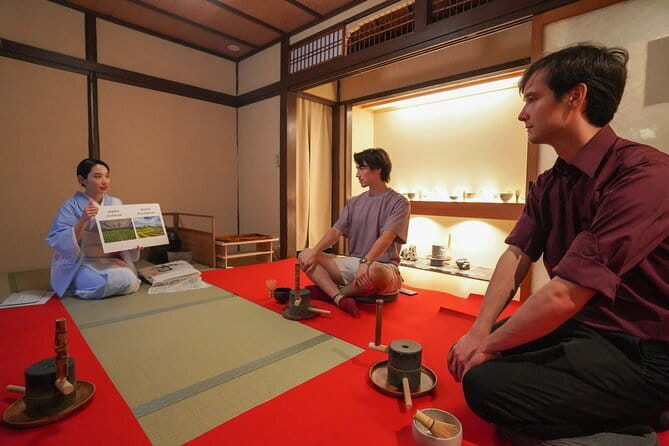
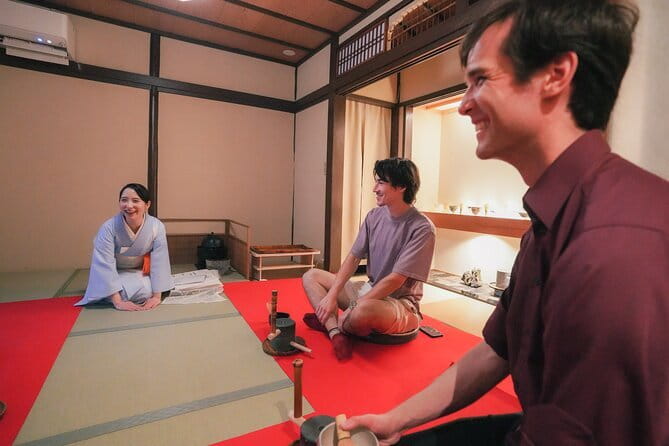
The final stop is the heart of the experience. At the Chayu tea ceremony, you spend about one hour in a real tea house and receive instruction from a tea master. You make matcha, then drink it in a traditional Japanese house.
This is not described as a formal ceremony where you only sit and watch. The hands-on element matters. You get to take part in preparing the tea, which helps you understand the care behind the movements and the tools.
The setting also changes the pace of the day. After walking through Gion, visiting a temple, and looking at crafts, you have time to sit and focus on one activity. The tea ceremony works best when you treat it as a cultural lesson rather than a performance. You do not need to know the rules in advance. The tea master provides the instruction.
Matcha is included, and the ceremony admission is covered. Additional food and drinks are not included, so budget separately if you want anything beyond the listed tea experience.
Children must be at least six years old to take part in the ceremony. Younger children may come on the tour, but an adult must stay outside the facility with them during the tea experience. That rule is important for families because the last hour is not a drop-in activity for very young children.
The tour ends at the tea experience location, at 4-chōme-172-7 Kiyomizu in Higashiyama Ward. Since you do not return to Gion Shijo Station, check your plans for the rest of the day before booking. The ending point is in the Kiyomizu area, which may be useful if you plan to continue sightseeing there.
Same city, a completely different kind of day:
- Kyoto Geisha Walking Tour: Gion District & Hidden Gems
★ 4.7 · 3,273 reviews - Kyoto: Tea Ceremony Ju-An at Jotokuji Temple
★ 4.9 · 3,207 reviews - Kyoto: Gion Magical Night Walking Tour with Geisha Trivia
★ 4.9 · 2,393 reviews - Kyoto: 45-Minute Tea Ceremony Lesson Experience
★ 4.3 · 2,378 reviews
What the $94.45 price really covers
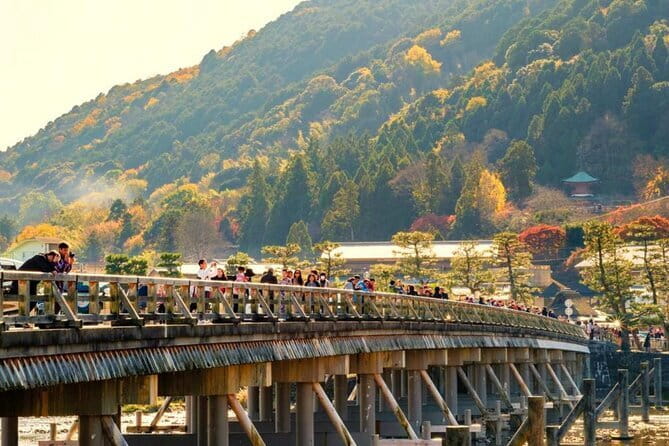
At $94.45 per person, this is not the cheapest way to see a Kyoto temple or drink matcha. The price becomes easier to justify if you want several linked activities in one booking: an English-speaking guide for about three hours, admission to two temples, a guided tea ceremony, matcha, and photos taken during the tour.
The small group also affects the value. With a maximum of seven people, you should have more room to ask questions than on a large city tour. That can matter during the pottery discussion and tea instruction, where a clear view and direct explanation improve the experience.
You are paying for structure as much as admission. The guide handles the route between Gion, the temples, craft shops, and the tea house. That saves you from working out the order, finding each entrance, and fitting the sites together yourself.
Still, the value depends on your interests. If you already have a temple-heavy Kyoto schedule and plan to attend a separate tea ceremony, you may prefer to spend the money elsewhere. If you want one compact introduction to tea, temples, crafts, and wabi-sabi, the combination is sensible.
The experience has a 4.9 rating from 41 ratings and a 98 percent recommendation rate. Those figures suggest strong overall satisfaction, but they should not erase the one practical concern: guide communication can vary. One critical rating describes very soft English that was hard to hear, along with uncertainty about some of the places visited. The guide tried to help, but the problem made the tour frustrating for that participant.
You can reduce the risk by staying close to the guide and asking for repetition when needed. The group cap helps, but it cannot guarantee a particular guide’s speaking volume or level of detail.
Timing, weather, and walking comfort
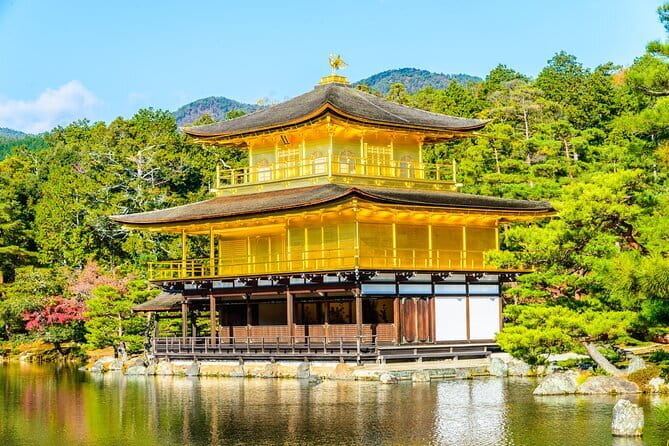
The advertised duration is about three hours and 30 minutes. The listed stops add up to roughly 2.5 hours, including the one-hour ceremony, with the remaining time used for walking, transitions, and group movement.
You begin at Gion Shijo Station and finish in the Kiyomizu area. The tour is near public transportation, but you should not treat it as a station-to-station loop. Wear shoes that can handle city walking and temple grounds.
Kyoto’s weather deserves real attention. Summer highs can reach 40°C, while winter lows can fall to -5°C. In hot weather, carry water and dress lightly. In cold weather, wear layers and bring protection against the chill. Unsuitable weather can lead to cancellation for safety reasons.
The tour can accommodate most people, but the supplied information does not promise a specific accessibility arrangement. If you have mobility concerns, contact the provider before booking and ask about the walking route, temple surfaces, and access to the tea house.
The booking uses a mobile ticket, which is convenient for a day of sightseeing. Free cancellation and rescheduling are available until 24 hours before the start time. After that deadline, changes are not accepted and the amount paid is not refunded.
Who will get the most from this Kyoto experience
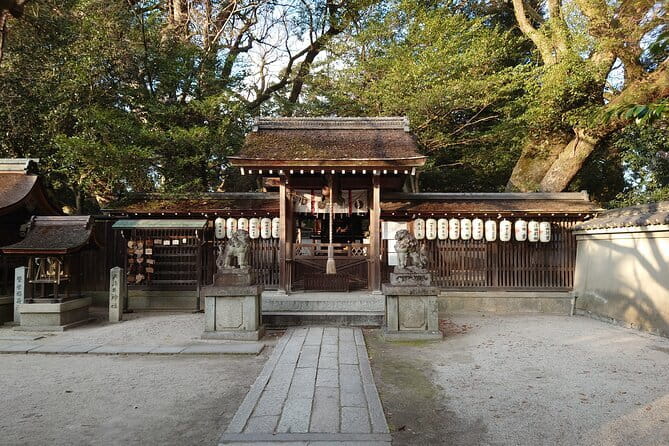
I would choose this tour if you are visiting Kyoto for the first time and want a guided introduction to traditional culture without committing to a full-day program. The route gives you several connected subjects in one morning or afternoon: tea, temples, gardens, ceramics, and the tea ceremony itself.
It also suits you if you prefer asking questions rather than reading every explanation from a sign. The small group should make that easier, and the guide takes care of navigation.
Families with children six and older can take part in the ceremony. Families with younger children need to plan for one adult to remain outside during the final activity. That makes the tour less convenient for families with toddlers or preschool-age children.
I would be more cautious if you need highly detailed historical interpretation at every stop. The tour’s appeal is its broad mix, and each site receives limited time. The soft-speaking guide problem in one low rating is another reason to keep expectations realistic.
Should you book The Way of Tea?
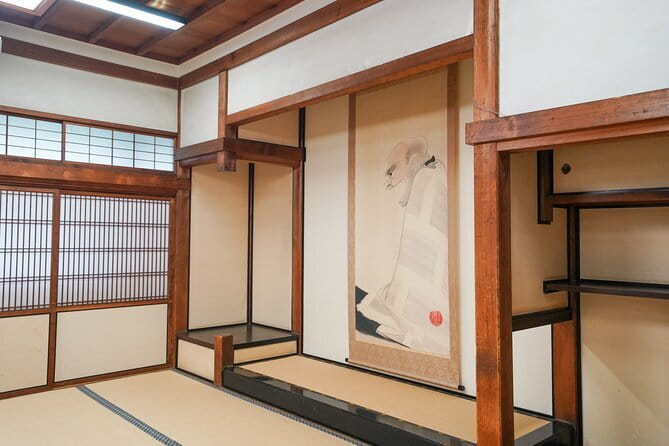
Book it if you want a compact, well-organized look at Kyoto’s tea culture, with the added texture of temples, gardens, and raku pottery. The best part is the progression from Gion to tea tools and aesthetics, ending with your own matcha-making session in a traditional house.
Skip it if you want a slow temple day, extensive shopping time, or a ceremony focused only on formal ritual. Also think twice if you are likely to arrive late, travel with a child under six, or need a guaranteed level of English commentary.
For many visitors, $94.45 is fair for the small group, two temple admissions, local guide, tea ceremony, matcha, and photos. Just arrive early at the Izumo-no-Okuni statue, dress for Kyoto’s weather, and see this as a connected cultural lesson rather than a checklist of famous sights.
FAQ
Where does the tour begin?
It begins in front of the Statue of Izumo-no-Okuni, just outside Exit 5 of Gion Shijo Station on the Keihan Line. The guide holds an orange MagicalTrip Tour signboard.
Where does the tour end?
The tour ends at the tea experience location at 4-chōme-172-7 Kiyomizu in Kyoto’s Higashiyama Ward.
How long does the experience last?
The experience lasts approximately three hours and 30 minutes. The tea ceremony itself takes about one hour.
Is the tea ceremony included in the price?
Yes. The tea ceremony, matcha, and entrance fees for two temples are included. Additional food and drinks are not included.
Can children join the tea ceremony?
Children must be at least six years old to join the tea ceremony. Younger children may come on the tour, but one accompanying adult must stay outside the facility during the ceremony.
What happens if I need to cancel?
You can cancel for a full refund or reschedule if you do so at least 24 hours before the experience starts. Cancellations or changes made less than 24 hours before the start time are not accepted.
Just added around Kyoto
- Private Guided Traditional Buddhist Cooking in Japan★ 5.0 · 16 reviews
- Kyoto: Gion Geisha District & Sake-in-Hand Walking Tour★ 5.0 · 37 reviews
- Your Private Vacation Photography Session In Kyoto★ 5.0 · 110 reviews
- Kyoto: Zen Meditation at a Private Temple with a Monk★ 5.0 · 25 reviews
- Traditional Japanese Washi Papermaking- Kyoto morning★ 5.0 · 77 reviews
- Kyoto Wagashi(Japanese sweets) Cooking Class near Fushimiinari★ 5.0 · 60 reviews
- Private Pewter Sake Cup Experience with a Kyoto Artisan★ 5.0 · 31 reviews
- Kyoto Private 6 hour Tour: English Speaking Driver Only, No Guide★ 5.0 · 88 reviews
Kyoto Tours, compared.
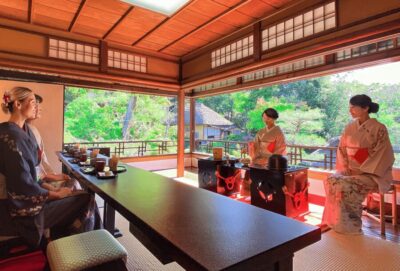
Tea Ceremony in a Traditional Tea House in Kiyomizu
Read our review →
Kyoto Geisha Walking Tour: Gion District & Hidden Gems
Read our review →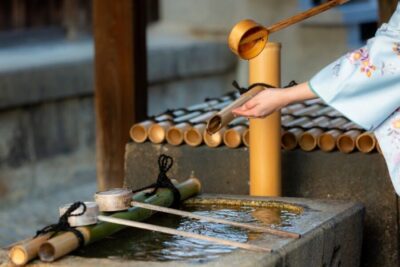

Gion Magical Night Walking Tour with Geisha Trivia
Read our review →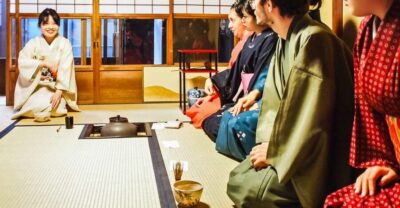

Gion Geisha District Walking Tour – Stories of Geisha
Read our review →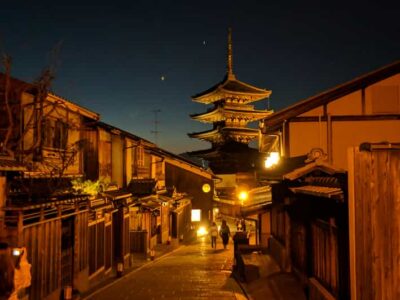
Best of Kyoto: Gion, Geisha, Pagodas & Cobblestones
Read our review →