
REVIEW · KYOTO TOURS
The right way to know Kyoto
Kyoto is easier to understand when someone helps you connect the shrines, temples, gardens, customs, and city streets. This private tour gives your group up to six people a flexible six-hour day with an expert guide, starting at Kyoto Station and ending there. You can focus on major sights, ask for quieter places, or learn how to use Kyoto’s trains and buses without spending your morning puzzling over maps.
I like two things right away. First, the guide can adjust the plan to your interests and walking speed. Families have used the day to keep teenagers engaged, while Tom adapted the pace for a 77-year-old guest. Second, the guides add practical help, from shrine etiquette to public transportation. The main caution is simple: this is a very active day, and the listed sights cannot all be enjoyed in depth within six hours.
In This Review
- Key points to know before booking
- What kind of Kyoto day is this?
- Fushimi Inari and its orange torii gates
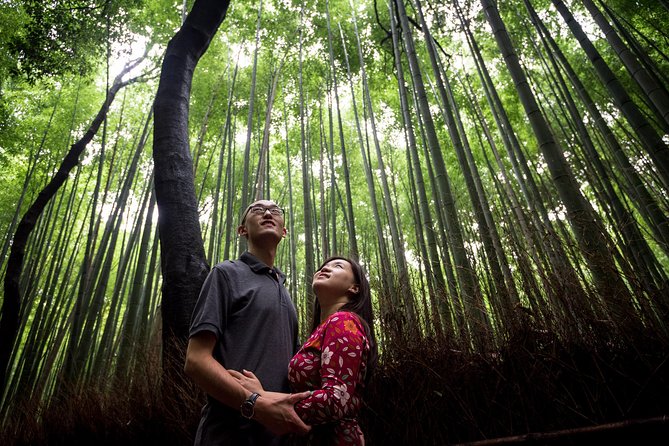
- Arashiyama and the Bamboo Forest Trail
- Kinkaku-ji, Kyoto’s Golden Pavilion
- Ginkaku-ji and its quiet Zen gardens
- Guides who shape the experience
- Walking, trains, buses, and the real pace
- What the $371.41 group price gets you
- Who should book this private Kyoto tour?
- My booking advice
- FAQ
- How long is the Kyoto tour?
- Where does the tour start?
- Where does the tour end?
- Is hotel pickup available?
- Is this a private tour?
- Which sites are suggested?
- Are entrance tickets included?
- Is transportation included?
- Are meals included?
- Can I cancel for a full refund?
Key points to know before booking
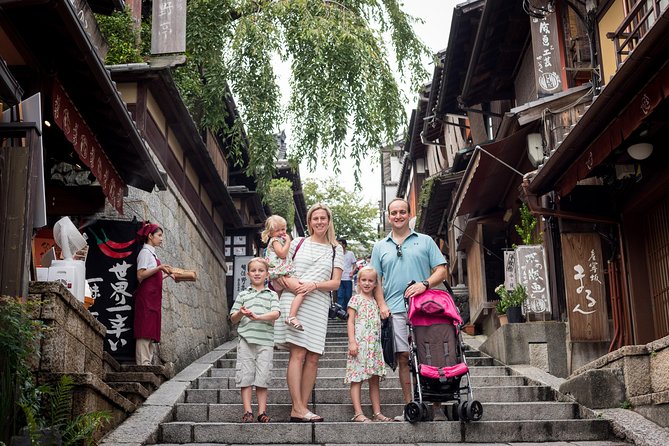
- Private group of up to six: You receive the guide’s attention rather than sharing the day with strangers.
- Four major Kyoto stops suggested: Fushimi Inari, the Bamboo Forest Trail, Kinkaku-ji, and Ginkaku-ji form the core plan.
- Walking and transit are central: Transportation is not included, and you may use trains, buses, or taxis during the day.
- Guides vary: Tom, Jose, Peter, Esteban, Cristobal, Laura, Brian, Adrian, Paco, and Kyoto native Maki are among the guides named in the tour material.
- The price works best for a full group: At $371.41 for up to six people, the per-person cost drops sharply when your party is larger.
- Plan ahead: The tour is booked an average of 59 days in advance, and free cancellation is available up to 24 hours before departure.
What kind of Kyoto day is this?

Think of this experience as a private orientation day rather than a fixed sightseeing bus loop. You meet at Kyoto Station at 9 a.m., then work with your guide to decide how to spend the next six hours. The route can include the famous places listed above, but the day is not meant to cover every major attraction in Kyoto.
That flexibility matters. Kyoto’s sights are spread across several areas, and moving between them takes time. Fushimi Inari is in the southeast, Ginkaku-ji sits in the northeast, Kinkaku-ji is farther northwest, and Arashiyama lies to the west. You can see several headline sights, but each added stop means less time for walking, explanations, photographs, or lunch.
Your guide should contact you before the tour to ask what you want to see. Use that opportunity well. Tell the company if you care most about Japanese history, religious customs, gardens, architecture, food streets, bamboo, or a fast list of major sights. The better you explain your priorities, the more useful the day becomes.
Other Kyoto days people book alongside this one:
- PERFECT KYOTO 1-Day Bus Tour
★ 5.0 · 13,518 reviews - Kyoto: Fushimi Inari, Kinkakuji, Bamboo Grove 1 Day Bus Tour
★ 4.8 · 4,316 reviews - Kyoto: Tea Ceremony in a Traditional Tea House in Kiyomizu
★ 4.9 · 3,519 reviews
Fushimi Inari and its orange torii gates
Fushimi Inari-taisha is one of Kyoto’s most recognizable sights. Its long path runs beneath thousands of orange torii gates, creating a striking corridor that leads up Mount Inari. The suggested visit lasts about an hour, and admission is free.
A guide adds value here by explaining how to behave at a Shinto shrine. One guide, Esteban, showed guests how to take part in an offering and explained details of Shinto practice along the way. That kind of instruction turns a quick photo stop into a cultural visit.
The main practical issue is pace. The torii path continues far beyond the first photographs, so an hour only gives you a taste of the site. If you want to walk farther uphill, you will need to shorten another stop. Ask your guide to choose the section that fits your energy and interests.
Fushimi Inari can also feel demanding because the day includes plenty of standing and walking. Comfortable shoes are essential. The guide can help you find better places for photographs, but you should not expect to have the entire shrine to yourself.
Arashiyama and the Bamboo Forest Trail
The Bamboo Forest Trail is listed as a 45-minute stop. It offers a change of mood from Kyoto’s temple grounds, with tall bamboo rising on both sides of the path. Admission to the trail itself is free.
The bamboo area is part of Arashiyama, a district where you can easily spend much longer than 45 minutes. Some versions of the tour have included more of the area, such as Nonomiya Shrine, Okochi Sanso Garden, Togetsukyo Bridge, Horin-ji Temple, and Monkey Park. Okochi Sanso has a small entry fee, and one especially useful tip is to allow time for its tea and memorial area.
You should not assume every Arashiyama stop will fit into this six-hour version. The bamboo path alone is the suggested visit. If you want gardens, the bridge, or Monkey Park, tell your guide before the day begins. The walk to Monkey Park is described as a hike, so it may not suit every group or every schedule.
I like this part of the tour for families and first-time visitors because it gives the day variety. You move from religious sites to a natural setting, then back to architecture and gardens. Still, Arashiyama is one of the places where a careful choice matters most. The more sights you add, the less time you have elsewhere.
Kinkaku-ji, Kyoto’s Golden Pavilion
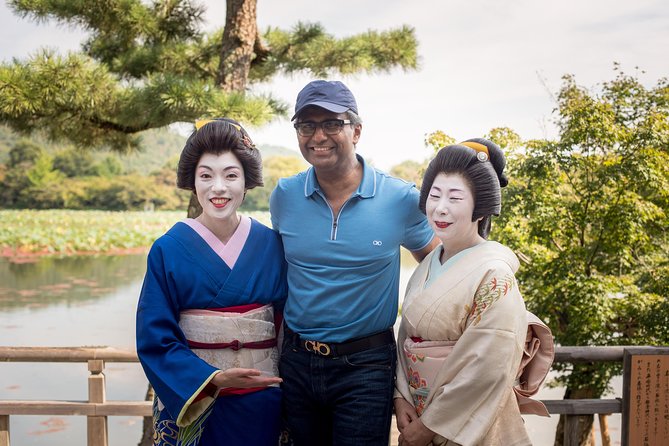
Kinkaku-ji is the famous Golden Pavilion, a Zen temple set beside reflective water and gardens. The suggested stop lasts one hour, but the admission ticket is not included.
This is one of Kyoto’s major icons, and it earns its place on a first visit. The pavilion is visually impressive, but the visit is more about viewing and photographing the building than exploring a large interior. Your guide can provide the historical and religious background that a quick walk around the grounds would otherwise miss.
The drawback is time and distance. Kinkaku-ji is not close to Fushimi Inari or Ginkaku-ji, so reaching it requires planning. Your guide may use public transportation or another local option, but you pay transportation costs separately. If your priority is a slow temple day, fitting Kinkaku-ji into a route with all the other suggested stops may feel rushed.
Ask about the exact order of stops. Starting at one end of the city and ending at another can waste time, while a well-planned route makes the six hours more productive.
Same city, a completely different kind of day:
- Kyoto Geisha Walking Tour: Gion District & Hidden Gems
★ 4.7 · 3,273 reviews - Kyoto: Tea Ceremony Ju-An at Jotokuji Temple
★ 4.9 · 3,207 reviews - Kyoto: Gion Magical Night Walking Tour with Geisha Trivia
★ 4.9 · 2,393 reviews - Kyoto: 45-Minute Tea Ceremony Lesson Experience
★ 4.3 · 2,378 reviews
Ginkaku-ji and its quiet Zen gardens
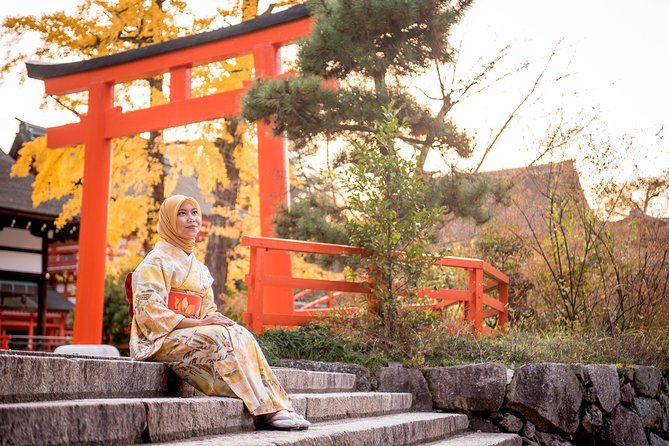
Ginkaku-ji, the Silver Pavilion, is known less for silver than for its calm gardens and restrained design. The suggested visit lasts one hour, and the entrance fee is extra.
This may be the best stop for anyone interested in Japanese garden design and the idea of beauty through simplicity. The grounds offer a quieter counterpoint to Kinkaku-ji’s bright exterior. A guide can help you notice details in the garden and explain how the site fits into Kyoto’s religious and artistic culture.
Ginkaku-ji is also a good place to slow down. The tour can become a race if you try to collect every famous sight, so tell your guide if you would rather spend meaningful time in two or three places instead of making a quick circuit of four.
The tour material describes the itinerary as suggested, not guaranteed as a complete fixed route. That is important. You may see Ginkaku-ji, but the final plan depends on your requests, timing, and the other stops you select.
Guides who shape the experience
The guide makes or breaks a private tour, and the names connected with this experience show a varied team. Tom has been praised for strong explanations of Japanese and Kyoto history, keeping teenagers interested, and adjusting the walking pace for an older guest. He has also led an Arashiyama day that included several temples, gardens, the bridge, and Monkey Park.
Jose and Jose David are associated with flexible planning, useful transit help, and clear answers to questions about Japanese life and religion. Esteban has handled tight schedules, including a same-day Shinkansen trip from Tokyo, and adapted plans when guests changed their minds. Peter has been used for a first day in Kyoto and for routes that include less obvious temples and gardens.
Other named guides include Laura, Brian, Cristobal, Adrian, Paco, and Maki. Maki is identified as a Kyoto native. The team is not limited to Japanese-born guides, though. One critical account describes Paco as a Spanish graduate student whose accent was difficult for that guest to follow and whose explanations felt too light.
That is a fair point to keep in mind. The company presents the guide as an expert in Japanese culture and history, but actual depth and communication style can differ by person. If a particular guide matters to you, request that person directly if possible. Before starting, explain how much historical detail you want and ask questions as you go.
Walking, trains, buses, and the real pace
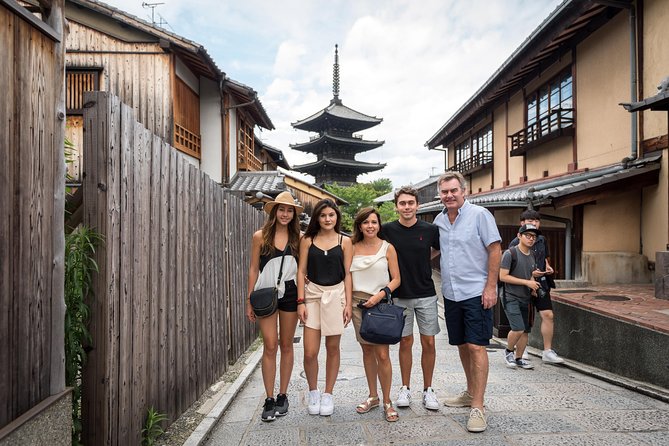
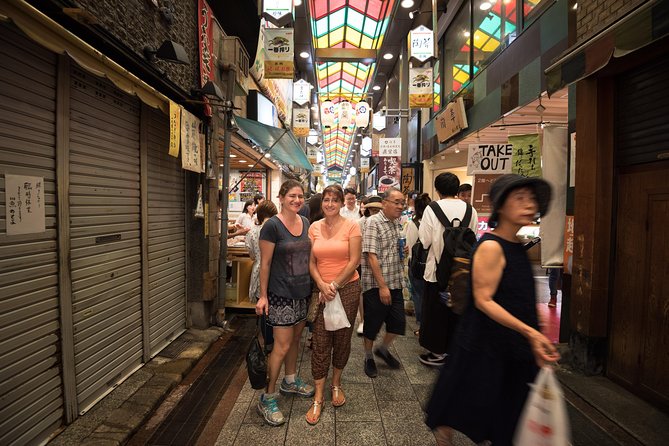
The tour is called a walking tour, but it is not six hours of walking from one end of Kyoto to the other. You will likely combine walking with public transportation, and transportation is not included in the price. Some groups have used trains and buses, while others have combined walking with local taxis.
This is one of the tour’s strongest practical features. Kyoto’s transport system can be confusing at first, and a guide can show you how to reach sights, rather than simply driving you past them. After the tour, you may feel more able to get around independently.
It is also a physical day. One family reported walking close to 28,000 steps during an extended version. That is not a promise for this six-hour tour, but it shows how quickly the mileage can build when you visit several districts. Wear sensible shoes, bring water, and be honest about your pace.
Most people can participate, but the activity involves extended walking and time on your feet. If someone in your group has limited stamina, say so at the start. Tom’s reported ability to adjust pace is useful, but no guide can remove the distances between Kyoto’s major sights.
What the $371.41 group price gets you
The price is $371.41 per group of up to six people. That covers the expert guide, not entrance tickets, transportation, or meals. For six people, the guide portion works out to roughly $62 per person. For two people, it is about $186 each, so the value improves greatly with a larger party.
I see the price as reasonable for a full private day if you want personal planning and help with transit. A private guide can save you the mental work of deciding which temple comes next, how to connect distant areas, and how much time to allow. That convenience has real value on a first Kyoto visit.
The price is less compelling if you prefer a slow, independent day or only want one district. You can visit free sites such as Fushimi Inari and the Bamboo Forest Trail without paying admission, while Kinkaku-ji and Ginkaku-ji require extra tickets. Add train, bus, taxi, and meal costs to your budget.
The strongest value comes when your group has limited time, mixed interests, or different walking needs. A same-day visitor from Tokyo used the flexibility to see major sights before catching an evening train. That kind of tight scheduling is exactly where a private guide earns the fee.
Who should book this private Kyoto tour?
I would choose this tour for a first visit, especially if you have only one day in Kyoto. It is also a good fit for families, small groups, and anyone who wants history and cultural context instead of a quick photo collection.
It suits you particularly well if you:
- Want to shape the day around personal interests
- Need help using Kyoto trains and buses
- Prefer a private guide to a large group
- Want both famous sights and quieter places
- Are comfortable walking for much of the day
- Have a short visit and want to make each hour count
I would think twice if you want a fixed, slow itinerary with guaranteed long visits at every listed site. Six hours is not enough for a relaxed exploration of Fushimi Inari, Arashiyama, Kinkaku-ji, and Ginkaku-ji all at once. Choose your priorities before you meet.
The tour is offered daily from 9 a.m. to 3 p.m. at the stated schedule, with pickup offered, while the listed meeting point is Kyoto Station. Confirmation arrives at booking, and you can cancel for a full refund up to 24 hours before the start time. Changes or cancellations inside that window are not accepted.
My booking advice
Book this tour if you want Kyoto explained as you move through it, not just photographed. The best version of the day will come from clear planning: name your must-see sites, tell the guide your walking limits, and decide if you prefer four major stops or fewer places with more time.
For a group of five or six, the cost is easier to justify. For a couple, I would book only if transit planning, cultural explanations, or a custom route are worth paying for. Kyoto is manageable alone, but a strong guide can turn a scattered day into a coherent one.
The main question is not can you see everything. You cannot, at least not well in six hours. The better question is which parts of Kyoto you want to understand, and this private format gives you a good chance to make those choices wisely.
FAQ
How long is the Kyoto tour?
The tour lasts approximately six hours, with the stated operating time from 9 a.m. to 3 p.m.
Where does the tour start?
The meeting point is Kyoto Station, at Higashishiokoji Kamadonocho in Shimogyo Ward.
Where does the tour end?
The activity ends back at the meeting point.
Is hotel pickup available?
Pickup is offered, although the listed meeting point is Kyoto Station.
Is this a private tour?
Yes. Only your group participates, with a maximum group size of six people.
Which sites are suggested?
The suggested stops are Fushimi Inari-taisha Shrine, the Bamboo Forest Trail, Kinkaku-ji Temple, and Ginkaku-ji Temple.
Are entrance tickets included?
No. Entrance tickets are not included. Kinkaku-ji and Ginkaku-ji require admission fees, while Fushimi Inari and the Bamboo Forest Trail are listed with free admission.
Is transportation included?
No. Transportation is not included. The tour may use public transportation or local taxis, and those costs are paid separately.
Are meals included?
No. Meals are not included in the tour price.
Can I cancel for a full refund?
Yes, if you cancel at least 24 hours before the experience start time. Cancellations or changes made less than 24 hours in advance are not accepted for a refund.
Just added around Kyoto
- Taste of Nishiki Market Walking Food Tour with Local guide★ 5.0 · 17 reviews
- Kyoto: Sushi Making Class with Sushi Chef★ 4.8 · 64 reviews
- Kyoto: City Secrets eBike Tour★ 4.9 · 196 reviews
- Sacred Pathways: Discover the Philosopher’s Path of Kyoto★ 4.9 · 20 reviews
- Private Tour to Monkey Park and Arashiyama Highlights★ 5.0 · 22 reviews
- Private Nara Tour from Osaka – Meet at Your Hotel★ 5.0 · 22 reviews
- Private Sake Tasting in Central Kyoto with Sake Sommelier★ 5.0 · 13 reviews
- Kyoto : Private Custom Walking Tour With A Local Guide★ 4.6 · 144 reviews
Kyoto Tours, compared.
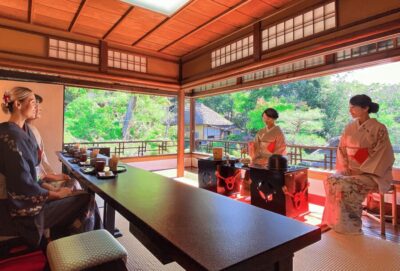
Tea Ceremony in a Traditional Tea House in Kiyomizu
Read our review →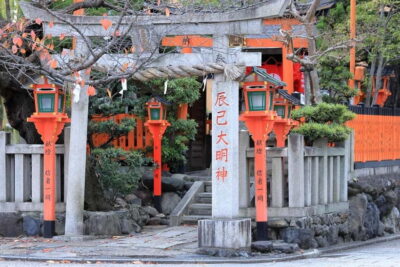
Kyoto Geisha Walking Tour: Gion District & Hidden Gems
Read our review →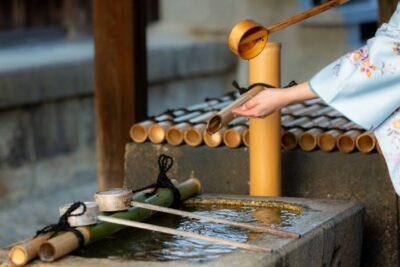
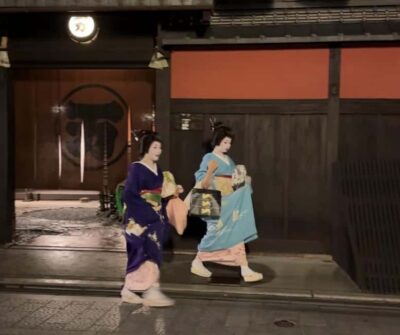
Gion Magical Night Walking Tour with Geisha Trivia
Read our review →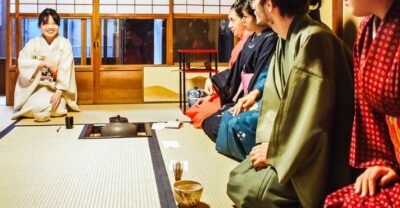
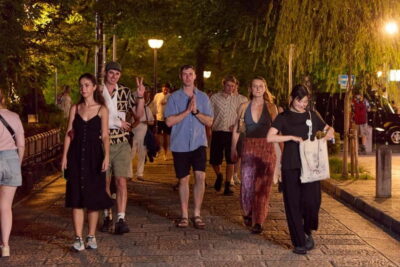
Gion Geisha District Walking Tour – Stories of Geisha
Read our review →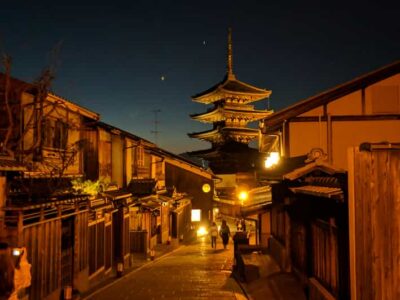
Best of Kyoto: Gion, Geisha, Pagodas & Cobblestones
Read our review →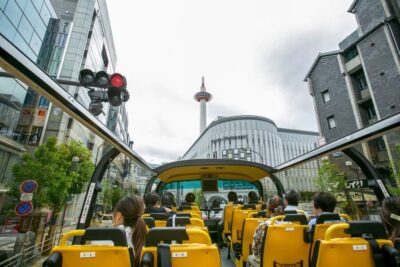
Browse the lists this tour appears in