
REVIEW · WALKING TOURS
Sunset Walking Tour at Peace Park, Hiroshima
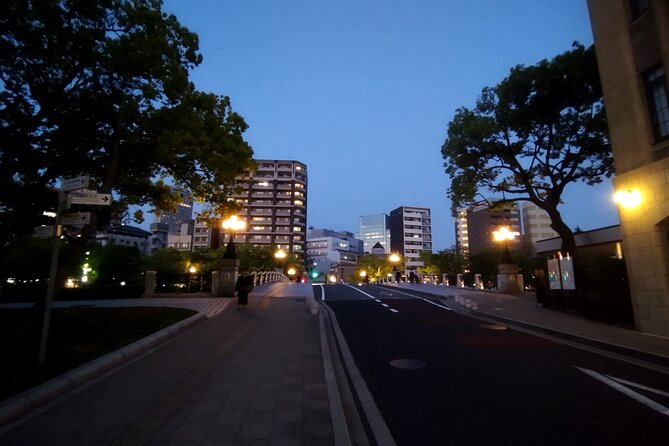
Hiroshima’s Peace Park changes character as daylight fades. The A-bomb Dome catches the last light, the fountains and memorials begin to glow, and the park grows quieter. This one-hour private walk with English-speaking guide Joshua focuses on the meaning of the site without leaving you with only the museum’s sadness.
I like the timing for two reasons: you avoid the worst heat and crowds, and evening light gives the monuments a calm, striking setting. I also like the personal format, since Joshua can adjust the route and discussion for your group, including families and visitors who already toured the museum. The main drawback is that one hour can feel brief, especially if you want a carefully structured explanation of every major monument.
In This Review
- Key points to know before booking
- Why sunset works so well at Hiroshima Peace Park
- Starting at the Atomic Bomb Hypocenter Monument
- The Peace Bell and the park’s smaller details
- The A-bomb Dome at the changing light
- The Cenotaph, Flame of Peace, and evening water
- What Joshua’s guiding style means for you
- Is $32.66 a fair price for one hour?
- Who will get the most from this walk?
- Practical planning for the 5:30 pm start
- Should you book the Peace Park sunset walk?
- FAQ
- How long is the Sunset Walking Tour at Peace Park?
- What time does the tour start?
- Where does the tour meet?
- Where does the tour end?
- Is this a private tour?
- Is the Peace Memorial Park admission included?
- Is the tour available in English?
- What happens if the weather is poor?
Key points to know before booking
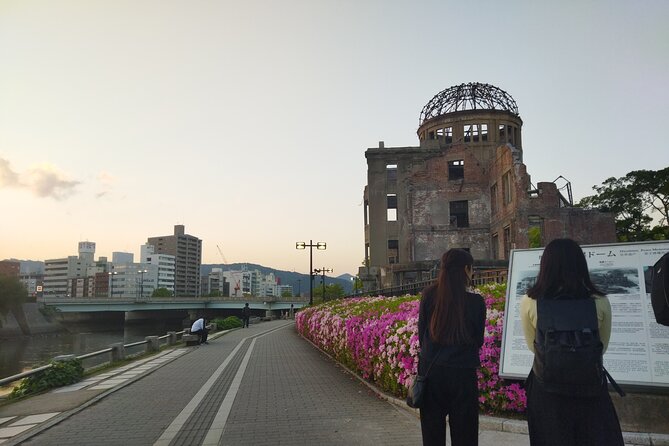
- Sunset changes the mood: See the A-bomb Dome, Peace Flame, fountain, and museum lights as the park shifts from day to evening.
- Joshua leads the walk: Expect clear English explanations about the park, the atomic bomb, World War II, and Japanese culture.
- Private format: Only your group takes part, so the pace and subject matter can be adjusted.
- Meeting point matters: Begin at the Hiroshima Atomic Bomb Hypocenter Monument, then return there after roughly one hour.
- A useful museum companion: The tour suits people who have already visited the museum as well as those who have not.
- Good value for a short visit: At $32.66 per person, the price pays for a focused guide rather than admission, since the park itself is free.
Why sunset works so well at Hiroshima Peace Park
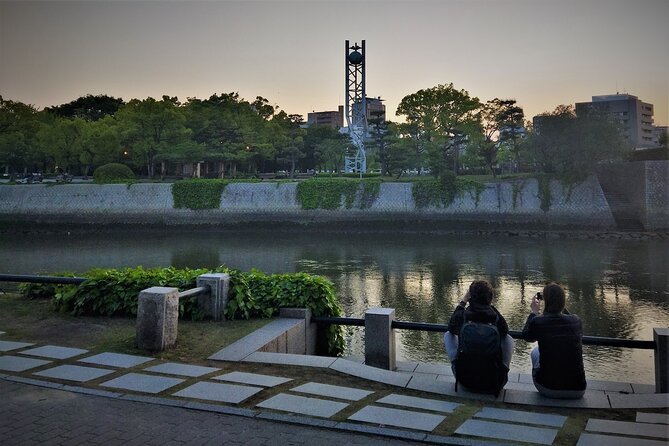
Hiroshima Peace Memorial Park is not one single monument. It is a broad memorial area filled with buildings, statues, bells, water, trees, and places of remembrance. In full daylight, you can move quickly from one point to the next. At sunset, the pace naturally slows.
That matters here. The subject is difficult, and the park can feel emotionally heavy. A twilight walk gives the experience a quieter rhythm. You have time to look closely, listen, and consider what each place means without trying to cover a large site in the middle of a hot afternoon.
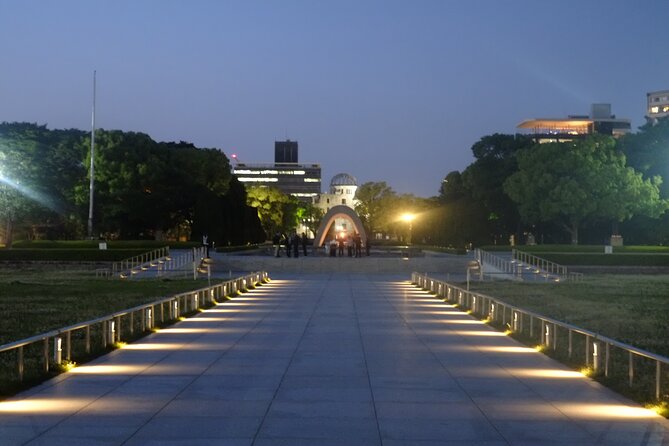
The evening setting also adds a visual layer. The Peace Bell, A-bomb Dome, Children’s Monument, Cenotaph, Peace Flame, and museum fountain are all described as well lit after dark. You should get several good photo opportunities, though the value of the tour is not just photographic. The changing light helps you notice the contrast between the park’s peaceful appearance and the event it commemorates.
I particularly like the idea of pairing this walk with a morning trip to Miyajima. That gives you a full day with two very different Hiroshima experiences, then leaves the evening for a reflective walk through the memorial park. The tour starts at 5:30 pm, so check the season and sunset time when planning. The experience is sold as a sunset tour, but the precise amount of remaining daylight will vary.
More Walking Tours in Hiroshima
- Hiroshima Historical Walking Tour – Why A-Bomb was Dropped
★ 4.8 · 893 reviews - Hiroshima Peace (Heiwa) Walking Tour at World Heritage Sites
★ 5.0 · 872 reviews - Hiroshima City 4hr Private Walking Tour with Licensed Guide
★ 5.0 · 437 reviews
Starting at the Atomic Bomb Hypocenter Monument
The meeting point is the Hiroshima Atomic Bomb Hypocenter Monument at 1-chōme-5-25 Ōtemachi, Naka Ward. This is a meaningful place to begin because it directly anchors the tour to the location associated with the atomic bombing.
Starting here gives Joshua a natural way to explain the site before leading you through the wider park. You do not begin with a vague overview or a general city walk. You begin at one of Hiroshima’s most important memorial points, then move outward through the surrounding area.
The tour ends back at the same meeting point. That is useful if you have a dinner reservation, a planned train journey, or another evening activity. It also removes the need to find a new ending location in an unfamiliar part of the city.
The park is near public transportation, and the meeting point is stated clearly. Still, give yourself enough time to arrive. A memorial site is not the place to rush in at 5:29 pm while trying to match a phone map.
The Peace Bell and the park’s smaller details
The Peace Bell is one of the listed stops, but this walk is not simply a checklist of famous sights. The larger park contains many details that are easy to pass without understanding, including the T-shaped bridge, memorial trees, and smaller monuments connected to the bombing and its victims.
The Tree that Survived the A-bomb is another important stop. Its presence offers a different way to think about survival and recovery. Instead of only looking at buildings and dates, you encounter a living reminder within the park.
The Children’s Monument and Fountain of Prayer bring a more personal and emotional focus. The Korean Victims Monument adds another part of the story that can be missed if you explore alone or only visit the best-known memorials.
A major strength of a private walk is the chance to ask about these less obvious features. You can tell Joshua what you already know and what you want explained. If you have already visited the museum, you can use the hour to focus on the outdoor memorials. If you have not, you can ask for enough background to make the park easier to understand.
The A-bomb Dome at the changing light
The A-bomb Dome is likely to be one of the visual highlights. At sunset, the remains can appear against a changing sky, then take on a different quality as evening lighting comes on.
The structure is famous, but its meaning deserves more than a quick photograph. A guide can help place it within the story of the bombing and the later creation of the Peace Park. Joshua’s role is especially useful here because the tour description promises clear, concise explanations rather than a long academic lecture.
The walk’s tone is intended to be hopeful rather than overwhelming. That will suit you if you want to understand Hiroshima while also having room to think. It may feel too gentle if you want a forceful, highly emotional presentation or an extended political discussion.
One of the clearest cautions comes from the tour’s own format: the hour is relaxed and personalized. That can be a benefit for families, older visitors, and anyone affected by heat. It can also mean the route feels less fixed than expected. If you want certain monuments covered, tell Joshua early in the walk.
Same city, a completely different kind of day:
- Peaceful Hiroshima & Miyajima UNESCO 1 Day Bus Tour
★ 5.0 · 5,309 reviews - Hiroshima: Hiroshima and Miyajima UNESCO Sites 1-Day Tour
★ 4.9 · 2,330 reviews - Hiroshima / Miyajima Full-day Private Tour with Government Licensed Guide
★ 5.0 · 1,298 reviews - Hiroshima in a Nutshell: Morning Bike Adventure
★ 5.0 · 524 reviews
The Cenotaph, Flame of Peace, and evening water
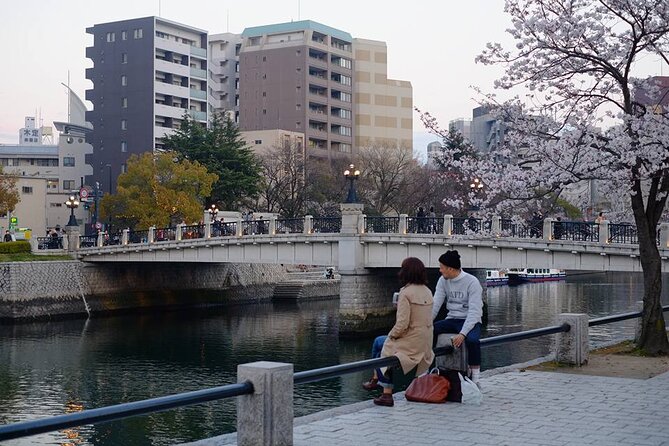
The Cenotaph and Flame of Peace form the symbolic center of the park for many visitors. Seeing them after the sun has gone down can make the park feel still and ceremonial.
The Pond of Peace and the museum fountain add reflections and movement to an otherwise quiet setting. The fountain is specifically noted as becoming part of the evening scene as the lights come on. These are small visual changes, but they help the walk feel different from a standard daytime visit.
You should not expect a show or a staged nighttime event. The appeal is subtle: lights, water, open space, and fewer distractions. If you enjoy taking photographs, bring a phone or camera and allow a little time at each location. The tour includes a mobile ticket, but no admission ticket is needed for the park itself.
The museum is part of the wider park itinerary, but this experience is a walking tour rather than a museum admission visit. If the museum is important to you, plan it separately and do not assume this one-hour activity replaces it. The guide can discuss the bombing and its impact, but the walk’s main setting is outdoors.
What Joshua’s guiding style means for you
Joshua is identified as the English-speaking guide, and the strongest part of the experience is the personal conversation. He explains the park, the atomic bomb’s impact, World War II, and aspects of Japanese culture in clear language. The format gives you room to ask questions rather than simply follow a script.
That worked well for groups with children, including an eight-year-old who asked many questions. It also suited people who wanted a gentle pace and more insight into details they might otherwise miss.
The tone is intentionally laid back. Some visitors will find that respectful and appropriate for a memorial site. You can take in the park without being pushed from one stop to the next. Others may want more energy, a stronger opening explanation, or a more tightly planned route.
This is where you should set expectations carefully. The experience has a high overall rating of 4.8 from 13 reviews, with 92 percent recommending it, but one detailed account found the hour under-structured and not very engaging. That criticism is useful. This is not a large, rehearsed sightseeing production. It is a quiet private walk that depends partly on the questions you bring.
At the start, tell Joshua if you have visited the museum, how much historical background you want, and which monuments matter most to you. That simple step should help the hour feel more purposeful.
Is $32.66 a fair price for one hour?
At $32.66 per person, this is not the cheapest way to stroll through a free public park. You are paying for the guide’s time, English explanation, and the ability to shape the experience around your group.
The value is strongest for first-time visitors who want context without committing to a longer tour. It is also strong for couples or families who prefer a private pace. A private tour can cost more than joining a large group, but here only your group participates, so you can ask questions freely and avoid waiting for strangers.
The price is less attractive if you are comfortable reading the park’s signs, have already researched the monuments, or want a tour lasting several hours. One hour gives you a thoughtful introduction, not an exhaustive examination of every memorial.
The free admission to the park keeps the total cost straightforward. You do not need to budget for an entry ticket to the outdoor memorial area. The mobile ticket is convenient, particularly if you are fitting the walk between other Hiroshima plans.
Who will get the most from this walk?
I would recommend this experience to:
- First-time visitors who want the park explained in plain English.
- People who have toured the museum and want a quieter outdoor follow-up.
- Families who need a flexible pace and the freedom to ask basic or detailed questions.
- Photographers looking for the A-bomb Dome, fountain, flame, and memorials in evening light.
- Cruise ship passengers or day visitors who need a compact experience.
- Anyone trying to avoid the midday heat.
You may want a different option if you want a long, formal lecture, a tightly timed route, or a tour built around the museum interior. You should also think twice if poor weather is likely, since the activity requires good weather and may be moved or canceled.
The private arrangement is useful for mobility needs as well. The route has been adjusted in the past to make it less tiring and wheelchair accessible, but you should communicate your needs before the walk so the plan can be set properly. Service animals are allowed, and most people can participate.
Practical planning for the 5:30 pm start
Allow time to reach the Atomic Bomb Hypocenter Monument before 5:30 pm. The activity ends where it starts, and the advertised duration is about one hour.
The best clothing choice depends on the season. The tour is promoted as a way to escape the heat, but summer evenings can still be warm. Comfortable walking shoes are sensible, and a small umbrella may be useful if the forecast is uncertain. The tour requires good weather, so check the conditions before setting your evening schedule.
The booking pattern suggests planning ahead. This experience is booked an average of 45 days in advance, which is a useful warning if your Hiroshima dates are fixed. Free cancellation is available until 24 hours before the start time for a full refund. Changes or cancellations inside that window are not accepted for a refund, and the local time cutoff applies.
If bad weather cancels the tour, you will be offered another date or a full refund. That policy makes it easier to reserve early, but keep a backup plan for the evening in case conditions change.
Should you book the Peace Park sunset walk?
Book it if you want a quiet, personal introduction to Hiroshima’s memorial park, especially after a morning at Miyajima or a daytime museum visit. The sunset timing, private format, and clear English commentary give you a useful way to see the park’s major monuments without rushing.
Go in knowing that the tour is short and deliberately relaxed. Ask at the beginning for the sights and topics you care about, since the flexible approach may otherwise feel loose. At $32.66, it is a fair buy for personal guidance and evening atmosphere, but not a substitute for spending time in the museum or studying Hiroshima in depth.
For many visitors, the best reason to book is the balance of seriousness and hope. You see the park’s memorials in a quiet light, hear the story explained with care, and leave with more than a collection of photographs.
FAQ
How long is the Sunset Walking Tour at Peace Park?
The tour lasts approximately one hour.
What time does the tour start?
The stated start time is 5:30 pm.
Where does the tour meet?
The meeting point is the Hiroshima Atomic Bomb Hypocenter Monument at 1-chōme-5-25 Ōtemachi, Naka Ward, Hiroshima, 730-0051, Japan.
Where does the tour end?
The activity ends back at the meeting point.
Is this a private tour?
Yes. Only your group participates in the activity.
Is the Peace Memorial Park admission included?
The park has free admission. The experience is an outdoor walking tour and does not state that museum admission is included.
Is the tour available in English?
Yes. The guide is an English-speaking native who explains the park and the atomic bomb’s impact.
What happens if the weather is poor?
The experience requires good weather. If it is canceled because of poor weather, you will be offered a different date or a full refund.
More Evening Experiences in Hiroshima
- Hiroshima Izakaya Food and Drink Night Tour
★ 5.0 · 297 reviews - Kyoto: Gion Magical Night Walking Tour with Geisha Trivia
★ 4.9 · 2,393 reviews - Night Walk in Gion: Kyoto’s Geisha District
★ 4.5 · 2,003 reviews - Kyoto Night Foodie Tour in Gion (9+ dishes + 6 Sake tastings)
★ 5.0 · 1,762 reviews
Just added around Hiroshima
- The Peace Memorial to Miyajima : Icons of Peace and Beauty★ 4.5 · 31 reviews
- Private Full Day Hiroshima Tour★ 4.5 · 29 reviews
- Hiroshima & Miyajima All-Inclusive Tour w/Licensed guide Pancho★ 5.0 · 54 reviews
- Okunoshima Rabbit Island Cycling Tour with Local Guide★ 4.5 · 17 reviews
- Shore Excursion from Hiroshima Port : Private Tour in Hiroshima★ 5.0 · 17 reviews
- Hiroshima Saijo Sake Tasting Tour with visit to 7 Breweries★ 5.0 · 104 reviews
- Miyajima Guided Tour and Fresh Oyster Farm Tour★ 5.0 · 20 reviews
- Hiroshima Country Cycling: Explore Rural Life 1 HR from City★ 5.0 · 22 reviews
Walking Tours, compared.

Kyoto Geisha Walking Tour: Gion District & Hidden Gems
Read our review →
Tokyo Tsukiji Fish Market Food and Culture Walking Tour
Read our review →
Gion Magical Night Walking Tour with Geisha Trivia
Read our review →
Imperial Palace and Shogun Historical Walking Tour
Read our review →
Gion Geisha District Walking Tour – Stories of Geisha
Read our review →
Asakusa Walking Tour with Sensoji Temple Visit
Read our review →
Kyoto Gion Geisha District Walking Tour – The Stories of Geisha
Read our review →Browse the lists this tour appears in