REVIEW · KYOTO TOURS
Shamisen Discovery in Kyoto 【Group】
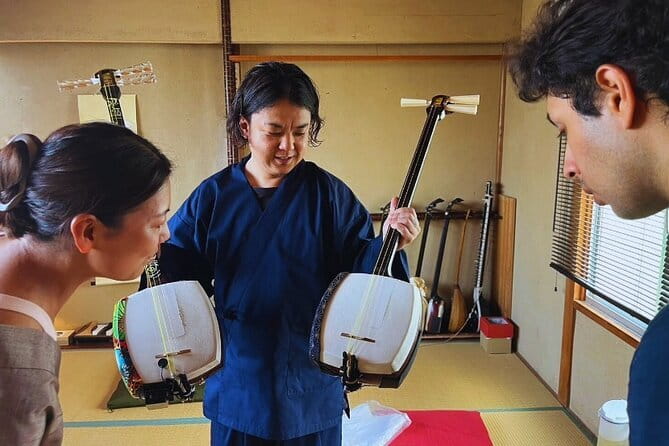
The best part of this Kyoto activity is that you do not just watch a Japanese instrument being played. You hold a real shamisen, learn how to use its pick, and make your own sounds within an hour. Instructor Jack combines a short history lesson with hands-on practice, then guides the group into a simple musical session.
I like the small maximum of five people, which gives you room to ask questions and get help with your grip. I also like the relaxed extras: a photo session, coffee or tea, and time to play freely. The main drawback is the short one-hour format. It is a fine introduction, but not enough time for advanced technique or a full lesson in shamisen music.
In This Review
- Key points to know before booking
- What the Kyoto shamisen lesson is really like
- Starting with the shamisen’s story and sound
- Holding the instrument and learning basic technique
- One scale, five sounds, and room to experiment
- The guided jam session is the payoff
- Photos, coffee, and tea make the lesson feel personal
- Is $65.89 a fair price?
- Who should book this experience?
- Practical planning for your Kyoto day
- What the strong feedback tells me
- Should you book the Shamisen Discovery in Kyoto?
- FAQ
- How long is the Shamisen Discovery in Kyoto experience?
- Where does the shamisen lesson start and end?
- How many people can join the group?
- Is the shamisen rental included?
- Are drinks included?
- Can left-handed participants take part?
Key points to know before booking
- You play from the start: The course includes hands-on instruction, not just a demonstration.
- Jack teaches the class: He has more than 20 years of experience and adjusts the lesson to the students in front of him.
- The group is capped at five: Small numbers mean more personal help and less waiting.
- A jam session closes the lesson: You can create simple melodies while Jack provides accompaniment.
- Left-handed players are covered: Lefty shamisen are available on request or at the lesson.
- Tea and photos are included: You leave with a keepsake photo and a pleasant break during the class.
What the Kyoto shamisen lesson is really like
This is a focused cultural activity in Kyoto, not a long concert or a formal music course. In 60 minutes, Jack introduces the shamisen, shows you how to hold it, teaches a basic scale, and gives you time to make music yourself.
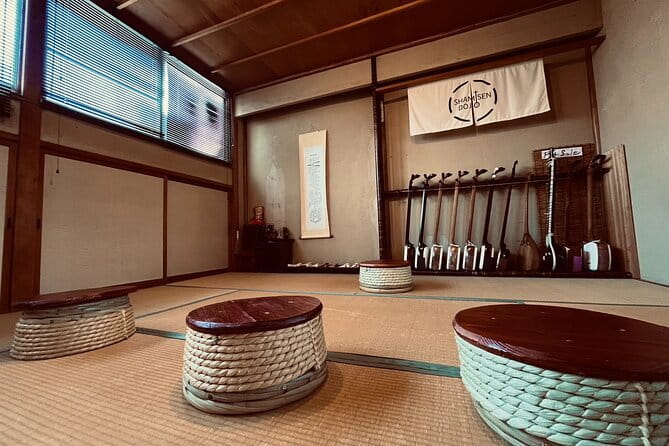
The lesson takes place at Shamisen Dojo in the Murasakino Nakakashiwanocho area of Kyoto’s Kita Ward. The meeting point is also the end point, so you do not need to arrange transportation between parts of the activity. It is near public transportation, but the provided information does not give a specific station or walking time, so check the meeting instructions carefully after booking.
The group can include no more than five people. That detail matters. A shamisen has an unfamiliar shape and playing style, and small adjustments to your hand position can make a noticeable difference. With a large class, you could spend much of the hour watching someone else receive help. Here, Jack has a better chance to correct your form and keep you moving.
Other Kyoto days people book alongside this one:
- PERFECT KYOTO 1-Day Bus Tour
★ 5.0 · 13,518 reviews - Kyoto: Fushimi Inari, Kinkakuji, Bamboo Grove 1 Day Bus Tour
★ 4.8 · 4,316 reviews - Kyoto: Tea Ceremony in a Traditional Tea House in Kiyomizu
★ 4.9 · 3,519 reviews
Starting with the shamisen’s story and sound
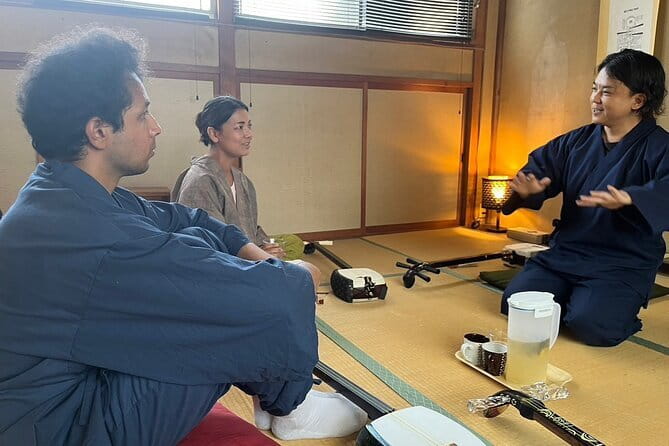
Jack begins with basic information about the instrument, including its types and history. This opening is brief by design. You get enough background to understand what you are holding, then move quickly to the part most people came for: playing it.
The lesson also introduces five signature sounds of Japan. This gives the class a useful musical frame instead of treating the shamisen like an ordinary guitar. You are not simply plucking strings at random. You are learning that the instrument has its own sound world and playing habits.
The precise depth of this section will depend on the group. If everyone is new, Jack can spend more time on first principles. If you already play music, he may move you through the basics faster. That flexibility is one reason the activity suits both complete beginners and people with some musical training.
Several participants with musical backgrounds were able to play through a song or create melodies by the end of the hour. That does not mean you should expect to master the instrument in one visit. It does mean the lesson is structured to give you a satisfying result quickly.
Holding the instrument and learning basic technique
The hands-on portion covers posture, the way you hold the shamisen, and how to use the bachi, or pick. These details may sound simple, but they are the foundation of the whole activity. If your grip is awkward, the sound will be awkward too.
Jack’s teaching style is especially useful here. He has more than 20 years of experience, yet the class is presented as a friendly introduction rather than a test. He can gauge how quickly you are picking things up and adjust the session to your level.
You do not need a musical background to take part. The lesson is designed for beginners, and the available feedback shows that people without experience on string instruments were able to participate. If you already play music, you may find the first steps familiar, but the shamisen’s form, pick, scales, and sound still make it a fresh challenge.
If you are left-handed, tell the provider or instructor in advance if possible. Left-handed shamisen are available, which is a useful detail that many short cultural classes overlook.
One scale, five sounds, and room to experiment
The course includes an introduction to one shamisen scale. It is a sensible amount for a one-hour class. Trying to cover many scales would leave you with a list of facts but little confidence. One scale gives you a small set of notes you can use during the final playing session.
You also receive free time to play. This is where the activity becomes less like a demonstration and more like a personal experience. You can test the instrument, listen to how the strings respond, and try forming your own short ideas.
Do not expect polished music immediately. The bachi, unfamiliar hand position, and strong character of the instrument can take time to control. That rough first sound is part of the fun, and Jack’s guidance keeps the lesson from feeling intimidating.
The class is also suitable if you are visiting Kyoto with a friend, partner, sibling, or older child. One parent and a 17-year-old son found the session highly enjoyable, and several pairs took the class together. Bringing someone you know can make the free playing and final jam more relaxed, though solo participants are welcome too.
Same city, a completely different kind of day:
- Kyoto Geisha Walking Tour: Gion District & Hidden Gems
★ 4.7 · 3,273 reviews - Kyoto: Tea Ceremony Ju-An at Jotokuji Temple
★ 4.9 · 3,207 reviews - Kyoto: Gion Magical Night Walking Tour with Geisha Trivia
★ 4.9 · 2,393 reviews - Kyoto: 45-Minute Tea Ceremony Lesson Experience
★ 4.3 · 2,378 reviews
The guided jam session is the payoff
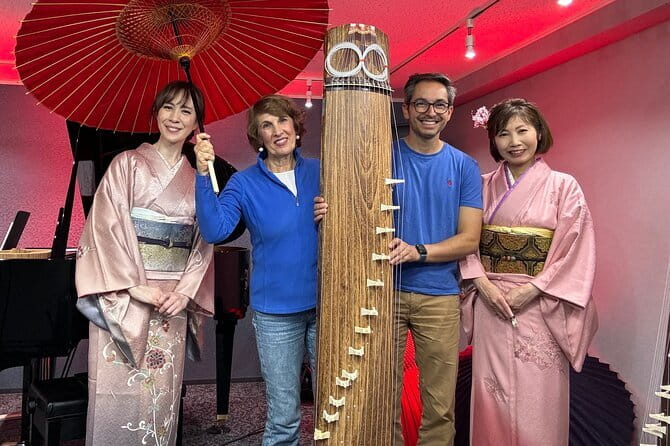
The final jam session is the most memorable part for many students. Jack provides accompaniment while you create melodies using what you have learned. It is not a concert where you sit quietly and listen. You are part of the sound, even if your first notes are simple.
This structure gives the hour a clear arc. You start with background, learn the physical basics, practice a scale, and finish by using those skills in a musical setting. That sense of progress makes the price easier to judge.
The jam also takes pressure off perfection. You are not expected to perform a difficult piece. You are given a chance to respond to Jack’s accompaniment and make musical choices. If you have played another instrument, you may enjoy the freedom to shape a melody. If you are new to music, you can follow the basic guidance and enjoy the novelty of making a Japanese instrument speak.
Jack may even play for you during the class. His own musicianship has impressed students, and hearing a skilled player gives you a clearer idea of what the shamisen can do beyond the first beginner sounds.
Photos, coffee, and tea make the lesson feel personal
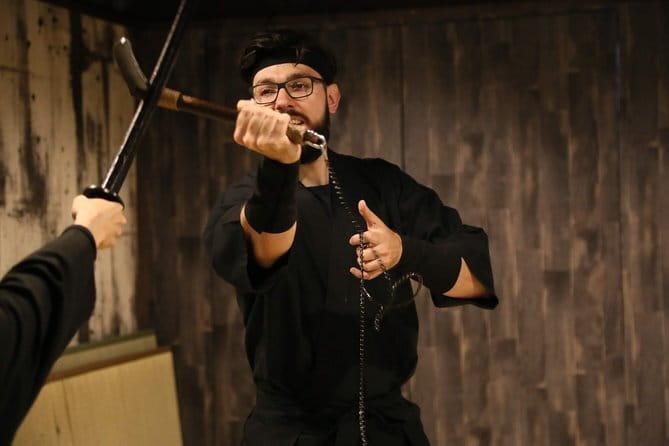
The included photo session is a small but worthwhile touch. You can choose a shamisen, hold it for photographs, and take home a visual memory of the activity. It also gives you a natural pause between instruction and playing.
Coffee, tea, and green tea are included. This is not a full meal or a long café stop, but it helps the class feel welcoming and gives you a short chance to reset. Stay hydrated, especially if you have scheduled the lesson after a morning of sightseeing.
These extras do not replace the main activity, but they add value. A basic instrument lesson at this price could feel strictly functional. The photos and drink make it more like a personal cultural encounter.
Is $65.89 a fair price?
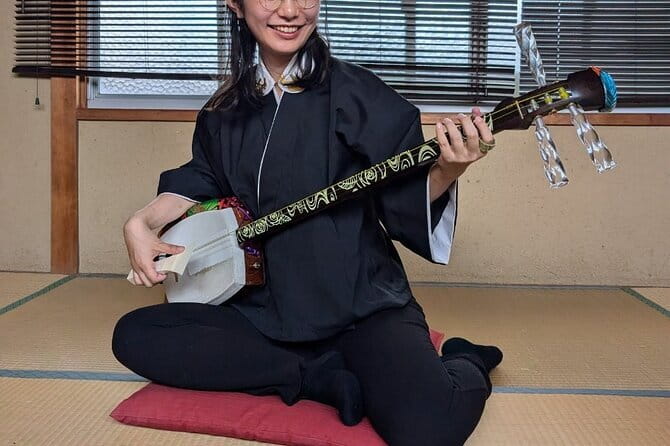
The listed price is $65.89 per person. For a one-hour class, that is not a bargain in the same way as a free temple visit or a self-guided neighborhood walk. You are paying for an instructor, instrument rental, a very small class, guided practice, a photo session, and tea or coffee.
The group limit is the key value point. With up to five people, you are paying for access to direct instruction rather than a seat in a crowded presentation. If you are curious about shamisen but do not want to buy an instrument or commit to a longer course, this is a reasonable way to try it.
It is also good value for people who want a cultural activity that feels active. Many Kyoto sights ask you to look and listen. This lesson asks you to use your hands, ears, and attention. That difference can make it a welcome change after visiting temples and gardens.
The value is weaker if you already play shamisen or want serious technical training. One scale and basic technique will only take you so far. In that case, ask about a longer lesson. Jack has suggested 90-minute sessions to returning students, but the standard experience described here lasts about 60 minutes.
Who should book this experience?
I would recommend it to first-time shamisen players, music lovers, couples, siblings, friends, and families with older children. It also suits anyone who wants a Kyoto activity away from the most crowded sightseeing routes.
You do not need to read music or play another instrument. The class is built to get beginners involved quickly. At the same time, people with musical experience can use the lesson as a starting point and may find the final melody work especially satisfying.
This is a strong pick if you want a personal memory from Kyoto rather than another photograph of a famous building. It is also a good choice for a rainy day, although the supplied details do not state whether the venue has any particular weather-related arrangements.
You may want to skip it if you dislike group activities, have no interest in playing music, or want a long, detailed course in Japanese instruments. Even with five or fewer participants, you will be learning alongside other people and sharing the instructor’s time.
Practical planning for your Kyoto day
The lesson starts and finishes at Murasakino Nakakashiwanocho, Kita Ward, Kyoto, postal code 603-8312. Since private transportation is not included, plan your route independently and allow enough time to find the meeting point.
The activity is near public transportation, and confirmation is sent when you book. The experience is usually reserved about 25 days ahead, so do not assume you can wait until the last afternoon of your trip. Booking earlier is sensible if you have a tight Kyoto schedule.
A useful plan is to pair the lesson with other sightseeing in northern Kyoto. One possible arrangement is a morning visit to Kinkaku-ji, followed by the shamisen class. Check travel times before committing, since the exact connection from your earlier stop is not provided.
The activity ends where it begins, which keeps the logistics simple. You do not need to collect belongings at another site or arrange a ride back from a distant performance venue.
You can cancel for a full refund if you do so at least 24 hours before the local start time. Changes or cancellations inside that 24-hour window are not accepted for a refund, so keep that deadline in mind when you build your itinerary.
What the strong feedback tells me
The most consistent praise centers on Jack’s teaching. His calm, encouraging manner helps people who arrive with little or no experience, while his musical ability gives more experienced players something to enjoy.
The lesson also appears to work well for mixed ability levels. One person can come with a musical background and another without one, and both can still take part. Jack’s willingness to adjust the pace is more important than a long list of technical topics in a short class.
Another strong point is the sense of achievement at the end. Students have managed to play through a song, learn several scales, and create melodies within the hour. Treat those results as a satisfying introduction, not a promise that you will become a shamisen player in one visit.
A few people who bought a shamisen were offered free online lessons with that purchase. That is not part of the standard $65.89 experience, so do not count on it unless you separately buy an instrument and confirm the arrangement. Still, it may appeal to you if the class turns a passing curiosity into a serious new hobby.
Should you book the Shamisen Discovery in Kyoto?
Book it if you want hands-on Japanese culture, personal instruction, and a small class that ends with you making music. The one-hour format is short, but it is carefully packed with history, technique, a scale, free play, photos, tea, and a guided jam.
The best reason to choose it is the chance to work directly with Jack rather than simply watch a performance. The main caution is price per minute: you are paying a premium for a personal activity, not a long course.
For most first-time visitors, I think it is worth considering, especially if you have already planned your major temple visits and want something more active. Bring your curiosity, arrive ready to make imperfect sounds, and treat the class as a lively first meeting with the shamisen.
FAQ
How long is the Shamisen Discovery in Kyoto experience?
The course lasts approximately 60 minutes.
Where does the shamisen lesson start and end?
It starts at Murasakino Nakakashiwanocho in Kyoto’s Kita Ward, postal code 603-8312. The activity ends back at the same meeting point.
How many people can join the group?
The group has a maximum of five participants.
Is the shamisen rental included?
Yes. A shamisen rental is included, along with a photo session using the instrument.
Are drinks included?
Yes. Coffee, tea, and green tea are included.
Can left-handed participants take part?
Yes. Left-handed shamisen are available for left-handed players.
Just added around Kyoto
- Private Guided Traditional Buddhist Cooking in Japan★ 5.0 · 16 reviews
- Kyoto: Gion Geisha District & Sake-in-Hand Walking Tour★ 5.0 · 37 reviews
- Your Private Vacation Photography Session In Kyoto★ 5.0 · 110 reviews
- Kyoto: Zen Meditation at a Private Temple with a Monk★ 5.0 · 25 reviews
- Traditional Japanese Washi Papermaking- Kyoto morning★ 5.0 · 77 reviews
- Kyoto Wagashi(Japanese sweets) Cooking Class near Fushimiinari★ 5.0 · 60 reviews
- Private Pewter Sake Cup Experience with a Kyoto Artisan★ 5.0 · 31 reviews
- Kyoto Private 6 hour Tour: English Speaking Driver Only, No Guide★ 5.0 · 88 reviews
Kyoto Tours, compared.

Tea Ceremony in a Traditional Tea House in Kiyomizu
Read our review →
Kyoto Geisha Walking Tour: Gion District & Hidden Gems
Read our review →

Gion Magical Night Walking Tour with Geisha Trivia
Read our review →

Gion Geisha District Walking Tour – Stories of Geisha
Read our review →
Best of Kyoto: Gion, Geisha, Pagodas & Cobblestones
Read our review →