
REVIEW · TEA CEREMONY EXPERIENCES
Samurai Show, Tea Ceremony, Japanese Traditional Activities
The most unusual part of this Osaka experience is how quickly it moves you from watching Japanese culture to trying it yourself. You can learn tea ceremony steps, write calligraphy, handle traditional instruments, and join a playful samurai demonstration rather than simply sitting through a stage show. The samurai armor connected with Marutake Industries adds visual appeal, though armor is not included in the basic ticket.
I like the hands-on format, especially for families and first-time visitors who want more than a lecture. I also like the mix of quiet tea and calligraphy with noisy music and theatrical swordplay. The main consideration is time: the advertised 2 hours 30 minutes may not be enough for every activity, and some people spend three and a half to four hours here.
I also appreciate the friendly support from the staff, including Yui and Miyu, who have been singled out for helping visitors with Japanese and guiding them through the sessions. The samurai performance is playful rather than a serious historical reenactment, so you should come expecting entertainment with cultural lessons, not a museum-quality study of warfare.
In This Review
- Key points at a glance
- A lively introduction to Japanese culture in Osaka
- Starting near Shinsaibashi and Dotonbori
- Tea ceremony: quiet, precise, and easier to understand by doing
- Calligraphy and the personalized fan
- Samurai performance with a comic edge
- Traditional music you can hear and try
- How long should you allow?
- What the basic price covers
- Indoor comfort and weather planning
- Who will get the most from this experience?
- Practical booking advice
- Should you book it?
- FAQ
- Where does the experience start?
- Where does the experience end?
- How long does the experience last?
- What activities are included?
- Are samurai armor and kimono included?
- Is the ticket mobile?
- How many people can join?
- Is the experience near public transportation?
- Can most people participate?
- What is the cancellation policy?
Key points at a glance
- Tea ceremony with participation: You learn the basic movements and manners instead of only watching a prepared demonstration.
- Calligraphy you can take home: Practice Japanese writing and create a personalized fan as a keepsake.
- Samurai show with safe audience action: The sword work uses non-real swords, and selected participants can practice simple movements.
- Traditional instruments: You can watch performances and try instruments such as a Japanese guitar, harp, flute, or Japanese keyboard-style instrument, depending on the session.
- Flexible time commitment: The listed duration is about 150 minutes, but setting aside three hours gives you a better chance to complete the program.
- Central Osaka meeting point: You start and finish at Shinsaibashi ARTY Inn, near public transportation and the Dotonbori area.
A lively introduction to Japanese culture in Osaka
This is a culture sampler built for people who want to do things. The program combines several short sessions in one large facility, giving you a broad look at Japanese customs, performance, and craft without sending you across Osaka.
That variety is the real value. A formal tea ceremony can feel slow if you do not know what to watch for. Here, you get an explanation and a chance to follow the movements yourself. Calligraphy becomes more memorable when your own writing goes home with you. The music is easier to appreciate after you have tried to produce a note yourself.
The atmosphere is also less solemn than a traditional ceremony at a temple or tea school. Staff help you move between areas, explain what to do, and assist with photographs. That makes the experience approachable, though it also means the presentation can feel like an organized cultural attraction rather than an everyday Japanese gathering.
More Kimono & Culture Experiences in Osaka
- Osaka: Sumo Show & Experience w/ Optional Kimono & Hot Pot
★ 4.5 · 609 reviews - Samurai Training Experience KENDO in Osaka
★ 5.0 · 515 reviews - OSAKA NIGHT FUSION Japanese Taiko Kabuki Samurai Dance Show
★ 4.8 · 155 reviews
Starting near Shinsaibashi and Dotonbori
The meeting point is Shinsaibashi ARTY Inn at 2-chōme-17-3 Nishishinsaibashi, in Chuo Ward. The activity ends at the same place, which keeps the logistics simple. The venue is near public transportation and close to the Dotonbori part of Osaka, so it fits neatly into a day of sightseeing around central Osaka.
The listed itinerary names Dotonbori as the stop, but this is not a walking tour of the neon streets or canal district. You are going to the cultural facility for the scheduled indoor activities. Plan your route carefully and allow time to find the exact entrance.
A mobile ticket makes arrival easier. Confirmation is provided when you book, and the group can include up to 20 people. That is small enough for staff to give practical help, though the experience can still feel busy when several people are trying instruments, writing, or taking photographs at once.
Tea ceremony: quiet, precise, and easier to understand by doing
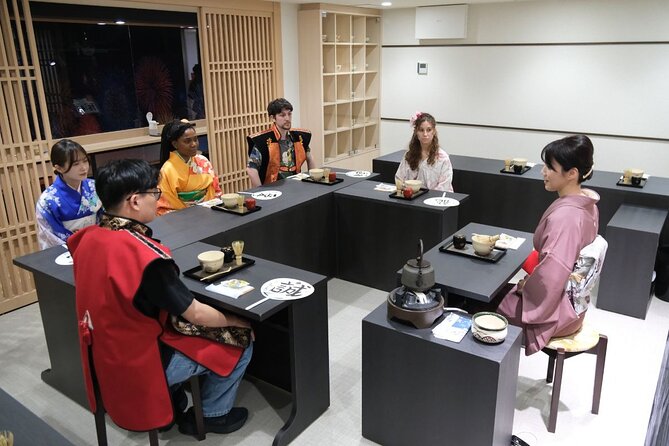
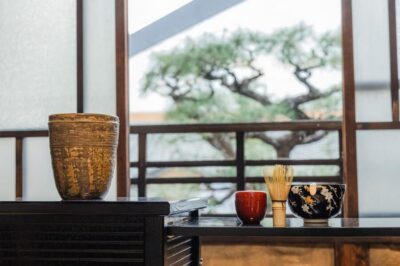
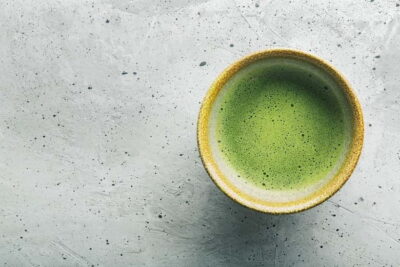
The tea ceremony is one of the strongest parts of the program because it gives you a clear task. You learn how to prepare and handle a cup of green tea, along with the polite movements that give the ceremony its character.
Do not expect a full, lengthy tea-school ceremony. This is a visitor-friendly introduction, designed to explain the basic order and meaning without requiring specialist knowledge. The staff help you perform the actions correctly, and they can answer questions as you go.
I like this part because the ceremony’s small details become visible once you take part. The way you hold the cup, turn it, and receive it politely matters. You may not master every movement, but you will leave with a better sense of why the ceremony feels deliberate and calm.
It also provides a useful contrast with the samurai show. After the noise and comic action of the performance, the tea session gives the afternoon a slower rhythm. If you are traveling with children, this may be the point where patience is tested, but the practical format helps keep it accessible.
Calligraphy and the personalized fan
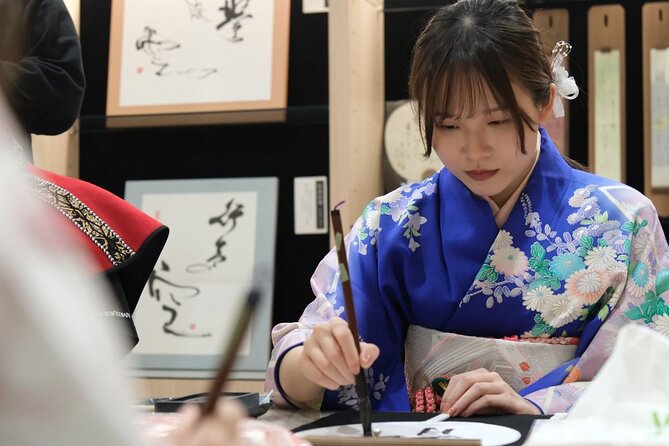
The calligraphy session offers another activity you can physically try. You practice Japanese characters with guidance, then create a personalized fan that you can take home. That small souvenir gives the lesson more purpose than a temporary demonstration on a whiteboard.
Calligraphy looks simple until you try to control the brush. The order of the strokes, the pressure, and the amount of ink all affect the result. You should not worry about producing gallery-quality work. The point is to understand the discipline behind the characters and enjoy making something by hand.
This session suits both adults and children. Staff assistance is especially useful if you are unfamiliar with Japanese writing or want help learning a few words. The activity is also a good choice if you prefer a quieter cultural lesson to the theatrical parts of the program.
More Tea Ceremony Experiences in Osaka
- Osaka: Tea Ceremony Experience
★ 4.9 · 1,426 reviews - Tea Ceremony Experience in Osaka Doutonbori
★ 5.0 · 754 reviews - Matcha Making Class in Osaka with Authentic Japanese Sweets Set
★ 5.0 · 509 reviews - Osaka: Matcha Making Experience with Japanese Sweets
★ 5.0 · 146 reviews
Samurai performance with a comic edge
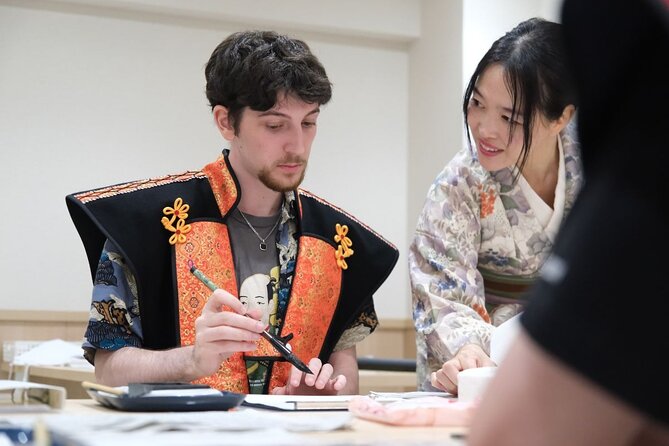
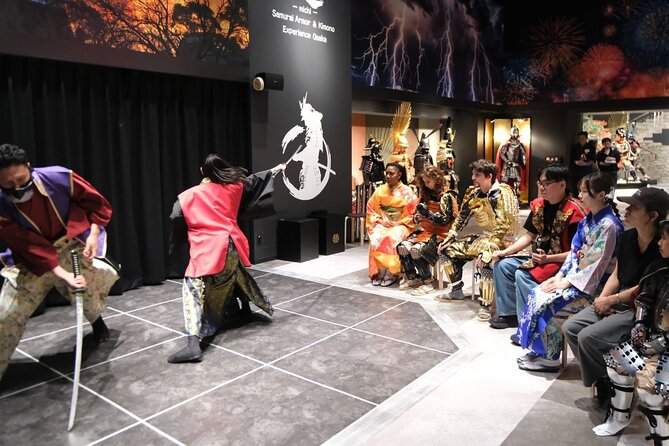
The samurai performance is the headline act for many people. You watch a staged battle, then may be invited to practice simple samurai movements. The swords used for audience practice are not real, so the activity is designed as safe entertainment rather than combat training.
Expect drama, movement, and humor. One staff member is described as especially funny during the practice section, which helps children take part without feeling intimidated. The performance may include more than one show, depending on the session and how long you stay.
This is not a reconstruction of a historical battle. The weapons and other pieces used in the performance are reproductions, and the style is deliberately theatrical. One account found the samurai section weaker than the tea, music, and calligraphy, so your enjoyment will depend on how much you like staged action.
I would still keep it in the program. It gives you a visual entry point into the image of the samurai, and the chance to copy a few movements makes it more engaging than a standard stage presentation. Just adjust your expectations. You are buying a fun cultural show, not a serious martial arts lesson or a scholarly account of samurai life.
Traditional music you can hear and try
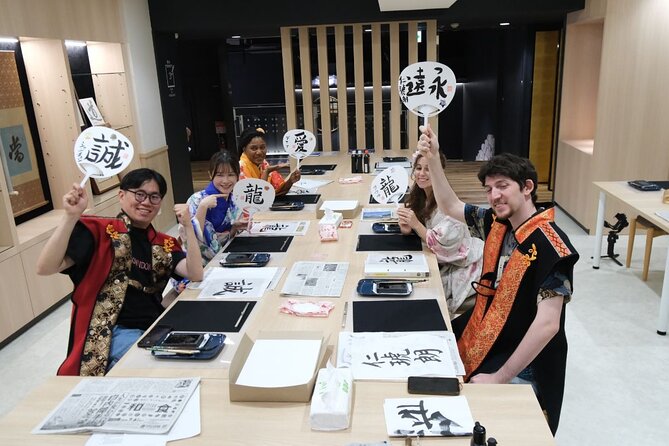
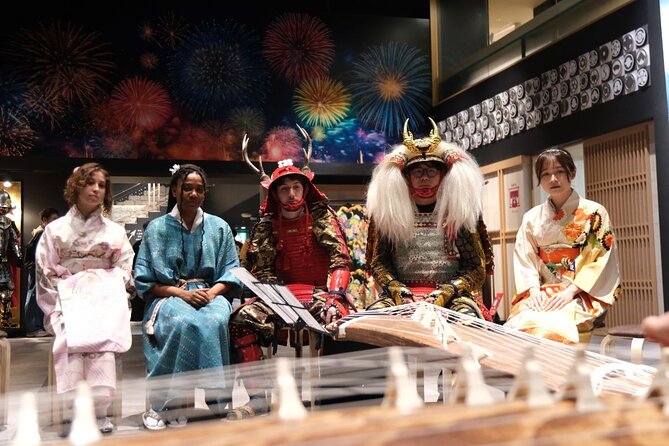
Music adds welcome range to the afternoon. You watch performances on traditional Japanese instruments and, in some sessions, get the chance to try them yourself. Accounts of the program mention instruments described as a Japanese guitar, harp, flute, and a complex Japanese keyboard-style instrument.
The exact instrument lineup may vary, so do not book this expecting one specific lesson. The key feature is participation. You are encouraged to pick up an instrument, make an attempt, and learn from the performer. Even an imperfect sound becomes part of the fun.
This section works well for families because it turns a concert into a short activity. It also helps you understand the skill involved. Producing a pleasant sound on a traditional flute or stringed instrument is not automatic, and the attempt gives you respect for the musicians on stage.
The music sessions can be among the most enjoyable parts for adults, too. They offer a glimpse of Japanese performance traditions without requiring you to attend a formal concert. If you have limited time, you should still try to stay for at least one music demonstration.
How long should you allow?
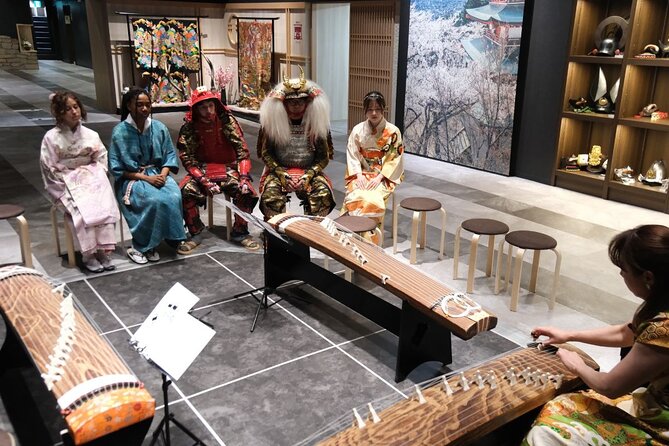
The official duration is approximately 2 hours 30 minutes, or about 150 minutes. In practice, you should set aside at least three hours if you want to move through the activities without rushing.
Some people spend three and a half to four hours, particularly if they stay for two samurai shows, more than one music performance, costume photographs, and extra practice time. The schedule may allow you to choose how much of each section you do, but the exact flow can depend on the day.
This matters when planning a train connection, restaurant reservation, or airport transfer. I would not place this experience immediately before a fixed departure. It is better suited to an open afternoon, especially because the staff may encourage you to try more than the minimum program.
What the basic price covers
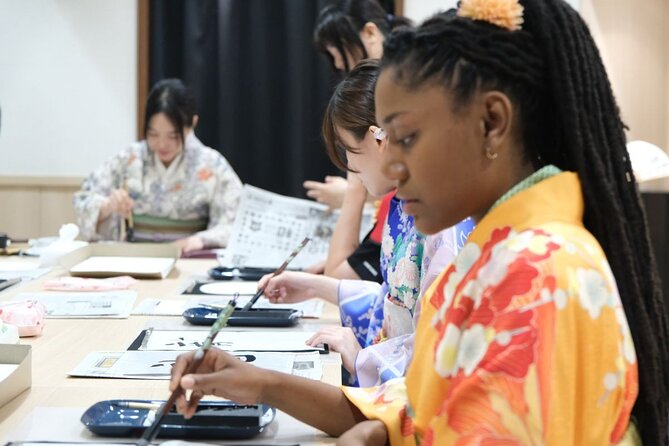
At $44.92 per person, the ticket offers a substantial amount for one indoor cultural activity. The listed inclusions are the tea ceremony, calligraphy, traditional Japanese music, and samurai performance. Because these are not separate bookings, you can sample several parts of Japanese culture in one visit.
The value is strongest if you participate in everything. A person who attends only the samurai show will get less from the ticket than someone who stays for tea, writing, music, and the interactive sections. The staff support also matters, particularly when you need help with Japanese instructions or handling an unfamiliar instrument.
The basic ticket does not include samurai armor, kimono, or ninja costume experiences. Kimono dress-up is available as an extra option, and one account described paying 5,000 yen for it, but you should confirm the current price and availability before booking. Samurai attire is also mentioned as an option, not part of the standard admission.
Costumes can add a fun photo element, especially for families or couples, but they are not necessary to enjoy the main program. If you are trying to keep costs down, the basic ticket already includes the central activities.
Indoor comfort and weather planning
The program takes place inside a large facility, and the indoor setting makes it a useful choice on a rainy day. You can spend the afternoon learning and watching performances without building your plans around Osaka’s weather.
There is one important policy detail: the experience requires good weather, and the operator may cancel if conditions are poor. If that happens, you are offered a different date or a full refund. This wording is worth checking when you book, particularly if weather is unstable during your visit.
The indoor setting also helps families and older adults who want a break from walking. The experience is near public transportation, most people can participate, and the group limit is 20. No special physical ability is listed as necessary, but the program does involve handling instruments, writing, and taking part in simple samurai movements.
Who will get the most from this experience?
I would recommend it most strongly to first-time visitors to Japan, families, couples, and anyone who wants a broad introduction rather than a single focused lesson. You get several cultural activities in one place, and the staff make the instructions easy to follow.
Children have plenty to watch and do, from the samurai action to musical instruments and calligraphy. The program has also worked well for large family groups, with staff helping people move through the different stations.
It is less suitable if you want a quiet, formal tea ceremony or a historically rigorous account of samurai culture. The tone is friendly and entertaining. Some sections may feel staged, and the samurai props are reproductions.
Language should not be a major barrier. Staff help with Japanese practice, and interpreters are available around the activities. The quality of explanation may vary by session, but the setup is intended for an international audience.
Practical booking advice
Book this with an open block of time. The advertised two and a half hours is a useful planning figure, but three hours is safer, and a longer stay may be worthwhile if you want every music and samurai segment.
Wear something that lets you sit, write, and move your arms comfortably. The supplied information does not give a dress code, so you do not need to plan a formal outfit for the basic ticket.
If you want a kimono or samurai costume, check the add-on details before arrival. The standard admission does not include either one. Also remember that the activity starts and finishes at the listed Shinsaibashi address, not at a separate Dotonbori sightseeing stop.
Free cancellation is available up to 24 hours before the start time for a full refund. Cancellations or changes made less than 24 hours ahead are not refunded or accepted. Cut-off times use Osaka local time.
Should you book it?
Book this experience if you want to touch, try, and laugh your way through several Japanese traditions in one afternoon. The strongest reasons are the tea ceremony, calligraphy keepsake, live music, and the friendly staff who guide you through each station.
The $44.92 price is fair when you use the full program. Allow three hours, treat the samurai show as theatrical fun, and remember that costumes cost extra. If those conditions suit you, this is a practical and entertaining addition to an Osaka itinerary, especially on a rainy day or when you want a break from sightseeing on foot.
FAQ
Where does the experience start?
It starts at Shinsaibashi ARTY Inn, 2-chōme-17-3 Nishishinsaibashi, Chuo Ward, Osaka, 542-0086, Japan.
Where does the experience end?
The activity ends back at the meeting point at Shinsaibashi ARTY Inn.
How long does the experience last?
The listed duration is approximately 2 hours 30 minutes, or about 150 minutes. You should allow extra time if you want to complete every activity.
What activities are included?
The ticket includes a tea ceremony experience, calligraphy experience, traditional Japanese music, and a samurai performance.
Are samurai armor and kimono included?
No. Samurai armor, kimono, and ninja experiences are not included in the basic ticket. They may be available as additional options.
Is the ticket mobile?
Yes. The experience provides a mobile ticket, and confirmation is received at the time of booking.
How many people can join?
The activity has a maximum group size of 20 people.
Is the experience near public transportation?
Yes. The meeting point is near public transportation.
Can most people participate?
Yes. The information states that most people can participate. The activities include calligraphy, tea preparation, instrument practice, and simple samurai movements.
What is the cancellation policy?
You can cancel up to 24 hours before the start time for a full refund. Cancellations or changes made less than 24 hours before the start time are not accepted or refunded. If poor weather causes the activity to be canceled, you are offered a different date or a full refund.
More Show in Osaka
- Osaka: Sumo Stage Show with Bento or Snack + Fight & Photo
★ 4.3 · 364 reviews - Osaka: English Stand Up Comedy Show at Osaka Comedy Club
★ 4.7 · 203 reviews - Osaka: UTAGE Japanese Taiko Live Show
★ 4.9 · 167 reviews - Osaka Sumo Experience with Live Show and Audience Challenge
★ 5.0 · 162 reviews
Just added around Osaka
- Samurai dress-up and shows, plus Tea Ceremony & Calligraphy★ 5.0 · 27 reviews
- Kyoto & Nara Private customized tour with English speaking Guide★ 4.5 · 99 reviews
- Well-balanced BENTO (lunch box) Cooking Class★ 5.0 · 35 reviews
- Urban Canvas: Osaka Street Art Bike Tour★ 5.0 · 47 reviews
- OSAKA:Feel the Power! Learn Taiko Drum from Professionals★ 5.0 · 28 reviews
- Volleyball in Osaka & Kyoto with Locals!★ 5.0 · 21 reviews
- 1.5〜2 Hours Traditional Kintsugi Work Shop in Namba Osaka★ 5.0 · 75 reviews
- Umami Town Street Food Tour★ 5.0 · 120 reviews
Tea Ceremony Experiences, compared.
Tea Ceremony in a Traditional Tea House in Kiyomizu
Read our review →
World Heritage Kyoto & Nara Uji Authentic Matcha Experience
Read our review →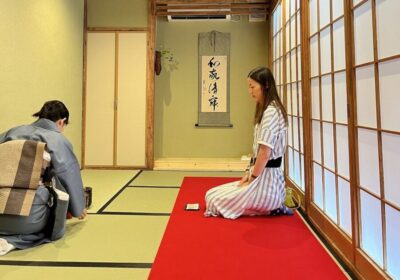
Browse the lists this tour appears in