
REVIEW · SHOW
Osaka: UTAGE Japanese Taiko Live Show
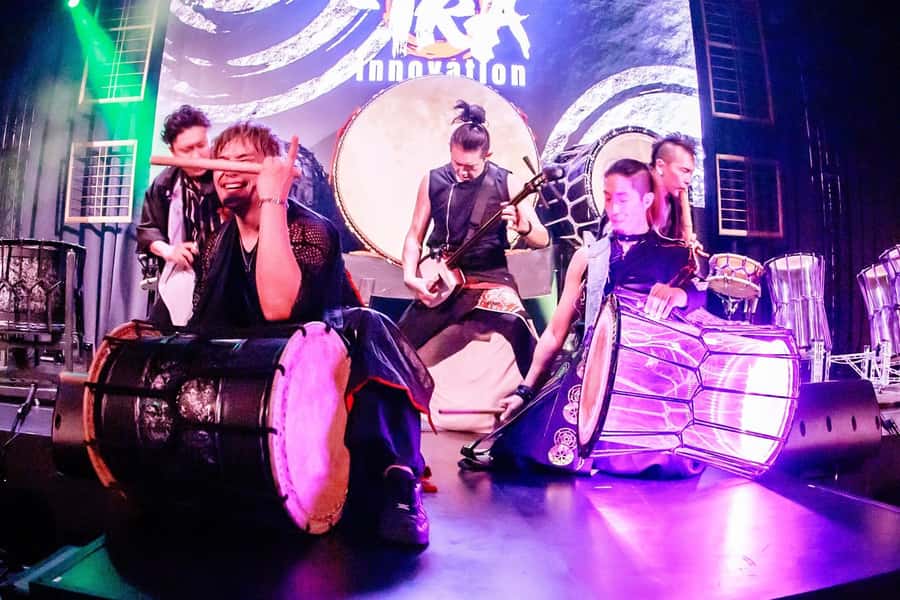
The first sound tells you what kind of night this is: a 180-centimeter taiko drum struck at close range, backed by shamisen, shakuhachi, shinobue, and modern electronic music. UTAGE is not a quiet museum-style look at Japanese instruments. It is a compact stage show built on volume, rhythm, humor, lights, and direct contact with the audience.
I like the small-theater setting, where the musicians can work the room instead of disappearing far away on a large stage. I also like the chance to play one song with the performers, an unusual touch that turns you from spectator into part of the act. The main thing to consider is that the show is conducted in Japanese, and the late-entry rule is strict: arrive at least five minutes early or you may miss the performance entirely.
In This Review
- Key points at a glance
- Why the 180-centimeter drum grabs your attention
- A close-up theater show, not a distant concert
- How the traditional instruments fit together
- The audience can become part of one song
- Visual effects and the modern entertainment angle
- The atmosphere suits families and solo visitors
- What happens after the main performance
- Is $40 a fair price?
- Timing, language, and simple planning advice
- Who should book UTAGE
- Should you book the UTAGE Taiko Live Show?
- FAQ
- Where does the UTAGE Japanese Taiko Live Show take place?
- Where does the activity end?
- How much does the experience cost?
- What instruments are used in the show?
- Is the show only traditional Japanese music?
- Can the audience participate?
- What language is the performance in?
- How early should I arrive?
- Can I cancel for a refund?
Key points at a glance

- The 180-centimeter drum: One of Kansai’s largest drums supplies the show’s biggest physical thrill.
- Traditional instruments, modern sound: Taiko, shamisen, shakuhachi, and shinobue are mixed with computer music and visual effects.
- Audience participation: A limited number of people may be invited to play one song onstage.
- Close-up performance: The theater setup can place you only a few metres from the band.
- A show for many ages: The energy, humor, music, and interactive moments work well for families, couples, and solo visitors.
- Useful timing rule: You must arrive at least five minutes before the start because late entry is not allowed once the show begins.
Why the 180-centimeter drum grabs your attention
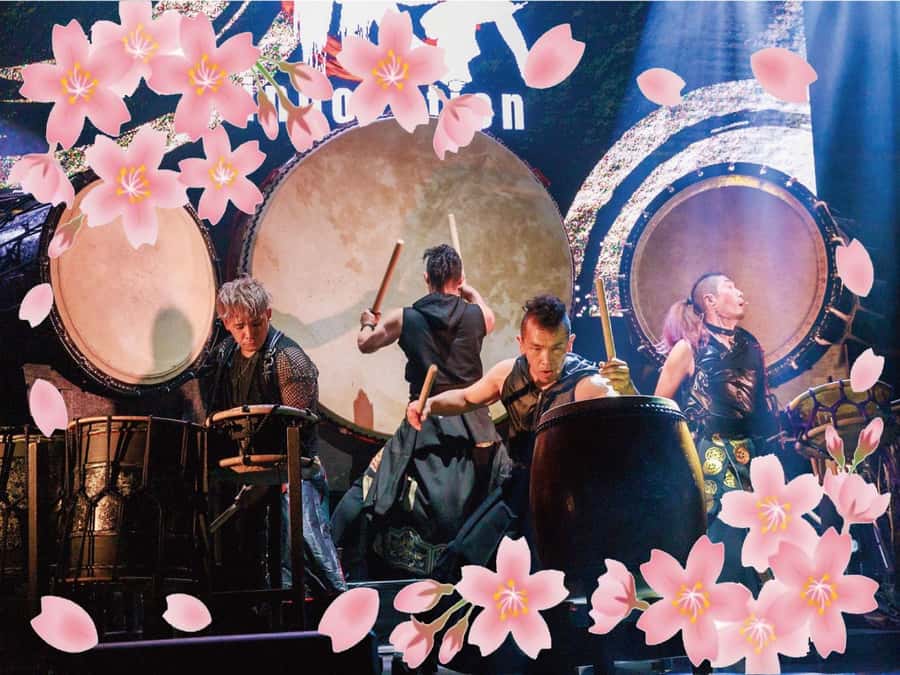
Japanese taiko drums come in many sizes, but UTAGE makes its largest instrument the physical center of the experience. At 180 centimeters in diameter, this is not a decorative prop sitting at the side of a stage. It gives the performance a heavy, chest-level pulse that you feel as much as hear.
That size also changes your sense of scale. A shamisen has a quick, bright attack. A shakuhachi can sound airy and spare. The huge drum brings weight and force, giving the music a strong contrast between delicate traditional tones and sudden bursts of rhythm.
You should not expect a formal concert devoted only to old musical forms. The program uses Japanese instruments with computer music, modern performance techniques, and visual elements. That mix is the point. It gives you a way to hear familiar Japanese sounds in a setting that feels closer to a contemporary stage show than a cultural demonstration.
The show also has a clear physical quality. The performers use movement and expression to keep the room involved, rather than asking you to sit quietly and study each instrument. If you enjoy percussion, live theater, or music that reaches you through rhythm, the taiko is likely to be the main reason you remember the evening.
A few more Osaka trips to weigh up
- Osaka: Sumo Show & Experience w/ Optional Kimono & Hot Pot
★ 4.5 · 609 reviews - Osaka: Sumo Stage Show with Bento or Snack + Fight & Photo
★ 4.3 · 364 reviews - Osaka: English Stand Up Comedy Show at Osaka Comedy Club
★ 4.7 · 203 reviews
A close-up theater show, not a distant concert
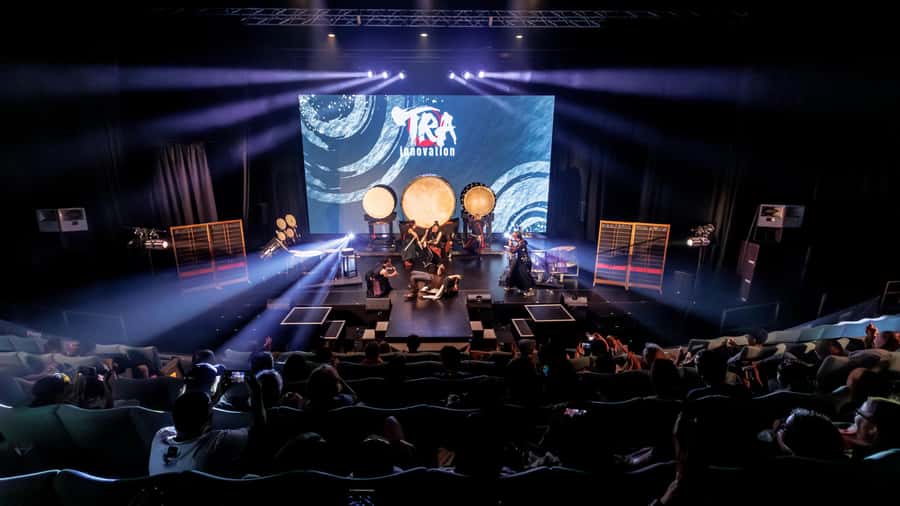
The venue is Osaka Cultural Center, and the performance takes place in a small theater arrangement. One account describes about thirty people seated in three rows, with the musicians only a few metres away. The exact crowd can vary, but the setup gives you a good idea of the scale: this is intended to feel personal and direct.
That closeness matters. In a large concert hall, the biggest drum might impress you through volume and spectacle. Here, you can also watch the musicians’ hands, posture, timing, and reactions as they play. The performers can look directly at the audience and invite people into the action.
The small room can also make the show feel lively even when attendance is modest. The band has been described as performing with the same commitment for a small audience as it would for a full house. That is useful to know if you are visiting during a quieter period. You are not relying on a packed crowd to create the atmosphere.
Photos are allowed during the performance, according to the experience details. Still, I would treat photography as a side benefit rather than the main goal. The show is built around quick movement, sound, and audience contact. You will get more from it if you watch the musicians first and use your camera at suitable moments.
How the traditional instruments fit together
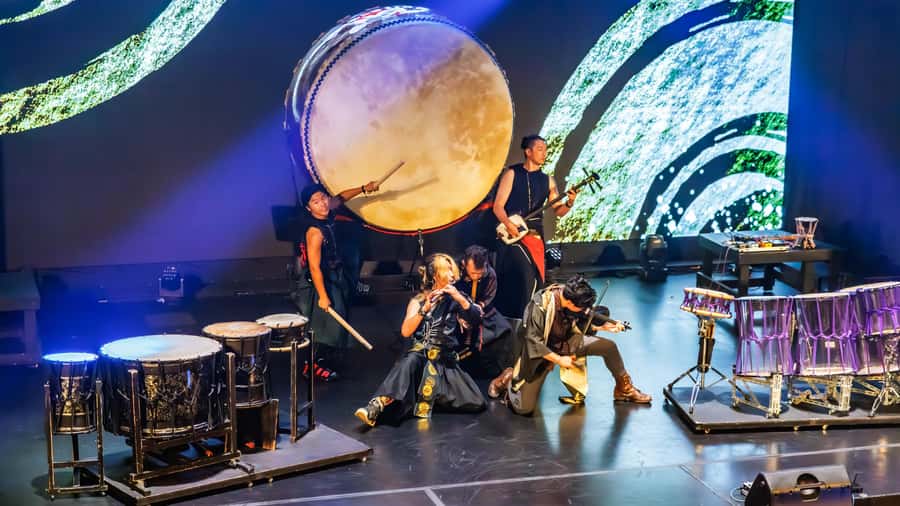
UTAGE presents several instruments, each with its own character. Taiko supplies the force. The shamisen, a three-stringed Japanese instrument, adds a sharp, plucked sound. The shakuhachi brings the breathy tone of a bamboo flute, while the shinobue offers another flute voice with a brighter folk quality.
You may not receive a long spoken explanation of every instrument. The performance is in Japanese, and the emphasis is on showing what the instruments can do together. That makes this a good choice if you want cultural contact without committing to a lecture or a long historical presentation.
The computer music helps connect the older instruments to a current stage format. Instead of placing traditional sounds in a separate box, the show pushes them into a modern arrangement. This is especially useful for families and mixed-age groups, since a strictly formal concert might not hold every person’s attention.
The result is less about comparing old and new and more about hearing them collide in real time. One moment can center on a traditional instrument, while the next brings in a stronger electronic or visual layer. The contrast keeps the hour moving and gives the musicians room to show both technical control and personality.
The audience can become part of one song
The most distinctive feature is the invitation for audience members to participate in one song. You may be asked to come onstage and try a Japanese instrument, including one of the large drums. It is offered for a limited time, so participation is not guaranteed for every person.
This is worth considering before you book. If you are shy, the possibility of going onstage may make you nervous. If you are traveling with children, though, it can be the part they talk about for the rest of the trip. The participation is framed as a fun part of the show, not as a serious music lesson.
A few practical points help. Pay attention to the staff, expect instructions to be given in Japanese, and be ready to respond if you are invited. You do not need to be a musician to enjoy the moment. The appeal is the shared rhythm and the comic energy of trying something new in front of the room.
Audience involvement also prevents the show from feeling one-way. You are not simply watching skilled performers from a fixed seat. You are given a chance to add a small human moment to the performance, even if you never step onstage yourself.
Same city, a completely different kind of day:
- Osaka Go Karting Tour with Funny Costume
★ 5.0 · 2,658 reviews - Osaka Castle: Museum and Tower Entry Ticket
★ 4.5 · 2,380 reviews - Osaka: Shinsekai Food Tour with 13-15 Dishes at 5 Eateries
★ 4.8 · 2,204 reviews - Osaka Food Tour: 13 Dishes at 5 Local Eateries
★ 5.0 · 2,149 reviews
Visual effects and the modern entertainment angle
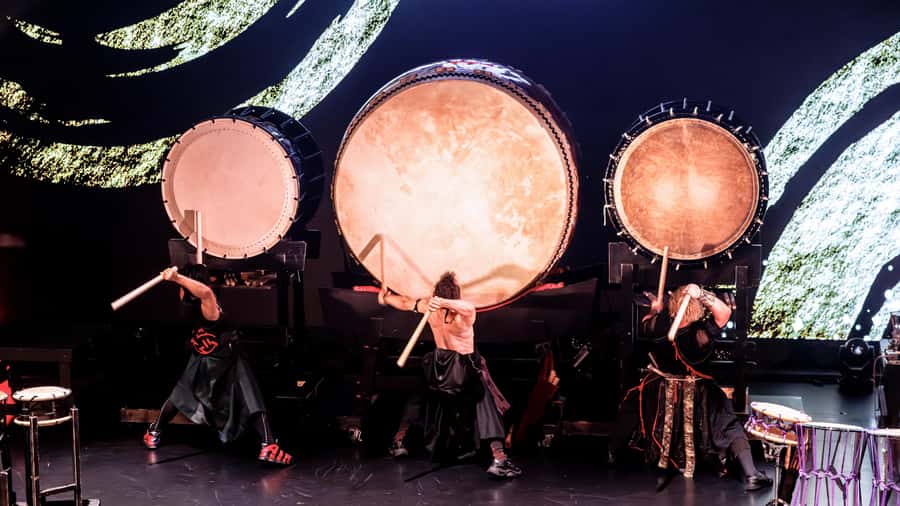
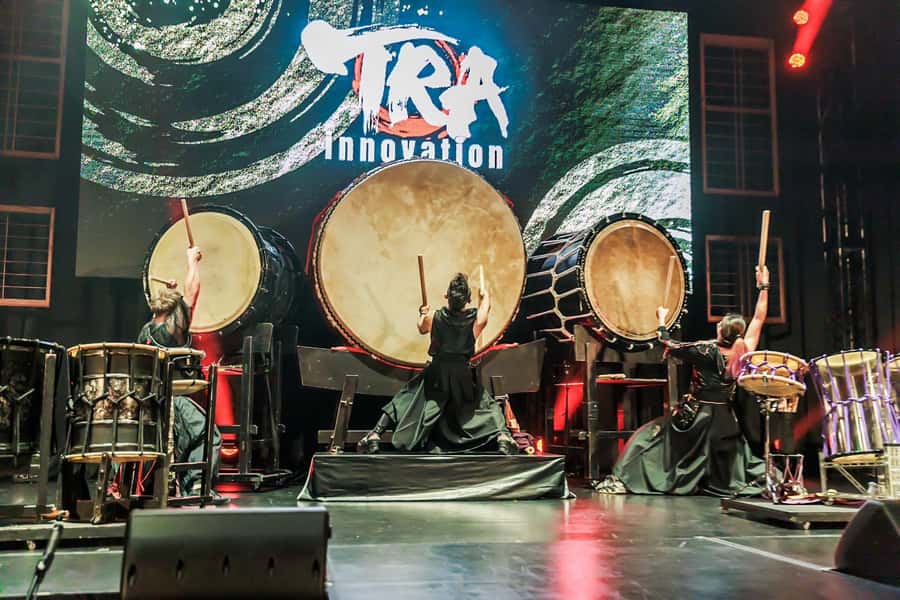
UTAGE adds visual elements to its music, helping the performance reach beyond sound alone. The band uses modern entertainment techniques alongside the instruments, and TRAinnovation is identified as the group behind the show. The band has also won the world’s number one indie band title, according to the experience information.
That combination gives you a more theatrical evening than a standard instrumental recital. Expect performers who use energy, humor, and movement, not only technical playing. The presentation is designed to work for people from different countries, so you do not need a strong background in Japanese music to follow the mood.
The visual side is also helpful when language is a barrier. Since the show is in Japanese, some spoken jokes or explanations may pass you by. Rhythm, gesture, facial expression, and stage action carry much of the meaning without translation.
I would not choose this experience if you want a long, quiet examination of traditional music. I would choose it if you want a lively introduction to Japanese performance culture with a modern edge. It is closer to a high-energy live act than a seated cultural lecture.
The atmosphere suits families and solo visitors
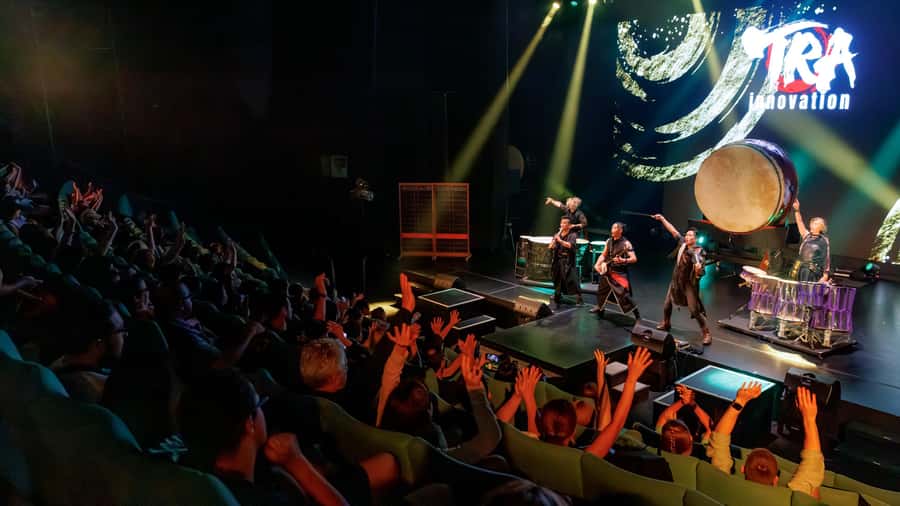
The show’s short, energetic format makes it easy to fit into an Osaka day. One account describes it as a great hour of entertainment, so you should plan on a compact performance rather than an entire evening program. The exact runtime is not otherwise stated, but the experience is clearly designed as a focused show.
Families can appreciate the visual effects, loud drums, and chance for audience participation. Children who might lose interest during a long historical talk may respond better to a performance that keeps changing its sound and pace. The volume could be intense for anyone sensitive to loud music, so keep that in mind when deciding who in your group will enjoy it.
Solo visitors are also likely to feel comfortable. The close seating and audience interaction give the room a shared feeling, even if you arrive alone. You do not need a large group to make the experience work.
Couples and adult groups may especially like the mix of music and theater. The performance has enough cultural content to feel connected to Japan, but it does not require you to know the rules of a formal concert. You can simply listen, watch, and join in if invited.
What happens after the main performance
The experience ends back at the meeting point, Osaka Cultural Center. The band may also meet the audience afterward for photographs. That gives you a chance to speak briefly with the performers and take a keepsake picture without having to arrange a separate meet-and-greet.
There is also a shop downstairs where you can pose for complimentary photographs with samurai swords and traditional Japanese umbrellas. This is a separate visual add-on to the music show, but it can make the visit feel more complete, particularly for families or anyone looking for a souvenir-style photo.
Do not assume every backstage or photo opportunity will be identical at every performance. The key point is that post-show photos with the performers and the downstairs photo area are part of the experience as described. Bring your camera or phone if those memories matter to you.
Is $40 a fair price?
At $40 per person, UTAGE is not the cheapest way to spend an hour in Osaka, but the price covers more than a seat and a short instrumental recital. You are paying for live performers, a large taiko presentation, several Japanese instruments, computer music, visual production, and the possibility of audience participation.
The value is strongest if you want a specialized live performance rather than a general sightseeing stop. A casual visitor may hear a drum demonstration elsewhere, but this show combines the drum with shamisen, shakuhachi, shinobue, electronic elements, and stage interaction. That broader format helps justify the cost.
It is also good value for a family if several people want the same activity. The show is suitable for all ages, and the interactive moments give children and adults something to anticipate. For a solo visitor, the price depends more on your interest in music and live theater. If that is your kind of evening, the close seating and performance quality make the ticket easier to defend.
The price may feel less worthwhile if you want a fully translated cultural explanation or a long program. No guide language other than Japanese is provided, and the event is a show first. You are buying atmosphere, musicianship, and participation, not a detailed lesson in Japanese music.
Timing, language, and simple planning advice
Arrive at least five minutes before the start. Once the show begins, late entry is not allowed because it would disrupt the production. This is one of those small rules that can ruin an otherwise good plan if you leave it too late.
The meeting point and ending point are both Osaka Cultural Center. Transportation details are not provided, so check your route and allow enough time to find the theater before the doors close. Do not plan to arrive at the exact start time.
The performance language is Japanese. You can still follow the music and visual action without Japanese, but spoken comments, introductions, and humor may be harder to catch. The show is designed for people of many nationalities, and the physical energy does much of the communication, yet you should book it for the performance rather than for English-language interpretation.
Reservations can be made with payment later, and cancellation is available up to 24 hours before the start for a full refund. Those terms give you some flexibility when building an Osaka schedule, but the strict late-entry rule still applies on the day.
Who should book UTAGE
I would put this show high on the list for:
- Families seeking an active cultural experience
- Couples who want an evening of music rather than a passive display
- Solo visitors who enjoy intimate theater settings
- Fans of Japanese drums and percussion
- People who like traditional culture presented with modern sound and visuals
- Anyone hoping to take part in a live performance
I would think twice if you dislike loud music, do not want any chance of audience interaction, or need a performance with detailed English explanations. The show’s strength is its energy and directness, and those same qualities will not suit every mood.
Should you book the UTAGE Taiko Live Show?
Book it if you want to hear Japanese instruments in a fresh, high-energy setting and you like the idea of sitting close to the musicians. The 180-centimeter drum, modern computer music, visual production, and one-song audience participation give the experience a clear identity.
I especially recommend it when you need a compact activity that works for different ages and nationalities. Arrive early, expect Japanese-language hosting, and be ready for a loud, playful show rather than a formal concert. At $40, it is a sensible choice for a memorable live performance, particularly if you take part or stay afterward for photos.
FAQ
Where does the UTAGE Japanese Taiko Live Show take place?
The show takes place at Osaka Cultural Center in Osaka, on Honshu, Japan.
Where does the activity end?
The activity ends back at the meeting point, Osaka Cultural Center.
How much does the experience cost?
The listed price is $40 per person.
What instruments are used in the show?
The performance includes Japanese drums, shamisen, shakuhachi, and shinobue. It also features a large drum measuring 180 centimeters in diameter.
Is the show only traditional Japanese music?
No. The show combines traditional Japanese instruments with computer music and modern visual elements.
Can the audience participate?
Yes. Audience members may be invited to the stage to experience Japanese instruments and participate in one song for a limited time.
What language is the performance in?
The listed language is Japanese.
How early should I arrive?
You should arrive at least five minutes before the show starts. Entry is not allowed after the performance begins.
Can I cancel for a refund?
You can cancel up to 24 hours in advance for a full refund. Payment later is also available when booking.
Just added around Osaka
- (Ticket Included) Explore Osaka Castle & Museum of History★ 4.8 · 21 reviews
- Hidden Osaka – Yukaku Red Light Tour & Culinary Adventure★ 4.8 · 96 reviews
- Osaka: Walking Tour and Top Highlights★ 4.8 · 104 reviews
- Osaka: Private Ceramic Painting Workshop★ 5.0 · 13 reviews
- Pickleball in Osaka, Kobe & Kyoto with Locals!★ 4.7 · 80 reviews
- Eat Like a Local in Osaka – Private Custom Street Food Tour★ 4.3 · 33 reviews
- Osaka:SUMO BEATS SHOWCASE: Taiko Drum and Wagyu burger!★ 4.2 · 37 reviews
- Kimono photoshoot-Includes 100 photo data★ 5.0 · 21 reviews
Show, compared.

Mt Fuji & Hakone Cruise, Drum Show Bullet Train 1 Day from Tokyo
Read our review →
Sumo Show Experience with Chicken Hot Pot and a Photo
Read our review →
Tokyo Shinjuku Sumo Show & Experience with Photo
Read our review →

Mt Fuji & Hakone Cruise, Drum Show Bus 1 Day from Tokyo
Read our review →
Browse the lists this tour appears in