
REVIEW · KYOTO TOURS
Sacred Pathways: Discover the Philosopher’s Path of Kyoto
Kyoto’s Philosopher’s Path is at its best on foot, where a quiet canal, trees, moss, temples, and small shops unfold at an easy pace. I like that this tour connects the walk to Ginkakuji’s garden and Nanzenji’s striking aqueduct, rather than treating the path as a simple photo stop. I also like the small groups, capped at eight, which make it easier to ask questions and pause for pictures.
The main thing to consider is the walking. You cover about 5 kilometers, or 3 miles, over four hours, so this is not a quick temple visit. The route needs moderate fitness, and the company asks families with children under ten to inquire about a private tour.
In This Review
- Key points at a glance
- Why this walk works so well in Kyoto
- Ginkakuji: the Silver Pavilion and its garden
- Along the canal on the Philosopher’s Path
- Nanzenji and the brick aqueduct
- What the guides add to the experience
- The value of $64 per person
- Who should book this tour
- Practical tips before you go
- Is Sacred Pathways worth booking?
- FAQ
- How long is the Philosopher’s Path tour?
- What places does the tour visit?
- Are entrance fees included?
- Are food and drinks included?
- What languages are available?
- How large is the tour group?
- Is the tour suitable for children?
Key points at a glance
- A 5-kilometer walk beside a canal: The Philosopher’s Path gives you a calm way to see Kyoto on foot, with trees, water, gardens, and quiet temple approaches.
- Ginkakuji’s carefully shaped garden: The Silver Pavilion is valuable here not only for its buildings, but also for the garden’s gravel forms, stones, moss, and overall sense of order.
- Nanzenji and its famous aqueduct: You get both Zen temple architecture and one of Kyoto’s more unexpected pieces of brick infrastructure.
- Small groups of no more than eight: There are no flags, microphones, or large buses, so the tour can keep moving at a human pace.
- Guides who add cultural context: Kevin and Craig are named in the experience details and past bookings, with English and French guiding available.
- Entrance fees are covered: At $64 per person, the price includes the paid visits, though food and drinks are extra.
Why this walk works so well in Kyoto
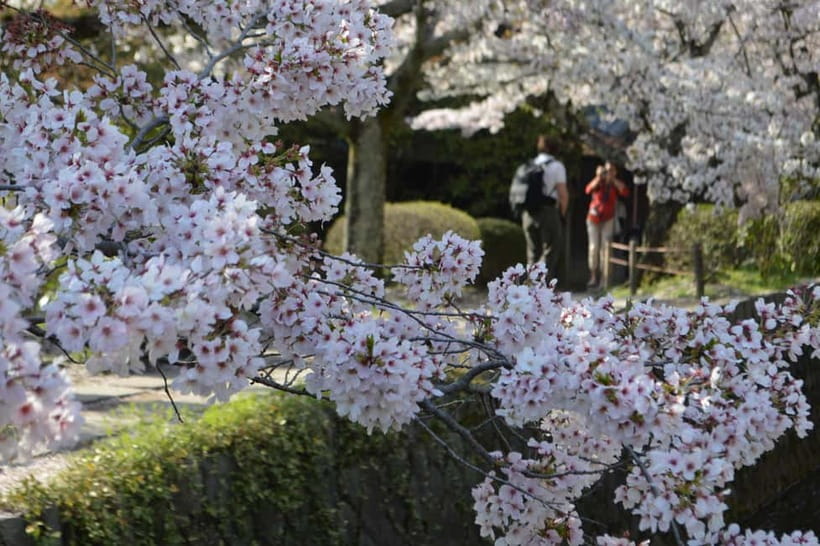
Kyoto can feel crowded and hurried, especially around its best-known temples. The Philosopher’s Path offers a welcome change. It follows the foot of Kyoto’s eastern mountains beside a narrow canal, giving you a route where the setting matters as much as the destination.
You are not simply moving from one gate to another. The sound of running water, shifting leaves, garden moss, and temple walls gives the walk a steady rhythm. The path also has small cafes and shops, so you may have a chance to stop for tea or browse handmade goods, depending on the pace and the group.
I like this kind of tour because the walking creates space for conversation. A guide can explain why Zen values appear so often in gardens, architecture, tea, painting, and other parts of Japanese culture. Without that background, a gravel garden may look pleasant but abstract. With some context, its empty space and careful arrangement begin to make more sense.
The pace is deliberately relaxed. That helps if you want time for photographs or prefer not to rush from sight to sight. It also means the tour may feel less efficient if your main goal is to check off as many temples as possible in one morning.
Other Kyoto days people book alongside this one:
- PERFECT KYOTO 1-Day Bus Tour
★ 5.0 · 13,518 reviews - Kyoto: Fushimi Inari, Kinkakuji, Bamboo Grove 1 Day Bus Tour
★ 4.8 · 4,316 reviews - Kyoto: Tea Ceremony in a Traditional Tea House in Kiyomizu
★ 4.9 · 3,519 reviews
Ginkakuji: the Silver Pavilion and its garden
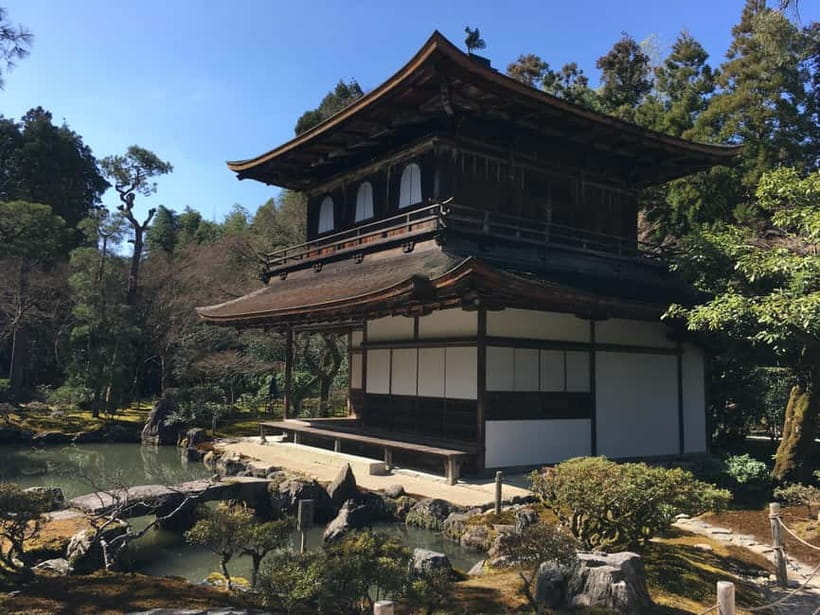
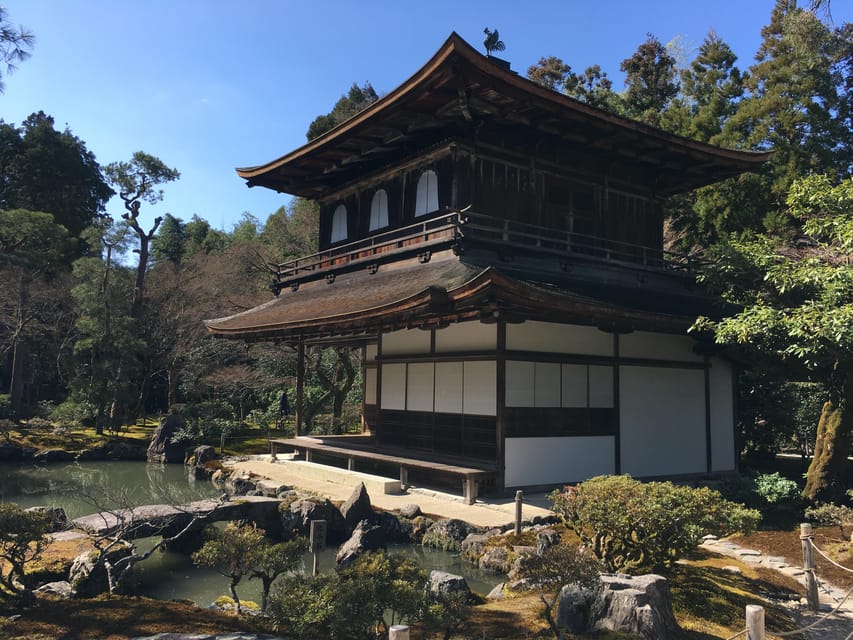
Ginkakuji is often called the Silver Pavilion, although the name can create the wrong expectation. The focus here is not a gleaming silver-covered building. The real pleasure is the setting, particularly the garden surrounding the temple.
The garden uses gravel, stones, moss, and planted areas with unusual precision. The raked gravel catches light and gives the grounds a clean, open quality. Moss softens the edges, while carefully placed stones guide your eye through the space. The result is quiet rather than showy, which suits the Zen ideas discussed on the tour.
A guide adds value here by explaining what you are seeing and how it relates to Japanese aesthetics. You will have a better chance of noticing the choices behind the garden instead of treating it as a decorative backdrop.
The grounds can change with the season and weather. In soft morning light, damp moss can look especially striking. Rain may make the garden feel more secluded and atmospheric, though wet conditions also make the walking less comfortable. Bring suitable shoes and a light rain layer if the forecast is uncertain.
Ginkakuji is also an important early stop because it gives the tour a strong visual introduction to the connection between Zen and the arts. You see how restraint, balance, and controlled natural forms can shape a place without making it feel stiff.
Along the canal on the Philosopher’s Path
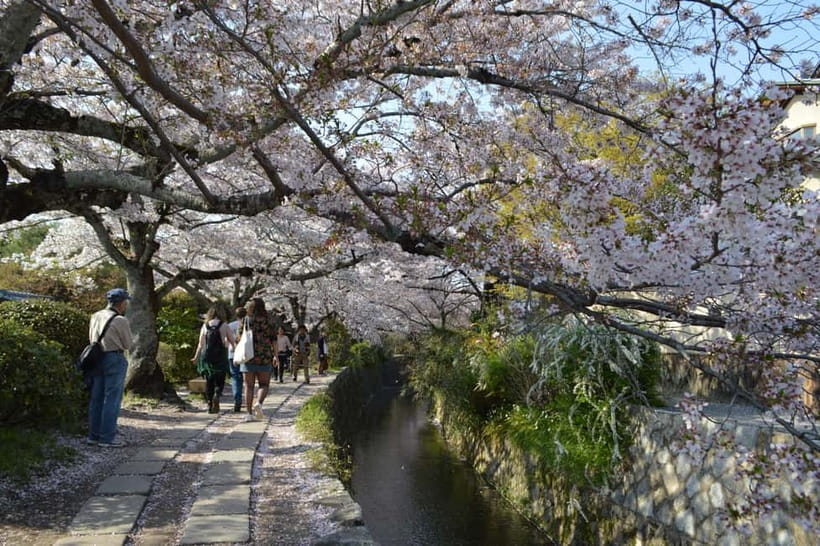
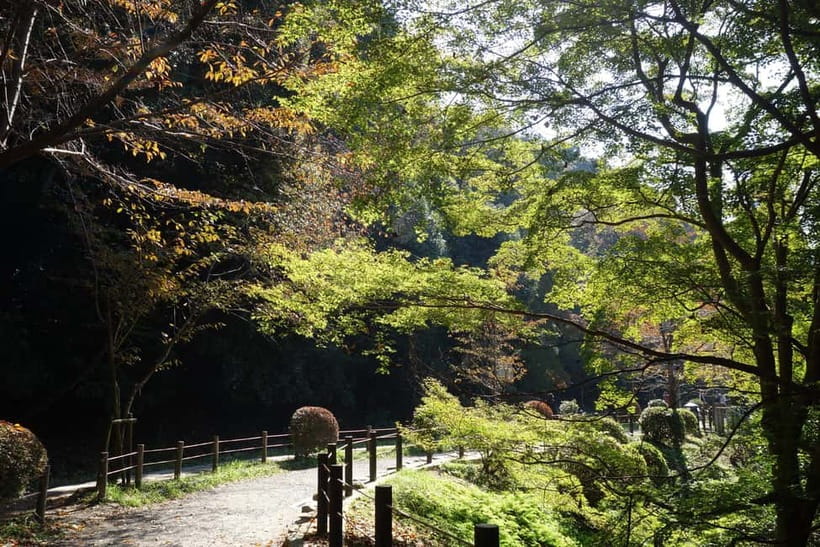
After visiting Ginkakuji, the route follows the Philosopher’s Path along the canal. This is the core of the experience, and you should allow yourself to enjoy it as a walk rather than waiting for a major sight at every turn.
The canal keeps the route grounded in nature. Trees line the path, and the water provides a gentle background sound. Depending on the season, the character of the walk can shift considerably. The supplied information highlights abundant nature, moss, and tree cover, but the exact appearance will depend on the time of year.
Small cafes and shops provide possible pauses. Food and drinks are not included, so budget separately if you want tea or a snack. That arrangement is reasonable because it lets you choose what you want, but a short cafe stop may affect how much time you spend at the temples or on the path.
This part of the tour is also where the small group matters most. A group of eight or fewer can stop without blocking the route for long, and you can hear the guide without a microphone. There are no tour flags or buses to follow, which keeps the outing quieter and less formal.
Several people who booked with Kevin appreciated his ability to adjust his speed to the group. That is useful on a walk like this. You may want to pause often for photos, ask about local customs, or simply take in the canal. A guide who keeps a steady but flexible pace can make the difference between a pleasant stroll and a forced march.
Nanzenji and the brick aqueduct
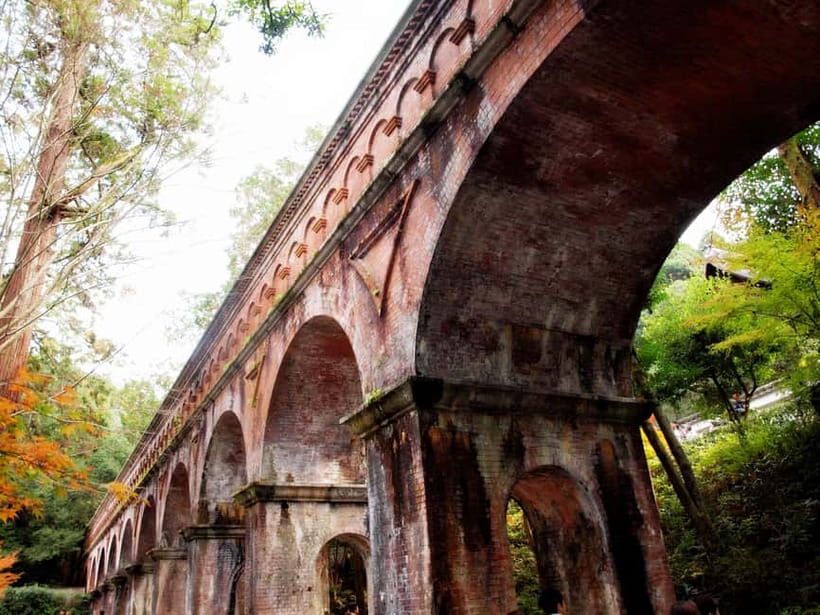
Nanzenji brings a different mood to the tour. It is one of Kyoto’s most prominent Zen temples, with imposing architecture and a broad temple setting. After the softer canal walk and garden views, the scale of Nanzenji gives the route a clear change of pace.
The aqueduct is one of the most memorable features. Its brick arches look striking beside the temple grounds, and it is an unusual example of practical infrastructure appearing within a major religious site. The contrast helps show that Kyoto’s historic areas are not frozen museum pieces. Sacred buildings, gardens, pathways, and working structures can all occupy the same setting.
You will benefit from hearing the story behind the site rather than only photographing the aqueduct. The tour is designed to explain the religious and cultural setting, including the influence of Zen on art and daily life. That context can help you connect what you see at Nanzenji with the garden principles introduced at Ginkakuji.
The experience information does not promise a detailed visit to every building at Nanzenji. Think of it as a guided look at a major Zen temple and its architecture, not a full-day temple study. Four hours gives you a good balance, but it naturally limits how long you can linger at each stop.
Same city, a completely different kind of day:
- Kyoto Geisha Walking Tour: Gion District & Hidden Gems
★ 4.7 · 3,273 reviews - Kyoto: Tea Ceremony Ju-An at Jotokuji Temple
★ 4.9 · 3,207 reviews - Kyoto: Gion Magical Night Walking Tour with Geisha Trivia
★ 4.9 · 2,393 reviews - Kyoto: 45-Minute Tea Ceremony Lesson Experience
★ 4.3 · 2,378 reviews
What the guides add to the experience
A path, canal, and temple garden can be enjoyed without a guide. The reason to pay for this tour is the interpretation and the ease of moving between the sights.
Kevin is named repeatedly in the booking details. Eric described him as personable, fun, and strong on Kyoto’s history and Japanese culture, while Rebecca A and Margaret valued his explanations of the Philosopher’s Path and his willingness to answer questions. Those details suggest a guide who does more than deliver a fixed speech.
Craig is also named. Lisa particularly valued his long experience living in Kyoto, his easy manner, and his ability to share local knowledge in clear English. That kind of resident perspective can help you understand what you are seeing beyond temple dates and architectural labels.
Guiding is available in English and French. The tour is supplied by Kyoto Fun, a locally run company established in 2014. The company also provides a digital city guide and restaurant recommendations, which can be handy after the walking portion ends.
The group size is important. With a maximum of eight people, you can usually ask a follow-up question without holding up a large crowd. You should still expect the exact feel to depend on the guide and the people booked that day, but the format is well suited to conversation.
The value of $64 per person
At $64, this is not the cheapest way to walk the Philosopher’s Path. You can visit parts of the area independently, and some of the most enjoyable moments, such as the canal and tree-lined route, do not require an admission ticket.
The price becomes easier to justify if you want help understanding what you see. It includes all entrance fees, a bilingual guide, and a digital city guide. You also avoid stopping to calculate ticket costs at each paid site.
The small group is another part of the value. A private tour or a very small group often costs more than a standard city outing, but it gives you a better chance to set the pace and ask questions. The company offers private or small-group options, so check the specific choice before booking because the meeting point may vary by option.
Food and drinks are not included. That is worth noting if you expect a cafe break, but it also keeps the base cost clear. You can decide how much to spend on tea, snacks, or lunch rather than paying for a package you may not want.
Free cancellation up to 24 hours before the start and the option to reserve now and pay later add useful flexibility. These policies matter most when your Kyoto schedule is still changing.
Who should book this tour
I would recommend Sacred Pathways if you want Kyoto explained as a place where religion, gardens, architecture, and nature overlap. It suits people who prefer a calm walk to a packed sightseeing schedule and who enjoy asking questions along the way.
It is also a good fit for a first visit to Kyoto. The tour gives you a clear introduction to Zen settings without requiring you to plan every temple entrance, route turn, and cultural explanation yourself. The digital city guide and restaurant suggestions may also help you plan the rest of your stay.
Photographers should like the format. The route includes water, trees, moss, gravel gardens, temple buildings, and the aqueduct, with enough time for photo stops. Still, the relaxed pace does not mean you can stop indefinitely. The guide has to keep the group moving through a four-hour route.
This is less suitable if you have limited mobility or dislike sustained walking. The distance is about 5 kilometers, and the tour is not suitable for children under ten or people over 95. Families with younger children are asked to inquire about a private option.
It may also be a poor match if you want a quick, highly structured temple checklist. The charm lies in the pauses, the stories, and the walk between major sites. If you want transport from temple to temple, this is not the right format.
Practical tips before you go
Wear comfortable shoes with reliable grip. The route is a moderate walk, and weather can alter the feel of the canal and temple grounds. Moss and stone areas may be damp after rain.
Arrive on time, since the meeting point can vary depending on the option you book. Confirm the exact location and language when you reserve.
You do not need to bring cash for entrance fees because they are included. Bring a payment method for optional food, drinks, or shopping along the route.
Keep your group small by asking questions early. Guides such as Kevin and Craig appear to welcome conversation, and the cultural explanations are one of the main reasons to choose this outing.
Drones are not allowed. That is a simple rule, but it matters in temple and residential areas.
Is Sacred Pathways worth booking?
Book it if you want a thoughtful, low-pressure introduction to Kyoto’s eastern temple area, especially if Zen gardens and Japanese culture interest you. The strongest parts are the unhurried 5-kilometer walk, Ginkakuji’s garden, Nanzenji’s aqueduct, and the chance to learn from a resident guide in a group of no more than eight.
Skip it if you want to cover many distant sights, avoid walking, or travel with young children without arranging a private tour. For most visitors who value context and a quieter pace, $64 is a fair price because it includes the entrance fees and turns a scenic route into a much more meaningful experience.
FAQ
How long is the Philosopher’s Path tour?
The tour lasts four hours and covers about 5 kilometers, or 3 miles, of walking.
What places does the tour visit?
The experience includes the Philosopher’s Path, Ginkakuji Temple and its garden, and Nanzenji Temple with its notable aqueduct.
Are entrance fees included?
Yes. All entrance fees are included in the tour price.
Are food and drinks included?
No. Food and drinks are not included, so bring a payment method if you want to stop at a cafe or buy something along the route.
What languages are available?
Live guiding is available in English and French.
How large is the tour group?
Private and small-group options are available. The small-group tours have no more than eight people.
Is the tour suitable for children?
The tour is not suitable for children under ten. If you want to bring younger children, the company asks you to inquire about a private tour.
Just added around Kyoto
- Taste of Nishiki Market Walking Food Tour with Local guide★ 5.0 · 17 reviews
- Kyoto: Sushi Making Class with Sushi Chef★ 4.8 · 64 reviews
- Kyoto: City Secrets eBike Tour★ 4.9 · 196 reviews
- Private Tour to Monkey Park and Arashiyama Highlights★ 5.0 · 22 reviews
- Private Nara Tour from Osaka – Meet at Your Hotel★ 5.0 · 22 reviews
- Private Sake Tasting in Central Kyoto with Sake Sommelier★ 5.0 · 13 reviews
- Kyoto : Private Custom Walking Tour With A Local Guide★ 4.6 · 144 reviews
- Osaka/Kyoto: Katsuoji, Kinkakuji, Arashiyama 1-Day Bus Tour★ 4.6 · 33 reviews
Kyoto Tours, compared.
Tea Ceremony in a Traditional Tea House in Kiyomizu
Read our review →
Kyoto Geisha Walking Tour: Gion District & Hidden Gems
Read our review →
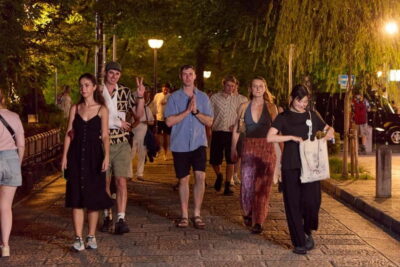
Gion Magical Night Walking Tour with Geisha Trivia
Read our review →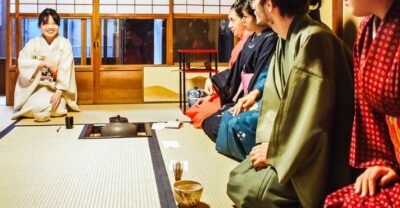
Gion Geisha District Walking Tour – Stories of Geisha
Read our review →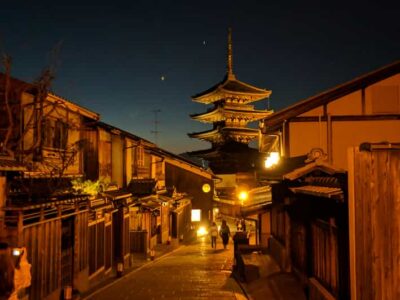
Best of Kyoto: Gion, Geisha, Pagodas & Cobblestones
Read our review →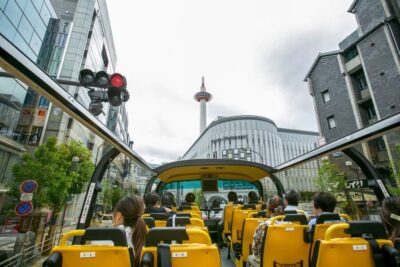
Browse the lists this tour appears in