REVIEW · KYOTO TOURS
Roketsu dyeing experience: M course Roketsu Dyeing Experience
Kyoto’s Roketsu workshop lets you draw your own design and dye it yourself, rather than simply watching a craft demonstration. You choose a fabric item, work with stencils or a personal sketch, apply wax in the traditional resist-dyeing method, and take the finished piece home the same day. I like the hands-on control, and I like that the result is a useful souvenir rather than a small trinket. The main consideration is communication: the owner and Yoko speak limited English, so demonstrations and gestures do much of the teaching.
I also like the calm pace. This is a welcome sit-down break after temple visits and long walks, with a small family-run studio atmosphere instead of a large tourist class. Detailed designs can stretch the session to three hours, so keep your schedule open if you want to work carefully.
In This Review
- Key points at a glance
- Why this Kyoto craft experience is different
- At Roketsu73 in western Kyoto
- Choosing a T-shirt, tote, or hanging
- Picking a pattern and testing your idea
- Applying wax by hand
- The dyeing stage and the finished reveal
- A calm break from Kyoto sightseeing
- Is $25.77 good value?
- Practical tips for booking and timing
- Who should book this Roketsu experience?
- Should you book it?
- FAQ
- Where does the Roketsu dyeing experience take place?
- How long does the activity last?
- What can I make during the workshop?
- Can I bring my own design?
- Is English instruction available?
- Can I cancel for a full refund?
Key points at a glance
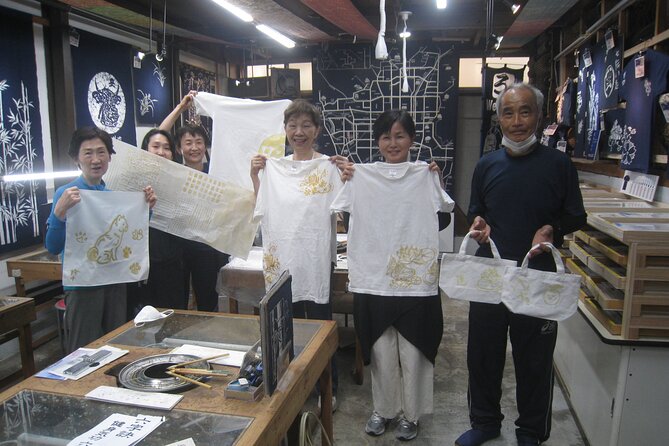
- Choose your own finished item: Make a T-shirt, tote bag, decorative hanging, or another available fabric piece.
- Select from many patterns: Use the studio’s large collection of stencils, combine designs, or bring your own sketch.
- Apply the wax yourself: Practice first, then paint the wax onto your fabric before the dyeing stage.
- Take it home that day: The complete process usually takes about 90 to 120 minutes.
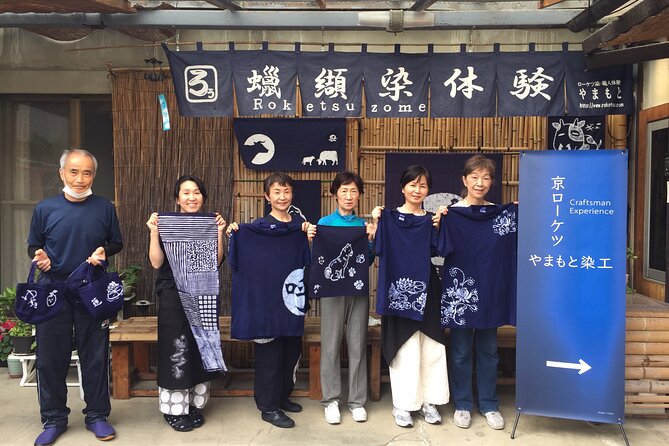
- A family-run Kyoto craft studio: The owner and his mother, Yoko, provide patient, hands-on guidance.
- Plan for extra time: Intricate artwork may take around three hours, even though the usual session is shorter.
Why this Kyoto craft experience is different
Many Kyoto activities ask you to look, listen, and move on. This one asks you to sit down and make something. That change matters. You get time to focus on one small task, work at your own speed, and leave with an object tied to your own trip.
Roketsu is a traditional wax-resist fabric dyeing method. The basic idea is simple: wax-covered areas resist the dye, leaving the design visible when the fabric is colored. The workshop turns that process into an approachable craft lesson. You do not need formal art training, and you do not need to arrive with a polished design.
The studio provides many patterns, with choices ranging from simple motifs to more intricate designs. You can use a stencil as a guide, combine elements, or draw freehand. If you already have a sketch, you can use it as the basis for an original piece.
That freedom is one of the best parts of the activity. You are not all making identical souvenirs. Two people can begin with the same rough pattern and finish with noticeably different work, depending on how they apply the wax and choose their colors.
Other Kyoto days people book alongside this one:
- PERFECT KYOTO 1-Day Bus Tour
★ 5.0 · 13,518 reviews - Kyoto: Fushimi Inari, Kinkakuji, Bamboo Grove 1 Day Bus Tour
★ 4.8 · 4,316 reviews - Kyoto: Tea Ceremony in a Traditional Tea House in Kiyomizu
★ 4.9 · 3,519 reviews
At Roketsu73 in western Kyoto
The meeting point is Roketsu73, at Nishikyōgoku Umazukachō in Kyoto’s Ukyo Ward. It is outside the city’s busiest sightseeing areas, which is part of the appeal. You are visiting a working craft studio rather than adding another stop to the usual temple circuit.
The activity begins and ends at the same location. The studio is near public transportation, and the mobile ticket makes entry simple once your booking is confirmed. Confirmation is issued within 48 hours, subject to availability, so I would not leave this booking until the last minute during a busy Kyoto visit.
The space is described as clean, comfortable, and well equipped. You might find the surroundings more practical than polished, but that suits the experience. The focus is on fabric, wax, dye, patterns, and the finished work. It feels connected to the craft itself.
The maximum group size is 30 people. That is a larger possible capacity than the small family-run setting might suggest, so the quietest experience may depend on the time of day and the number of people booked. The owner and Yoko are used to helping beginners, and the process is designed to keep people working at different speeds.
Choosing a T-shirt, tote, or hanging
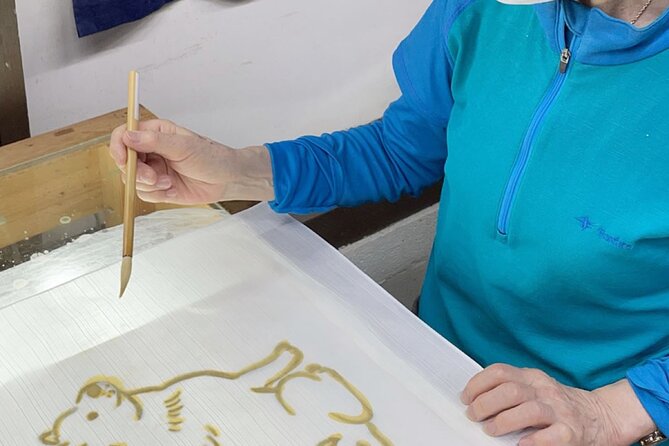
Your first creative decision is the object you want to dye. Available choices include T-shirts, tote bags, and decorative hanging banners. The best choice depends on how you expect to use the souvenir.
A T-shirt gives you something wearable and personal. It also provides a larger area for a noticeable design. A tote bag is practical and often a good choice if you want a smaller project. A hanging banner works well if you want a decorative reminder of Kyoto for your home.
The exact price or selection of each item is not specified in the supplied details, so confirm the available options when booking or at the studio. The activity price itself is about $25.77 per person, which is a strong value if the fee includes the craft item and the full hands-on process as described.
The choice also affects your working time. A simple design on a smaller item should fit closer to the 90-minute estimate. A large banner or detailed shirt may take much longer. One family spent several hours because of the number of pieces and the complexity of their designs, and another group took about three hours while working carefully.
Picking a pattern and testing your idea
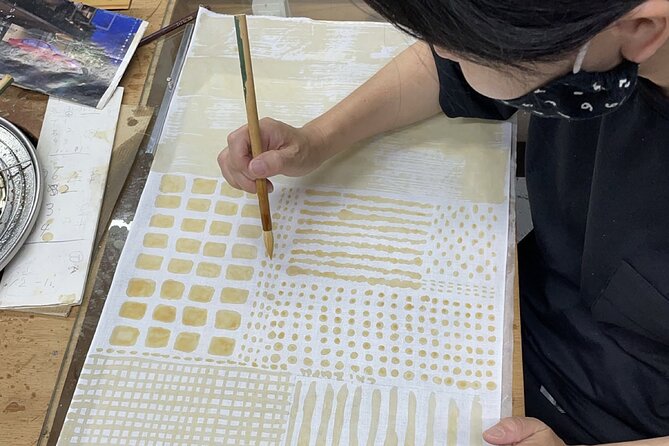
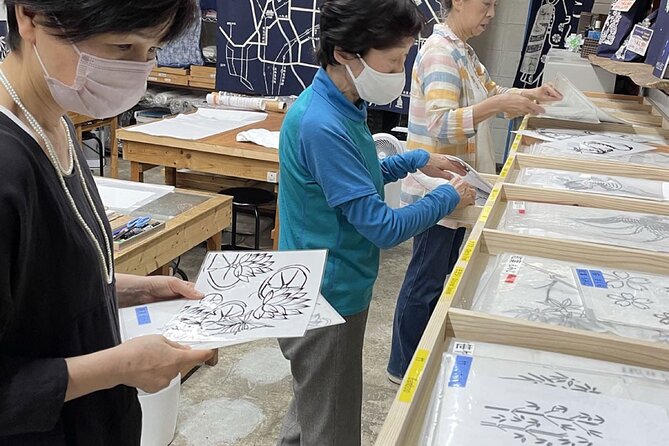
Once you choose the fabric item, you select a design. The studio has dozens, and in some descriptions, hundreds, of stencils and sample patterns. That gives you plenty of help if you are not confident drawing from scratch.
You can also combine several designs. This is a useful approach if you want something personal without having to invent a complete image. Start with one motif, add a border or smaller element, and let the composition grow from there.
The studio also offers a practice step on a small piece of fabric. Do not rush past it. It gives you a chance to understand how the wax brush behaves and how much detail you can manage. A short test can prevent you from discovering halfway through your shirt that your lines are too thick or your design is too ambitious.
If you bring your own sketch, keep it clear and workable. A complicated image may require more time than the standard session allows. The workshop can help turn an original idea into a finished object, but the final result will reflect the handmade process rather than looking like a machine-printed design.
Same city, a completely different kind of day:
- Kyoto Geisha Walking Tour: Gion District & Hidden Gems
★ 4.7 · 3,273 reviews - Kyoto: Tea Ceremony Ju-An at Jotokuji Temple
★ 4.9 · 3,207 reviews - Kyoto: Gion Magical Night Walking Tour with Geisha Trivia
★ 4.9 · 2,393 reviews - Kyoto: 45-Minute Tea Ceremony Lesson Experience
★ 4.3 · 2,378 reviews
Applying wax by hand
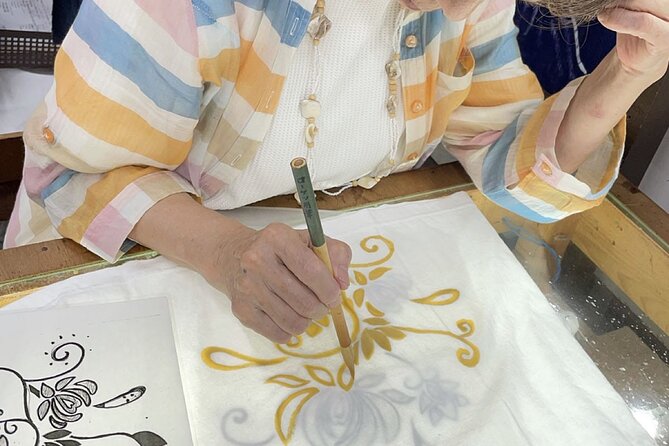
The central hands-on stage is painting melted wax onto the fabric. The wax forms the areas that resist the dye. You are not simply decorating a finished item with surface paint. Your marks help determine the final pattern.
The instructor demonstrates the process and provides help as you go. The owner and his mother, Yoko, are known for giving patient guidance, especially when someone is unsure of the next step. You can expect a practical lesson rather than a long formal talk.
English is limited, and this is the clearest drawback of the workshop. Instructions may sometimes be hard to follow in words. The activity remains workable because much of the teaching is visual and hands-on, but you should be comfortable watching closely, copying a demonstration, and asking for help with simple gestures.
That language gap may matter more if you want a technical explanation of Roketsu history or dye chemistry. It matters less if your main goal is to make an attractive piece and learn through doing. The craft is accessible at all skill levels, and even beginners have produced satisfying results with guidance.
Do not worry about artistic ability. The patterns provide structure, and the staff can help you make choices that work. At the same time, the process leaves room for small imperfections. Those marks are part of the appeal. You are making a personal object, not ordering a factory-perfect print.
The dyeing stage and the finished reveal
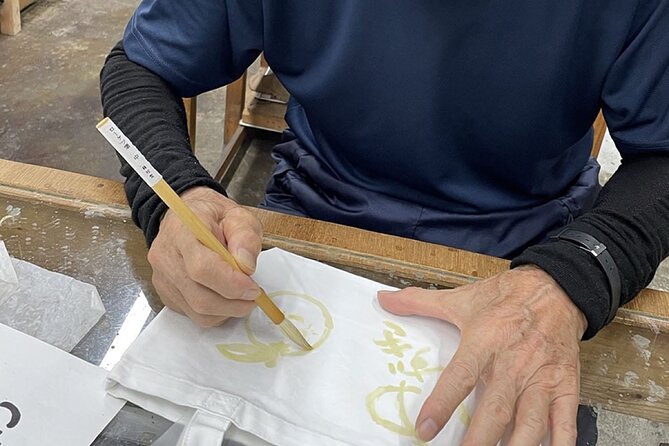
After the wax has been applied, the fabric is dyed. The resist areas preserve the design while the surrounding cloth takes on the dye. The workshop presents this as a full bucket-dyeing experience, giving you a closer connection to the traditional method than a quick paint-and-go class.
The final result is revealed after the dyeing process. Part of the fun is seeing how your wax lines and selected pattern translate into the finished fabric. The outcome may differ slightly from what you pictured, especially if you freehand the design. That uncertainty is normal in handmade dye work.
You can take the finished item home on the day of the activity, usually after about 90 to 120 minutes. That makes the workshop easy to fit into a Kyoto holiday. You do not need to return on another day or arrange later delivery.
Still, treat the time estimate as a guide, not a deadline. People who choose detailed patterns, multiple items, or freehand drawings may need around three hours. The staff do not appear to force everyone into the same pace, but you should avoid scheduling a major attraction immediately afterward.
A calm break from Kyoto sightseeing
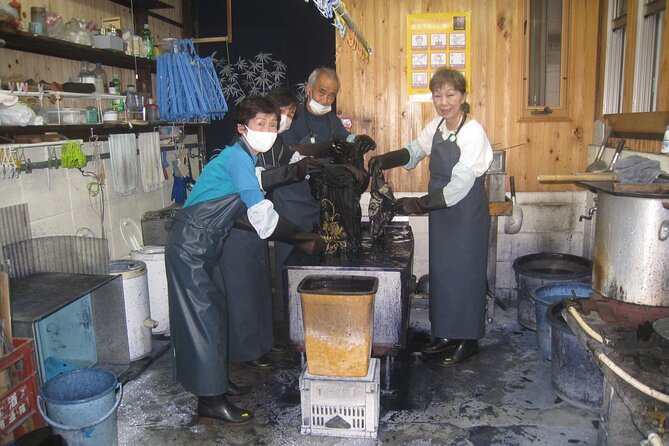
I see this workshop as especially useful on a packed Kyoto trip. Temples, gardens, and market streets are rewarding, but several days of walking and listening can become tiring. Sitting at a worktable gives you a different kind of cultural experience.
The activity also works well for families. Adults and teenagers can choose different designs and work side by side. A family of six, including four teens, spent several hours making shirts and a banner, with everyone putting phones aside for the project.
Children can take part, too, though the supplied information does not specify a minimum age. One family made T-shirts and a tote bag with a six-year-old. The staff’s patient approach helps, but younger children may need close adult help with the wax and design stages.
Solo visitors are welcome. The studio’s process does not depend on arriving as part of a group, and a solo maker can focus quietly on a personal design. This is a good choice if your companions want different activities for an afternoon.
Service animals are allowed, and most people can participate. The activity requires good weather under its cancellation terms, even though much of the work takes place indoors, so check the conditions and provider notices close to your booking date.
Is $25.77 good value?
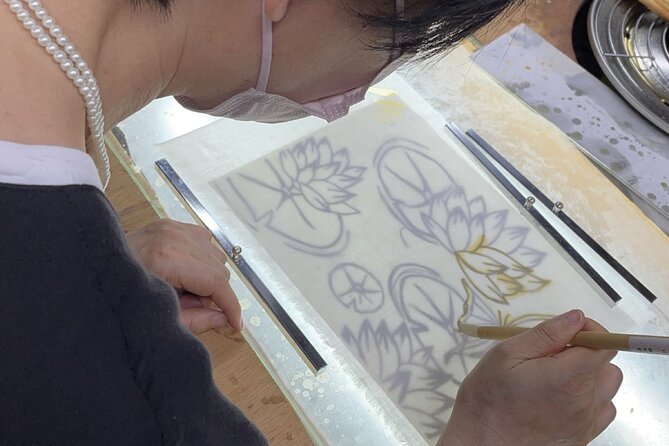
At about $25.77 per person, this experience offers more than a short demonstration. You receive instruction, time at the worktable, access to patterns, a fabric item, the dyeing process, and a finished souvenir to take home that day.
That is good value for Kyoto, especially when you compare it with buying a mass-produced souvenir. Your finished piece is one of a kind, and the process gives it a story. You can wear the shirt, use the tote, or display the hanging banner as a reminder of the city.
The value is strongest if you enjoy making things. If you want a fast attraction with a guaranteed polished result, the workshop may feel slower and less predictable. Your final design depends on your patience and choices. The staff can guide you, but they cannot remove every handmade variation.
The price also becomes more attractive for families. Everyone can work on a separate item, and the activity creates shared time rather than another stop where one person waits while others take photographs.
Practical tips for booking and timing
Book ahead. The experience had been booked more than 10 times in the previous week, and confirmation is subject to availability. Free cancellation is available up to 24 hours before the start time for a full refund. Changes or cancellations inside that 24-hour window are not accepted for a refund.
Allow at least two hours, even if your plan says 90 minutes. If you want a freehand design or several detailed motifs, reserve closer to three hours. This extra margin will keep you from turning a relaxing activity into a race.
Think about your design before you arrive. You can use the studio’s stencils, but a simple idea in mind will help you choose quickly. If you bring a sketch, make sure it can be adapted to the size and shape of your chosen item.
The mobile ticket is convenient, and the activity returns you to the meeting point. Since the studio is in western Kyoto, check your route from your hotel or previous stop and avoid pairing it with a faraway appointment at a tight time.
Who should book this Roketsu experience?
I would choose this for anyone who wants a hands-on cultural activity and a useful souvenir. It suits families, couples, solo visitors, craft fans, and people who need a quieter afternoon between major sights.
It is also a strong pick for anyone who worries about not being artistic. The stencils and step-by-step help make the process approachable, while the option to draw freely keeps it from feeling like a rigid paint-by-numbers class.
I would be more cautious if you need detailed spoken instruction in English, have only an hour to spare, or dislike handmade results that may vary from your plan. The language barrier is manageable, but it is real. A simple design and a willingness to watch demonstrations will make the session much easier.
Should you book it?
Yes, if you want to slow down and create something personal in Kyoto. The modest price, same-day souvenir, family-run setting, and real participation in the dyeing process make this more rewarding than a quick craft demonstration.
Book it with enough time, choose a design you can finish without stress, and expect to learn by watching as much as listening. If you do that, Roketsu73 offers a memorable break from sightseeing and a shirt, bag, or wall hanging that carries your own marks.
FAQ
Where does the Roketsu dyeing experience take place?
It takes place at Roketsu73, Nishikyōgoku Umazukachō, Ukyo Ward, Kyoto, Japan. The activity ends back at the same meeting point.
How long does the activity last?
The usual duration is about 90 to 120 minutes. Detailed designs, multiple items, or freehand work can take around three hours.
What can I make during the workshop?
Available choices include a T-shirt, tote bag, or decorative hanging banner. The exact selection can vary, so confirm the options at the studio.
Can I bring my own design?
Yes. You can bring a sketch and use it to create an original work. You can also select from the studio’s many stencils and combine patterns.
Is English instruction available?
The staff speak limited English, so some explanations may be difficult to follow verbally. The process is hands-on, with demonstrations and direct guidance at each stage.
Can I cancel for a full refund?
Yes. You can cancel at least 24 hours before the experience start time for a full refund. Cancellations or changes made less than 24 hours before the start time are not accepted for a refund.
Just added around Kyoto
- Private Guided Traditional Buddhist Cooking in Japan★ 5.0 · 16 reviews
- Kyoto: Gion Geisha District & Sake-in-Hand Walking Tour★ 5.0 · 37 reviews
- Your Private Vacation Photography Session In Kyoto★ 5.0 · 110 reviews
- Kyoto: Zen Meditation at a Private Temple with a Monk★ 5.0 · 25 reviews
- Private Pewter Sake Cup Experience with a Kyoto Artisan★ 5.0 · 31 reviews
- Traditional Japanese Washi Papermaking- Kyoto morning★ 5.0 · 77 reviews
- Kyoto Wagashi(Japanese sweets) Cooking Class near Fushimiinari★ 5.0 · 60 reviews
- Kyoto Private 6 hour Tour: English Speaking Driver Only, No Guide★ 5.0 · 88 reviews
Kyoto Tours, compared.
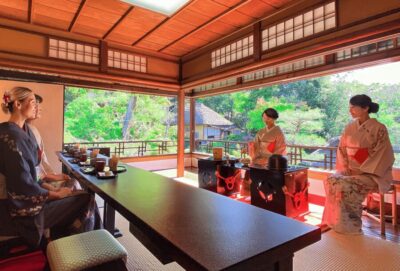
Tea Ceremony in a Traditional Tea House in Kiyomizu
Read our review →
Kyoto Geisha Walking Tour: Gion District & Hidden Gems
Read our review →
Gion Magical Night Walking Tour with Geisha Trivia
Read our review →
Gion Geisha District Walking Tour – Stories of Geisha
Read our review →
Best of Kyoto: Gion, Geisha, Pagodas & Cobblestones
Read our review →