
REVIEW · KIMONO & CULTURE EXPERIENCES
Osaka 2-Hour Genuine Kendo / Samurai Experience In Japan
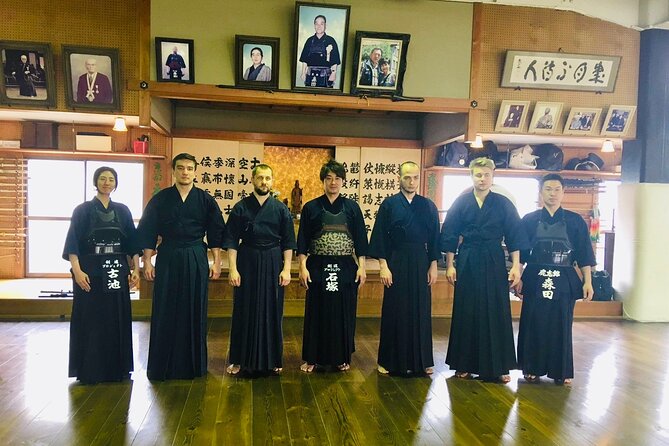
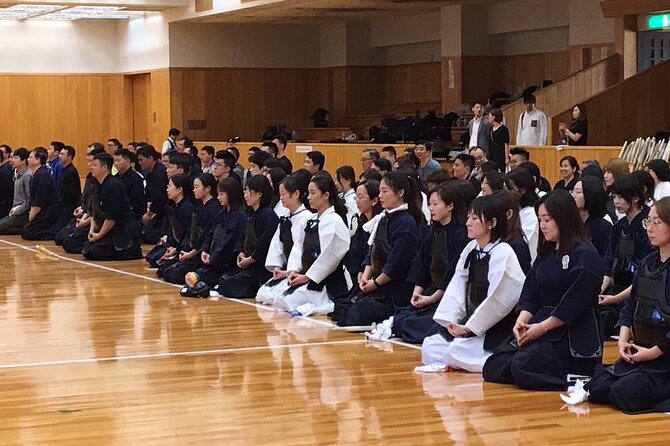
Kendo is not a costume photo opportunity. It is a disciplined martial art built around posture, footwork, timing, manners, and control. In this two-hour Osaka class, you learn the basics step by step, then work toward striking practice and light sparring with an English-speaking instructor.
I like the small group limit of seven, which gives the instructor room to correct your stance and pace the class for beginners. I also like that the lesson includes history and etiquette, not just a workout with bamboo swords. The main drawback is simple: this is physical, and you will sweat, especially in Osaka’s hot summer months.
In This Review
- Key points before you book
- Why kendo makes a good Osaka activity
- Arriving at Shigino Hall for the 10 a.m. start
- The opening lesson: manners before movement
- Learning footwork, posture, and basic strikes
- Equipment, protective gear, and the move toward sparring
- What the small group changes
- The cultural value beyond sword swings
- Is $118.89 a fair price?
- Who should book this experience?
- Practical planning for your morning
- My call: book it if you want to participate, not just watch
- FAQ
- How long does the Osaka kendo experience last?
- Where does the class meet?
- What time does the class start?
- Does the activity end at the meeting point?
- How many people can join the class?
- Is equipment provided?
- Is hotel pickup included?
- Do I need to be physically fit?
- Can I cancel for a refund?
Key points before you book
- A real beginner lesson: You learn basic footwork, strikes, manners, and kendo principles rather than simply posing in samurai gear.
- Small groups: The class has a maximum of seven people, and some sessions may feel close to private instruction.
- English-speaking teaching: Instructors including Hiroki and Yama explain the techniques and cultural background in English.
- Sparring is the payoff: The class builds toward short practice bouts, sometimes in full protective equipment.
- Everything practical is supplied: Kendo equipment, bottled water, and a souvenir towel are included.
- Plan for a workout: Moderate fitness is advised, and hot weather can make the two-hour session harder.
Why kendo makes a good Osaka activity
Osaka is famous for food, neon streets, shopping, and easygoing energy. Kendo gives you a different side of Japan. For two hours, you are not simply looking at an old custom. You are asked to stand correctly, move carefully, show respect, and repeat small actions until they begin to feel natural.
The class introduces three ideas that sit at the heart of the experience: unifying your spirit, practicing manners, and treating kendo as a lifelong pursuit. That matters because kendo is not presented as a contest where the hardest hit wins. The physical moves have a mental and cultural purpose too.
I find this more rewarding than a short samurai photo session. You get a little history, a little physical training, and a better sense of how Japanese martial arts connect the body, mind, and rules of conduct. You also get to try something that requires your attention. It is hard to check your phone while concentrating on footwork and an incoming strike.
The class is designed for complete beginners. You do not need prior martial arts experience, and the instructor leads you through the movements in a clear order. The English instruction is especially useful here, since timing and body position are difficult to understand from gestures alone.
More Kimono & Culture Experiences in Osaka
- Osaka: Sumo Show & Experience w/ Optional Kimono & Hot Pot
★ 4.5 · 609 reviews - Samurai Training Experience KENDO in Osaka
★ 5.0 · 515 reviews - OSAKA NIGHT FUSION Japanese Taiko Kabuki Samurai Dance Show
★ 4.8 · 155 reviews
Arriving at Shigino Hall for the 10 a.m. start
The meeting point is Shigino Hall in Joto Ward, at 1-chome 18, Shiginonishi, Osaka, postal code 536-0014. The venue is near public transportation, making it practical to reach by train, though you should allow enough time to find the hall and settle in before the 10 a.m. start.
This is a meeting-point activity. Hotel pickup and drop-off are not included, and the class ends back at the same place. That makes the timing easy to understand, but it also means you need to handle the journey to and from the hall yourself.
A morning start works well with an Osaka sightseeing day. After the class, you can have lunch and continue exploring. Still, do not schedule something that requires you to look perfectly fresh immediately afterward. The lesson is active, and you may want time to cool down and change before heading onward.
Bring a mobile ticket for entry. The booking confirmation is issued at the time of booking, and the activity is available with a mobile ticket, so there is no need to print a voucher.
The opening lesson: manners before movement
The first part of the experience deals with what kendo is and how it should be practiced. You learn about its history, its place within Japanese martial arts, and the etiquette that shapes the class.
This beginning is important. A sword-based activity can easily become a fast, theatrical exercise, but kendo asks for restraint. You learn how to behave in the practice space, how to show respect, and why manners are treated as part of the art rather than an optional extra.
The instructor explains the basic ideas in English and introduces the relationship between mind, skill, and body. That gives the physical work some context. When you later repeat a strike or correct your stance, you understand that the goal is not just to swing harder.
Instructors named in the class feedback include Hiroki and Yama. The teaching style is described as patient and encouraging, with an emphasis on making new students comfortable. That is useful for a first lesson because kendo has unfamiliar rules, clothing, movements, and sounds.
Learning footwork, posture, and basic strikes
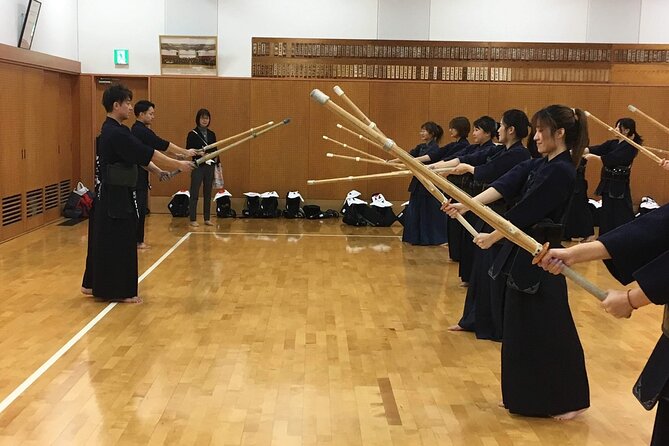
The physical lesson moves through the fundamentals. You practice how to stand, how to move your feet, and how to coordinate the body with the sword. Basic strikes are introduced step by step, giving you time to focus on one part of the movement before joining everything together.
Footwork may sound less exciting than swordplay, but it is one of the most useful parts of the lesson. If your feet are in the wrong position, your strike loses balance and control. The instructor can watch your movement closely in a small group and offer corrections before bad habits settle in.
You also learn that kendo depends on timing and focus. The class is not simply a matter of lifting the sword and bringing it down. You need to pay attention to distance, posture, and the moment of contact.
The pace suits beginners, though it is not passive. You will repeat movements, listen for instructions, and put in physical effort. The two-hour duration is long enough to move beyond a quick demonstration, but short enough to fit into a larger Osaka itinerary.
Same city, a completely different kind of day:
- Osaka Go Karting Tour with Funny Costume
★ 5.0 · 2,658 reviews - Osaka Castle: Museum and Tower Entry Ticket
★ 4.5 · 2,380 reviews - Osaka: Shinsekai Food Tour with 13-15 Dishes at 5 Eateries
★ 4.8 · 2,204 reviews - Osaka Food Tour: 13 Dishes at 5 Local Eateries
★ 5.0 · 2,149 reviews
Equipment, protective gear, and the move toward sparring
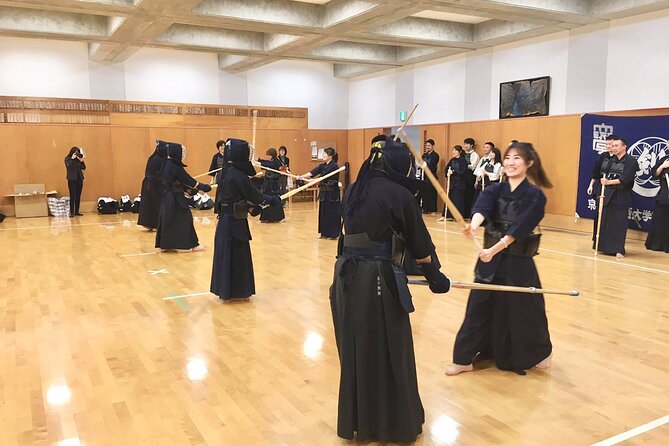
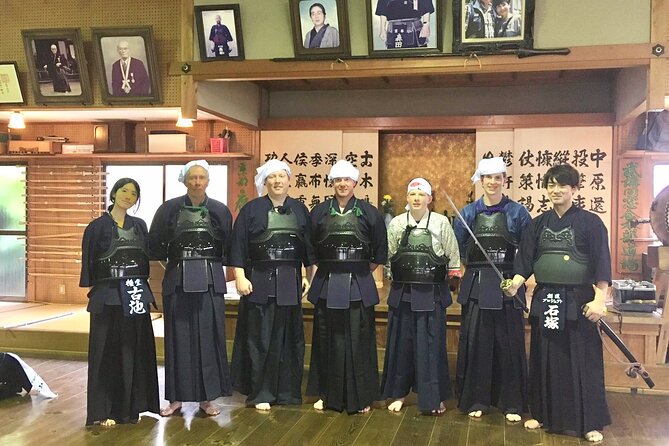
All kendo equipment is included, which is a major convenience for visitors. You do not need to bring or rent a bamboo sword or protective gear separately. The class also supplies bottled water and a free kendo towel.
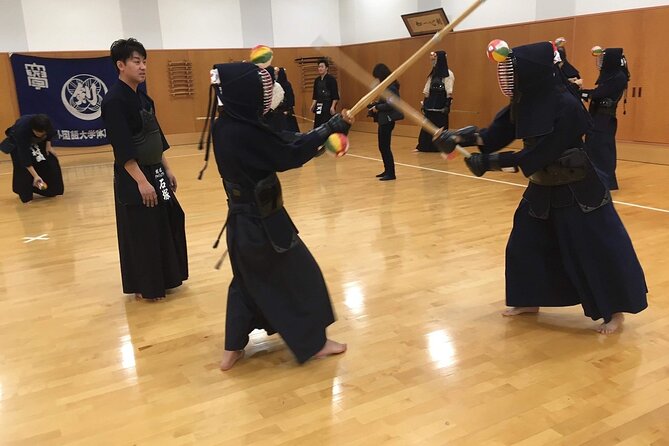
The session builds toward practice bouts. By the later part of the class, you may work with another participant or the instructor in light sparring. Some sessions progress to short battles in full protective gear, giving you a taste of how the earlier drills fit together.
This is the moment many people will remember. Sparring gives the lesson a clear purpose, but it should not be confused with an unsupervised fight. The instructor controls the pace and makes sure beginners understand what to do.
You should expect a workout. Several parts of the experience involve repeated movement, and protective equipment can feel warm. August is likely to be uncomfortable for anyone sensitive to heat, so cooler months may be a better choice if you have flexibility.
The supplied information advises a moderate level of physical fitness. That does not mean you need to be athletic, but you should be comfortable standing, moving, and practicing for two hours. Tell yourself to focus on learning rather than trying to look skilled on the first attempt.
What the small group changes
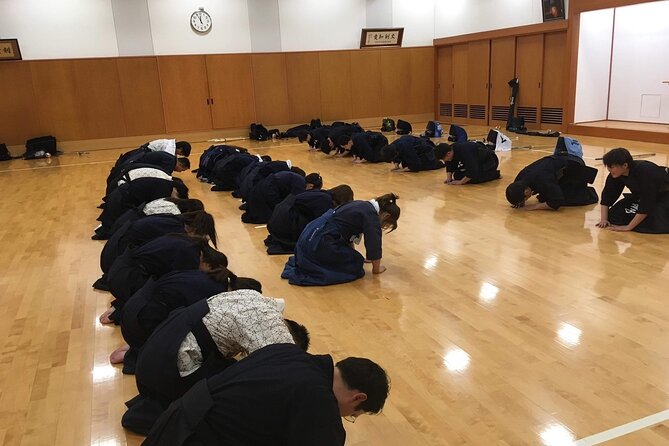
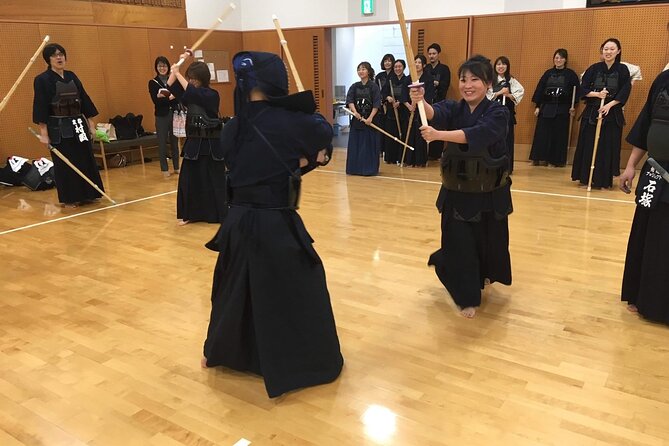
With a maximum of seven people, this is more personal than a large demonstration. The instructor can see how you are holding the sword, check your footwork, and adjust the lesson if the group needs more time.
The group size may be even smaller. A session could have four people, two friends, a family, or just one booking party. If you are alone, you may practice alongside another small group. If you come with a friend, the sparring section gives you a shared activity instead of two separate sightseeing schedules.
A small class also helps with nerves. Your first kendo movements may feel awkward, and that is normal. An encouraging instructor can make the difference between feeling self-conscious and enjoying the challenge.
The tradeoff is that the experience may feel different from one date to another. A nearly private class offers more direct attention, while a group of seven gives you more partners and a lively practice setting. The maximum is still modest, so neither format should feel crowded.
The cultural value beyond sword swings
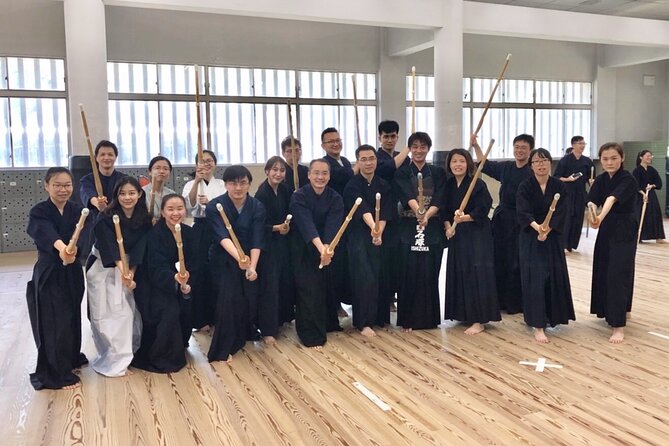
The best reason to choose this class is not the word samurai in the title. The useful part is the connection between kendo practice and Japanese ideas about discipline, respect, and lifelong improvement.
You learn that etiquette is not a formal introduction before the real activity begins. It is part of the activity. The way you enter the practice space, address the instructor, face a partner, and control your actions all contribute to the lesson.
That makes the class suitable for people interested in Japanese sporting culture, not only martial arts fans. You may arrive because you like samurai films, anime, or video games, but you leave with a more grounded picture of kendo.
The lesson also gives you a physical way to remember the culture. A museum explanation can tell you about discipline. Kendo asks you to practice it through repeated movement and attention. You do not master the art in two hours, but you can understand why it has lasted as a serious practice.
Is $118.89 a fair price?
At $118.89 per person, this is not a cheap activity. Osaka offers many low-cost cultural sights, and you should not book this class expecting a bargain attraction.
The value comes from the amount of attention and equipment included. You receive a two-hour lesson, an English-speaking instructor, all kendo equipment, bottled water, and a souvenir towel. The small group format matters too, since instruction is the central product rather than a short performance.
I think the price makes the most sense if you want an active cultural experience that you could not easily arrange on your own. It is also stronger value for people who care about instruction, etiquette, and hands-on practice. If you only want a quick samurai photo, this class is more time and money than you need.
A private or nearly private session can also make the cost feel more reasonable. You get more chances to ask questions, repeat movements, and practice with direct guidance. Groups of up to seven still offer personal instruction, but the exact amount of individual attention depends on attendance.
Who should book this experience?
I would recommend it to first-time visitors who want to do more than look at traditional Japanese culture from the outside. It suits solo participants, couples, friends, and families with older children. A 13-year-old has taken part successfully, according to the supplied experience details, though every young participant should be comfortable with the physical demands.
It is a good choice for anyone with an interest in:
- Japanese martial arts
- Samurai culture
- Japanese etiquette
- Hands-on cultural activities
- Light physical exercise
- Small-group instruction
You should think twice if you dislike structured lessons, cannot manage moderate physical activity, or want a relaxed activity with little movement. The class is friendly, but it is not a passive talk.
The English-speaking instruction is a major help. You can focus on technique instead of guessing what the instructor means. The teaching also appears suited to mixed ability levels, since beginners are taken through the material step by step.
Practical planning for your morning
Wear clothing that allows you to move comfortably. The provided information does not specify a dress code, so avoid anything restrictive and plan for heat during the active sections. You may sweat, especially in summer, and the included towel is a useful small extra.
Bring water if you prefer to have more than the supplied bottle. Food is not included, so arrange breakfast before class or lunch afterward. Since the activity starts at 10 a.m., a meal after the session may fit naturally into your day.
Check the route to Shigino Hall before leaving. The location is near public transportation, but Osaka’s station areas can be confusing when you are in a hurry. A mobile ticket makes entry simple, though it does not replace the need to arrive at the correct hall.
The cancellation terms are friendly if your plans are still changing. You can cancel for a full refund up to 24 hours before the local start time. Cancellations or changes made less than 24 hours ahead are not accepted for a refund.
My call: book it if you want to participate, not just watch
Book this Osaka kendo experience if you want a genuine beginner lesson with clear English instruction, cultural context, and a chance to practice in protective equipment. The small group cap, patient teaching, and final sparring section give the two hours a satisfying shape.
The cost is the main question. At $118.89, you are paying for instruction and access to a practice rather than a cheap attraction. For a first visit to Japan, that can be worthwhile if you value active, personal experiences.
Skip it if you want a short photo stop, dislike exercise, or have a packed schedule with no room to cool down afterward. For everyone else, this is a memorable way to spend a morning in Osaka, with enough history and etiquette to make the sword work mean something.
FAQ
How long does the Osaka kendo experience last?
The experience lasts approximately two hours.
Where does the class meet?
The meeting point is Shigino Hall, 1-chome 18, Shiginonishi, Joto Ward, Osaka, postal code 536-0014.
What time does the class start?
The scheduled start time is 10 a.m.
Does the activity end at the meeting point?
Yes. The activity ends back at the same meeting point.
How many people can join the class?
The class has a maximum of seven participants.
Is equipment provided?
Yes. All kendo equipment is included, along with bottled water and a free kendo towel.
Is hotel pickup included?
No. Hotel pickup and drop-off are not included. You meet at Shigino Hall and make your own way there.
Do I need to be physically fit?
Participants should have a moderate level of physical fitness. The class includes movement and practice for about two hours, and you may sweat.
Can I cancel for a refund?
Yes. You can cancel at least 24 hours before the local start time for a full refund. Cancellations and changes made less than 24 hours before the start are not accepted for a refund.
More 2-Hour Experiences in Osaka
- Osaka: 2-Hour Nightlife District Walking & Local Food Culture
★ 5.0 · 199 reviews - Osaka: 2-Hour Local Street Food Tour – Dotonbori & Namba
★ 4.6 · 95 reviews - 1.5〜2 Hours Traditional Kintsugi Work Shop in Namba Osaka
★ 5.0 · 75 reviews - Kyoto Gion: 2-Hour Geisha Culture & History Walking Tour
★ 5.0 · 1,186 reviews
Just added around Osaka
- Samurai dress-up and shows, plus Tea Ceremony & Calligraphy★ 5.0 · 27 reviews
- Kyoto & Nara Private customized tour with English speaking Guide★ 4.5 · 99 reviews
- Well-balanced BENTO (lunch box) Cooking Class★ 5.0 · 35 reviews
- Urban Canvas: Osaka Street Art Bike Tour★ 5.0 · 47 reviews
- OSAKA:Feel the Power! Learn Taiko Drum from Professionals★ 5.0 · 28 reviews
- Volleyball in Osaka & Kyoto with Locals!★ 5.0 · 21 reviews
- 1.5〜2 Hours Traditional Kintsugi Work Shop in Namba Osaka★ 5.0 · 75 reviews
- Umami Town Street Food Tour★ 5.0 · 120 reviews
Kimono & Culture Experiences, compared.

Kyoto Geisha Walking Tour: Gion District & Hidden Gems
Read our review →
Gion Magical Night Walking Tour with Geisha Trivia
Read our review →
Gion Geisha District Walking Tour – Stories of Geisha
Read our review →
Best of Kyoto: Gion, Geisha, Pagodas & Cobblestones
Read our review →

Kyoto Gion Geisha District Walking Tour – The Stories of Geisha
Read our review →
Browse the lists this tour appears in