
REVIEW · SUMO EXPERIENCES
Morning Sumo Practice Viewing in Tokyo
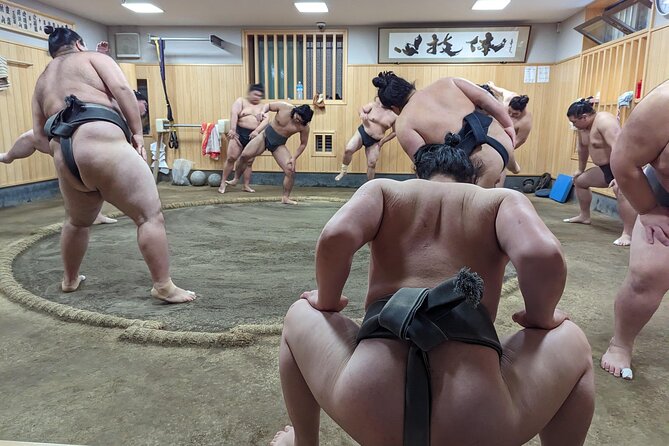
The best part of this Tokyo experience is the access. You sit inside a real sumo stable while wrestlers warm up, practice throws, and face one another at close range. This is not a stadium show. It is a quiet morning training session, with the occasional thud of a body hitting the floor.
I like the small group size, limited to 10 people, and the short briefing at Tokyo Skytree Station, which helps you understand what you are seeing. I also like that your $99.08 includes a donation to the stable, so part of your fee supports the place allowing you through its door. The main drawback is simple: you sit on a cushion on the floor for about two hours, with no chairs and no toilet available during the practice.
In This Review
- Key points to know before you book
- Why morning practice feels different from a sumo tournament
- Starting at Tokyo Skytree at 7:30 am
- Entering Naruto-beya in Sumida
- What the guide adds to the stable visit
- The floor seating is the main test
- Photos and the chance to meet wrestlers
- Chanko nabe and the food side of sumo
- Is $99.08 a fair price?
- Who should book this sumo experience?
- Cancellation and weather details
- My verdict: book it for access, not spectacle
- FAQ
- Where does the sumo practice tour begin?
- What time does the experience start?
- Where does the tour end?
- How long does the experience last?
- Do I sit on a chair during practice?
- Is a photo with the wrestlers guaranteed?
- Can I cancel for a full refund?
Key points to know before you book
- Morning access at 7:30 am: You meet at Tokyo Skytree Station and walk to the sumo stable in Sumida.
- Close-up practice, not a staged bout: You watch wrestlers warm up and train as part of their normal morning routine.
- A guide makes the action easier to follow: Guides such as Joji, Dawn, Jeff, and Aki have explained the rules, rituals, moves, and background of sumo.
- Floor seating is part of the deal: You sit on a cushion on a flat floor for roughly two hours, and no chairs are available.
- A possible photo session: You will most likely have a chance to take photos with sumo wrestlers after practice.
- Small group and stable donation included: The group can have up to 10 people, and the ticket price includes a donation to the stable.
Why morning practice feels different from a sumo tournament
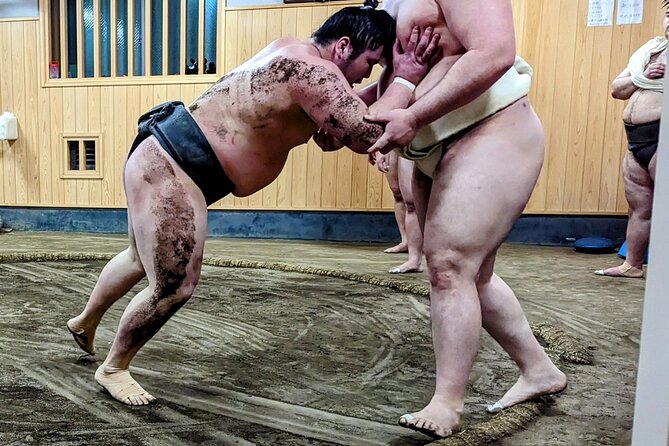
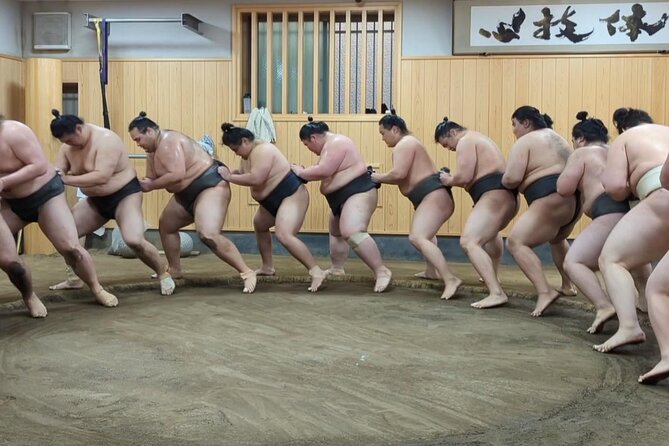
A tournament gives you bright lights, a formal schedule, and the thrill of a packed arena. This morning visit gives you something quieter and closer. You watch wrestlers prepare their bodies, repeat movements, and test one another in a working stable.
Sumo is tied to Shinto customs, so the session is not only about strength. Ritual, discipline, and respect shape what happens in the room. Your guide explains these points before you enter and helps you notice details that could otherwise look like simple stretching or roughhousing.
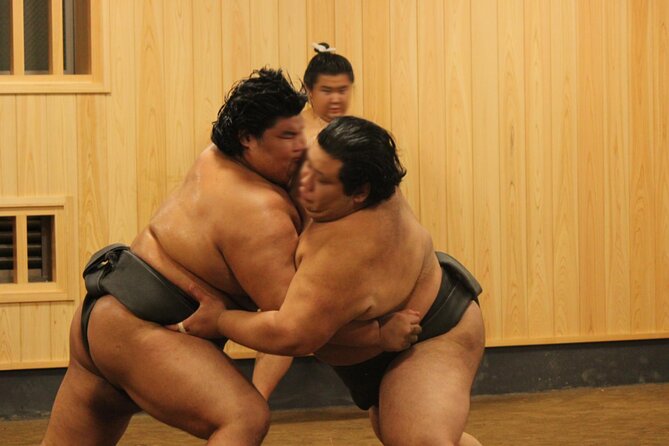
I especially like this setting for first-time sumo fans. You do not need to know the difference between a push-out and a belt throw before arriving. The briefing gives you enough background to follow the action, while the close seating lets you feel the physical force of each bout.
Still, this is practice. The wrestlers are not performing for an audience, and the exact length or pace of training can vary. You may see long stretches of preparation, repeated drills, and bouts that end quickly. That lack of polish is part of the value, but anyone expecting a full tournament should book a tournament instead.
More Sumo Experiences in Tokyo
- Tokyo: Sumo Show and Dining Experience
★ 4.8 · 2,742 reviews - the SUMO show
★ 5.0 · 1,960 reviews - Tokyo Shinjuku Sumo Show & Experience with Photo
★ 5.0 · 1,750 reviews
Starting at Tokyo Skytree at 7:30 am
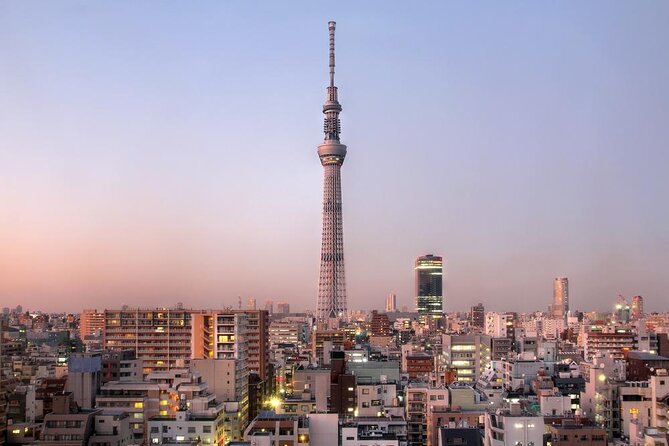
Your meeting point is Tokyo Skytree Station at 1-chome-1-4 Oshiage in Sumida City. The early start means you need to plan your train ride carefully, especially if you are staying in another part of Tokyo.
The first part lasts about 30 minutes. Your guide introduces the basics of sumo and explains the rules for watching inside the stable. This matters because the stable is a working place, not a sightseeing attraction built for large crowds. You need to know when to stay quiet, where to sit, and how to watch without interrupting the training.
The Skytree also gives you a useful landmark for finding the meeting point. You will not spend the morning touring the tower or going up to the observation decks. Instead, the tower serves as the starting point before you continue into the Sumida neighborhood.
Guides including Joji, Dawn, Jeff, and Aki have helped make this opening talk useful. The information can include written handouts, profiles of wrestlers in training, and explanations of basic moves. If you are new to sumo, pay attention here. Once practice begins, there may not be much conversation inside the stable.
Entering Naruto-beya in Sumida
From the Skytree area, the tour continues to Naruto-beya Sumo Stable at 1-chome-22-16 Mukojima. The stable is where wrestlers live and train under the direction of a stable master. Getting inside is difficult if you are arranging the visit on your own, which is one of the strongest reasons to book a guided outing.
The group spends about two hours watching practice. You sit inside the stable on a cushion placed on a flat floor. The viewing position puts you close to the wrestlers, but it also means you must respect the room’s quiet and formal mood.
You might see warm-ups, stretching, footwork, practice bouts, and repeated training between wrestlers. The room can feel very different from a public sports venue. There are no grand announcements or constant commentary, so your guide’s earlier explanations become important.
This close setting is also why the experience receives such strong marks, with a 4.9 rating and 98 percent recommendation rate shown for the activity. The appeal is not just seeing sumo from a better seat. You are watching the daily work behind the public sport.
What the guide adds to the stable visit
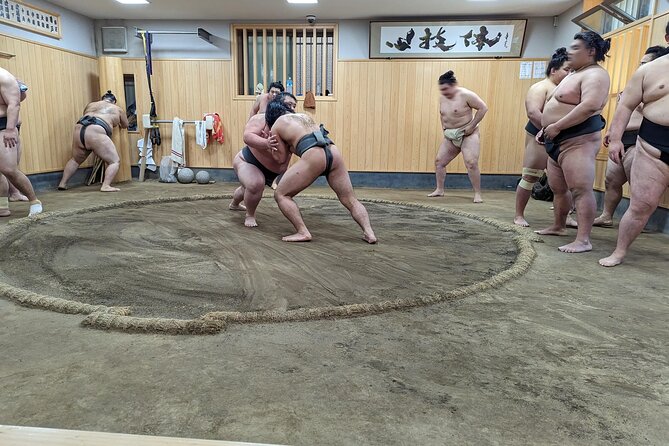
You could watch a practice session and enjoy the power of it without any explanation. You would miss much of the meaning, though. A good guide points out the purpose of a movement, explains why wrestlers follow certain rituals, and gives you enough context to understand the relationship between training and Shinto tradition.
Aki has been praised for explaining sumo rules and moves in advance, then providing written information so the group could follow the practice. Dawn has focused on the sport itself and helped make a two to three-hour viewing session easier to understand. Joji has been described as careful about preparation and timing, while Jeff has offered clear background on the sport.
The guide also helps with the practical side of entering a stable. You are told how to behave before you sit down, and the group is prepared for the fact that the practice room is not arranged like a theater.
This is listed as a private tour, but the stated maximum is 10 people. That is still a small group for Tokyo, and it should give you a better chance to hear the guide and ask questions than a large bus outing. Exact group size can vary, but you should not assume you will have the stable entirely to yourself.
Same city, a completely different kind of day:
- Mt Fuji and Hakone 1-Day Bus Tour Return by Bullet Train
★ 5.0 · 26,383 reviews - 1-Day Tokyo Bus Tour
★ 5.0 · 14,250 reviews - Tokyo: TOKYO SKYTREE® Admission ticket
★ 4.5 · 11,192 reviews - Tokyo: teamLab Planets TOKYO Digital Art Museum Entry Ticket
★ 4.6 · 9,779 reviews
The floor seating is the main test
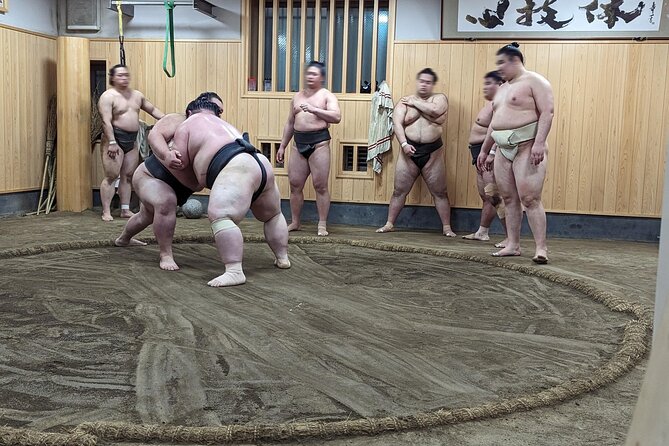
The most important comfort warning is the seating. Everyone sits on a cushion on the floor, and no chairs are available. The practice lasts around two hours, so this can be difficult if you have stiff knees, limited mobility, or simply dislike sitting cross-legged for a long period.
One useful detail is that the experience is described as suitable for most people, but that does not erase the floor-seating requirement. Think honestly about your comfort before paying. You may be close to the action, but you will not have the option of standing at the back or moving to a regular chair.
There is also no toilet available during the practice, according to the practical information provided about the visit. Use facilities before entering and avoid treating the morning as a casual drop-in. Once training starts, you should expect to remain seated and quiet.
The early time adds another consideration. You will be leaving your hotel while much of Tokyo is still waking up. That can be a pleasure if you enjoy calm streets and a purposeful start, but it is not ideal if you are recovering from a late arrival or planning a long evening beforehand.
Photos and the chance to meet wrestlers
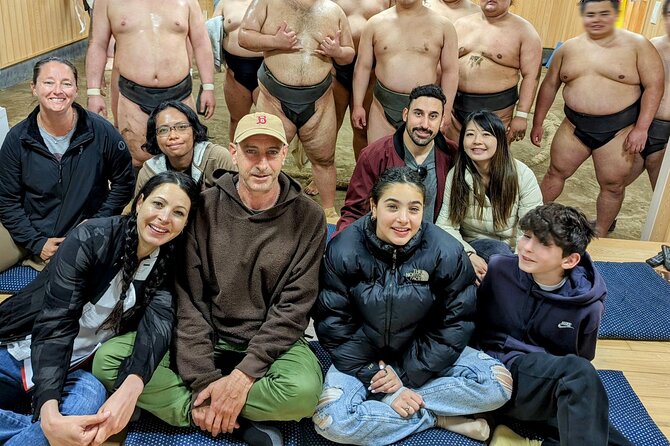
After practice, you will most likely have a photo session with the wrestlers. The wording matters: it is a strong possibility, not a guaranteed part of every visit. Training schedules and stable routines can change, so you should not book solely for a posed photograph.
If the photo opportunity happens, it gives the morning a personal finish. You have just watched the athletes train at close range, and then you may have a chance to stand beside them for a picture. That is very different from seeing a competitor across a tournament ring.
The experience can be especially meaningful for families and sports fans. One account describes a child receiving an excellent seat beside the stable master, which shows how the small setting can make the visit memorable for younger participants. Still, the stable’s rules come first, and you should follow the guide’s instructions about photographs and behavior.
Chanko nabe and the food side of sumo
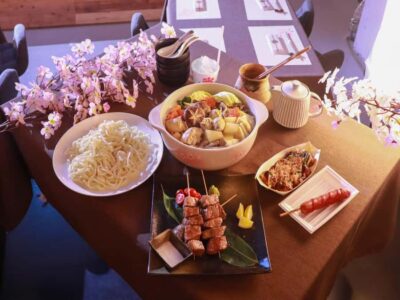
The tour description says you will probably have the chance to refuel with chanko nabe, the traditional stew associated with sumo wrestlers. It is an important cultural detail because food is part of the training system, not just an extra meal added for tourists.
The wording again is worth noting. Chanko nabe is presented as a likely opportunity, not an absolute guarantee. The supplied details do not specify the exact menu, restaurant setting, or dietary arrangements, so you should ask the provider directly if food restrictions are important to you.
I like the idea of ending the morning with this dish because it connects the viewing session to the wrestlers’ daily life. You are not just learning how bouts work. You are also seeing how sumo culture includes eating, ritual, communal life, and disciplined training.
Is $99.08 a fair price?
At $99.08 per person, this is not the cheapest morning activity in Tokyo. You are paying for a small-group guide, access to a place that is difficult to enter alone, a donation to the stable, and roughly three hours of organized time.
The donation is a worthwhile detail. Your money is not only buying a seat and an explanation. Part of the ticket supports the stable that permits the visit, which makes the cost easier to justify for anyone who wants a more respectful cultural experience.
The value also depends on your interest. If sumo is high on your Tokyo list, close access and clear explanations can make this one of the better uses of a morning. If you are only mildly curious, the floor seating and early start may make the price feel high.
Group discounts are available, which may help families or friends traveling together. The maximum group size of 10 keeps the visit more personal than a large sightseeing tour. A mobile ticket is also included, making the booking side simple, though you still need to arrive at the correct station on time.
Who should book this sumo experience?
I would choose this tour for you if you want sport connected to Japanese culture rather than a quick photo opportunity. It suits first-time visitors who want a guide to explain the action, as well as serious sumo fans who value access to a real training stable.
It is a good fit for families, provided everyone can sit on the floor for about two hours. It also works well for visitors who have already seen Tokyo’s major sights and want a morning rooted in a local tradition.
You may want to skip it if you need chair seating, require toilet access during the session, or dislike quiet observation. It is also not the right choice if you want the fixed drama of a tournament, where every match follows a public schedule.
The tour is generally easy to reach by public transportation, but hotel pick-up and drop-off are not included. The morning ends at Naruto-beya, not back at Tokyo Skytree, so plan your next stop from the stable in Mukojima.
Cancellation and weather details
You can cancel for a full refund up to 24 hours before the 7:30 am start time. Changes or cancellations made less than 24 hours before the start are not accepted for a refund, and the cut-off follows Tokyo local time.
The experience requires good weather. If poor weather causes cancellation, you will be offered another date or a full refund. Confirmation arrives when you book, and mobile tickets are accepted.
My verdict: book it for access, not spectacle
I recommend this experience if you want to see sumo at its source and are willing to trade comfort for closeness. The strongest reasons to book are the stable access, the small group, the English-speaking guide, and the chance to see daily practice rather than a polished demonstration.
Go in prepared for a 7:30 am meeting, a floor cushion, no toilet during practice, and a session that may include long periods of quiet training. If you accept those limits, the morning can give you a more direct look at sumo than a seat in the arena. If you need a chair or want guaranteed photos and lunch, confirm those points before booking.
FAQ
Where does the sumo practice tour begin?
It begins at Tokyo Skytree Station, at 1-chome-1-4 Oshiage, Sumida City, Tokyo 131-0045, Japan.
What time does the experience start?
The start time is 7:30 am.
Where does the tour end?
The tour ends at Naruto-beya Sumo Stable at 1-chome-22-16 Mukojima, Sumida City, Tokyo 131-0033, Japan.
How long does the experience last?
The full experience lasts approximately three hours. The briefing near Tokyo Skytree takes about 30 minutes, followed by roughly two hours inside the sumo stable.
Do I sit on a chair during practice?
No. All participants sit on a cushion on a flat floor, and chairs are not available.
Is a photo with the wrestlers guaranteed?
No. A photo session will most likely be available, but it is not presented as a guaranteed part of every visit.
Can I cancel for a full refund?
Yes. You can cancel at least 24 hours before the experience start time for a full refund. If poor weather causes the tour to be canceled, you will be offered another date or a full refund.
More Morning in Tokyo
- Tokyo: Sumo Morning Practice Viewing Tour
★ 4.8 · 570 reviews - Tokyo: Sumo Morning Training Visit
★ 4.4 · 370 reviews - Tokyo: Sumo Morning Practice Tour at Sumida City
★ 4.8 · 308 reviews - Tokyo Sumo Morning Practice Tour at Stable
★ 5.0 · 298 reviews
Just added around Tokyo
- Private Memorable Tokyo Tour with English Speaking Driver★ 5.0 · 30 reviews
- Private Tokyo Custom Full-Day Tour by Chartered Vehicle★ 5.0 · 16 reviews
- Private Sightseeing to Mt Fuji and Hakone with English Driver★ 5.0 · 51 reviews
- Tokyo Photography Masterclass – Private Photography Lesson★ 5.0 · 25 reviews
- Private Mt. Fuji Day Trip from Tokyo with English-Speaking Driver★ 5.0 · 33 reviews
- 4 Day Tour – Mount. Fuji, Tokyo, Hakone, Kamakura and Yokohama★ 5.0 · 19 reviews
- Private Unforgettable Mt Fuji Tour with English Speaking Driver★ 5.0 · 142 reviews
- Private Tokyo Food Tour – A Journey Through Time Through Food★ 5.0 · 36 reviews
Sumo Experiences, compared.
Sumo Show Experience with Chicken Hot Pot and a Photo
Read our review →
Tokyo Shinjuku Sumo Show & Experience with Photo
Read our review →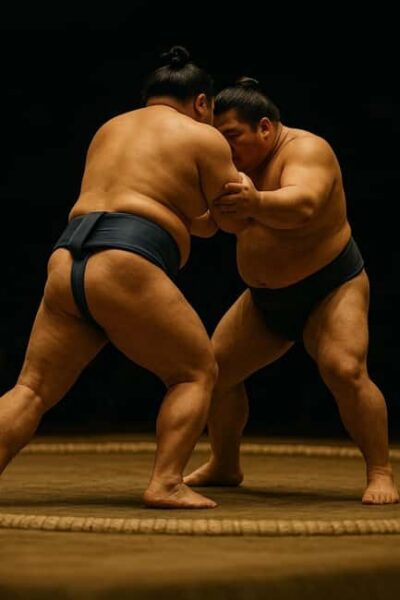
Sumo Show & Experience w/ Optional Kimono & Hot Pot
Read our review →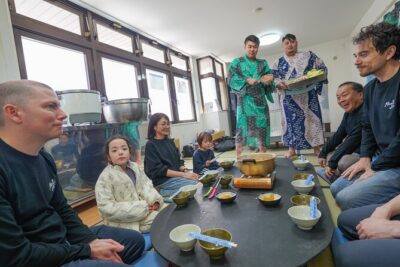
Authentic Sumo Experience in Tokyo: Enter the Sanctuary
Read our review →Browse the lists this tour appears in