REVIEW · KYOTO TOURS
Let’s make only one original onigawara in the world
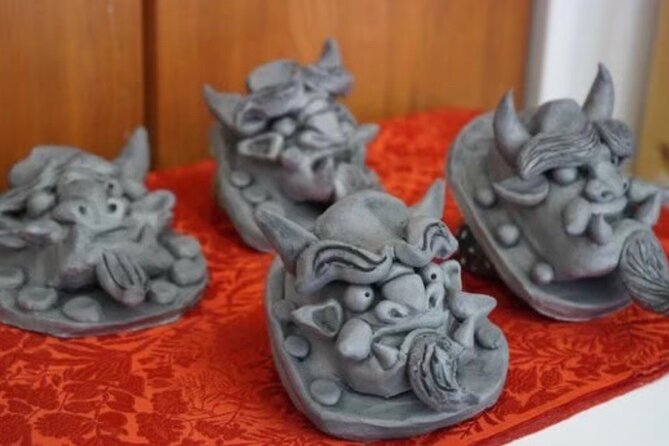
Kyoto has plenty of beautiful souvenirs, but few that you make from a lump of clay and watch transform into a guardian. At 瓦工房 You家, artisan Yuya shows you how onigawara protect Japanese roofs from rainwater and evil, then guides you through building your own demon-faced tile from scratch. I like the clear, step-by-step method, and I like that even a first-time clay worker can create something personal rather than copy a shop display. The main catch is shipping: it costs extra, is paid separately, and the final piece may take weeks or even around two months to reach you.
This is a small, friendly workshop rather than a polished tourist production. The class is normally capped at five people, though larger groups can be arranged at a different location. You will work with soil, so wear clothes that can get dirty, and do not count on taking the finished onigawara home in your suitcase.
In This Review
- Key points at a glance
- Why an onigawara makes a better souvenir
- Arriving at the Higashiyama workshop
- The first lesson: kawara and the demon face
- Turning clay into your own guardian
- A calm break from Kyoto sightseeing
- What happens after the clay work
- Is $89.17 good value?
- Who should book this workshop?
- Practical details before you reserve
- My verdict: book it for the making, not the instant souvenir
- FAQ
- Where does the onigawara workshop take place?
- How long does the activity last?
- What will I make?
- Who teaches the class?
- Is the workshop suitable for beginners?
- How many people can join the regular class?
- Is shipping included in the price?
- When will my finished onigawara arrive?
- What should I wear?
- Can I cancel for a full refund?
Key points at a glance
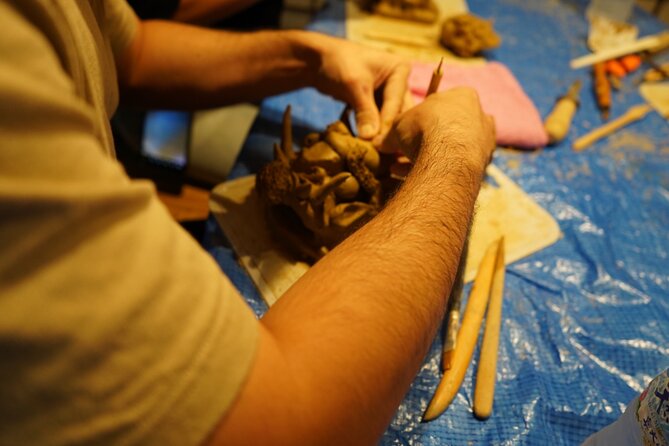
- Make a protective demon tile from raw clay: You shape the face and form yourself, with Yuya breaking the work into manageable steps.
- Learn why onigawara sit on Japanese roofs: These fierce ornaments traditionally guard buildings against evil and rainwater.
- Suitable for complete beginners: The method is designed for children, adults, and people who do not consider themselves handy.
- Expect more than the advertised two hours: Some sessions finish in about two hours, while others take close to three.
- Your piece is fired and shipped later: Kiln firing and delivery are part of the process, but shipping is not included in the price.
- Small classes mean useful personal help: The usual maximum of five allows Yuya to correct techniques and encourage individual designs.
Why an onigawara makes a better souvenir
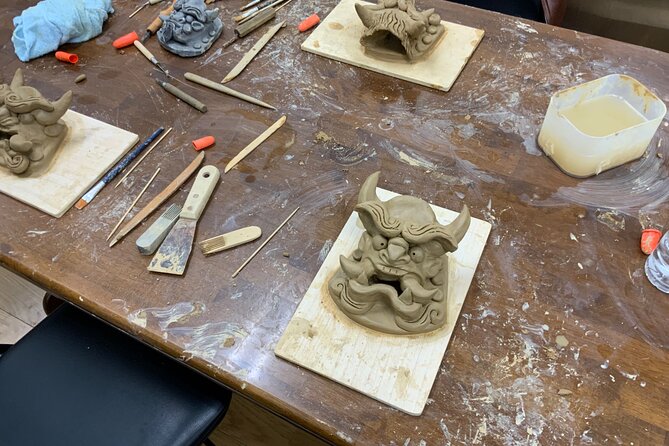
An onigawara is not simply a decorative face stuck on a roof. It is a traditional kawara roof tile, usually placed at the ends of the main roof ridge. Its ogre-like expression has a job: to guard the building and help protect it from harm.
That gives your finished piece more meaning than a generic ceramic trinket. You are making a small guardian connected to the roofs, temples, and homes you see around Kyoto. The workshop also gives you a reason to notice those roof ornaments afterward. Once you know what to look for, you may spot fierce faces above buildings that you had previously walked past.
I especially like the contrast between the old idea and the modern holiday souvenir. Japan’s tile industry has changed with time, but this class lets you try a handmade process based on an older tradition. You leave Kyoto with an object that carries both your own design choices and a bit of Japanese architectural culture.
Other Kyoto days people book alongside this one:
- PERFECT KYOTO 1-Day Bus Tour
★ 5.0 · 13,518 reviews - Kyoto: Fushimi Inari, Kinkakuji, Bamboo Grove 1 Day Bus Tour
★ 4.8 · 4,316 reviews - Kyoto: Tea Ceremony in a Traditional Tea House in Kiyomizu
★ 4.9 · 3,519 reviews
Arriving at the Higashiyama workshop
The meeting point is 瓦工房 You家, also written as kawarakoubouyouya, at 373-2 Yamazakichō in Kyoto’s Higashiyama Ward. The site is near public transportation, though the supplied information does not name a particular station or give walking directions. Check the exact meeting instructions before setting out, especially if you are fitting the class between temple visits.
The activity begins and ends at the workshop. That simple setup is useful on a busy Kyoto day. You do not have to manage a separate return transfer, and the studio can hold luggage during the session according to one detailed account. Still, allow time to find the address and arrive ready to work. A craft class is less forgiving than a sightseeing stop if you turn up late.
The room is a working studio, not a grand cultural center. That is part of its appeal. You are close to the making process and to the person who practices it, rather than watching a distant demonstration behind glass.
The first lesson: kawara and the demon face
Yuya begins with the story and purpose of kawara, Japan’s traditional roof tiles. He explains the role of onigawara and introduces the basic shape you will create. The demon face is not intended to be a perfect portrait. Its character comes from the strong brow, eyes, mouth, and exaggerated features that make each oni look alert, comic, fierce, or slightly lopsided.
The teaching style is practical. Yuya breaks what looks like a difficult sculpture into a series of smaller tasks. You work through a set process, but the shaping still leaves room for your own decisions. That balance matters. A totally free sculpture class can leave a beginner staring at a lump of clay, while a strict mold would produce five identical pieces.
English instruction is available and is described as clear enough for the techniques and steps. Casual conversation may be simpler, but Yuya’s direct demonstrations do much of the work. He also has a patient manner, asking questions and offering suggestions without taking over the project.
Turning clay into your own guardian
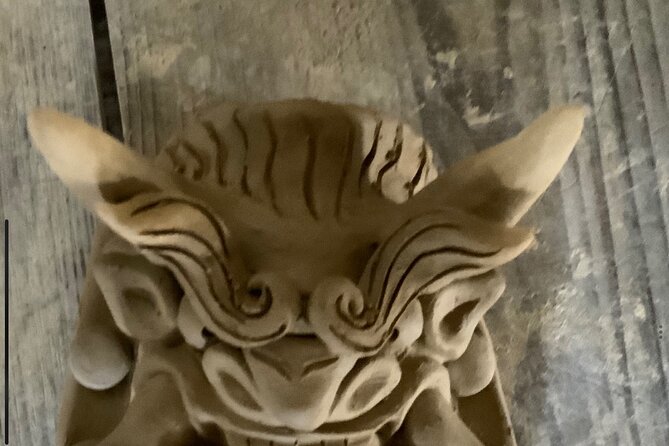
The hands-on portion is the heart of the experience. You start with clay and gradually build the form. The process can feel uncertain in the middle, particularly if you have never worked with clay. Several detailed accounts describe a moment when the piece seemed misshapen or beyond saving, followed by a surprisingly good result once the features came together.
That is worth knowing before you begin. Do not judge the work too early. The method is designed to guide you toward a complete onigawara, even if your first attempts at shaping look rough. Yuya can give hands-on help when needed, and he keeps the project within the time available.
Your piece will not look exactly like the example in the studio, and that is the point. One family produced designs that ranged from a baby-like face to stacks of tubes and triangles. Other pieces came out different despite following the same basic recipe. Your skill level affects the finish, but your choices affect the personality even more.
The class is also a good choice for mixed groups. Adults, teenagers, children, complete beginners, and more experienced sculptors can work side by side. A teenage participant added her own twist, while other first-time clay workers were pleased with the result. The instructions are structured enough for beginners, yet there is space for someone artistic to push the design further.
Same city, a completely different kind of day:
- Kyoto Geisha Walking Tour: Gion District & Hidden Gems
★ 4.7 · 3,273 reviews - Kyoto: Tea Ceremony Ju-An at Jotokuji Temple
★ 4.9 · 3,207 reviews - Kyoto: Gion Magical Night Walking Tour with Geisha Trivia
★ 4.9 · 2,393 reviews - Kyoto: 45-Minute Tea Ceremony Lesson Experience
★ 4.3 · 2,378 reviews
A calm break from Kyoto sightseeing
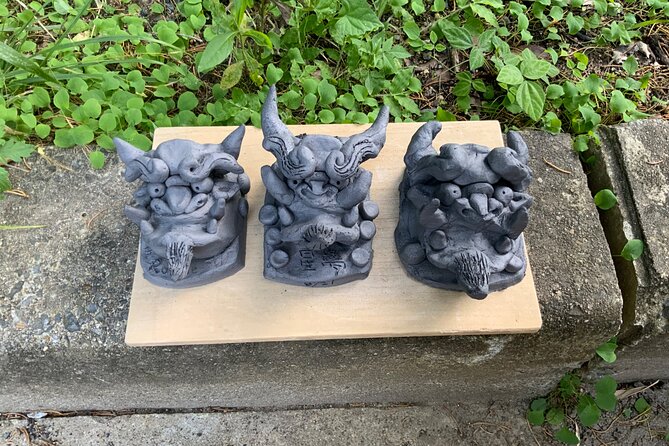
Kyoto days can become a march from one temple to the next. This workshop changes the pace. For a couple of hours, you sit down, work with your hands, and focus on one small object. The activity has a relaxed quality, but it is not passive. You need to keep up with the steps and handle the clay carefully.
That makes the class a good fit for a morning or afternoon when you want something other than sightseeing. It also works well for families with artistic teenagers and for couples who want matching or contrasting guardians. A small class can feel almost like being invited into an artisan’s workplace, particularly when only one booking is scheduled.
Do not expect a silent meditation session, though. You will receive instruction, ask questions, and keep moving through the build. One class with six people took almost three hours, and a novice needed about three hours to finish. The official duration is approximately two hours, so I would protect a little extra time rather than schedule a train or meal immediately afterward.
What happens after the clay work
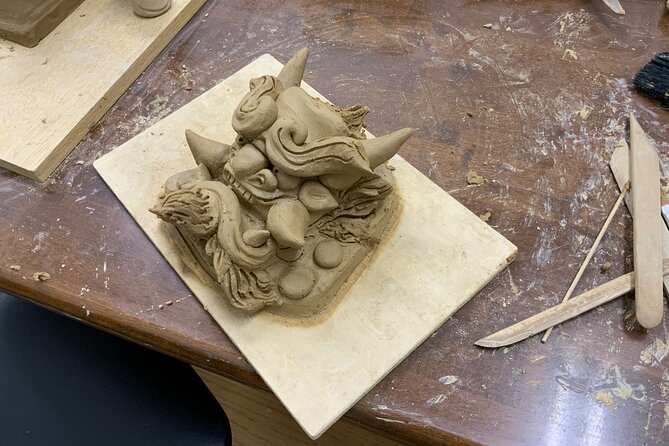
When your onigawara is complete, it is not ready for your suitcase. The piece must dry and then be fired in a kiln at the factory. The timing varies in the available accounts, with delivery described as taking several weeks, about one month, or around two months. Treat the process as a delayed souvenir rather than an item you collect at the end of class.
Shipping costs are not included in the $89.17 experience price. You should bring cash to pay the delivery charge at the end of the session. The exact amount is not provided in advance, and one participant found that uncertainty frustrating. That is the clearest practical weakness of the experience. Almost everyone who describes receiving the finished work was pleased with the result, including one person whose piece arrived undamaged, but you must be comfortable paying extra and waiting.
The upside is that international shipping lets you enjoy the class without carrying a fragile clay figure through the rest of your trip. Pack your home address details carefully and keep the shipping arrangement in mind. If you are moving between hotels or leaving Japan soon, confirm how the address should be recorded before you finish.
Is $89.17 good value?
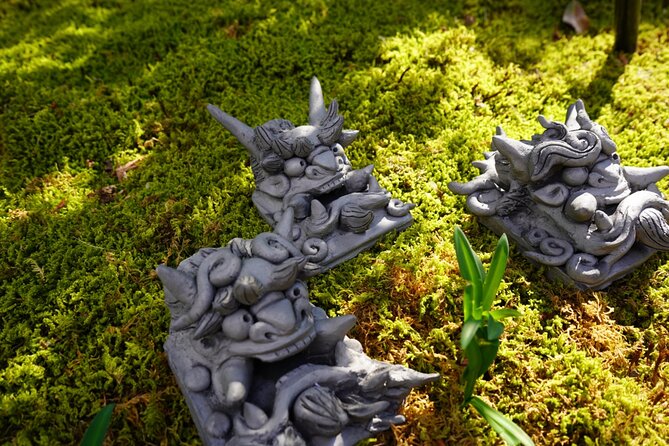
At $89.17 per person, this is not the cheapest craft activity in Kyoto. The price makes more sense when you separate it into what you are buying: instruction from a working onigawara artisan, clay work in a small class, kiln firing, and delivery of a custom piece. The shipping charge is extra, so budget above the advertised price.
I see the value in the personal result. A mass-produced demon mask may cost less, but it will not carry the small imperfections and design choices created by your own hands. You also gain a useful way to understand a feature of Japanese architecture that can otherwise remain easy to miss.
The experience becomes better value for people who care about making rather than simply acquiring. It is less compelling if you need a finished souvenir immediately, want a tightly timed activity, or prefer to avoid extra delivery costs. Group discounts are available, and groups of five or more can be accepted, with arrangements for larger groups of up to 40 at a different location. Ask for the group details before booking, since the standard class maximum is five.
Who should book this workshop?
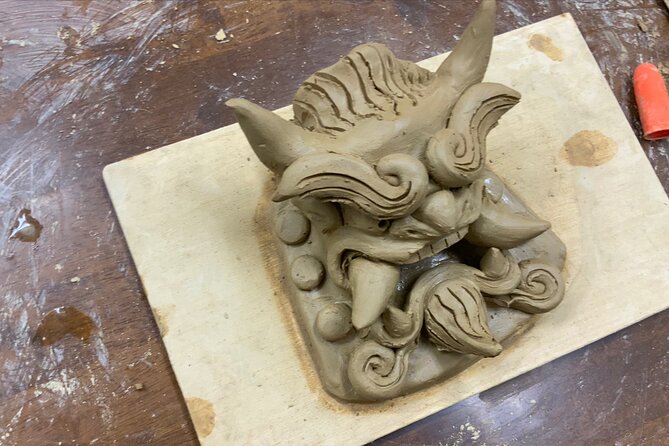
I would choose this for:
- Families with children or teenagers who enjoy creative work
- Couples looking for a shared souvenir with a story
- Adults who think they are bad at pottery but are willing to follow instructions
- Visitors who want a break from temples and walking
- Anyone interested in Japanese roof design, folk belief, or traditional crafts
- Small groups that prefer personal guidance over a large demonstration
The workshop is especially forgiving for beginners. Yuya’s method turns a complicated final shape into manageable steps, and he continues to help slower participants rather than forcing everyone to finish at the same speed.
You may want to skip it if your schedule has no flexibility, your clothes cannot get dirty, or you need to bring the finished item on your flight. It is also not the best choice if your idea of a souvenir is something polished and identical to the display example. Your demon will be personal, and that can mean charming, comic, or imperfect.
Practical details before you reserve
The experience is listed at about two hours, but plan for two to three hours based on how quickly your group works. A busy class may take longer, and you should not rush the shaping stage.
Wear old or washable clothes. The activity uses soil, and an apron is not included. Bottled water is provided, but food and other extras are not part of the stated package.
The class is near public transportation and allows service animals. Most people can participate, and the usual maximum is five participants. Confirmation is provided when you book.
Free cancellation is available if you cancel at least 24 hours before the local start time. Cancellations or changes made inside that window are not accepted for a refund.
My verdict: book it for the making, not the instant souvenir
I recommend this workshop if you want an authentic, hands-on Kyoto activity and like the idea of bringing home something that could not have been made by anyone else. Yuya’s patient instruction, the small class size, and the odd little transformation from clay lump to guardian make this far more memorable than ordinary souvenir shopping.
Book with three points clear in your mind: the class may run close to three hours, your clothes may get dirty, and shipping costs extra with a long wait before delivery. If those conditions suit you, the onigawara is a fine choice for a creative Kyoto afternoon and a keepsake with a real connection to the city.
FAQ
Where does the onigawara workshop take place?
The standard meeting point is 瓦工房 You家, kawarakoubouyouya, at 373-2 Yamazakichō, Higashiyama Ward, Kyoto, 605-0841, Japan.
How long does the activity last?
The listed duration is approximately two hours. Some sessions may take closer to three hours, depending on the group and each person’s pace.
What will I make?
You will make a small onigawara tile with a traditional demon face. You shape the piece from clay with guidance from the instructor.
Who teaches the class?
The instructor is Yuya, also referred to as Yuuya-san or You-san in the supplied information. He is an onigawara artisan and explains the process step by step.
Is the workshop suitable for beginners?
Yes. The process is designed so children, adults, and people with little or no clay experience can make an onigawara.
How many people can join the regular class?
The standard activity has a maximum of five participants. Groups of five or more can be accepted, and larger groups of up to 40 may use a different location.
Is shipping included in the price?
No. Shipping costs are separate from the experience fee and are paid at the end of the class. Cash is recommended.
When will my finished onigawara arrive?
The piece must dry and be fired before shipping. Delivery may take several weeks, around one month, or in some cases about two months.
What should I wear?
Wear clothing that can get dirty because the class uses soil. An apron is not included.
Can I cancel for a full refund?
You can cancel for a full refund up to 24 hours before the local start time. Cancellations or changes made less than 24 hours before the start are not accepted for a refund.
Just added around Kyoto
- Private Guided Traditional Buddhist Cooking in Japan★ 5.0 · 16 reviews
- Kyoto: Gion Geisha District & Sake-in-Hand Walking Tour★ 5.0 · 37 reviews
- Your Private Vacation Photography Session In Kyoto★ 5.0 · 110 reviews
- Kyoto: Zen Meditation at a Private Temple with a Monk★ 5.0 · 25 reviews
- Traditional Japanese Washi Papermaking- Kyoto morning★ 5.0 · 77 reviews
- Kyoto Wagashi(Japanese sweets) Cooking Class near Fushimiinari★ 5.0 · 60 reviews
- Private Pewter Sake Cup Experience with a Kyoto Artisan★ 5.0 · 31 reviews
- Kyoto Private 6 hour Tour: English Speaking Driver Only, No Guide★ 5.0 · 88 reviews
Kyoto Tours, compared.
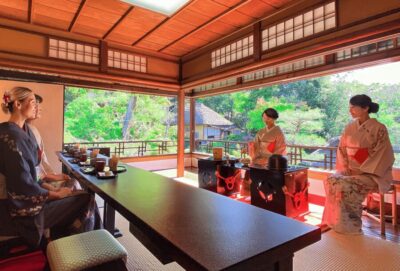
Tea Ceremony in a Traditional Tea House in Kiyomizu
Read our review →
Kyoto Geisha Walking Tour: Gion District & Hidden Gems
Read our review →

Gion Magical Night Walking Tour with Geisha Trivia
Read our review →

Gion Geisha District Walking Tour – Stories of Geisha
Read our review →
Best of Kyoto: Gion, Geisha, Pagodas & Cobblestones
Read our review →