
REVIEW · KYOTO TOURS
Kyoto: Traditional Yuzen Dyeing Experience
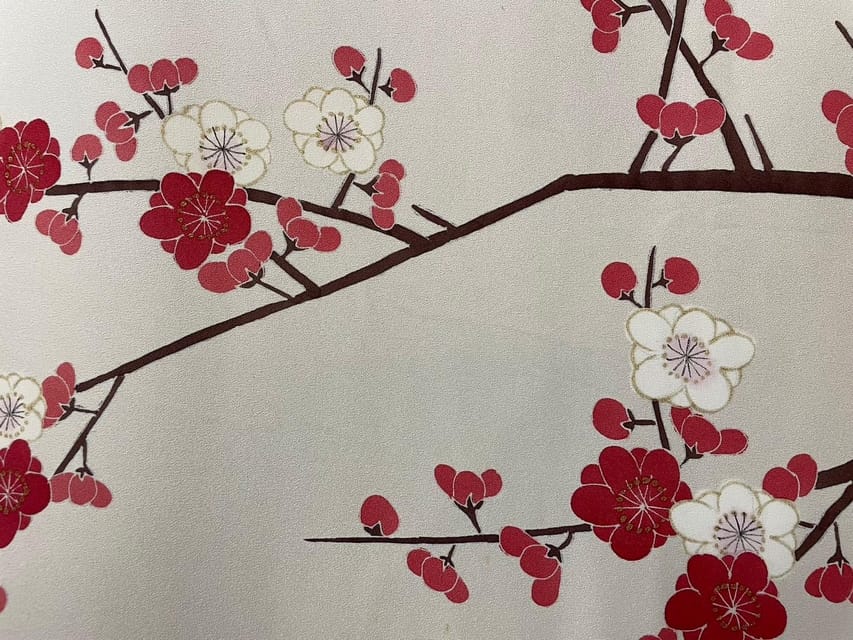
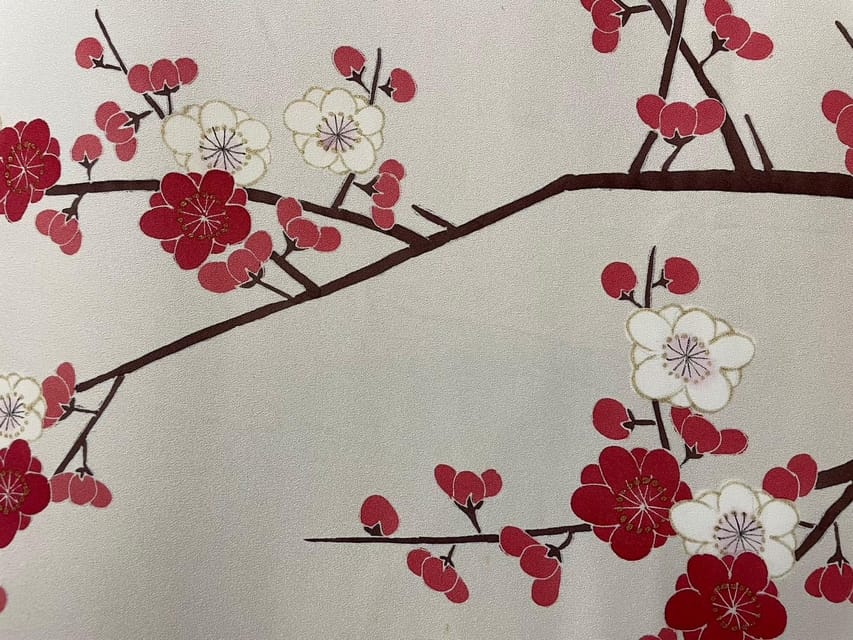
Kyoto Yuzen dyeing turns a quiet visit to a traditional Nishijin machiya into a hands-on art lesson. You work with a retired kimono artisan, choose colors for a silk design, and paint inside the golden outlines of a phoenix, crane, fan, or another available pattern. The finished piece is yours to take home.
I especially like the one-on-one artistic guidance and the chance to see the artisan’s own Yuzen work in his home studio. I also like the calm pace: the session lasts two hours, but the artisan has allowed extra time when guests needed it. The main consideration is that this is more like careful silk painting than tie-dye, and you may sit on the floor for much of the class.
In This Review
- Key points to know before booking
- Entering a Nishijin machiya for a two-hour craft lesson
- What Yuzen dyeing means in this class
- Choosing a phoenix, crane, fan, or another design
- How Master Shin’ichiro guides your color choices
- Painting silk without rushing the process
- Seeing the artisan’s finished Yuzen work
- What you take home at the end
- Is $161 a fair price?
- Who will enjoy this Kyoto experience most?
- Practical details that affect your visit
- Should you book the Kyoto Yuzen dyeing experience?
- FAQ
- Where does the Yuzen dyeing experience take place?
- How long does the experience last?
- How much does the experience cost?
- Is the finished artwork included?
- Who teaches the class?
- Are interpreters available?
- How many people can join?
- Can children attend?
- What should I wear?
- What should I do if I have an allergy or chemical sensitivity?
Key points to know before booking
- You work with an actual Yuzen artisan: Master Shin’ichiro mixes the dyes and advises you on color balance.
- The setting is part of the experience: You enter a traditional townhouse in Kyoto’s historic Nishijin district, not a standard activity room.
- Your silk design is prepared in advance: You paint inside an existing outlined image, so beginners can produce a finished piece without advanced art skills.
- Small groups keep the class personal: Attendance is limited to six people, and some sessions have only one or two participants.
- English and Chinese support is available: An interpreter works alongside the artisan, including interpreter Ha in several sessions.
- Dress for the craft: Wear clothes you do not mind getting dye on, and tell the provider about allergies or chemical sensitivities ahead of time.
Entering a Nishijin machiya for a two-hour craft lesson
The experience takes place in Kyoto’s Nishijin district, an area closely linked with textile production and kimono culture. Instead of meeting in a large workshop built for tour groups, you step into the artisan’s traditional machiya townhouse and home studio.
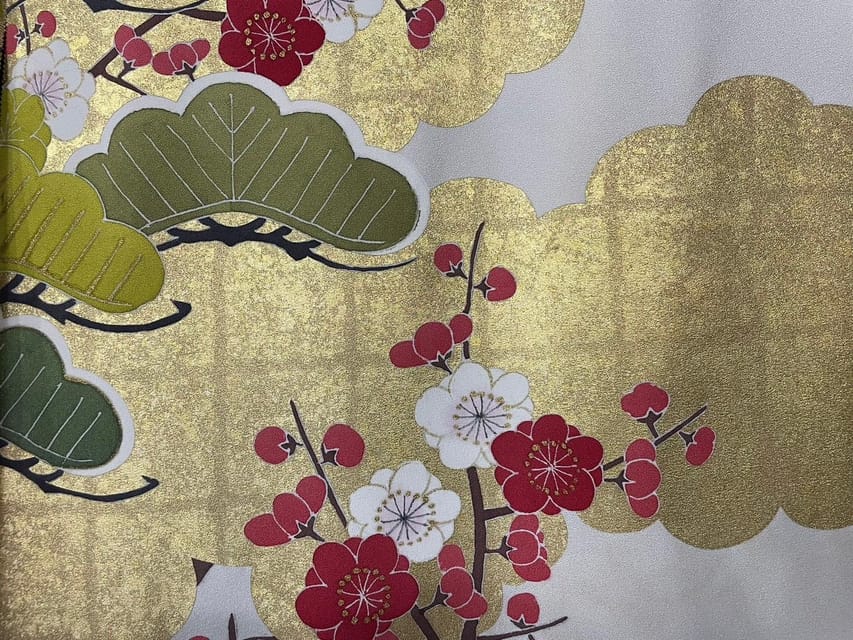
That setting gives the class its strongest sense of place. You can see the artisan’s Yuzen-dyed artwork and get a feel for the quiet, careful surroundings in which the craft is practiced. One session included a view over a small Zen garden, adding to the peaceful mood.
The home setting also means this is an intimate activity. The group limit is six, and some bookings have been private sessions for one couple or one individual. That matters if you prefer direct help and conversation rather than a large demonstration where you wait your turn.
There is one practical tradeoff. A traditional townhouse is not designed like a modern classroom, and one participant specifically cautioned that the class may require sitting on the floor for two hours. If that is difficult for you, check your comfort level before booking. The activity is listed as wheelchair accessible, but the traditional home setting may still make it wise to ask about the exact seating arrangement in advance.
Other Kyoto days people book alongside this one:
- PERFECT KYOTO 1-Day Bus Tour
★ 5.0 · 13,518 reviews - Kyoto: Fushimi Inari, Kinkakuji, Bamboo Grove 1 Day Bus Tour
★ 4.8 · 4,316 reviews - Kyoto: Tea Ceremony in a Traditional Tea House in Kiyomizu
★ 4.9 · 3,519 reviews
What Yuzen dyeing means in this class
Yuzen is one of Kyoto’s best-known textile arts. It is strongly associated with kimono decoration, where controlled lines and carefully balanced colors create elegant images on silk.
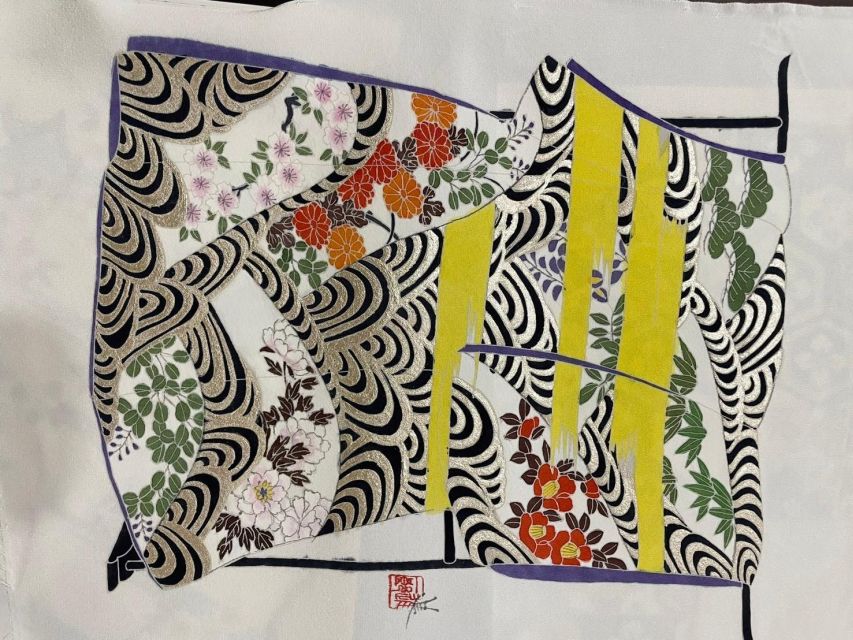
You are not asked to produce an entire kimono or learn every stage of professional textile production in two hours. Instead, the artisan prepares silk fabric with a selected design, often marked by golden outlines. Your job is to apply the colors within those sections, using brushes and dyes under close instruction.
This is a good format for beginners. The outlines provide a clear guide, and the artisan controls the difficult parts, such as preparing the colors and judging the proper mix of dye and water. You still make real choices, but you are not left to solve the technical process alone.
That distinction is worth understanding before you arrive. If you expect a loose, free-form painting class, the structured design may feel limited. If you want to take home something polished and recognizably Japanese, the prepared pattern is a real advantage.
Choosing a phoenix, crane, fan, or another design
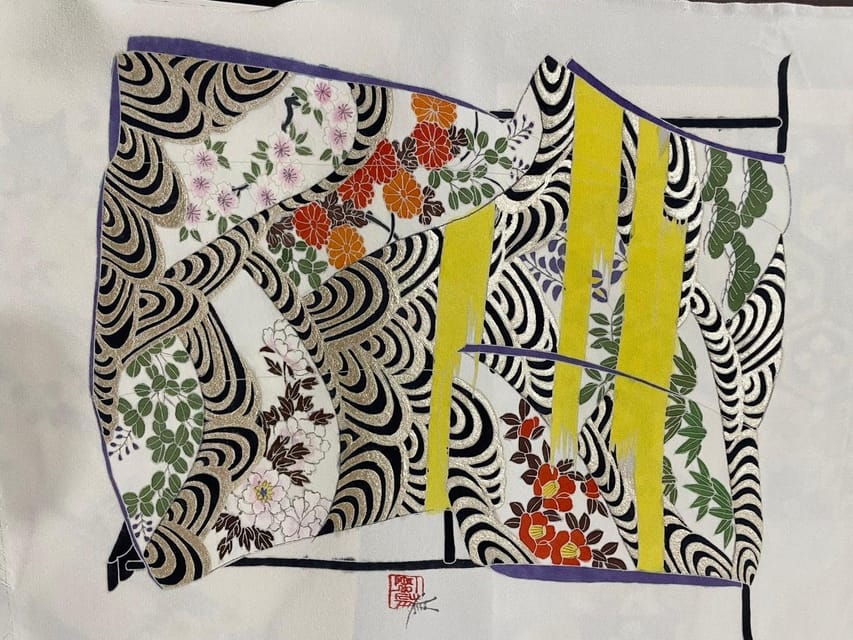
Early in the session, you choose the design you want to paint. Available examples have included phoenixes in front of a crescent moon, cranes, and fans. A few finished samples are displayed for inspiration, so you can see how different color choices affect the final appearance.
The range may be fairly small. One participant found only three design options available during the session. This is not a major problem if you already like the traditional motifs, but it is worth noting if you want a wide catalog of images.
Do not spend the entire class deciding. You need enough time for the painting itself, and the color work is the heart of the visit. A phoenix may suit someone who wants a bold, dramatic image, while a crane or fan can produce a lighter, more restrained piece. Your choice is personal, but the artisan remains involved in the visual decisions.
How Master Shin’ichiro guides your color choices
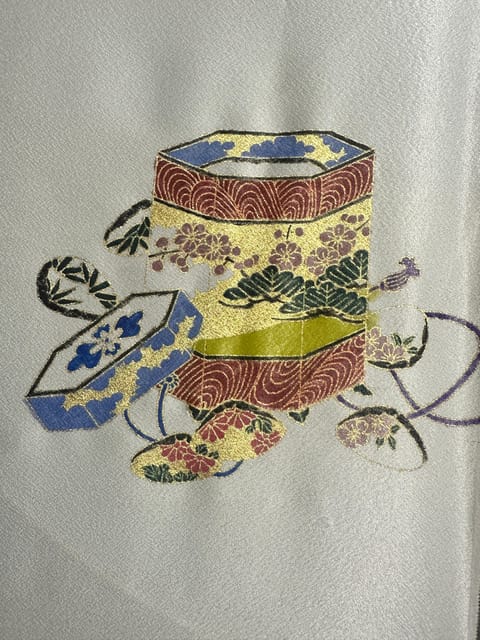
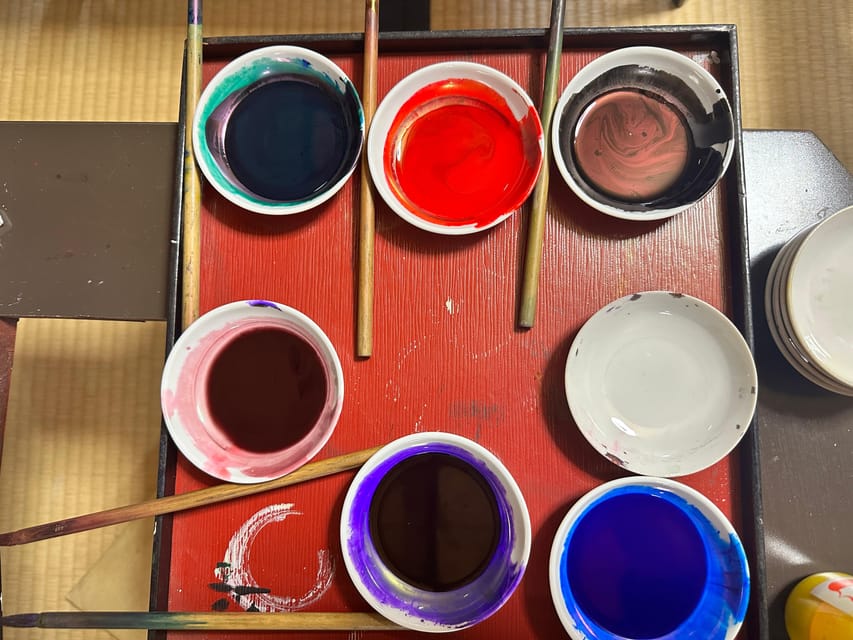
You normally select one or two colors that appeal to you first. Master Shin’ichiro then helps choose the remaining tones so the finished piece looks balanced rather than accidental.
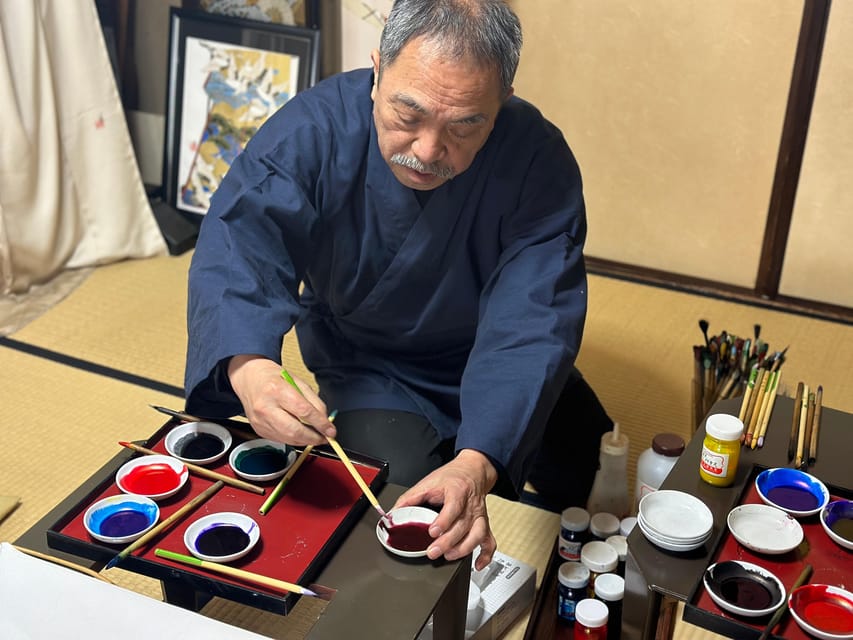
This is where the experience becomes more than a simple craft kit. The artisan mixes the colors in front of you and can show how a shade will appear on the fabric. One participant noted that he was remarkably precise about the ratio of paint and water, producing the expected tone each time.
You are still free to change your mind. The artisan may suggest a stronger contrast, a softer background, or a color that will work better beside the one you already selected. That makes the class suitable for people who like creative freedom but do not fully trust their own color sense.
The instruction is supported by an interpreter in English or Chinese. Master Shin’ichiro may not speak much English, so the interpreter plays an important role in explaining each step and translating his advice. Interpreter Ha was praised for translating clearly and helping with photographs during one session.
The conversation is part of the charm. You are not simply handed materials and left alone. The artisan and interpreter can guide you while you work, answer questions, and explain the purpose of the tools and dyes.
Same city, a completely different kind of day:
- Kyoto Geisha Walking Tour: Gion District & Hidden Gems
★ 4.7 · 3,273 reviews - Kyoto: Tea Ceremony Ju-An at Jotokuji Temple
★ 4.9 · 3,207 reviews - Kyoto: Gion Magical Night Walking Tour with Geisha Trivia
★ 4.9 · 2,393 reviews - Kyoto: 45-Minute Tea Ceremony Lesson Experience
★ 4.3 · 2,378 reviews
Painting silk without rushing the process
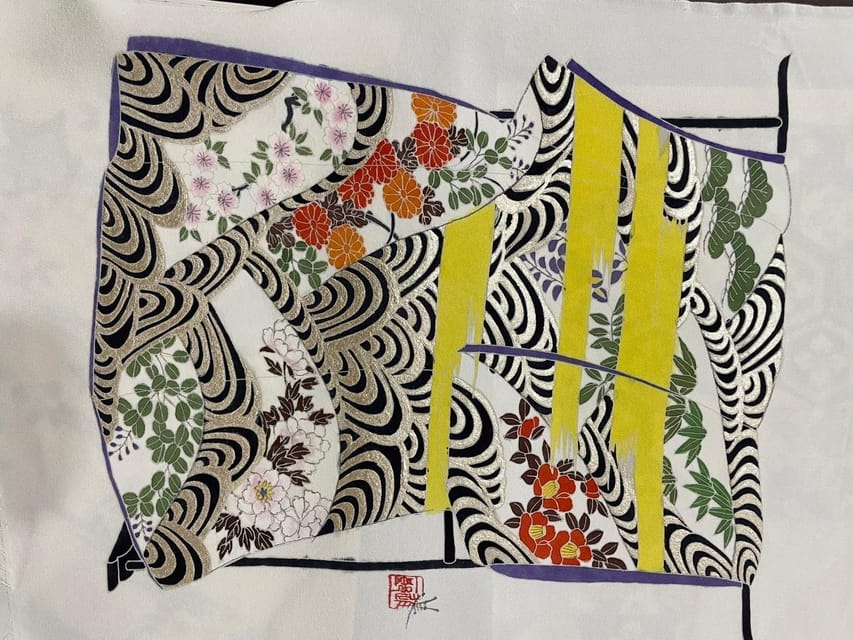
Once the design and color plan are settled, you begin painting. The task is careful rather than difficult. You fill the outlined sections, watch how the dye spreads, and adjust your brushwork as the artisan shows you how much color to use.
The most useful tip is simple: do not overload your brush. Too much dye can bleed beyond the outlined section, so it is better to work with controlled amounts. You do not need advanced drawing skills, but you do need patience and a light touch.
This is a good activity for people who enjoy making something with their hands. It is also more relaxing than many Kyoto sightseeing stops. Several sessions were described as calm and almost meditative, with enough concentration to make the outside world fade for a while.
Perfectionists should take a breath. Silk painting is a handmade process, and minor variations are part of the result. The goal is not to copy a machine-made souvenir. You are creating a piece in collaboration with an artisan, using your own color decisions within his prepared design.
Keep an eye on the clock, even if the atmosphere feels unhurried. Some sessions ran about 30 minutes over the scheduled time because participants wanted to finish. The artisan has shown patience in allowing extra time, but you should not assume every booking can extend beyond two hours, especially if another appointment follows.
Seeing the artisan’s finished Yuzen work
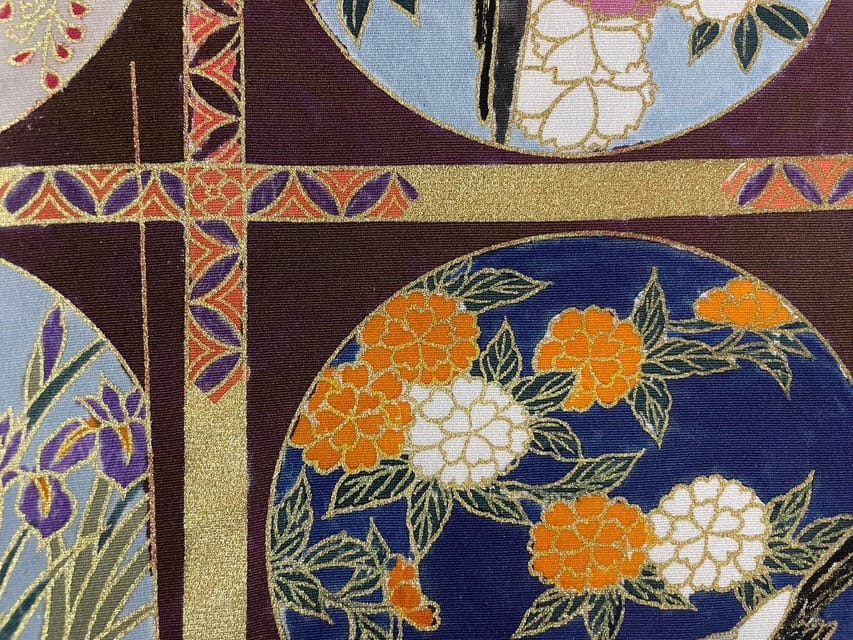
The class includes time to view Kyoto Yuzen pieces made by the artisan. This display helps you understand the level of control behind the craft before you attempt your own work.
The comparison is useful, but it should not make you nervous. Professional work may feature far more complex shading and detail than a beginner can complete in one sitting. Your project is designed to give you a manageable introduction, with the artisan handling the parts that require years of practice.
You may also have the option to purchase additional works from the artisan. These purchases are not included in the price and require cash. Treat this as optional, not as a hidden part of the class. The main included keepsake is the piece you make yourself.
What you take home at the end
Your finished silk artwork is the clearest reason to choose this activity over a standard museum visit. It is small enough to pack more easily than a kimono, yet personal enough to recall the day and the place.
The artisan finishes the piece so it is ready to take with you. One account describes the work being ironed to help dry and set it before departure. The exact finishing steps may vary, but you should leave with your completed Yuzen-dyed fabric.
The result is not just a souvenir purchased from a shop. You selected the image, chose the colors, learned the process, and received help from a practicing artisan. That gives the piece a story you can explain when you return home.
Pack it carefully during the rest of your trip. The fabric is a handmade artwork, and you should follow any handling advice given at the studio. Since you will be working with dye, bring clothing that can tolerate a stain and avoid wearing anything precious.
Is $161 a fair price?
At $161 per person, this is not a bargain-priced craft hour. The value depends on what you want from your Kyoto schedule.
You are paying for more than materials. The price includes two hours of instruction directly from an artisan, an interpreter, access to a private traditional home studio, a display of finished Kyoto Yuzen work, and your own silk piece. The group limit of six also means you are not paying for a large-scale demonstration with little personal help.
I consider the price reasonable for visitors who place a high value on access and authenticity. Entering an artisan’s home and receiving direct guidance is different from attending a generic workshop in a tourist shopping district. The finished silk piece also gives the experience lasting value.
Still, the cost may be hard to justify if your main goal is a cheap souvenir or a quick activity for children. The session is not suitable for children under 10, and the careful work requires patience. You are paying for the setting, the instruction, and the connection with the craft, not just for a square of dyed fabric.
Who will enjoy this Kyoto experience most?
I would recommend it most strongly to art lovers, craft hobbyists, couples, solo visitors, and anyone who wants a slower Kyoto activity. It works especially well for people who enjoy learning how traditional objects are made rather than only photographing the finished result.
It can also suit families with older children. One group ranging in age from 12 to 55 enjoyed the activity, but the stated minimum age is 10. Younger children may find the seated, detail-focused format too demanding.
This is a good rainy-day plan, too. One participant arrived late because of heavy rain and found the hosts flexible. You should still plan your route carefully and allow enough time to reach the meeting point, since transportation is not included.
I would hesitate to recommend it to anyone who dislikes sitting still, wants a highly social party atmosphere, or expects a fully free-form art class. Party groups are not allowed, and alcohol and drugs are prohibited. The tone is quiet, focused, and respectful of the home and the craft.
Practical details that affect your visit
The experience lasts two hours, with starting times available according to the booking calendar. English and Chinese interpretation is offered, and the group is limited to six participants.
Wear comfortable clothing that you do not mind getting dye on. The activity may involve chemicals, so tell the provider in advance about allergies or sensitivities. That is a small step, but an important one.
Transportation to and from the meeting point is not included. You will need to arrange your own way there. Additional purchases from the artisan are also separate and may require cash.
Cancellation is flexible up to three days in advance for a full refund. The activity is listed as wheelchair accessible, but because it takes place in a traditional townhouse, I would confirm any specific seating or access needs before arrival.
Should you book the Kyoto Yuzen dyeing experience?
Book it if you want a personal connection with Kyoto’s textile traditions and like the idea of taking home art you helped make. The strongest parts are the artisan’s color advice, the small group size, the private machiya setting, and the interpreter’s help.
Think twice if $161 feels high for a two-hour activity, if you need many design choices, or if floor seating would be uncomfortable. For the right person, this is a thoughtful souvenir and a rare chance to work beside a Kyoto craftsperson. For a visitor who wants only a quick, low-cost activity, it may be more commitment than necessary.
FAQ
Where does the Yuzen dyeing experience take place?
It takes place in a traditional machiya townhouse in Kyoto’s historic Nishijin district on Honshu, Japan.
How long does the experience last?
The scheduled duration is two hours. Some sessions have lasted longer when participants needed extra time to finish.
How much does the experience cost?
The listed price is $161 per person.
Is the finished artwork included?
Yes. You create a Yuzen-dyed silk piece during the session and take it home as a souvenir.
Who teaches the class?
Instruction is provided directly by a Yuzen artisan. Reviews identify the master as Shin’ichiro, with an interpreter assisting during the class.
Are interpreters available?
Yes. The experience offers English and Chinese support through a live interpreter.
How many people can join?
The activity is a small-group experience limited to six participants.
Can children attend?
Children under 10 are not permitted, and babies under 1 year are not suitable for the activity.
What should I wear?
Wear comfortable clothes that you do not mind getting dye on.
What should I do if I have an allergy or chemical sensitivity?
The activity may involve chemicals, so inform the provider in advance about any allergies or sensitivities.
Just added around Kyoto
- Taste of Nishiki Market Walking Food Tour with Local guide★ 5.0 · 17 reviews
- Kyoto: Sushi Making Class with Sushi Chef★ 4.8 · 64 reviews
- Kyoto: City Secrets eBike Tour★ 4.9 · 196 reviews
- Sacred Pathways: Discover the Philosopher’s Path of Kyoto★ 4.9 · 20 reviews
- Private Tour to Monkey Park and Arashiyama Highlights★ 5.0 · 22 reviews
- Private Nara Tour from Osaka – Meet at Your Hotel★ 5.0 · 22 reviews
- Private Sake Tasting in Central Kyoto with Sake Sommelier★ 5.0 · 13 reviews
- Kyoto : Private Custom Walking Tour With A Local Guide★ 4.6 · 144 reviews
Kyoto Tours, compared.
Tea Ceremony in a Traditional Tea House in Kiyomizu
Read our review →
Kyoto Geisha Walking Tour: Gion District & Hidden Gems
Read our review →
Gion Magical Night Walking Tour with Geisha Trivia
Read our review →
Gion Geisha District Walking Tour – Stories of Geisha
Read our review →
Best of Kyoto: Gion, Geisha, Pagodas & Cobblestones
Read our review →
Browse the lists this tour appears in