
REVIEW · TEMPLE & SHRINE TOURS
KYOTO: Tempio Kiyomizu Pagode Gion “Geisya” (Guida Italiana)
Kyoto’s old pilgrimage road is the star here. You begin at Kyoto Station and soon trade city traffic for the sloping lanes around Kiyomizu-dera, where temples, sweet shops, cafés, and souvenir stalls lead you through some of the city’s most recognizable streets. I like the Italian-speaking guide, especially Omae, whose clear explanations and friendly manner have earned strong praise. I also like that bus transport and scheduled entrance fees are included, so the $117 price is easier to judge from the start.
The main consideration is the pace. Five hours covers several famous districts, but much of the experience is on foot, with hills, steps, and crowded shopping lanes possible along the route. You get a broad first look at eastern Kyoto rather than a long, quiet visit at every stop.
In This Review
- Key points to know before booking
- Why this five-hour Kyoto route works
- Meeting at Kyoto Station without confusion
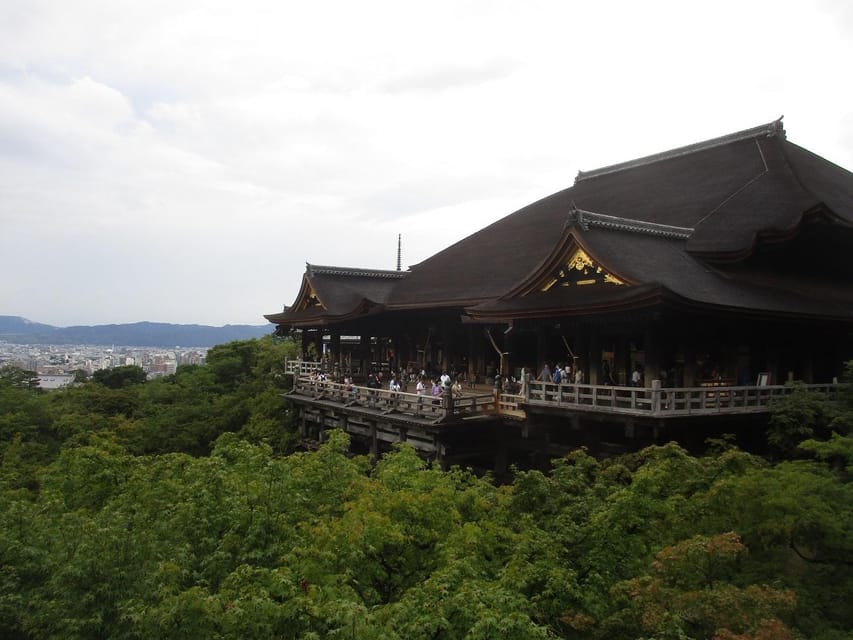
- Kiyomizu-dera, the main temple visit
- Sannenzaka and Ninenzaka on foot
- The walk toward Gion
- Passing Kyoto Minami-za and finishing in Pontocho
- What the $117 price really covers
- The guide makes the difference
- Who should book this tour
- Should you book it?
- FAQ
- Where does the tour start?
- How can I identify the meeting point?
- Is the tour conducted in Italian?
- What is included in the price?
- How long does the tour last?
- Can I cancel the booking?
Key points to know before booking
- Omae leads the tour in Italian: He is praised for accurate explanations, warmth, and answering questions about Japanese culture.
- Kiyomizu-dera is the main visit: Plan on about one hour inside and around this major Buddhist temple.
- The old lanes connect naturally: Sannenzaka and Ninenzaka follow the temple visit on foot, with shops, cafés, sweets, and traditional-looking streets.
- Gion comes later: You spend about 30 minutes there before passing Kyoto Minami-za and finishing in Pontocho.
- The price includes transport and entry: The bus from Kyoto Station and scheduled monument admissions are covered.
- The meeting point needs care: Meet outside Kyoto Station’s north entrance, between the four escalators in front of the taxi terminal.
Why this five-hour Kyoto route works
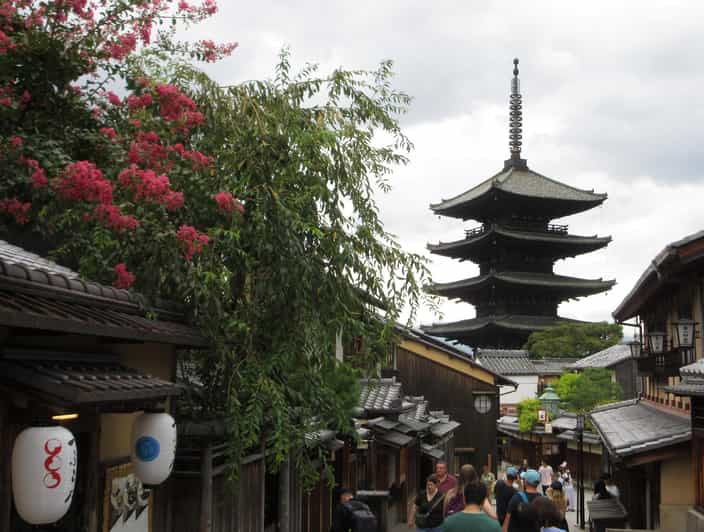
I see this tour as a useful bridge between Kyoto’s famous sights and the cultural details that are easy to miss when you explore alone. Kiyomizu-dera, Gion, and Pontocho all appear in guidebooks, but the route between them is just as important. You walk along old pilgrimage approaches, pass shops selling local sweets and souvenirs, and move through streets that still shape the way people experience this part of the city.
The guide explains historical, cultural, and religious details in Italian. That matters more than it may seem. A translated sign or a quick internet search can identify a temple, but it rarely explains how the site fits into Kyoto’s religious life, why visitors follow certain customs, or what you are seeing beyond the main photo spot.
The route also has a sensible progression. You start at a major transport hub, ride for about 15 minutes, visit the principal temple, and then continue downhill or across connected streets on foot toward Gion and Pontocho. You do not spend the day zigzagging across Kyoto.
Still, this is not a slow, private temple study. The route includes several districts in five hours, and the stated visits at Kiyomizu-dera and Gion are about one hour and 30 minutes. If you want extended time for shopping, photography, or sitting quietly at each location, you may need to use your free time before or after the tour.
More Temple & Shrine Tours in Kyoto
- Kyoto: Fushimi Inari, Kinkakuji, Bamboo Grove 1 Day Bus Tour
★ 4.8 · 4,316 reviews - Kyoto: Tea Ceremony in a Traditional Tea House in Kiyomizu
★ 4.9 · 3,519 reviews - Kyoto: Tea Ceremony Ju-An at Jotokuji Temple
★ 4.9 · 3,207 reviews
Meeting at Kyoto Station without confusion
The meeting point is outside the central north entrance of Kyoto Station, also called the Karasuma-Guchi side. Look for the open space between the four escalators in front of the taxi terminal, not the bus terminal.
There is a useful visual check: Kyoto Tower should appear in front of the station, toward the upper left from your position. If the tower seems to be on the right, you are likely standing in the wrong orientation. This small detail can save you from a frantic search in one of Japan’s largest stations.
A message is sent by the day before the tour with confirmation and more details about the meeting point. I would still arrive early. Kyoto Station is easy to navigate once you know where you are going, but it is a poor place to arrive at the last minute while carrying luggage or trying to find a taxi stand.
The tour can be booked as a group or individual experience. The information provided does not specify a fixed maximum group size, so ask before booking if the size of the party matters to you.
Kiyomizu-dera, the main temple visit
The bus ride from Kyoto Station takes about 15 minutes. From there, you visit Kiyomizu-dera for roughly one hour, making this the longest single stop on the route.
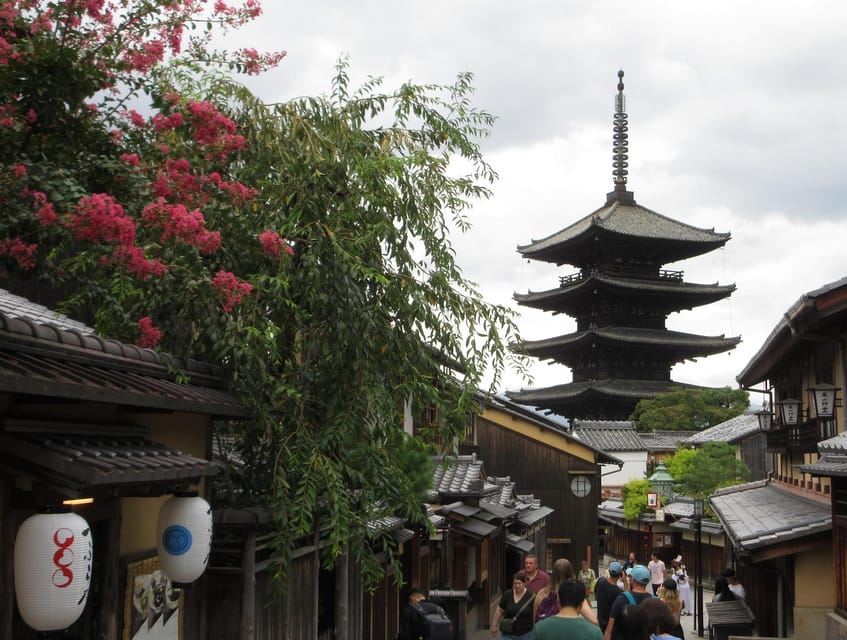
Kiyomizu-dera is a Buddhist temple area linked to Kyoto’s old pilgrimage routes. Its setting has drawn worshippers and sightseers for centuries, and the approach is part of the experience. Rather than arriving at an isolated building, you reach the temple through a district shaped by visitors, worship, food, and trade.
The guide’s role is most useful here. Buddhist temples can appear quiet and simple if you do not know what to look for. In Italian, Omae can explain the religious and cultural meaning behind the site and respond to your questions as you walk. The strongest praise for him centers on this combination of preparation and friendliness. One Italian-speaking participant specifically valued his attention to small details and his command of the language.
You should expect a popular attraction, not a secret corner of Kyoto. The approach is lined with souvenir shops, sweet shops, cafés, and places aimed at people of all ages. That commercial side is not separate from the pilgrimage tradition. It is part of how this area has served visitors over time, but it also means you may want to keep moving if shopping is not your priority.
The one-hour visit gives you a useful introduction, though it is not a full day at Kiyomizu-dera. Keep your camera ready, listen for the guide’s explanations, and save longer browsing for the end if the schedule allows.
Sannenzaka and Ninenzaka on foot
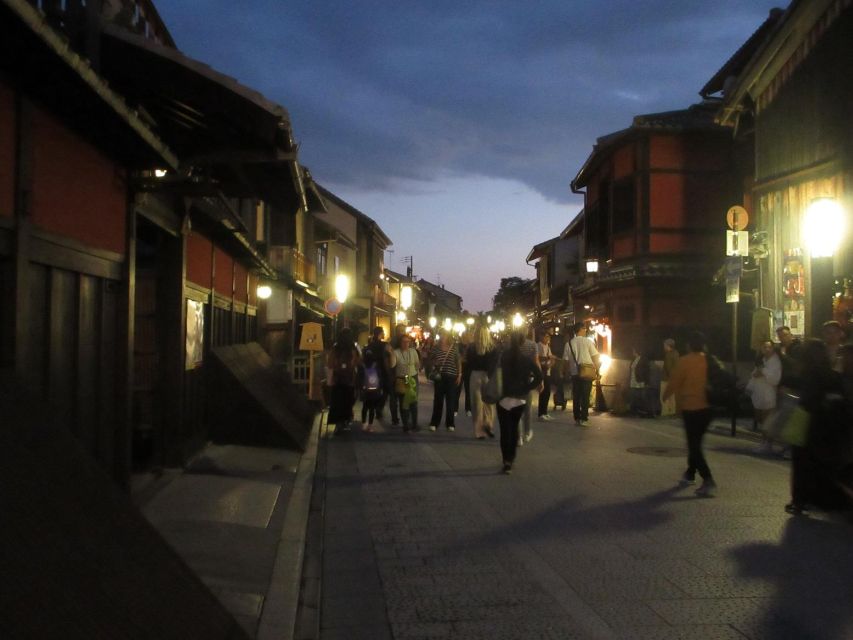
After Kiyomizu-dera, the group walks for about five minutes to Sannenzaka. The visit itself is listed at about three minutes, followed by another short walk and a two-minute visit at Ninenzaka.
Those times should not be read as strict sightseeing limits at every corner. They show how the route is organized. These lanes form a connected walking section between the temple and Gion, and the value comes from seeing them together rather than treating each street as a separate attraction.
Sannenzaka and Ninenzaka are known for their traditional appearance, sloping paths, shops, cafés, sweets, and souvenir stalls. They are ideal places to ask the guide about Kyoto’s customs, architecture, and local culture while you move through the district. You can also note shops you want to revisit later.
This section is where the walking demands become most relevant. The route is short in distance, but the old streets are not laid out like a modern shopping mall. You may encounter slopes, uneven surfaces, and crowds. The experience is listed as wheelchair accessible, but anyone using a wheelchair or with limited mobility should confirm the exact route and conditions in advance, since the tour includes old pilgrimage streets and several walking segments.
I like the way these lanes break up the formal temple visit. Kiyomizu-dera gives you the major religious site, while Sannenzaka and Ninenzaka show how Kyoto’s visitor culture works at street level. You are not simply moving from one landmark to another.
Same city, a completely different kind of day:
- PERFECT KYOTO 1-Day Bus Tour
★ 5.0 · 13,518 reviews - Kyoto Geisha Walking Tour: Gion District & Hidden Gems
★ 4.7 · 3,273 reviews - Kyoto: Gion Magical Night Walking Tour with Geisha Trivia
★ 4.9 · 2,393 reviews - Kyoto: 45-Minute Tea Ceremony Lesson Experience
★ 4.3 · 2,378 reviews
The walk toward Gion
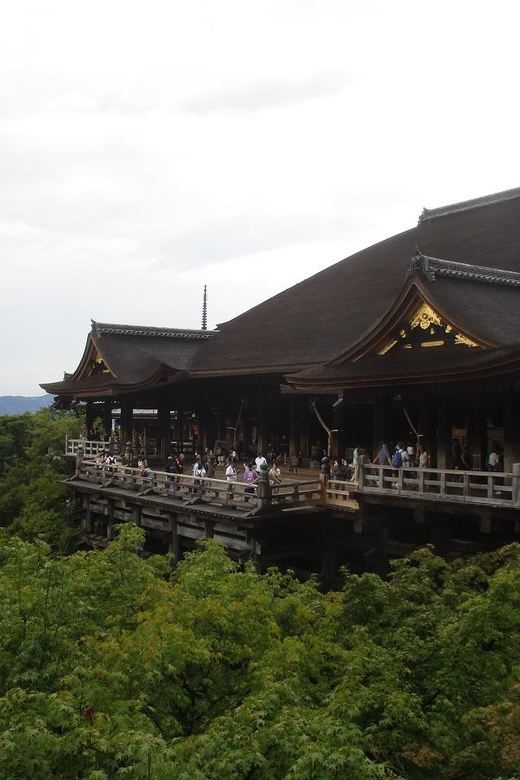
From Ninenzaka, the route continues on foot for about 15 minutes before reaching Gion. This is the longest listed walking connection, and it gives the tour a more continuous feel.
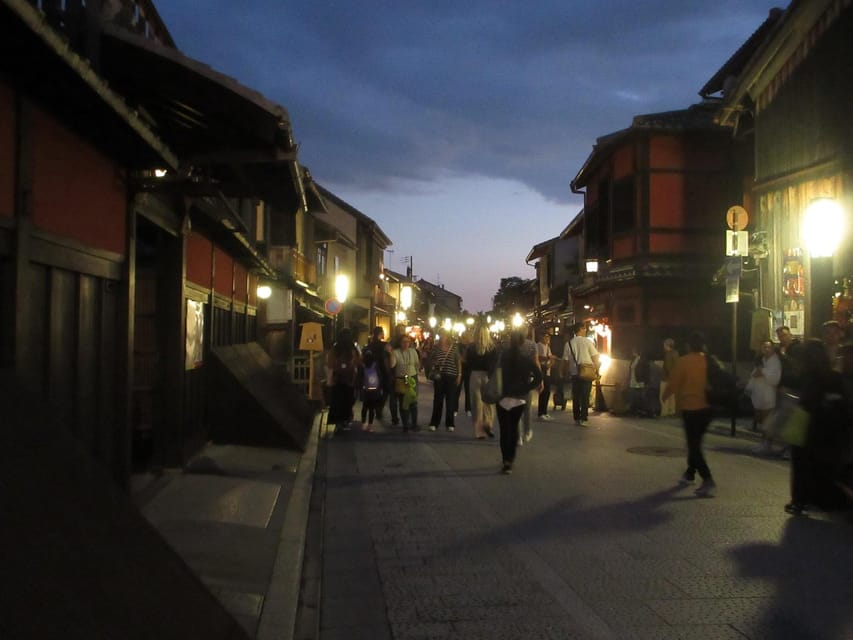
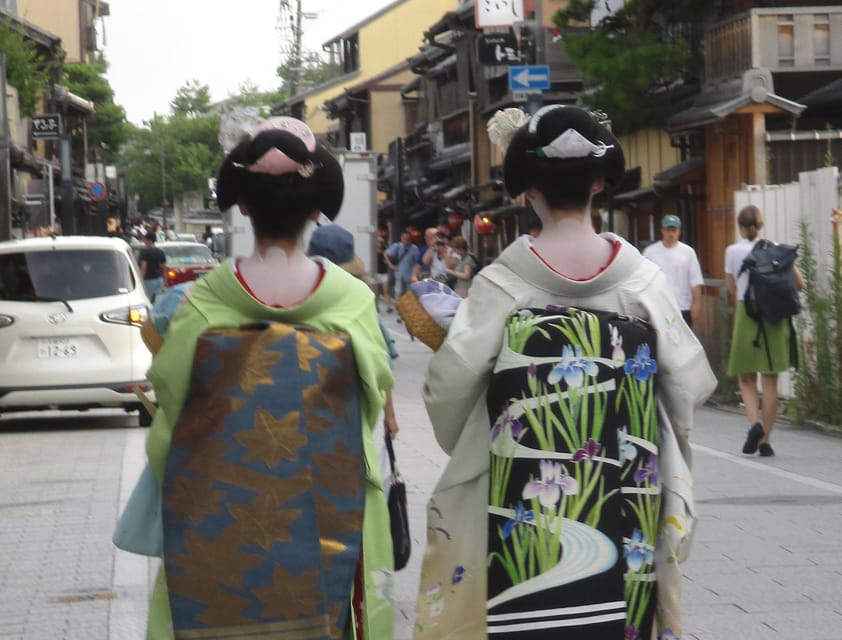
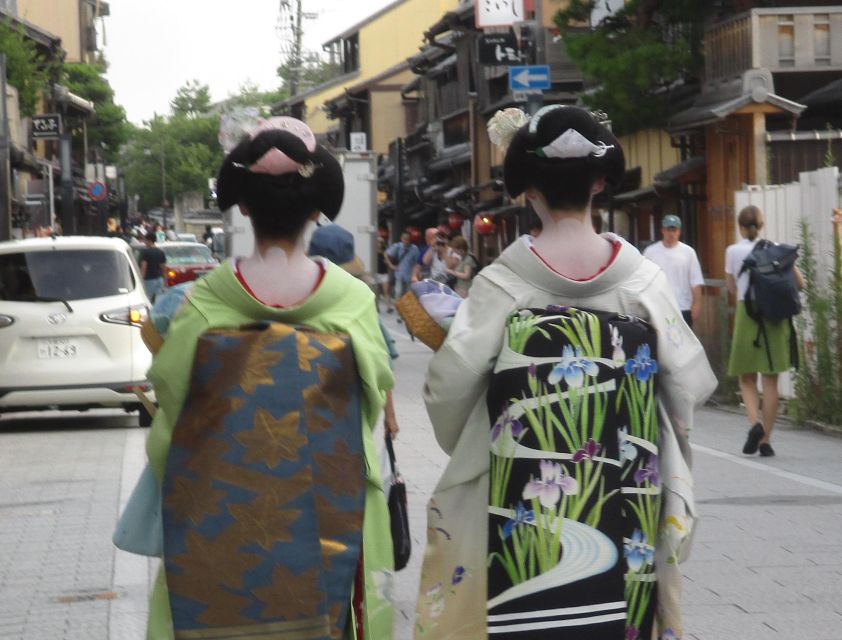
Gion is one of Kyoto’s best-known districts, associated with traditional entertainment, tea houses, and geisha culture. The supplied tour description uses the spelling Geisya in its title, but the usual English spelling is geisha. The guide can help you understand the difference between the public image of the district and the cultural traditions behind it.
The Gion visit lasts around 30 minutes and includes guided sightseeing. That is enough for an introduction, especially if you want a guide to point out details you might otherwise pass without noticing. It is not enough to explore every lane or wait around for a particular encounter, and you should not expect guaranteed sightings of geisha or maiko. No such promise is made, so approach Gion as a historic entertainment district, not a staged performance.
This is also a place where good behavior matters. Walk quietly, follow posted rules, and avoid treating people or private entrances as photo props. A guide who can explain local customs in Italian is valuable here because a short reminder can prevent an awkward mistake.
Passing Kyoto Minami-za and finishing in Pontocho
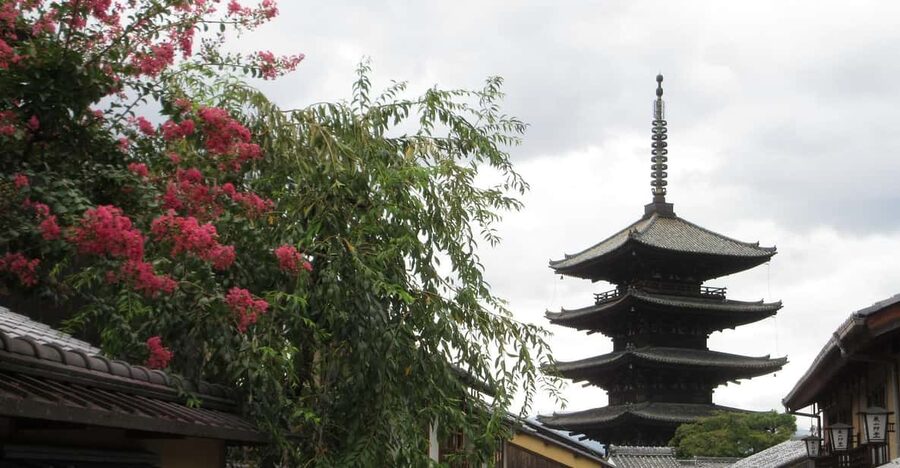
After Gion, the group walks for about five minutes and passes by Kyoto Minami-za. The theater receives only about three minutes in the schedule, so this is a brief exterior look rather than a theater visit.
Kyoto Minami-za is a useful marker on the route because it connects the traditional entertainment district with the next part of the walk. The itinerary then continues for about three minutes on foot to Pontocho, where the tour ends.
Pontocho is a well-known dining and nightlife lane beside the Kamo River area. Since the tour finishes there, you are in a convenient position to continue your evening independently. You can treat the ending as practical planning help: ask the guide for assistance during the itinerary, then use the final location as a starting point for your own plans.
The tour does not include a meal or a specific restaurant reservation. That is worth noting when you plan the day. Pontocho is the finish, not a promised dining experience.
What the $117 price really covers
At $117 per person, this is not a bargain walking tour in the narrow sense. The value comes from the combination of an Italian-speaking guide, local transport, and entrance fees, plus help throughout a five-hour route.
You are paying to avoid several small problems that can eat up a half-day in Kyoto. The bus ride is handled, the main scheduled temple admission is included, and you have someone who can explain cultural details and answer questions in Italian. For a first visit, that can be worth more than a lower-priced route that simply points out buildings.
The value is strongest for you if Italian is your preferred language for history and religion. The information available does not give a separate price for a private tour, a detailed breakdown of every admission fee, or a fixed group limit, so compare those points before booking if you are focused on exact cost control.
The reserve-now-and-pay-later option also helps with planning, and cancellation is free up to 24 hours before the start for a full refund. These terms are useful when your Kyoto schedule is still shifting.
The guide makes the difference
The guide named in the strongest feedback is Omae. His praised qualities are specific: a friendly and lively manner, accurate explanations, careful attention to detail, strong Italian, and a willingness to answer questions.
That combination suits Kyoto particularly well. The city is full of places where the basic facts are easy to find, but the reasons behind a custom or building are less obvious. A guide who can explain those points without making the walk feel like a lecture adds real value.
The positive comments also repeatedly focus on his personality. You can expect an approachable guide rather than a silent escort between sights. That matters on a route with several short stops, since your questions and the guide’s explanations help connect the pieces.
Guide availability can change, so check the confirmed details for your date. The experience is offered with a live Italian-speaking guide, and Omae is the name associated with the published feedback.
Who should book this tour
I would recommend it most strongly to Italian-speaking visitors who want Kyoto’s famous eastern districts explained in their own language. It is also a good fit for a first Kyoto visit, when having the route organized can prevent wasted time and help you understand what you are seeing.
Families and mixed-age groups may appreciate the shops, sweets, cafés, temple grounds, and range of sights. The tour is not built around one narrow subject, so it can keep different interests in play.
You should think twice if you prefer to explore entirely alone, spend hours photographing one street, or move at a very slow pace. The route covers Kiyomizu-dera, two old lanes, Gion, Kyoto Minami-za, and Pontocho in five hours. That breadth is its strength, but it limits lingering.
People with mobility concerns should also read the accessibility information carefully. The tour is listed as wheelchair accessible, yet the route includes walking through old pilgrimage streets and connected neighborhoods. Ask for route details before committing if slopes or uneven ground affect your plans.
Should you book it?
Book this tour if you want a well-organized introduction to Kyoto’s best-known eastern sights and you value precise explanations in Italian. The included transport and temple entry make the $117 easier to justify, while Omae’s praised language skills and personal manner add something a self-guided route cannot provide.
Skip it if your priority is maximum free time or a private, unhurried visit at each stop. For most Italian-speaking visitors on a first Kyoto trip, though, this is a sensible five-hour route that links major sights with the old streets between them.
FAQ
Where does the tour start?
It starts at Kyoto Station’s central north entrance, known as Karasuma-Guchi. Meet outside on the space between the four escalators in front of the taxi terminal, not the bus terminal.
How can I identify the meeting point?
From the meeting area, Kyoto Tower should be visible in front of the station toward the upper left. A message sent by the day before the tour confirms and details the meeting point.
Is the tour conducted in Italian?
Yes. It is a live guided tour in Italian, and the guide provides explanations and assistance during the route.
What is included in the price?
The price includes transport during the itinerary and entrance fees for the scheduled monuments to be visited. The bus ride from Kyoto Station is included.
How long does the tour last?
The tour lasts five hours. Starting times vary, so you need to check availability for your chosen date.
Can I cancel the booking?
You can cancel up to 24 hours before the tour for a full refund. You can also reserve now and pay later.
Just added around Kyoto
- Taste of Nishiki Market Walking Food Tour with Local guide★ 5.0 · 17 reviews
- Kyoto: Sushi Making Class with Sushi Chef★ 4.8 · 64 reviews
- Kyoto: City Secrets eBike Tour★ 4.9 · 196 reviews
- Sacred Pathways: Discover the Philosopher’s Path of Kyoto★ 4.9 · 20 reviews
- Private Tour to Monkey Park and Arashiyama Highlights★ 5.0 · 22 reviews
- Private Nara Tour from Osaka – Meet at Your Hotel★ 5.0 · 22 reviews
- Private Sake Tasting in Central Kyoto with Sake Sommelier★ 5.0 · 13 reviews
- Kyoto : Private Custom Walking Tour With A Local Guide★ 4.6 · 144 reviews
Temple & Shrine Tours, compared.
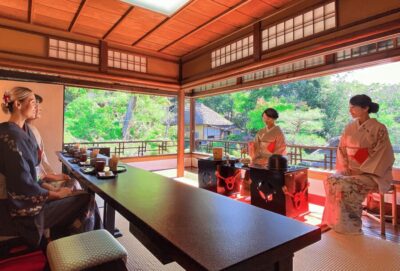
Tea Ceremony in a Traditional Tea House in Kiyomizu
Read our review →
Meiji Shrine, Asakusa, Skytree Bus Tour and Cruise
Read our review →
Asakusa Walking Tour with Sensoji Temple Visit
Read our review →
Kamakura & Enoshima Day Trip including Temple Tickets
Read our review →
Kyoto/Osaka: Nara, Fushimi Inari Taisha, Arashiyama Bus Tour
Read our review →
Nikko Toshogu Shrine and Kegon Waterfall Tour
Read our review →
Tokyo Panoramic 1 Day: Meiji Shrine, Asakusa, Odaiba and SKYTREE®
Read our review →Browse the lists this tour appears in