
REVIEW · GARDEN & PALACE TOURS
Kyoto: Nijo Castle World Heritage Guided Tour with Admission
Nijo Castle was built to intimidate without starting a fight. The Tokugawa shoguns placed this lavish palace beside the Emperor’s residence, using gates, room sizes, painted panels, and even noisy floors to show who really held power. The tour ends at the room where that power was handed back in 1867.
I like the small group of up to 10 people, since the castle is far easier to understand when you can ask questions instead of trailing behind a large crowd. I also like the clear historical thread, from Tokugawa control to the end of more than 260 years of shogunate rule.
The main limitation is time. Ninety minutes gives you a focused introduction, not a leisurely study of every garden path and castle building. You must also remove your shoes inside Ninomaru Palace, so wear socks and footwear that comes off easily.
In This Review
- Key points to know before you book
- Nijo Castle turns architecture into political theater
- Meeting at Nijōjō-mae Station
- The entrance route shows how power was staged
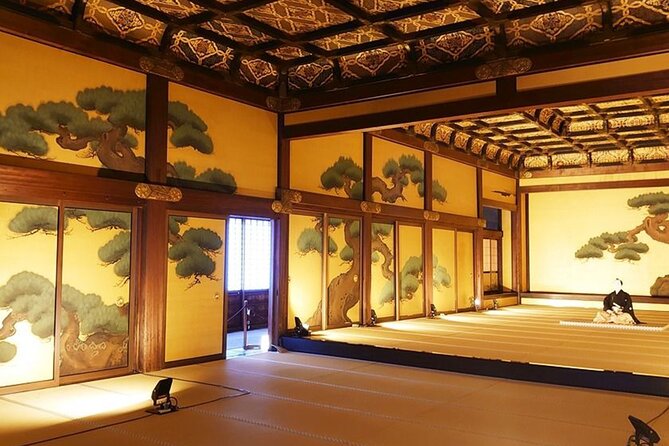
- Ninomaru Palace and the famous nightingale floors
- The final room connects Nijo Castle to modern Japan
- Small groups make the explanations more personal
- A good fit for families, first-time visitors, and history fans
- Is $40 good value for 90 minutes?
- Practical details that affect your visit
- Should you book this Nijo Castle tour?
- FAQ
- Where does the Nijo Castle tour meet?
- How long does the experience last?
- Is admission to Nijo Castle included?
- What language is the tour conducted in?
- Is the tour wheelchair accessible?
- How many people are in the group?
- Can I cancel the booking?
Key points to know before you book
- The tour begins at Exit 1 of Nijōjō-mae Station, where your guide holds a Local Guide Stars sign.
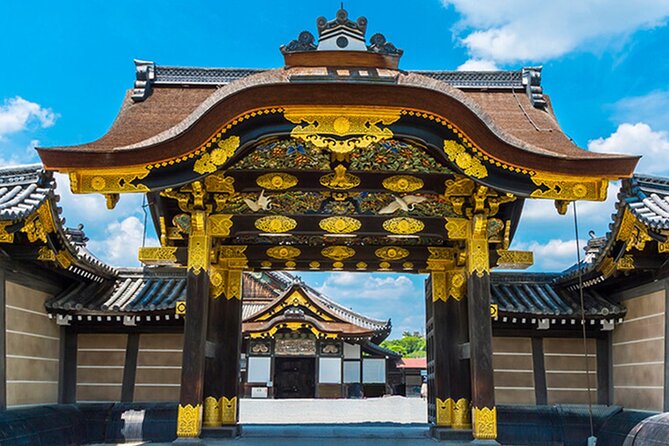
- Ninomaru Palace is the heart of the visit, with nightingale floors, strict social order, and rooms designed to impress and unsettle.
- The final historical stop marks the end of the Tokugawa shogunate, when Yoshinobu returned authority to the Emperor in 1867.
- The group is limited to 10 people, though some departures may be much smaller, even a private experience.
- Koi-filled moats and formal gardens add visual appeal, giving you a pleasant break from the palace’s political drama.
- Admission and an English-speaking guide are included in the $40 price.
Nijo Castle turns architecture into political theater
I find Nijo Castle most rewarding when you stop thinking of it as a defensive fortress. Its walls and moats matter, but the palace was built as a message. The Tokugawa shoguns ruled from Edo, now Tokyo, while the Emperor remained in Kyoto. Constructing a grand residence beside the Imperial court was a blunt way to say that military power, not ceremony, ran Japan.
Your guide explains this before the details start to blur together. That context gives every gate and corridor a job. You are not simply looking at old wood and painted screens. You are seeing a carefully arranged performance of authority.
The castle’s design aimed to control visitors before a weapon was ever drawn. Long approaches, layered gates, changing floor levels, and increasingly ornate spaces created a steady sense of pressure. The closer an important visitor came to the shogun, the more the building told that person where they belonged.
That is why this tour works better with a guide than a quick independent walk. You can see the surfaces on your own, but you may miss the social rules built into them.
More Garden & Palace Tours in Tokyo
- Tokyo: Imperial Palace and Shogun Historical Walking Tour
★ 5.0 · 2,251 reviews - Tokyo Castle & Imperial PalaceーShogun Walking Tour
★ 4.7 · 1,068 reviews - Tokyo: Imperial Palace Japanese History Walking Tour
★ 4.9 · 987 reviews
Meeting at Nijōjō-mae Station
The meeting point is outside Exit 1 of Nijōjō-mae Station, at the castle entrance. Look for a guide holding a Local Guide Stars sign. This is a useful arrangement because you do not need to search through a busy station area or find an office elsewhere in Kyoto.
The tour returns to the same general area after the castle visit. The stated walking time inside the castle is about one hour, while the full experience lasts 90 minutes. That leaves enough time for introductions, explanations, and movement between the major areas without turning the tour into an all-day commitment.
I would arrive a little early. The meeting instructions are simple, but Kyoto sightseeing days often involve tight train connections and crowded station platforms. Having a few spare minutes also helps you begin the tour calmly rather than rushing through the first explanation.
The entrance route shows how power was staged
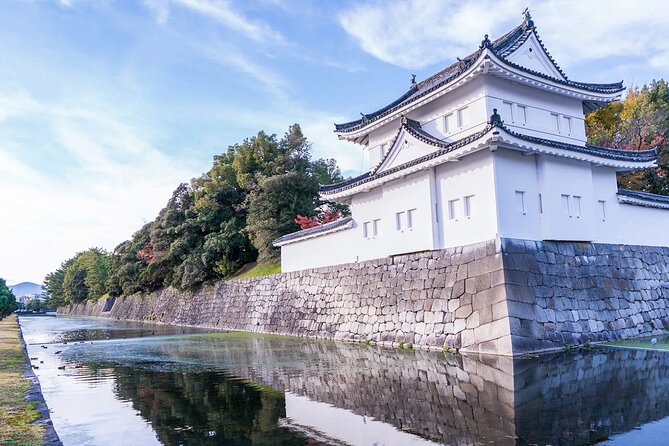
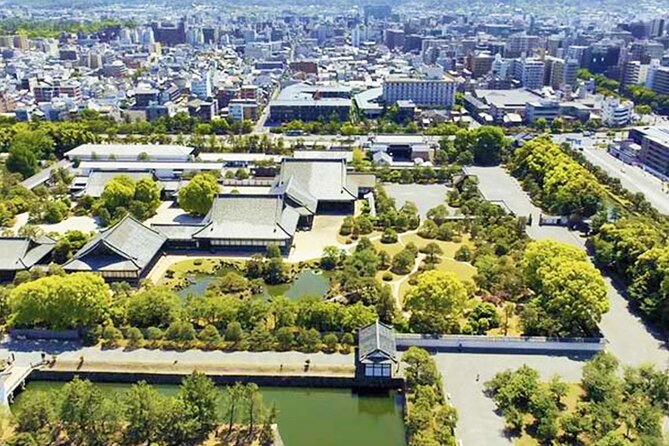
Once inside, pay attention to the approach rather than racing toward the palace. Nijo Castle uses space to make you feel observed and managed. Gates do not merely keep people out. They create pauses, force changes of direction, and separate one level of access from another.
Your guide connects these details to the relationship between the shogun and the Emperor. The castle’s placement near the Imperial residence was itself a political statement. The Tokugawa family wanted to show control in Kyoto, the symbolic center of imperial life, even though the shogunate’s administrative base was far away in Edo.
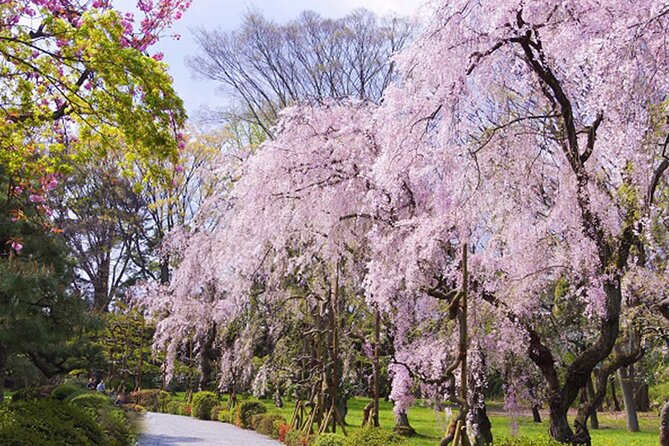
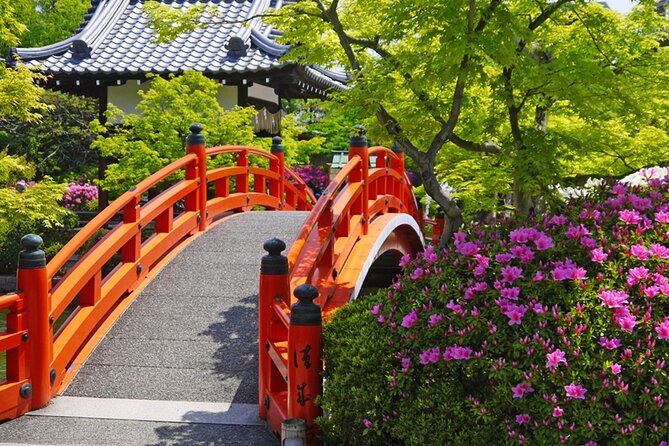
The castle’s moats are part of this story, but they are also one of the prettiest parts of the visit. Colorful koi swim through the water, and the gardens give you a chance to step away from the dense interior sequence of gates and corridors. Bring your camera, though the historical explanations remain the main reason to book.
Ninomaru Palace and the famous nightingale floors
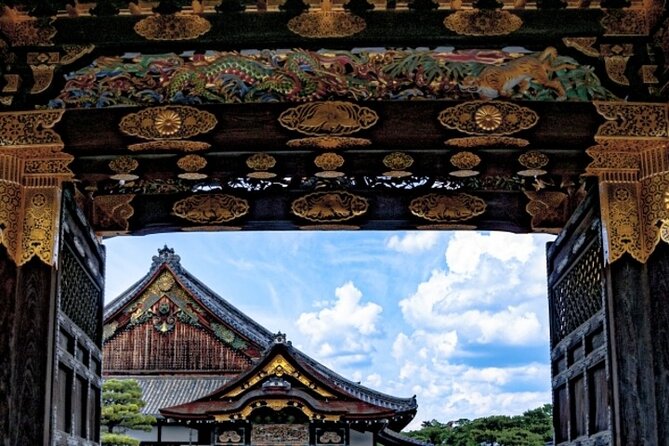
Ninomaru Palace is the tour’s strongest section. You remove your shoes before entering, then walk through rooms where architecture reflected rank. The size of a room, its height, its decoration, and its position in the sequence all helped define the importance of the person inside.
The famous nightingale floors are the detail most people anticipate. Boards beneath your feet chirp as you walk, creating a warning system against intruders. It is an enjoyable sound, but the practical point is darker: the palace was designed so that suspicious movement could not happen quietly.
The floors also help you understand the shogun’s concern with control. Even in a palace intended for display, security remained part of the design. A visitor could be surrounded by beautiful screens and polished wood while still being reminded that the building was watching.
Look carefully at the corridors. Their layered arrangement helped manage who could approach the shogun and how far. The palace was not a single open hall where everyone mingled. It was a series of controlled thresholds, each one reinforcing the difference between ruler, high-ranking officials, attendants, and lower-status visitors.
The guide points out how room decoration reinforced this hierarchy. I appreciate that kind of explanation because it turns Japanese artistic details into readable information. Instead of simply admiring an impressive painted panel, you begin to ask who was allowed to sit in that room, who could enter, and what the room was meant to communicate.
Same city, a completely different kind of day:
- Mt Fuji and Hakone 1-Day Bus Tour Return by Bullet Train
★ 5.0 · 26,383 reviews - 1-Day Tokyo Bus Tour
★ 5.0 · 14,250 reviews - Tokyo: TOKYO SKYTREE® Admission ticket
★ 4.5 · 11,192 reviews - Tokyo: teamLab Planets TOKYO Digital Art Museum Entry Ticket
★ 4.6 · 9,779 reviews
The final room connects Nijo Castle to modern Japan
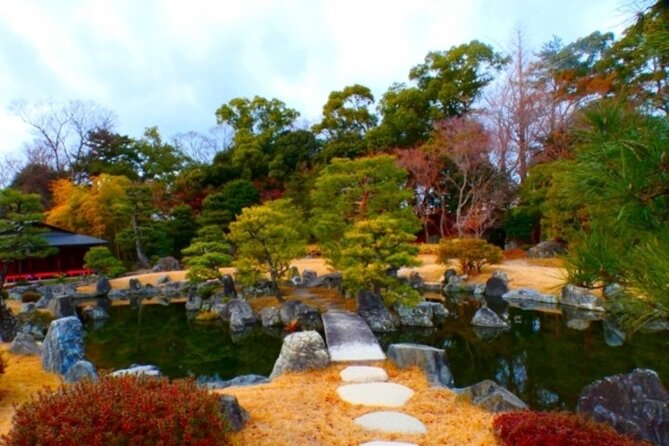
The most important stop comes near the end, when the tour reaches the room associated with Tokugawa Yoshinobu’s return of authority to the Emperor in 1867. This act ended more than 260 years of Tokugawa shogunate rule and helped bring on the Meiji Restoration.
That moment gives Nijo Castle a powerful ending. You begin with a building designed to display shogun authority beside the Emperor’s residence, then finish in the place where that authority was surrendered. The castle becomes a compact lesson in political change.
I like this structure because the tour does not treat history as a list of dates. You move through the same spaces that once expressed dominance, then stand in the room tied to the collapse of that system. The transition from military government to imperial rule becomes easier to picture.
Do not expect a long lecture on every event surrounding the Meiji Restoration. The tour has only 90 minutes, and its focus remains Nijo Castle. Still, the guide gives you a useful framework for understanding why this particular palace matters.
Small groups make the explanations more personal
A maximum of 10 participants is a real advantage here. Palace interiors can be difficult to follow when a guide is speaking over a large crowd. With a smaller group, you have a better chance of hearing the explanation, seeing what the guide is pointing toward, and asking about details that catch your attention.
The quality of the experience also depends on your individual guide. The English-speaking team includes guides such as Nao, Naoya, Uta, Benjamin, and Alexander. Their styles may differ, but the feedback attached to the experience repeatedly highlights clear storytelling, warmth, humor, and the ability to answer questions.
Nao is especially noted for explaining the castle in depth and drawing attention to parts that are easy to miss. Naoya is praised for mixing castle history with Japanese culture and for adjusting to a family group that included children and older adults. Uta is described as covering local customs as well as the building itself, while Benjamin brings a friendly tone and humor to the explanations.
One useful point comes through clearly: some departures have very few participants. One person had a private tour, and another was the only guest. That possibility makes the $40 price more appealing, although you should not assume every departure will be private.
A good fit for families, first-time visitors, and history fans
I would choose this tour if you want a clear introduction to Nijo Castle without spending several hours reading signs and guidebooks. It suits first-time visitors who want the main story, especially the shogun and Emperor rivalry, the palace rules, and the end of the shogunate.
It also works well for mixed-age groups. A family with children aged 8 and 13, along with older adults, found the pace manageable and the explanations engaging. The mostly flat terrain helps, and the activity is listed as wheelchair accessible. Still, the palace shoe-removal rule and the need to walk through its interior spaces are practical points to keep in mind.
The tour is a good match for anyone fascinated by Tokugawa Japan, particularly if you have read historical fiction or want to see a palace connected to the Tokugawa family. The nightingale floors provide an immediate hook for children and casual sightseers, while the political story gives adults more to think about.
If your main goal is quiet garden time, this may not be the best choice. The guide-led format keeps you moving and concentrates on the castle’s political and architectural meaning. You can appreciate the gardens, moats, and koi, but this is not primarily a garden stroll.
Is $40 good value for 90 minutes?
At $40 per person, the tour costs more than simply entering a site on your own, but admission is included. The real question is how much help you want making sense of the palace.
For independent visitors, Nijo Castle can be visually impressive but historically scattered. You may understand that the palace belonged to the Tokugawa shoguns, yet miss why it was placed in Kyoto, how the rooms expressed rank, or why the 1867 event mattered. The guide supplies that connection in a short, efficient format.
The small group also matters to the price. You are not paying only for someone to point toward a famous floor. You are paying for a live explanation, the chance to ask questions, and a more flexible experience than a large organized group usually provides.
I would consider it good value if Nijo Castle is high on your Kyoto list and you want more than photographs. If you already have strong knowledge of Tokugawa political history and prefer to wander at your own pace, admission alone may suit you better.
The 4.9 rating from 37 reviews supports the idea that the guiding is the strongest part of the experience. I would still treat the exact guide assignment as a variable. Nao, Naoya, Uta, Benjamin, and Alexander have each received especially positive comments, but availability can change.
Practical details that affect your visit
The tour is conducted in English and lasts 90 minutes. Starting times vary, so check availability when booking. You can cancel up to 24 hours in advance for a full refund, and the reserve-now, pay-later option gives you some flexibility while arranging a Kyoto schedule.
Wear shoes that are easy to remove and put back on. Socks are a sensible choice, particularly if you are visiting in cool weather or do not like walking barefoot indoors. The palace floor is the part you will remember most, and you want to enjoy it without worrying about awkward footwear.
The terrain is mostly flat, and the activity is listed as wheelchair accessible. Since the experience includes palace interiors and shoe removal, I would confirm any specific mobility needs before booking if someone in your group requires special assistance.
The meeting point is convenient, but do not confuse Nijōjō-mae Station with another nearby stop. Exit 1 is the detail to remember. The guide’s Local Guide Stars sign should make the final connection straightforward.
Should you book this Nijo Castle tour?
Book it if you want Nijo Castle to make sense as a political building, not just a pretty Kyoto attraction. The best parts are the small group, the nightingale floors, the social order built into Ninomaru Palace, and the strong ending in the room linked to Yoshinobu’s surrender of power.
I especially recommend it for first-time visitors, families, and anyone who likes history explained through real places. The $40 cost is reasonable when you value admission, a live English guide, and the chance of a very small group.
Skip it if you want to spend a long, unhurried time alone in the gardens or already know the castle’s history well. For most people, though, the tour provides the missing thread between the koi-filled moats, the polished palace rooms, and the political change that reshaped Japan.
FAQ
Where does the Nijo Castle tour meet?
Meet outside Exit 1 of Nijōjō-mae Station. Your guide will hold a sign that says Local Guide Stars.
How long does the experience last?
The full guided experience lasts 90 minutes. The castle visit itself is listed as about one hour, with the remaining time used for the tour’s overall route and explanations.
Is admission to Nijo Castle included?
Yes. The $40 price includes admission to Nijo Castle and the 1.5-hour guided tour.
What language is the tour conducted in?
The tour is conducted in English with a live guide.
Is the tour wheelchair accessible?
Yes, the activity is listed as wheelchair accessible, and the terrain is mostly flat. Everyone must remove their shoes when entering the palace.
How many people are in the group?
The group is limited to 10 participants. Some departures may be smaller, and individual departures have sometimes operated with only one participant.
Can I cancel the booking?
Yes. You can cancel up to 24 hours in advance for a full refund. A reserve-now, pay-later option is also available.
More Historical Tours in Tokyo
- Tokyo: Shinjuku Historical Walking Tour & Secret Backstreets
★ 5.0 · 530 reviews - Yanaka Walking Tour: Historic and Traditional District of Tokyo
★ 5.0 · 530 reviews - Mt. Fuji Heritage Tour: Traditional Villages, Lakes & Shrine
★ 4.5 · 509 reviews - From Tokyo: Nikko World Heritage Site Private Full-Day Trip
★ 4.9 · 243 reviews
Just added around Tokyo
- Tokyo: Customizable Private Guided Walking Tour★ 4.5 · 129 reviews
- Private Harajuku Omotesando Architecture Tour★ 4.9 · 18 reviews
- Tokyo: Guided Helicopter Ride★ 4.9 · 24 reviews
- Tokyo: Guided Walking Tour of Tsukiji Market with Lunch★ 4.4 · 24 reviews
- Tokyo: Private Personalized Local Food Tour★ 4.5 · 101 reviews
- Tokyo GINZA: KONPARU Japanese Cabaret Show with Drink★ 4.8 · 38 reviews
- Tokyo: Guided Walking Tour of Tsukiji Market with Breakfast★ 4.4 · 134 reviews
- Tokyo: Gotokuji Cat Temple, Shinjuku Cat Cafe & 3D Cat Tour★ 4.9 · 38 reviews
Garden & Palace Tours, compared.

Imperial Palace and Shogun Historical Walking Tour
Read our review →
Tokyo Castle & Imperial PalaceーShogun Walking Tour
Read our review →
Nijo-jo Castle and Ninomaru Palace Guided Tour
Read our review →

Ultimate Osaka Walking Tour: Castle, Dotonbori & Hidden Gems
Read our review →Tokyo Castle & Imperial PalaceーShogun Walking Tour
Read our review →Browse the lists this tour appears in