
REVIEW · KYOTO TOURS
Kyoto Nighttime All-Inclusive Eats and Streets, Gion and Beyond
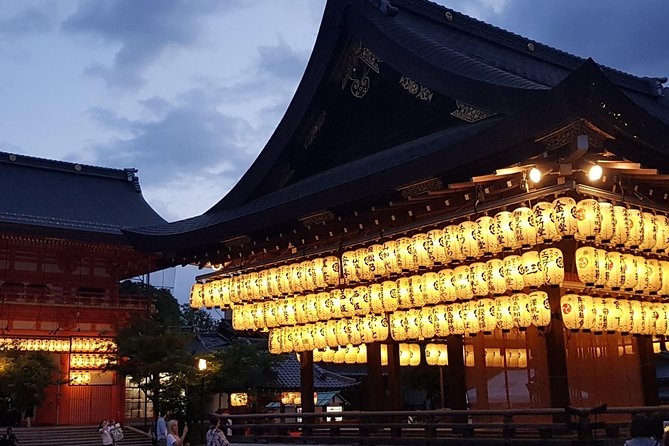
Kyoto’s nighttime story is more complicated than lanterns and quiet temple lanes. This three-hour walk explains geiko and maiko culture, then connects it to today’s hostess clubs and entertainment districts before taking you to two small local places for food and drinks. I love the way the tour treats nightlife as part of Kyoto’s culture, not just a backdrop for dinner.
I also like the small group size, capped at six except for larger parties making one reservation, and the useful mix of old streets, shrine stops, food, and practical neighborhood guidance. Guides such as Laura, Hugo, Jamie, Joshua, and Maya have earned praise for their humor and local insight. The main caution is that restaurants can vary, and one stop may allow smoking. You should also expect a fair amount of walking.
In This Review
- Key points to know before booking
- Gion after dark, with more than pretty lanterns
- From geiko houses to modern hostess clubs
- The first food stop at around 7:30 p.m.
- Pontocho and Kiyamachi on the west side of the river
- The second restaurant and the final drink
- What the $119 price really covers
- Who will enjoy this Kyoto night tour
- Should you book it?
- FAQ
- Where does the tour begin?
- Where does the tour end?
- How long does the experience last?
- How many people can join?
- Are drinks included?
- Can vegetarians join?
- What is the minimum age?
- Can I cancel the tour?
Key points to know before booking
- Two restaurant stops: You receive regional dishes and one alcoholic or non-alcoholic drink at each place.
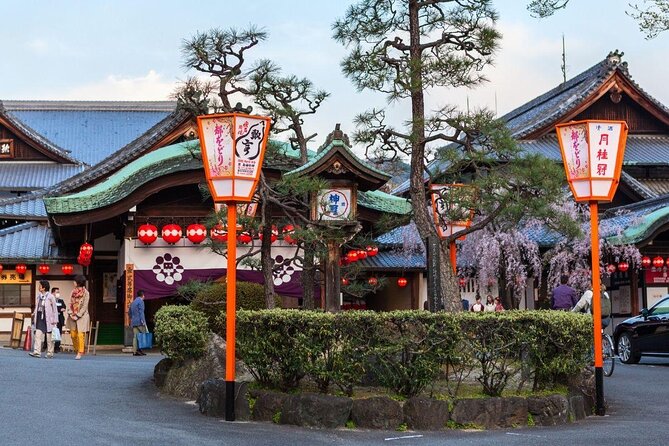
- Gion with context: The walk covers geiko, maiko, Kabuki, shrines, temples, and Kyoto’s changing nightlife.
- Small-group format: The usual maximum is six people, with groups of up to eight allowed when booked together.
- Three distinct nightlife areas: The route includes Gion, Pontocho, Kiyamachi, and the Kawaramachi area.
- Dietary requests are considered: Vegetarians, pescatarians, and some other dietary needs can be accommodated when provided in advance.
- A late, active evening: The tour runs from 6:30 to 9:30 p.m. and requires walking between stops.
Gion after dark, with more than pretty lanterns
Meet at 6:30 p.m. near the Minamiza Theatre, beside Gion Shijo Station. This is a useful meeting point, since several tours may gather nearby, so arrive early and confirm your guide’s name or contact details. The meeting area can feel crowded, especially in Kyoto’s popular evening hours.
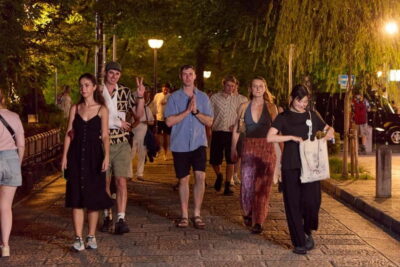
The first hour focuses on Gion, the district east of the Kamogawa River. You’ll walk through streets linked to Kyoto’s traditional entertainment world and learn why Kyoto uses the term geiko rather than the more familiar geisha. You’ll also hear about maiko, the younger performers in training, and the customs surrounding these highly skilled artists.
This part is not built around guaranteed sightings. You might see a geiko or maiko moving between appointments, as one guest did, but that is luck, not a promise. If you do see one, your guide can help explain what you are seeing without turning the moment into a spectacle. Respect matters here. Keep your distance, avoid blocking narrow lanes, and follow your guide’s advice about photography.
Several guides receive special praise for making this material easy to follow. Laura has explained the difference between geiko and maiko, along with the distinction between Shinto shrines and Buddhist temples. Bryan has covered geisha, maiko, Kabuki, and Gion for private groups. The guide assigned to your date may be different, but the experience depends heavily on this storytelling portion.
Other Kyoto days people book alongside this one:
- PERFECT KYOTO 1-Day Bus Tour
★ 5.0 · 13,518 reviews - Kyoto: Fushimi Inari, Kinkakuji, Bamboo Grove 1 Day Bus Tour
★ 4.8 · 4,316 reviews - Kyoto: Tea Ceremony in a Traditional Tea House in Kiyomizu
★ 4.9 · 3,519 reviews
From geiko houses to modern hostess clubs
The tour’s unusual feature is its look at Kyoto’s nighttime economy. You’ll learn how the old entertainment districts worked and how evening social life has shifted toward modern hostess clubs and other businesses. The subject is presented as cultural background and urban observation, not as a visit to adult entertainment venues.
That makes the tour suitable for participants aged 13 and older. It can work well for families with teenagers who want a more grounded look at Kyoto after the temples close. Still, this is a conversation about nightlife, work, drinking, and social customs. Parents should decide if that subject fits their group.
I find this angle valuable because Kyoto can be mistaken for a city frozen in the past. Gion’s old lanes are carefully protected, but the people who live and work in Kyoto also use newer districts and modern forms of entertainment. The tour helps you see both sides in a short period.
Some groups also visit a shrine or pass temples during the walk. These stops add useful cultural contrast, especially if you have spent the day looking at famous religious sites without much explanation of how Shinto and Buddhism differ.
The first food stop at around 7:30 p.m.
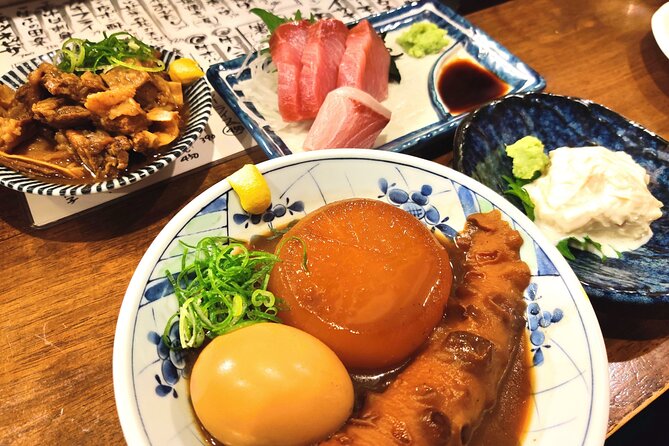
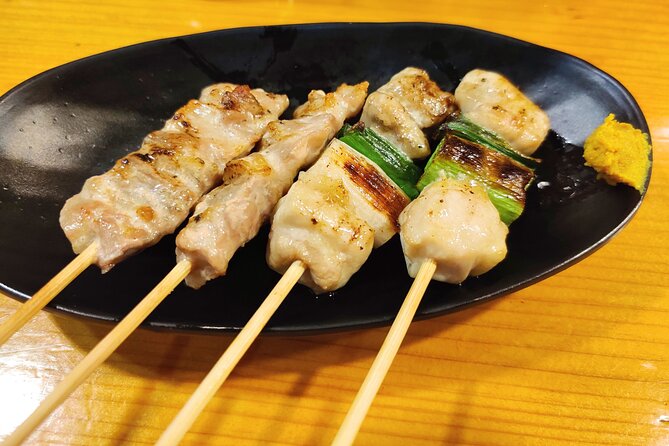
After about an hour on foot, you’ll stop at a small bar or restaurant for regional dishes and your first drink. The food is served as a series of items to share or sample, rather than one large plate. This lets you try several Japanese flavors without committing to a full meal built around one dish.
The exact menu and restaurant can change. The experience may include izakaya-style food, wagyu beef, sake, beer, shochu, or other local options, depending on the venue and arrangements for that evening. You receive one alcoholic or non-alcoholic beverage at this stop. Additional drinks cost extra and are paid directly to the restaurant.
Portions are intended to make up dinner across both stops. Several guides have arranged a broad selection of dishes, and one group found the food plentiful enough without feeling overly full. That balance matters because you still have more walking and another restaurant ahead.
The small-restaurant setting is part of the appeal. These are not described as formal dining rooms designed for tour groups. You may eat at a standing bar or in a compact local venue, which can feel more like ordinary Kyoto nightlife. The tradeoff is comfort. Seating, noise, and service can vary from one night to another.
You should share dietary needs when booking. Vegetarians have been accommodated, as have vegetarian and pescatarian diets and gluten-free requests. The tour provider says various dietary restrictions can be handled, but a small local restaurant may have limits, so clear advance notice is important.
Pontocho and Kiyamachi on the west side of the river
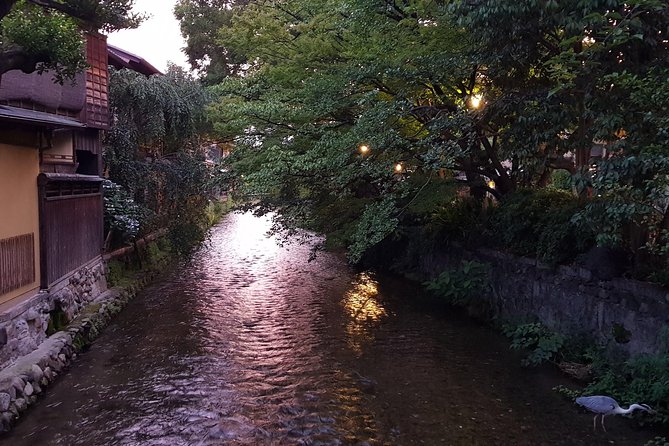
After the first stop, the route crosses to the west side of the Kamogawa River. You’ll walk through Pontocho, Kiyamachi, and the Kawaramachi Street area, seeing three different moods within a compact part of Kyoto.
Pontocho is known for its narrow lane and traditional-style buildings. It is the sort of street that rewards a slow walk and careful looking. The passage is tight, and the low wooden facades give it a strong sense of continuity. At night, restaurant entrances and discreet signs hint at the businesses behind them.
A few streets away, Kiyamachi and Kawaramachi feel younger and more current. Restaurants, bars, shops, and entertainment venues bring a different pace. The contrast is the point: you are not simply walking through a preserved old quarter, but watching Kyoto move between tradition and present-day city life.
This section also helps with orientation. Kyoto’s central nightlife districts can be confusing on a first evening, especially if you do not read Japanese. Hugo was praised for showing nearby areas in a way that made later independent exploring less stressful. Guides also provide suggestions for the rest of your stay, which can make this a useful first-night activity.
Do not book this tour mainly for photographs. Night lighting can be atmospheric, but it is not ideal for clear sightseeing photos, and some streets are narrow or dim. Book it for the stories, food, and help understanding where you are.
Same city, a completely different kind of day:
- Kyoto Geisha Walking Tour: Gion District & Hidden Gems
★ 4.7 · 3,273 reviews - Kyoto: Tea Ceremony Ju-An at Jotokuji Temple
★ 4.9 · 3,207 reviews - Kyoto: Gion Magical Night Walking Tour with Geisha Trivia
★ 4.9 · 2,393 reviews - Kyoto: 45-Minute Tea Ceremony Lesson Experience
★ 4.3 · 2,378 reviews
The second restaurant and the final drink
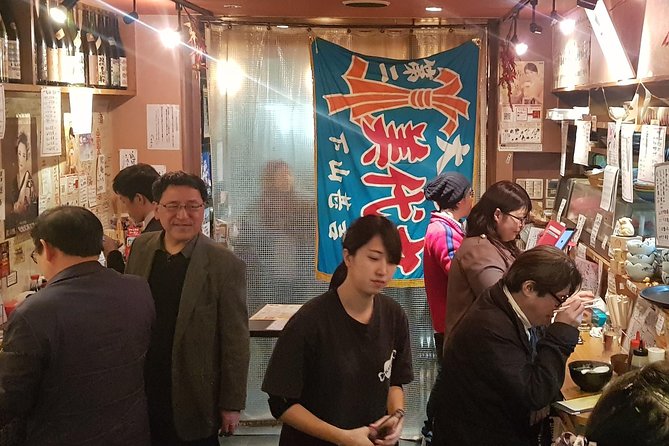
Around 9 p.m., you’ll make a second restaurant stop. This provides more food and your second included drink, again with the option of an alcoholic or non-alcoholic beverage. The two-stop structure gives the evening a natural rhythm: walk, eat, walk, eat.
The second venue may serve several different dishes, and some groups have tried multiple types of food and sake there. The food is meant to complete dinner rather than function as a small snack after a larger meal. Even so, appetites differ, and the final amount depends on the restaurants chosen that night.
The seating arrangement deserves attention. At one stop, a group sat at a bar where conversation across the group was difficult. That is a normal feature of compact Japanese dining spaces, but it can matter if you are hoping for a relaxed meal with a large party. Groups of six may feel more connected than a full party of eight.
Restaurant quality is not perfectly consistent. Many evenings have featured delicious food, warm owners, and places that would be difficult to find without a local guide. A few experiences have fallen short, including complaints about one poor first stop and, on another evening, a smoky venue. Japan still has restaurants where smoking is allowed, so this is worth considering if you are sensitive to smoke.
The provider checks its stops, but small independent venues can change. That uncertainty is part of the bargain. You get a more local-feeling evening than a fixed restaurant package, but you give up the predictability of a single established dining room.
What the $119 price really covers
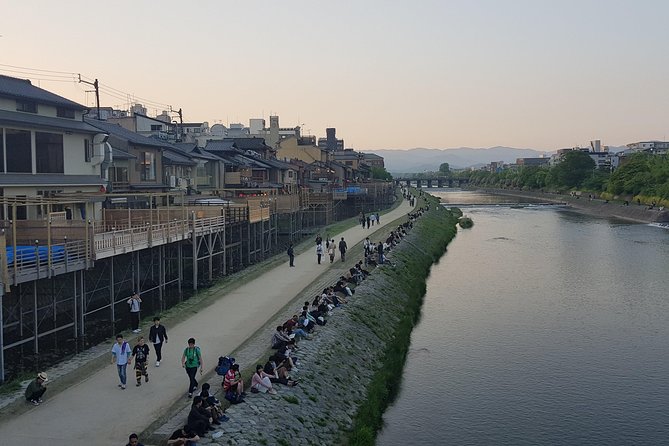
At $119 per person, this is not simply a three-hour walk with two restaurant reservations. The price includes dinner, two alcoholic or non-alcoholic drinks, a guide, and the work of arranging two small local stops. You are also paying for interpretation: someone explains what you are seeing, orders across language barriers, and adjusts dishes when dietary needs are involved.
I think the value is strongest if you are new to Kyoto, do not feel comfortable choosing small restaurants on your own, or want food to be part of a wider cultural evening. The tour can also save you from spending time studying menus and wondering which narrow doorway to enter.
The value is weaker if you mainly want a large meal, a long sit-down dinner, or a guaranteed menu. Drinks beyond the two included are extra. The route includes plenty of walking, so you are paying for an active evening rather than a restaurant crawl where you sit most of the time.
With a 4.6 rating from 464 reviews and a 90 percent recommendation rate, the overall record is strong, but the less positive experiences point to real limits. The guide is a major part of the result, and the food stops are not identical each night. I would book it for access and explanation, not because every dish or venue is guaranteed to be perfect.
Who will enjoy this Kyoto night tour
This is a good match for you if:
- You want to understand Gion beyond taking photos of old streets.
- You are visiting Kyoto for the first time and want help finding central nightlife areas.
- You enjoy tasting several dishes rather than ordering one familiar dinner.
- You like walking and do not mind compact, informal restaurants.
- You want a small group and a guide who can explain local customs in English.
- You have teenagers aged 13 or older and are comfortable with a discussion of nightlife.
It may not suit you if you have trouble walking for three hours, need guaranteed seating, dislike bars, or are highly sensitive to smoke. The minimum drinking age in Japan is 20, but non-alcoholic drinks are available, so younger participants can still join if they are at least 13.
The tour runs in most conditions but requires good weather. It can be canceled for poor weather, with a different date or a full refund offered. You can cancel for a full refund up to 24 hours before the 6:30 p.m. start time. Gratuities are not customary in Japan, though you may thank your guide if you feel the service deserves it.
Should you book it?
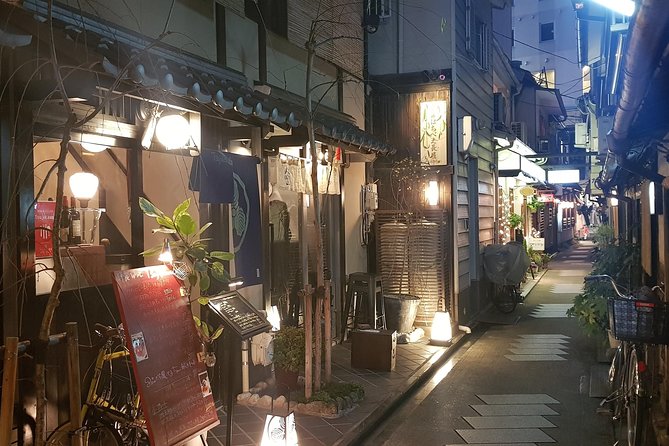
I would book this tour early in a Kyoto stay, especially if you want a friendly introduction to Gion, Pontocho, Kiyamachi, and Kawaramachi before exploring them on your own. The best reason to go is the combination of cultural explanation and local food, not any single restaurant or promised sighting.
Go in with sensible expectations. You may stand while eating, walk farther than expected, encounter a smoky venue, or find that the second restaurant is better than the first. If you want a polished dinner with fixed dishes, choose a restaurant reservation instead. If you want to understand Kyoto after dark while sampling several local foods, the $119 fee is a fair price for the access, guidance, and two included drinks.
FAQ
Where does the tour begin?
The tour begins at 6:30 p.m. near the Minamiza Theatre, close to Gion Shijo Station, at the east end of the Shijo Bridge in Kyoto’s Higashiyama Ward.
Where does the tour end?
The tour ends around 9:30 p.m. near Kyoto-Kawaramachi Station in the Shimogyo Ward.
How long does the experience last?
The experience lasts about three hours, from 6:30 to 9:30 p.m.
How many people can join?
The usual maximum is six participants. Groups of up to eight may be accepted when everyone is part of the same reservation.
Are drinks included?
Yes. You receive two alcoholic or non-alcoholic beverages, one at each restaurant. Any drinks beyond those two are purchased directly from the restaurants.
Can vegetarians join?
Yes. Vegetarians can be accommodated. Vegetarian, pescatarian, gluten-free, and other dietary needs should be provided when booking so arrangements can be made.
What is the minimum age?
All participants must be at least 13 years old. The minimum drinking age in Japan is 20, and non-alcoholic beverages are available.
Can I cancel the tour?
You can cancel up to 24 hours before the start time for a full refund. Changes or cancellations made less than 24 hours before the experience are not accepted. If poor weather causes the tour to be canceled, you will be offered another date or a full refund.
Just added around Kyoto
- Taste of Nishiki Market Walking Food Tour with Local guide★ 5.0 · 17 reviews
- Kyoto: Sushi Making Class with Sushi Chef★ 4.8 · 64 reviews
- Kyoto: City Secrets eBike Tour★ 4.9 · 196 reviews
- Sacred Pathways: Discover the Philosopher’s Path of Kyoto★ 4.9 · 20 reviews
- Private Tour to Monkey Park and Arashiyama Highlights★ 5.0 · 22 reviews
- Private Nara Tour from Osaka – Meet at Your Hotel★ 5.0 · 22 reviews
- Private Sake Tasting in Central Kyoto with Sake Sommelier★ 5.0 · 13 reviews
- Kyoto : Private Custom Walking Tour With A Local Guide★ 4.6 · 144 reviews
Kyoto Tours, compared.
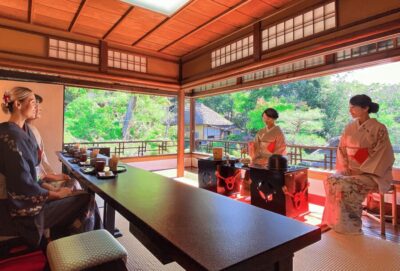
Tea Ceremony in a Traditional Tea House in Kiyomizu
Read our review →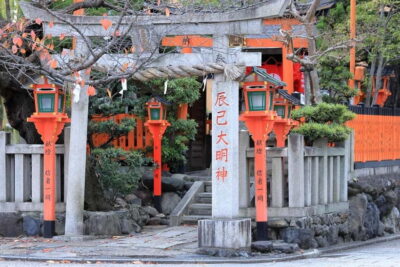
Kyoto Geisha Walking Tour: Gion District & Hidden Gems
Read our review →
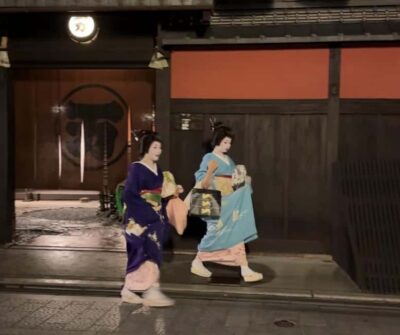
Gion Magical Night Walking Tour with Geisha Trivia
Read our review →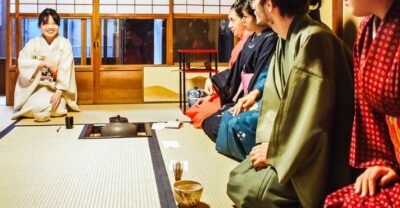
Gion Geisha District Walking Tour – Stories of Geisha
Read our review →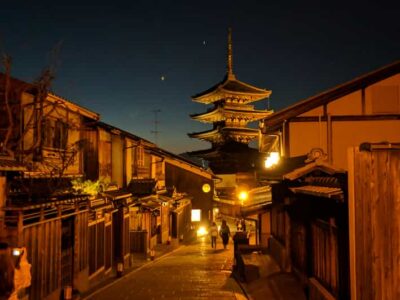
Best of Kyoto: Gion, Geisha, Pagodas & Cobblestones
Read our review →
Browse the lists this tour appears in