
REVIEW · TEMPLE & SHRINE TOURS
Kyoto Early Bird English Tour: Fushimi Inari & Gion(Private opt)
The best thing about this Kyoto morning tour is its early start. You reach Fushimi Inari Shrine before the torii gates fill with people, then work through Kyoto’s major sights in one clear route. The tour is designed for a first visit, with an English-speaking local guide who explains what you are seeing instead of simply pointing at it.
I like the local perspective, especially when the guide is Ikki, who grew up in Kyoto and has been praised for clear English, good humor, and useful food advice. I also like the photo service. Your guide takes pictures throughout the morning, which means you can enjoy the walk without asking strangers to photograph your group.
The main consideration is timing. The advertised duration is four to five hours, but one detailed account described a much shorter visit of about two and a half hours. The route is also a real walking experience, with public transport between some areas, stairs, slopes, and no long meal break.
In This Review
- Key points at a glance
- Why an early start matters at Fushimi Inari
- Kiyomizu-dera and Kyoto from above
- Sannenzaka and Ninenzaka, Kyoto on foot
- Yasaka Pagoda and the colorful Koshin-Do
- Gion, with context and good manners
- Yasaka Shrine, a useful finishing point
- What the guide adds to the morning
- Cost, transport, and what you really pay
- Meeting at Kyoto Station
- Who should book this Kyoto route
- Booking and cancellation details
- Should you book it?
- FAQ
- Where does the tour start?
- Where does the tour end?
- How long does the experience last?
- Is the tour private?
- Is the tour conducted in English?
- Is admission to Fushimi Inari Shrine included?
- Is admission to Kiyomizu-dera included?
- Are public transportation fares included?
- Are food and drinks included?
- What happens if I arrive late?
- What fitness level is needed?
- Can I cancel for a refund?
Key points at a glance
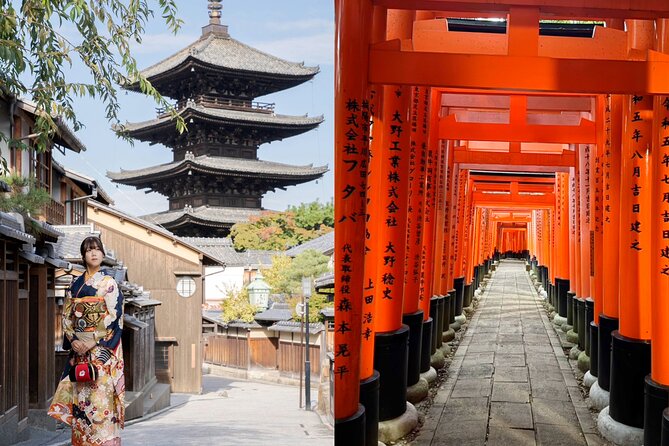
- Fushimi Inari comes first: Arriving early gives you a calmer look at Kyoto’s famous red torii paths.
- Seven sights in one morning: The route links Fushimi Inari, Kiyomizu-dera, historic lanes, Gion, and Yasaka Shrine.
- Ikki is a guide to request: He is known for fluent English, local knowledge, friendly energy, and taking excellent photos.
- The tour is listed as private: Only your group participates, making questions and pacing more personal.
- Budget for extra costs: Add ¥390 per person for public transport and ¥500 per person for Kiyomizu-dera.
- The finish is useful: You end at Yasaka Shrine, close to Gion, with onward bus routes and more sightseeing nearby.
Why an early start matters at Fushimi Inari

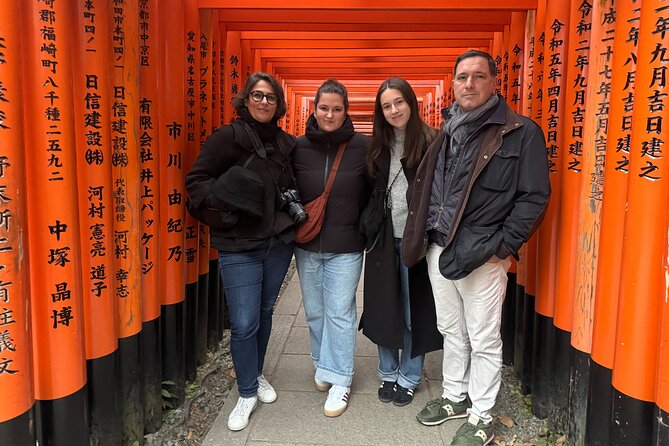
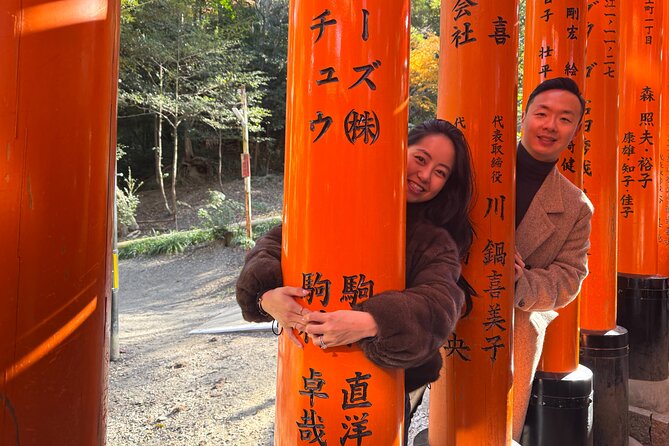
Fushimi Inari-taisha is the natural opening act for this tour. Its thousands of orange-red torii gates rise along paths into the wooded slopes of Mount Inari, creating one of Japan’s most recognizable scenes. The shrine is dedicated to Inari, associated with rice and prosperity, and fox figures appear around the grounds as traditional messengers of the deity.
You spend about an hour here. That is enough to walk beneath a section of the gates, pause for photographs, and hear how the shrine fits into Japanese religious life. It is not enough for a full climb of Mount Inari, so you should not book this expecting a summit hike.
The early timing is the practical advantage. Fushimi Inari is one of Kyoto’s most visited places, and the narrow gate paths become far less pleasant when everyone is trying to stop for the same photograph. Your guide can also help position your group for pictures, a useful benefit at a place where the best views are often crowded.
Wear shoes with a firm grip. Even without climbing all the way up the mountain, this is the first substantial walking section of the morning. If you want quiet shrine grounds and soft morning light, this is the part of the schedule worth getting out of bed for.
More Temple & Shrine Tours in Kyoto
- Kyoto: Fushimi Inari, Kinkakuji, Bamboo Grove 1 Day Bus Tour
★ 4.8 · 4,316 reviews - Kyoto: Tea Ceremony in a Traditional Tea House in Kiyomizu
★ 4.9 · 3,519 reviews - Kyoto: Tea Ceremony Ju-An at Jotokuji Temple
★ 4.9 · 3,207 reviews
Kiyomizu-dera and Kyoto from above
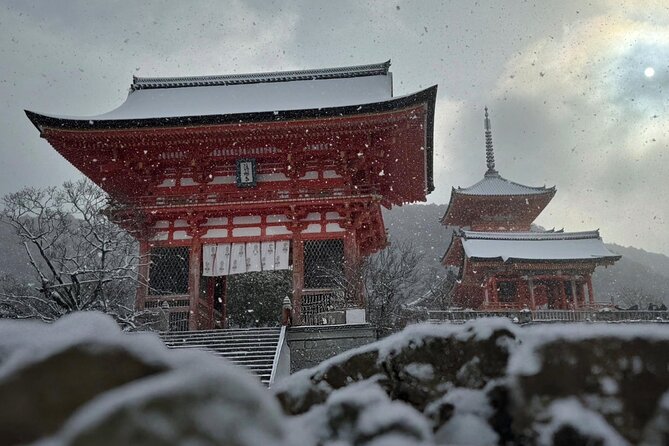
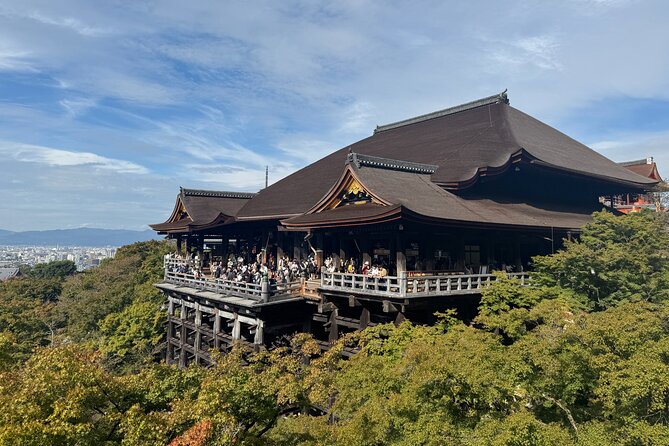
The next major stop is Kiyomizu-dera, one of Kyoto’s essential temple visits. It sits above the city and offers broad views across Kyoto, with temple buildings and wooded hills framing the scene.
You have about an hour here. The admission fee is not included, so allow ¥500 per person. That extra cost is small compared with the value of seeing one of Kyoto’s signature temples with someone who can explain the customs, symbolism, and background.
The temple area can be busy even in the morning. Your guide helps turn a large, potentially confusing site into a more focused visit. Based on the experience described by past participants, guides may use printed material or a small booklet to explain temple and shrine customs, Japanese language details, and how to take part in prayers respectfully.
Kiyomizu-dera also brings the tour’s physical demands into clearer focus. You will walk uphill and over temple approaches, then continue down through the historic streets. Anyone with moderate fitness should manage it, but this is not a sit-back sightseeing trip.
Sannenzaka and Ninenzaka, Kyoto on foot
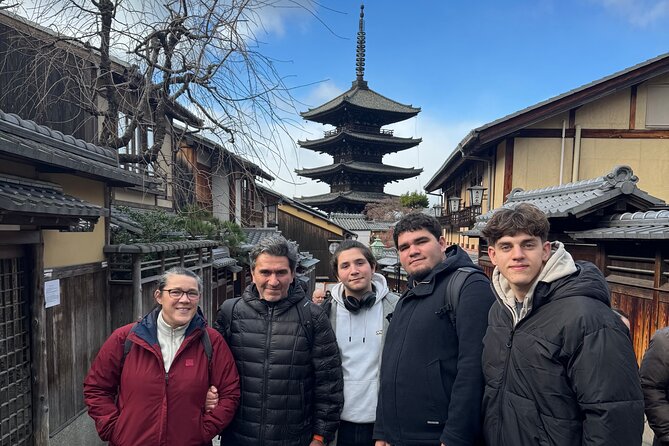
After Kiyomizu-dera, the route moves through Sannenzaka and Ninenzaka. These stone-paved lanes run between traditional wooden buildings, small shops, and restaurants. They are among the most atmospheric streets in eastern Kyoto.
The scheduled time here is only 15 minutes, which is enough for a guided stroll and a few photographs, but not enough for serious shopping. If you see a snack or souvenir you want, you may need to return later on your own.
That short stop makes sense within the larger plan. The tour is trying to connect several districts rather than give you a full shopping morning. Your guide can point out the character of the streets, explain how the old buildings relate to Kyoto’s past, and help you recognize places worth revisiting after the tour.
The stone paving and slopes can be uneven. Keep your camera ready, but also watch your footing. The appeal here is not one single monument. It is the feeling of moving through an old part of town under your own power.
Yasaka Pagoda and the colorful Koshin-Do
The route pauses at Yasakanoto, also called Yasaka Pagoda or Hokanji Temple. The pagoda is described as one of Japan’s oldest wooden structures and is an important Kyoto symbol. Its scale is impressive when viewed from the surrounding lanes.
The planned stop lasts 15 minutes. That is a photo and explanation stop, not a lengthy temple visit. You get a chance to appreciate the pagoda’s form and hear why it matters before moving on.
Next comes Yasaka Koshin-Do, another brief stop. Its bright decorations contrast with the more restrained colors common at many Japanese temples. The site is visually unusual, so it gives the morning a welcome change of mood after the more formal atmosphere of Kiyomizu-dera.
Again, the short timing matters. You will see the place and learn its basic meaning, but you should not expect an extended spiritual visit at every stop. This tour favors variety and coverage over slow exploration.
Same city, a completely different kind of day:
- PERFECT KYOTO 1-Day Bus Tour
★ 5.0 · 13,518 reviews - Kyoto Geisha Walking Tour: Gion District & Hidden Gems
★ 4.7 · 3,273 reviews - Kyoto: Gion Magical Night Walking Tour with Geisha Trivia
★ 4.9 · 2,393 reviews - Kyoto: 45-Minute Tea Ceremony Lesson Experience
★ 4.3 · 2,378 reviews
Gion, with context and good manners
Gion is Kyoto’s best-known geisha district, marked by traditional machiya houses, teahouses, and preserved streets. The scheduled visit is 15 minutes, enough to walk through part of the area and get an introduction to its role in Kyoto’s cultural life.
A guide is especially useful here because Gion is easy to misunderstand. The district is not a theme park, and the women in traditional dress you may see are not automatically available for photographs or conversation. Follow your guide’s advice, ask before taking close-up pictures, and keep the visit respectful.
The short Gion stop also tells you what this tour is and is not. You will get a first look at the district, but you will not have time for an evening performance, a tea ceremony, or a long meal. If Gion is your main reason for visiting Kyoto, plan a separate return visit.
Yasaka Shrine, a useful finishing point
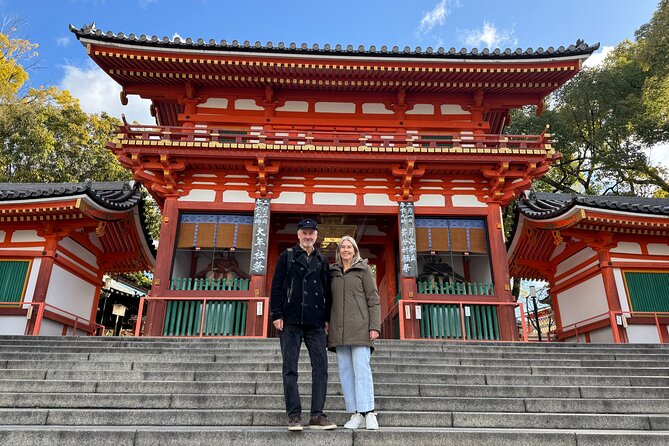
The final destination is Yasaka Shrine, where the tour allows about 30 minutes. The shrine is linked with 2,300 related shrines across Japan and is associated with prosperity and protection.
Ending here works well. Yasaka Shrine is in the historic Gion area, so you can continue walking after the guide leaves. You can also take a bus toward other parts of Kyoto or back toward your accommodation. Tell your guide what you plan to do next, and the guide can direct you toward a suitable route.
This is more useful than ending at a transport hub with no clear next step. You finish in one of Kyoto’s most interesting districts, with restaurants, lanes, and further sights close by.
What the guide adds to the morning
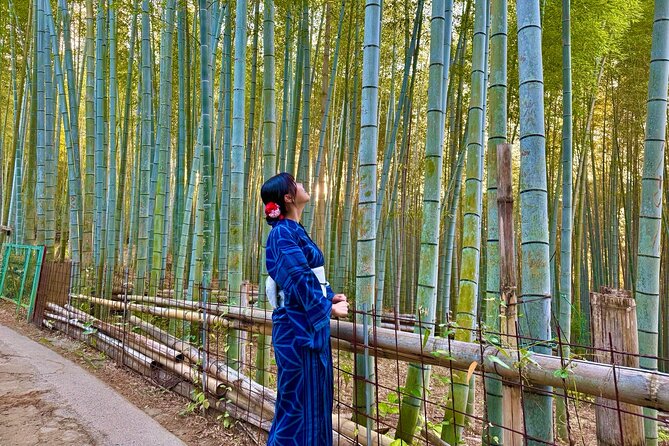
The guide is the heart of this experience. The strongest feedback centers on Ikki, who is described as Kyoto-born and raised, fluent in English, polite, funny, and easy to understand. He has also received praise for answering questions patiently and explaining local religion and customs in plain language.
That local connection can change the way you see the route. Fushimi Inari becomes more than a line of orange gates. Kiyomizu-dera becomes more than a scenic temple. The small stops gain purpose because you understand why they are included.
Ikki is also praised as a personal photographer. He takes pictures during the walk and sends them afterward, according to the information provided. This is a genuine advantage for couples, families, and groups who want photographs of everyone together.
Several accounts also describe useful recommendations after the tour, including food suggestions and help finding a restaurant. Those extras are not guaranteed as a formal part of the schedule, but they show the kind of practical local help you can ask for.
The booking information identifies the activity as private, so only your own group participates. That gives you more freedom to ask questions than a large group tour. Still, the published route is fairly fixed, and the short stops mean you should not expect to redesign the whole morning around one favorite temple.
Cost, transport, and what you really pay
The listed price is $99.10 per person. That is not the lowest-cost way to see these places, since Fushimi Inari and several shrines are free and Kyoto’s public transport is inexpensive.
You are paying for three things: a local English-speaking guide, a private group format, and professional photos. If you are visiting Kyoto for the first time and want meaning added to the sights, those benefits can justify the price. It is particularly fair for a small group that values clear explanations and a smooth morning route.
You should add ¥390 per person for public transport and ¥500 per person for Kiyomizu-dera. Food and drinks are also extra. The route does not include a meal, so eat before meeting or plan lunch after reaching Yasaka Shrine.
The timing needs a little caution. The official duration is approximately four to five hours, while one account reported a tour of around two and a half hours. The listed stop times total roughly three hours and 45 minutes, before transport and walking between sites. I would treat four to five hours as the intended window, but keep your afternoon plans flexible.
Meeting at Kyoto Station
The tour starts at Kyoto Station, at Higashishiokoji Kamadonocho in Shimogyo Ward. This is a practical starting point because the station is connected to local transport and is familiar to most people arriving in the city.
Be early. The late-arrival rule is strict: if you miss the meeting time, you may not be able to join and will not receive a refund. That matters more here than on a flexible self-guided outing, since the group moves through several scheduled stops.
The tour ends at Yasaka Shrine, at 625 Gionmachi Kitagawa. Since the start and finish are in different parts of Kyoto, you should not leave luggage or other items at the starting point unless you have made your own arrangements.
The walking element is central. You use public transport for part of the route, but spend plenty of time on foot. Moderate fitness is required, and comfortable shoes will make the morning much easier.
Who should book this Kyoto route
I would choose this tour for a first visit to Kyoto, especially if you have one morning available and want to cover the city’s classic eastern sights efficiently. Families can benefit from the guide’s patience and the photo service, while couples may value having pictures together instead of taking turns behind the camera.
It also suits you if religious customs feel unfamiliar. The guide can explain how shrines and temples differ, what the symbols mean, and how to participate respectfully.
The tour is less suitable if you prefer to linger. Fifteen minutes at Gion, Yasaka Pagoda, Koshin-Do, and Sannenzaka gives you an introduction, not a full visit. Independent explorers may prefer to visit fewer places and spend half a day at each.
It is also not ideal for anyone who wants a relaxed breakfast tour. You need to start early, keep moving, and manage several hills and temple approaches.
Booking and cancellation details
Confirmation is provided when you book, and the activity uses a mobile ticket. Group discounts are available. The listed experience provider is OTAKU hopper.
You can cancel for a full refund up to 24 hours before the start time. Cancellations or changes made inside that 24-hour window are not refunded or accepted, based on local time.
Should you book it?
Book this tour if you want a well-planned first morning in Kyoto, prefer explanations in clear English, and value a private setting with photos. The early visit to Fushimi Inari is the strongest reason to choose it, while the guide’s local insight and friendly help can make the whole route easier to understand.
Skip it if your priority is a slow temple morning, extended shopping, or a precise four-to-five-hour schedule with no possible variation. Before booking, confirm the expected start and finish time, then budget for ¥890 per person in transport and temple admission.
For most first-time visitors who want Kyoto’s famous shrines, temples, old lanes, and Gion in one morning, the route offers solid value, especially when Ikki is available.
FAQ
Where does the tour start?
It starts at Kyoto Station, at Higashishiokoji Kamadonocho in Shimogyo Ward, Kyoto.
Where does the tour end?
It ends at Yasaka Shrine in the historic Gion area, at 625 Gionmachi Kitagawa.
How long does the experience last?
The stated duration is approximately four to five hours. One account described a much shorter visit of about two and a half hours, so you should confirm the expected timing when booking.
Is the tour private?
Yes. The activity is described as a private tour, with only your group participating.
Is the tour conducted in English?
Yes. It includes a local English-speaking guide.
Is admission to Fushimi Inari Shrine included?
There is no admission charge listed for Fushimi Inari Shrine.
Is admission to Kiyomizu-dera included?
No. The Kiyomizu-dera admission fee is ¥500 per person.
Are public transportation fares included?
No. Public transportation costs ¥390 per person and are paid separately.
Are food and drinks included?
No. You are responsible for food and drinks.
What happens if I arrive late?
If you are late for the meeting time, you may not be able to join the tour and will not receive a refund.
What fitness level is needed?
A moderate level of physical fitness is recommended. The experience includes substantial walking and uses public transportation.
Can I cancel for a refund?
You can receive a full refund if you cancel at least 24 hours before the experience start time. Changes and cancellations inside 24 hours are not accepted or refunded.
Just added around Kyoto
- Private Guided Traditional Buddhist Cooking in Japan★ 5.0 · 16 reviews
- Kyoto: Gion Geisha District & Sake-in-Hand Walking Tour★ 5.0 · 37 reviews
- Your Private Vacation Photography Session In Kyoto★ 5.0 · 110 reviews
- Kyoto: Zen Meditation at a Private Temple with a Monk★ 5.0 · 25 reviews
- Traditional Japanese Washi Papermaking- Kyoto morning★ 5.0 · 77 reviews
- Kyoto Wagashi(Japanese sweets) Cooking Class near Fushimiinari★ 5.0 · 60 reviews
- Private Pewter Sake Cup Experience with a Kyoto Artisan★ 5.0 · 31 reviews
- Kyoto Private 6 hour Tour: English Speaking Driver Only, No Guide★ 5.0 · 88 reviews
Temple & Shrine Tours, compared.

Tea Ceremony in a Traditional Tea House in Kiyomizu
Read our review →
Meiji Shrine, Asakusa, Skytree Bus Tour and Cruise
Read our review →
Asakusa Walking Tour with Sensoji Temple Visit
Read our review →
Kamakura & Enoshima Day Trip including Temple Tickets
Read our review →
Kyoto/Osaka: Nara, Fushimi Inari Taisha, Arashiyama Bus Tour
Read our review →
Nikko Toshogu Shrine and Kegon Waterfall Tour
Read our review →
Tokyo Panoramic 1 Day: Meiji Shrine, Asakusa, Odaiba and SKYTREE®
Read our review →Browse the lists this tour appears in