
REVIEW · KYOTO TOURS
Kioto: Gion Tour, recorrido a pie (Español/Castellano)
Gion is much more than Kyoto’s famous geisha quarter. In two hours, this Spanish-language walk links three hanamachi districts with old bridges, shrines, theater buildings, preserved streets, and the quiet corners most visitors pass without understanding. I like the route’s range, especially the contrast between Pontocho’s narrow alley and the more formal streets of Gion Kobu.
I also like the small group size, limited to six people, and the open question time. Guides José and Juan are praised for clear explanations, personal stories, and flexibility. The main drawback is that Hanamikoji-dori is not included, and no guide can promise a maiko or geiko sighting.
In This Review
- Key points at a glance
- Why this Gion walk covers more ground than most
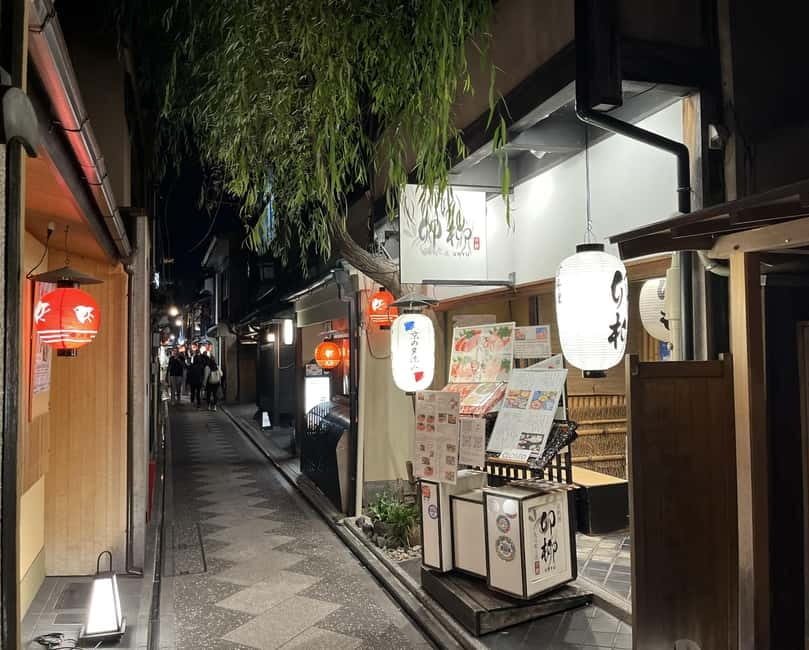
- Starting at Pontocho Alley and Kaburenjo
- Crossing the Kamo River by Sanjo Ohashi
- Gion Kobu, Shirakawa, and Tatsumi Shrine
- Gion Higashi and Yasaka Shrine
- What the route leaves out
- The Spanish-language guiding style
- How much value do you get for $35?
- Who should book this walk?
- Booking and cancellation details
- Should you book the Kioto Gion Spanish Walking Tour?
- FAQ
- How long does the Gion walking tour last?
- How far do you walk?
- What language is the tour conducted in?
- How many people can join the tour?
- Where is the meeting point?
- Does the tour include Hanamikoji-dori?
- Will I see a maiko or geiko?
- Does the tour visit Yasaka Shrine?
- Can the tour include the Gion Gallery?
Key points at a glance
- Three hanamachi in one walk: Visit Pontocho, Gion Kobu, and Gion Higashi rather than seeing only one famous street.
- A 3.3-kilometer route: Expect a steady two-hour walk through central Kyoto, with bridges, shrines, alleys, and preserved neighborhoods.
- Spanish-speaking guidance: José and Juan are among the guides praised for answering detailed questions in a friendly, clear way.
- Small groups capped at six: You get room to ask about daily life, Japanese customs, maiko training, and anything else you notice.
- Yasaka Shrine adds context: Learn how the former Gion Shrine gave the district its name and how the Gion Festival began more than 1,100 years ago.
- Gion Gallery option: The 9:45 and 12:30 departures can include a free visit to the Gion Gallery if you want to extend the outing.
Why this Gion walk covers more ground than most
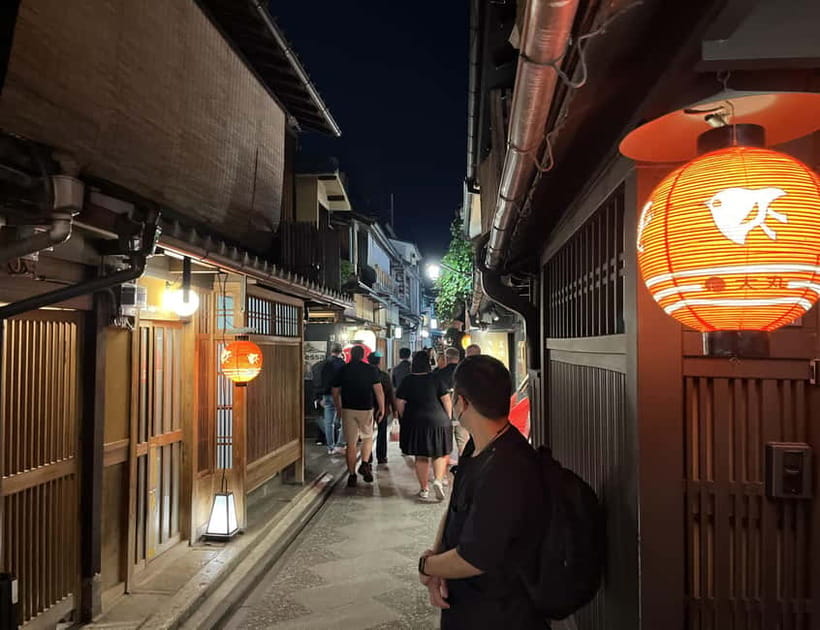
Many first visits to Gion focus on one photogenic lane and a quick look at wooden townhouses. This walk takes a broader view. You move through Pontocho, Gion Kobu, and Gion Higashi, three of Kyoto’s five hanamachi, the traditional entertainment districts associated with geiko and maiko.
That matters because each area helps explain a different part of Kyoto’s old social and cultural life. You are not simply collecting photographs of wooden facades. You are learning why these neighborhoods developed, how they function, and what daily routines lie behind the carefully maintained streets.
The experience is conducted in Spanish and limited to six participants. That is a useful combination for anyone who wants to ask questions without waiting behind a large crowd. The guide can explain a sign, a building, a shrine custom, or a point about Japanese life as you encounter it.
I would treat the walk as an introduction to Gion, not a complete study of Kyoto’s geisha culture. Two hours is enough to build a strong framework, but not enough to examine every street or tradition in detail.
Other Kyoto days people book alongside this one:
- PERFECT KYOTO 1-Day Bus Tour
★ 5.0 · 13,518 reviews - Kyoto: Fushimi Inari, Kinkakuji, Bamboo Grove 1 Day Bus Tour
★ 4.8 · 4,316 reviews - Kyoto: Tea Ceremony in a Traditional Tea House in Kiyomizu
★ 4.9 · 3,519 reviews
Starting at Pontocho Alley and Kaburenjo
The meeting point is in front of the Disney Kyoto Shijo-Kawaramachi store. There is only one Disney store in Kyoto, and the guide waits outside holding an iPad marked with the Spanish tour title and the scheduled time. This is a clear landmark, but arrive with enough time to identify the guide before the group sets off.
Pontocho Alley is the natural first chapter. Its narrow passage and traditional wooden buildings show how compact Kyoto’s entertainment districts can feel. The route also includes Pontocho Kaburenjo, an important reference point for the local performing arts tradition.
Your guide can place Pontocho within the wider story of the hanamachi system. You will hear about maiko and geiko life, their training, working routines, and the customs that shape these districts. This is where a small group helps. If you are curious about the difference between a maiko and a geiko, or about how the neighborhoods operate today, you can ask directly rather than save your question for later.
Do not expect a guaranteed appearance by a maiko or geiko. The walk explains the culture and the neighborhoods, but it is not a staged encounter. That distinction is important, both for practical expectations and for respectful behavior.
Crossing the Kamo River by Sanjo Ohashi
The route continues toward the Kamo River and Sanjo Ohashi, one of Kyoto’s best-known bridges. You also pass the Yagi-san and Kita-san statues, then make your way along Yamato-dori.
These stops broaden the tour beyond the usual geisha story. Bridges and streets help you understand how central Kyoto’s districts connect, while small statues and local landmarks are easy to miss when you are walking alone. The guide’s role here is less about grand monuments and more about showing you what deserves a second look.
I like this part because it gives the walk a sense of movement. You are not circling one attraction. You are crossing from one historic quarter to another, following the paths that connect downtown Kyoto with Gion.
The 3.3-kilometer distance is manageable for most people who are comfortable walking for two hours, but it is still a proper city walk. Comfortable shoes are a must. In warm weather, bring water, sunscreen, and a sun hat. An umbrella is also sensible because the tour runs outdoors and Kyoto’s weather can change.
Gion Kobu, Shirakawa, and Tatsumi Shrine
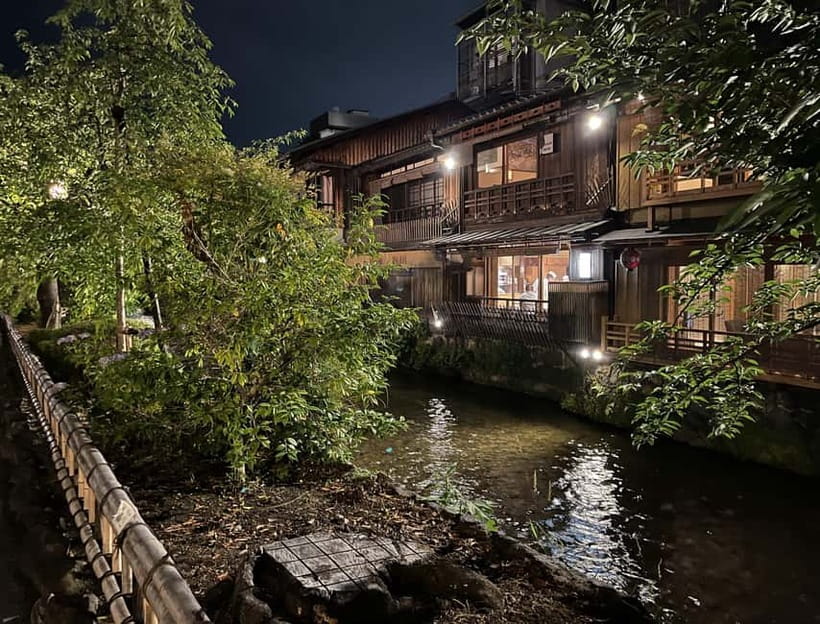
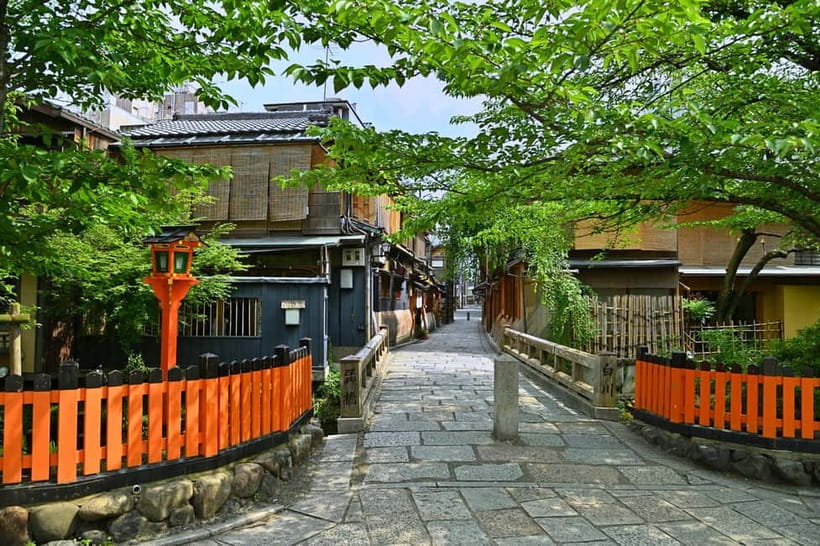
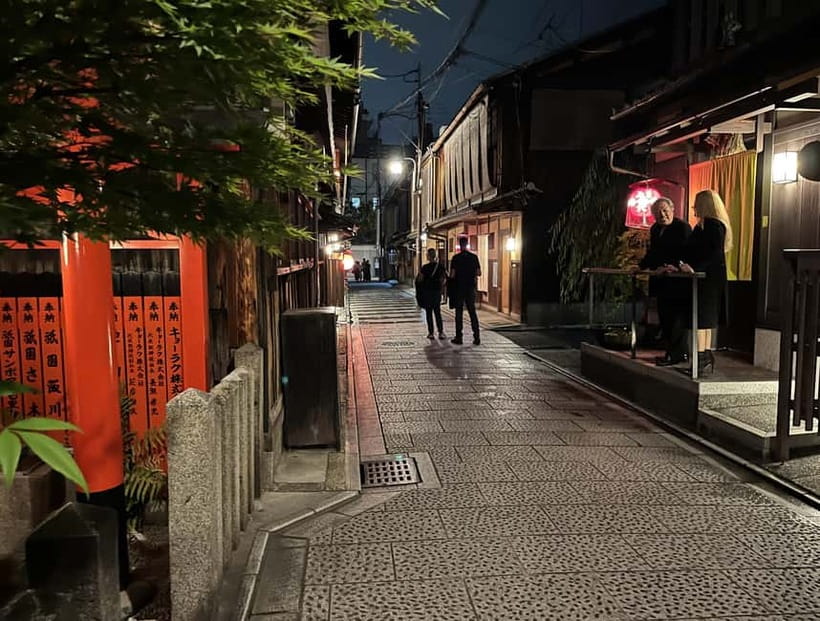
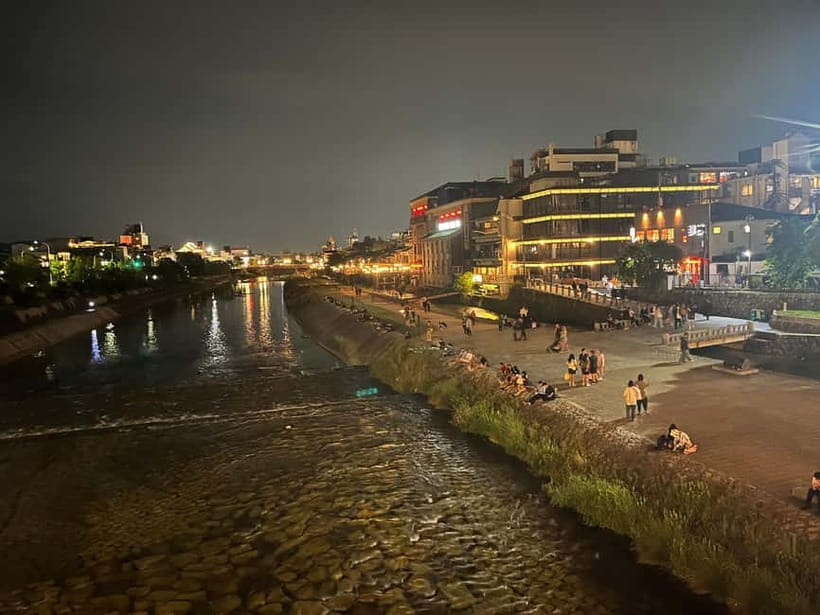
Gion Kobu is the largest and best-known of Kyoto’s hanamachi districts. The route takes you through Gion Shinbashi-dori and Gion Shirakawa, areas known for preserved architecture and traditional streetscapes.
This is likely to be one of the most visually appealing sections. Wooden machiya houses line the route, and the Shirakawa area offers a calmer setting beside the water. Yet the value is not just visual. Your guide explains how the district developed, what the buildings represent, and how the local entertainment culture is connected to Kyoto’s past.
Tatsumi Shrine and Tatsumi Bridge add smaller-scale landmarks to the walk. These are the kinds of places that can seem incidental if you do not know their role. With a guide, you can pause to understand the connection between religious sites, neighborhood customs, and the old hanamachi districts.
The walk also visits national historical preserved neighborhoods, particularly in northern Gion Kobu. Preservation keeps the old streets recognizable, but it also means you need to behave thoughtfully. This is not a theme park. People live and work here, and the streets deserve quiet, respectful sightseeing.
Same city, a completely different kind of day:
- Kyoto Geisha Walking Tour: Gion District & Hidden Gems
★ 4.7 · 3,273 reviews - Kyoto: Tea Ceremony Ju-An at Jotokuji Temple
★ 4.9 · 3,207 reviews - Kyoto: Gion Magical Night Walking Tour with Geisha Trivia
★ 4.9 · 2,393 reviews - Kyoto: 45-Minute Tea Ceremony Lesson Experience
★ 4.3 · 2,378 reviews
Gion Higashi and Yasaka Shrine
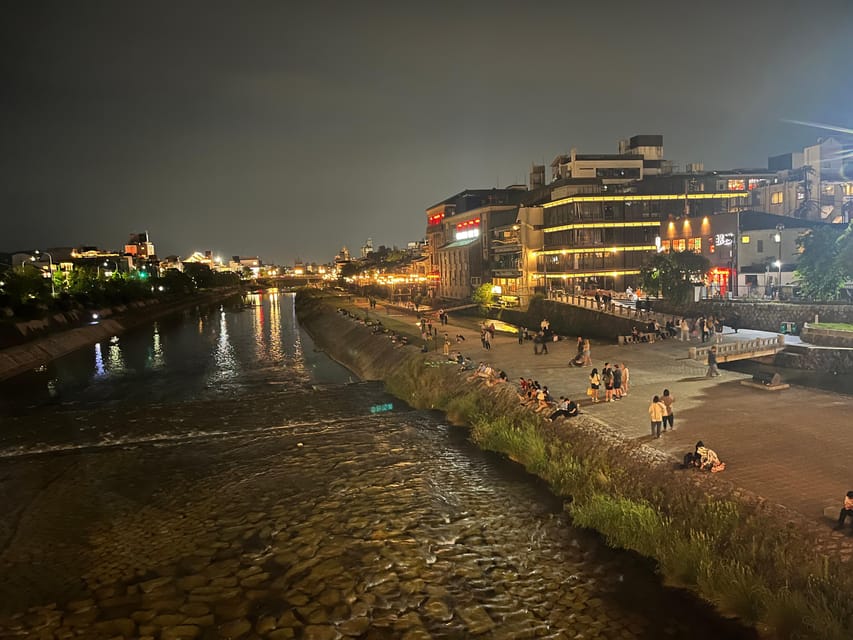
From Gion Kobu, the group continues to Gion Higashi, another of Kyoto’s traditional hanamachi. Seeing both Gion Kobu and Gion Higashi helps you compare the districts rather than treating Gion as one uniform quarter.
The final major stop is Yasaka Shrine, formerly known as Gion Shrine. The name of the district comes from this shrine, and the guide explains the connection between the religious site and the surrounding neighborhood.
If time allows, you may also hear about the Gion Festival. It began more than 1,100 years ago and is counted among Japan’s three most important festivals. Even if you visit Kyoto outside festival season, this background gives Yasaka Shrine and Gion a larger place in the city’s story.
I find this ending useful because it joins several themes from the walk: religion, public celebrations, neighborhood identity, and the long development of Kyoto. You finish with more than a collection of streets. You have a clearer sense of why Gion became such an important part of the city.
What the route leaves out
The tour does not include Hanamikoji-dori. That is worth knowing before you book, since many people associate Gion with this particular street. If seeing Hanamikoji is a main goal, you will need to visit it separately.
This omission is not necessarily a weakness. The route uses its time for Pontocho, Gion Kobu’s Shinbashi and Shirakawa areas, Gion Higashi, and Yasaka Shrine. You gain variety, but you give up one of the most familiar Gion photo stops.
A maiko or geiko sighting is also not guaranteed. The guide can explain their lives, routines, customs, and activities, but the people who work in these districts are not performers placed there for sightseeing. I would choose this walk for its cultural explanation, not for a chance encounter.
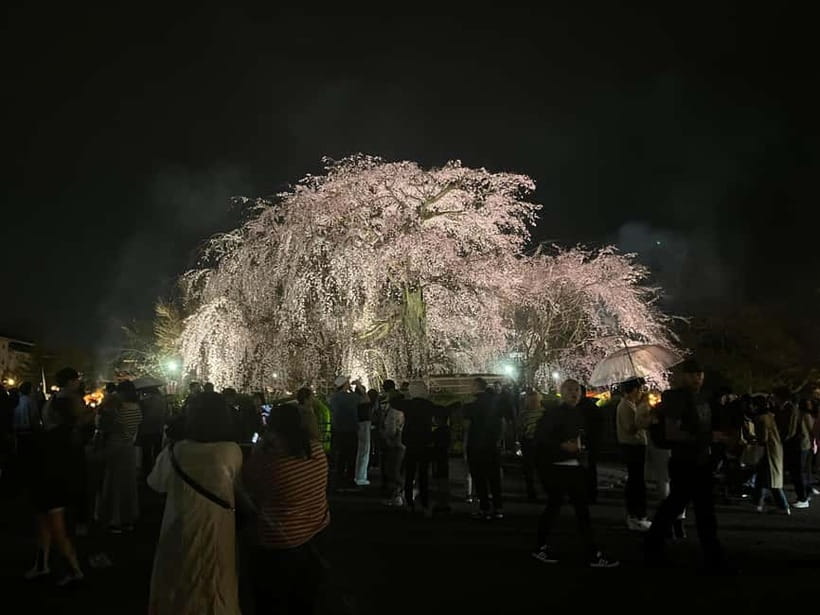
During cherry blossom season, roughly late March to early April, the route changes slightly to show blossoms around Gion. Exact bloom dates vary, so you should think of this as a seasonal route adjustment rather than a promise of peak flowers.
The Spanish-language guiding style
The strongest feature of this experience is the guide’s willingness to explain details and answer questions. José is described as warm, flexible, and especially good at making complicated subjects easy to follow. He also helped adjust times when needed, according to the available guest feedback.
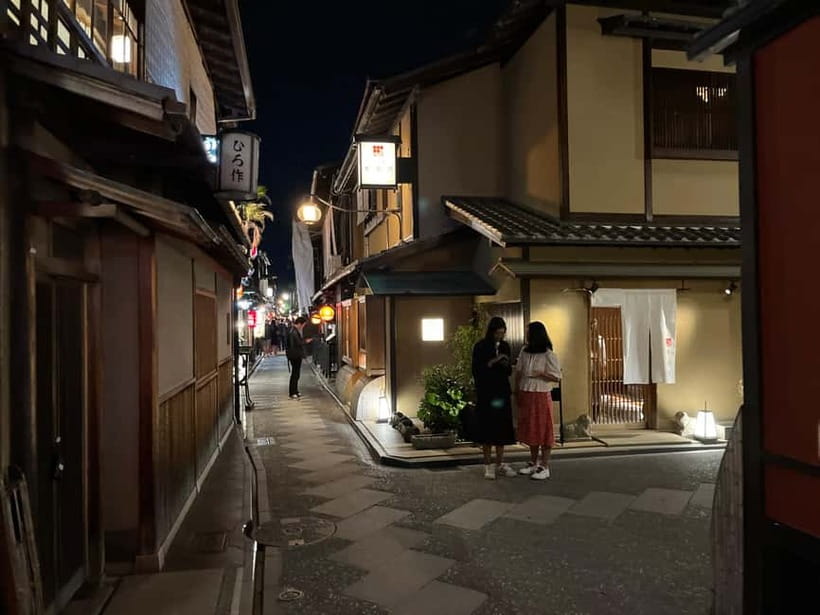
Juan is praised for showing hidden passages and sharing a high level of detail about the area. Another useful point is that José can explain in English when a Spanish beginner needs help. That makes the tour workable for mixed-language groups, although Spanish remains the stated tour language.
The personal tone matters in a district like Gion. You may want to ask about etiquette, the difference between Kyoto and other Japanese cities, daily routines, or something you have noticed elsewhere in Japan. The guide’s personal experiences can make those answers more practical than a memorized speech.
Because the group is capped at six, you should have a better chance to ask follow-up questions. I would use that opportunity. Ask about the meaning of the neighborhood names, the role of Yasaka Shrine, or how maiko and geiko training fits into life in Kyoto.
How much value do you get for $35?

At $35 per person, this is reasonably priced for a two-hour guided walk, especially if you want Spanish-language interpretation and a small group. You are paying less for admission tickets and more for access to context, local explanation, and a route that connects several districts.
The value is strongest for first-time visitors who would otherwise see Gion as a series of attractive lanes without knowing what they represent. It is also useful early in a Kyoto stay, since the guide can give you a map of the central area and help you decide where to return on your own.
The price is less compelling if you only want photographs or if you already know Kyoto’s history and hanamachi culture well. You can walk through many of these streets without a guide. The difference is the interpretation, so take advantage of the question time if you book.
The optional Gion Gallery visit may add value for the 9:45 and 12:30 departures. It is free, but you should be prepared for the tour to run longer if you choose to extend it.
Who should book this walk?
I would recommend it to Spanish-speaking visitors who want more than a quick photo stop in Gion. It suits couples, families, and small groups who prefer conversation over a large scripted tour.
It is also a good fit if you are interested in everyday Japanese life, not only temples and major landmarks. The guides discuss personal experiences and invite questions about whatever you see, which makes the experience adaptable to your interests.
You should think twice if your main goal is Hanamikoji-dori, a guaranteed geisha encounter, or a short route with little walking. Those are not promises this tour makes.
Plan for outdoor conditions. Wear comfortable shoes, carry water, and bring sun protection. An umbrella is useful in wet weather. The route covers about two miles, so the practical challenge is not difficult terrain but maintaining a steady walking pace through central Kyoto.
Booking and cancellation details
The tour lasts two hours, with starting times shown when you check availability. It offers free cancellation up to 24 hours before departure for a full refund, and you can reserve now and pay later.
The meeting point is specific: outside the Disney Kyoto Shijo-Kawaramachi store. Look for the guide with the iPad displaying Kioto Gion Recorrido Guiado ESPAÑOL/CASTELLANO and the tour time.
The experience is provided by Lambda Cube LLC. No extra services are included, so plan to bring your own water and personal items.
Should you book the Kioto Gion Spanish Walking Tour?
Book it if you want Gion explained in Spanish, prefer a small group, and care about the people, customs, and history behind Kyoto’s old streets. The route is especially useful because it connects Pontocho, Gion Kobu, Gion Higashi, and Yasaka Shrine in one outing.
Skip it if Hanamikoji-dori is essential to your plans or if you are hoping for a guaranteed maiko or geiko sighting. For most visitors, though, the $35 cost is fair for two hours of focused local guidance, a well-chosen route, and the freedom to ask many questions. José and Juan bring the kind of personal, clear explanation that can make familiar-looking streets much easier to understand.
FAQ
How long does the Gion walking tour last?
The tour lasts two hours.
How far do you walk?
The route covers about 3.3 kilometers, or two miles.
What language is the tour conducted in?
The tour is conducted in Spanish, with a live Spanish-speaking guide.
How many people can join the tour?
The group is limited to six participants.
Where is the meeting point?
Meet the guide in front of the Disney Kyoto Shijo-Kawaramachi store. The guide will be seated outside with an iPad displaying the Spanish tour name and scheduled time.
Does the tour include Hanamikoji-dori?
No. Hanamikoji-dori is not included in the route.
Will I see a maiko or geiko?
A maiko or geiko sighting cannot be guaranteed.
Does the tour visit Yasaka Shrine?
Yes. The route includes Yasaka Shrine, formerly known as Gion Shrine.
Can the tour include the Gion Gallery?
The 9:45 and 12:30 departures can include a free visit to the Gion Gallery if you want to extend the tour.
Just added around Kyoto
- Taste of Nishiki Market Walking Food Tour with Local guide★ 5.0 · 17 reviews
- Kyoto: Sushi Making Class with Sushi Chef★ 4.8 · 64 reviews
- Kyoto: City Secrets eBike Tour★ 4.9 · 196 reviews
- Sacred Pathways: Discover the Philosopher’s Path of Kyoto★ 4.9 · 20 reviews
- Private Tour to Monkey Park and Arashiyama Highlights★ 5.0 · 22 reviews
- Private Nara Tour from Osaka – Meet at Your Hotel★ 5.0 · 22 reviews
- Private Sake Tasting in Central Kyoto with Sake Sommelier★ 5.0 · 13 reviews
- Kyoto : Private Custom Walking Tour With A Local Guide★ 4.6 · 144 reviews
Kyoto Tours, compared.
Tea Ceremony in a Traditional Tea House in Kiyomizu
Read our review →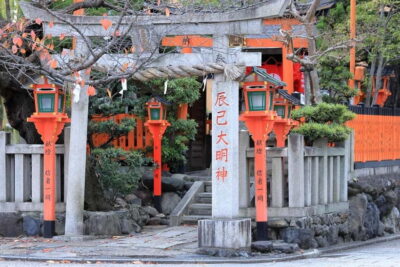
Kyoto Geisha Walking Tour: Gion District & Hidden Gems
Read our review →
Gion Magical Night Walking Tour with Geisha Trivia
Read our review →
Gion Geisha District Walking Tour – Stories of Geisha
Read our review →
Best of Kyoto: Gion, Geisha, Pagodas & Cobblestones
Read our review →
Browse the lists this tour appears in