REVIEW · KYOTO TOURS
Ikebana Traditional Japanese Art of Flower Arranging
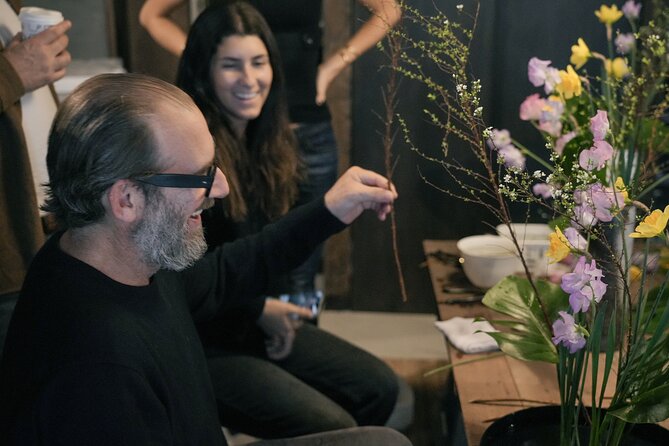
Ikebana turns a handful of cut flowers into a small study of balance, space, and time. In this Kyoto class, instructor Mana demonstrates two traditional styles, then gives you the tools to make your own arrangement in a typical Japanese home setting.
I like the personal scale, with a maximum of six people, and the chance to work with seasonal flowers rather than simply watch a demonstration. I also like that the class connects flower arranging with mindfulness and includes useful care tips that may help your flowers last up to two weeks.
The main consideration is the short format. At roughly 90 minutes, you get a pleasant introduction, but anyone hoping for a detailed survey of ikebana schools, rules, and history may find the lesson brief. One booking also reported difficulty finding the meeting and reaching the provider, so check the address carefully before setting out.
In This Review
- Key points about the Kyoto ikebana class
- What the 90-minute experience is really about
- Meeting Mana and seeing the first arrangement
- Nageire and Moribana: two useful starting points
- Arranging your own seasonal flowers
- Wabi-sabi, empty space, and the pleasure of restraint
- Flower-care advice you can use after class
- What the setting and group size add
- Is $72.26 a fair price?
- Who should book this class?
- Should you book the Kyoto ikebana experience?
- FAQ
- How long does the ikebana class last?
- Where does the class meet?
- Who teaches the class?
- Which ikebana styles will I learn?
- How many people can join?
- Can I cancel for a refund?
Key points about the Kyoto ikebana class
- Two traditional styles: Mana teaches and demonstrates Nageire and Moribana, both suitable starting points for beginners.
- Small class size: The experience accepts no more than six people, allowing time for individual guidance.
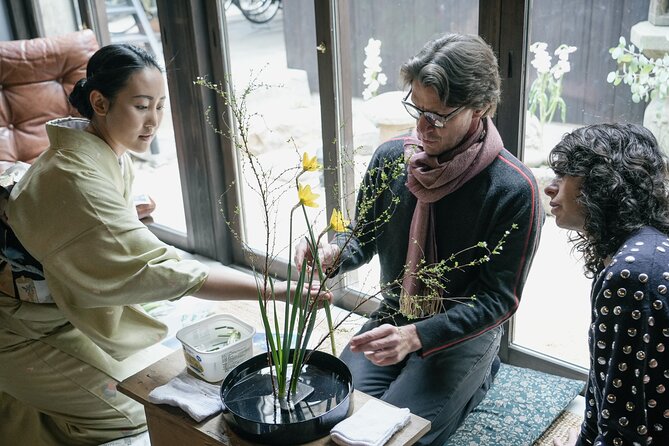
- Hands-on practice: You arrange your own flowers after watching the instructor work.
- Seasonal materials: The flowers change with the time of year, giving each class a different character.
- Mindful Japanese aesthetics: The lesson introduces wabi-sabi ideas through space, asymmetry, balance, and the natural shape of each stem.
- Useful flower care: You learn methods intended to help fresh arrangements last for up to two weeks.
What the 90-minute experience is really about
This is not a quick craft session where you place flowers in a vase and call it done. Ikebana, which means living flowers, asks you to notice the natural line of a stem, the direction of a leaf, and the empty space around each piece.
That idea gives the class more purpose than a standard flower-arranging workshop. You are not trying to fill every gap. You are making a small composition in which each flower has room to show its shape and character.
The experience lasts about 1 hour and 30 minutes. That is enough time for an introduction, demonstrations, and your own arrangement, but not enough for a long academic lesson on every branch of the art. I would treat it as a practical first meeting with ikebana, not a full course.
The class is held in Kyoto at 3481 Tanbayacho, in the Kamigyo Ward area. The meeting address is listed as Symphony Kitano East, and the activity ends at the same point. Since the class is in a home-style setting rather than a large public venue, I would allow extra time to locate the exact entrance.
Other Kyoto days people book alongside this one:
- PERFECT KYOTO 1-Day Bus Tour
★ 5.0 · 13,518 reviews - Kyoto: Fushimi Inari, Kinkakuji, Bamboo Grove 1 Day Bus Tour
★ 4.8 · 4,316 reviews - Kyoto: Tea Ceremony in a Traditional Tea House in Kiyomizu
★ 4.9 · 3,519 reviews
Meeting Mana and seeing the first arrangement
The session is led in English by Mana, an ikebana instructor who explains both the ideas behind the art and the basic methods you need to begin. Her teaching includes two styles, Nageire and Moribana, which gives the class more range than a lesson focused on one arrangement alone.
The opening explanation sets the tone. Ikebana is built around the belief that cut flowers receive a new life through arrangement. You are encouraged to work with the natural features of the plant instead of forcing every stem into a fixed shape.
Mana demonstrates arrangements before you begin. The demonstrations are important because ikebana rules are easier to understand when you see the placement of stems, the use of height, and the role of open space.
The class format includes two demonstrations, according to the detailed experience information. That is useful for beginners because you can compare the distinct approaches before making your own arrangement.
I like this part of the class because it gives you something concrete to copy without making your work feel like a test. You can observe the basic structure, then make choices based on the flowers in front of you.
Nageire and Moribana: two useful starting points
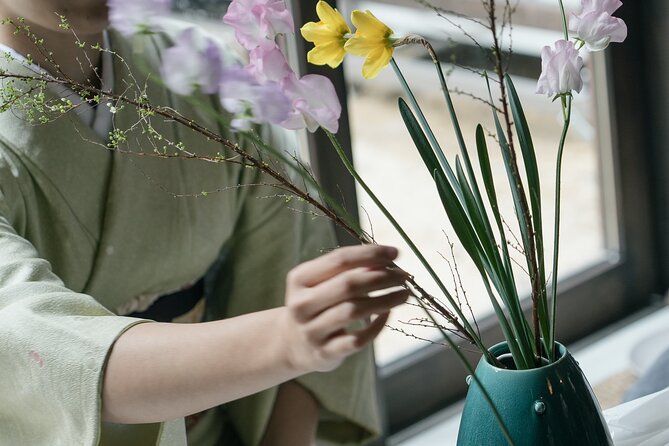
Nageire and Moribana are presented as beginner-friendly ikebana styles, but they have different visual approaches. The class lets you see both, which makes the short session feel more substantial.
Nageire is associated with a more upright, natural-looking arrangement. Moribana is often recognized by a lower, more open form. The exact result depends on the flowers and the instructor’s method, but learning both gives you a useful comparison.
This matters because a first ikebana class can otherwise leave you with one attractive arrangement but little sense of how the art can change from one style to another. Here, you begin to see that ikebana is not one fixed look.
One limitation is that the short lesson cannot provide a full guide to the different schools of ikebana or every basic rule. A three-star assessment specifically noted a desire for more discussion of the art’s history, schools, and principles.
Mana’s response made an important point: the class is designed around teaching Nageire and Moribana as practical beginner styles. If you want a broad cultural lecture, ask about that at the start. If you want to learn by watching and doing, the two-style approach is a good use of the available time.
Arranging your own seasonal flowers
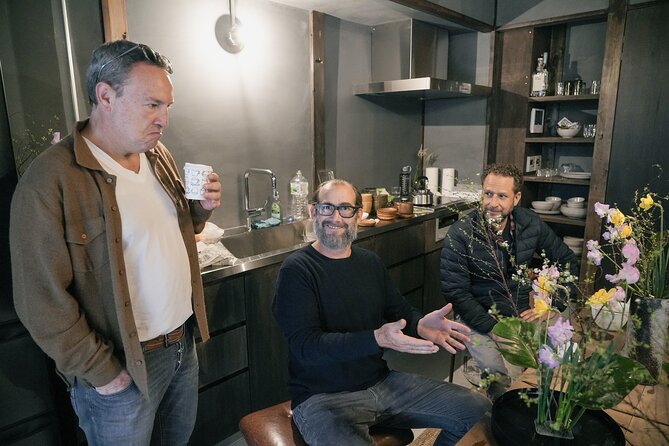
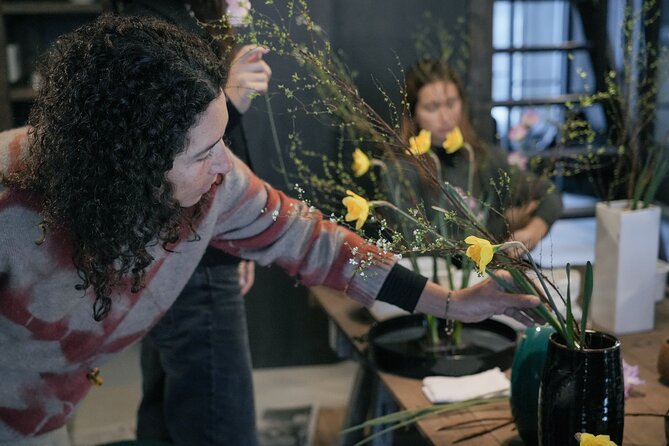
After the demonstrations, you get to make your own arrangement. This is the heart of the experience, and it changes the class from a talk into a real workshop.
The flowers are seasonal, so the exact materials vary. That is part of the appeal. You are working with what nature offers at that time of year, and the form of your arrangement must respond to the stems, leaves, and blooms you receive.
I like that approach more than using identical artificial materials. Fresh flowers have uneven curves and individual shapes. Those small differences force you to look closely and make decisions rather than follow a rigid diagram.
You may begin by considering the strongest line in the material. One stem might give the arrangement height, another may provide a lower counterpoint, and a flower may become the focal point. The goal is harmony, but not perfect symmetry.
This is where the mindfulness element becomes practical. You slow down, handle each stem with care, and pay attention to the relationship between the flowers. The class describes this as tuning into the flowers’ feelings, a poetic way of saying that you should respect their natural direction and character.
Mana allows flexibility as you work. That is helpful for couples and beginners who want guidance without having every decision made for them. You can follow the demonstrated method closely or make small changes to create an arrangement that feels like your own.
The small group limit also matters here. With no more than six people, the instructor has a reasonable chance to look at each arrangement and offer corrections. A larger class would make this hands-on portion less personal.
Same city, a completely different kind of day:
- Kyoto Geisha Walking Tour: Gion District & Hidden Gems
★ 4.7 · 3,273 reviews - Kyoto: Tea Ceremony Ju-An at Jotokuji Temple
★ 4.9 · 3,207 reviews - Kyoto: Gion Magical Night Walking Tour with Geisha Trivia
★ 4.9 · 2,393 reviews - Kyoto: 45-Minute Tea Ceremony Lesson Experience
★ 4.3 · 2,378 reviews
Wabi-sabi, empty space, and the pleasure of restraint
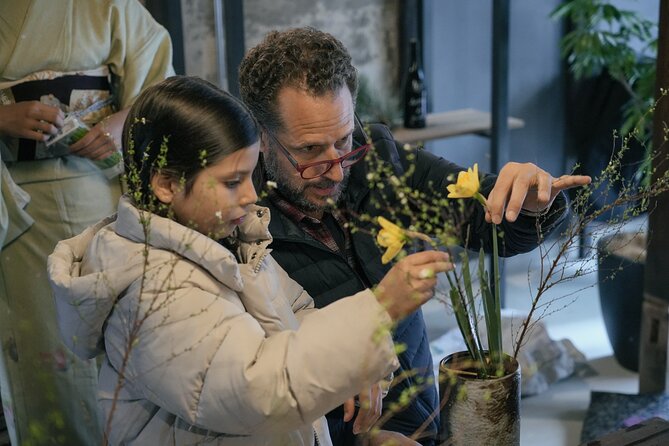
The class introduces wabi-sabi minimalist aesthetics through flowers. You will not be asked to make a crowded centerpiece packed with color and volume. Instead, the arrangement depends on restraint.
Empty space is part of the design. A curved branch may need room around it. A single flower can matter more when it is not surrounded by several competing blooms. This can feel strange at first if your idea of flower arranging is based on fullness.
The lesson also shows why ikebana is tied so closely to nature. A flower is not treated as a decoration without a past. Its angle, age, texture, and movement all contribute to the final form.
That makes the activity a good match for a slow afternoon in Kyoto. You are still learning a traditional Japanese art, but you are also getting a quiet break from temples, shops, and crowded sightseeing routes.
I would not book this class only for a finished bouquet. The arrangement is temporary, and the greater value comes from learning to notice proportion, texture, and space. If you enjoy practical cultural activities, that change in attention may be the most memorable part.
Flower-care advice you can use after class
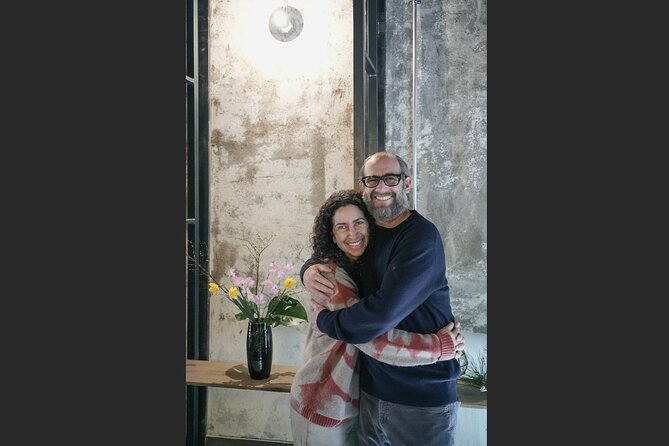
The workshop includes tips for keeping fresh flowers in good condition, with the aim of helping them last up to two weeks. This practical detail adds value to the price because you leave with more than a one-time activity.
You learn how to maintain the flowers rather than simply admire them for one evening. The precise care methods are taught during the class, so pay attention and take notes if you want to repeat the process at home.
This advice also helps you understand the Japanese idea of giving flowers new life. The arrangement does not end when the class finishes. With proper care, you can continue to observe how the flowers change over the following days.
I would ask whether you may photograph your finished arrangement or write down the care instructions during the session. The information provided confirms that flower maintenance is included, but it does not spell out the exact take-home materials or written handout.
What the setting and group size add
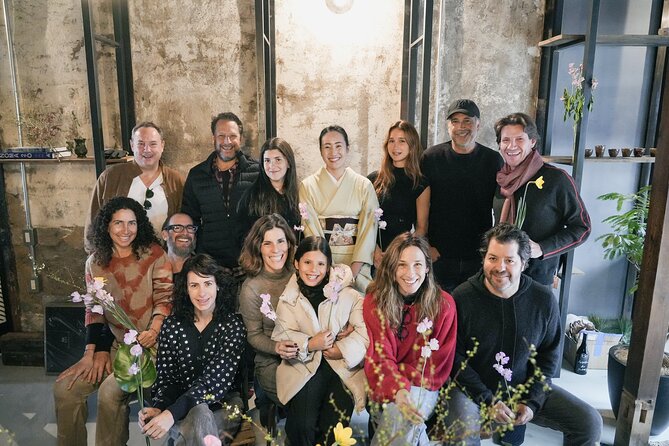
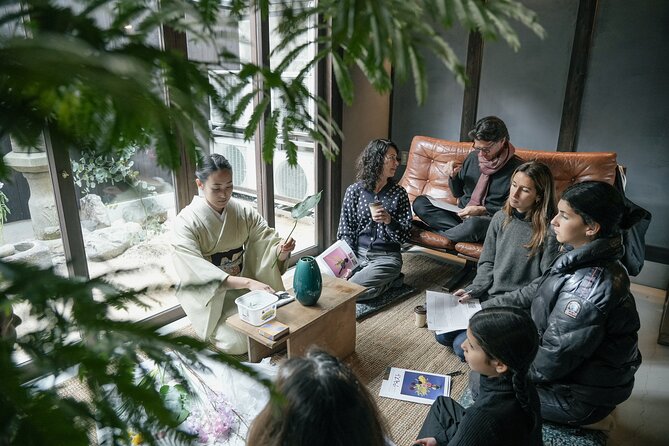
The class takes place in a traditional-style Japanese home environment, which gives the activity a more intimate feel than a hotel meeting room. The setting helps connect the arrangement to everyday Japanese aesthetics rather than presenting ikebana as a display behind glass.
The maximum group size is six. That is small enough for a relaxed lesson and personal help, while still allowing you to share the experience with a partner or a few other people.
The compact format works especially well for couples. One couple described having plenty of flexibility while making their arrangements, and the class can give you something to do together without requiring previous artistic skill.
There is one practical warning. A Spanish-language booking reported that the provider did not appear at the meeting point and did not answer the phone. One poor incident does not define the whole experience, especially alongside the overall 4.7 rating from 19 evaluations, but it is enough reason to confirm the address, arrive early, and keep your booking details handy.
The experience is near public transportation, though the supplied details do not identify a particular station or give walking times. I would not rely on finding the entrance at the last minute.
Is $72.26 a fair price?
At $72.26 per person, this is not the cheapest flower-arranging class you could find. The value depends on what you want from the hour and a half.
You are paying for an English-speaking instructor, seasonal flowers, two traditional methods, a small group, a hands-on arrangement, and flower-care instruction. For someone who wants a focused cultural activity in Kyoto, that package can make sense.
The price is less appealing if you mainly want a long lecture about ikebana history or the various schools. The class gives you useful context, but its strength is practical instruction rather than a detailed cultural seminar.
I see the best value for people who want to learn a skill they can repeat at home. The tips for keeping flowers fresh may extend the experience beyond your time in Kyoto, and the two styles give you more to experiment with later.
The class is often reserved about 30 days ahead, which suggests you should plan it before your trip rather than assume a last-minute place will be available. You receive a mobile ticket, making the booking easy to carry on your phone.
Free cancellation is available if you cancel at least 24 hours before the local start time. Changes or cancellations made inside that window are not refunded, so keep your schedule firm once the deadline passes.
Who should book this class?
I would recommend it to first-time ikebana students, couples, solo visitors who enjoy calm creative activities, and anyone looking for a break from Kyoto’s major sights. You do not need to be an artist. The format is built around demonstration, practice, and individual guidance.
It also suits people with an interest in mindfulness. The lesson does not treat meditation as a separate activity. Instead, concentration comes from handling flowers, judging space, and making careful adjustments.
Families and larger groups may find the maximum of six restrictive, though the small size is a benefit for anyone who prefers personal instruction. The activity information says most people can participate, but it does not provide specific accessibility details, so contact the provider if you have particular mobility needs.
I would be more cautious about booking if your main goal is a detailed study of Japanese floral schools. You may leave wanting more information about the wider tradition, especially because the class focuses on two selected styles within a short time.
Should you book the Kyoto ikebana experience?
Book it if you want a quiet, hands-on introduction to Japanese culture and like the idea of making an arrangement with seasonal flowers. Mana’s demonstrations, the choice of Nageire and Moribana, and the small group size give the class a clear practical focus.
Skip it if you want a long historical lecture, a large-scale floral display, or a full professional course. Also take the meeting point seriously, arrive with time to spare, and keep the provider’s contact details available.
For most visitors, the strongest reason to choose this experience is its balance of instruction and making. You watch, you try, and you leave with a better eye for the natural shape of flowers. That is a modest but worthwhile souvenir from Kyoto.
FAQ
How long does the ikebana class last?
The experience lasts approximately 1 hour and 30 minutes.
Where does the class meet?
The meeting point is Japan, 602-8287 Kyoto, Kamigyo Ward, Tanbayacho, 3481 Symphony Kitano East. The activity ends back at the meeting point.
Who teaches the class?
The class is taught in English by Mana, an ikebana instructor.
Which ikebana styles will I learn?
The class includes demonstrations and instruction in the Nageire and Moribana styles.
How many people can join?
The activity has a maximum group size of six participants.
Can I cancel for a refund?
Yes. You can receive a full refund if you cancel at least 24 hours before the experience start time. Cancellations or changes made less than 24 hours ahead are not refunded.
Just added around Kyoto
- Private Guided Traditional Buddhist Cooking in Japan★ 5.0 · 16 reviews
- Kyoto: Gion Geisha District & Sake-in-Hand Walking Tour★ 5.0 · 37 reviews
- Your Private Vacation Photography Session In Kyoto★ 5.0 · 110 reviews
- Kyoto: Zen Meditation at a Private Temple with a Monk★ 5.0 · 25 reviews
- Traditional Japanese Washi Papermaking- Kyoto morning★ 5.0 · 77 reviews
- Kyoto Wagashi(Japanese sweets) Cooking Class near Fushimiinari★ 5.0 · 60 reviews
- Private Pewter Sake Cup Experience with a Kyoto Artisan★ 5.0 · 31 reviews
- Kyoto Private 6 hour Tour: English Speaking Driver Only, No Guide★ 5.0 · 88 reviews
Kyoto Tours, compared.
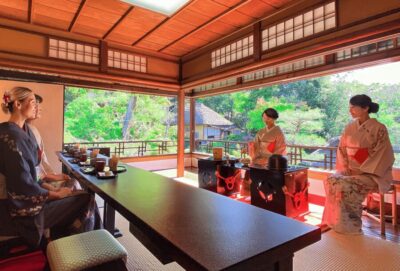
Tea Ceremony in a Traditional Tea House in Kiyomizu
Read our review →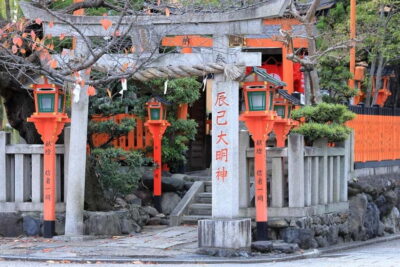
Kyoto Geisha Walking Tour: Gion District & Hidden Gems
Read our review →
Gion Magical Night Walking Tour with Geisha Trivia
Read our review →
Gion Geisha District Walking Tour – Stories of Geisha
Read our review →
Best of Kyoto: Gion, Geisha, Pagodas & Cobblestones
Read our review →