REVIEW · KYOTO TOURS
Home style Ramen and Homemade Gyoza in Kyoto
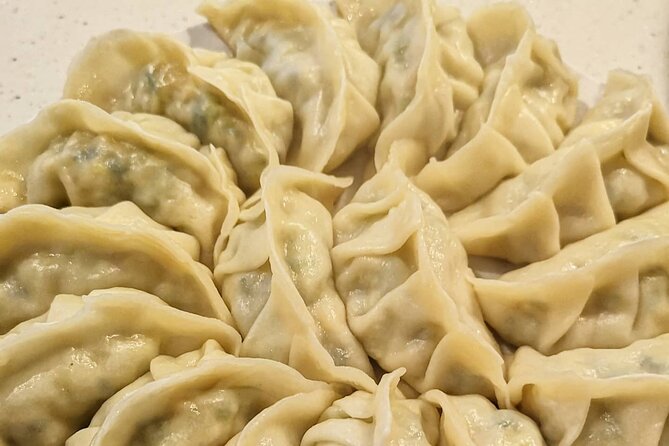
The best part of this Kyoto class is that you do not simply watch a chef assemble a pretty bowl. You help make the broth, mix and roll gyoza wrappers from scratch, shape the dumplings, prepare cucumber pickles, and eat the results at Nariko’s home. I like the useful, home-kitchen focus, and I like that the recipes are practical enough to repeat after Japan.
There are two points to weigh before booking. The class uses dried fish in the ramen soup, so it cannot be made vegetarian, and ramen noodles are not prepared from scratch. Children must be older than 10 and able to use a knife, even though one past family account included a seven-year-old, so I would follow the published age rule rather than count on an exception.
In This Review
- Key points at a glance
- What you actually make in Nariko’s kitchen
- The three-and-a-half-hour rhythm
- Why the home setting matters
- Learning the broth, not just the toppings
- Homemade gyoza is the hands-on highlight
- Cucumber pickles and the value of small skills
- The price: good value for cooks, less so for spectators
- Who should book this class
- Practical details before you reserve
- Should you book Nariko’s ramen and gyoza class?
- FAQ
- Where does the cooking class take place?
- What time does the class start?
- What food will I make?
- Are ramen noodles made during the class?
- Can vegetarians take the class?
- What is the minimum age?
Key points at a glance
- Nariko’s mother’s ramen recipe: You make the soup rather than merely adding toppings to a ready-made bowl.
- Gyoza skins made by hand: The class teaches the dough, rolling, filling, folding, and frying of Japanese dumplings.
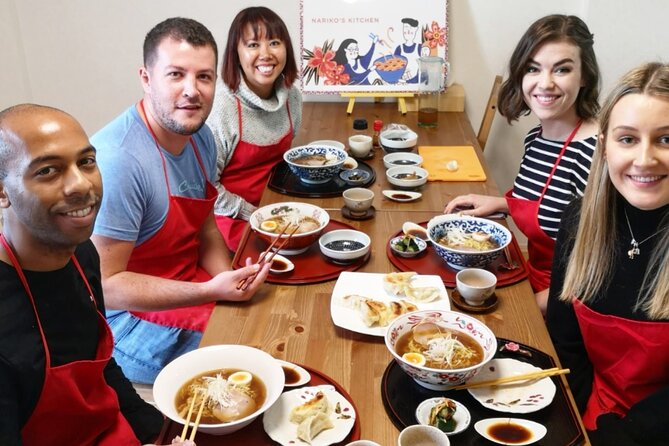
- A real home setting: The lesson takes place in Nariko’s clean, purposefully arranged kitchen, not a large commercial cooking school.
- Small groups of up to eight: Past classes have had four to seven people, allowing Nariko to guide each participant.
- A full meal in about three and a half hours: Ramen, fried gyoza, and cucumber pickles make this both a lesson and lunch.
- Important food limits: Dried fish is used in the broth, and the class is not vegetarian.
What you actually make in Nariko’s kitchen
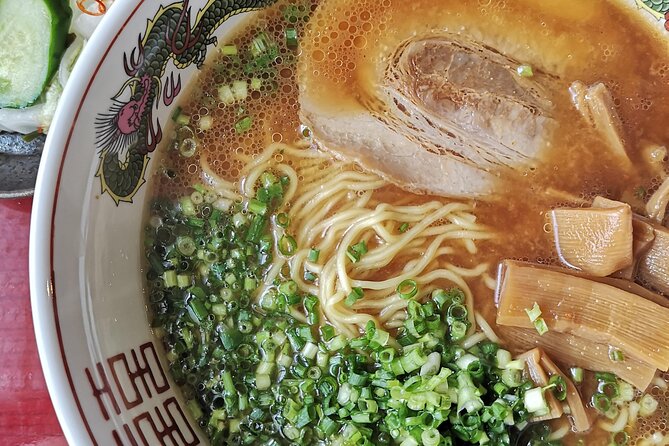
This is a hands-on Japanese cooking lesson built around three simple dishes. The main event is home-style ramen using Nariko’s mother’s recipe. You make the soup, but you do not make the ramen noodles, so the class is best understood as a lesson in broth, preparation, and assembly rather than a complete noodle-making workshop.
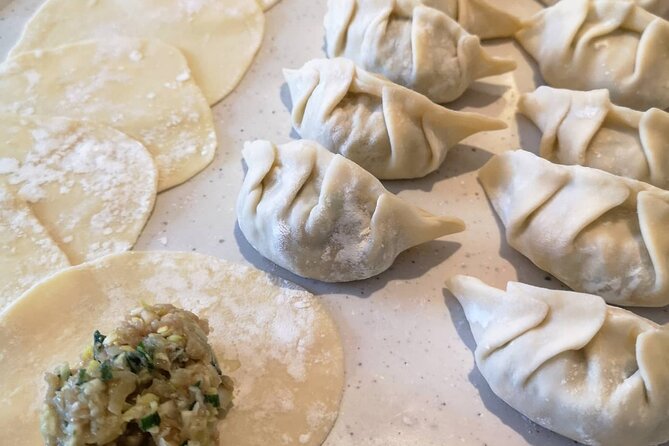
The second dish is gyoza, Japanese dumplings. Here the from-scratch work is more extensive. You prepare homemade skins, learn how to handle the dough, add the filling, fold the dumplings, and fry them. The handmade wrappers are the unusual part of the class, since many short cooking sessions rely on ready-made skins.
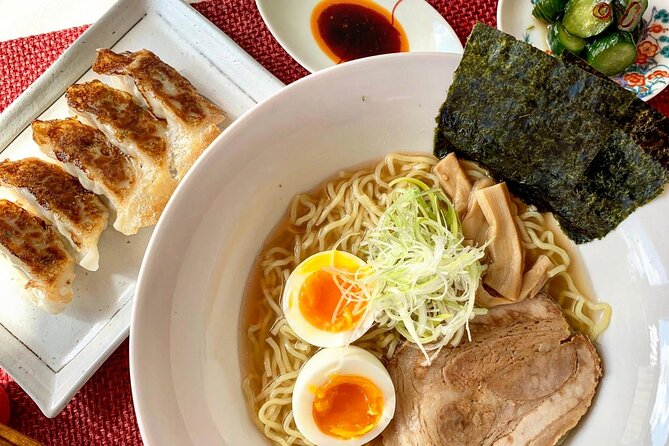
You also prepare cucumber pickles, a small side dish that helps round out the meal. It may not sound as exciting as folding dumplings, but it gives you another useful Japanese technique to take home. The final meal includes your own ramen, fried gyoza, and pickles, with the cooking turning into a shared lunch at the end.
The food is not designed as a restaurant performance. You work through the smaller jobs, including vegetable preparation and proper cutting techniques, with Nariko showing each step. That makes the class a good fit if you want to understand how the meal comes together, not just collect a few attractive photographs.
Other Kyoto days people book alongside this one:
- PERFECT KYOTO 1-Day Bus Tour
★ 5.0 · 13,518 reviews - Kyoto: Fushimi Inari, Kinkakuji, Bamboo Grove 1 Day Bus Tour
★ 4.8 · 4,316 reviews - Kyoto: Tea Ceremony in a Traditional Tea House in Kiyomizu
★ 4.9 · 3,519 reviews
The three-and-a-half-hour rhythm
The class starts at 10:00 a.m. at 5-6 Matsugasaki Rokunotsubochō in Sakyo Ward. One past group met Nariko at a train station before walking a few minutes to her home, but your booking instructions should be checked for the exact meeting arrangement. The listed activity begins and ends at the same meeting point.
The morning has a sensible pace. Ingredients are prepared for the group, then Nariko demonstrates techniques before you try them. The small size matters here. A class of four gives everyone plenty of room to work, while a group of six or seven still allows each person to take part without turning the session into a crowded demonstration.
Expect several stages rather than one long cooking task. You may move between broth preparation, chopping, dough work, dumpling assembly, and pickles. The structure keeps the class active, though it also means you should not expect to sit down for the meal right away.
At the table, you taste the food you helped make. The portions have been described as plentiful, and the meal is a useful reward after the preparation. The class ends back at Nariko’s home after roughly three and a half hours.
Why the home setting matters
A home kitchen changes the tone of the lesson. You see food prepared in a domestic setting, with the focus on methods that can work in an ordinary kitchen rather than on restaurant-scale equipment. Nariko’s cooking space is described as clean and well arranged for teaching, which is important when several people are handling dough, knives, fillings, and hot pans.
The setting also leaves room for conversation. Nariko is praised for being warm, patient, and easy to talk with, and the class brings together people from different parts of the world. That social side is part of the value, especially if you want a cultural activity that feels less formal than a standard sightseeing stop.
You should still keep your expectations realistic. This is not a private meal in complete solitude. The maximum group size is eight, and only paying participants may attend because space is limited. A couple or family can enjoy the intimate setting, but you will likely share the kitchen and table with other class members.
Nariko has also helped people with practical Kyoto questions, including dinner reservations. That is a pleasant extra, but it should not be the reason you book. The main product is the cooking lesson and meal.
Learning the broth, not just the toppings
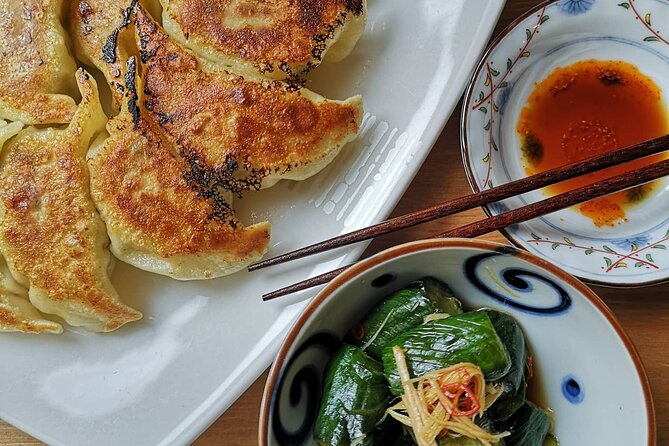
Ramen is often presented as a finished bowl, which can hide how much of the flavor comes from the soup. This class puts attention on the broth, using dried fish along with vegetables and meats. You get a clearer sense of the savory base that makes home-style ramen work.
The dried fish is also the key dietary issue. The instructor cannot make the ramen soup without it, so this is not a vegetarian class. If you have food allergies, restrictions, or other concerns, you must contact Nariko before booking. Accommodation may or may not be possible, and the class information specifically asks you to raise the issue in advance.
Because the noodles are not made, you will not learn the process of mixing, stretching, or cutting ramen noodles. That is a real limitation if noodle-making is your top goal. On the other hand, many home cooks will find the focus more useful, since broth, toppings, and serving methods are easier to repeat with noodles bought at home.
The lesson also helps explain why the experience costs more than a simple food tasting. You are paying for instruction, ingredients, kitchen time, and a meal, not just a bowl of ramen. The recipes and techniques are intended to remain useful after your return home.
Same city, a completely different kind of day:
- Kyoto Geisha Walking Tour: Gion District & Hidden Gems
★ 4.7 · 3,273 reviews - Kyoto: Tea Ceremony Ju-An at Jotokuji Temple
★ 4.9 · 3,207 reviews - Kyoto: Gion Magical Night Walking Tour with Geisha Trivia
★ 4.9 · 2,393 reviews - Kyoto: 45-Minute Tea Ceremony Lesson Experience
★ 4.3 · 2,378 reviews
Homemade gyoza is the hands-on highlight
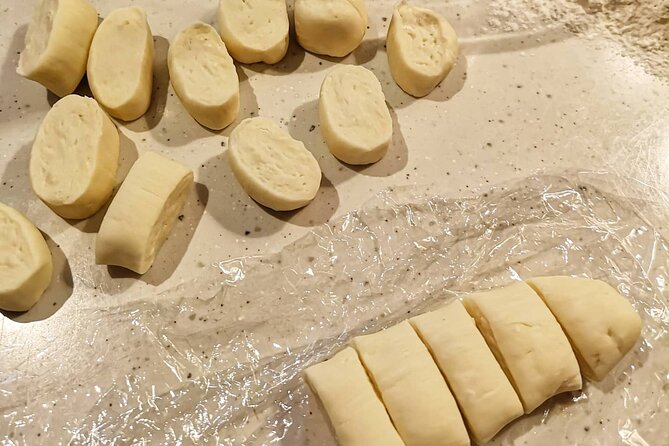
The gyoza portion is likely to be the most tactile part of the morning. You make the skins yourself, which adds work but also gives you control over thickness and texture. You then fill and fold the dumplings before frying them.
The folding can look simple until you try it. Nariko demonstrates the process step by step and keeps the pace manageable. Past participants have found that even first-time dumpling makers can produce gyoza that hold together well, a good sign for anyone who worries about making a mess of the dough.
The class makes fried gyoza rather than boiled dumplings. That gives you a useful comparison with the soft, steamed style found in many restaurants. It also adds another practical skill: managing the pan so the dumplings cook properly and develop a browned underside.
I like this part because it produces a clear result you can recreate at home. Gyoza skins, filling, and folding are all skills that improve with practice, and the class gives you a sensible first attempt under supervision.
Cucumber pickles and the value of small skills
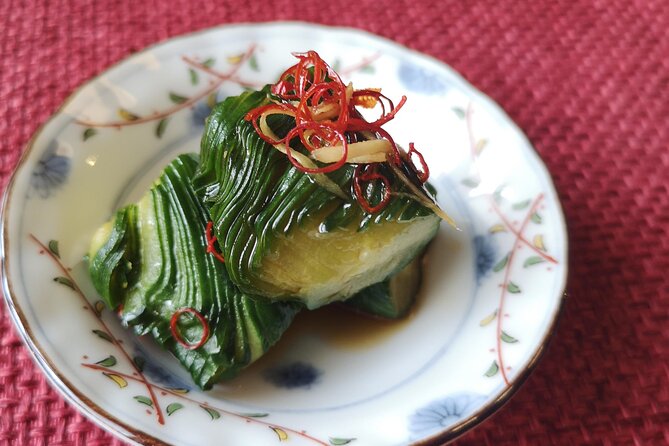
The cucumber pickles may receive less attention than ramen and gyoza, but they make the meal feel more like a Japanese home lunch. They are quick to prepare, offer a crisp contrast to the hot dishes, and show how a small side can balance a meal.
This is also where the class avoids becoming too ambitious. Three and a half hours is long enough to teach several useful elements, but not long enough for an elaborate multi-course menu. The dishes are familiar, filling, and manageable, which improves the chance that you will actually cook them again.
Nariko shares the recipes after the class, making the lesson more than a one-time activity. You may need to adjust ingredients based on what is available at home, but the basic methods are designed to be approachable. I would save the recipe information and note any ingredient names you may have trouble finding later.
The price: good value for cooks, less so for spectators
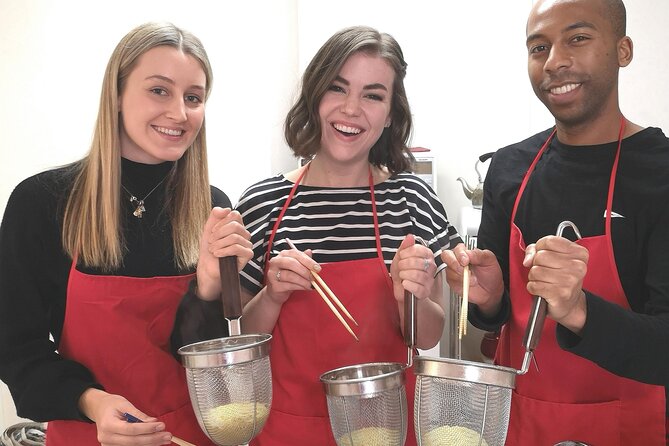
The cost is $118.92 per person. That is a substantial price for a three-and-a-half-hour food activity, especially when Kyoto offers inexpensive ramen restaurants and gyoza shops. If you only want to eat these dishes, this class is not the economical choice.
The value improves if you want instruction, a home visit, a full meal, and recipes to use later. You are also making the gyoza wrappers and soup yourself, rather than paying for a short demonstration followed by a small tasting. For couples, families, and people who enjoy cooking, the hands-on time helps justify the price.
Group size is another part of the calculation. With a maximum of eight and past sessions ranging from four to seven people, you should receive more personal attention than in a large culinary workshop. The exact group on your date will affect how much direct guidance you receive, but the format is intentionally small.
I would book this for the experience, not as a cheap lunch. If your Japan budget is tight, compare it with a restaurant meal and a less expensive cultural activity. If you want to learn dishes you can make for friends at home, the price is easier to defend.
Who should book this class
This is a strong choice for:
- Couples who want a shared activity beyond temples and shopping
- Families with children who meet the age and knife-use requirements
- Home cooks interested in dumplings, broth, and Japanese side dishes
- People who prefer small-group instruction over a large demonstration
- Visitors who want a relaxed look at Japanese home cooking
- Anyone who enjoys meeting other people during a meal
It is less suitable if you need vegetarian food, dislike dried fish, or want to make ramen noodles from flour. It may also disappoint you if you expect a formal restaurant chef, a polished cooking show, or a quick class that finishes in under two hours.
The age rule deserves care. The published requirement is older than 10 because knives are used. One past account says a seven-year-old took part, but that does not change the stated rule. Ask Nariko before booking if your child is younger than 10, and do not assume participation will be allowed.
Practical details before you reserve
Confirmation is sent within 48 hours, subject to availability. The class is near public transportation, but allow time to reach the Matsugasaki address and read your meeting directions closely.
Only people taking the class may enter. There is no spectator option, which is understandable in a small home kitchen but important for families with nonparticipating adults or younger children.
The experience is non-refundable and cannot be changed after booking. Since the fee is not returned for cancellation or amendments, make sure your Kyoto schedule is firm before paying. If the minimum number is not reached and the class is canceled, you will be offered another date or experience, or receive a full refund.
The activity uses a mobile ticket. Bring the booking information on your phone, and tell the instructor about dietary restrictions before reserving rather than waiting until the morning of the class.
Should you book Nariko’s ramen and gyoza class?
I would book it if you want to cook a Japanese meal from the ground up in a friendly home setting. Nariko’s patient instruction, small groups, handmade gyoza skins, family ramen recipe, and generous final meal give the class more substance than a basic food demonstration.
I would skip it if vegetarian food is essential, if you specifically want ramen-noodle production, or if $118.92 feels too high for a cooking lunch. For everyone else, this is a practical Kyoto experience with a good chance of lasting beyond your holiday: you leave with a full meal, new techniques, and recipes that can bring a little of Japan back to your own kitchen.
FAQ
Where does the cooking class take place?
It takes place at Nariko’s home at 5-6 Matsugasaki Rokunotsubochō, Sakyo Ward, Kyoto, 606-0915, Japan.
What time does the class start?
The scheduled start time is 10:00 a.m., and the experience lasts about three and a half hours.
What food will I make?
You will make ramen soup, gyoza with homemade skins, cucumber pickles, and then eat the food you prepare.
Are ramen noodles made during the class?
No. The class teaches the ramen soup and preparation, but it does not include making ramen noodles. Gyoza wrappers are made from scratch.
Can vegetarians take the class?
No. Dried fish is used in the ramen soup, and the instructor cannot prepare the broth without it. Tell Nariko about any other dietary restrictions before booking, since accommodation may or may not be possible.
What is the minimum age?
Participants must be older than 10 and able to use a knife. Only people participating in the class may attend because space is limited.
Just added around Kyoto
- Private Guided Traditional Buddhist Cooking in Japan★ 5.0 · 16 reviews
- Kyoto: Gion Geisha District & Sake-in-Hand Walking Tour★ 5.0 · 37 reviews
- Your Private Vacation Photography Session In Kyoto★ 5.0 · 110 reviews
- Kyoto: Zen Meditation at a Private Temple with a Monk★ 5.0 · 25 reviews
- Private Pewter Sake Cup Experience with a Kyoto Artisan★ 5.0 · 31 reviews
- Traditional Japanese Washi Papermaking- Kyoto morning★ 5.0 · 77 reviews
- Kyoto Wagashi(Japanese sweets) Cooking Class near Fushimiinari★ 5.0 · 60 reviews
- Kyoto Private 6 hour Tour: English Speaking Driver Only, No Guide★ 5.0 · 88 reviews
Kyoto Tours, compared.
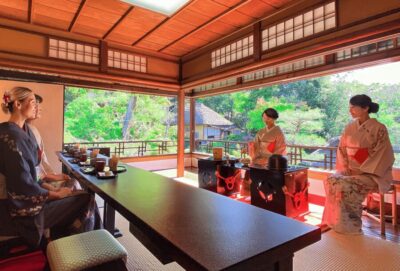
Tea Ceremony in a Traditional Tea House in Kiyomizu
Read our review →
Kyoto Geisha Walking Tour: Gion District & Hidden Gems
Read our review →

Gion Magical Night Walking Tour with Geisha Trivia
Read our review →

Gion Geisha District Walking Tour – Stories of Geisha
Read our review →
Best of Kyoto: Gion, Geisha, Pagodas & Cobblestones
Read our review →